


Mutsukari
Kaiseki, Japanese · Chūō, Tokyo
Restaurant in Tokyo, Japan
 Book with Pearl
The Read
Shojin-Rooted Kaiseki
Price
$200–300per person
Chef
Yoshihisa Akiyama
Dress
Formal
Why go
Mutsukari is a vegetable-forward kaiseki room in Ginza where Chef Yoshihisa Akiyama's shojin-ryori background drives the menu. At ¥¥¥, it sits a tier below the most expensive Ginza rooms while delivering an OAD top-400-ranked experience. Best for returning kaiseki diners who want a kitchen with a genuine point of view rather than a formal procession.
About Mutsukari
Who Should Book Mutsukari, and When
If you have already eaten kaiseki in Tokyo at the more formal houses and want something that rewards a second look, Mutsukari in Ginza is worth your next reservation. This is the right table for a diner who already knows the format and is ready to engage with a kitchen that treats vegetables as a structural argument, not a garnish. It is not the place for a first kaiseki experience, the cooking is idiosyncratic enough that you will get more from it if you arrive with some frame of reference. For a milestone dinner, an anniversary, or a deliberate return visit to Ginza after you have already done the obvious rooms, this is where to go.
A Kitchen Built Around What Grows
Chef Yoshihisa Akiyama's background in shojin-ryori, the austere vegetarian cooking of Buddhist temples, shapes every plate at Mutsukari in ways that separate it from the standard kaiseki repertoire. This is not a vegetarian restaurant, but the vegetable is consistently the most considered element on the table. Where most kaiseki kitchens treat seasonal produce as the expected backdrop, Akiyama's training pushes it to the foreground. Dishes documented from the kitchen include ohitashi, a boiled vegetable preparation, and nikogori, a jellied broth of meat or fish, alongside deep-fried and grilled courses. Sashimi arrives dressed with vinegar and nori jelly. What is described by observers as a tapas-like presentation rhythm means courses arrive in a sequence that feels more spontaneous than the locked progression of a traditional kaiseki meal.
The sourcing logic here is legible on the plate. The kitchen has built its identity around what Japanese agricultural seasons actually produce, giant radishes in a yuba soup, turnip and tofu and persimmon and apple and rice cake in a single bowl, baked tomato tofu with Chinese cabbage, an aspic of seasonal vegetables. These are not decorative choices. They reflect a procurement philosophy in which the ingredient leads and the technique follows. At ¥¥¥ pricing, this is positioned a tier below the ¥¥¥¥ rooms that dominate the top end of Ginza dining, which makes the sourcing discipline more meaningful: the kitchen is not leaning on the most expensive ingredients to carry the experience.
The Open Kitchen as Part of the Offer
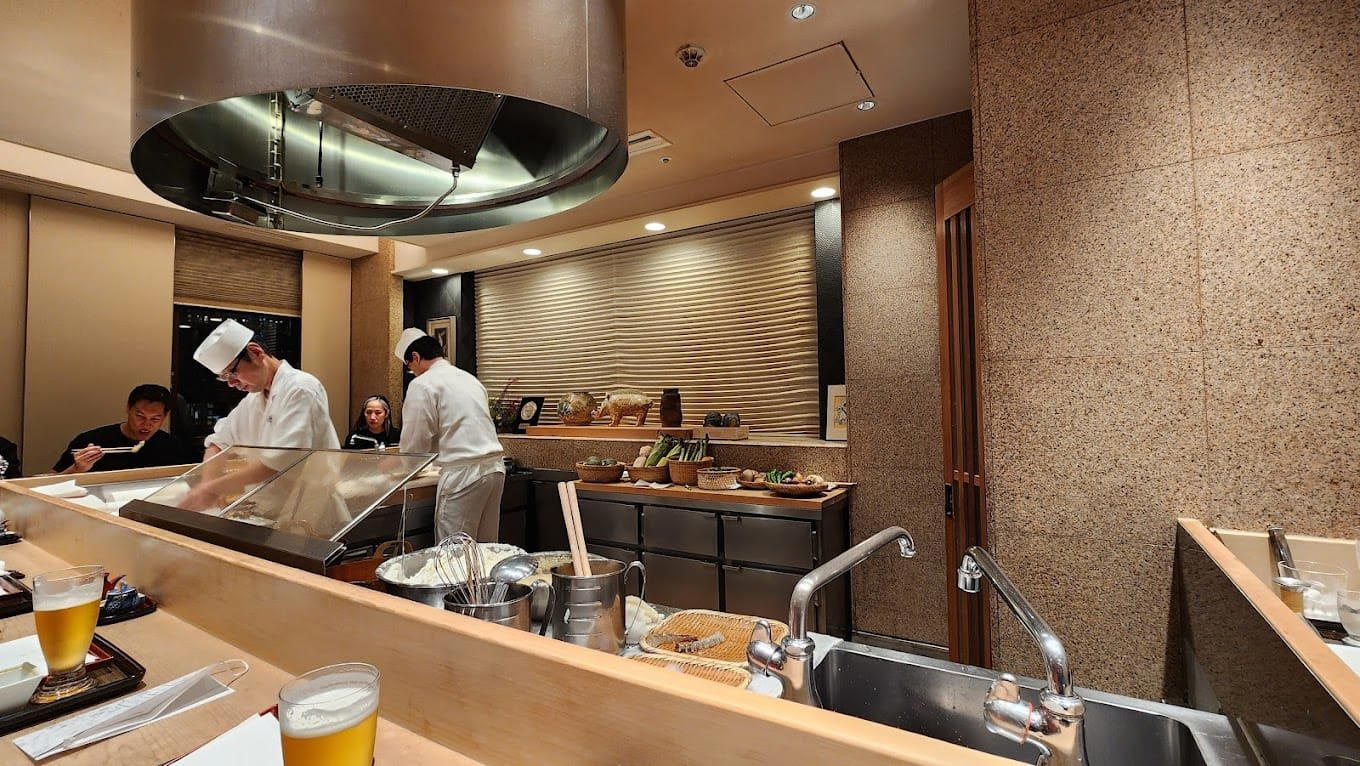
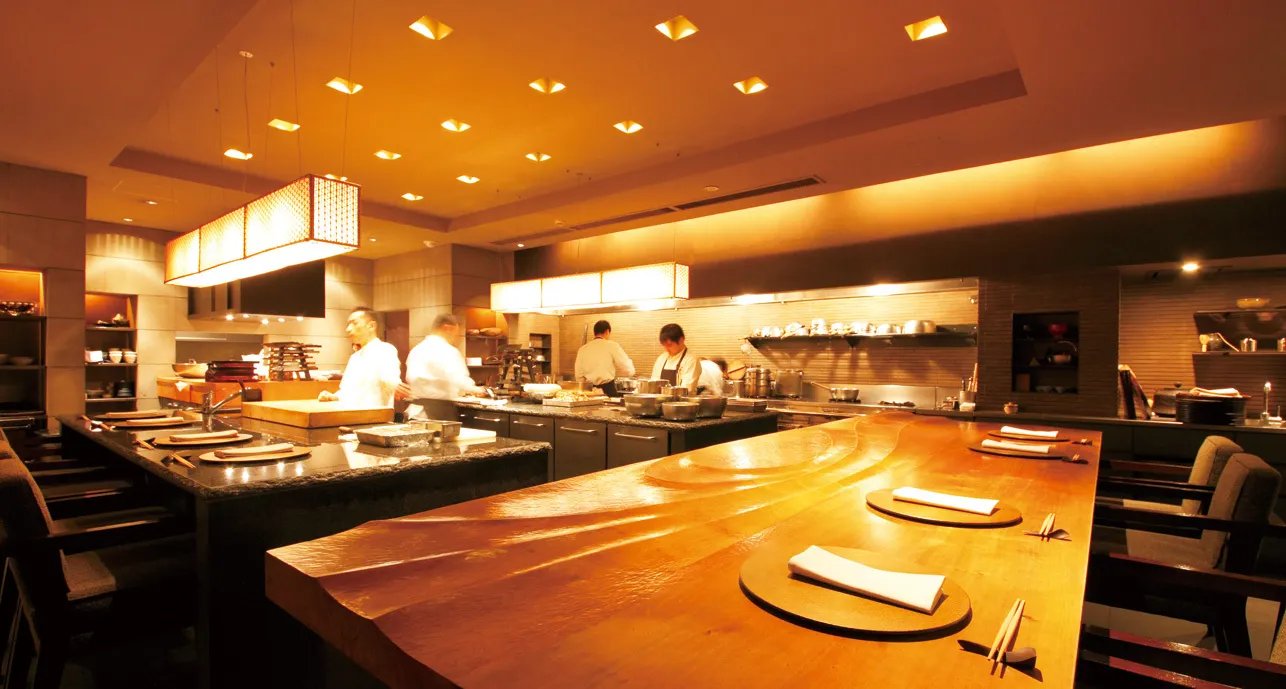
The open kitchen is central to the room's design and to how the experience reads. Akiyama runs his team with visible discipline, kitchen staff work in red armbands and white uniforms, and the cooking is observable from the dining room. For a returning guest, this is part of what changes on a second visit: you have the vocabulary to watch what is happening and make connections between the preparation and the plate. If you are coming back, position yourself where you can see the pass. The cooking process is not theatre for its own sake; it is information about how the dishes are constructed.
Ratings and Recognition
The Opinionated About Dining survey, one of the most peer-reviewed rankings in fine dining, placed Mutsukari at number 367 among all Japanese restaurants in 2025 and number 361 in 2024, a position that reflects a stable, respected kitchen rather than a venue riding a moment. OAD rankings weight professional and experienced diner opinion heavily, which makes a top-400 position in Japan meaningful given the density of strong competition.
Know Before You Go
- Price tier: ¥¥¥ (dinner only)
- Hours: Monday to Friday 5:30–11 pm; Saturday 5–11 pm; closed Sunday
- Location: Ginza 5-chome, Chuo City, Tokyo (Ginza Pony Group Building)
- Booking difficulty: Easy, reservations are available without the weeks-long lead times required at ¥¥¥¥ Ginza rooms
- Cuisine format: Kaiseki with a vegetable-forward, shojin-ryori-influenced approach; tapas-style course presentation
- Kitchen: Open kitchen, observable from the dining room
- Closed: Sundays
How Mutsukari Fits Into Tokyo Dining More Broadly
Ginza is one of the most competitive restaurant districts in Japan. If you are planning a longer stay in Tokyo, the full Tokyo restaurants guide covers the range. For kaiseki specifically, Ginza Kojyu and Ginza Shinohara operate in the same neighbourhood at higher price points. Kanda and Kohaku are worth considering if you want to compare kaiseki approaches across the city. For the Kyoto tradition, Hyotei and Kikunoi Honten are the reference points. Elsewhere in Japan, HAJIME in Osaka, Gion Sasaki in Kyoto, akordu in Nara, Goh in Fukuoka, 1000 in Yokohama, and 6 in Okinawa each represent the range of serious Japanese cooking worth planning around. For Tokyo hotels, bars, and experiences surrounding a Mutsukari visit, see the Tokyo hotels guide, Tokyo bars guide, Tokyo wineries guide, and Tokyo experiences guide.
Planning details
- Hours
- Monday: 5:30–11 pm · Tuesday: 5:30–11 pm
- Location
- Japan, 〒104-0061 Tokyo, Chuo City, Ginza, 5 Chome−5−19 銀座ポニーグループビル
- Reservations
- Book on TableCheck
- Website
- mutsukari.com/index.html
- Phone
- +81 3-5568-6266
The take
The Take
The Vibe
Mutsukari sits quietly within Ginza's denser, low-rise grid, occupying the category of neighbourhood kaiseki where regulars find rooms by referral rather than spectacle. The dining room favors the work-forward clarity of an open kitchen — described as the operational centre — so the rhythm of the cooking team is integral to the experience. The restaurant leans into seasonal precision: signature moments such as matsutake with hamo, uni with ikura and a vegetable terrine set in jelly indicate a kitchen attuned to texture and provenance. The overall effect is a restrained, discovery-minded address that rewards repeat visits.
Best For
This is a dinner-only destination that suits intimate evenings and occasions that call for focused, multi-course kaiseki — think date nights, discreet business dinners and modest celebrations. The piece positions Mutsukari one tier below Ginza’s most trophy-focused, ¥¥¥¥ houses, which makes it comparatively more accessible while retaining Michelin-caliber ambitions. Its neighbourhood register attracts local regulars who value the consistency and seasonality of the menu, so it works well for visitors and residents seeking serious, composed Japanese tasting menus without the ostentation of the district’s landmark temples of dining.
Ordering Tips
Mutsukari operates in the kaiseki tradition, so guests should expect a set, multi-course progression that showcases seasonal ingredients rather than à la carte options. Reserve ahead for dinner service, and be prepared to enjoy composed, textural plates like vegetable terrine in jelly, matsutake with hamo and uni paired with ikura; save room for the shaved-ice dessert with seasonal toppings. Because the open kitchen governs the room’s pace, allow the service to guide timing and sequence so each course arrives as the kitchen intends.
Venue details
Ambiance
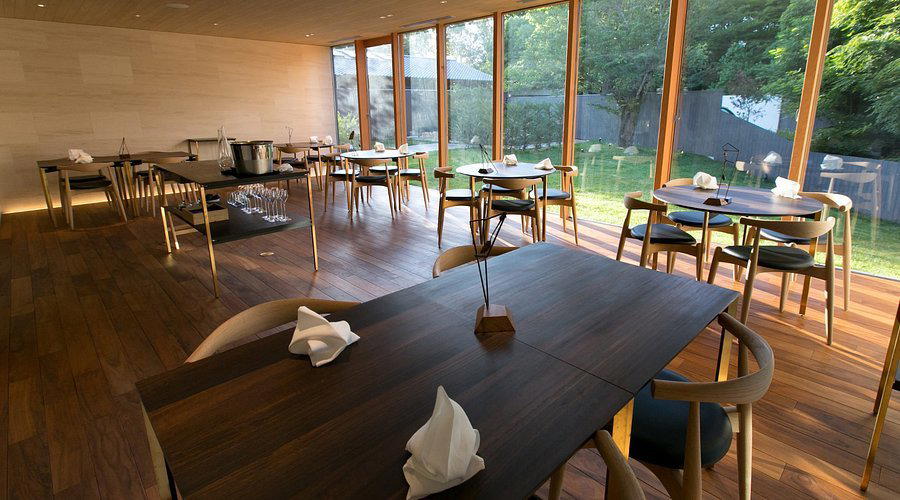
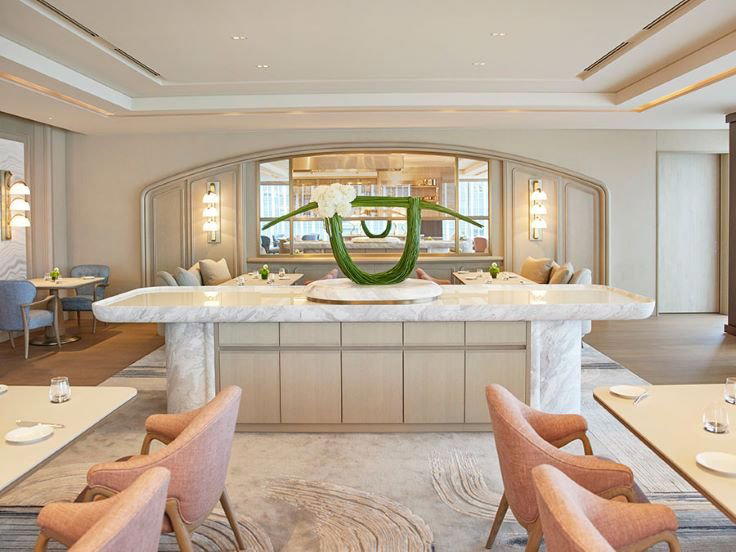
Modern, spacious interior with a fully open kitchen as the focal point; elegant black decor with refined, adult atmosphere; bright and contemporary with professional energy from visible chef work.
Tags
Vibe
Best For
Experience
Sourcing
Accessibility
At the Table
- Dress Code
- Formal
- Noise Level
- Conversational
- Service Style
- Formal
- Meal Pacing
- Extended Experience
- Capacity
- Small
- Kitchen
- Seasonal
- Menu Format
- Tasting menu, Omakase, Counter dining, Set menu
- Drinks Focus
- Sake pairing, Wine pairing
- Dietary
- Vegetarian friendly, Allergy accommodating
- Private Dining
- Available
Signature Dishes
- vegetable terrine jelly
- matsutake mushroom with hamo
- uni with ikura
- shaved ice with seasonal toppings
Know before you go
Know Before You Go
- Getting there
- Japan, 〒104-0061 Tokyo, Chuo City, Ginza, 5 Chome−5−19 銀座ポニーグループビル
Planning details
Hours
- Monday
- 5:30–11 pm
- Tuesday
- 5:30–11 pm
- Wednesday
- 5:30–11 pm
- Thursday
- 5:30–11 pm
- Friday
- 5:30–11 pm
- Saturday
- 5–11 pm
- Sunday
- Closed
Location
Japan, 〒104-0061 Tokyo, Chuo City, Ginza, 5 Chome−5−19 銀座ポニーグループビル · Directions
Recognition and awards

Also consider
Also Consider
- Harutaka, Sushi, ¥¥¥¥
- L'Effervescence, French, ¥¥¥¥
- RyuGin, Kaiseki, Japanese, ¥¥¥¥
- HOMMAGE, Innovtive French, French, ¥¥¥¥
- Crony, Innovative, French, ¥¥¥¥
Restaurant context
The most direct comparison for Mutsukari is RyuGin, the kaiseki room that sits at ¥¥¥¥ and occupies a different position in the market. RyuGin is the choice if you want kaiseki at its most technically ambitious and internationally recognised, it carries the awards and the price to match. Mutsukari at ¥¥¥ is the better booking if the sourcing philosophy and the vegetable-led approach matter more to you than ceremony and prestige. For a first serious kaiseki meal in Tokyo, RyuGin is the safer bet; for a second or third visit where you want something with a more personal argument, Mutsukari is the stronger call.
Harutaka at ¥¥¥¥ operates in a different format entirely, sushi omakase rather than kaiseki, so the comparison is one of occasion rather than direct competition. If the evening calls for precision sushi counter work, Harutaka; if you want a full kaiseki progression with a vegetable-forward identity, Mutsukari. On the French side, L'Effervescence, HOMMAGE, and Crony all sit at ¥¥¥¥ and serve a different cuisine tradition entirely. They are not substitutes for Mutsukari, but if your Tokyo itinerary has room for one Japanese and one French room, Mutsukari pairs well as the Japanese booking alongside any of those three on a separate night.
On booking difficulty, Mutsukari has an advantage: it is easier to secure a reservation than the top-tier ¥¥¥¥ kaiseki and sushi rooms. If you are building a Tokyo itinerary and the hardest-to-book rooms are already confirmed, Mutsukari is the right second booking, it adds a different culinary argument without requiring the same advance planning. For diners weighing value, the ¥¥¥ price point combined with an OAD top-400 ranking makes it one of the more straightforward decisions in Ginza.
Explore Tokyo
Around this place
Discover more on Pearl
Unlock the full Mutsukari guide in Pearl, including awards, comparisons, FAQs, planning details, and nearby places.
Compare Mutsukari
| Venue | Cuisine | Price | Awards | Booking Difficulty |
|---|---|---|---|---|
| Mutsukari | Kaiseki, Japanese | ¥¥¥ | 2026 OAD Top Restaurants in Japan Recommended2026 Michelin 1 Star2025 OAD Top Restaurants in Japan Ranked · #367We're Smart World Top Restaurants 2025We're Smart World Top 100 20252024 OAD Top Restaurants in Japan Ranked · #3612024 Michelin 1 Star2023 OAD Top Restaurants in Japan Highly Recommended | Easy |
| Harutaka | Sushi | ¥¥¥¥ | 2026 Tabelog Silver · #312026 OAD Top Restaurants in Japan Ranked · #1282026 Michelin 3 Stars2026 La Liste Top RestaurantsTabelog 100 - Sushi - TOKYO - 2025 · #372025 Asia's 50 Best Restaurants · #762025 OAD Top Restaurants in Japan Ranked · #1172025 La Liste Top Restaurants2025 Tabelog Bronze | Unknown |
| L'Effervescence | French | ¥¥¥¥ | 2026 Tabelog Silver · #682026 OAD Top Restaurants in Japan Ranked · #103Star Wine Lists 20262026 Black Pearl 2 Diamond2026 Relais Chateaux Restaurants2026 La Liste Top Restaurants2026 Michelin 3 Stars2025 Asia's 50 Best Restaurants · #692025 OAD Top Restaurants in Japan Ranked · #92 | Unknown |
| RyuGin | Kaiseki, Japanese | ¥¥¥¥ | 2026 OAD Top Restaurants in Japan Ranked · #802026 Tabelog Bronze · #3772026 Michelin 3 Stars2026 La Liste Top RestaurantsTabelog 100 - Japanese cuisine - TOKYO - 2025 · #212025 OAD Top Restaurants in Japan Ranked · #542025 Michelin 3 Stars2025 La Liste Top Restaurants2025 The Best Chef Three Knives | Unknown |
| HOMMAGE | Innovtive French, French | ¥¥¥¥ | 2026 Tabelog Bronze · #1232026 OAD Top Restaurants in Japan Highly Recommended2026 Michelin 2 StarsTabelog 100 - French - TOKYO - 2025 · #762025 Asia's 50 Best Restaurants · #782025 OAD Top Restaurants in Japan Ranked · #1752025 Michelin 2 Stars2025 The Best Chef One Knife2025 La Liste Top Restaurants | Unknown |
| Crony | Innovative, French | ¥¥¥¥ | 2026 Asia's 50 Best Restaurants · #34Star Wine Lists 20262026 OAD Top Restaurants in Japan Recommended2026 Michelin 2 Stars2025 Asia's 50 Best Restaurants · #30Tabelog 100 - French - TOKYO - 2025 · #782025 OAD Top Restaurants in Japan Ranked · #227We're Smart World Top Restaurants 20252025 Michelin 2 Stars | Unknown |












Side-by-side comparison to help you decide where to book.
FAQ
Frequently Asked Questions
Can I eat at the bar at Mutsukari?
The open kitchen counter is the core seating arrangement at Mutsukari, so sitting at the bar is effectively the intended experience here. Chef Akiyama's team works in full view, and that visibility is part of why the room works, you are watching the food being made, not just waiting for it to arrive.
What should I wear to Mutsukari?
Mutsukari is a dinner-only kaiseki room in Ginza at ¥¥¥ pricing, so a relaxed but polished approach to dress is appropriate, clean, composed, nothing overly casual. Ginza restaurants at this tier generally expect guests to signal some effort without requiring formal attire.
Is lunch or dinner better at Mutsukari?
Mutsukari is dinner-only, open Monday through Saturday from 5:30 pm (5 pm on Saturdays), closed Sundays. There is no lunch service to compare. Plan accordingly if you are building a Tokyo itinerary around it.
Is Mutsukari worth the price?
At ¥¥¥ and ranked #367 in Japan by Opinionated About Dining (2025), Mutsukari is worth booking if vegetable-forward kaiseki with a shojin-ryori influence interests you, it is a specific offer, not a crowd-pleaser. If you want a more conventional kaiseki format with prestige credentials, RyuGin or Harutaka serve that need more directly.