
Restaurant in Kyoto, Japan
Gion Nishikawa
1,635Pearl PointsTwo Michelin stars, 11 seats, book early.





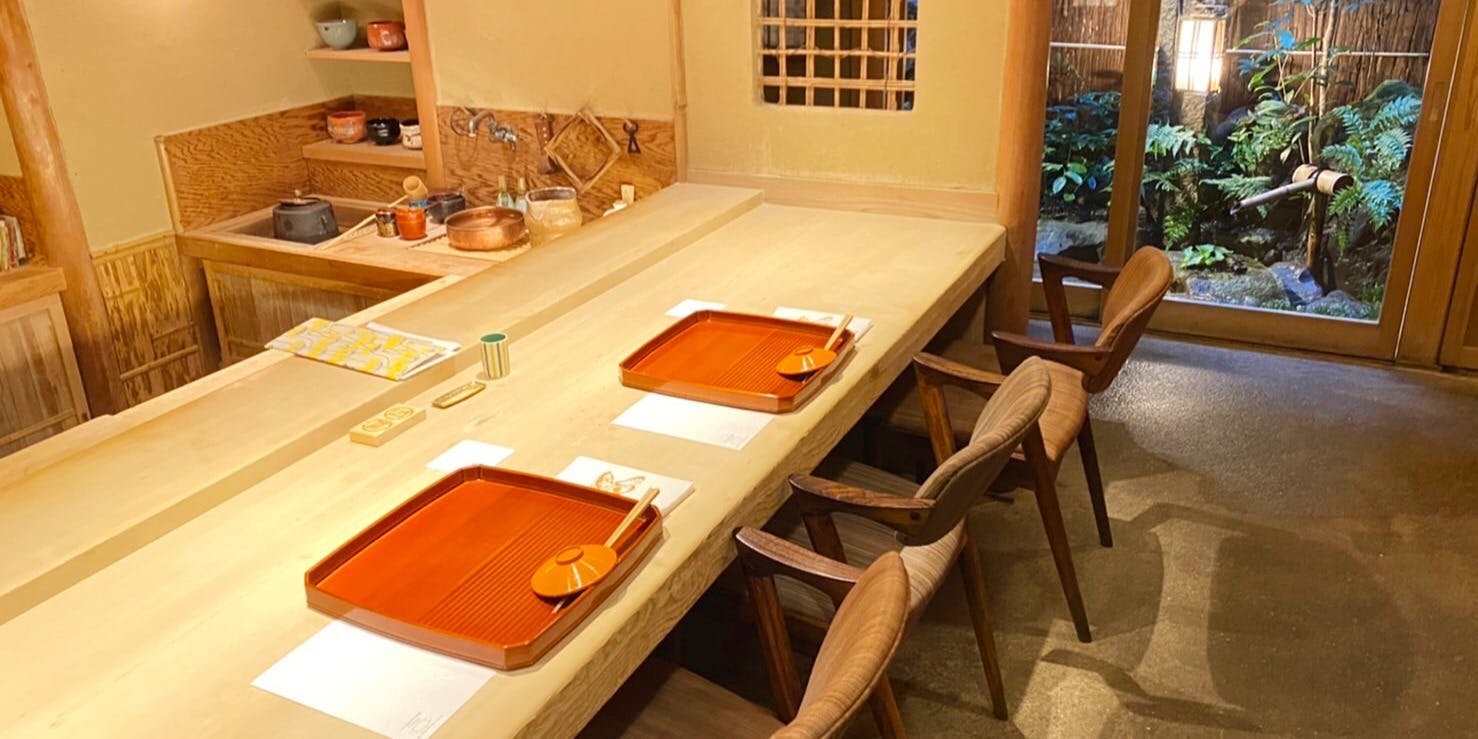
About Gion Nishikawa
Gion Nishikawa is a two-Michelin-star kaiseki counter in Higashiyama with ten consecutive Tabelog Bronze Awards and a Tabelog Top 100 WEST ranking. Dinner runs JPY 30,000–39,999 all-in; Thursday–Saturday lunch at JPY 15,000–19,999 is the better value entry point. Book months ahead — this is one of the most consistently credentialed and hardest-to-book kaiseki rooms in Kyoto.
Gion Nishikawa: The Verdict
Book Gion Nishikawa if you are serious about kaiseki and can secure a reservation. This is one of the most consistently decorated Japanese cuisine restaurants in western Japan, holding two Michelin stars since at least 2024, a Tabelog Bronze Award every year from 2017 through 2026, and a place on the Tabelog Top 100 Japanese Cuisine WEST list in 2021, 2023, and 2025. Opinionated About Dining ranked it #165 in Japan in 2024 and #182 in 2025. La Liste scored it 83.5 points in 2025. The credentialed consensus is unusually strong for a 27-seat house restaurant in Gion. At a dinner price that reviewers place at JPY 30,000–39,999 all-in (including the 10% service charge), it is not the cheapest seat in Kyoto kaiseki, but it is one of the most justified.
The Experience
Gion Nishikawa opened in January 2009 inside a sukiya-style townhouse near Kodaiji Temple and Yasaka Shrine, a short walk from the Higashiyamayasui bus stop and about 750 metres from Gion Shijo station. The setting does the work that the neighbourhood's reputation alone cannot: the interior architecture evokes the atmosphere of old Gion rather than performing it. Kombu boxes line the walls like hanging scrolls, a quiet signal that the cooking here is ingredient-first. Chef Masayoshi Nishikawa's stated principle is that true flavours are subtle, and his approach to wanmono — the soup course that is the technical centrepiece of any kaiseki sequence — aims for a light flavour that draws out the umami of makombu rather than asserting itself over it. That restraint is a deliberate commitment to Kyoto cuisine's defining logic: the ingredient should arrive at the table as close to its leading natural expression as possible.
For a special occasion, the seating options matter as much as the food. The room holds 27 in total: 11 at the counter, a tatami room for up to 6, and a table room for up to 10. The counter is where you get the closest view of the kitchen and the most direct interaction with Nishikawa, whose warmth keeps the mood notably relaxed for a room at this price level. Private rooms are available for parties of 2, 4, 6, 8, and 10, which makes this an unusually flexible venue for a celebration dinner. The tatami room with sunken seating is the right call for a couple or a small group that wants the full traditional atmosphere. Wheelchair access is listed as available. Photography with mobile phones is allowed; dedicated cameras are not.
Timing shapes the decision significantly. Lunch runs Thursday through Saturday, 12:00–15:00, with prices that reviewers put at JPY 15,000–19,999 all-in. If you are visiting Kyoto in cherry blossom or autumn foliage season, Monday evening service becomes available, which is otherwise closed. Tuesday and Wednesday offer dinner only (18:00–19:00 last entry). Sunday is closed unless Monday falls on a public holiday. The most practical window for most visitors is a Thursday, Friday, or Saturday lunch, which opens up the afternoon for the Higashiyama sightseeing corridor immediately outside. Lunch here costs roughly half of dinner and draws from the same kitchen, so it is the stronger value proposition if your budget is fixed.
The kaiseki format is not designed for takeout or off-premise consumption. The progression of courses, the temperature discipline, and the dashi-led flavour logic all depend on immediate service. This is not a criticism of the restaurant but a practical note: if your schedule requires flexibility, this is the wrong venue. Kaiseki at this level is an immersive, fixed-time commitment. Plan for two hours minimum, especially at dinner. Drinks run to sake (nihonshu), shochu, and wine. Credit cards are accepted (Visa, Mastercard, JCB, Amex, Diners). QR code payments are not accepted. Parking is unavailable; arrive by taxi, bus, or on foot from Gion Shijo.
Gion Nishikawa is also listed as a non-smoking space throughout the dining rooms, though a smoking room with a garden view is available inside the building. Families with children should note that the venue is listed as family-friendly in private rooms only.
For other Kyoto kaiseki and the wider Japan fine-dining landscape, see our guides to Gion Sasaki, Hyotei, Kikunoi Honten, Mizai, and Gion Maruyama. Beyond Kyoto, comparable ambition appears at RyuGin and Kanda in Tokyo, HAJIME in Osaka, and Goh in Fukuoka. For planning the rest of your trip, browse our full Kyoto restaurants guide, our full Kyoto hotels guide, our full Kyoto bars guide, our full Kyoto wineries guide, and our full Kyoto experiences guide. If you are building a wider Japan itinerary, Harutaka in Tokyo, akordu in Nara, 1000 in Yokohama, and 6 in Okinawa are worth cross-referencing.
Booking Gion Nishikawa
Expect this to be near-impossible to book without significant lead time. A two-Michelin-star kaiseki counter with 11 seats in Gion fills months in advance, particularly around cherry blossom season (late March to mid-April) and autumn foliage season (mid-November). Book through Tabelog or the restaurant directly at +81-75-525-1776. Non-Japanese speakers should be prepared: English-language booking at this level of Kyoto dining often requires a hotel concierge or a booking intermediary. If Gion Nishikawa is unavailable, the comparison section below identifies the most realistic alternatives at the same quality tier.
Ratings at a Glance
- Michelin: 2 Stars (2024, 2025)
- Tabelog: 4.09 / Bronze Award 2017–2026 consecutive; Tabelog Top 100 Japanese Cuisine WEST (2021, 2023, 2025)
- Opinionated About Dining: #182 in Japan (2025), #165 (2024)
- La Liste: 83.5 points (2025)
- Google: 4.2 / 271 reviews
Frequently Asked Questions
Is Gion Nishikawa worth the price?
At ¥20,000–¥29,999 for dinner (with actual spend often reaching ¥30,000–¥39,999 per person once service charge and drinks are added), Gion Nishikawa sits at the serious end of Kyoto kaiseki pricing. The two Michelin stars held consecutively, Tabelog Bronze recognition every year since 2017, and a #182 ranking in Opinionated About Dining's Japan list (2025) put this in the upper tier of the city's kaiseki options. If you are comparing on value, lunch at ¥10,000–¥14,999 listed (reviews suggest ¥15,000–¥19,999 in practice) is a better entry point than dinner for cost-conscious visitors who still want the full format.
Can I eat at the bar at Gion Nishikawa?
Yes — there are 11 counter seats, which is where most solo diners and couples will be seated. The counter gives a direct view of chef Masayoshi Nishikawa at work and is the format best suited to engaging with the cooking. Private rooms are available for groups of 2 to 10 if counter seating is not your preference, but the counter is the default and arguably the reason to book here over a tatami-only alternative.
What should a first-timer know about Gion Nishikawa?
Reservations are close to essential: this is an 11-seat counter holding two Michelin stars, and it is closed Sundays and Mondays (except during cherry blossom and autumn foliage seasons when Monday evening service opens). Phone photography is permitted; camera photography is not. A 10% service charge applies to both lunch and dinner. The restaurant is near Kodaiji Temple and Yasaka Shrine, accessible on foot from the Higashiyamayasui bus stop — no parking is available, so plan accordingly.
Is Gion Nishikawa good for a special occasion?
Yes, provided the occasion suits a quiet, focused dining format. The sukiya-style interior, private rooms for 2–10 guests, and a non-smoking dining room (with a separate garden-view smoking room) make it well set up for celebrations that call for privacy and a considered atmosphere. The Tabelog listing notes the occasion is recommended by many for friends gatherings. For corporate or very large groups, the 10-person private room covers most scenarios, but full private use of the venue is also available.
Can Gion Nishikawa accommodate groups?
Groups of up to 10 can be accommodated: there is a tatami room for six and a table room for up to 10, in addition to the 11-seat counter. Private rooms are available for parties of 2, 4, 6, 8, or 10, and full private use of the restaurant is possible. Families with children are welcome in private rooms only. For groups larger than 10, the 27-seat total capacity means full private hire is the only realistic option — confirm directly with the restaurant when booking.
Location
Japan, 〒605-0825 Kyoto, Higashiyama Ward, Shimokawaracho, 473
Kyoto, Japan
Compare Gion Nishikawa
| Venue | Price | Value |
|---|---|---|
| Gion Nishikawa | ¥¥¥¥ | , |
| Gion Sasaki | ¥¥¥¥ | , |
| cenci | ¥¥¥ | , |
| Ifuki | ¥¥¥¥ | , |
| Kyokaiseki Kichisen | ¥¥¥¥ | , |
| Kyo Seika | ¥¥¥ | , |
A quick look at how Gion Nishikawa measures up.
Also Consider
- Gion Sasaki, Kaiseki, Japanese, ¥¥¥¥
- cenci, Italian, ¥¥¥
- Ifuki, Kaiseki, ¥¥¥¥
- Kyokaiseki Kichisen, Japanese, ¥¥¥¥
- Kyo Seika, Chinese, ¥¥¥
How Gion Nishikawa Compares
Gion Sasaki is the most direct competitor: also kaiseki, also ¥¥¥¥, and operating at a comparable credential level in the Gion area. If your priority is booking ease, Gion Sasaki may offer slightly more flexibility depending on season, though neither is easy to secure on short notice. Ifuki sits at the same price tier (¥¥¥¥) and kaiseki format, and is worth considering if Nishikawa has no availability, but it operates with a different atmosphere and a smaller public credential footprint than the two-Michelin-star Nishikawa. Kyokaiseki Kichisen is the most formal and most expensive option in this comparison set; choose it over Nishikawa only if ceremony and prestige are the primary objective, or if you are entertaining at the highest business level.
If the ¥¥¥¥ price point is a stretch, both cenci and Kyo Seika sit at ¥¥¥ and represent meaningfully different dining propositions. Cenci is Italian-influenced and considerably easier to book, making it a strong alternative for a special occasion dinner where kaiseki format is not the specific goal. Kyo Seika offers Chinese cuisine at the same price tier, which is a different category entirely. Neither replaces Nishikawa for the diner who came to Kyoto specifically for high-level washoku.
The practical decision for most visitors: if you can book Gion Nishikawa, book it, the consistency of its awards record over nearly a decade is a reliable signal. If availability fails, target Ifuki or Gion Sasaki at the same tier before dropping to ¥¥¥ alternatives. For lunch-only visitors on a tighter budget, Nishikawa's own Thursday–Saturday lunch at JPY 15,000–19,999 all-in is a better choice than switching venues entirely.
Hours
- Monday
- 6:30–10 pm
- Tuesday
- 12–3 pm, 6:30–10 pm
- Wednesday
- 12–3 pm, 6:30–10 pm
- Thursday
- 12–3 pm, 6:30–10 pm
- Friday
- 12–3 pm, 6:30–10 pm
- Saturday
- 12–3 pm, 6:30–10 pm
- Sunday
- Closed
Recognized By


Explore Kyoto
Save or rate Gion Nishikawa on Pearl
Keep this venue in your Pearl passport, rate it after you visit, and track it alongside every other place you collect.