

Restaurant in Kyoto, Japan
Aca 1°
1,805Pearl PointsTabelog Gold. Tiny counter. Book early.




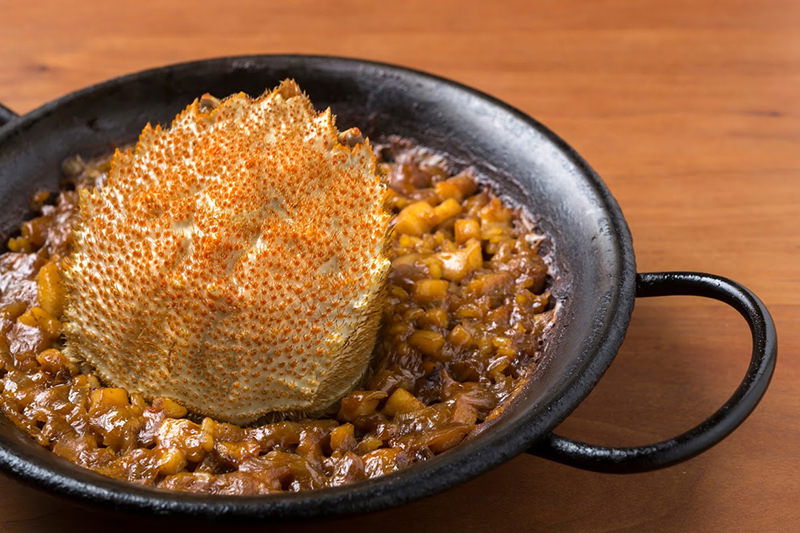
About Aca 1°
Aca 1° is a reservation-only, 12-seat Spanish counter in Nihonbashi, Tokyo — not Kyoto — with five consecutive Tabelog Gold awards (2022–2026), a 4.67 score, La Liste recognition at 92 points. Budget JPY 60,000–79,999 per person. Book it for a special occasion if a set-menu Spanish tasting format suits your group; plan several weeks ahead given the small counter and consistent demand.
Verdict: A Tabelog Gold-winning Spanish counter in Tokyo, not Kyoto — book it if the format fits your occasion
The most important thing to clarify upfront: Aca 1° is not in Kyoto. The restaurant operates out of the Nihonbashi district of central Tokyo, a three-minute walk from Mitsukoshimae Station (Ginza and Hanzomon Lines, Exit A8). If you are planning a Kyoto trip and searching for Spanish cuisine with comparable awards pedigree, that is a different decision — see our full Kyoto restaurants guide for options. What follows is the portrait for Aca 1° as it stands: a 12-seat Spanish counter in Tokyo with five consecutive Tabelog Gold awards (2022–2026), a 4.67 Tabelog score, a La Liste ranking of 92 points in both 2025 and 2026, a place on the Opinionated About Dining Japan list at #26 in 2025. The Pearl recommendation is direct: if you want a high-precision Spanish tasting menu in Tokyo and can plan several weeks ahead, this is worth booking.
What Aca 1° Is
Aca 1° is a reservation-only Spanish restaurant that opened on 1 August 2020 in the Mitsui No. 2 Building in Nihonbashi. It seats 12 across the counter, with a private room available for parties of four. The cuisine is described on Tabelog as refined Spanish cooking shaped by Japanese aesthetic sensibility, a format that has earned it Gold recognition on Tabelog every year since 2022, progressing from a Silver in 2021. It was also selected for the Tabelog Spanish Cuisine "Tabelog 100" in 2024, which places it among the leading Spanish restaurants in Japan by peer and reviewer consensus.
Budget for JPY 60,000–79,999 per person at both lunch and dinner, plus a 10% service charge and consumption tax. At that price point, this sits in the same bracket as Tokyo's leading omakase counters. For a special occasion where the bill is part of the signal, the awards track record justifies the spend. For a more casual Spanish meal in Tokyo, this is not the right room.
Seasonal Considerations: When to Go
Spanish tasting menus at this level typically change with Japanese seasons, a format where the kitchen follows local ingredient availability rather than a fixed menu. Spring (late March through May) tends to bring lighter, more delicate ingredient profiles, while autumn (October and November) is often when Japanese produce is at its peak for this style of cooking, with mushrooms, root vegetables, game adding depth to the progression. Summer and winter sittings reflect the same logic. If you have flexibility in your travel dates, autumn is generally the season when ingredient quality aligns most directly with the kind of tasting menu format Aca 1° runs. Confirm current menu direction with the restaurant directly at +81-3-6262-5090, as specific seasonal dishes are not available in the public record.
Booking and Practical Details
Aca 1° is reservation-only with no walk-in option. The counter seats just 12, with Gold-level Tabelog recognition for five consecutive years, availability is tight. Reservations: By phone (+81-3-6262-5090) or via the restaurant's website (aca-kyoto.jp), book as far in advance as your schedule allows, particularly for Saturday lunch or dinner, which are the only weekend sessions available. Hours: Monday to Friday, sittings from 17:00 and 20:30; Saturday, sittings from 12:00 and 17:00; closed Sundays. Budget: JPY 60,000–79,999 per person before service charge (add 10% for tax and service). Payment: Credit cards accepted (Visa, Mastercard, JCB, Amex, Diners); no electronic money or QR code payments. Access: Mitsukoshimae Station, Ginza Line and Hanzomon Line, Exit A8, approximately three minutes on foot. No parking available.
How It Compares
For Japanese kaiseki at a comparable price point in or around Kyoto, Gion Sasaki and Ifuki both operate at the ¥¥¥¥ tier and offer the seasonal kaiseki format that Aca 1°'s Spanish approach echoes structurally. Kyokaiseki Kichisen is the higher-ceremony option if tradition matters more than a cross-cultural format. For a less formal Japanese meal in Kyoto at a lower price point, cenci offers Italian-Japanese at ¥¥¥ and is easier to book. If you want to understand how Aca 1°'s Spanish-Japanese approach compares to other non-Japanese cuisines working within a Japanese seasonal framework elsewhere in Japan, akordu in Nara is the closest structural parallel at a lower price point.
Within Tokyo's Spanish fine dining set, Aca 1°'s five-year Gold streak and 4.67 Tabelog score put it ahead of most competitors in terms of sustained peer recognition. For Japanese kaiseki at similar spend in Tokyo, Aoyagi is a relevant comparison. For those interested in high-end Japanese tasting menus across the country, HAJIME in Osaka and Goh in Fukuoka offer comparable spend at comparable recognition levels in different formats.
For more on dining and travel in the region, see our guides to Kyoto hotels, Kyoto bars, Kyoto wineries, and Kyoto experiences. For comparable high-precision Japanese tasting menus elsewhere in Japan, consider Harutaka in Tokyo, 1000 in Yokohama, 6 in Okinawa, or Enowa Yufuin in Yufu.
Frequently Asked Questions
What should I order at Aca 1°?
There is no à la carte option — Aca 1° runs a set tasting menu format, reservation-only, at ¥60,000–79,999 per person. You eat what the kitchen serves. Given the Spanish cuisine framing and Tabelog Gold score of 4.67, the format rewards guests who trust the counter and come without a specific dish agenda.
What should a first-timer know about Aca 1°?
First, the address: Aca 1° is in Nihonbashi, central Tokyo — not Kyoto, despite the aca-kyoto.jp website. The restaurant seats just 12 at the counter, is closed Sundays, operates two sittings Monday–Friday (17:00 and 20:30) plus two Saturday sessions. Reservations are required; there is no walk-in option. Budget ¥60,000–79,999 per head plus 10% service charge.
Is Aca 1° good for a special occasion?
Yes, with one condition: the private room fits only four people, the full restaurant cannot be booked for private use. For a couple or a group of four, the private room option makes it a strong fit for a significant occasion. For larger groups, the 12-seat counter format means you will be sharing the room with other diners. The five consecutive Tabelog Gold awards and La Liste score of 92 give it the weight the occasion likely requires.
Does Aca 1° handle dietary restrictions?
The venue data does not specify a dietary restriction policy. Given the tasting menu format and 12-seat counter, this is a kitchen where advance notice of restrictions is worth communicating at the time of reservation rather than assuming flexibility on the night.
What are alternatives to Aca 1° in Kyoto?
Aca 1° is in Tokyo, not Kyoto. For comparable-tier dining in Kyoto, Kyokaiseki Kichisen operates at the highest end of kaiseki; Gion Sasaki and Ifuki both deliver seasonal Japanese tasting menus at the ¥¥¥¥ level; and cenci offers a more contemporary, European-inflected approach. Kyo Seika is worth considering if you want a lighter-spend kaiseki experience. None of these are Spanish tasting counters — for that format, Aca 1° has no direct Kyoto equivalent.
Location
麻布台ヒルズ ガーデンプラザA, 2F, 5 Chome-8-1 Toranomon, Minato City, Tokyo 105-0001, Japan
Kyoto, Japan
Compare Aca 1°
| Venue | Price |
|---|---|
| Aca 1° | |
| Gion Sasaki | ¥¥¥¥ |
| cenci | ¥¥¥ |
| Ifuki | ¥¥¥¥ |
| Kyokaiseki Kichisen | ¥¥¥¥ |
| Kyo Seika | ¥¥¥ |
A quick look at how Aca 1° measures up.
Also Consider
- Gion Sasaki, Kaiseki, Japanese, ¥¥¥¥
- cenci, Italian, ¥¥¥
- Ifuki, Kaiseki, ¥¥¥¥
- Kyokaiseki Kichisen, Japanese, ¥¥¥¥
- Kyo Seika, Chinese, ¥¥¥
Comparing Aca 1° directly to Kyoto restaurants requires a clarification: Aca 1° operates in Nihonbashi, Tokyo, so a like-for-like comparison within Kyoto is not possible. That said, if you are deciding between Aca 1° on a Tokyo trip and Kyoto options on a separate visit, the Spanish tasting menu format at JPY 60,000–79,999 per person sits in the same spend tier as Gion Sasaki and Ifuki, both of which deliver traditional Japanese kaiseki in Kyoto at ¥¥¥¥. If the seasonal progression of Japanese ingredients expressed through a Japanese framework matters to you, Gion Sasaki or Ifuki will feel more aligned with that intent. Aca 1° is the better choice if you want that same seasonal ingredient logic expressed through a Spanish lens.
Kyokaiseki Kichisen sits at the top of the Kyoto kaiseki hierarchy for ceremony and tradition, is the right call if formality and historical depth are your priority over culinary experimentation. For a Kyoto meal at a lower price point, cenci (Italian-Japanese, ¥¥¥) is easier to book and noticeably less expensive, a reasonable trade-off if the occasion does not require the full ¥¥¥¥ commitment. Kyo Seika (Chinese, ¥¥¥) fills a different niche and is not a direct alternative to Aca 1°'s format.
In terms of booking difficulty, Aca 1° is rated Easy by Pearl at present, which is notable given its awards profile. Gion Sasaki and Kyokaiseki Kichisen can be harder to secure, particularly for international visitors. If you are building a high-end dining itinerary across Japan, Aca 1° in Tokyo pairs logically with a kaiseki meal in Kyoto rather than replacing one, the formats are complementary, not duplicative.
Recognized By


Explore Kyoto
Save or rate Aca 1° on Pearl
Keep this venue in your Pearl passport, rate it after you visit, and track it alongside every other place you collect.