Book Hwaro. The Hwaro tasting menu NYC diners are only just discovering opened in October 2025 inside Sungchul Shim's Theater District steakhouse, Gui, and at 22 seats it fills fast. At $295 per person, it is the most focused and personal expression of Korean fine dining currently running in New York, a counter experience where Shim and his team cook in the center of an oval marble counter while you sit close enough to watch every move. If you care about Korean technique, counter-format tasting menus, or simply want to eat somewhere that feels considered rather than assembled, this is where to go.
What the Hwaro Tasting Menu Actually Delivers for $295
The $295 multi-course menu is bookable on Tock and rooted, course by course, in Korean techniques and traditions. Hwaro takes its name from a Korean charcoal braiser, and that heritage runs through the cooking rather than sitting as decoration.
The meal opens with abalone served with shrimp bread alongside a white soy custard topped with caviar. The custard is creamy, the caviar briny, and the combination lands cleanly. From there, the duck course arrives in three forms: dry-aged duck breast, duck terrine, and a duck jus sweetened with bokbunja, a Korean fruit wine. All three components work together rather than competing, and the bokbunja gives the jus a depth that a conventional reduction would not.
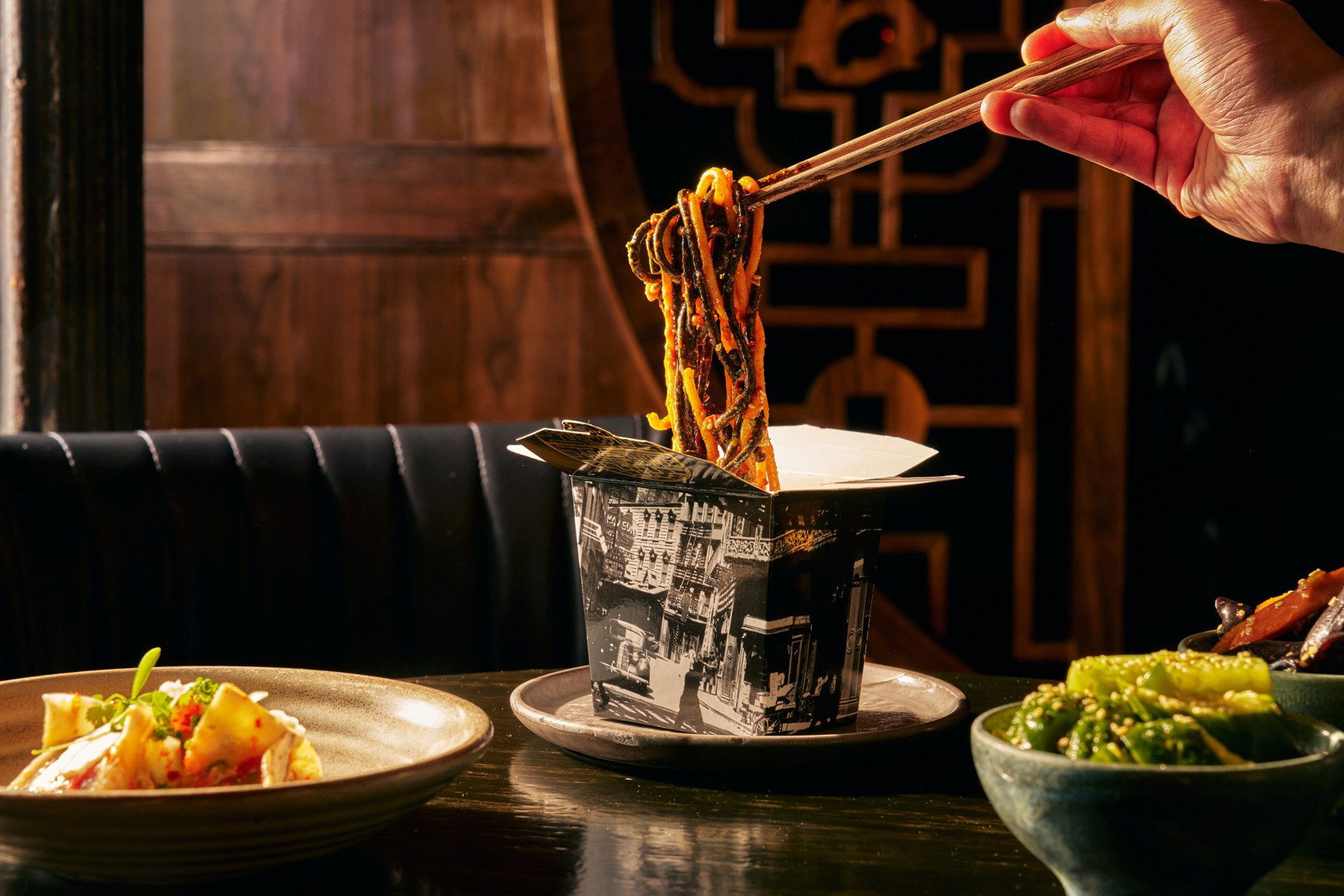
The mushroom tart is built for texture and intensity: multiple mushroom varieties layered for contrast, topped with shaved truffles atop a mushroom sauce, with porcini mornay adding a further layer of richness. The jook course is harder to categorize, described as black bean sauce meeting cacio e pepe risotto, topped with lamb and diced crunchy vegetables, served alongside an egg drop soup with a whole soft quail egg in a teacup. It is the kind of dish that sounds busy on paper and coheres on the plate.
Other dishes that have appeared on the menu include golden eye snapper with Chungju consomme, foie gras duck pastrami with fermented black rice, and cast-iron pot rice with pike mackerel. The menu rotates, so the specific lineup will shift, but the structural logic, Korean technique applied to high-quality ingredients with real precision, holds across seatings.
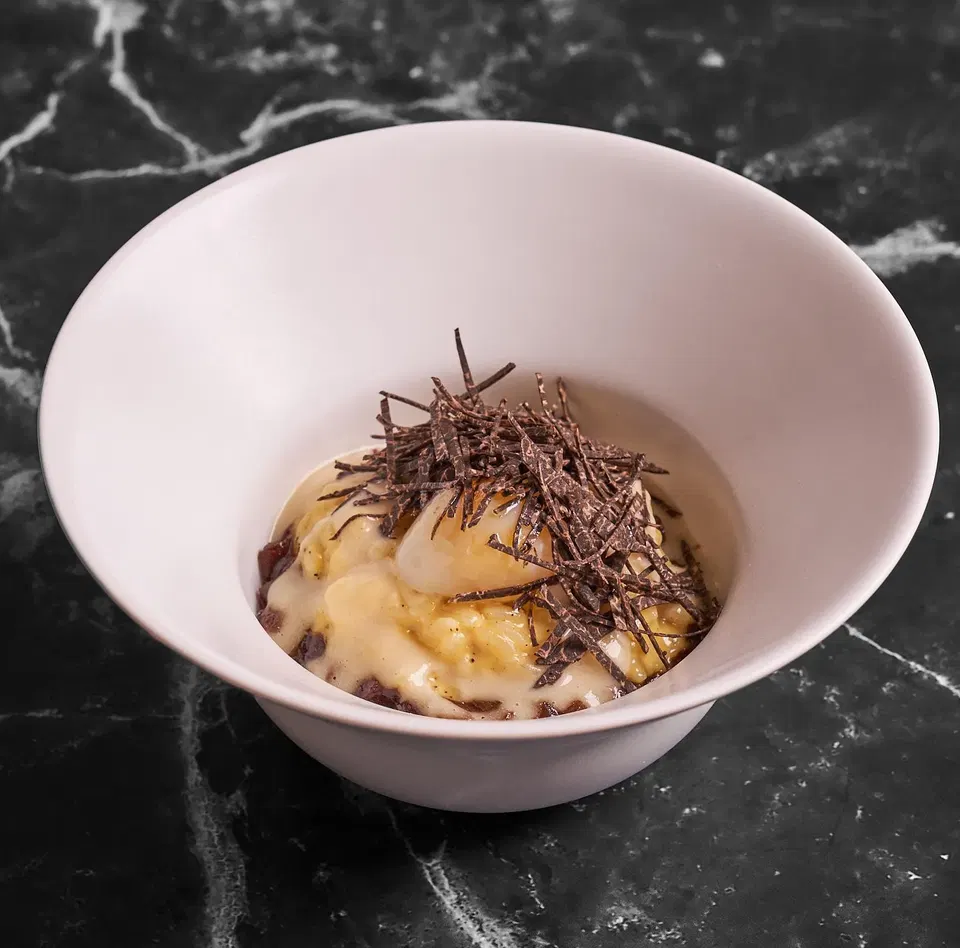
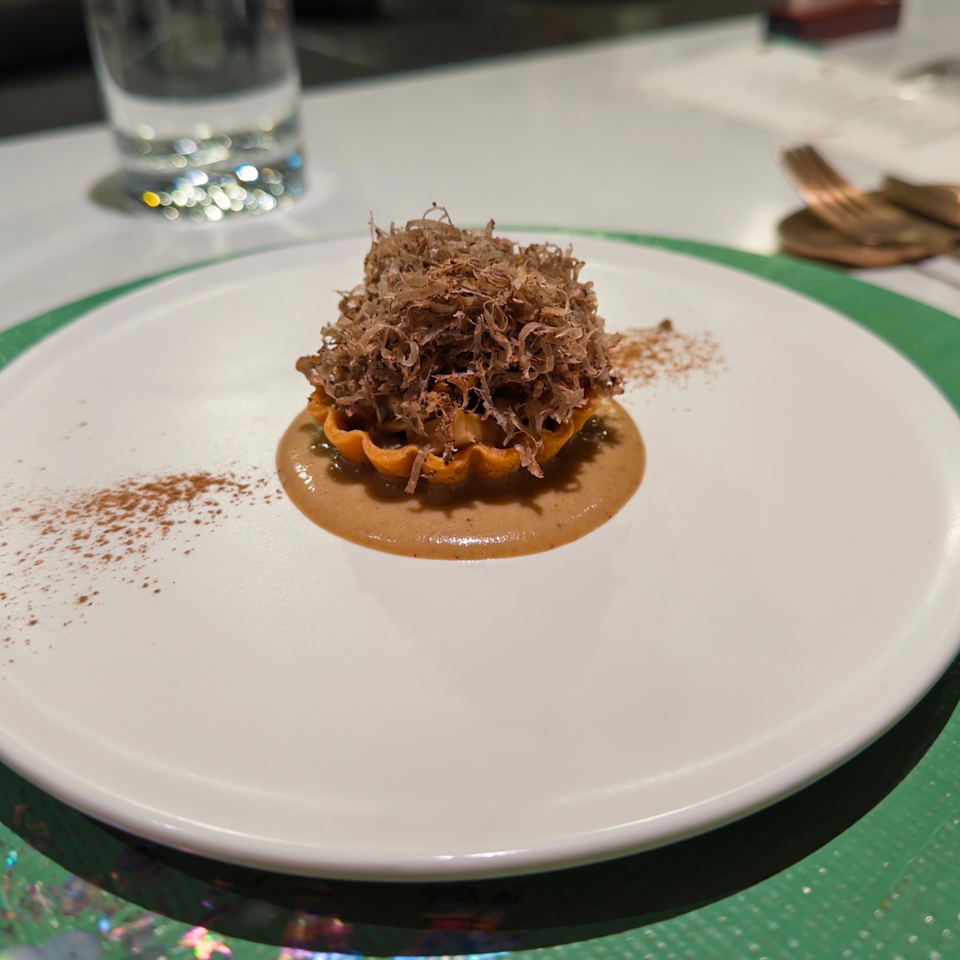
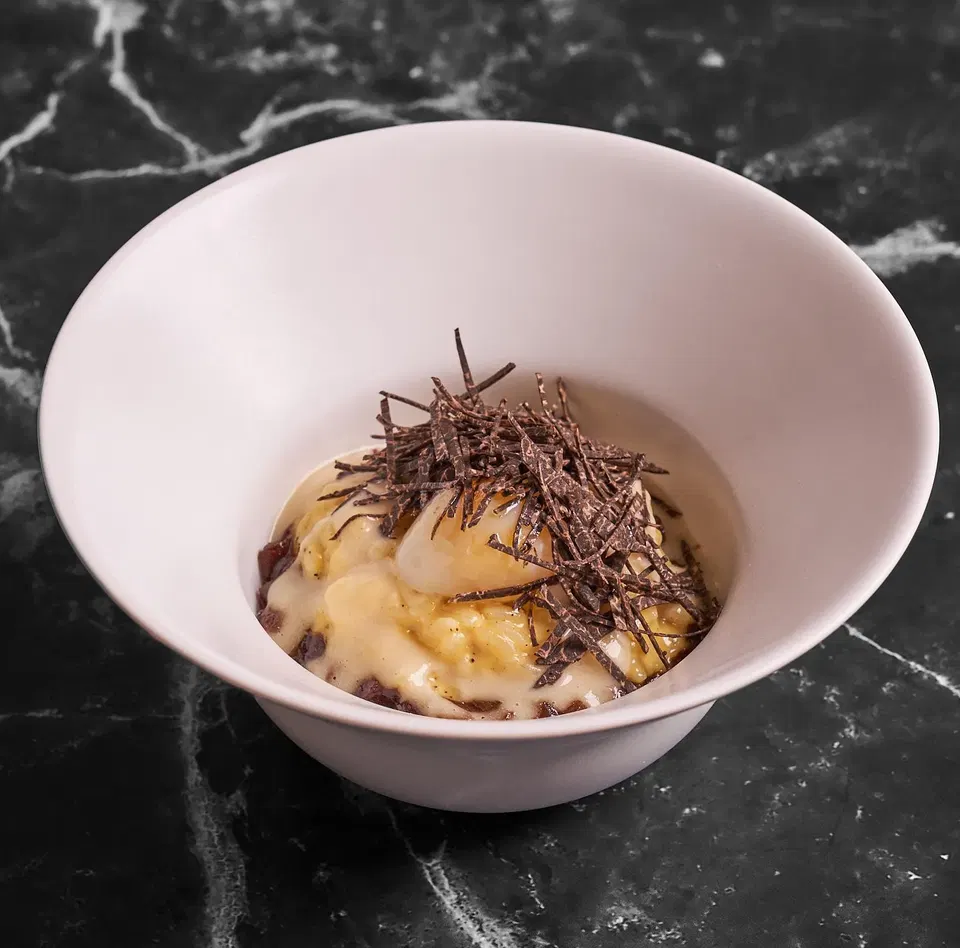
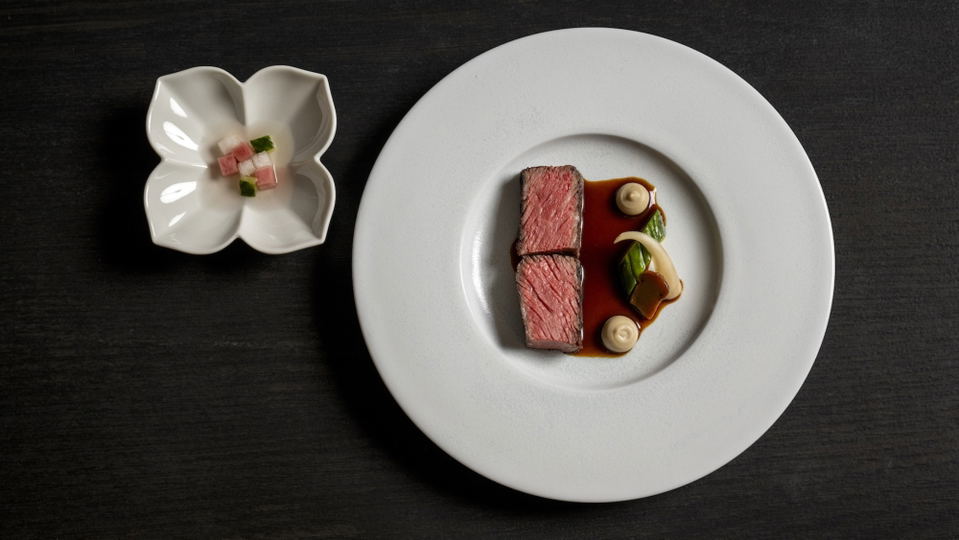
A selection of courses from Hwaro's rotating tasting menu.
Desserts move from light to heavier in a deliberate sequence. Persimmon with chevre sabayon and grated feta opens with a citrus-tangy note. An Earl Grey financier covered in chocolate with pear sorbet follows. The closing surprise is a black sesame popsicle, a carry-over from Shim's other restaurant Kochi, described as not too sweet, chewy, and nutty. It is a smart ending: familiar enough to land, specific enough to feel like a signature.
For $295, the value question is whether the cooking justifies the price against other Korean fine dining counters in New York. It does. The format, 22 seats, chef in the center, courses built around a named culinary tradition, gives the meal a coherence that larger tasting-menu rooms rarely achieve. You are not eating a chef's interpretation of Korean food from a distance. You are eating it an arm's length from the person who built the menu.
Inside Hwaro: A Hidden Counter Behind a Theater District Steakhouse
The physical experience of arriving at Hwaro is part of the point. You check in at a reception booth on the ground floor of the building, coats and bags can be left there, then take an elevator upstairs, where the Hwaro entrance is to the left. Nothing about the exterior signals that a 22-seat Korean fine dining counter is operating inside a steakhouse. Most people walking past Gui have no idea Hwaro exists.
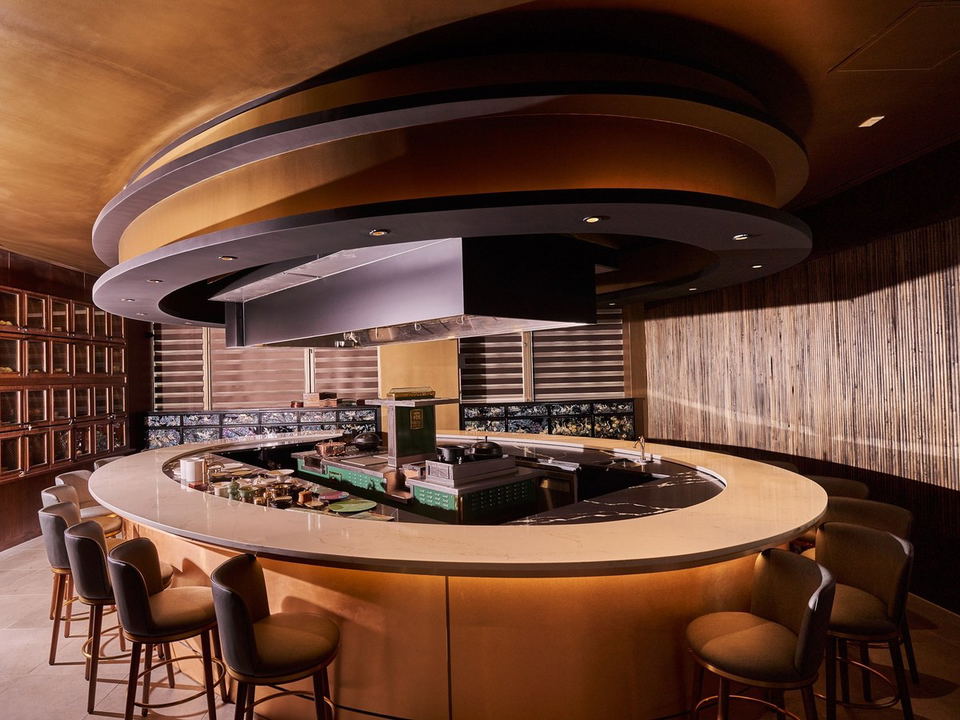
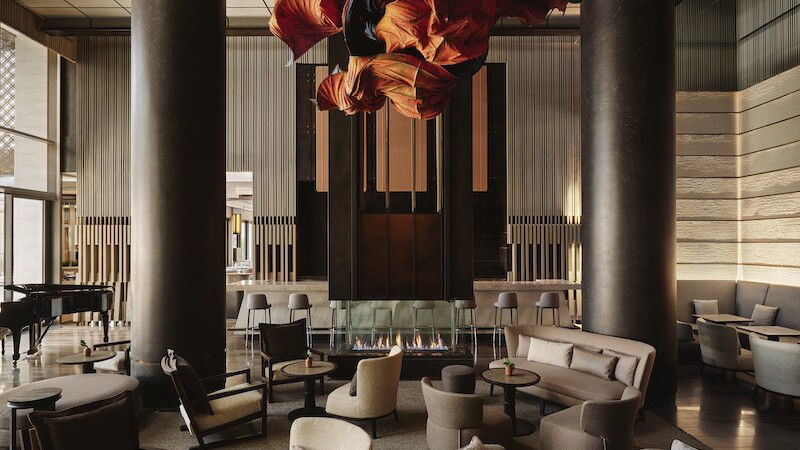
Once inside, the room is built around the oval marble counter. Brass lighting runs along the counter's edge. The chargers carry mother-of-pearl inlay designs, and the chopsticks match. Custom ceramics appear throughout the service. Before the meal begins, a display of the evening's ingredients on ice is presented at the counter, a preview of what is coming that also functions as a statement of sourcing intent.
The design is precise without being cold. The mother-of-pearl inlays and custom ceramics connect to the Korean craft traditions the menu draws from rather than functioning as decorative afterthoughts. The brass-lit counter creates a warm focal point that keeps attention on the cooking happening in the center rather than on the room itself. At 22 seats, the space never feels crowded, and the counter format means every guest has a direct sightline to the kitchen action.
For Theater District visitors, the location is practical: the neighborhood is dense with pre-theater dining options, but almost none of them operate at this format or price point. Hwaro is not a pre-theater restaurant in the conventional sense, a multi-course tasting menu at a counter requires time and attention, but for anyone building an evening around the meal rather than around a show, the Theater District location is convenient rather than limiting.
Chef Sungchul Shim's Most Personal Project: Custom Ceramics, Charcoal, and Korean Tradition
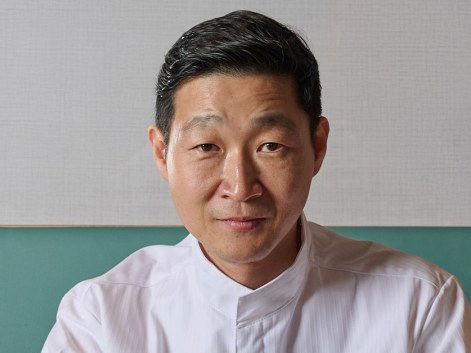
Sungchul Shim runs several restaurants in New York, including Gui, Kochi, and Hwaro. Gui is the steakhouse that houses Hwaro. Kochi is where the black sesame popsicle that closes Hwaro's dessert sequence originated. The three restaurants form a connected body of work, with Hwaro sitting at the most personal and technically demanding end of the range.
The charcoal braiser that gives Hwaro its name is not a branding choice. Charcoal cookery is central to the menu's construction, and the custom grill built into the counter is the piece of equipment the kitchen works around. Korean charcoal cooking traditions emphasize heat control and the specific flavor compounds that come from cooking over live coals. At Hwaro, that tradition is applied to ingredients like dry-aged duck, abalone, and pike mackerel, proteins that reward the precision charcoal cooking demands.
The ceramics are custom-made for the restaurant. In Korean dining culture, the vessel is not incidental to the dish, the material, weight, and form of a bowl or plate affect how food is perceived. Shim's decision to commission custom ceramics rather than source standard tableware signals that the same attention applied to the cooking extends to every point of contact between the food and the guest. The mother-of-pearl inlays on the chargers and chopsticks reinforce that logic: these are objects made for this room and this menu.
Within NYC's Korean fine dining scene, Hwaro occupies a specific position. It is not a Korean barbecue concept, not a modern Korean-American fusion tasting menu, and not a temple-food minimalism exercise. It is a chef cooking Korean technique at a counter, with high-end ingredients, caviar, truffles, foie gras, dry-aged duck, applied through a Korean culinary framework. That combination is less common in New York than the city's Korean restaurant density might suggest, and at 22 seats it is limited by design.
How to Book Hwaro and What to Know Before You Go
Reservations for the Hwaro tasting menu NYC are available through Tock. With 22 seats per seating, availability moves quickly, and the counter format means there is no walk-in option. Book as far in advance as Tock allows, particularly for weekend seatings.
The price is $295 per person for the multi-course tasting menu. Budget for beverages and service on top of that. The counter format means you will be seated for the full duration of the meal, this is not a restaurant where courses arrive quickly and the table turns. Plan for a full evening rather than a fixed window.
The arrival process is worth knowing in advance: check in at the ground-floor reception booth inside the Gui building, leave coats and bags there, and take the elevator upstairs. The Hwaro entrance is to the left of the elevator. The entrance is not marked in a way that makes it obvious from the street, so knowing the check-in process before you arrive removes any uncertainty on the night.
The counter seats 22 guests around an oval, with Shim and his team cooking in the center. Every seat has a direct view of the kitchen. If you are bringing a group, the counter format accommodates parties that can be seated together along one arc of the oval, but the 22-seat total means larger groups will need to coordinate carefully with the reservation system.
For comparison: if you are weighing Hwaro against other Korean fine dining options in New York, the counter format and the charcoal-centered menu construction give it a different character than restaurant dining rooms where the kitchen is separated from the guest. The proximity to the cooking is not incidental, it is the format. If that kind of direct access to the chef's process matters to you, Hwaro delivers it more completely than most tasting-menu rooms in the city at this price point.
Hwaro opened in October 2025 and is still in its early months. Shim's track record across Gui and Kochi suggests the menu will continue to develop as the kitchen finds its rhythm, which means the case for booking sooner rather than later is clear: 22 seats, a chef cooking at the center of the room, and a $295 menu that currently has no direct equivalent in New York's Korean fine dining scene.
Frequently Asked Questions
How much does the Hwaro tasting menu NYC cost?
The Hwaro tasting menu is priced at $295 per person. It is bookable through Tock and seats only 22 guests per service.
Where is the Hwaro tasting menu located in NYC?
Hwaro operates as a hidden counter inside Gui, Sungchul Shim's steakhouse in the Theater District. You check in at a ground-floor reception booth and take an elevator up to the Hwaro entrance, which is to the left.
When did the Hwaro tasting menu NYC open?
Hwaro opened in October 2025. At 22 seats, reservations fill quickly, so booking in advance through Tock is strongly recommended.
How many courses are included in the Hwaro tasting menu?
Hwaro serves a multi-course tasting menu that progresses from savory dishes through a deliberate dessert sequence. The specific lineup rotates between seatings, though the structural focus on Korean technique applied to high-quality ingredients remains consistent.
What makes the Hwaro tasting menu different from other Korean fine dining in New York?
Hwaro is a 22-seat counter format where chef Sungchul Shim and his team cook at the center of an oval marble counter, placing diners an arm's length from the kitchen. The menu is rooted in named Korean culinary traditions, including techniques tied to the charcoal braiser the restaurant is named after, rather than a generalized interpretation of Korean cuisine.