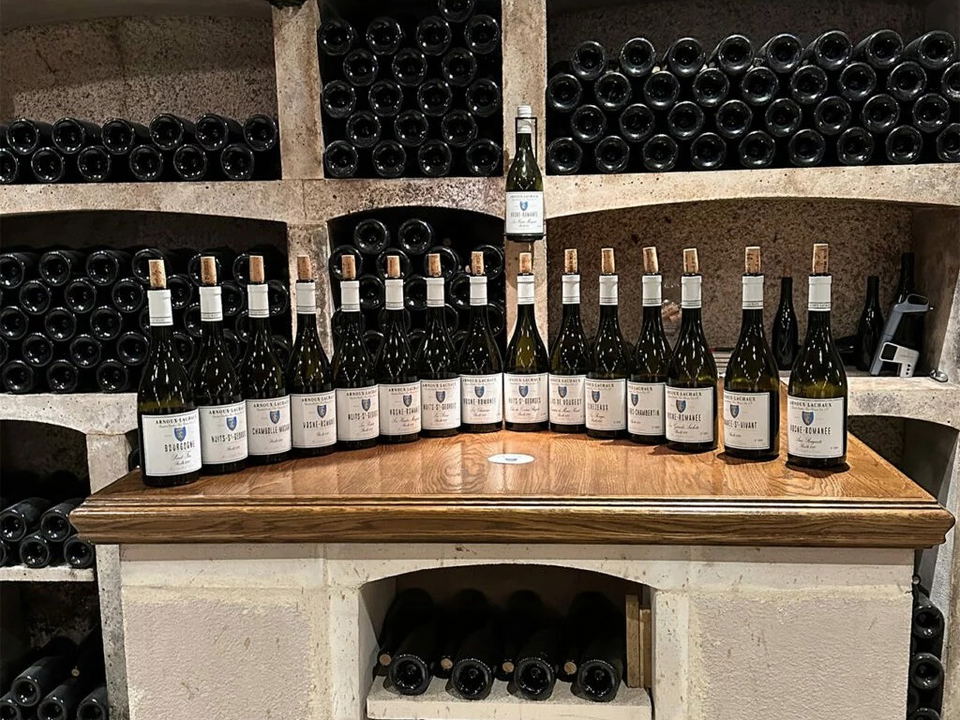
Domaine Arnoux-Lachaux does not want a MICHELIN grape next to its name. The Vosne-Romanée domaine has asked MICHELIN to remove it from the inaugural Grape Selection for Burgundy, which matters if you plan to use the new list as a buying shortcut. For collectors, the immediate read is simple: treat the guide as one reference point, not as authority.
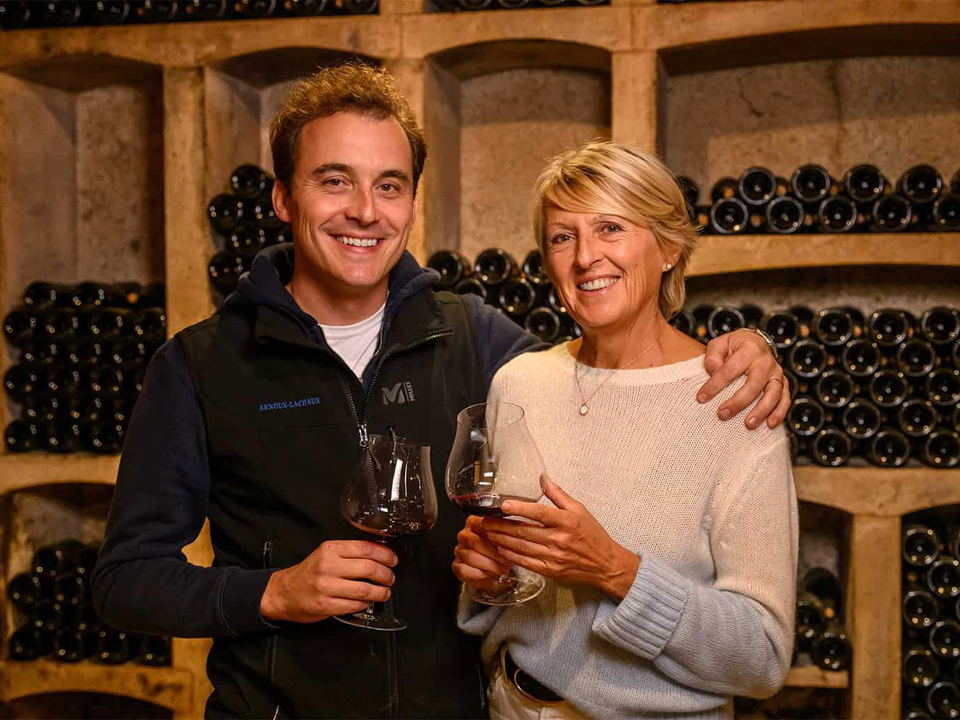
The sought-after Vosne-Romanée estate, led by sixth-generation winemaker Charles Lachaux, says it has not received MICHELIN or presented its wines to the press since the 2020 vintage, and has asked to be removed from the guide in keeping with that policy.
The request came in an official Instagram statement signed by Florence Arnoux-Lachaux and Charles Lachaux. Their objection is direct: MICHELIN rated the domaine even though it has long refused to submit wines for press reviews or ratings.
Why Domaine Arnoux-Lachaux Rejected the MICHELIN Grape Selection
The estate’s objection is procedural. "We do not know how the Domaine's rating, reportedly based on five criteria, could have been established, as we have not received Michelin or presented our wines to the press since the 2020 vintage," said Florence Arnoux-Lachaux and Charles Lachaux1 in the statement. The domaine has, as a matter of policy, opted out of all critic ratings and press tastings since 2020, a position it says MICHELIN Grape Selection ignored when awarding it a single grape, the lowest of three tiers. The statement closed by thanking clients, partners, and wine lovers for their continued interest and messages of support.

The request bites because Arnoux-Lachaux is one of modern Burgundy’s most in-demand and highly priced names, yet MICHELIN put it in the one-grape tier, the entry level of its three-grape scale. That gap tells collectors not to read the list as a market map. MICHELIN’s five criteria, agronomy, technical mastery, identity, balance, and consistency across vintages, do not necessarily match the scarcity logic that drives Burgundy’s most coveted bottles.
The estate’s 2020 move away from press engagement means any rating must rely on bottles sourced through retail channels, trade tastings, or secondary markets, not the collaborative, estate-hosted visits that define most wine criticism. The domaine asked MICHELIN to remove it from the selection in keeping with its long-standing position. As of mid-July 2026, MICHELIN had not publicly said whether it would honor the request, and no other recognized estate had joined the domaine in publicly objecting.
What the MICHELIN Grape Selection Actually Measures
The MICHELIN Grape Selection was unveiled on July 7, 2026 at the Palace of the Dukes of Burgundy in Dijon. It is the guide’s first rating for wine estates and its first extension of the distinction model beyond restaurants, with stars since 1926, and hotels, with Keys since 2024. Burgundy is the inaugural region, with Bordeaux announced to follow.

In total 94 estates were recognized: nine at three grapes, 20 at two grapes, 33 at one grape, and 32 in a Selected category carrying no grape. The nine three-grape estates are Domaine de la Romanée-Conti, Domaine Leroy, Domaine d'Auvenay, Cécile Tremblay, Dugat-Py, Roumier, Coche-Dury, Jean-Marc and Thomas Bouley, and Hubert Lamy.
MICHELIN says its salaried experts, former sommeliers, wine critics, and winemakers, assess each estate as a whole across vintages, against five criteria: quality of agronomy and soil vitality, technical mastery, identity, balance, and consistency across vintages. Unlike anonymous restaurant inspections, the tastings are collaborative and non-anonymous.
The guide stresses that it rates the estate as a whole, across cuvées and vintages, rather than scoring individual bottles. Gwendal Poullennec, MICHELIN’s International Director, has said the assessors deliberately set aside the classified-vineyard system: the guide does not stop at the question of Grands Crus, Premiers Crus, or other classifications.
That choice is the problem for Burgundy buyers. To purists, sidestepping the centuries-old climat hierarchy, the same framework recognized by UNESCO, weakens the guide’s usefulness. Burgundy’s classification is terroir-based: a Grand Cru parcel gets allocation priority because of soil, slope, and centuries of documented quality. A five-criterion model that plays down place will not satisfy collectors who buy Burgundy by parcel first and producer second.
The Vosne-Romanée Estate's 2020 Pivot and Press Silence
Since 2020, Arnoux-Lachaux has declined all press samples and critic visits, a policy it reaffirmed in the statement. It is not alone in that instinct: Domaine de la Romanée-Conti submits wines to few critics and rarely grants press access, yet remains the most sought-after name in the region. Arnoux-Lachaux’s position is less absolute but philosophically aligned, that a domaine’s reputation should rest on the wines themselves rather than on critic scores.

The opt-out raises the practical question MICHELIN has not answered: how many other estates declined to take part but were included anyway? That is a harder sell than restaurant ratings, where the process is standardized and the venue has no veto. For most estates the tastings are, MICHELIN says, conducted with the producer’s knowledge; an estate like Arnoux-Lachaux is the exception. Any assessment of it must lean on bottles from distributors, shops, or trade events, which brings in variables a restaurant inspection never faces: provenance, storage history, and whether a given bottle still reflects the estate’s current style.
Critics questioned whether an inspector can assess something so complex and seasonal on a single visit. Writing in the San Francisco Chronicle, wine critic Esther Mobley flagged the difficulty of judging Burgundy’s many négociant houses.
Wine writer and educator Julia Coney warned that under such a system many small producers may not get the love they justly deserve.
On wine forums such as WineBerserkers, collectors argued that reducing domaines to a one-to-three scale works badly for Burgundian terroir, and singled out specific placements as indefensible, notably Dugat-Py receiving three grapes while Armand Rousseau, one of the Côte de Nuits’ most revered names, received only one.
Writing in The Somm Pour, Anna Belani-Ellis, DipWSET, attacked consistency across vintages as the wrong yardstick for the region, arguing that Burgundy has never been great despite vintage variation, it is great because of it. In an analysis for The Grape Reset, Jamie Anderson argued the selection undercut its own soil-vitality criterion, calculating that only about 21 of the 94 estates, roughly 22 percent, are certified organic or biodynamic, with organic pioneers among the lower tiers. Commentators further noted a potential conflict of interest: MICHELIN owns Robert Parker Wine Advocate, a competing wine-rating publication.
MICHELIN’s answer is to point back to its method. Poullennec has argued that excellence is not defined solely by the prestige of a name but by precision in vineyard and cellar work, and that judging an estate as a whole and across vintages, weighing the history of the domaine and how its wines hold over time, protects against the single-bottle, single-vintage snapshot the critics warn about. That may be useful for a broad read on producers. It is less useful if you are deciding between parcels, cuvées, and vintages in a region built on those distinctions.
What This Means for Collectors Using the New Guide
The opt-out should make collectors cautious about completeness. If some of Burgundy’s most in-demand names may not cooperate, the list cannot work like a restaurant star system. Stars work in restaurants because chefs, diners, and critics broadly agree they reflect excellence. In wine, where producers control access and the bottle changes by vintage, cuvée, and cellar, that consensus does not yet exist.
So should you use the Grape Selection to buy Burgundy? Yes, but only as a starting list, not as a shopping command. Because it sets the climat hierarchy aside, it cannot replace Parker, Burghound, or Decanter reviews that reference terroir prestige directly. Because it rates estates rather than wines, it also does not tell you which cuvée to buy from a given producer, a real gap in a region where a domaine’s village wine and its grand cru can differ by an order of magnitude. What it does offer is a curated entry point: 94 of the region’s top producers, sorted into a rough three-tier hierarchy for readers who do not yet know their climats.
The larger question is whether Arnoux-Lachaux stays alone. No other recognized estate has objected publicly, and MICHELIN has not said whether it will grant the removal. But many of Burgundy’s most coveted names sell through mailing lists and multi-year waitlists that owe nothing to guide scores, and if a public refusal proves to carry no cost, others may follow, quietly or otherwise. For now, the Arnoux-Lachaux rejection is the clearest warning to buyers: Burgundy’s most sought-after domaines are not yet convinced they want MICHELIN rating them at all.