For luxury stays, Hyatt now offers the cleaner path. If your trips depend on confirmed suites, peak-season resorts, or award nights at genuinely expensive city hotels, Hyatt should be your first search. Marriott still commands the advantage on sheer footprint, but footprint is not the same as usable value. The Marriott Bonvoy devaluation problem is precise: you can spend heavily, earn faithfully, and still arrive at a room decision that feels provisional rather than settled.
That shortfall matters most to the high-spend traveler. Marriott Ambassador Elite requires 100 Qualifying Nights and $23,000 in annual eligible spending, so this is not a casual points arrangement. If you are placing that level of spend into a single program, the return has to be legible before check-in. Hyatt operates on a narrower scale, but for travelers who care about how luxury actually lands, it is far easier to plan around: fewer hotels, greater certainty when a stay is on the line.
Marriott's problem is not size; it is confidence
Marriott's scale remains the most compelling reason to keep Bonvoy active. Marriott International operates more than 37 hotel and timeshare brands, 9,000 locations, and 1,597,380 rooms worldwide, making it the natural choice when you need a hotel in a secondary market or want brand continuity across business and leisure travel. That matters if your calendar runs from airport overnights to conference hotels to last-minute transatlantic pit stops. But for readers who treat hotel loyalty as part of a considered travel strategy, size is not the governing factor. Certainty is.
The current Marriott frustration is that the program asks for deep loyalty while the reward side grows harder to rely on. Independent point valuations place Marriott Bonvoy's baseline at 0.8 cents per point, with a working range of 0.7 to 0.9 cents. That figure is not fatal in isolation. The issue is that sophisticated travelers judge a loyalty program by the specific stays where cash rates are most punishing: ski weeks, resort peaks, fashion-week cities, anniversary trips. When the redemption arithmetic feels weakest precisely where cash rates are highest, the program loses standing with the travelers it most needs to retain.
The phrase "stealth devaluation" earns its place here because the erosion requires no single dramatic announcement. Marriott's dynamic pricing era pushed average redemption value in 2024 to 0.70 to 0.79 cents per point, slipping below the 0.8 cents-per-point threshold many travelers apply when deciding whether to earn or redeem. That gap is enough to shift behavior. The Marriott Bonvoy devaluation prompts the clear-eyed traveler to ask whether accumulating more Bonvoy points is the right allocation, or whether transferable credit-card currencies and a deliberate lean toward Hyatt represent the more rational position.
Marriott's early 2026 promotion offering 2,500 bonus points per stay is not the kind of benefit that recaptures a luxury traveler who is already questioning the program's value. At the program's 0.7 to 0.9 cents-per-point average, those 2,500 points translate to roughly $17.50 to $22.50 per stay, a modest rebate, not a reason to anchor a five-figure annual hotel budget to one program. Marriott Ambassador Elite demands $23,000 in annual eligible spending, and a per-stay bonus does nothing to shift the underlying calculus for a traveler already operating at that level. What the luxury traveler actually needs is priority that can be planned in advance: the right room confirmed, a coherent upgrade path, dependable redemption value, and less guesswork at every stage. A points increment after each stay is useful for someone who was booking anyway. It is weak persuasion for someone weighing another year of Bonvoy concentration against a deliberate move to Hyatt. To put the arithmetic in concrete terms: a traveler who hits the $23,000 Ambassador Elite threshold and collects the 2,500-point bonus per stay is receiving a return worth less than a single night's incidentals at the luxury properties that tier was designed to unlock, a mismatch that is difficult to ignore once you have done the math carefully.
This is where Marriott's scale cuts both ways. A network of 9,000 properties makes Bonvoy straightforward to earn, but it also makes the program feel impersonal when the reward experience varies by property, date, occupancy, and a hotel's local interpretation of elite benefits. Luxury travelers will accept a smaller network if the benefits are easier to plan around. They will not accept paying loyalty prices for outcomes that feel like a lottery. If Marriott wants to hold these customers, it has to win the high-value stay, not the airport overnight.
How the Marriott Bonvoy devaluation is making Hyatt win the suite-certainty argument
Hyatt's advantage is not universal coverage. It does not need one. Hyatt's advantage is that its most valuable benefits are legible before you book, particularly for travelers for whom suite confirmation changes the nature of a trip. Hyatt suite upgrade awards can confirm a suite at the point of booking for stays of up to seven nights, exactly the kind of benefit a traveler can build an itinerary around. That single feature alters the decision entirely. It converts "perhaps the property will look after us" into a known room type, a known floor plan, a known experience.
Knowing the floor plan before arrival is more than a convenience. It determines whether a terrace works for breakfast, whether the living room layout seats a small group comfortably, and whether the suite functions as a base for two families traveling together or a couple who needs a working space separate from the bedroom. For trips where those details define the week, a confirmed suite award is a planning instrument, not a loyalty perk. Marriott's upgrade path, subject to availability at check-in, cannot offer that.
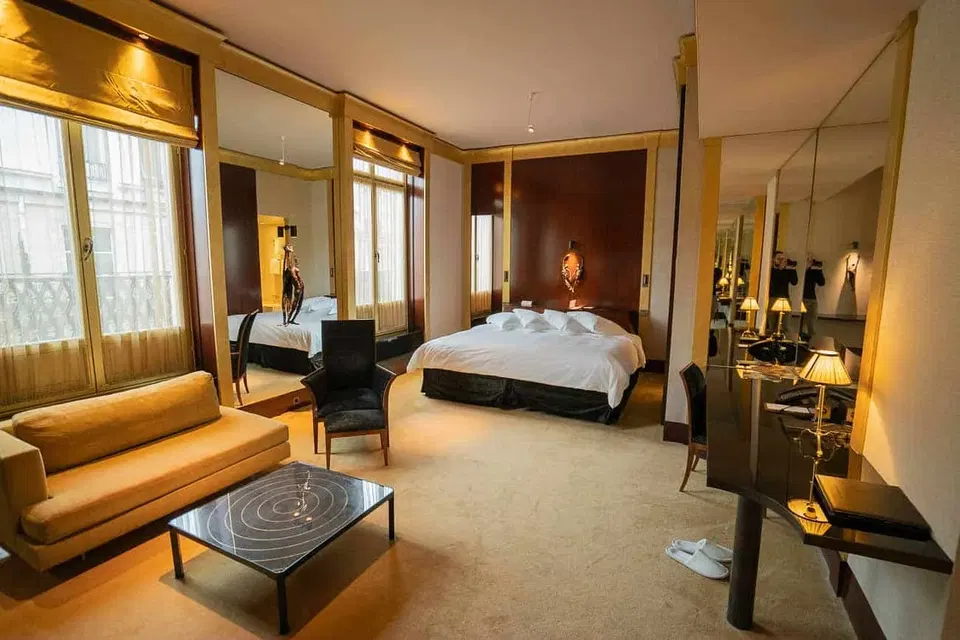
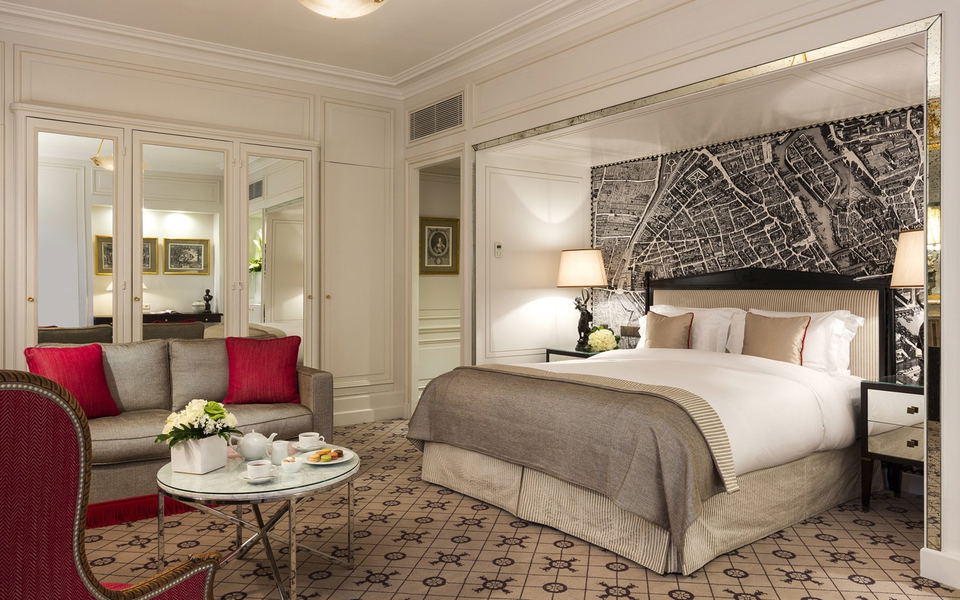
To ground the comparison in real decisions, the table below pairs the programs' strongest luxury properties across four flagship cities. The distinctions matter: confirmed butler service, documented suite dimensions, private beach or terrace access. These are the variables that determine whether a stay is planned or merely hoped for.
| Park Hyatt vs. St. Regis: Award Redemption and Luxury Benefits Comparison | ||
|---|---|---|
| Category | Park Hyatt (World of Hyatt) | St. Regis (Marriott Bonvoy) |
| Property | Park Hyatt Paris-Vendôme / Park Hyatt New York | St. Regis Paris / St. Regis New York |
| Loyalty Program | World of Hyatt | Marriott Bonvoy |
| Award Pricing Model | Category-based chart; cost fixed regardless of travel dates | Dynamic pricing; award cost rises with demand at peak dates |
| Points Valuation | ~1.5 to 2.0 cents per point at luxury properties | ~0.70 to 0.79 cents per point (2024 average); up to 0.9 cents with fifth-night-free |
| Suite Upgrade Policy | Suite upgrade awards confirmed at booking for stays up to 7 nights | Nightly Upgrade Awards (renamed 2024); availability checked post-booking, not guaranteed at reservation |
| Suite Award Confirmation Window | Confirmed at time of booking for up to 7 consecutive nights on eligible paid, points, or points+cash stays booked direct. Awards expire 14 months after year-end earned. | Confirmation no earlier than 5 days before arrival (most brands) or 3 days before arrival (St. Regis, Ritz-Carlton, EDITION). Awards expire December 31 of the following year. |
| Milestone Rewards / Guest of Honor | Milestone Rewards from 20 nights, every 10 nights after. Guest of Honor awards at 40 and 60, 70, 80, 90, 110, 120, 130, and 140 nights: a non-member guest gets Globalist benefits for up to 7 nights. Lifetime Globalists receive 5 Guest of Honor awards each March. | No equivalent Guest of Honor benefit. Ambassador Elite perks apply to the elite member only. |
| Airline Transfer Partners | ~25 partners. 5,000 Hyatt points = 2,000 miles (2.5:1 ratio); 5,000-point bonus at 50,000+ points transferred. | ~39 partners, broadest coverage of any hotel program. 3:1 ratio (3 Bonvoy points per 1 mile); 5,000-mile bonus per 60,000 points. Weaker ratio, stronger destination reach. |
| Peak Pricing Surcharge | Some properties carry peak surcharges; category chart limits exposure | Dynamic pricing; award costs can spike significantly at high-demand dates |
| Suite Interior Style | Residential: Frette linens, Le Labo amenities, hardwood/stone floors, floor-to-ceiling windows, curated contemporary art | Formal classic: grand entertaining layouts, white-glove butler service with garment pressing and packing, the Bloody Mary ritual (invented at the St. Regis New York King Cole Bar) |
| Butler Service | Available at select Park Hyatt properties | Codified at all St. Regis properties globally |
| Fifth-Night-Free Benefit | Not available | Available on 5+ night award stays; pushes effective value to ~0.96 cents per point |
| Portfolio Size | Smaller, curated; strongest in gateway luxury cities | Broader footprint; St. Regis present in more secondary and emerging markets |
| Program Growth | 60M+ members; ~30% annual growth since 2017 | Largest hotel loyalty program by property count globally |
| Best For | Confirmed suites, predictable award costs, certainty before arrival | Broad destination coverage, or 5-night award stays maximizing fifth-night-free value |
For luxury travelers redeeming points on suite stays, Park Hyatt properties consistently offer more predictable award pricing than comparable St. Regis hotels under Marriott Bonvoy's dynamic pricing model. Park Hyatt Paris-Vendôme award stays clear at a fixed category rate with no dynamic pricing surcharges; the St. Regis Paris, by contrast, is subject to dynamic pricing that can push award costs 30 to 50 percent above published category rates at peak dates. World of Hyatt's category-based chart gives you a firm cost before you book; Marriott Bonvoy's dynamic pricing means the same St. Regis suite can cost significantly more points at peak dates. The residential signatures at Park Hyatt properties, Frette linens, Le Labo bath amenities, curated contemporary art, hardwood and stone floors, sit in deliberate contrast to the St. Regis template of grand entertaining rooms, white-glove butler service with garment pressing and packing, and the formal dining layouts the brand has maintained since the St. Regis New York King Cole Bar gave the world the Bloody Mary. Both are defensible luxury formats; only one lets you confirm the room before you book flights. If suite confirmation and award clarity determine the quality of your trip, Hyatt is the stronger tool, Marriott makes more sense when destination coverage or five-night award stays are the governing constraint.
For couples, families, and anyone planning a resort week, the difference between a confirmed suite and a vague upgrade promise matters from the moment flights are booked. It shapes whether you bring children, whether you invite another couple, whether you use the room as a base for work, and whether the property justifies its cash rate. Hyatt's suite tool is a benefit and a planning instrument. Marriott can still deliver strong stays, but the loyalty member is typically asked to trust the hotel, the date, the occupancy reading, and the local interpretation of elite recognition. That is too many variables for a high-stakes trip with no flexibility.
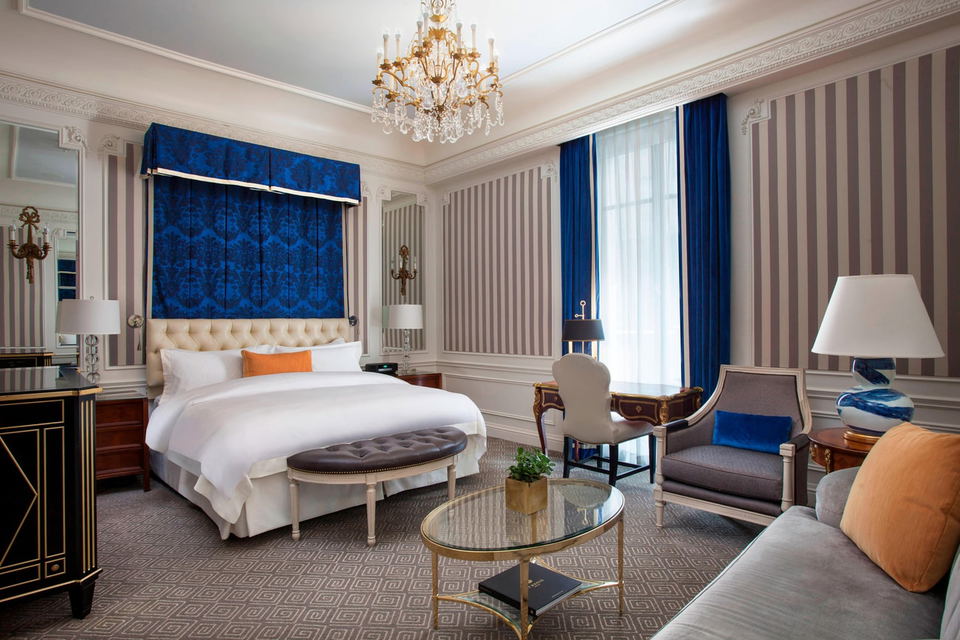
Hyatt also carries momentum Marriott cannot afford to ignore. World of Hyatt has more than 60 million loyalty members, and Hyatt reports that the program has grown nearly 30% annually since 2017, demonstrating that careful travelers are concentrating their stays there even as Marriott retains the advantage on raw scale. That does not mean every Marriott loyalist is departing. It does confirm that travelers reward programs that make value readable in advance.
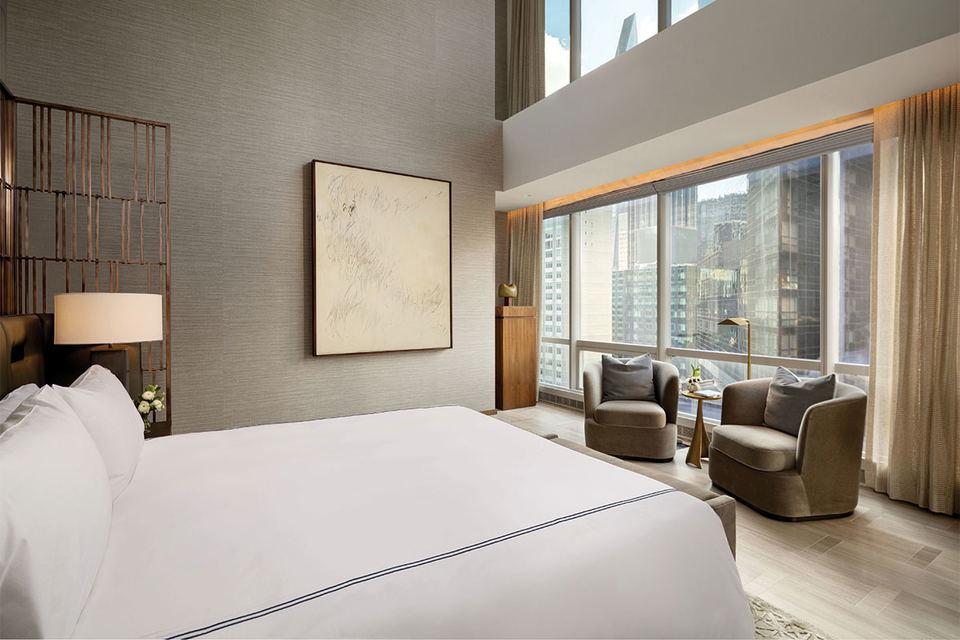
The confirmed suite advantage plays out most clearly in the four flagship corridors where Hyatt's category chart diverges most sharply from Bonvoy's dynamic model: Paris, New York, Tokyo, and Dubai. In Tokyo, Park Hyatt's position on floors 39 to 52 of the Shinjuku Park Tower means the confirmed suite award is a room category upgrade, and it determines whether you arrive to panoramic city views from a known floor plan or to a standard room with an upgrade promise attached. In Dubai, where Gulf peak season drives Bonvoy award costs well above category estimates, the ability to lock a suite at Park Hyatt Dubai's creek-side property at a fixed redemption rate is the difference between a planned family week and a booking that depends on the hotel's occupancy on the day you check in.
The practical caveat is availability. Hyatt has reclassified 136 hotels in a loyalty program overhaul, which means members should not assume the award chart will remain friendly at every property they rely on, and a growing membership competing for the same inventory will move certain hotels into higher tiers over time. The considered approach is to deploy Hyatt where it offers something Marriott cannot easily replicate: confirmed suite planning, high-value awards, and a tighter portfolio where elite recognition carries more weight. Do not migrate every stay indiscriminately. Move the stays where room category and redemption clarity determine the outcome of the trip.
The strongest case for staying with Marriott
The most compelling argument for Marriott is coverage. Marriott's 9,000 locations and 1,597,380 rooms give it a reach Hyatt cannot match, particularly for travelers whose year combines client dinners, industry conferences, family visits, and luxury leisure under the same loyalty umbrella. Marriott also offers a meaningful redemption lever for longer stays: the fifth-night-free benefit lifts effective point value from 0.8 cents per point to roughly 0.96 cents per point on five-night award stays. For travelers who regularly book five-night award stays at high-rate resorts, Bonvoy can still deliver solid returns. The program is not without merit, it has simply become less predictable than it once was.
There is also a fair argument that Marriott's breadth protects the traveler from over-concentration risk. When a Hyatt property is unavailable, overpriced on points, or poorly positioned for a particular itinerary, a Hyatt-first strategy can force compromises that undermine the very trip quality it was meant to protect.
Marriott's brand spread provides more fallback options, and fallback options carry genuine weight when your itinerary is driven by client meetings, weddings, flight disruptions, or the constraints of a school calendar. For certain travelers, particularly those operating outside the primary luxury corridors, Hyatt functions better as a strategic supplement than as a wholesale replacement.
That is a considered point, and dismissing it entirely would be a disservice to anyone whose travel reality does not fit neatly into a Hyatt-centric framework.
Why that Marriott defense still does not settle the luxury decision
Coverage helps you earn. It does not automatically help you redeem well. Marriott's fifth-night-free benefit is worth constructing an itinerary around when five or more award nights are feasible, but many luxury trips are shorter city stays, resort long weekends, or peak-period trips where dynamic pricing determines the outcome. Marriott's average point value of 0.7 to 0.79 cents per point leaves little margin for imprecise redemptions, especially when the alternative is paying cash and preserving points for a redemption that actually performs. That is precisely why the Marriott argument holds for breadth while losing ground when luxury precision is what the trip demands.
The high-spend traveler should decouple earning convenience from trip quality. Use Marriott when its footprint solves a genuine itinerary problem. Do not allow that footprint to determine your loyalty strategy for stays where room category, suite confirmation, and redemption value are the defining variables. Hyatt's confirmed suite upgrade awards for stays of up to seven nights give the traveler a planning advantage that Marriott's scale cannot simply absorb. That is the division worth making: Marriott for coverage, Hyatt for the stays where arriving to hear "we will see what we can do" is not an acceptable outcome.
The luxury playbook now: keep Marriott, shift the prized stays
The rational move is not to liquidate your Bonvoy account. It is to stop extending Marriott the benefit of the doubt on trips where the program has not earned that trust. Keep Marriott for markets where it holds the right property, where the cash rate is defensible, or where a five-night award booking allows the fifth-night-free benefit to push effective value toward 0.96 cents per point. But when deciding where to place future luxury spend, Hyatt deserves first consideration when suite confirmation or award clarity shapes the character of the trip.
In practice, that means changing the search sequence. Open Hyatt first for resort weeks, anniversary city stays, and trips where a suite changes what the experience actually is. Open Marriott first when destination coverage is the binding constraint. If both programs field a credible property, ask which one gives you greater certainty before arrival. For most luxury travelers, Hyatt's answer is the stronger one, given that a confirmed suite award can cover stays of up to seven nights.
One note of caution: Hyatt's growing appeal will erode its easiest wins. The reclassification of 136 Hyatt hotels is a reminder that no program remains generous indefinitely once enough travelers converge on it, and the same membership growth that validates Hyatt's appeal is what will push more properties into higher award tiers over time. Book earlier, confirm the suite when the tool permits, and do not accumulate points as though award pricing were fixed. This is especially true in the four corridors where the gap between programs is sharpest: Paris, New York, Tokyo, and Dubai. At Park Hyatt Paris-Vendôme, award stays clear at a fixed category rate with no dynamic pricing surcharges; at Park Hyatt Tokyo on floors 39 to 52 of the Shinjuku Park Tower, a confirmed suite award removes the single biggest variable from a trip built around panoramic city views; at Park Hyatt Dubai, the creek-side retreat's lagoon pool and private beach are worth far more when you know the suite is yours before you land. Hyatt performs best for travelers who move before the room they want becomes unreachable, and those four cities are where moving early pays off most.
Marriott should be concerned because the first travelers to defect are not casual points collectors. They are travelers who understand what a suite is worth, who can read redemption arithmetic quickly, and who speak directly to other high-spend travelers, the same group whose migration toward Hyatt's faster-growing loyalty base points to a broader reallocation of luxury hotel spend. Once those travelers decide a program feels unreliable, a modest promotional bonus will not repair the relationship. Marriott can still win individual nights, but it no longer owns the luxury decision by default.
The verdict
Book Hyatt over Marriott when the stay is expensive, suite-sensitive, or tied to a trip that matters, Paris, New York, Tokyo, and Dubai are the four corridors where this decision is sharpest and where the fixed-rate award advantage against Bonvoy's dynamic model is most legible. Keep Marriott for footprint-driven itineraries, five-night award stays where the fifth-night-free benefit pushes effective value to roughly 0.96 cents per point, and destinations where Hyatt does not have the right property. Do not pursue Marriott Ambassador Elite unless the 100 Qualifying Nights and $23,000 in annual spend align naturally with your travel pattern, without forcing bookings that compromise the trips themselves.
Make Hyatt the first search for luxury leisure, then treat Marriott as the coverage program rather than the principal loyalty plan. The Marriott Bonvoy devaluation has made that division the rational response rather than a contrarian position. Until Marriott makes the reward side feel dependable again, the move toward Hyatt is not hype, it is the logical conclusion for a program where the footprint is vast, the points land at 0.7 to 0.79 cents on average, and the suite you actually want is easier to confirm somewhere else.