
.png?width=1200&quality=80)
Noyashichi
Chinese · Shinjuku, Tokyo
Restaurant in Tokyo, Japan
 Book with Pearl
The Read
Japanese-Inflected Sichuan
Price
¥¥¥
Dress
Smart Casual
Why go
Noyashichi is a Michelin Plate-recognised restaurant in Shinjuku's Arakicho neighbourhood applying Japanese techniques and ingredients to Chinese cooking at the ¥¥¥ price tier. Expect clay-pot rice with Sichuan toppings, sashimi prepared with chilli-oil technique, and kombu in clear soup. It books easily relative to Tokyo's starred rooms, making it a practical choice for a special-occasion dinner without a months-long wait.
About Noyashichi
Noyashichi, Tokyo: Worth Booking?
At the ¥¥¥ price point, Noyashichi is one of the more considered ways to spend an evening in Shinjuku's quieter Arakicho neighbourhood. This is not a safe Chinese restaurant in the conventional sense: the kitchen applies Japanese technique to Chinese frameworks, producing a menu where kombu kelp turns up in clear soup, clay-pot rice carries Sichuan-style bean curd, and steamed-chicken spicy-sauce technique gets redirected onto fish sashimi with chilli oil. The result has earned a Michelin Plate in both 2024 and 2025, which signals consistent quality without the tasting-menu theatre of a starred room. If you want a serious dinner that does not demand a second mortgage, Noyashichi is worth serious consideration.
What Noyashichi Actually Is
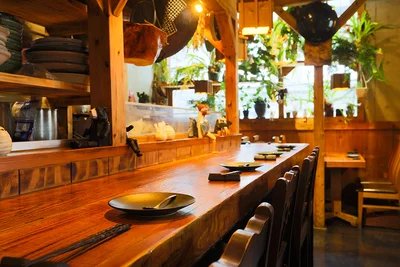
The concept here is a genuine culinary dialogue between Chinese cooking and Japanese ingredients, led by a kitchen that treats both traditions as equal partners rather than one decorating the other. Dishes arrive on Japanese serving plates, which grounds the experience spatially and signals the intent before the first bite. The steamed chicken spiced with chilli oil technique applied to fish sashimi is the clearest illustration: a Chinese method, a Japanese product, a result that belongs to neither tradition entirely. Rice cooked in clay pots topped with either Sichuan-style bean curd or stir-fried beef anchors the menu with something familiar before the more hybridised dishes arrive.
Arakicho itself is a useful framing detail. This is a narrow-streeted residential pocket of Shinjuku City, not the neon-lit commercial end of the ward most visitors default to. The address at 2-9 Arakicho puts you in a part of Tokyo where small, focused restaurants operate quietly for regulars and those who have done their research. That context matters for special-occasion planning: this is a dinner for people who want to be somewhere intentional, not somewhere obvious.
For Special Occasions
Noyashichi's positioning at ¥¥¥ rather than ¥¥¥¥ makes it a practical choice for celebrations where the meal itself should be the focus rather than the price tag the morning after. The Michelin recognition gives it enough credibility to work as a date-night or business-dinner choice where you need the table to convey effort. The cross-cultural concept also gives the evening a built-in talking point without being gimmicky: the food genuinely does something that most restaurants in either the Chinese or Japanese category do not attempt.
For a special occasion, the clay-pot rice dishes are the natural anchors for a longer, unhurried meal. The Sichuan-style bean curd preparation and the stir-fried beef option give a table something to share and compare, which is useful when the meal is as much about the conversation as the food. The Japanese serving plates contribute to the sense that care has gone into the experience beyond the kitchen itself.
Late-Night Considerations
Hours are not confirmed in the available data, so verify current service times directly before booking. What the neighbourhood context does suggest is that Arakicho operates on a quieter rhythm than central Shinjuku, meaning this is unlikely to be a late-night operation in the way a bar-adjacent izakaya might be. If your evening runs late and you need a restaurant that explicitly accommodates post-10pm sittings, confirm in advance. For late-night eating in Shinjuku more broadly, the options diversify considerably once you move toward the station. Noyashichi is better positioned as a primary dinner destination than a late-night continuation.
How It Compares
Within Tokyo's Chinese restaurant category, the comparison set matters. Chugoku Hanten Fureika and Chugoku Hanten Kohakukyu (Amber Palace) represent the grander, more formal end of Chinese dining in the city. Ippei Hanten and itsuka offer different points on the price-and-formality spectrum. Koshikiryori Koki takes a different conceptual angle entirely. Noyashichi's specific value is the Japan-China fusion at a ¥¥¥ price point with Michelin-level recognition: it occupies a distinct position that none of those venues replicate directly.
If you are cross-shopping globally, Restaurant Tim Raue in Berlin and Mister Jiu's in San Francisco represent the same instinct: Chinese cooking refracted through a different culinary culture's lens. Noyashichi's version is arguably the most coherent because both source traditions are Japanese by geography, meaning the ingredients and techniques are not imports but the actual local context.
For broader Tokyo planning, our full Tokyo restaurants guide covers the wider field. You can also explore our guides to Tokyo hotels, Tokyo bars, Tokyo wineries, and Tokyo experiences to build out a full trip.
If you are travelling through Japan more widely, comparable ambition in different cities shows up at HAJIME in Osaka, Gion Sasaki in Kyoto, akordu in Nara, Goh in Fukuoka, 1000 in Yokohama, and 6 in Okinawa.
The Verdict
Book Noyashichi if you want a Michelin-recognised dinner in Shinjuku that does something genuinely specific at a price that does not require advance financial planning. The Japan-China concept is coherent rather than gimmicky, the setting in Arakicho adds a degree of intention to the evening, and the ¥¥¥ price range positions it well for a special occasion where the quality should be evident but the bill should not dominate the memory. Booking appears direct relative to the Michelin-starred rooms in the same city, which makes it a practical first-choice for dates, business meals, or celebration dinners where you need reliability without a months-long reservation queue.
Quick reference:
Planning details
- Location
- 2-9 Arakicho, Shinjuku City, Tokyo 160-0007, Japan
- Website
- noyashichi.com
- Phone
- +81 3-3226-7055
The take
The Take
The Vibe
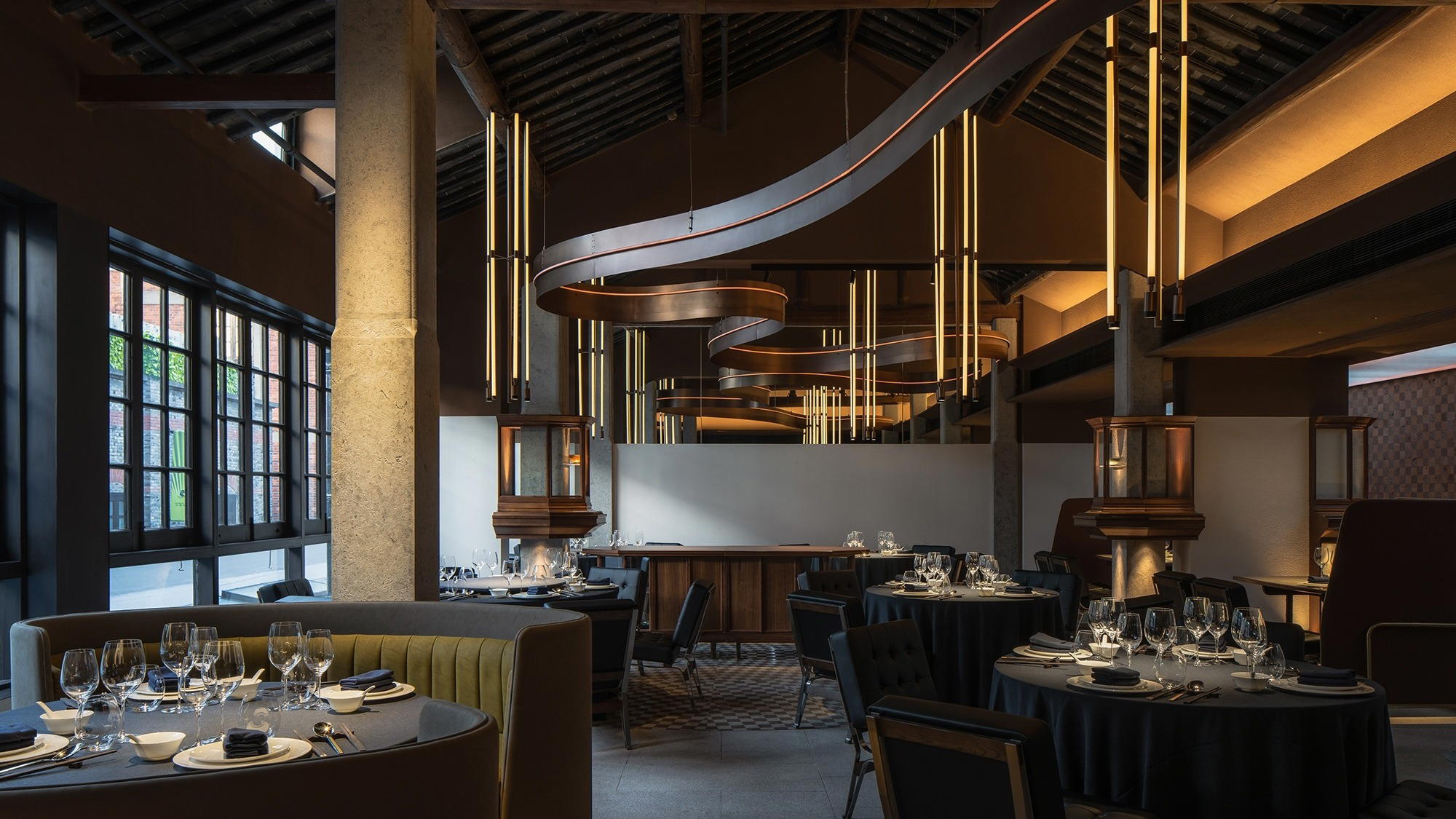
Noyashichi presents a quietly assured presence in Arakicho: it is low-profile, precise and focused rather than flashy. The restaurant’s Michelin Plate for 2024 and 2025 signals recognized quality while its siting in a residential pocket of Shinjuku keeps the room subdued and unhurried. The kitchen treats the boundary between Chinese and Japanese cooking as creative territory, applying classic Chinese techniques to Japanese ingredients. The result feels thoughtful and restrained — a place for diners who value technique and subtle reinvention over theatrical presentation, and for those who prefer their dining rooms removed from the bustle of central Shinjuku.
Best For
This is a smart choice for date nights, special occasions and business dinners where thoughtful cooking and a calm atmosphere matter. The food’s conceptual rigor and the restaurant’s modest pricing relative to Tokyo’s most decorated cross-cultural kitchens make it suitable for celebratory evenings that aren’t ostentatious. Its location in a quiet residential stretch of Arakicho, a short walk from Yotsuya-Sanchome station, keeps the experience local and low-key — well suited to parties who want focused conversation alongside cuisine that’s intellectually engaging without overwhelming formality.
Ordering Tips
Look for dishes that explicitly transpose Chinese techniques onto Japanese ingredients: the menu calls out examples such as a steamed chicken–style preparation applied to sashimi and a clay-pot rice that references southern Chinese anchors. These items illustrate the kitchen’s principle and make good entry points to the menu. Given the restaurant’s Michelin Plate recognition and mid‑tier pricing relative to Tokyo’s most expensive cross-cultural spots, expect carefully executed plates rather than loud flavors; order a selection that showcases the technical moves so you can taste the contrasts between preparation and ingredient.
Venue details
Ambiance
Cozy, relaxing, and sophisticated with calming environment, attentive service, and thoughtful design.
Tags
Vibe
Best For
Experience
Sourcing
At the Table
- Dress Code
- Smart Casual
- Noise Level
- Quiet
- Service Style
- Upscale Casual
- Meal Pacing
- Leisurely
- Capacity
- Intimate
Know before you go
Know Before You Go
- Getting there
- 2-9 Arakicho, Shinjuku City, Tokyo 160-0007, Japan
Planning details
Location
Recognition and awards
Also consider
Also Consider
- Harutaka, Sushi, ¥¥¥¥
- RyuGin, Kaiseki, Japanese, ¥¥¥¥
- L'Effervescence, French, ¥¥¥¥
- HOMMAGE, Innovtive French, French, ¥¥¥¥
- Florilège, French, ¥¥¥
Restaurant context
How Noyashichi Compares
Noyashichi sits at ¥¥¥ with a Michelin Plate, which puts it below the ¥¥¥¥ rooms in both cost and booking difficulty. RyuGin at ¥¥¥¥ is the go-to if you want maximum prestige and a kaiseki structure for a special occasion, but it requires significantly more advance planning and spend. Harutaka operates at ¥¥¥¥ in the sushi format and is harder to book than Noyashichi by a considerable margin. For a Michelin-recognised dinner that you can actually secure within a week or two, Noyashichi is the more accessible option.
Among the French options, Florilège at ¥¥¥ is the direct price-tier peer and a strong alternative if French technique is the preference. L'Effervescence and HOMMAGE both operate at ¥¥¥¥ with stronger international profiles. The case for Noyashichi over those options is specificity: the Japan-China concept is not replicated in the French dining set, and if the cuisine angle matters to your evening, there is no direct substitute.
The practical recommendation: if budget is the primary constraint, Noyashichi and Florilège are the two ¥¥¥ Michelin-recognised options worth comparing directly. If booking ease matters as much as quality, Noyashichi's assessed easy difficulty gives it a clear edge over the ¥¥¥¥ rooms. If prestige for a high-stakes business dinner is the priority and budget is flexible, RyuGin is the stronger choice.
Explore Tokyo
Around this place
Discover more on Pearl
Unlock the full Noyashichi guide in Pearl, including awards, comparisons, FAQs, planning details, and nearby places.
Compare Noyashichi
| Venue | Cuisine | Awards | Booking Difficulty |
|---|---|---|---|
| Noyashichi | Chinese | Tabelog 100 - Chinese cuisine - TOKYO - 2026 · #132026 Michelin Plate2025 Michelin Plate2024 Michelin Plate | Easy |
| Harutaka | Sushi | 2026 Tabelog Silver · #312026 OAD Top Restaurants in Japan Ranked · #1282026 Michelin 3 Stars2026 La Liste Top RestaurantsTabelog 100 - Sushi - TOKYO - 2025 · #372025 Asia's 50 Best Restaurants · #762025 OAD Top Restaurants in Japan Ranked · #1172025 La Liste Top Restaurants2025 Tabelog Bronze | Unknown |
| RyuGin | Kaiseki, Japanese | 2026 OAD Top Restaurants in Japan Ranked · #802026 Tabelog Bronze · #3772026 Michelin 3 Stars2026 La Liste Top RestaurantsTabelog 100 - Japanese cuisine - TOKYO - 2025 · #212025 OAD Top Restaurants in Japan Ranked · #542025 Michelin 3 Stars2025 La Liste Top Restaurants2025 The Best Chef Three Knives | Unknown |
| L'Effervescence | French | 2026 Tabelog Silver · #682026 OAD Top Restaurants in Japan Ranked · #103Star Wine Lists 20262026 Black Pearl 2 Diamond2026 Relais Chateaux Restaurants2026 La Liste Top Restaurants2026 Michelin 3 Stars2025 Asia's 50 Best Restaurants · #692025 OAD Top Restaurants in Japan Ranked · #92 | Unknown |
| HOMMAGE | Innovtive French, French | 2026 Tabelog Bronze · #1232026 OAD Top Restaurants in Japan Highly Recommended2026 Michelin 2 StarsTabelog 100 - French - TOKYO - 2025 · #762025 Asia's 50 Best Restaurants · #782025 OAD Top Restaurants in Japan Ranked · #1752025 Michelin 2 Stars2025 The Best Chef One Knife2025 La Liste Top Restaurants | Unknown |
| Florilège | French | 2026 Asia's 50 Best Restaurants · #312026 Tabelog Bronze · #712026 OAD Top Restaurants in Japan Ranked · #1242026 Black Pearl 1 Diamond2026 Michelin 2 Stars2026 La Liste Top Restaurants2025 Asia's 50 Best Restaurants · #172025 World's 50 Best Restaurants · #36Tabelog 100 - French - TOKYO - 2025 · #68 | Unknown |












How Noyashichi stacks up against the competition.
FAQ
Frequently Asked Questions
What should a first-timer know about Noyashichi?
This is not a standard Chinese restaurant. Chef Shinya Yamamoto runs a kitchen that applies Japanese technique and ingredients — kombu, bonito — directly to Chinese dishes, so expect something specific rather than familiar. The address is 2-9 Arakicho, Shinjuku, which is a quieter residential pocket rather than a busy dining strip. Confirm hours directly before going, as they are not publicly listed.
What should I order at Noyashichi?
The database highlights a handful of signature directions: fish sashimi prepared with steamed-chicken spicy-sauce technique and chilli oil, clay pot rice topped with Sichuan-style bean curd or stir-fried beef, and a kombu kelp clear soup that nods to Japanese preparation. Those dishes represent the clearest expression of what Noyashichi is actually doing, so anchor your order around them if the menu allows it.
Is Noyashichi worth the price?
At ¥¥¥, Noyashichi sits below Tokyo's top-tier tasting-menu pricing while carrying two consecutive Michelin Plate recognitions (2024, 2025), which signals consistent kitchen standards. The concept — Chinese technique meeting Japanese ingredients in a specific, thought-through way — gives the price a clear justification. If you want straightforward Chinese food at lower cost, there are cheaper options; if you want something with a defined point of view and Michelin recognition, the pricing is fair.
Is Noyashichi good for a special occasion?
Yes, with one caveat: verify the format suits your group before booking. The ¥¥¥ price point makes it accessible for celebrations without demanding the financial commitment of a ¥¥¥¥ tasting-menu venue, and the Michelin Plate status gives the evening credibility. The Arakicho setting is quieter than central Shinjuku, which tends to suit dinners where conversation matters.
What are alternatives to Noyashichi in Tokyo?
For higher-end Chinese in Tokyo, Chugoku Hanten Fureika and Chugoku Hanten Kohakukyu (Amber Palace) represent the more formal, higher-priced tier. If you want to stay in the Michelin-recognised space but shift to Japanese fine dining, options in Shinjuku and nearby neighbourhoods exist at comparable price points. Noyashichi's specific Chinese-Japanese hybrid angle does not have a direct like-for-like competitor based on available data.