.png?width=128&height=128&quality=80)

grill GRAND
Yoshoku · Taitō, Tokyo
Restaurant in Tokyo, Japan
 Book with Pearl
The Read
Three-Generation Demi-Glace
Price
¥
Chef
Ryan Ratino
Dress
Smart Casual
Why go
A Michelin Bib Gourmand yoshoku institution in Asakusa, grill GRAND has served three generations of locals from the same address. The demi-glace beef stew is the dish to order. At the ¥ price tier, this is one of the clearest value-for-quality calls in Tokyo; book it for an authentic old-Tokyo neighbourhood meal rather than a special-occasion dinner.
About grill GRAND
Should You Book grill GRAND?
If you are choosing between a high-concept French bistro and a generational yoshoku restaurant in Asakusa, book grill GRAND; but know what you are walking into. This is not the place for avant-garde plating or a deep wine list. It is a Michelin Bib Gourmand-recognised neighbourhood institution that has been feeding Asakusa families for three generations, its demi-glace sauce is the single leading argument for the booking. For food-forward travellers who want to eat where locals actually eat, not where tourists are pointed, this is a sharper call than most ¥ price-tier options in Tokyo. Compare it with YŌSHOKU BISTRO TŌYAMA if you want a more contemporary take on the same cuisine, or Ponta Honke if the pull is old-Tokyo dining rooms generally.
Portrait: What grill GRAND Actually Is
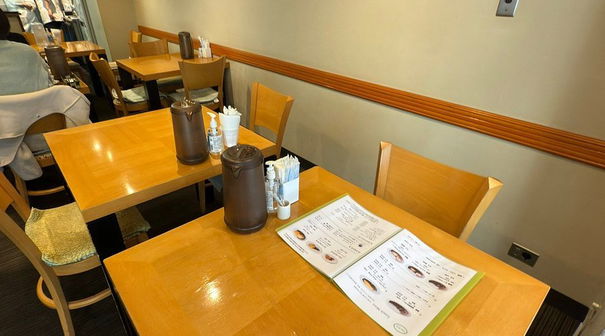
Yoshoku is Japan's answer to the question of what happens when French and Western cooking gets absorbed, reinterpreted, then quietly perfected over a century. At grill GRAND, that process has played out across three generations in the same Asakusa address; 3 Chome-24-6 Asakusa, Taito City, the visual evidence is immediate. The restaurant's logo is a medieval-style shield bearing the French tricolour, reportedly inspired by a gift from a long-standing regular. That detail tells you something useful about the room: this is a place with genuine history and a clientele that returns out of loyalty, not novelty-seeking.
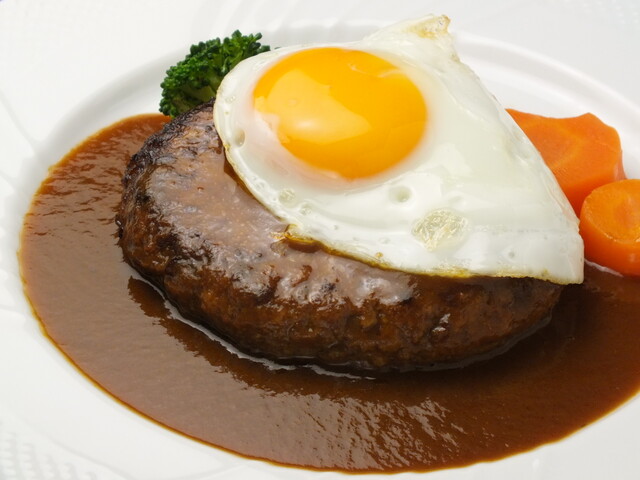
The kitchen's identity is built around demi-glace. This is not incidental. Demi-glace takes days to make properly, repeated reduction of veal or beef stock with mirepoix and tomato, cooked down to a deep brown concentration that carries both body and complexity. It is the foundation of classical French saucework, at grill GRAND it functions as the spine of the menu. The beef stew is the most-ordered dish, it is the clearest expression of what the kitchen does: long-braised beef in a demi-glace base that has been refined over decades of repetition. Order it.
The omurice, a soft egg omelette over fried rice, is served with a choice of demi-glace or ketchup. The ketchup option is not a concession to simplicity; it is a nod to the relationship between the former chef and his guests, it reflects the way yoshoku holds both Western technique and Japanese sentiment in the same dish without forcing a resolution. If you are ordering omurice for the first time, go demi-glace. If you know the dish and want to taste the tradition, try ketchup. Either way, the egg work is the test of the kitchen's precision.
On the editorial angle of beverage depth: the ¥ price point and the neighbourhood context mean you are not booking this for a wine list. Yoshoku restaurants in this register typically offer beer, whisky highballs, basic wine, which suits the food. The demi-glace dishes pair well with a cold Sapporo or an Asahi, a whisky highball alongside the beef stew is a sharper pairing call than most mid-range wine options would produce. For visitors who drink wine, the practical guidance is to keep it simple or let the kitchen's sauces lead. The food does not need elevation from the glass; it is already balanced. This is comparable to how Mejiro Shunkotei operates, the food tradition defines the drink register, not the other way around.
The Michelin Bib Gourmand recognition (2024) is the clearest external validation available here. Bib Gourmand means Michelin inspectors found the cooking worth more than the price, specifically, good food at a moderate cost. That is a more useful credential than a star for this type of venue, because it confirms the value proposition rather than positioning it against restaurants operating at a different scale entirely. For the explorer traveller, this is the kind of recognition that signals a venue has been tested and held up, not just discovered and hyped.
Asakusa as a neighbourhood adds context. It is one of Tokyo's older, denser downtown districts, shitamachi in the traditional sense, where the social contract between a restaurant and its regulars runs deep. Grill GRAND's three-generation history fits that context precisely. You are eating in a room that has accumulated meaning over decades, which is a different experience from eating in a recently opened concept restaurant, regardless of technical quality. For visitors exploring beyond the Ginza-Shinjuku circuit, Asakusa rewards attention. See our full Tokyo restaurants guide for how grill GRAND fits into a wider itinerary, cross-reference with our Tokyo hotels guide if you are planning to base yourself in the east of the city.
For yoshoku elsewhere in Japan, the comparison set is thin but useful. KORISU in Kyoto and Yoshoku Izumi in Osaka both operate in the same culinary tradition and are worth knowing if your trip covers multiple cities. For Tokyo day-trip context, 1000 in Yokohama is relevant, Yokohama has its own deep yoshoku history given the port city's early Western influence, the two cities' traditions are related. Further afield, HAJIME in Osaka, Gion Sasaki in Kyoto, akordu in Nara, and Goh in Fukuoka represent the broader range of serious Japanese dining if you are building a multi-city itinerary. For bars and experiences in the same neighbourhood, check our Tokyo bars guide and our Tokyo experiences guide.
Know Before You Go
- Address: 3 Chome-24-6 Asakusa, Taito City, Tokyo 111-0032, Japan
- Cuisine: Yoshoku (Japanese-Western)
- Price range: ¥ (budget-friendly)
- Awards: Michelin Bib Gourmand (2024)
- Booking difficulty: Easy
- Leading dish: Beef stew; omurice with demi-glace
- Drink approach: Beer or whisky highball recommended over wine
- Dress code: Casual, neighbourhood restaurant, no formality expected
- Good for: Solo diners, food-focused travellers, casual lunches, old-Tokyo atmosphere
- Wineries nearby: See our Tokyo wineries guide
Planning details
- Location
- 3 Chome-24-6 Asakusa, Taito City, Tokyo 111-0032, Japan
- Phone
- +81 3-3874-2351
The take
The Take
The Vibe
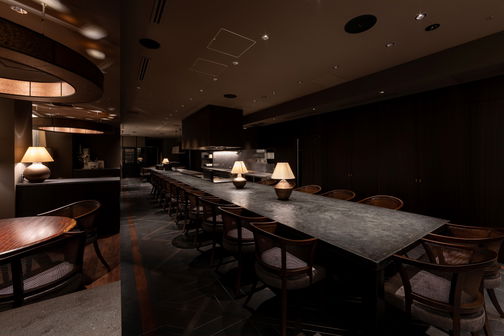
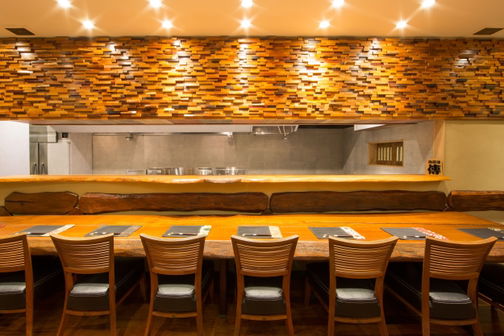
grill GRAND presents a quietly historic Yoshoku counter that feels rooted in Asakusa's multi-generational dining culture. The restaurant leans into the Meiji- and Taisho-era origins of Japanese-Western cooking, and its identity is built on a handful of time-tested plates rather than trend-chasing. The counter format creates an intimate, hands-on atmosphere where technical work—most notably the laborious demi-glace reductions—takes center stage. Despite the provenance and meticulous technique, the room reads as approachable: modest prices, a neighbourhood rhythm, and the lived-in feel of a place that has been doing this for generations.
Best For
This is a go-to for diners seeking comforting, classic yoshoku without pretense. Families and couples appreciative of traditional Japanese-Western dishes find it satisfying, while solo diners and neighbourhood regulars fit naturally at the counter. The Michelin Bib Gourmand signals quality at an accessible price, so it's equally appropriate for casual weekday lunches or unhurried dinners. Visit when you want straightforward, well-executed plates—this is not a spot for spectacle but for standards upheld with care and consistency.
Ordering Tips
Center your order on the kitchen's signature dishes and the demi-glace that defines them: Omurice, Crab Cream Croquette, and Beef Stew are highlighted in the listing and exemplify the restaurant's focus. The copy emphasizes the demi-glace as a deliberate, time-intensive element, so expect rich, sauce-driven preparations. If counter seating is available, sit there to watch the cooking craft and appreciate the small roster of dishes delivered with precision. Keep expectations aligned: this is neighbourhood yoshoku—simple menus, steady technique, and reliable portions.
Planning details
Location
3 Chome-24-6 Asakusa, Taito City, Tokyo 111-0032, Japan · Directions
Recognition and awards
.png?width=144&height=144&quality=80)

Also consider
Also Consider
- Harutaka; Sushi, ¥¥¥¥
- L'Effervescence; French, ¥¥¥¥
- RyuGin; Kaiseki, Japanese, ¥¥¥¥
- HOMMAGE; Innovtive French, French, ¥¥¥¥
- Crony; Innovative, French, ¥¥¥¥
Restaurant context
Compared to Tokyo's high-end French and kaiseki options, grill GRAND is solving a different problem. L'Effervescence and HOMMAGE both operate at ¥¥¥¥ with serious wine programs and multi-course formats; book those if you want a structured, full-evening experience with sommelier input. RyuGin is the call for kaiseki at the highest level, Harutaka is where you go if omakase sushi is the priority. None of these compete with grill GRAND on value, none of them give you three generations of demi-glace tradition in a shitamachi dining room.
Within the ¥ and neighbourhood-restaurant tier, the relevant comparison is with YŌSHOKU BISTRO TŌYAMA, which takes a more contemporary approach to the same cuisine. If you want yoshoku that has been updated and reframed, TŌYAMA is the booking. If you want yoshoku as it has been cooked and eaten in Tokyo for decades; without redesign; grill GRAND is the answer. Crony sits in a different register entirely (innovative French at ¥¥¥¥) and is not a direct alternative, but it is worth knowing if your trip has room for a contrast meal.
On booking difficulty, grill GRAND is the easiest venue on this list to secure. Walk-in access is more realistic here than at any ¥¥¥¥ option, the Bib Gourmand recognition means demand is steady but not prohibitive. For the food-focused traveller building a Tokyo itinerary that mixes registers; a high-end kaiseki or omakase dinner alongside a lunch or casual dinner at a generational neighbourhood restaurant; grill GRAND earns its place in that plan on merit, not just on price.
Explore Tokyo
Around this place
Discover more on Pearl
Unlock the full grill GRAND guide in Pearl, including awards, comparisons, FAQs, planning details, and nearby places.
Compare grill GRAND
| Venue | Awards | Price |
|---|---|---|
| grill GRAND | 2026 Bib GourmandTabelog 100 - Yoshoku - EAST - 2025 · #912024 Michelin Bib Gourmand | ¥ |
| Harutaka | 2026 Tabelog Silver · #312026 OAD Top Restaurants in Japan Ranked · #1282026 Michelin 3 Stars2026 La Liste Top RestaurantsTabelog 100 - Sushi - TOKYO - 2025 · #372025 Asia's 50 Best Restaurants · #762025 OAD Top Restaurants in Japan Ranked · #1172025 La Liste Top Restaurants2025 Tabelog Bronze | ¥¥¥¥ |
| L'Effervescence | 2026 Tabelog Silver · #682026 OAD Top Restaurants in Japan Ranked · #103Star Wine Lists 20262026 Black Pearl 2 Diamond2026 Relais Chateaux Restaurants2026 La Liste Top Restaurants2026 Michelin 3 Stars2025 Asia's 50 Best Restaurants · #692025 OAD Top Restaurants in Japan Ranked · #92 | ¥¥¥¥ |
| RyuGin | 2026 OAD Top Restaurants in Japan Ranked · #802026 Tabelog Bronze · #3772026 Michelin 3 Stars2026 La Liste Top RestaurantsTabelog 100 - Japanese cuisine - TOKYO - 2025 · #212025 OAD Top Restaurants in Japan Ranked · #542025 Michelin 3 Stars2025 La Liste Top Restaurants2025 The Best Chef Three Knives | ¥¥¥¥ |
| HOMMAGE | 2026 Tabelog Bronze · #1232026 OAD Top Restaurants in Japan Highly Recommended2026 Michelin 2 StarsTabelog 100 - French - TOKYO - 2025 · #762025 Asia's 50 Best Restaurants · #782025 OAD Top Restaurants in Japan Ranked · #1752025 Michelin 2 Stars2025 The Best Chef One Knife2025 La Liste Top Restaurants | ¥¥¥¥ |
| Crony | 2026 Asia's 50 Best Restaurants · #34Star Wine Lists 20262026 OAD Top Restaurants in Japan Recommended2026 Michelin 2 Stars2025 Asia's 50 Best Restaurants · #30Tabelog 100 - French - TOKYO - 2025 · #782025 OAD Top Restaurants in Japan Ranked · #227We're Smart World Top Restaurants 20252025 Michelin 2 Stars | ¥¥¥¥ |














Side-by-side comparison to help you decide where to book.
FAQ
Frequently Asked Questions
Is grill GRAND good for solo dining?
Yes; a generational neighbourhood yoshoku spot in Asakusa is one of the better formats for solo dining in Tokyo. At the ¥ price range, you can eat well without committing to a long or expensive meal. The relaxed, familiar atmosphere built over three generations makes solo visits comfortable rather than awkward.
What should I wear to grill GRAND?
Casual clothes are fine. This is a Bib Gourmand yoshoku restaurant in Asakusa; Michelin-recognised for value and quality, not formality. Think clean everyday wear, not business attire. Leave the jacket at the hotel.
Can I eat at the bar at grill GRAND?
Seating specifics are not documented in available venue data, so check directly when you arrive. What is confirmed: this is a neighbourhood restaurant with a three-generation history, which typically means counter or bar seating is part of the setup. Arriving early is advisable given its Bib Gourmand status and local following.
Is grill GRAND good for a special occasion?
It depends on the occasion. For a casual, meaningful dinner that feels personal rather than performative, yes; a restaurant beloved across three generations in Asakusa carries genuine warmth. For a milestone that calls for a formal setting or tasting menu, L'Effervescence or RyuGin are better fits. grill GRAND's strength is intimacy and character, not occasion-dining pomp.
Is grill GRAND worth the price?
At the ¥ price point with a Michelin Bib Gourmand (2024) on its record, yes; this is one of the clearer value cases in Tokyo dining. The Bib Gourmand is specifically awarded for quality food at accessible prices. For yoshoku done with generational care, including the beef stew and omurice with demi-glace, you are getting more than the price suggests.