Kita Onsen(株)北温泉旅館
Nasu Yumoto, Nasu
Hotel in Nasu, Japan
 Book with Pearl
Why go
Kita Onsen Ryokan is one of Nasu's most atmospheric traditional inns — a genuinely old building with memorable outdoor baths, particularly the riverside rotenburo. It is not a luxury property, but the price-to-atmosphere ratio is strong. Best suited to guests who prioritise authenticity over polish and are comfortable navigating Japanese-language booking channels.
About Kita Onsen(株)北温泉旅館
One of Japan's Most Atmospheric Onsen Inns — But You Need to Plan Around Its Limitations
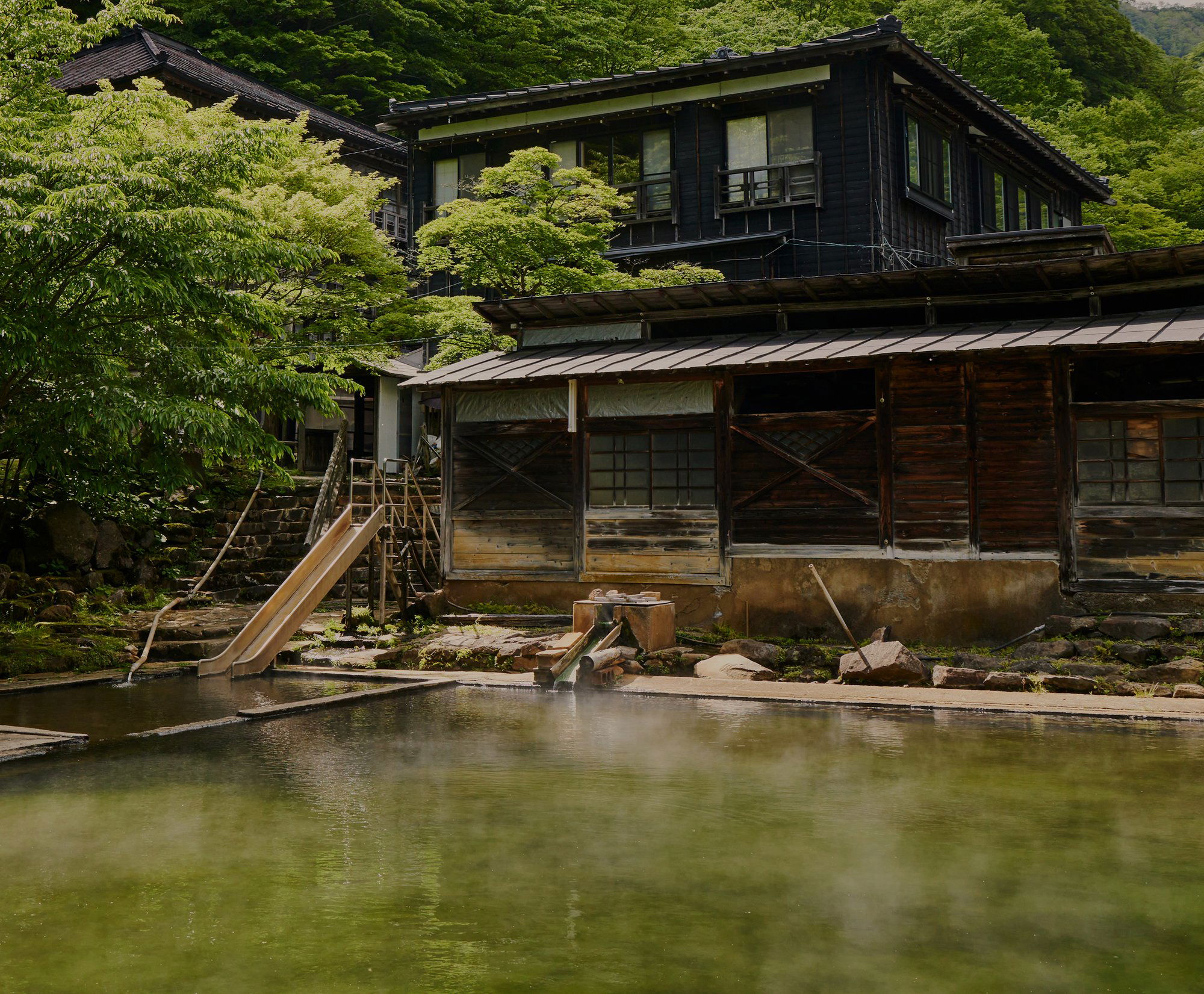
Kita Onsen Ryokan in Nasu, Tochigi Prefecture, is a rare thing: a working Japanese inn that appears to have changed almost nothing about itself in a very long time. The physical structure is the draw here. Weathered timber, low-ceilinged corridors, wooden bathing halls that creak underfoot — the atmosphere is earned, not designed. If you are comparing this to newer, polished ryokan experiences like Gora Kadan in Hakone or Zaborin in Kutchan, understand that Kita Onsen is playing a different game entirely. Its value is in authenticity and atmosphere, not in luxury amenities or service polish.
The onsen baths themselves, including an outdoor riverside bath that is among the more memorable in the Nasu area, are the core reason to book. Nasu as a destination is worth your time: it draws visitors from Tokyo for its highland air, hot spring culture, and relative quiet compared to more tourist-heavy onsen towns. Kita Onsen sits at the more rustic end of the Nasu hotel scene, and that is precisely the point. For guests who want the curated, room-service version of Japan, look elsewhere. For guests who want to feel like they have stepped into a building that time has largely bypassed, this is difficult to match in the region.
On value: Kita Onsen is not expensive by ryokan standards, and that price-to-atmosphere ratio is genuinely strong. You are not paying Aman-tier rates for an experience that delivers something no Aman property could replicate, a sense of age and place that cannot be constructed from scratch. The trade-off is that information is sparse, direct booking can require Japanese-language communication, and the level of English-language support on-site is unclear. Go in with realistic expectations and the stay tends to reward.
The ambient character of the property is leading appreciated in quieter seasons, late autumn and early spring tend to be ideal for onsen towns in this part of Tochigi, when crowds thin and the surrounding landscape does its leading work. Summer weekends can draw day-trippers to the Nasu area, so timing matters. See our full Nasu experiences guide for seasonal planning and our Nasu restaurants guide if you plan to eat beyond the inn.
Know Before You Go
- Location: 151 Yumoto, Nasu, Nasu District, Tochigi 325-0301, Japan
- Booking difficulty: Easy, but direct booking may require Japanese-language communication; third-party platforms (Jalan, Rakuten Travel) are the more accessible route
- Leading for: Solo travellers, couples, and Japan-fluent guests seeking atmosphere over amenity
- Less suited for: Guests expecting full English service, modern room design, or concierge-level support
- Nearby alternatives: Nasu Mukunone for a more polished Nasu stay; Fufu Nikko in Nikko for a comparable mountain onsen experience with more English-language infrastructure
- Seasonal note: Late autumn (October–November) and early spring (March–April) offer the strongest atmosphere with fewer crowds
- Getting there: Nasu-Shiobara Station on the Tohoku Shinkansen is the standard access point; local transport or taxi required from there
Planning details
- Location
- 151 Yumoto, Nasu, Nasu District, Tochigi 325-0301, Japan
- Website
- kitaonsen.com
- Phone
- +81 287 76 2008
The take
The Take
The Vibe
Kita Onsen reads like an object rather than a designed set piece: the buildings are genuinely antique, their timber surfaces showing a patina accumulated over decades of pragmatic maintenance. The property resolves slowly out of a forested slope above the Nasu river, with low rooflines, weathered wood and geothermal mist that underline the onsen’s natural logic. This is not a meticulously curated modern ryokan; it is a place where the structure itself is the primary credential. The overall effect is quietly charismatic — intact, unselfconscious and quietly magnetic for anyone drawn to authenticity and a lived-in aesthetic.
Best For
Kita Onsen is best for travelers seeking an authentic onsen experience and a quiet mountain retreat. The property’s emphasis on its antique buildings and the thermal activity beneath the site makes it a compelling stop for wellness-minded guests and architecture-minded visitors who prefer lived history to curated luxury. It suits people who value solitude and atmosphere over modern amenities and who want to experience an onsen where the bath culture and the building’s material history are central. It is less suited to travelers seeking glossy, heavily renovated resort facilities.
Venue details
Ambiance
Darkened wooden beams from mineral steam, sulfur-laden air, creaking corridors evoking centuries of history in a serene mountain setting.
Tags
Vibe
Best For
Experience
Amenities
View
About the Stay
- Rooms
- 0
- Check-in
- 14:00
- Check-out
- 10:00
- Property Style
- Traditional Japanese Ryokan with Authentic Historical Architecture
- Design Style
- Rustic Edo Meiji Showa Era Wooden Interiors
Know before you go
Know Before You Go
- Getting there
- 151 Yumoto, Nasu, Nasu District, Tochigi 325-0301, Japan
Planning details
Location
Also consider
Also Consider
- Bvlgari Hotel Tokyo, Notable alternative
- Aman Kyoto, Notable alternative
- Aman Tokyo, Notable alternative
- Amanemu, Notable alternative
- Four Seasons Hotel Tokyo at Otemachi, Notable alternative
Hotel context
Kita Onsen sits at the opposite end of the spectrum from ultra-luxury Japanese properties like Amanemu in Mie or Bvlgari Hotel Tokyo. Those properties offer flawless service infrastructure, English-language concierge depth, and rooms designed to impress at high nightly rates. Kita Onsen offers none of that, but it also costs a fraction of the price and delivers something those properties cannot: the feeling of a place that has not been optimised for the international luxury traveller. If you are choosing between Kita Onsen and a high-design, ryokan-influenced stay, HOTEL THE MITSUI KYOTO or Gora Kadan in Hakone will give you the full-service version of traditional Japanese hospitality with no communication friction.
Within the Nasu area specifically, Nasu Mukunone is the cleaner comparison: it operates in the same highland setting and appeals to a similar guest profile, but with more modern facilities and a more accessible booking process. If you want the Nasu experience but are not willing to trade on comfort, Nasu Mukunone is the safer recommendation. Kita Onsen is better if atmosphere is your primary criterion and you are prepared for a more spartan stay.
For travellers building a broader Japan itinerary around onsen culture, Fufu Nikko and Nishimuraya Honkan in Kinosaki-cho both offer traditional ryokan character with better English support and clearer online booking. Asaba in Izu is worth considering if you want historic atmosphere with a higher service ceiling. Kita Onsen earns its place in the conversation purely on character, book it if that is what you are optimising for.
Explore Nasu
Around this place
Discover more on Pearl
Unlock the full Kita Onsen(株)北温泉旅館 guide in Pearl, including awards, comparisons, FAQs, planning details, and nearby places.
Compare Kita Onsen(株)北温泉旅館
| Venue | Awards | Booking Difficulty |
|---|---|---|
| Kita Onsen(株)北温泉旅館 | No published awards | Easy |
| Bvlgari Hotel Tokyo | 2026 World’s 50 Best Hotels 1-50 · #242026 Forbes 5-Star2026 Virtuoso Luxury Hotel Collection2026 Robb Report Best Luxury Hotels in Tokyo2026 La Liste Top Hotels2025 World’s 50 Best Hotels · #15Tatler Best Hotels Asia-Pacific 20252025 Michelin 3 Keys2024 World's 50 Best Hotels · #22 | Unknown |
| Aman Kyoto | 2026 Virtuoso Luxury Hotel Collection2026 La Liste Top Hotels2025 World’s 50 Best Hotels · #74World Travel Awards 2025Michelin 2 Keys 20252025 Michelin 2 Keys2025 Conde Nast Hotels Gold List2024 Michelin 2 KeysAman Hotels | Unknown |
| Aman Tokyo | 2026 Food & Wine Top 10 Global Hotels for Food and Drink · #52026 World’s 50 Best Hotels 1-50 · #112026 Forbes 4-Star2026 Virtuoso Luxury Hotel Collection2026 Robb Report Best Luxury Hotels in Tokyo2026 Mr & Mrs Smith Luxury Hotels2026 La Liste Top Hotels2025 World’s 50 Best Hotels · #252025 Robb Report The 50 Greatest Luxury Hotels on Earth · #29 | Unknown |
| Amanemu | 2026 Virtuoso Luxury Hotel Collection2026 Mr & Mrs Smith Luxury Hotels2026 La Liste Top HotelsMichelin 3 Keys 20252025 Michelin 3 Keys2024 Michelin 3 KeysAman Hotels | Unknown |
| Four Seasons Hotel Tokyo at Otemachi | 2026 Forbes 4-Star2026 Robb Report Best Luxury Hotels in Tokyo2026 La Liste Top Hotels2025 Conde Nast Best Hotels · #142025 Forbes 4-Star2025 Michelin 3 Keys2024 Michelin 3 KeysFour Seasons HotelsPearl Recommended Hotels | Unknown |
















Comparing your options in Nasu for this tier.
FAQ
Frequently Asked Questions
How is the dining at Kita Onsen(株)北温泉旅館?
Dining at Kita Onsen follows the standard ryokan format: kaiseki-style meals served in your room or a communal dining area, typically included in your room rate. The kitchen leans on local Tochigi produce and seasonal ingredients. This is not the place for à la carte flexibility or dietary substitutions on short notice. If food is your primary motivation, Nasu has a handful of standalone restaurants worth combining with your stay.
When is the best time to book Kita Onsen(株)北温泉旅館?
Autumn (mid-October to early November) is the most popular window: the Nasu highlands' foliage draws significant domestic travel demand, and rooms at inns like Kita Onsen fill weeks in advance. Spring is a quieter alternative with cooler temperatures well-suited to the baths. Winter is genuinely cold in Tochigi, which makes the outdoor baths compelling but requires tolerance for austere, unheated corridors. Book at least 6-8 weeks ahead for autumn; shoulder seasons offer more flexibility.
Which room category is best at Kita Onsen(株)北温泉旅館?
Kita Onsen's rooms vary in condition and size — this is an old building that has not been uniformly renovated, so room selection matters more here than at a standardised hotel. Requesting a room with direct or close access to the outdoor bath (rotenburo) is worth the effort given that the baths are the main draw. If you are travelling as a couple, a tatami room with garden or river views is the most atmospheric option the property offers.
How is the pool and spa at Kita Onsen(株)北温泉旅館?
The onsen baths are the entire point of staying here. Kita Onsen has multiple bathing areas including an outdoor rotenburo, and the water quality — naturally sourced in the Nasu volcanic highlands — is the property's strongest asset. There is no spa treatment menu, no pool, and no wellness programming in the resort-hotel sense. If you want Balinese massage and a lap pool, this is not your property. If you want to soak in mineral-rich water in an old wooden building, it delivers.
Is Kita Onsen(株)北温泉旅館 family-friendly?
Manageable for families with older children who can handle tatami rooms, communal bathing etiquette, and a schedule built around meal times. Younger children and toddlers are a harder fit: the building's age means uneven surfaces and minimal childproofing, and shared baths require adults to supervise closely. Japanese domestic families do visit ryokan with children, but Kita Onsen's particular character — remote, austere, historically preserved — suits adults and teenagers better than families with young kids.
Do loyalty programs work at Kita Onsen(株)北温泉旅館?
No. Kita Onsen is an independent ryokan in Nasu, Tochigi, with no affiliation to any hotel group or points program. You will not earn or redeem Marriott Bonvoy, IHG, or Hyatt points here. Book directly or through a Japan-specialist travel agent for the best room allocation and any special requests. The trade-off for foregoing points is a property that has not been renovated or branded to suit loyalty-program expectations — which is precisely why people seek it out.