
Weingut Allendorf
Oestrich-Winkel
Winery in Oestrich-Winkel, Germany
 Book with Pearl
The Read
Rheingau Riesling Precision
Price
$20–30tasting
Why go
A serious Oestrich-Winkel winery choice for Rheingau drinkers who care about producer depth and possible allocation value. Prioritise it over castle-led visits if the wine itself is the main reason for going; choose Schloss Vollrads or Schloss Johannisberg instead if the group wants a more scenery-led stop.
About Weingut Allendorf
Weingut Allendorf is a Pearl 3 Star Prestige venue in Oestrich-Winkel for 2025. With only a small set of public details, the safest way to plan around it is to treat the listing as a focused venue profile rather than a promise of specific services, formats, prices, menus, or access. The confirmed dress code is casual.
Choose this for a confirmed 3 Star Prestige listing
The clearest reason to keep Weingut Allendorf on a shortlist is its Pearl 3 Star Prestige recognition for 2025. Beyond that accolade and its Oestrich-Winkel location, specific claims about visit format, availability, buying options, tastings, food, shipping, or group handling should be confirmed directly with the venue before planning around them.
For travellers comparing options, use Weingut Allendorf as a named Oestrich-Winkel reference point, but avoid assuming details that are not confirmed in the listing. If timing, booking requirements, purchase terms, or on-site services matter, check the venue's official channels before making it the anchor of a day.
The room decision: compare the confirmed recognition, then verify the details
Weingut Allendorf can be compared with Schloss Vollrads, Weingut Josef Spreitzer, and Weingut Peter Jakob Kühn, as well as Fürst von Metternich-Winneburg'sche Domäne Schloss Johannisberg and Schloss Johannisberg. Those names are useful for orientation, but the right choice depends on the current experience each venue is offering.
Do not infer a specific hospitality format, food program, tour style, seat count, or buying arrangement from this listing alone. The grounded facts for Weingut Allendorf are its Oestrich-Winkel location, casual dress code, and Pearl 3 Star Prestige recognition in 2025. Treat any more detailed planning questions as items to verify before visiting.
Who should skip it
Skip relying on this listing alone if your decision depends on unconfirmed specifics such as food availability, group capacity, shipping, a named flagship bottle, or a particular visit format. Keep it on the list if a Pearl 3 Star Prestige venue in Oestrich-Winkel fits your plans and you are prepared to confirm the operational details directly.
Planning details
- Location
- Kirchstraße 69, 65375 Oestrich-Winkel
- Website
- allendorf.de
- Phone
- +49 6723 91850
The take
The Take
The Vibe
Weingut Allendorf reads like a historically minded Rheingau estate: old vine plots, ties to the region's VDP and Grosslage/Einzellage structures, and a focus on Riesling set the tone. The writing emphasizes terroir nuance — slate over clay and loam — and situates the winery within a sun-favored bend of the Rhine, which shapes the wine's structural argument. A 2025 Pearl 3 Star Prestige rating underlines consistent quality across vintages, so the overall impression is of a refined, terroir-driven producer where tradition and careful viticulture inform an elevated, study-worthy tasting experience.
Best For
This estate is best for visitors who want to learn about Rheingau Riesling and trace how geology and exposure shape style. The essay-style description makes it a natural stop for wine-education-minded travelers, solo explorers eager to follow vineyards and classification histories, and small groups plotting multi-estate outings along the Rhine. Practical access by regional rail from Wiesbaden and Frankfurt and the proximity of neighboring producers make it a convenient base for comparing production philosophies on foot or by bicycle rather than a destination for large-scale events.
Tasting Tips
When you visit, prioritize Riesling and questions about site-specific character: the piece highlights slate-influenced soils atop clay and loam, so ask which parcels contribute particular structural notes. Bring plans for mobility — regional rail service and walk- or bike-friendly routes are called out — and consider pairing this stop with nearby estates to hear contrasting production philosophies. Note the estate’s Pearl 3 Star Prestige rating and ask staff to explain what that consistency across vintages means in practice rather than focusing on a single recent release.
Venue details
Ambiance
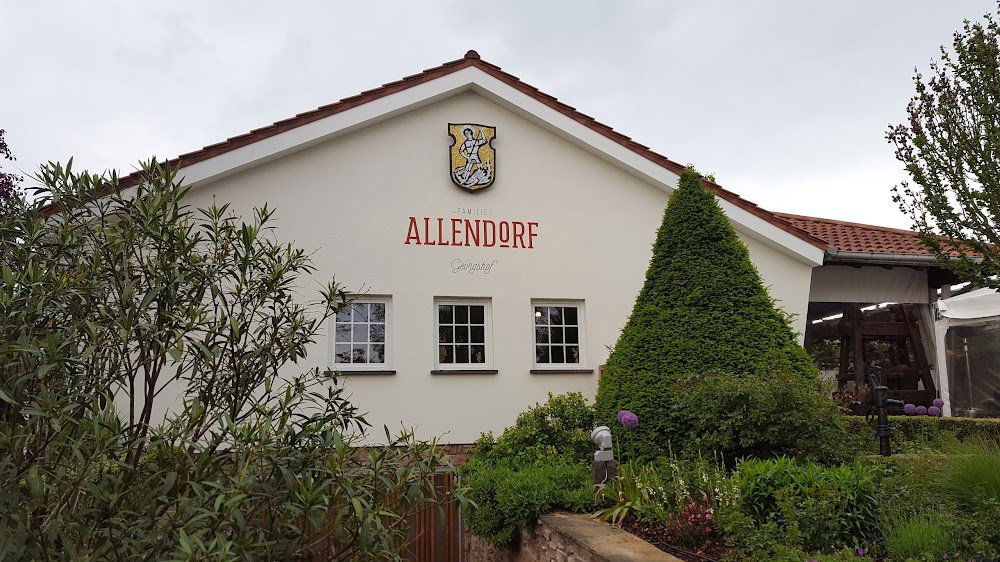
Traditional family-run estate with historic charm, cozy estate wine tavern, and sensory tasting experiences in specialized rooms.
Tags
Vibe
Best For
Experience
Sourcing
View
At the Vineyard
- Appellation
- Rheingau
- Varietals
- Riesling, Spätburgunder, Chardonnay, Pinot Gris, Gewürztraminer
- Tour Duration
- 60-90 minutes
- Tour Languages
- German, English
- Visits
- By reservation
- Farming
- Sustainable
- Wine Styles
- Still White, Still Red, Sparkling
- Wine Club
- Not available
Know before you go
Know Before You Go
- Getting there
- Kirchstraße 69, 65375 Oestrich-Winkel
Planning details
Location
Recognition and awards

Also consider
Also Consider
- Schloss Vollrads, Notable alternative
- Fürst von Metternich-Winneburg'sche Domäne Schloss Johannisberg, Notable alternative
- Schloss Johannisberg, Notable alternative
- Weingut Peter Jakob Kühn, Notable alternative
- Weingut Josef Spreitzer, Notable alternative
Winery context
How it compares in Oestrich-Winkel and nearby Rheingau
Choose Weingut Allendorf over Schloss Vollrads if the priority is a producer-led visit rather than a castle-forward outing. Schloss Vollrads is the safer call for mixed groups who want heritage setting and a more conventional sightseeing feel; Allendorf is the better fit for wine travellers deciding whether to build a buying relationship.
Weingut Peter Jakob Kühn and Weingut Josef Spreitzer are the closest practical cross-shops in Oestrich-Winkel. Pick Peter Jakob Kühn when the group wants a similarly serious producer comparison, and Josef Spreitzer when the plan needs another local winery option without turning the day into a long transfer exercise.
Fürst von Metternich-Winneburg'sche Domäne Schloss Johannisberg and Schloss Johannisberg make more sense for a grander Rheingau itinerary. They are stronger for occasion value and setting; Allendorf is stronger when the decision is about wine access, repeat buying, and whether the producer is worth deeper commitment.
Explore Oestrich-Winkel
Around this place
Discover more on Pearl
Unlock the full Weingut Allendorf guide in Pearl, including awards, comparisons, FAQs, planning details, and nearby places.
Compare Weingut Allendorf
| Venue | Location | Awards |
|---|---|---|
| Weingut Allendorf | Oestrich-Winkel | 2026 Falstaff Winery Guide |
| Schloss Vollrads | Oestrich-Winkel | 2026 Falstaff Winery Guide2019 World's 50 Best Vineyards · #33 |
| Fürst von Metternich-Winneburg’sche Domäne Schloss Johannisberg | Rheingau | 2020 World's 50 Best Vineyards · #12 |
| Schloss Johannisberg | Geisenheim-Johannisberg | 2025 World's 50 Best Vineyards · #22024 World's 50 Best Vineyards · #52023 World's 50 Best Vineyards · #82022 World's 50 Best Vineyards · #52021 World's 50 Best Vineyards · #342019 World's 50 Best Vineyards · #21 |
| Weingut Peter Jakob Kühn | Oestrich-Winkel | 2026 Falstaff Winery Guide |
| Weingut Josef Spreitzer | Oestrich-Winkel | 2026 Falstaff Winery Guide |

How Weingut Allendorf Oestrich-Winkel compares with similar nearby venues.
FAQ
Frequently Asked Questions
What other venues can be compared with Weingut Allendorf?
Schloss Vollrads, Fürst von Metternich-Winneburg'sche Domäne Schloss Johannisberg, Schloss Johannisberg, Weingut Peter Jakob Kühn, and Weingut Josef Spreitzer are useful comparison venues. Choose among them based on the current details each venue confirms directly.
Is the wine club at Weingut Allendorf worth joining?
If repeat purchasing, releases, or membership terms matter, confirm those details with Weingut Allendorf before making a decision.
Does Weingut Allendorf ship wine?
Do not plan around shipping unless Weingut Allendorf confirms the current terms directly.
What is the flagship wine at Weingut Allendorf?
No named flagship wine is in the available facts. The confirmed details are that Weingut Allendorf is in Oestrich-Winkel, has a casual dress code, and holds Pearl 3 Star Prestige recognition for 2025.