.png?width=1200&quality=80)
Piatto Mitsu
Italian · Minato, Tokyo
Restaurant in Tokyo, Japan
 Book with Pearl
The Read
Kyushu-Italian Abalone Counter
Price
$150–200per person
Dress
Smart Casual
Why go
A Michelin Plate Italian restaurant in Motoazabu built around Kyushu-sourced abalone, served three ways. Chef Mitsuaki Okamura keeps the presentation simple and the sourcing precise, making this a strong choice for food-focused diners at the ¥¥¥ tier. Easy to book and more personal in scale than Tokyo's starred Italian tables.
About Piatto Mitsu
Verdict
Piatto Mitsu is worth booking if you want Italian cooking in Tokyo that has a clear point of view. Chef Mitsuaki Okamura works with Kyushu-sourced ingredients — most notably abalone, which anchors the menu — and applies Italian technique with a restraint that sets it apart from the more theatrical end of Tokyo's Italian scene. If abalone prepared three ways is not your priority, or if you need kaiseki-level ceremony, look elsewhere. But for food-focused diners who want ingredient-led Italian cooking with a Japanese producer's sensibility, this is a sound choice.
Portrait
Piatto Mitsu occupies the seventh floor of the Galle Motoazabu building in Motoazabu, Minato City, a Minami-Azabu-adjacent address that puts it in one of Tokyo's quieter, more residential pockets rather than in the thick of Roppongi's busier dining corridor. The seventh-floor setting means you are removed from street level, which tends to create a more contained, focused atmosphere: the kind of room where the cooking is the main event rather than the spectacle of the room itself. Spatial data from the database is limited, but the building context and the Motoazabu neighbourhood both suggest an intimate rather than theatrical setting. That fits the food.
The kitchen's signature is abalone, available deep-fried, oven-baked, or in pasta. This is a serious commitment to a single ingredient, and it reflects Chef Okamura's background: he opened his first restaurant in Fukuoka before returning to Azabu, and the Kyushu producer relationships he built there are what underpin the sourcing here. Kyushu is Japan's southernmost main island, with a coastline well-regarded for shellfish, and abalone from that region carries a different texture and minerality than farmed alternatives. The decision to structure the menu around this single product, presented simply, is the clearest indicator of where Okamura's priorities lie. He is not trying to dazzle with complexity; he is trying to let the ingredient read clearly on the plate.
That philosophy sits within a broader category of Japanese-Italian cooking that Tokyo has made its own. The city has a deep bench of Italian restaurants, from the Michelin-starred formality of Aroma Fresca to the produce-led approach of PRISMA and the more conceptually adventurous territory of Gucci Osteria da Massimo Bottura Tokyo. Piatto Mitsu does not compete on the same axis as any of those. It is smaller in ambition and more specific in focus, which is precisely what makes it interesting to the right diner. The name itself encodes the premise: 'piatto' is Italian for plate, 'Mitsu' is drawn from Mitsuaki Okamura's name, and the combination reads as 'Mitsu's plates', personal, direct, and without pretension.
The Michelin Plate recognition in 2025 is worth understanding correctly: it signals that Michelin inspectors found the cooking worth noting, but it does not indicate a starred performance. For a ¥¥¥ restaurant in this neighbourhood, a Michelin Plate is a credible signal without overpromising. That combination, Michelin-noted, neighbourhood-scaled, ingredient-specific, is actually the profile of a restaurant that rewards the diner who has done a little research. If you are building a Japan itinerary with stops at HAJIME in Osaka, Gion Sasaki in Kyoto, or Goh in Fukuoka, Piatto Mitsu fits the same explorer-oriented bracket in Tokyo.
For timing, a weekday dinner is the most reliable call. The Motoazabu neighbourhood sees less weekend tourist foot traffic than areas like Shinjuku or Shibuya, but the restaurant's small scale means even modest weekend demand can affect pace and availability. Book in advance to be safe; the booking difficulty is rated Easy, meaning you are unlikely to wait weeks, but walking in without a reservation at a seventh-floor restaurant with no published hours is a risk not worth taking. Specific opening hours are not confirmed in the venue data, so verify directly before visiting.
If you are comparing Italian options at the ¥¥¥ tier, also consider Principio and AlCeppo within Tokyo, or look at cenci in Kyoto for Italian that draws on Japanese producer relationships in a comparable way. For Italian at a higher price point and with a more documented international profile, 8½ Otto e Mezzo Bombana in Hong Kong is the regional reference point. Piatto Mitsu sits firmly below that in both price and profile, but the cooking logic is in the same family.
The restaurant address is 1 Chome-7-12 Motoazabu, Minato City, Tokyo, Galle Motoazabu 7F. No phone number or website is currently listed in the Pearl database, so reservations may need to be made through a concierge or a third-party booking platform. Confirm hours and availability before making the trip, particularly given the building-specific location.
Quick reference: Booking: Easy. Leading time: weekday dinner.
How It Compares
See the comparison section below for how Piatto Mitsu stacks up against Tokyo's leading dining options.
Explore More in Tokyo and Japan
For a fuller picture of where to eat, drink, and stay in the city, see our full Tokyo restaurants guide, our full Tokyo hotels guide, our full Tokyo bars guide, our full Tokyo wineries guide, and our full Tokyo experiences guide. Further afield, akordu in Nara, 1000 in Yokohama, and 6 in Okinawa round out a Japan itinerary for food-focused travellers.
Planning details
- Location
- Japan, 〒106-0046 Tokyo, Minato City, Motoazabu, 1 Chome−7−12 galle motoazabu 7F
- Reservations
- Book on Omakase
- Website
- piattomitsu-tokyo.com
- Phone
- +81 3-5442-9225
The take
The Take
The Vibe
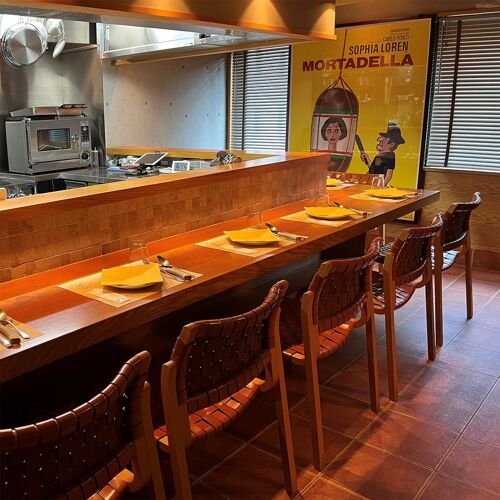
Piatto Mitsu presents as an intimate, cozy and sophisticated counter restaurant that treats Italian cooking through a Japanese lens. Sitting on the seventh floor of Galle Motoazabu, it reads as an elegant, chef-directed experience rather than a large dining hall. The writing frames the kitchen as quietly serious — Michelin Plate recognition and close relationships with Kyushu producers underscore a focused, refined approach. The overall tone is composed and deliberate: this is a spot for diners who want detailed, ingredient-led cooking in a restrained, intimate setting.
Best For
This counter is best for milestone dinners and focused meals — date nights, business dinners and other special occasions are the explicit use cases. The menu’s emphasis on a single ingredient presented in multiple preparations encourages a comparative, contemplative way to dine, ideal for celebratory or formal visits. Pricing and the Michelin Plate placement position it as serious but not ultra-expensive, so it attracts guests seeking elevated Italian-Japanese cooking without the highest tier price point.
Ordering Tips
Center your order around the abalone-driven format: the kitchen’s three-way presentation (deep-fried, oven-baked and in pasta) is a deliberate tasting device and a smart place to start. Among signature plates, the sea urchin risotto and abalone risotto are highlighted, alongside seasonal features such as firefly squid pasta and Miyazaki beef. Given the counter setup and ingredient-focused cooking, opt for dishes that showcase the chef’s comparisons of technique and texture to get the clearest sense of the restaurant’s intent.
Venue details
Ambiance
Bright, casual, and pleasant atmosphere with an open kitchen facing an L-shaped counter; intimate counter seating for 8 with a relaxed yet refined dining experience.
Tags
Vibe
Best For
Experience
Sourcing
At the Table
- Dress Code
- Smart Casual
- Noise Level
- Conversational
- Service Style
- Omakase Bar
- Meal Pacing
- Leisurely
- Capacity
- Intimate
- Kitchen
- Traditional
- Menu Format
- Omakase, Counter dining, Tasting menu
- Wine Program
- Curated
- Drinks Focus
- Wine
- Dietary
- Allergy accommodating
- Private Dining
- Available
Signature Dishes
- Abalone confit
- Sea urchin risotto
- Abalone risotto
- Miyazaki beef
- Milk gelato
- Firefly squid pasta
Know before you go
Know Before You Go
- Getting there
- Japan, 〒106-0046 Tokyo, Minato City, Motoazabu, 1 Chome−7−12 galle motoazabu 7F
Planning details
Location
Japan, 〒106-0046 Tokyo, Minato City, Motoazabu, 1 Chome−7−12 galle motoazabu 7F · Directions
Recognition and awards
Also consider
Also Consider
- Harutaka, Sushi, ¥¥¥¥
- RyuGin, Kaiseki, Japanese, ¥¥¥¥
- L'Effervescence, French, ¥¥¥¥
- HOMMAGE, Innovtive French, French, ¥¥¥¥
- Florilège, French, ¥¥¥
Restaurant context
Piatto Mitsu sits in a different tier and register from most of its Tokyo peers. At ¥¥¥, it is a price band below L'Effervescence, HOMMAGE, and RyuGin, all of which operate at ¥¥¥¥ with Michelin star credentials and considerably more room ceremony. If your priority is a complete fine-dining occasion with wine service depth and multi-course theatre, those venues deliver more of that architecture. Piatto Mitsu's value case is different: it is a focused, ingredient-specific room where the abalone sourcing does the heavy lifting, without the cover charge implied by a starred setting.
Florilège is the most direct comparison in terms of price tier, also ¥¥¥, also Michelin-recognised, and also operating with a clear culinary point of view. Florilège runs a more ambitious tasting format with strong ecological sourcing credentials. If you are choosing between the two, Florilège is the pick for diners who want structured progression and a more globally documented reputation. Piatto Mitsu is the pick if the specific combination of Italian technique and Japanese shellfish is what interests you. Harutaka at ¥¥¥¥ is the reference point for omakase-format precision in Tokyo's top tier, but it is a different cuisine category entirely and notably harder to book.
Within Tokyo's Italian category specifically, Aroma Fresca is the benchmark for starred Italian with documented depth; Gucci Osteria da Massimo Bottura Tokyo adds a high-concept international frame. Piatto Mitsu is neither of those things, and that is not a weakness. For a diner who wants to eat well, spend less than a starred table demands, and eat something that has a genuine regional identity, Piatto Mitsu is the more interesting booking than a mid-market Italian with no particular ingredient focus.
Explore Tokyo
Around this place
Discover more on Pearl
Unlock the full Piatto Mitsu guide in Pearl, including awards, comparisons, FAQs, planning details, and nearby places.
Compare Piatto Mitsu
| Venue | Cuisine | Awards | Booking Difficulty |
|---|---|---|---|
| Piatto Mitsu | Italian | 2026 Michelin Plate2025 Michelin Plate2024 Michelin Plate | Easy |
| Harutaka | Sushi | 2026 Tabelog Silver · #312026 OAD Top Restaurants in Japan Ranked · #1282026 Michelin 3 Stars2026 La Liste Top RestaurantsTabelog 100 - Sushi - TOKYO - 2025 · #372025 Asia's 50 Best Restaurants · #762025 OAD Top Restaurants in Japan Ranked · #1172025 La Liste Top Restaurants2025 Tabelog Bronze | Unknown |
| RyuGin | Kaiseki, Japanese | 2026 OAD Top Restaurants in Japan Ranked · #802026 Tabelog Bronze · #3772026 Michelin 3 Stars2026 La Liste Top RestaurantsTabelog 100 - Japanese cuisine - TOKYO - 2025 · #212025 OAD Top Restaurants in Japan Ranked · #542025 Michelin 3 Stars2025 La Liste Top Restaurants2025 The Best Chef Three Knives | Unknown |
| L'Effervescence | French | 2026 Tabelog Silver · #682026 OAD Top Restaurants in Japan Ranked · #103Star Wine Lists 20262026 Black Pearl 2 Diamond2026 Relais Chateaux Restaurants2026 La Liste Top Restaurants2026 Michelin 3 Stars2025 Asia's 50 Best Restaurants · #692025 OAD Top Restaurants in Japan Ranked · #92 | Unknown |
| HOMMAGE | Innovtive French, French | 2026 Tabelog Bronze · #1232026 OAD Top Restaurants in Japan Highly Recommended2026 Michelin 2 StarsTabelog 100 - French - TOKYO - 2025 · #762025 Asia's 50 Best Restaurants · #782025 OAD Top Restaurants in Japan Ranked · #1752025 Michelin 2 Stars2025 The Best Chef One Knife2025 La Liste Top Restaurants | Unknown |
| Florilège | French | 2026 Asia's 50 Best Restaurants · #312026 Tabelog Bronze · #712026 OAD Top Restaurants in Japan Ranked · #1242026 Black Pearl 1 Diamond2026 Michelin 2 Stars2026 La Liste Top Restaurants2025 Asia's 50 Best Restaurants · #172025 World's 50 Best Restaurants · #36Tabelog 100 - French - TOKYO - 2025 · #68 | Unknown |













Side-by-side comparison to help you decide where to book.
FAQ
Frequently Asked Questions
Can Piatto Mitsu accommodate groups?
The restaurant is on the seventh floor of the Galle Motoazabu building, which suggests a compact format. Groups larger than four should confirm capacity and any private arrangement directly with the venue before booking. Intimate dinners of two to four are likely the natural fit here.
What are alternatives to Piatto Mitsu in Tokyo?
For French rather than Italian, L'Effervescence and Florilège both offer chef-driven tasting menus with strong local sourcing credentials. If you want Italian specifically in Tokyo, Piatto Mitsu is one of the few with a clearly personal angle: Kyushu produce applied to Italian technique. For a higher-end Japanese experience in the same Azabu area, Harutaka covers omakase sushi at a different price tier.
Is Piatto Mitsu good for solo dining?
A seventh-floor restaurant with a clear chef identity and a focused menu around abalone is a reasonable solo choice if you want to eat attentively rather than socially. The ¥¥¥ price range means it sits above casual, so expect to spend meaningfully. Solo diners at the counter, if available, would get the most from the format.
Is Piatto Mitsu good for a special occasion?
Yes, with caveats. The Michelin Plate recognition (2025) and Chef Okamura's deliberate return to Azabu after running his own place in Fukuoka give the meal a sense of intention that suits a celebration. The ¥¥¥ price range and Motoazabu address add occasion weight without tipping into the four-hour omakase territory of Tokyo's most formal rooms.
Is Piatto Mitsu worth the price?
At ¥¥¥, Piatto Mitsu sits in Tokyo's upper-mid tier. The value case rests on the specificity: Kyushu producer relationships, abalone as a signature, and Italian technique applied with a distinct point of view. If you want straightforward Italian without the ingredient sourcing backstory, there are cheaper options in the city. If the provenance and the Michelin Plate credential matter to you, the price holds up.