
Okadamae
Minato, Tokyo
Restaurant in Tokyo, Japan
 Book with Pearl
The Read
Counter-Theatre Wagyu
Price
$300–500per person
Chef
Kinichiro Okada
Dress
Smart Casual
Why go
A 16-seat wagyu omakase counter in Azabu-Juban, Okadamae runs a course-driven format through Kobe, Matsusaka, Omi, and Sendai beef, finishing with a Spanish charcoal oven-seared steak. Chef Kinichiro Okada cooks in front of you throughout. Easier to book than most Tokyo counters at this tier, and well-suited to a serious special occasion dinner for two.
About Okadamae
Verdict
Okadamae is not a steakhouse in the Western sense, and arriving with that expectation will work against you. This is a 16-seat kappo counter in the basement of a building in Azabu-Juban, where chef Kinichiro Okada runs a wagyu omakase that moves through a full course progression rather than putting a single cut in front of you and stepping back. If you want to sit at a counter, watch skilled preparation unfold in front of you, and eat wagyu from Kobe, Matsusaka, Omi, and Sendai sources across a structured meal, this is worth booking. If you want to order a steak independently and eat at your own pace, look elsewhere.
The Space and Experience
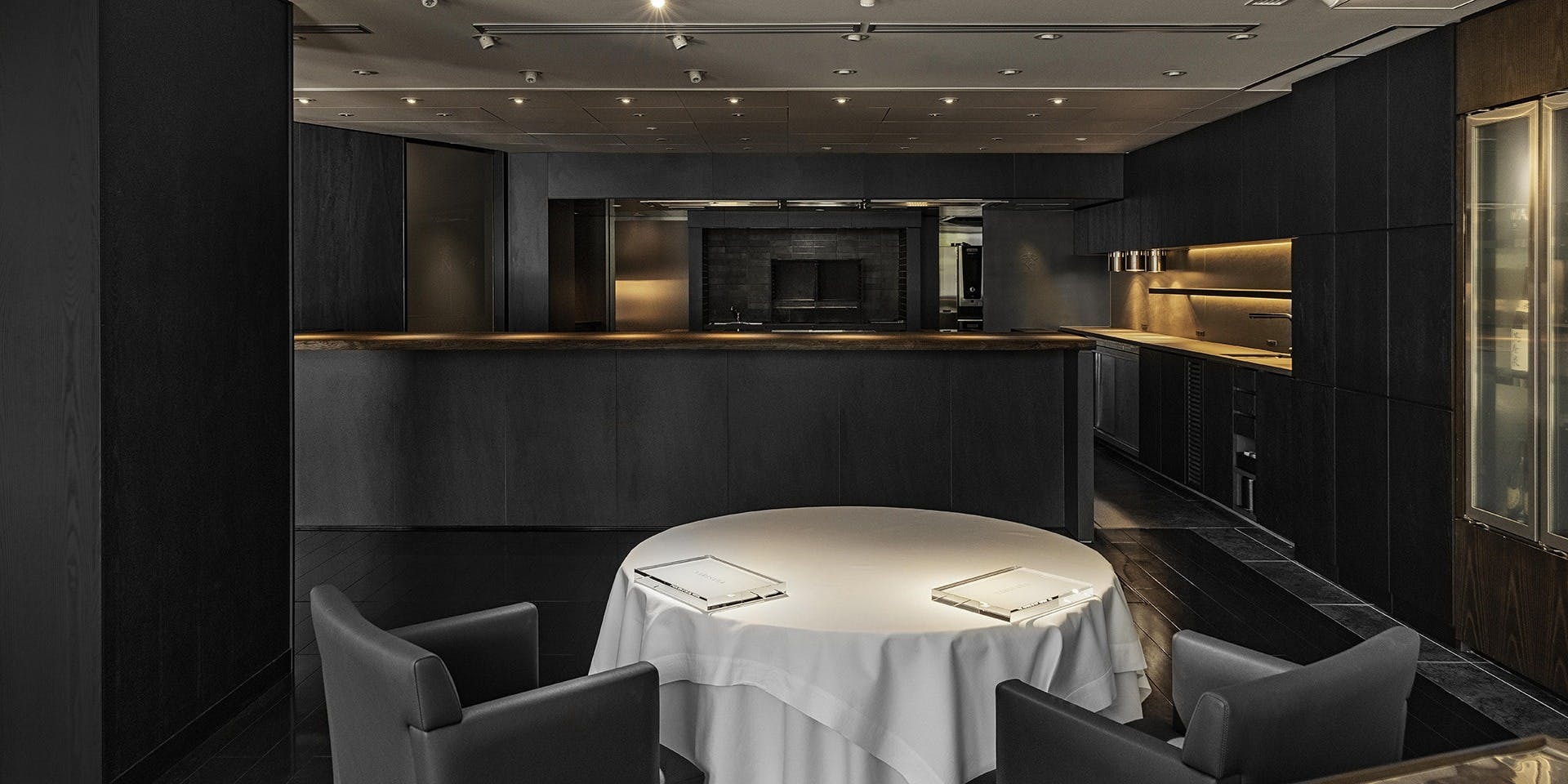
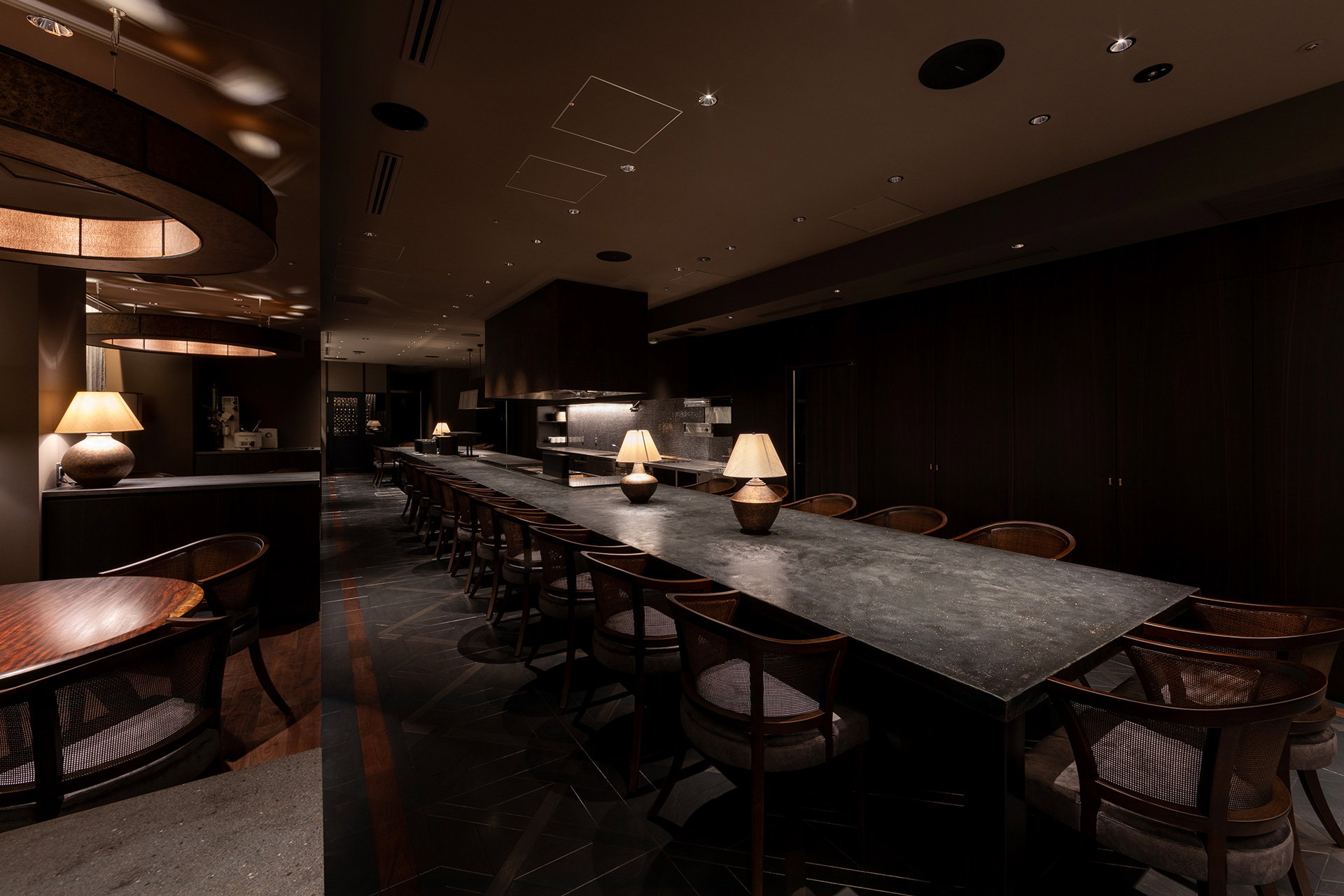
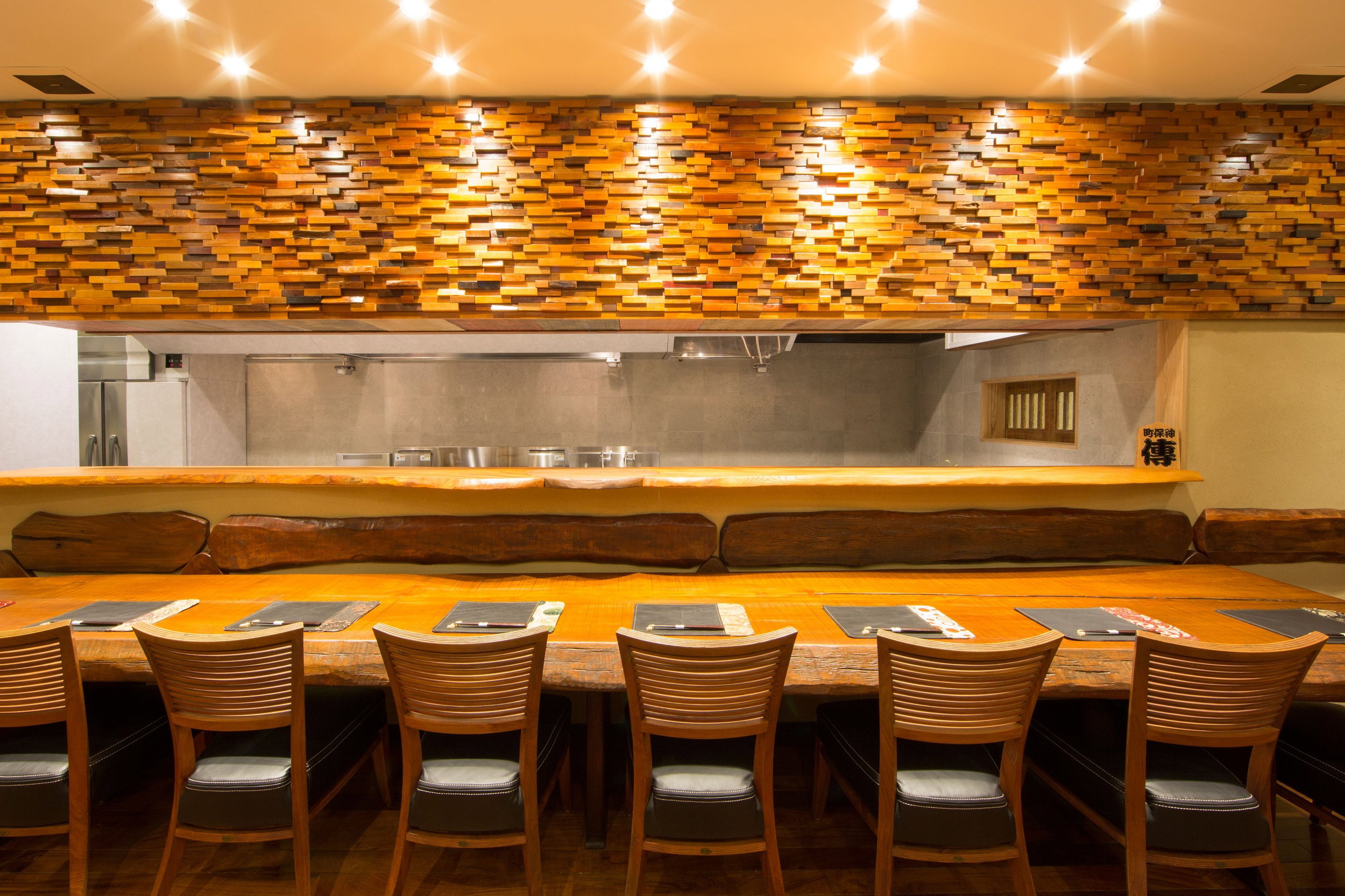
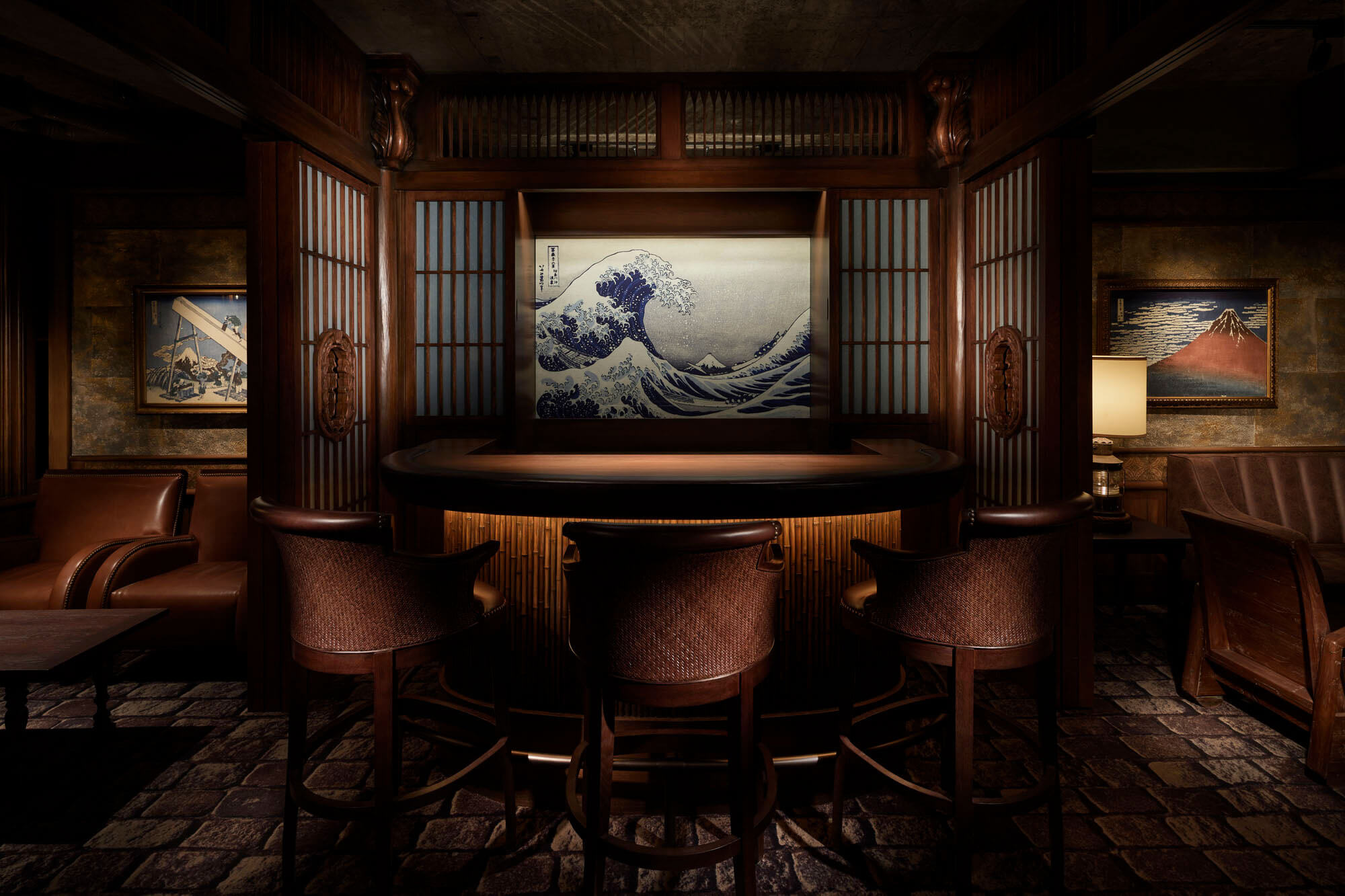
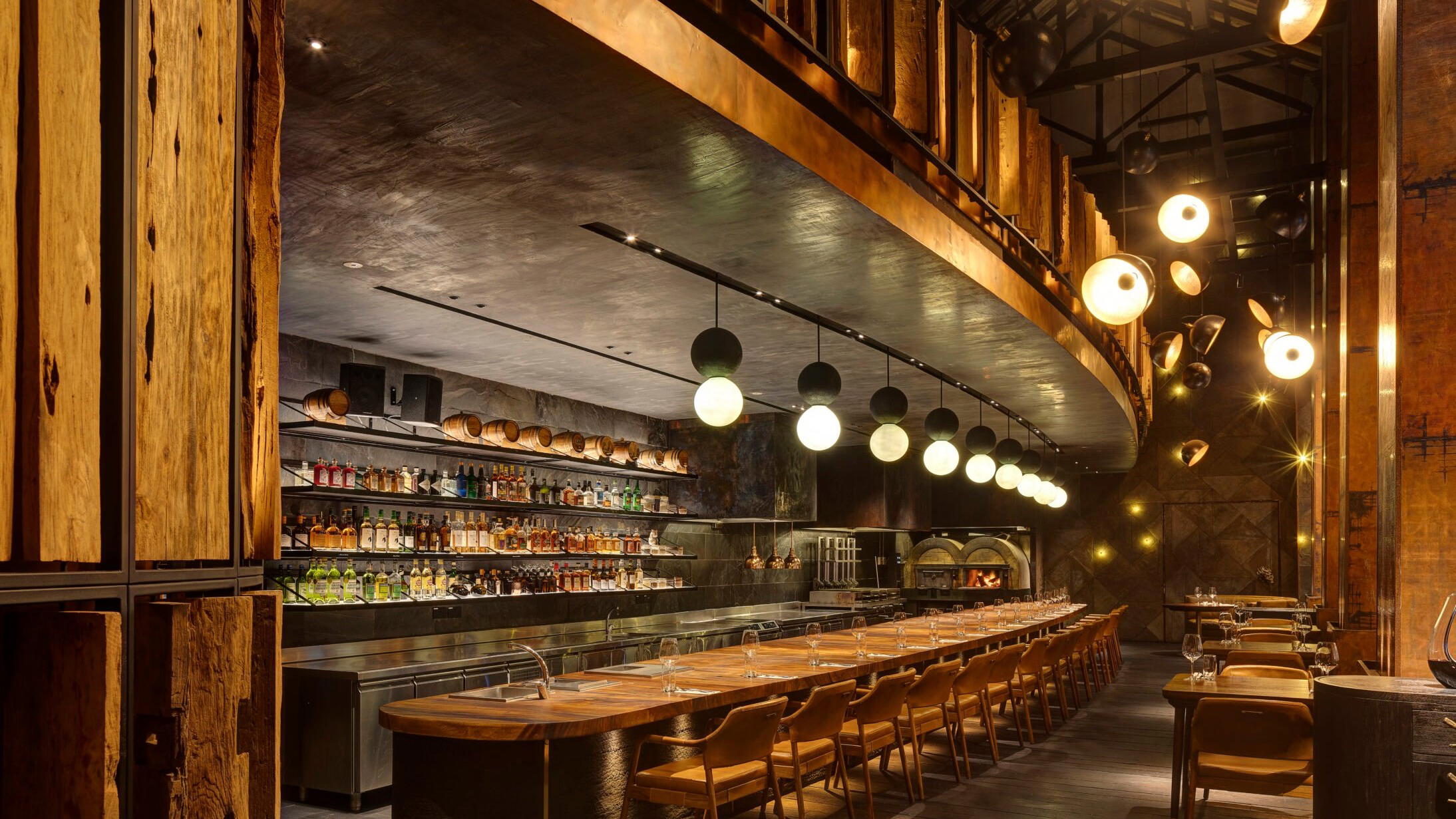
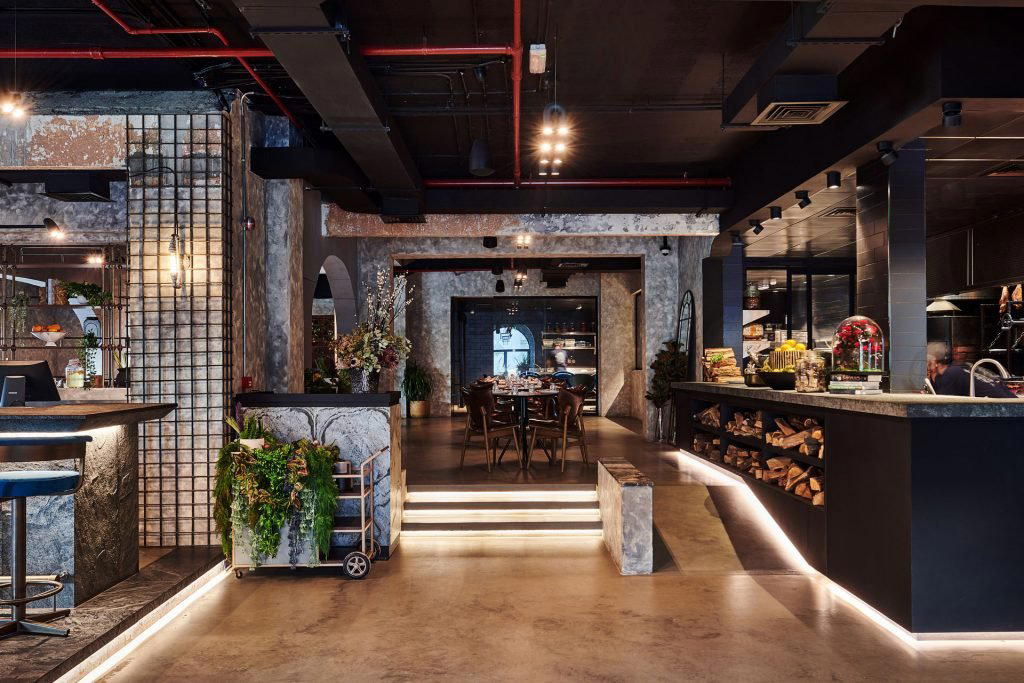
Sixteen seats arranged at a counter is the defining fact about Okadamae. That layout is not incidental: it is what makes the format work. You are close enough to watch every stage of preparation, and the meal is built around that proximity. Chef Okada cooks in front of you throughout, a format the restaurant refers to as "Okada Theater." For a special occasion meal, the counter setting delivers something a conventional dining room cannot: the progression of the meal is visible, and you understand what you are eating and why the sequencing matters.
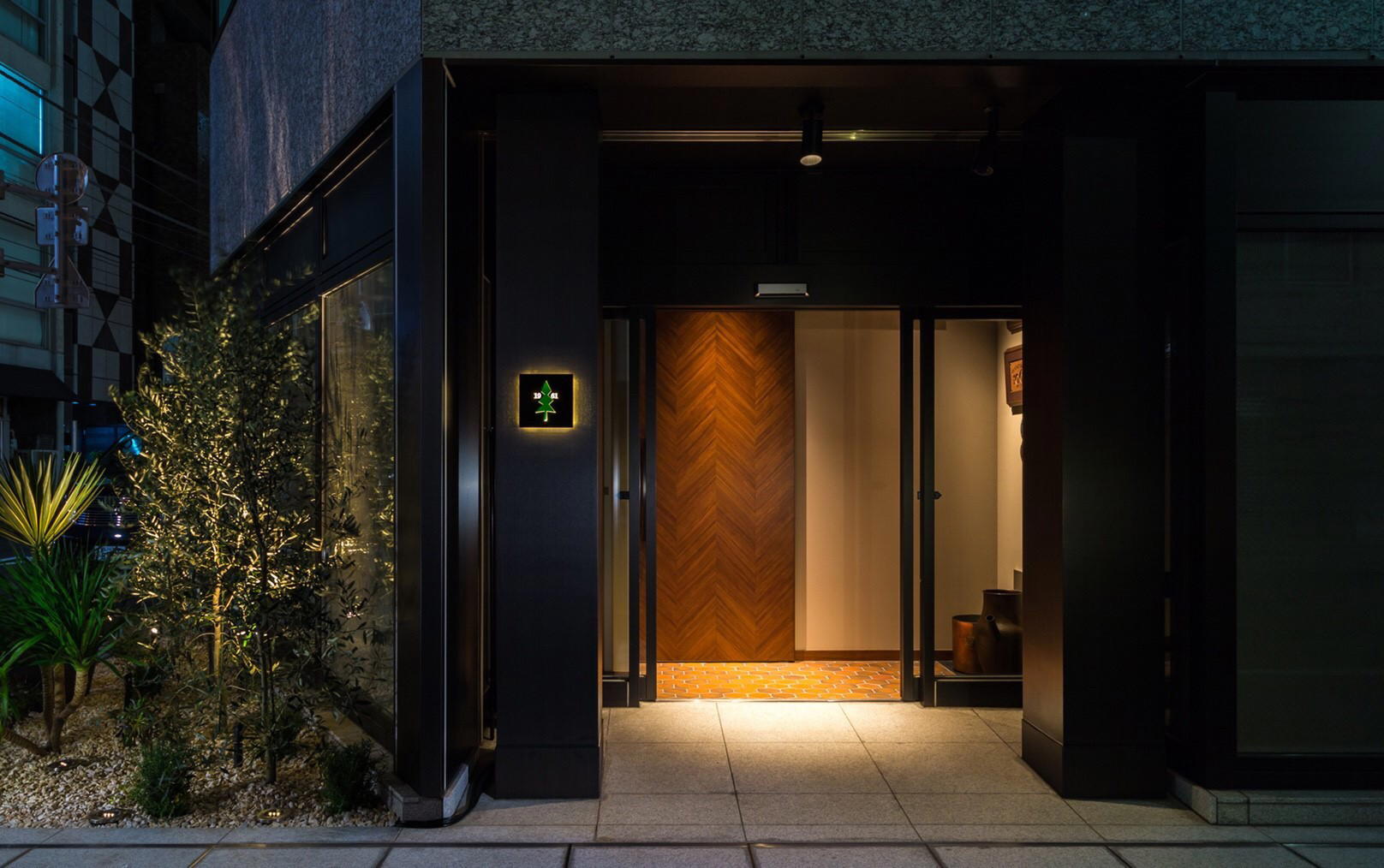
The basement location in Azabu-Juban suits the format. The neighbourhood is one of Tokyo's quieter upscale residential and dining districts, and the below-street-level setting means the room is insulated from the outside. For a date or a celebration meal where the evening needs to feel contained and focused, that physical separation from the street matters more than you might expect.
What You Are Eating
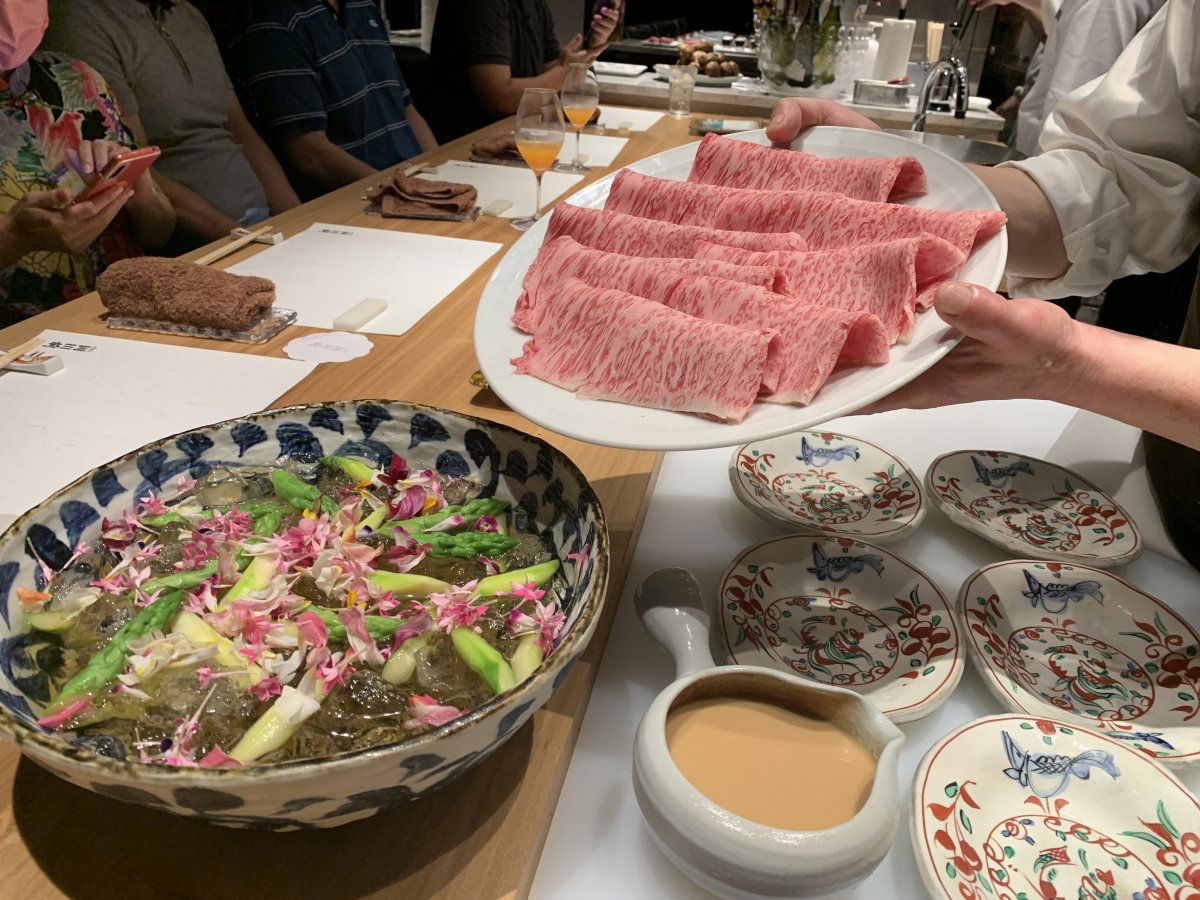
The menu is a seasonal omakase course built around wagyu. The structure moves from lighter preparations toward richer ones: beef tartare with caviar, yukhoe (seasoned raw beef), menchi-katsu (a minced meat cutlet), sirloin sukiyaki in a Kansai-style preparation using Matsusaka beef, and a final seared steak cooked over a Spanish charcoal oven. The sequencing is deliberate: Chef Okada's sourcing prioritises cuts with balanced marbling rather than maximum fat content, which means the meal does not become fatiguing in the way that some wagyu-heavy menus do. You are tasting across breeds and preparations, not eating one maximally rich cut repeatedly.
Charcoal oven finish on the steak course adds a smoky quality that separates it from teppanyaki-style preparations. Wet aging is the primary method used here, which tends to emphasise cleaner beef flavour over the more intense notes of dry-aged cuts. If you have strong preferences about aging method, that is worth knowing before you book.
Wine and sake pairings are available, including sake from the IWA label and wines from Kenzo Estate. These are not casual pour-by-the-glass options: IWA is a collaboration between Dom Pérignon's former chef de cave Richard Geoffroy and a Toyama-based brewery, and Kenzo Estate is a Napa Valley winery with a strong following in Japan. The pairing selection is curated toward the premium end.
When to Go
For a special occasion, a weekday evening booking will give you the most focused experience: the room is small and the counter format means even modest noise variation changes the atmosphere. Avoid booking here if you are trying to accommodate a group dynamic that requires conversation across a large table. Two people celebrating, or a small group of four who are genuinely interested in the food, is the format this counter rewards most. Azabu-Juban is accessible by subway, and the neighbourhood has enough post-dinner options for drinks that the evening does not have to end at the counter.
How It Compares
For ¥¥¥¥ omakase dining in Tokyo, Okadamae occupies a specific position: it is the wagyu-specialist counter option in a city where most high-end omakase defaults to sushi or kaiseki. If the category of wagyu preparation across multiple cuts and styles is what you want, there is no direct equivalent at this counter scale in the ¥¥¥¥ tier. Harutaka delivers comparable counter intimacy but is sushi-only. RyuGin offers the broadest seasonal progression in kaiseki, but the format is very different and wagyu is one element among many rather than the organising principle of the meal. If the question is specifically "where do I go to eat wagyu at this level of preparation and attention," Okadamae answers it directly.
Booking here is rated Easy relative to Tokyo's top-end counter restaurants, which is a meaningful distinction. Securing a seat at L'Effervescence or Crony requires more lead time. If you are planning a Tokyo trip and want a high-end counter meal without the pressure of a months-out reservation, Okadamae is a practical choice at the top tier.
Know Before You Go
- Location: Azabu-Juban, Minato City, Tokyo — basement level of the Rene Azabu-Juban Building
- Seats: 16-seat counter
- Format: Seasonal wagyu omakase, counter service
- Beef sources: Kobe, Matsusaka, Omi, Sendai
- Grill method: Spanish charcoal oven (steak course)
- Aging method: Primarily wet aged
- Pairing options: Curated sake (including IWA) and wine (including Kenzo Estate)
- Booking difficulty: Easy relative to Tokyo's top-tier counters
- Leading for: Dates, celebrations, small groups of 2–4 with genuine interest in wagyu
- Getting there: Azabu-Juban Station (Namboku and Oedo lines) is the closest subway access
Explore More in Tokyo and Beyond
For further dining in Tokyo, see our full Tokyo restaurants guide. If you are building a broader trip, our Tokyo hotels guide, bars guide, wineries guide, and experiences guide cover the rest. Elsewhere in Japan, HAJIME in Osaka, Gion Sasaki in Kyoto, akordu in Nara, Goh in Fukuoka, 1000 in Yokohama, and 6 in Okinawa are worth knowing. For high-end counter dining in New York as a point of comparison, Le Bernardin and Atomix occupy a similar price and attention tier. For French at ¥¥¥¥ in Tokyo, Sézanne and L'Effervescence are the comparison points.
Planning details
- Location
- Japan, 〒106-0045 Tokyo, Minato City, Azabujuban, 1 Chome−5−23 ルネ麻布十番ビル B1
- Reservations
- Book on TableCheck
- Website
- tablecheck.com/shops/okadamae/reserve
- Phone
- +81 3-3478-0338
The take
The Take
The Vibe
Okadamae presents wagyu through a kappō lens: the room is a sixteen-seat counter in a basement, and the chef operates within arm’s reach. The format privileges process and proximity, turning premium beef into theatre while retaining the restraint of Japanese seasonal sequencing. The experience feels classic rather than flashy — disciplined, focused and quietly exacting — with diners watching each cut and sear. Because the kitchen never retreats behind a pass, the meal is conversational and intimate, oriented around technique, provenance and the comparative qualities of Kobe, Matsusaka, Omi and Sendai beef.
Best For
This is a destination for an attentive wagyu dinner: the counter setup and kappō-style sequencing make it ideal for diners who want to watch preparation and engage with the chef. The restaurant’s structure — sixteen seats and a deliberate pace — suits special-occasion meals or business dinners where food and conversation are central. Okadamae’s focus on regional wagyu selections turns the service into a guided tasting, so it works best for those who appreciate provenance, precise cooking and a tasting-like progression rather than a casual, à la carte steak night.
Ordering Tips
Book the counter and lean into the chef-led sequence: Okadamae frames beef as a comparative tasting, so choose the coursed experience that highlights different regional wagyu rather than ordering isolated steaks. The signature preparations — sirloin sukiyaki and charcoal-grilled wagyu steak — are explicit touchpoints for the kitchen’s approach; mention interest in regional comparisons when you reserve if you want the tasting emphasis. Expect a paced, kappō-style flow with pairings selected to match each course, and be prepared for conversational exchanges with the chef throughout the meal.
Venue details
Ambiance
Calm, sophisticated, stylish space with relaxing counter seating focused on the immersive 'Okada Theater' cooking performance.
Tags
Vibe
Best For
Experience
At the Table
- Dress Code
- Smart Casual
- Noise Level
- Quiet
- Service Style
- Upscale Casual
- Meal Pacing
- Leisurely
- Capacity
- Intimate
- Kitchen
- Modern
- Menu Format
- Omakase
- Wine Program
- Curated
- Drinks Focus
- Sake, Wine
Signature Dishes
- sirloin sukiyaki
- charcoal-grilled wagyu steak
Know before you go
Know Before You Go
- Getting there
- Japan, 〒106-0045 Tokyo, Minato City, Azabujuban, 1 Chome−5−23 ルネ麻布十番ビル B1
Planning details
Location
Japan, 〒106-0045 Tokyo, Minato City, Azabujuban, 1 Chome−5−23 ルネ麻布十番ビル B1 · Directions
Recognition and awards

Also consider
Also Consider
- Harutaka, Sushi, ¥¥¥¥
- L'Effervescence, French, ¥¥¥¥
- RyuGin, Kaiseki, Japanese, ¥¥¥¥
- HOMMAGE, Innovtive French, French, ¥¥¥¥
- Crony, Innovative, French, ¥¥¥¥
Restaurant context
At the ¥¥¥¥ tier in Tokyo, the counter omakase format is crowded with sushi and kaiseki options. Okadamae is the clearest choice if wagyu is the specific focus: it is the only counter at this scale and price level that structures an entire course progression around Japanese beef from named breeds. Harutaka delivers comparable counter intimacy and technical precision, but the format is sushi-only. If the question is which counter to book for the most focused wagyu experience in Tokyo, Okadamae answers it directly in a way that Harutaka does not.
RyuGin is the right choice if you want kaiseki with seasonal depth and a broader range of Japanese ingredients. Wagyu appears at RyuGin, but it is one element in a wide progression rather than the organising principle. L'Effervescence and Crony are the comparison points if you are weighing a French omakase against a Japanese one at the same price tier: both require more advance booking than Okadamae, and neither offers anything close to the wagyu-specific depth. HOMMAGE sits in a similar innovative-French position and is worth considering if the cuisine category is flexible, but again the wagyu sourcing and counter theatre at Okadamae are not replicated.
On booking difficulty, Okadamae has a practical advantage over most of its peers at this level. Tokyo's top counters frequently require months of lead time; Okadamae is rated Easy. If you are planning a Tokyo trip without long advance notice and need a high-end counter meal that can actually be secured, that distinction matters. The trade-off is that the format is more specific than some alternatives: you are committing to a wagyu-led progression, not a broad tasting menu. For diners who want that specificity, it is an advantage, not a limitation.
Explore Tokyo
Around this place
Discover more on Pearl
Unlock the full Okadamae guide in Pearl, including awards, comparisons, FAQs, planning details, and nearby places.
Compare Okadamae
| Venue | Location | Cuisine | Awards | Price |
|---|---|---|---|---|
| Okadamae | Tokyo | , | 2025 World's Best Steaks 101 Best Steak Restaurants · #86 | , |
| Harutaka | Tokyo | Sushi | 2026 Tabelog Silver · #312026 OAD Top Restaurants in Japan Ranked · #1282026 Michelin 3 Stars2026 La Liste Top RestaurantsTabelog 100 - Sushi - TOKYO - 2025 · #372025 Asia's 50 Best Restaurants · #762025 OAD Top Restaurants in Japan Ranked · #1172025 La Liste Top Restaurants2025 Tabelog Bronze | ¥¥¥¥ |
| L'Effervescence | Tokyo | French | 2026 Tabelog Silver · #682026 OAD Top Restaurants in Japan Ranked · #103Star Wine Lists 20262026 Black Pearl 2 Diamond2026 Relais Chateaux Restaurants2026 La Liste Top Restaurants2026 Michelin 3 Stars2025 Asia's 50 Best Restaurants · #692025 OAD Top Restaurants in Japan Ranked · #92 | ¥¥¥¥ |
| RyuGin | Tokyo | Kaiseki, Japanese | 2026 OAD Top Restaurants in Japan Ranked · #802026 Tabelog Bronze · #3772026 Michelin 3 Stars2026 La Liste Top RestaurantsTabelog 100 - Japanese cuisine - TOKYO - 2025 · #212025 OAD Top Restaurants in Japan Ranked · #542025 Michelin 3 Stars2025 La Liste Top Restaurants2025 The Best Chef Three Knives | ¥¥¥¥ |
| HOMMAGE | Tokyo | Innovtive French, French | 2026 Tabelog Bronze · #1232026 OAD Top Restaurants in Japan Highly Recommended2026 Michelin 2 StarsTabelog 100 - French - TOKYO - 2025 · #762025 Asia's 50 Best Restaurants · #782025 OAD Top Restaurants in Japan Ranked · #1752025 Michelin 2 Stars2025 The Best Chef One Knife2025 La Liste Top Restaurants | ¥¥¥¥ |
| Crony | Tokyo | Innovative, French | 2026 Asia's 50 Best Restaurants · #34Star Wine Lists 20262026 OAD Top Restaurants in Japan Recommended2026 Michelin 2 Stars2025 Asia's 50 Best Restaurants · #30Tabelog 100 - French - TOKYO - 2025 · #782025 OAD Top Restaurants in Japan Ranked · #227We're Smart World Top Restaurants 20252025 Michelin 2 Stars | ¥¥¥¥ |














How Okadamae Tokyo compares with similar nearby venues.
FAQ
Frequently Asked Questions
What should a first-timer know about Okadamae?
Come expecting kappo counter dining, not a Western steakhouse. The 16-seat format means Chef Okada cooks in front of you — the sequenced omakase course moves from lighter preparations like beef tartare with caviar through to a charcoal-oven-seared steak. The kitchen controls the pace, so allow two to three hours and arrive with no fixed plans afterward.
Is Okadamae good for a special occasion?
Yes, and it is one of the stronger cases for it in Azabu-Juban. The counter format, the 'Okada Theater' live preparation, and the progression through elite wagyu breeds — Kobe, Matsusaka, Omi, Sendai — give the meal a clear arc that suits a celebratory dinner. Weekday evenings are the better call: a 16-seat room absorbs even light weekend energy quickly.
What should I wear to Okadamae?
The venue data does not specify a dress code, but the Azabu-Juban address, counter format, and price point place this firmly in the category where you would not arrive in casual sportswear. Business casual or neat evening wear is a safe assumption for a kappo counter of this nature in Tokyo.
Is Okadamae good for solo dining?
It is one of the better formats for a solo diner in Tokyo. A 16-seat counter by design faces you toward the kitchen and Chef Okada's preparation — there is no awkward table-for-one dynamic. The omakase structure also means you do not need to make decisions; you are guided through the full wagyu progression from arrival.
What are alternatives to Okadamae in Tokyo?
For wagyu-focused omakase, Okadamae has few direct counter equivalents at this level in Tokyo. If you want a broader Japanese tasting menu with meat as one element among many, RyuGin or L'Effervescence offer that format. Harutaka is the natural comparison for high-commitment counter dining where a single ingredient defines the whole experience — in that case sushi rather than wagyu.
What should I order at Okadamae?
There is no ordering: Okadamae runs a set omakase course. The kitchen decides the sequence, which typically includes beef tartare with caviar, yukhoe, menchi-katsu, Matsusaka sirloin sukiyaki, and a charcoal-oven steak as the centrepiece. Sake and wine pairings are available, including the IWA sake label noted in the venue record.
Can Okadamae accommodate groups?
The entire restaurant seats 16 at a single counter, so a group of six to eight is plausible but would occupy a substantial share of the room on any given night. Groups larger than that are not a realistic fit for the format. For private group dining in Tokyo at this price tier, a venue with a dedicated private room would serve you better.