.png?width=1200&quality=80)
Gainn
Korean · Castro Pretorio, Rome
Restaurant in Rome, Italy
 Book with Pearl
The Read
Communal Korean Sharing Table
Price
$20–30per person
Dress
Casual
Why go
Gainn has been Rome's most consistent Korean restaurant since 2007, now listed in the Michelin Guide. At the € price tier, it is the default answer for Korean food in the city. Order a range of shared dishes and skip the dessert course — there isn't one.
About Gainn
Verdict: The Leading Korean Food in Rome, and One of the Few Places to Get It at All
If you are in Rome and want Korean food, Gainn at Via dei Mille 18 is the answer. Operating since 2007 and now holding a Michelin Plate for 2024 and 2025, it has earned its status as the reference point for Korean cuisine in the city. At the € price point, it is also one of the most accessible Michelin-recognised restaurants in Rome. Book it for a weeknight dinner with two or more people, order a spread of shared dishes, and you will eat well without spending anywhere near what a comparable evening at Il Pagliaccio or Enoteca La Torre would cost.
What Gainn Is
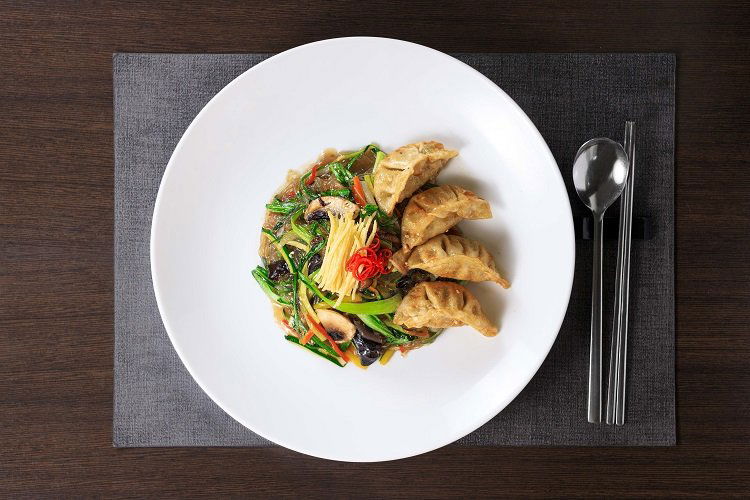
Gainn has been introducing Rome to Korean cooking since 2007, which in the context of Rome's dining scene makes it a veteran. The kitchen focuses on the structural pillars of Korean food: rice-based dishes, soups, meat and fish preparations, and a heavy presence of vegetables and soya-fermented components. The Michelin Plate, awarded consecutively in 2024 and 2025, signals food worth your attention without implying the ceremony of a starred room.
The format here is communal. The ideal way to eat at Gainn is to order several dishes and share across the table. This is not a restaurant where you choose one plate and eat alone; it is built for the shared-table dynamic that defines Korean dining culture. Come with at least one other person, ideally more. A table of four gives you the range to try the full breadth of the menu across meat, fish, vegetable, and soup categories.
One practical note: there are no desserts on the menu. If that is a dealbreaker for your group, factor it in before you arrive.
Seasonal Considerations
Korean cuisine is a fermentation-forward tradition, which means its leading flavours are shaped by time and season as much as by any single ingredient. Dishes built on doenjang, gochujang, or kimchi change character depending on how long those fermented bases have aged, and autumn through winter is when many fermented preparations are at their most developed. If you are visiting Rome between October and March, you are likely eating Korean food at Gainn at the moment when its foundational flavours are most pronounced. The cooler months also favour the heavier soups and braises that benefit from the season. Summer visits are no less valid, but the menu logic tilts toward lighter rice and vegetable dishes when the heat rises. Ask the staff what is reading well on the day. At this price tier, there is no downside to ordering widely and letting the kitchen guide you.
For travellers interested in how Korean cuisine looks at the highest level, Mingles and Kwonsooksoo in Seoul represent the benchmark. Gainn is not operating at that register, but in Rome, it does not need to. It is filling a specific gap in a city that does not otherwise offer much Korean cooking, and it is doing so with enough consistency to have earned Michelin recognition twice running.
Booking and Timing
Gainn is easy to book. A week's notice should be sufficient for most evenings. If you are travelling in peak tourist season (May to September) or planning a larger group dinner, booking two weeks out is sensible. There is no reported tasting menu format here, so you are not committing to a single price-fixed experience. Show up hungry and order broadly.
For context on the wider Rome dining picture, see our full Rome restaurants guide. If you are still planning your trip, our Rome hotels guide, bars guide, and experiences guide cover the rest of the city.
How It Compares: Practical Details
| Venue | Cuisine | Price | Michelin Status | Booking Difficulty |
|---|---|---|---|---|
| Gainn | Korean | € | Michelin Plate (2025) | Easy |
| Zia | Modern Italian, Innovative | €€€ | Michelin recognised | Moderate |
| La Palta | Country cooking | €€€ | Michelin recognised | Moderate |
| Idylio by Apreda | Modern Italian | €€€€ | Michelin starred | Moderate-Hard |
| Il Pagliaccio | Contemporary Italian, Creative | €€€€ | Michelin starred | Hard |
Also Worth Knowing
If Korean food is what brought you here, Gainn is your only serious option in Rome. But if you are building a wider Rome itinerary around serious restaurants, Acquolina, Achilli al Parlamento, and La Pergola represent the city's Italian fine dining ceiling. They sit in a completely different price bracket and format, but they are the comparators if Gainn is one meal in a longer restaurant-focused trip.
Italy's broader range of destination dining also includes Osteria Francescana in Modena, Uliassi in Senigallia, Reale in Castel di Sangro, Dal Pescatore in Runate, Quattro Passi in Marina del Cantone, and Atelier Moessmer Norbert Niederkofler in Brunico, all of which are worth planning around if you are spending more time in the country. See also our Rome wineries guide for producers worth visiting alongside your restaurant bookings.
FAQ
Is Gainn worth the price?
- Yes. At € per head, Gainn delivers Michelin Plate-recognised Korean cooking in a city where this cuisine is otherwise almost absent. The value is clear: you are not paying for ceremony or a starred room, you are paying for food that is genuinely worth eating.
What should I order at Gainn?
- Order a selection of dishes to share rather than one plate each. The menu spans rice dishes, soups, meat, fish, and vegetable preparations. In cooler months, lean into the soups and heartier meat options. In summer, the rice and vegetable dishes tend to be the better call. No desserts are served, so plan your evening accordingly.
What should a first-timer know about Gainn?
- It is a shared-table format. Come with at least one other person and order across multiple categories. There are no desserts. It has been open since 2007 and holds a 2025 Michelin Plate, so it is not an experiment. If you have never eaten Korean food before, this is a low-cost, low-risk way to start.
Is the tasting menu worth it at Gainn?
- There is no reported tasting menu at Gainn. The format is à la carte dishes designed for sharing. Order broadly rather than narrowly and you will get a more representative meal than any fixed menu would deliver anyway.
Can Gainn accommodate groups?
- The shared-dish format makes Gainn well-suited to groups. A table of four or more lets you order across the full menu without anyone missing out. For larger parties, book at least two weeks in advance. Contact the restaurant directly to confirm availability, as phone and booking details are not listed publicly.
What are alternatives to Gainn in Rome?
- For Korean food specifically, Gainn has no direct competitor in Rome worth naming at the same level. If you want to compare against Rome's broader Michelin-recognised mid-range restaurants, Zia offers modern Italian at €€€ and is bookable without too much lead time. For a step up in formality and price, Idylio by Apreda at €€€€ is the next logical comparison. Neither replaces Gainn if Korean food is what you want.
Planning details
- Location
- Via dei Mille, 18, 00185 Roma RM, Italy
- Website
- gainnrome.com
- Phone
- +39 06 4436 0160
The take
The Take
The Vibe
Gainn presents as a quietly resolute presence in Rome’s dining scene. Operating from Via dei Mille since 2007, it reads less like a trend and more like an established go‑to for Korean cuisine: steady, familiar and rooted in its Esquilino context. The restaurant’s longevity and the Michelin Plate recognition underline a kitchen that values consistency and technical care over flash. For diners seeking genuine Korean flavors within the city, Gainn feels like a discoverable steadiness — a compact, classic spot that quietly rewards repeat visits rather than headline‑grabbing innovation.
Best For
Gainn is best suited to anyone looking for dependable Korean food in Rome — families, groups and casual gatherings in particular. Its reputation as the address locals and visiting Koreans gravitate toward positions it as a social, communal option rather than a formal tasting‑menu destination. Because the kitchen emphasizes reliable execution, the restaurant works well for dinners where the point is comforting, familiar flavors and shared plates rather than experimental tasting sequences. The Esquilino location also makes it a good choice for visitors wanting an authentic neighbourhood meal.
Ordering Tips
Stick to the classics that define Gainn’s reputation: bulgogi, kimchi jjigae, yangnyeom chicken and tokpokki are singled out as signature choices. The Michelin Plate nod suggests those staples are handled with steady technique, so order a mix of grilled and stew dishes to sample the kitchen’s range. If you’re with others, choose multiple items to share so you can taste contrasting textures and spice levels. Given the restaurant’s longstanding place in Rome’s Korean scene, leaning on its best‑known dishes is a reliable way to gauge what the kitchen does well.
Venue details
Ambiance
Cozy, clean, simple, and welcoming atmosphere with a dark interior in some descriptions.
Tags
Vibe
Best For
Experience
At the Table
- Dress Code
- Casual
- Noise Level
- Conversational
- Service Style
- Upscale Casual
- Meal Pacing
- Standard
- Capacity
- Medium
- Kitchen
- Traditional
- Menu Format
- A la carte, Small plates
- Dietary
- Vegetarian friendly
Signature Dishes
- bulgogi
- kimchi jjigae
- yangnyeom chicken
- tokpokki
Know before you go
Know Before You Go
- Getting there
- Via dei Mille, 18, 00185 Roma RM, Italy
Planning details
Location
Recognition and awards
Also consider
Also Consider
- Il Pagliaccio, Contemporary Italian, Creative, €€€€
- Enoteca La Torre, Creative, €€€€
- Idylio by Apreda, Modern Italian, Italian Contemporary, €€€€
- La Palta, Country cooking, €€€
- Zia, Modern Italian, Innovative, €€€
Restaurant context
Gainn sits in a different category from most Michelin-recognised restaurants in Rome, and that distinction matters when you are deciding where to spend your evenings. At €, it is one of the most affordable Michelin Plate restaurants in the city. Il Pagliaccio and Enoteca La Torre both operate at €€€€ with starred kitchens and tasting menu formats. If your priority is spending a special-occasion evening with full Italian fine dining ceremony, those two are the better choice. If your priority is eating well on a normal evening without a significant outlay, Gainn wins on value by a wide margin.
Zia at €€€ is the closest mid-market Italian competitor in terms of booking difficulty and general accessibility, but it serves modern Italian cooking and is not a direct cuisine comparison. Idylio by Apreda at €€€€ is a strong choice if you want a formal modern Italian room with serious technique. La Palta at €€€ offers country-style Italian cooking with Michelin recognition and is worth considering if you want something rooted and regional rather than creative and contemporary.
The honest answer is that Gainn does not compete with any of these venues on cuisine type, and that is precisely its advantage. If you are building a Rome restaurant itinerary and want variety, Gainn fills the Korean slot that nothing else in the city covers at this quality level. Pair it with one of the Italian options above across different nights rather than treating them as alternatives to each other.
Around this place
Discover more on Pearl
Unlock the full Gainn guide in Pearl, including awards, comparisons, FAQs, planning details, and nearby places.
Compare Gainn
| Venue | Cuisine | Awards | Booking Difficulty |
|---|---|---|---|
| Gainn | Korean | 2026 Michelin Plate2025 Michelin Plate2024 Michelin Plate | Easy |
| Il Pagliaccio | Contemporary Italian, Creative | 2026 OAD Classical in Europe Ranked · #121Star Wine Lists 20262026 Wine Spectator Best of Award of Excellence2026 Les Grandes Tables du Monde Members2026 Michelin 2 Stars2026 La Liste Top Restaurants2026 Falstaff Restaurant Guide2025 OAD Classical in Europe Ranked · #1162025 Wine Spectator Best of Award of Excellence | Unknown |
| Enoteca La Torre | Creative | 2026 La Liste Top Restaurants2026 Michelin 2 Stars2026 Falstaff Restaurant Guide2025 OAD Classical in Europe Ranked · #2562025 La Liste Top Restaurants2025 Michelin 2 Stars2024 OAD Classical in Europe Ranked · #2082024 Michelin 2 Stars | Unknown |
| Idylio by Apreda | Modern Italian, Italian Contemporary | 2026 OAD Top Restaurants in Europe Recommended2026 La Liste Top Restaurants2026 Michelin 1 Star2025 OAD Top Restaurants in Europe Ranked · #5152025 La Liste Top Restaurants2025 The Best Chef One Knife2025 Michelin 1 Star2024 OAD Top Restaurants in Europe Ranked · #4802024 Michelin 1 Star | Unknown |
| La Palta | Country cooking | 2026 OAD Top Restaurants in Europe Recommended2026 Michelin 1 Star2025 OAD Casual in North America Ranked · #8142025 Michelin 1 Star2025 The Best Chef One Knife2024 OAD Casual in North America Ranked · #7812024 Michelin 1 Star2023 OAD Casual in North America Recommended | Unknown |
| Zia | Modern Italian, Innovative | 2026 OAD Top Restaurants in Europe Ranked · #992026 Michelin 1 Star2026 Falstaff Restaurant Guide2025 OAD Top Restaurants in Europe Ranked · #962025 Michelin 1 Star2025 The Best Chef One Knife2024 OAD Top Restaurants in Europe Ranked · #1002024 Michelin 1 Star2023 OAD Top New Restaurants in Europe Ranked · #140 | Unknown |










Comparing your options in Rome for this tier.
FAQ
Frequently Asked Questions
Can Gainn accommodate groups?
Gainn's sharing-format menu makes it naturally suited to groups — the kitchen's own guidance is to order a selection of dishes across the table. At the € price point, splitting a broad spread keeps costs very manageable. Call ahead for larger parties, as no booking policy is confirmed in available data.
What are alternatives to Gainn in Rome?
There are no direct Korean alternatives to Gainn in Rome — it has occupied that space since 2007 and holds a Michelin Plate. If you want a different style of serious dining in Rome, Idylio by Apreda or Il Pagliaccio operate at a much higher price point and a completely different format. For Korean food specifically, Gainn is your only serious option.
What should I order at Gainn?
The venue's own advice is to order a selection of dishes to share: rice-based plates, soups, meat, fish, and vegetable dishes all feature. Skip planning a dessert course — there are none on the menu. Come hungry and order broadly rather than narrowly.
Is Gainn worth the price?
At the € price range, Gainn is one of Rome's better-value Michelin Plate restaurants. You are paying for consistent Korean cooking backed by 17 years of operation and two consecutive Michelin Plates, not for a prestige dining occasion. The value case is strong for what it is.
What should a first-timer know about Gainn?
Order to share — that is how the menu is designed to work, and it gives you the widest read on the kitchen. There are no desserts, so plan your meal around savoury courses. Gainn is at Via dei Mille 18 in Rome, has been running since 2007, and holds a Michelin Plate for 2024 and 2025.
Is the tasting menu worth it at Gainn?
No tasting menu format is confirmed in the available data for Gainn. The kitchen operates on a sharing model where you build your own selection from the full menu. That approach gives you more control over what you spend and eat than a fixed tasting course would.