
Restaurant in Tokyo, Japan
Ren Mishina
1,050ptsFive-year Tabelog Bronze. Book it.


About Ren Mishina
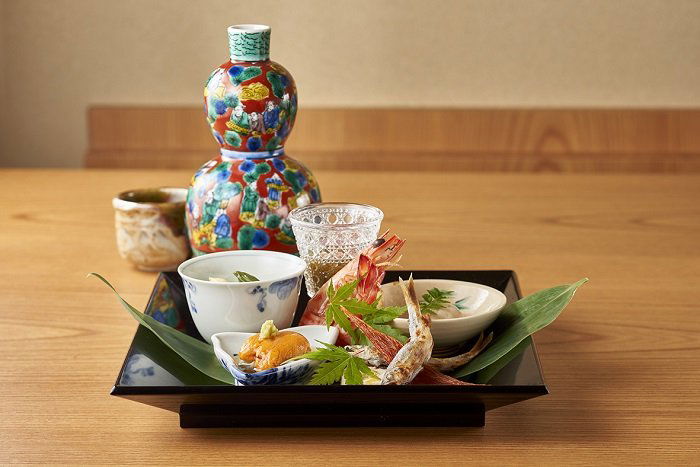
Ren Mishina is a strong case for kaiseki in Ginza at JPY 50,000–59,999 per head. Five consecutive Tabelog Bronze Awards (2022–2026) and three Tokyo Top 100 selections back up a kitchen built on charcoal technique, seasonal fish, and minimal pretension. The 16-seat basement room — six counter seats, two private rooms — is easy to book and well-positioned five minutes from Ginza Station.
Ren Mishina, Ginza: The Verdict
At JPY 50,000–59,999 per head, Ren Mishina is one of the most consistent kaiseki arguments in central Tokyo. Five consecutive Tabelog Bronze Awards (2022–2026), three selections for the Tabelog Japanese Cuisine Tokyo Top 100 (2021, 2023, 2025), and a score of 4.11 from Japan's most demanding reviewing platform make the case clearly. If you are spending serious money on kaiseki in Ginza, this is a booking worth making.
The Space
Ren Mishina seats 16 people across a six-seat counter and two private rooms, one for four and one for six. You access the restaurant through a lattice door off Ginza's main axis, descending to a basement room where Indian-ink lotus paintings line the wall behind the counter. The scale is deliberate: intimate enough that you are close to the preparation, contained enough that the room stays quiet. For a solo diner or a couple, the counter is the right call. For groups of four or six, the private rooms are available and bookable. The room is entirely non-smoking. Skip strongly scented perfumes or colognes — the restaurant asks guests to avoid them to preserve the integrity of the food experience.
The address puts you five minutes on foot from Ginza Station's C2 exit and four minutes from Shimbashi Station, which makes Ren Mishina the most accessible of Ginza's serious kaiseki addresses. That convenience matters when you are coordinating around an evening's dining in central Tokyo. For context on what else this neighbourhood offers, see our full Tokyo restaurants guide, alongside guides to Tokyo hotels, Tokyo bars, Tokyo wineries, and Tokyo experiences.
The Food
Chef Jun Mishina's stated orientation is toward honesty in cooking: no affectation, no theatrical flourish, just precise technique applied to seasonal Japanese ingredients. The kitchen is particular about fish and about the quality of its sake programme. The drink list covers nihonshu, shochu, and wine, with notable attention paid to both sake and wine selections. BYO is accepted, which is worth knowing if you have a specific bottle in mind for a special occasion.
Ren Mishina opened in June 2018, which means the track record is now substantial — seven years of consistent award recognition across Tabelog's most competitive market. That longevity in Ginza, where turnover among high-end restaurants is real, is its own signal. The venue is also ranked #331 in Japan by Opinionated About Dining (2025 data), which confirms that recognition extends beyond the domestic audience. Tabelog reviewer spending suggests most guests land in the JPY 30,000–39,999 range based on review averages, though the listed price band is JPY 50,000–59,999 , worth checking directly before booking to understand the current menu structure.
For visitors looking to compare kaiseki quality across Japan, the traditions represented here have close parallels at Hyotei and Kikunoi Honten in Kyoto, and in Tokyo, RyuGin and Kanda occupy adjacent territory at the leading of the format. Within Ginza specifically, Ginza Kojyu and Ginza Shinohara are the most direct peers on the same block. Outside Tokyo, the kaiseki tradition extends to Gion Sasaki in Kyoto and, further afield, to HAJIME in Osaka.
Ginza as Context
Ginza is the address that makes Ren Mishina easier to recommend to a visitor than to a Tokyo local planning around the city's full options. It is central, well-served by transit, and positioned in a district where the surrounding neighbourhood , galleries, high-end retail, bars , means you can build a full evening without crossing town. The basement entrance with its gallery at street level is also the kind of detail that distinguishes this from restaurants that sit in anonymous tower lobbies. The lotus-season paintings behind the counter are not decorative filler: in Japanese floral symbolism, the lotus carries a clear meaning (purity, an unaffected spirit), and it matches the cooking philosophy directly. For food-focused travellers interested in this level of alignment between setting and food, it adds a layer that is worth knowing before you arrive. If your Tokyo itinerary also includes destinations like Kohaku, or you are planning wider Japan dining at akordu in Nara, Goh in Fukuoka, 1000 in Yokohama, or 6 in Okinawa, Ren Mishina fits naturally into a serious itinerary without requiring a detour.
Booking
Booking difficulty is rated Easy by Pearl. Reservations are available and accepted, but the restaurant's own policy notes that any changes to date, time, or guest numbers incur a cancellation fee calculated from the date the change is requested. Book with a confirmed group and stick to the plan. Lunch runs Wednesday through Saturday from 12:00; dinner runs Tuesday through Saturday from 17:00 with last seating appearing to extend to midnight. The restaurant is closed Sundays, most Mondays, and on public holidays including early May, late August, and year-end. Credit cards accepted (VISA, Mastercard, JCB, AMEX, Diners, UnionPay). No electronic money or QR code payment. Parking is not available.
Know Before You Go
- Price per head: JPY 50,000–59,999 (service charge included)
- Seating: 16 total , 6-seat counter, two private rooms (4-person and 6-person)
- Lunch hours: Wednesday–Saturday from 12:00
- Dinner hours: Tuesday–Saturday from 17:00 (to midnight)
- Closed: Sunday, most Mondays, public holidays
- Getting there: 5-min walk from Ginza Station (Exit C2); 4-min walk from Shimbashi Station
- Payment: Credit card (VISA, MC, JCB, AMEX, Diners, UnionPay) , no electronic money or QR
- Children: Ages 12 and over welcome
- BYO: Permitted
- Dress code note: Avoid strongly scented cosmetics or perfumes
- Smoking: Non-smoking throughout
- Booking difficulty: Easy
- Awards: Tabelog Bronze 2022–2026; Tabelog Japanese Cuisine Tokyo Top 100 (2021, 2023, 2025); OAD Leading Restaurants Japan #331 (2025)
How It Compares
Compare Ren Mishina
| Venue | Price | Value |
|---|---|---|
| Ren Mishina | ¥¥¥¥ | — |
| Harutaka | ¥¥¥¥ | — |
| L'Effervescence | ¥¥¥¥ | — |
| RyuGin | ¥¥¥¥ | — |
| HOMMAGE | ¥¥¥¥ | — |
| Crony | ¥¥¥¥ | — |
Key differences to consider before you reserve.
Frequently Asked Questions
Is the tasting menu worth it at Ren Mishina?
Yes, for the format. At JPY 50,000–59,999 per head, you are paying for a restrained, technique-led kaiseki built around seasonal ingredients — bamboo shoots, pike conger, matsutake, puffer fish — cooked over charcoal without theatrical flourish. Five consecutive Tabelog Bronze Awards and inclusion in the Tabelog Tokyo Top 100 for 2021, 2023, and 2025 put it among the most consistently rated kaiseki restaurants in central Tokyo. If you want showmanship or fusion ideas, look elsewhere; if you want honest Japanese cooking at a high level, this justifies the price.
Is Ren Mishina good for solo dining?
Yes. The six-seat counter is the right setting for a solo guest: you get full access to the kitchen view and the natural rhythm of the meal without the social pressure of a private room. The 16-seat total means the room stays quiet. Book the counter directly when reserving.
Is lunch or dinner better at Ren Mishina?
Lunch is the more practical option. At JPY 30,000–39,999 per head based on reviewer-reported spending, lunch runs meaningfully cheaper than dinner (JPY 50,000–59,999), and the format appears comparable. Lunch runs Wednesday through Saturday from 12:00; dinner runs Tuesday through Saturday from 17:00. If the price gap matters to your budget, lunch is the clearer value case.
Does Ren Mishina handle dietary restrictions?
check the venue's official channels before booking — the venue data does not specify a formal dietary accommodation policy. Given that kaiseki menus are composed around seasonal Japanese ingredients and the kitchen emphasises fish, guests with seafood restrictions or strict dietary requirements should confirm in advance via the restaurant's website at ginza-ren.jp or by phone at 03-6265-0177. Changes to reservations after booking incur cancellation fees, so clarify requirements before confirming.
Can Ren Mishina accommodate groups?
Groups of up to six can be seated in the larger private room; a second private room seats four. The full restaurant holds only 16 guests, so parties larger than six cannot be accommodated without booking the entire venue — which is listed as unavailable for private hire. For groups of two to six, a private room is a reasonable option and worth requesting at the time of reservation.
Is Ren Mishina worth the price?
At JPY 50,000–59,999 for dinner, it sits at the upper end of Tokyo kaiseki pricing, but the track record supports the ask: Tabelog Bronze every year from 2022 through 2026, a Tabelog score of 4.11, and a ranking of #331 in Opinionated About Dining's Japan list for 2025. The Ginza address adds convenience for visitors. Where it earns its price is in consistency and restraint rather than spectacle — if you are after a bolder, more contemporary kaiseki statement, RyuGin makes a stronger case for the same spend.
Hours
- Monday
- Closed
- Tuesday
- 5:30 pm–12 am
- Wednesday
- 12 pm–12 am
- Thursday
- 12 pm–12 am
- Friday
- 12 pm–12 am
- Saturday
- 12 pm–12 am
- Sunday
- Closed
Recognized By


More restaurants in Tokyo
- SazenkaSazenka is the address for Chinese cuisine in Tokyo at its most technically demanding. Chef Tomoya Kawada's wakon-kansai approach — Japanese seasonal ingredients applied through Chinese culinary technique — has earned consecutive Tabelog Gold Awards from 2019 to 2026, a #71 ranking on the World's 50 Best 2025, and 99 points from La Liste 2026. At JPY 50,000–59,999 per head, it is one of the hardest tables in the city to book and worth the effort.
- SézanneOccupying the seventh floor of the Four Seasons Hotel Tokyo at Marunouchi, Sézanne earned its first Michelin star within months of opening in July 2021 and now holds three. British chef Daniel Calvert applies French technique to Japanese ingredients, producing a prix-fixe format that Tabelog has recognised with Silver awards every year from 2023 through 2026. It ranked 4th in Asia's 50 Best Restaurants in 2025 and 15th globally in 2024.
- NarisawaNarisawa is Tokyo's most credentialled innovative tasting menu restaurant — two Michelin stars, Asia's 50 Best number 12, and a Tabelog Silver award — running at JPY 80,000–99,999 per head. Book for a milestone occasion, confirm vegetarian or vegan needs in advance, and reserve at least two to three months out. With 15 seats and reservation-only access, this is one of Tokyo's hardest tables to secure.
- FlorilègeFlorilège delivers two Michelin stars and an Asia's 50 Best #17 ranking at a dinner price of ¥22,000 — competitive for Tokyo at this level. Chef Hiroyasu Kawate's plant-forward tasting menus around an open-kitchen counter at Azabudai Hills make this the strongest choice for contemporary French dining in Tokyo if theatrical, produce-led cooking is what you want. Book well in advance; availability is near-impossible at short notice.
- QuintessenceQuintessence is Tokyo's most consistently decorated French restaurant: three Michelin stars held through 2025, a La Liste score of 96.5 points, and a Tabelog Gold run from 2017 to 2024. Dinner runs ¥60,000–¥79,999 all in with wine. Book the first seating (5 PM) well ahead — Near Impossible to secure — and come for classical French cooking executed with sustained precision in a secluded Gotenyama setting.
- MyojakuMyojaku is a 2-Michelin-star, 14-course French-leaning omakase in Nishiazabu holding a 4.47 Tabelog score, Tabelog Silver 2025–2026, and Asia's 50 Best #45 (2025). Chef Hidetoshi Nakamura's water-forward, no-dashi approach shifts meaningfully with the seasons — making timing your reservation as important as getting one. Budget JPY 50,000–59,999 per head plus 10% service charge; reservations only, near-impossible to secure.
Related editorial
- Asia's 50 Best Restaurants 2026: The Chairman and Wing Go 1-2 from the Same BuildingThe Chairman takes No. 1 and Wing climbs to No. 2 at Asia's 50 Best Restaurants 2026. Both operate from the same Hong Kong building. Here's what it means.
- Four Seasons Yachts Debut: 95 Suites, 11 Restaurants, and a March 2026 Maiden VoyageFour Seasons I launches March 20, 2026, with 95 suites, a one-to-one staff ratio, and 11 onboard restaurants. Worth tracking if you want hotel-grade service at sea.
- LA Michelin Guide 2026: Seven New Restaurants from Tlayudas to Uzbek DumplingsMichelin's March 2026 California Guide update adds six LA restaurants and one Montecito newcomer, spanning Oaxacan tlayudas, Uzbek manti, and Korean-Italian pasta.
Save or rate Ren Mishina on Pearl
Keep this venue in your Pearl passport, rate it after you visit, and track it alongside every other place you collect.