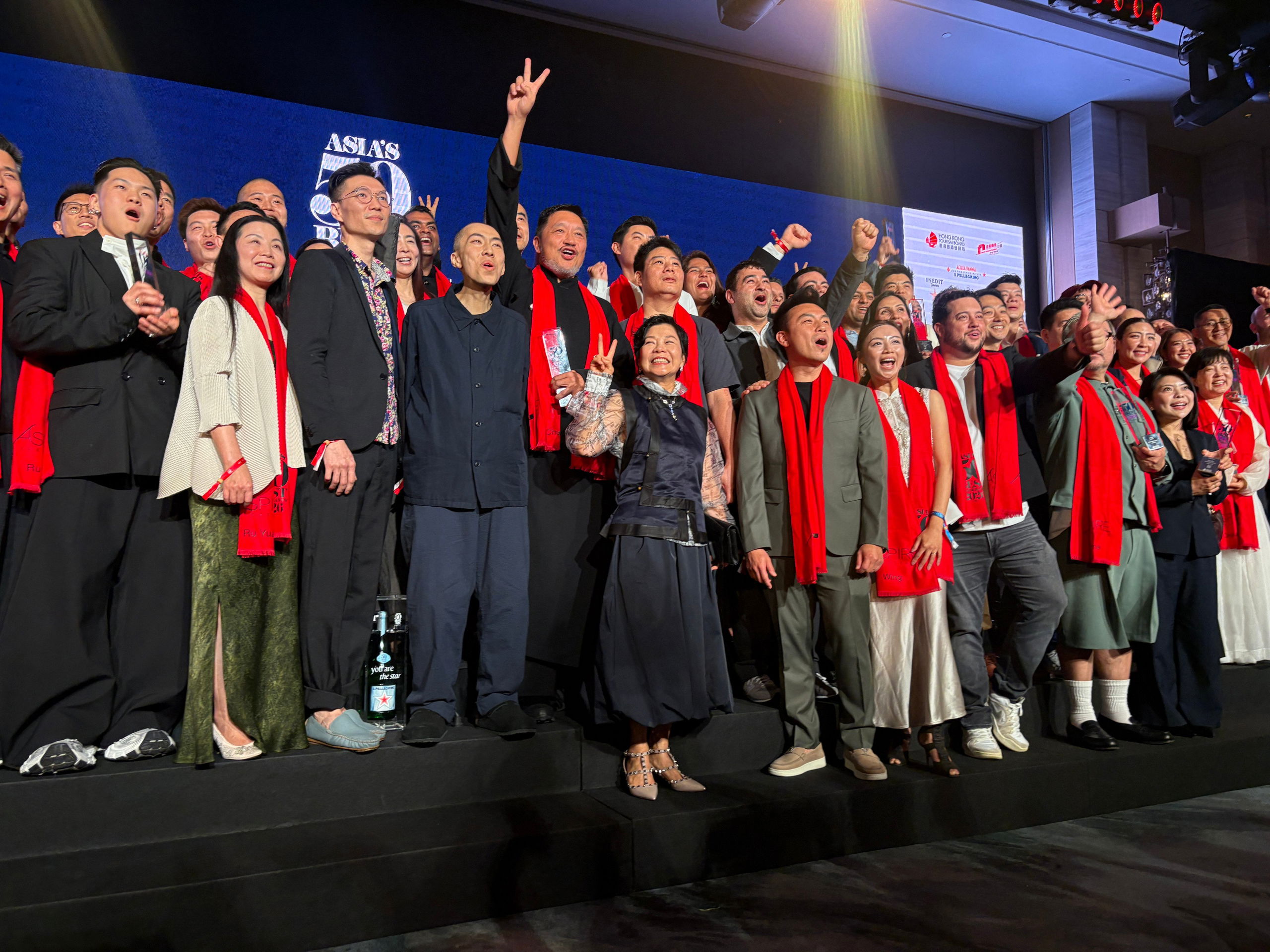
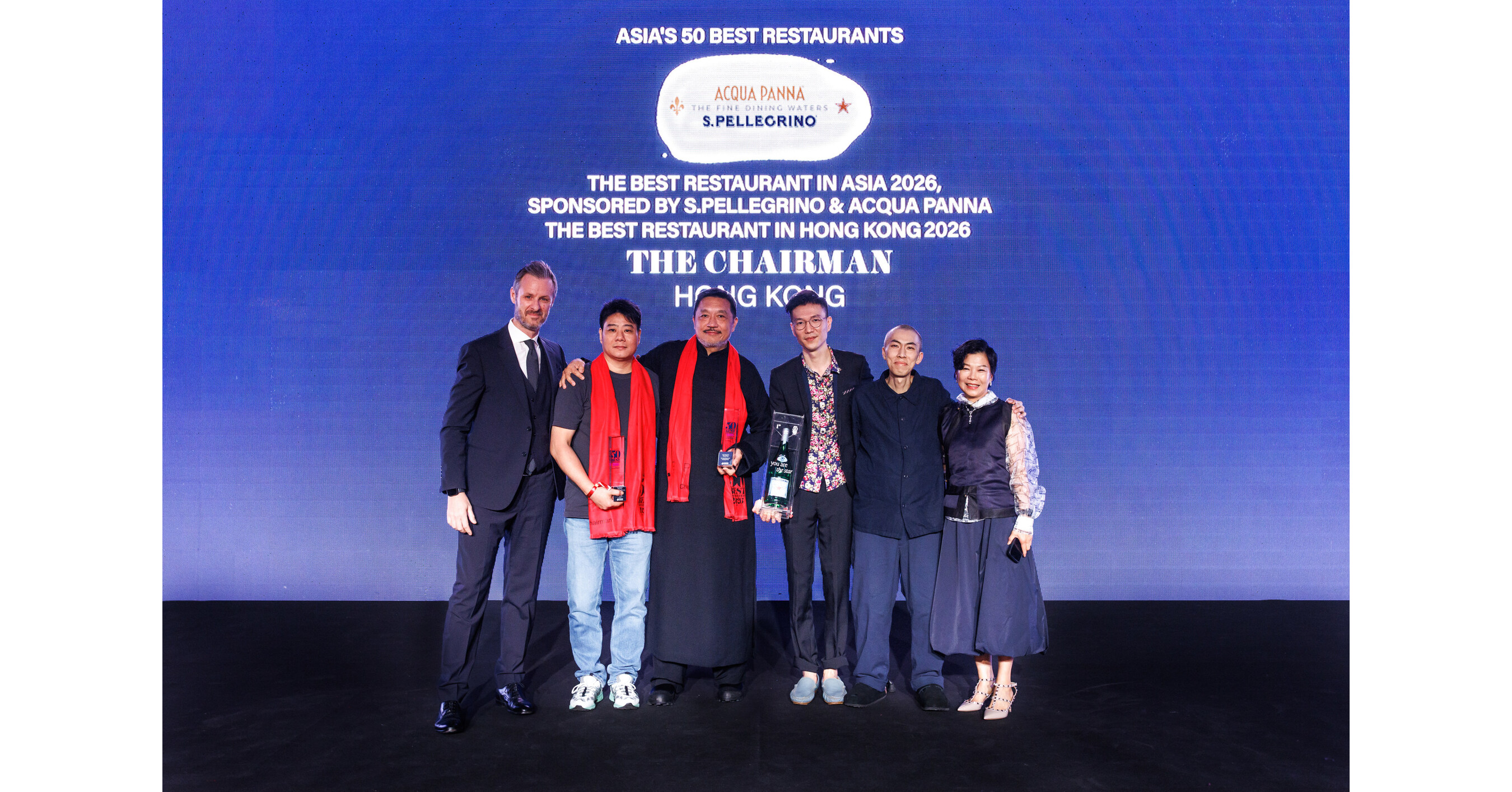
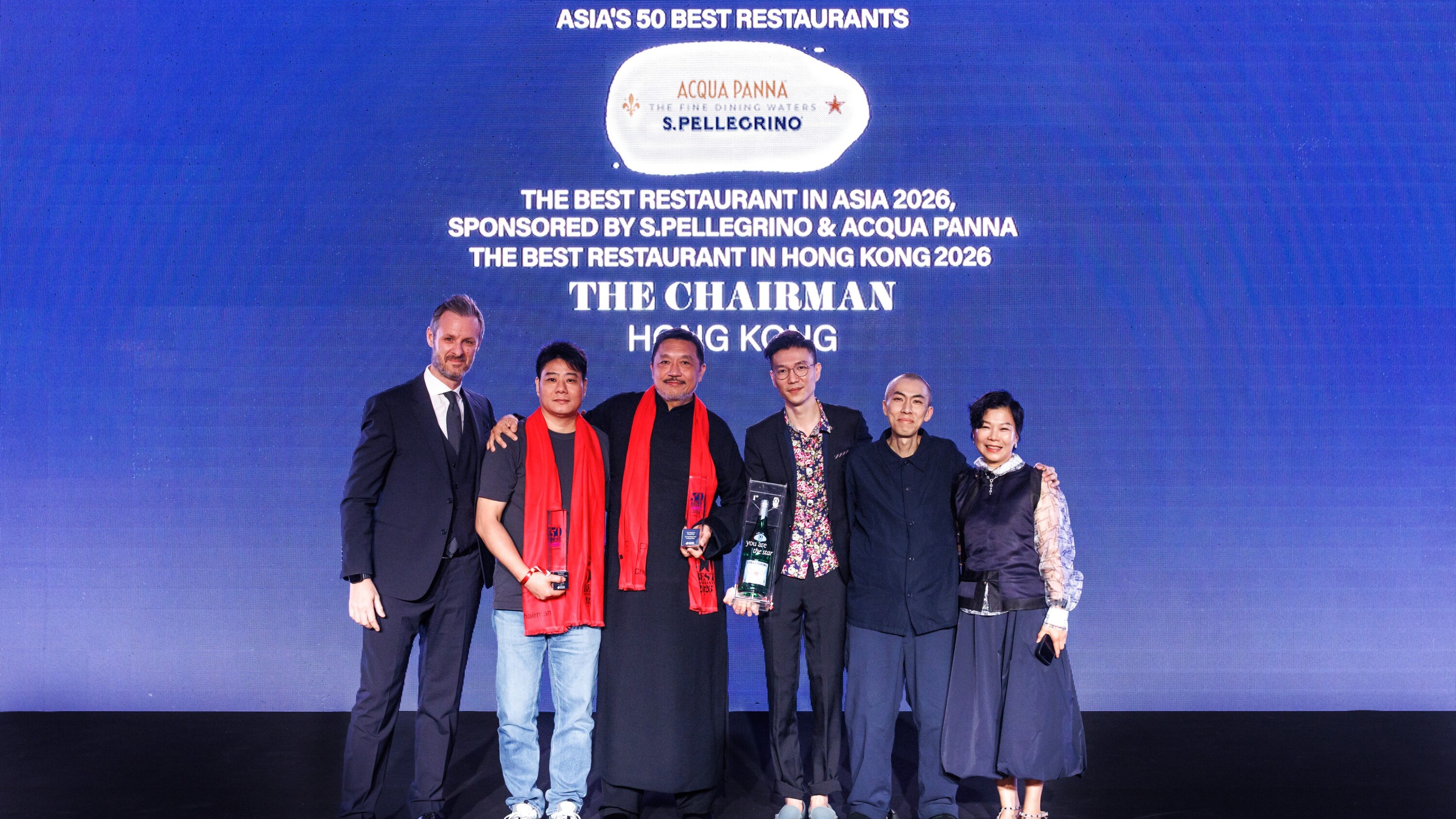
The Chairman claimed the No. 1 spot at Asia's 50 Best Restaurants 2026. Wing climbed to No. 2. Both restaurants operate from the same building in Hong Kong. That's never happened before in the list's history: two restaurants sharing an address and sweeping the top two positions. If you've been watching Hong Kong's dining scene rebuild over the past few years, this is the result that confirms the trajectory.
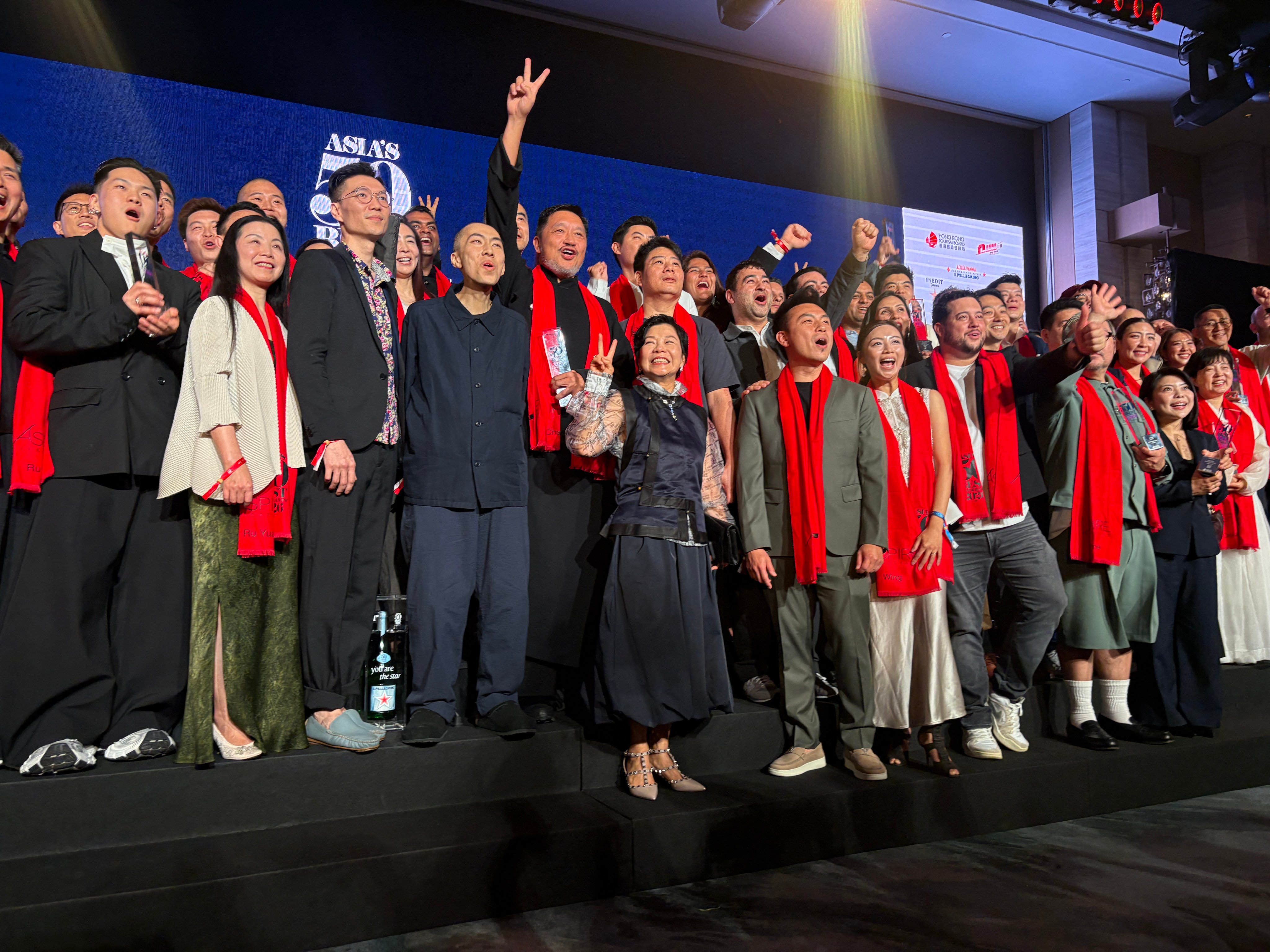
The ceremony itself, held on the evening of March 25 at the Kerry Hotel in Hung Hom, marked the first time Hong Kong hosted Asia's 50 Best Restaurants. The city didn't just play host. It dominated.
Asia's 50 Best Restaurants 2026: The Chairman and Wing Make History
Start with the headline fact: two restaurants, one building, the top two positions on the continent's most closely watched annual dining ranking. The Chairman has been a fixture on the Asia's 50 Best list for years, known for its Cantonese cooking rooted in direct sourcing from local farms and fishermen. Wing, located in the same building, climbed to No. 2 this year. The proximity isn't a coincidence of real estate. It reflects a concentration of talent and intent in a single Hong Kong address that, as Yip joked on stage, likely has good feng shui.
Yip, accepting the No. 1 award for The Chairman, said on stage: "It means everything to us to win this award in Hong Kong." He paid tribute to Wing during his remarks, acknowledging the shared address and the shared moment. The gesture was notable. In a ranking system where restaurants are often framed as competitors, Yip's public acknowledgment of Wing underscored something different: a sense of collective achievement for Hong Kong's dining culture rather than individual rivalry.
For readers deciding where to eat in Hong Kong, the practical takeaway is clear. These two restaurants now sit at the top of the Asia's 50 Best list, and they're in the same building. If you're planning a trip around dining, this single address should anchor your itinerary. Expect reservation pressure to increase for both in the months following the announcement. Wing's climb to No. 2 will bring a wave of new attention from diners who track these rankings closely.
The Chairman's cooking has long centered on Cantonese traditions with an emphasis on ingredient provenance. The restaurant's reputation was built not on spectacle but on the quality of its raw materials and the precision of its preparations. Wing, while sharing a building, offers its own distinct identity. The fact that both earned top honors in the same year, at a ceremony held in their home city, adds a layer of narrative that the ranking hasn't produced before.
Peer Set Snapshot
| Attribute | The Chairman | Wing |
|---|---|---|
| 2026 Ranking | No. 1 | No. 2 |
| Location | Hong Kong | Hong Kong (same building as The Chairman) |
| Cuisine Focus | Cantonese with emphasis on ingredient provenance | Distinct identity from The Chairman (details emerging) |
| Key Distinction | Long-time fixture on Asia's 50 Best list | Climbed to No. 2 in 2026, generating a wave of new attention |
| Notable Detail | Chef Yip acknowledged Wing during acceptance speech | Shares an address with the No. 1 restaurant, a first in list history |
Inside the Kerry Hotel Ceremony: Hong Kong Hosts for the First Time
The 2026 Asia's 50 Best Restaurants ceremony took place in the grand ballroom of the Kerry Hotel in Hung Hom, Hong Kong, on the evening of March 25. This was the first time Hong Kong served as the host city for the event, as reported by the South China Morning Post. The choice of venue and city carried weight: the awards landed in a city that proceeded to claim the top two spots on the list.
Hosting the ceremony is a rotating privilege among Asian cities, and the selection of Hong Kong for 2026 coincided with a period of renewed international attention on the city's food scene. The Kerry Hotel, situated on the Kowloon waterfront in Hung Hom, provided the setting. The ballroom filled with chefs, restaurateurs, and food media from across the region, all watching as Hong Kong restaurants took the night's top prizes.
For context, the Asia's 50 Best Restaurants list is compiled through votes from a panel of food writers, chefs, restaurateurs, and food enthusiasts across Asia. The annual ceremony has become a calendar fixture for the industry, with the host city typically using the event to showcase its dining credentials. Hong Kong's first turn as host couldn't have produced a more emphatic local result.
The timing matters for anyone considering a Hong Kong trip. The city's dining infrastructure, from Cantonese banquet halls to modern tasting-menu restaurants, has been rebuilding momentum after several difficult years. The 2026 ceremony landing in Hong Kong, and Hong Kong restaurants taking the top two positions, sends a signal that the city's recovery is underway and producing results at the highest level of international recognition.
A Landmark Night for Chinese Cuisine Across the Region
The 2026 edition of Asia's 50 Best Restaurants saw a strong showing from Chinese restaurants in the top 10, according to the South China Morning Post. Representatives came from Shanghai, Hangzhou, Hong Kong, and Macau. This geographic spread is significant. It reflects growing recognition of Chinese culinary traditions across multiple cities and regional styles, not just the Cantonese cooking that Hong Kong is most associated with internationally.
Shanghai and Hangzhou represent distinct culinary traditions. Shanghainese cuisine leans on braising, stewing, and the use of sugar and soy in ways that differ sharply from Cantonese approaches. Hangzhou's cooking, rooted in Zhejiang province traditions, emphasizes freshwater ingredients and lighter preparations. The presence of restaurants from these cities in the top 10, alongside Hong Kong and Macau, suggests that the Asia's 50 Best voting panel is engaging more deeply with the diversity of Chinese regional cuisines rather than treating Chinese food as a monolithic category.
Macau's inclusion in the top 10 also matters for travelers. The city has long been known for its Macanese fusion cuisine and its casino-hotel dining, but its representation on this list points to a broader recognition of its restaurant culture. For readers planning trips to the Pearl River Delta region, the concentration of top-ranked restaurants across Hong Kong and Macau makes a compelling case for a combined itinerary.
The broader trend here is one that has been building for several years. International restaurant rankings, including Asia's 50 Best and the Michelin Guide, have historically skewed toward Japanese and modern-European-influenced restaurants in Asia. The 2026 results suggest a recalibration. Chinese restaurants, cooking in traditions that predate most Western fine-dining conventions by centuries, are now claiming top positions in a ranking system that was not originally designed around their culinary logic. That shift matters for how the global dining conversation evolves.
For collectors of dining experiences (and Pearl's audience tends to be exactly that), the 2026 results offer a roadmap. The cities to watch in mainland China for high-level Chinese cuisine are Shanghai and Hangzhou. In the Pearl River Delta, Hong Kong and Macau remain the anchors. The density of top-10 restaurants across these four cities means a focused trip through southern and eastern China could hit multiple list entries in a single journey.
What the 2026 Rankings Signal for Hong Kong's Dining Resurgence
Hong Kong's position as a global dining capital has been debated intensely over the past several years. The city faced a series of disruptions that affected its hospitality industry, from social upheaval to pandemic-era restrictions to shifting travel patterns. Restaurants closed. Chefs relocated. International visitors stayed away. The question for the dining world was whether Hong Kong could reclaim its former standing or whether the center of gravity in Asian dining had permanently shifted elsewhere, perhaps to Tokyo, Bangkok, or Singapore.
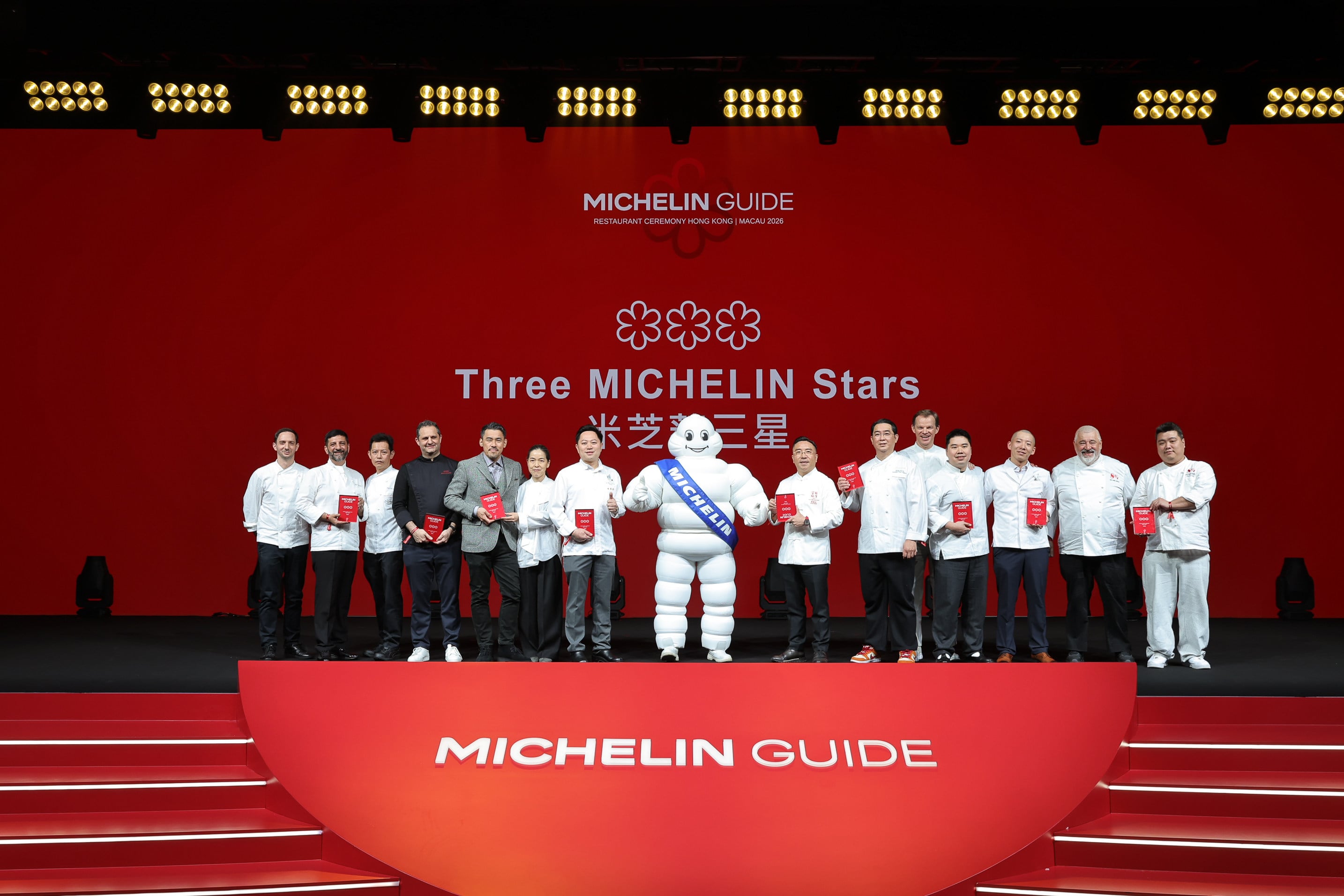
The 2026 Asia's 50 Best results offer a data point in Hong Kong's favor. Taking the No. 1 and No. 2 positions is not a marginal result. It's a dominant one. And it happened at a ceremony held in Hong Kong for the first time, amplifying the local impact. The city didn't just participate in the 2026 rankings. It owned them.
Compare this to recent years. Tokyo has long been the default answer when people ask about Asia's strongest dining city, with its concentration of Michelin-starred restaurants and its deep bench of sushi, kaiseki, and tempura specialists. Bangkok has surged on the strength of its modern Thai restaurants and its affordability relative to other major Asian cities. Singapore has positioned itself as a hub for chef-driven restaurants with international backing. Hong Kong's 2026 result doesn't erase those cities' strengths, but it reasserts Hong Kong's claim to the conversation in a way that's hard to argue with.
For travelers who plan trips around restaurant rankings (and if you're reading Pearl, you probably do), Hong Kong should move up your priority list for 2026. The Chairman and Wing are the headline names, but a city that produces a No. 1 and No. 2 result typically has depth beyond its top entries. The supporting cast of restaurants, the ones ranked further down the list or not on it at all, often benefits from the same ecosystem of suppliers, talent, and culinary culture that produces the leaders.
Practically speaking, Hong Kong remains one of the most accessible major dining cities in Asia. Direct flights connect it to most global hubs. The city's hotel infrastructure ranges from established luxury properties to newer boutique options. And the density of the dining scene means you can eat at a high level multiple times a day without significant travel between restaurants. A three-night trip built around The Chairman, Wing, and a supporting cast of Cantonese restaurants, dim sum specialists, and roast-meat shops is a realistic and rewarding itinerary.
The Same Building: What It Means and Why It Matters
The detail that The Chairman and Wing share a building deserves its own consideration. In most cities, the top two restaurants on any major list would be in different neighborhoods, possibly different districts. Here, they share an address. Yip's on-stage joke about the building's feng shui got laughs, but the underlying point is real: this particular location has become a locus of culinary achievement in Hong Kong.
For diners, the co-location is a practical advantage. You could, in theory, eat at the No. 1 and No. 2 restaurants in Asia on the same day without changing buildings. That's a logistical convenience that no other city on the list can offer for its top two entries. It also creates an interesting dynamic for the restaurants themselves. Sharing a building means sharing foot traffic, sharing a neighborhood reputation, and, to some degree, sharing an audience. The fact that both restaurants thrived in this proximity, rather than cannibalizing each other, speaks to the distinctiveness of their respective offerings.
The co-location also concentrates booking demand. If you're trying to secure a table at The Chairman following the No. 1 announcement, expect competition. The same applies to Wing after its climb to No. 2. Booking early and being flexible on timing will help. If you're visiting Hong Kong specifically for these two restaurants, build your trip dates around reservation availability rather than the other way around.
Where Chinese Cuisine Goes from Here on the Global Stage
The 2026 Asia's 50 Best results, with Chinese restaurants from four different cities in the top 10, mark a moment for the broader recognition of Chinese culinary traditions in international rankings. For years, the conversation about fine dining in Asia was dominated by Japanese cuisine (particularly sushi and kaiseki) and by restaurants cooking in European-influenced modern styles. Chinese restaurants, even those operating at the highest level of technique and ingredient quality, were often underrepresented relative to the depth and diversity of the cuisine.
The 2026 results suggest that dynamic is shifting. The inclusion of restaurants from Shanghai, Hangzhou, Hong Kong, and Macau in the top 10 reflects a voting panel that is engaging with Chinese regional cuisines on their own terms. This isn't about Chinese restaurants adopting Western fine-dining conventions to gain recognition. The Chairman, for instance, has built its reputation on Cantonese cooking that prioritizes sourcing and simplicity over the kind of multi-course tasting-menu theatrics that often characterize top-ranked restaurants elsewhere.
For the dining-obsessed traveler, this trend opens up new itinerary possibilities. Hangzhou, in particular, is a city that many international food travelers have not yet prioritized. Its inclusion in the top 10 via its restaurant representation could drive a new wave of culinary tourism to Zhejiang province. Shanghai, already a major destination, gains further credibility as a city where Chinese cuisine is being practiced at the highest level alongside its well-known international restaurant scene.
The question going forward is whether this recognition continues to build or whether 2026 represents a peak. The Asia's 50 Best list is voted on annually, and results can shift significantly from year to year based on panel composition and voting trends. But the structural factors favoring Chinese cuisine's rise on these lists, including growing international awareness, increased travel to mainland Chinese cities, and a new generation of chefs committed to regional traditions, suggest this is a trend with momentum rather than a one-year anomaly.
Hong Kong's role in this story is central. As the city that produced the No. 1 and No. 2 restaurants and hosted the ceremony for the first time, it enters 2026 with a stronger claim to global dining relevance than it has had in years. For Pearl readers tracking where to eat next in Asia, the answer just got clearer. Start in Hong Kong. Start at that building.
Frequently Asked Questions
When and where was the Asia's 50 Best Restaurants 2026 ceremony held?
The ceremony took place on the evening of March 25, 2026, at the Kerry Hotel in Hung Hom, Hong Kong. This marked the first time Hong Kong served as the host city for the Asia's 50 Best Restaurants event.
Why is the Asia's 50 Best Restaurants 2026 result considered historic?
For the first time in the list's history, two restaurants sharing the same building address claimed the No. 1 and No. 2 positions. The Chairman and Wing both operate from the same building in Hong Kong, making this an unprecedented result in the ranking's history.
How are the Asia's 50 Best Restaurants 2026 rankings determined?
The list is compiled through votes from a panel of food writers, chefs, restaurateurs, and food enthusiasts across Asia. The annual ceremony rotates among Asian cities, with Hong Kong hosting for the first time in 2026.
What style of cuisine does The Chairman serve?
The Chairman is known for Cantonese cooking rooted in direct sourcing from local farms and fishermen. Its reputation was built on the quality of its raw materials and the precision of its preparations rather than spectacle.
Will it be harder to get reservations at The Chairman and Wing after the 2026 rankings?
Reservation pressure is expected to increase significantly for both restaurants in the months following the announcement. Wing's climb to No. 2 in particular will bring a wave of new attention from diners who closely track these rankings.