





Le Jules Verne
French Haute · Gros-Caillou, Paris
Restaurant in Paris, France
 Book with Pearl
The Read
Monument-Height Haute Cuisine
Price
$300–500per person
Chef
Frédéric Anton
Dress
Formal
Why go
Le Jules Verne is a restaurant at the Eiffel Tower in Paris.
About Le Jules Verne
Is Le Jules Verne worth booking in Paris?
Yes — but with conditions. Le Jules Verne holds 2 Michelin Stars (2024 and 2025), a Les Grandes Tables du Monde Award (2025), and an 83-point score on La Liste 2026. Chef Frédéric Anton's kitchen delivers French haute cuisine at the level those credentials demand. The view from the second floor of the Eiffel Tower is not incidental to the experience — it is, for many diners, the point. If you are weighing where to spend a serious amount of money on one Parisian dinner, this is a defensible choice. If you want the most technically ambitious kitchen in the city, there are quieter alternatives. The decision depends on how much the setting matters to your occasion.
The portrait
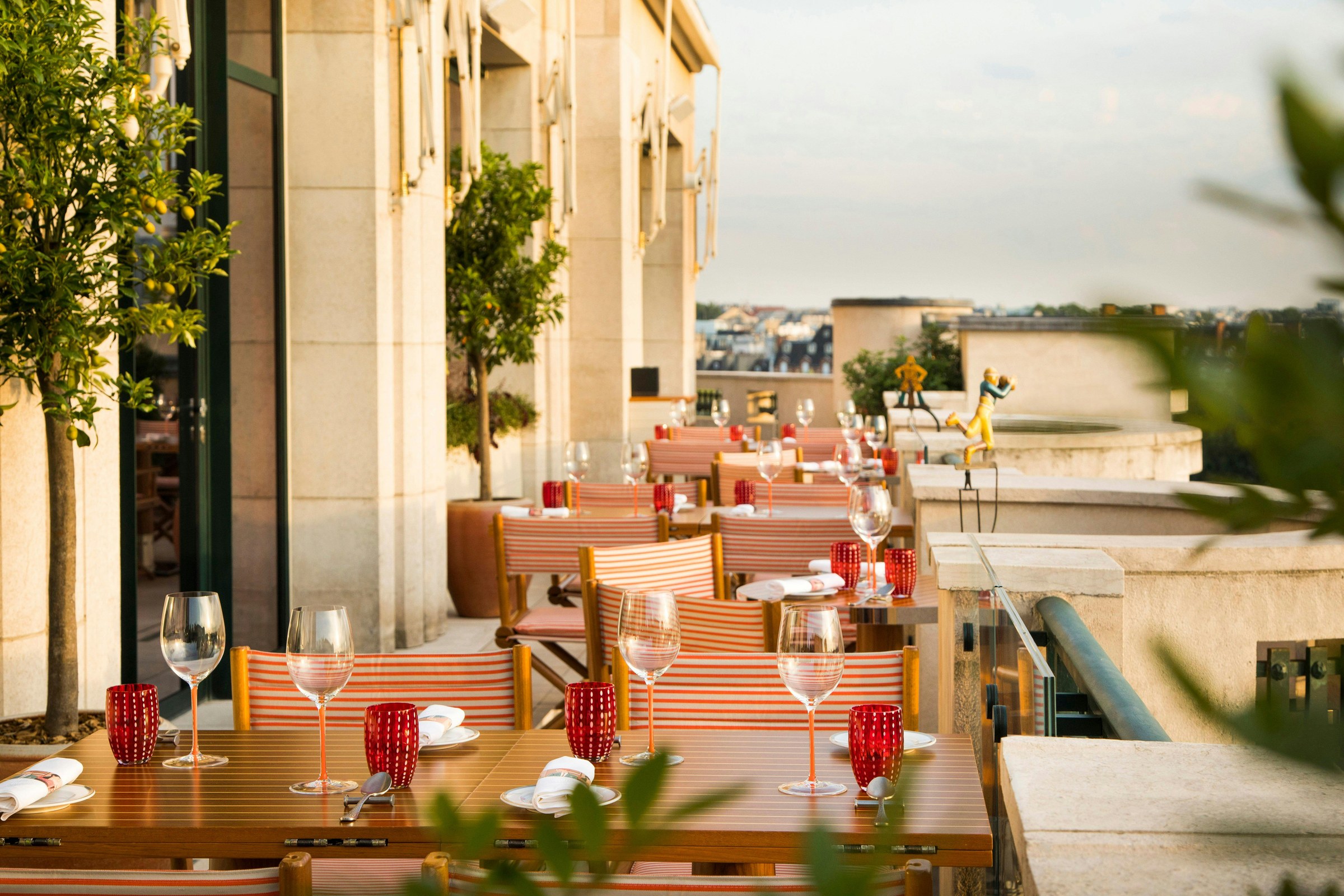
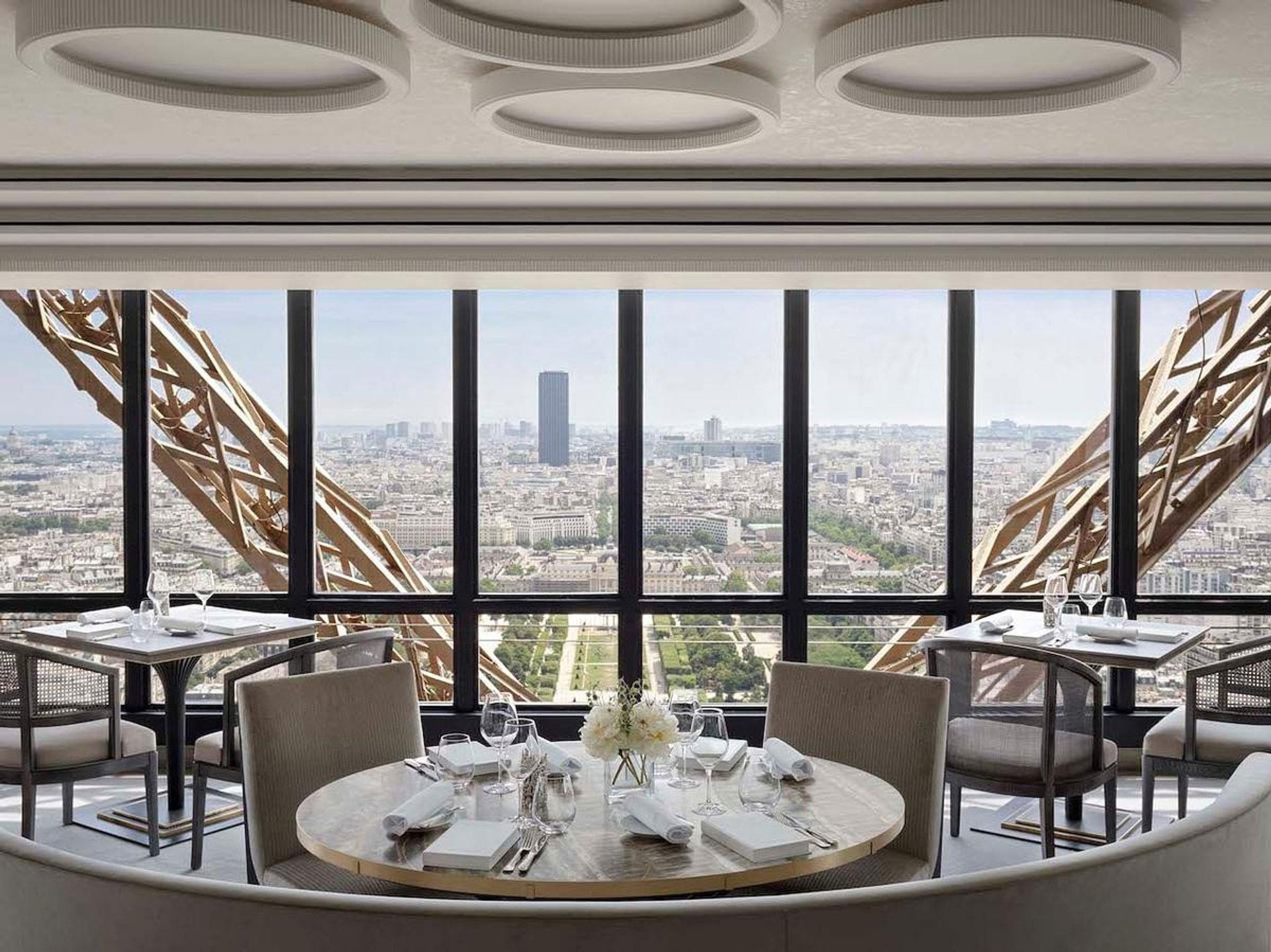
Le Jules Verne sits on the second floor of the Eiffel Tower, which means the visual component of your meal is settled before you sit down. The panorama across Paris, the Seine, Trocadéro, Montmartre in the distance, frames every course. For a special occasion dinner, that backdrop does real work. It removes the need to manufacture atmosphere and delivers something that few other dining rooms in the world can offer at the 2-star level.
Frédéric Anton leads the kitchen with a classical French discipline. The cuisine sits firmly in the French haute tradition: precise, technically grounded, and built around produce quality rather than conceptual theatre. This is not the place to come if you want boundary-pushing tasting menus on the level of what Alain Passard does at Arpège, or the creative ambition of Alléno Paris au Pavillon Ledoyen. Anton's approach rewards diners who value refinement and coherence over provocation.
Multi-visit strategy
If you are planning more than one visit to Le Jules Verne, or weighing a return trip, timing and meal positioning matter. A first visit should be a dinner, ideally timed to arrive before sunset. The visual transition from late-afternoon light over Paris to the Tower's illuminated structure after dark is the defining experience of the room, and you want to be seated for it. Lunch offers lower prices at the same kitchen quality and is easier to book, but you surrender the after-dark spectacle that defines the location at its finest.
A second visit merits different thinking. Lunch during a quieter weekday, particularly outside the July–August tourist peak, gives you a more relaxed room and sharper service attention. If you have already seen the view at night, the daytime light over Paris has its own logic, clearer sightlines, a different city silhouette. The OAD Classical in Europe ranking of #217 (2025) positions Le Jules Verne as a reliable, recognised table rather than a cutting-edge one, which means the cooking itself is worth returning to on its own terms, separate from the spectacle.
For a third visit, or for local Parisians thinking about this differently, the question becomes what you want from the room versus what Anton's menu is doing seasonally. French haute cuisine at this level is built around seasonal market changes, so a visit in late autumn differs meaningfully from one in spring. Timing a third visit around a menu shift makes sense if the food, rather than the setting, is your primary reason to return.
Booking and timing
Booking difficulty here is near impossible without significant lead time. This is one of the hardest reservations to secure in Paris, not because the room is small by fine-dining standards but because demand is global and the location is singular. For a Saturday dinner, plan for two to three months minimum lead time; for a specific date tied to a celebration, book the moment the reservation window opens. Weekday lunches are marginally easier to secure but should not be treated as walk-in options.
The address is Avenue Gustave Eiffel 2ème, inside the Eiffel Tower structure itself. Access is via a dedicated lift, separate from the public queues, confirmed diners bypass the standard entrance. From central Paris, the 7th arrondissement location is well-connected. Paris Orly airport is approximately 20 km away; Paris Charles de Gaulle is approximately 37 km. GPS coordinates are 48.8582, 2.2944 for navigation purposes.
For timing within Paris more broadly, avoid peak tourist months (July and August) if the room's energy matters to you, those months bring the highest density of first-time visitors and the room can feel less considered. May, June, September, and October give you better conditions: pleasant weather for the walk to the tower, manageable crowds, and a room that skews toward destination diners rather than passing tourists.
Occasion fit
Le Jules Verne is purpose-built for special occasions. The combination of a 2-star kitchen, the Eiffel Tower setting, and the formal service register makes it one of the strongest choices in Paris for a milestone dinner, an anniversary, a proposal, a significant birthday, or a high-stakes business meal where the room needs to do as much work as the food. It outperforms Le Cinq at the Four Seasons George V on sheer visual impact, though Le Cinq arguably delivers more consistent service polish in a traditional grand hotel format. If the setting is your priority, Le Jules Verne is the clearer choice. If classical French service in a storied interior matters more than the view, Le Cinq is worth considering.
For context on where this fits in the broader spectrum of French fine dining, Anton previously led the kitchen at Flocons de Sel in Megève and has credentials within the classical French tradition that extend across the country. Peer institutions in the French grand-restaurant canon, Auberge de l'Ill, Bras in Laguiole, Troisgros in Ouches, share Anton's orientation toward craft and precision over novelty. That lineage is worth understanding before you book: this is a kitchen committed to the classical French tradition, not one chasing contemporary trends.
For everything else in Paris, see our full Paris restaurants guide, our Paris hotels guide, our Paris bars guide, our Paris wineries guide, and our Paris experiences guide.
Ratings at a glance
- Michelin Stars: 2 (2024, 2025)
- Les Grandes Tables du Monde: 2025
- La Liste 2026: 83 points
- La Liste 2025: 84.5 points
- OAD Classical in Europe: #217 (2025), Category: Remarkable
How it compares
Planning details
- Location
- Avenue Gustave Eiffel 2ème, Eiffel Tower, Av. Anatole France, 75007 Paris, France
- Reservations
- Book on the venue's website
- Website
- restaurants-toureiffel.com/fr/restaurant-jules-verne.html
- Phone
- +33 1 83 77 34 34
The take
The Take
The Vibe
Le Jules Verne occupies a singular register: monument dining translated into haute cuisine. The room foregrounds its setting—glass and ironwork frame an unbroken panorama of Paris—so architecture and view become part of the meal. The kitchen aligns with that gravity, working within the French classical tradition under Frédéric Anton and earning sustained two‑Michelin‑star recognition. The overall effect is refined and historical; service and presentation reflect the rigor of classical technique while the tower’s structure and the sweeping city vistas lend the dining room an unmistakable, elevated character.
Best For
This is a destination for milestone meals and formal evenings rather than casual drop‑ins. The restaurant’s vertical address, panoramic views over the Seine and Trocadéro, and two‑star standing make it especially suited to special occasions, celebrations and romantic dinners where the setting is part of the experience. Guests seeking a rigorous expression of French haute cuisine in a once‑in‑a‑lifetime location will find the combination of kitchen pedigree and monument scale appropriate for date nights, anniversaries and formal nights out.
Ordering Tips
Focus on the kitchen’s signature preparations to judge the house style: the Tarragon‑Tinged Crab, Scallop with Puffed Buckwheat Galette and Oscietra Caviar, Langoustine Raviolo with Parmesan Cream, and the Caramelized Veal Sweetbread with Grenobloise Sauce showcase the classical techniques the restaurant emphasizes; finish with the Pear Poached with Honey to close the meal. Given the restaurant’s stature and location, plan to prioritize a composed multi‑course experience so you can sample several of these emblematic dishes.
Venue details
Ambiance
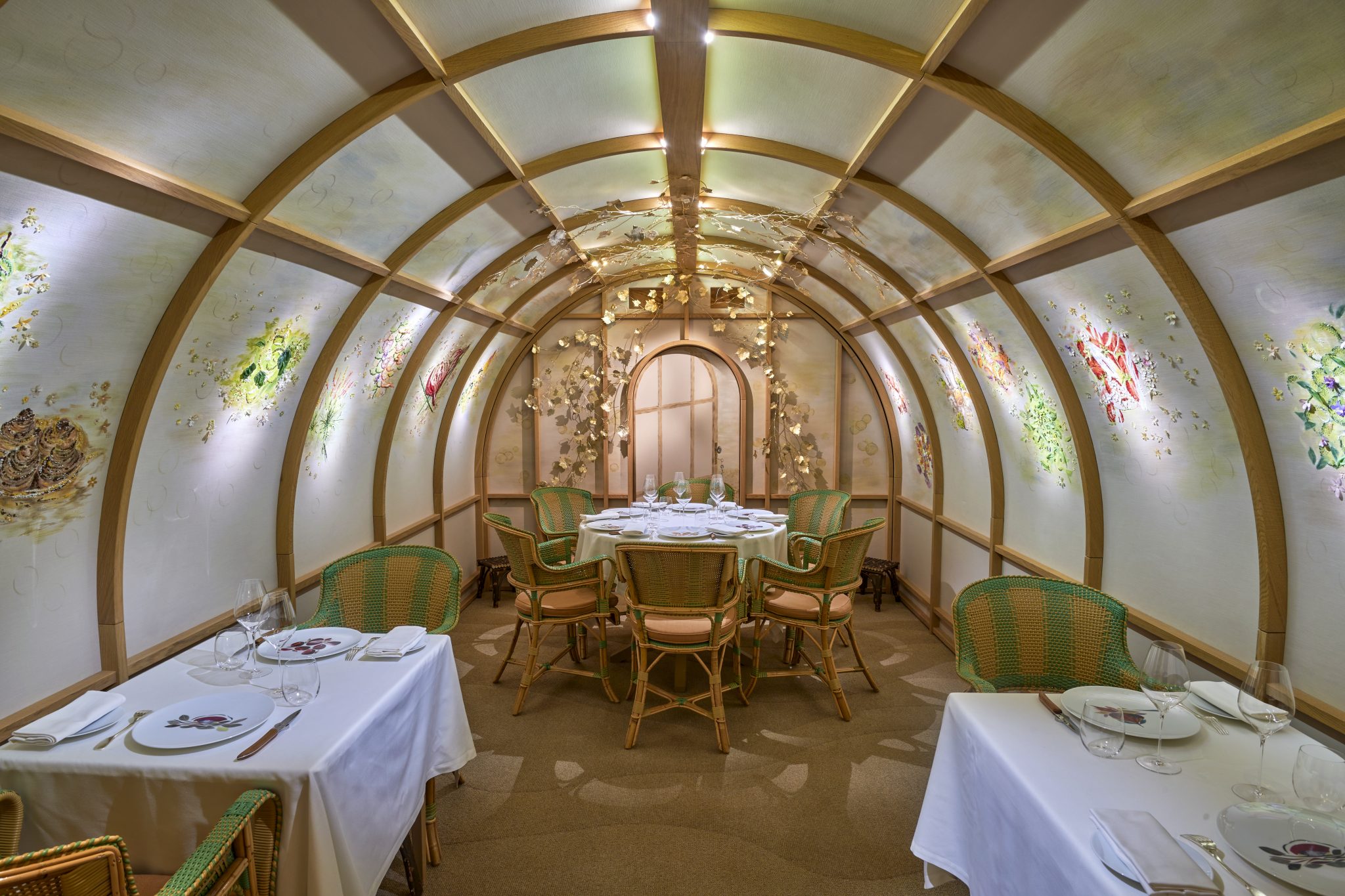
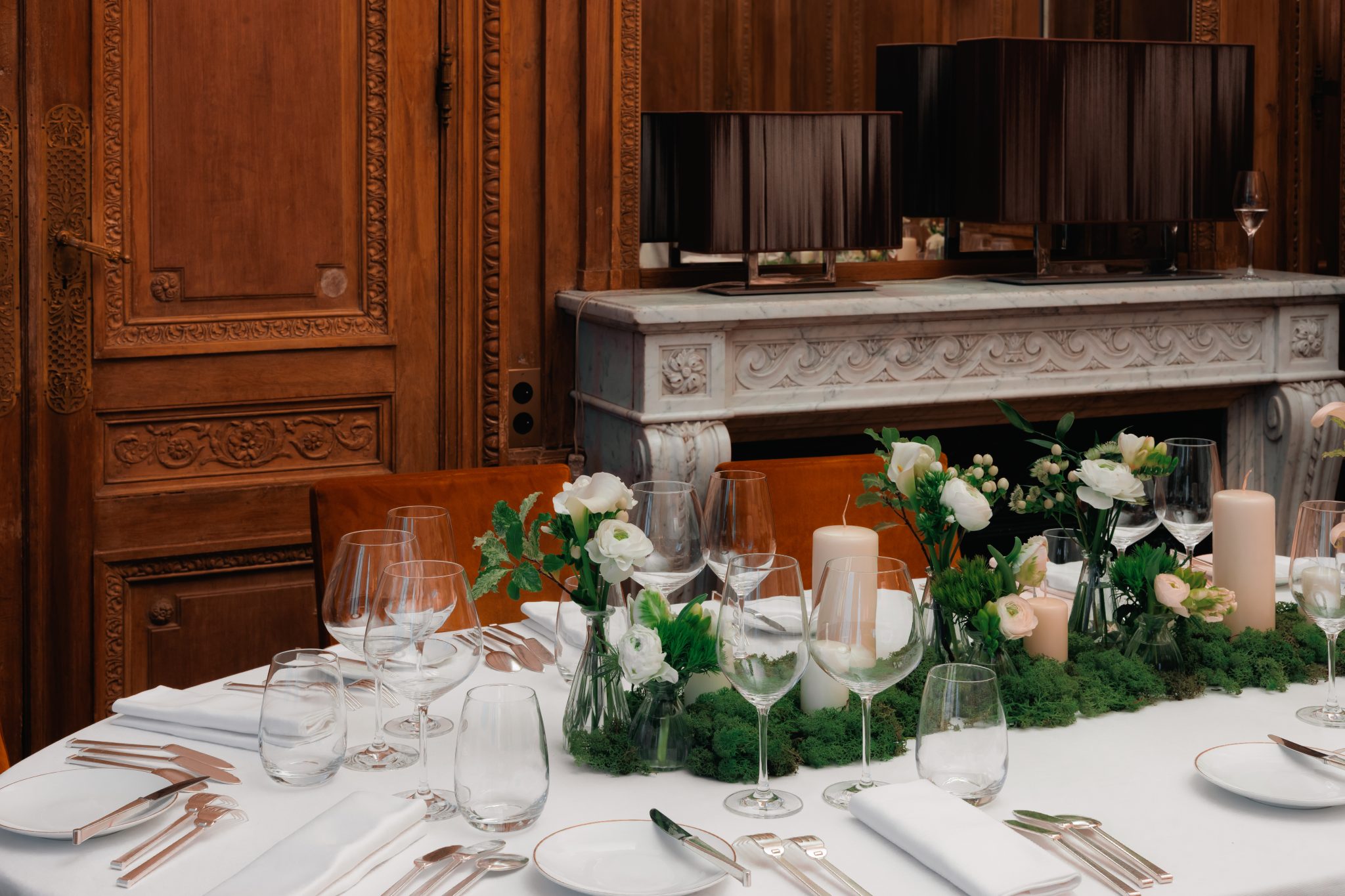
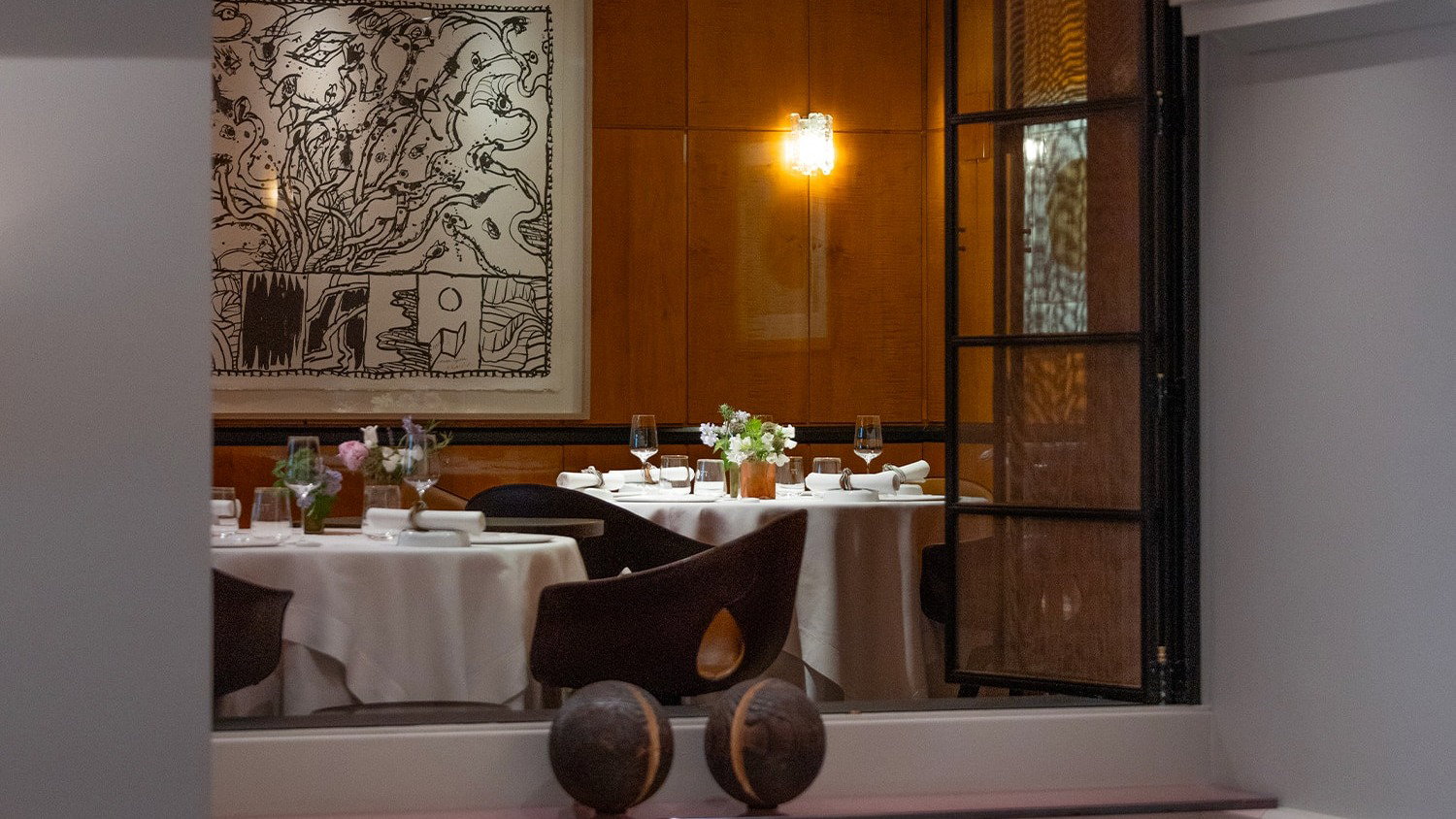
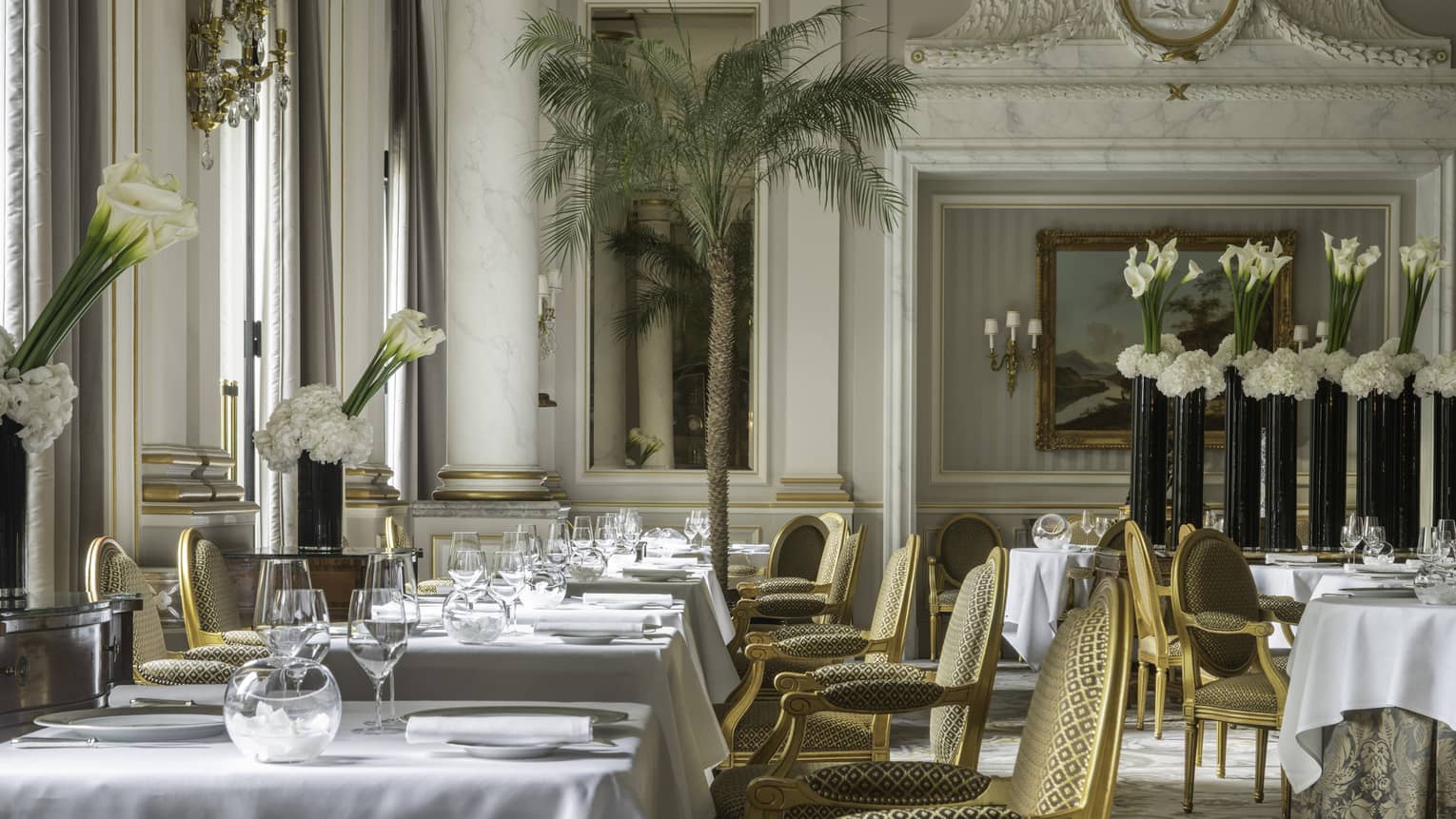
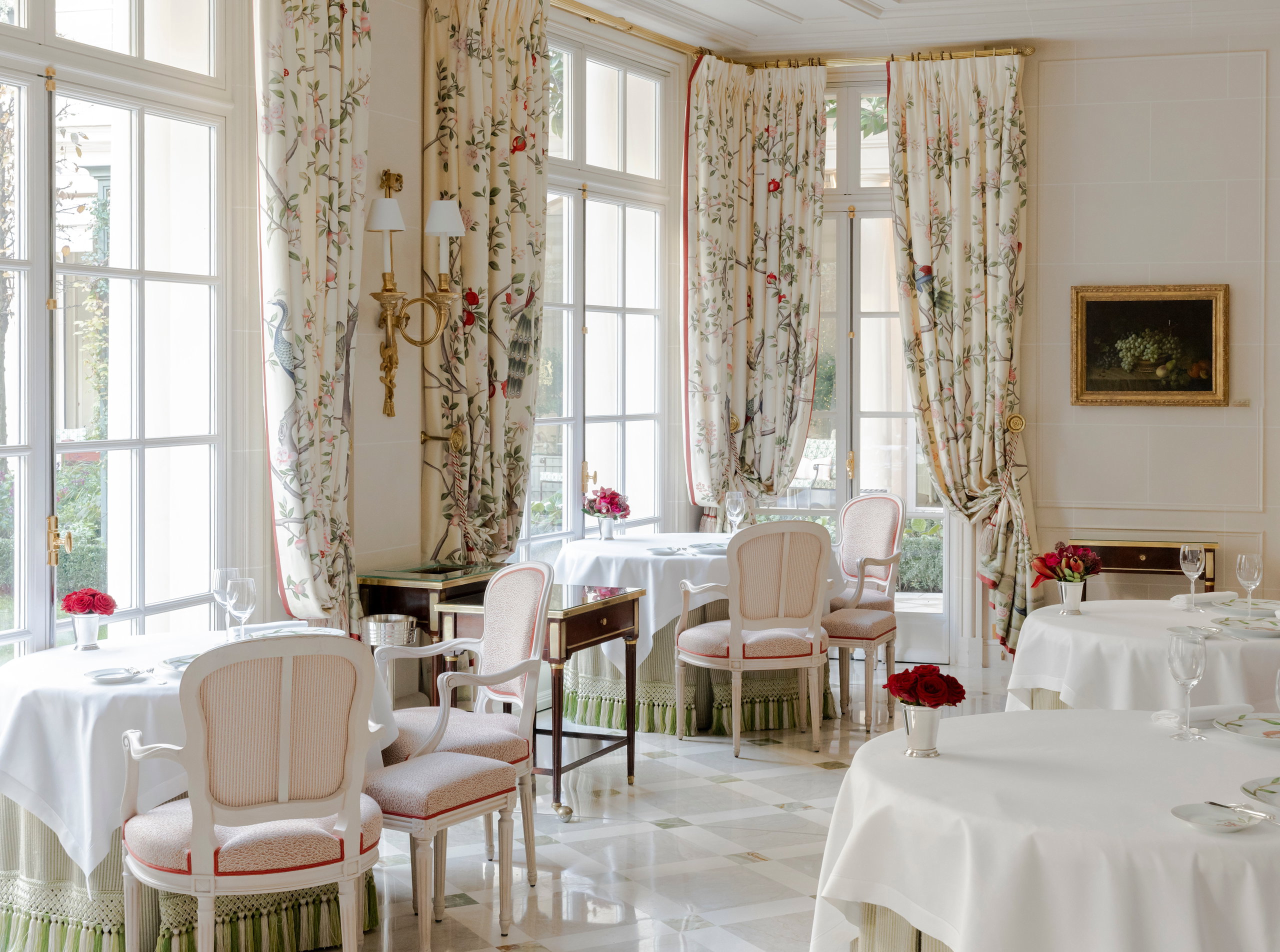
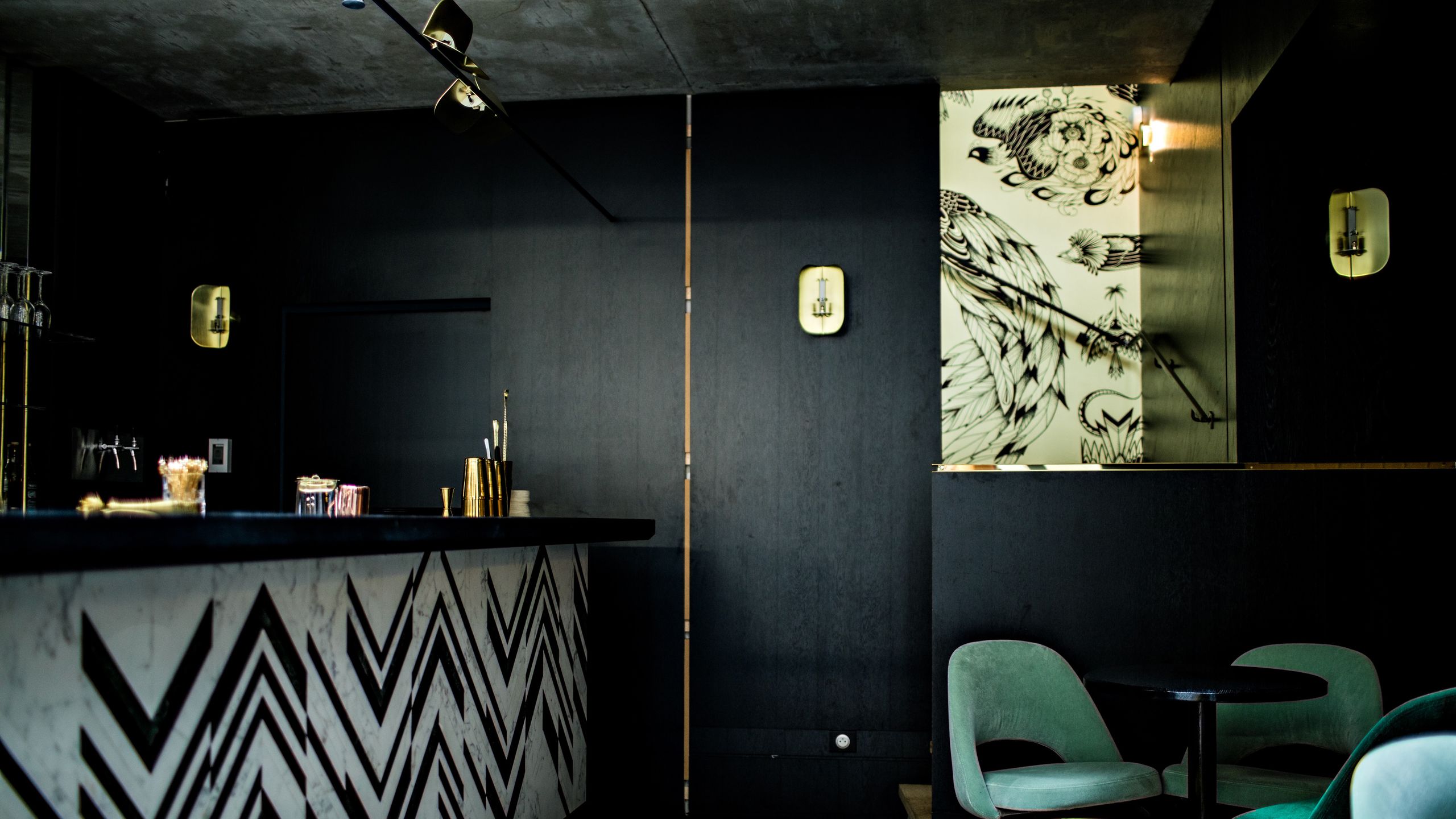
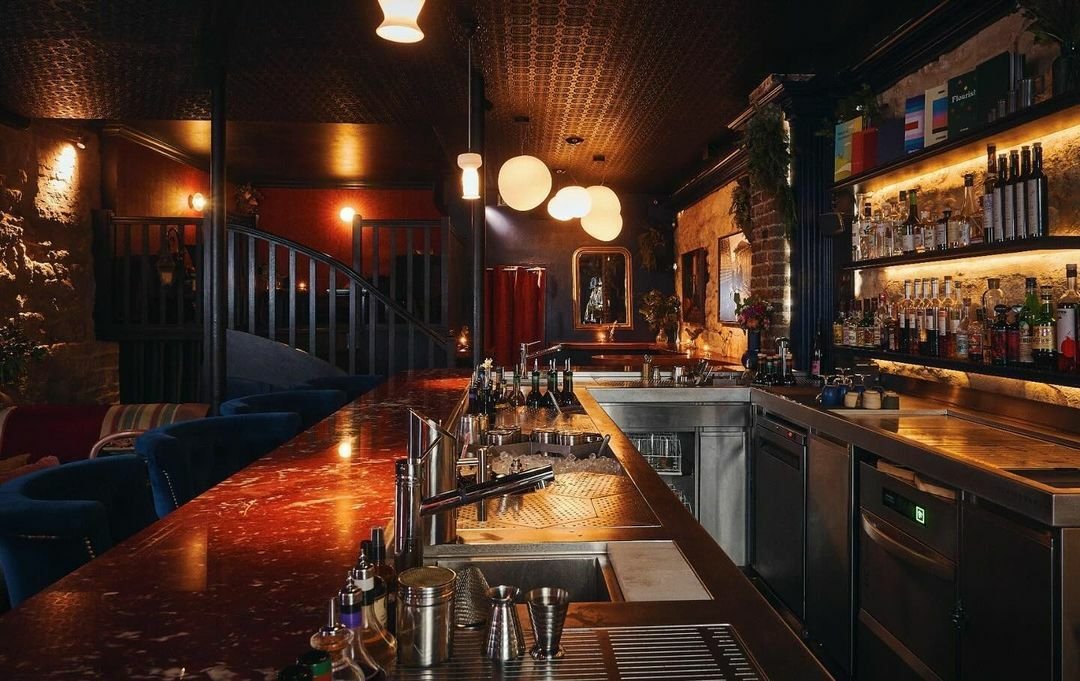
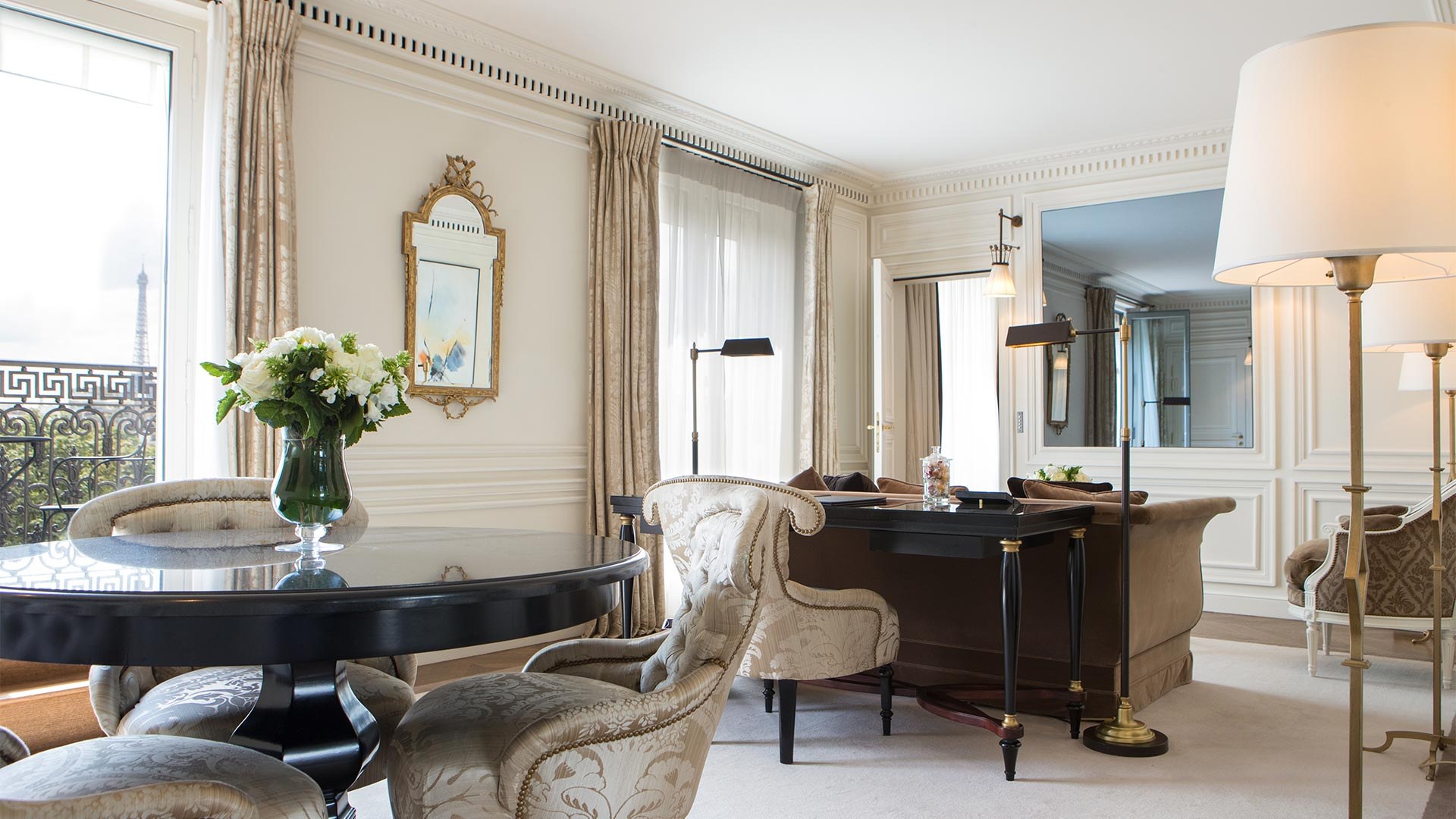
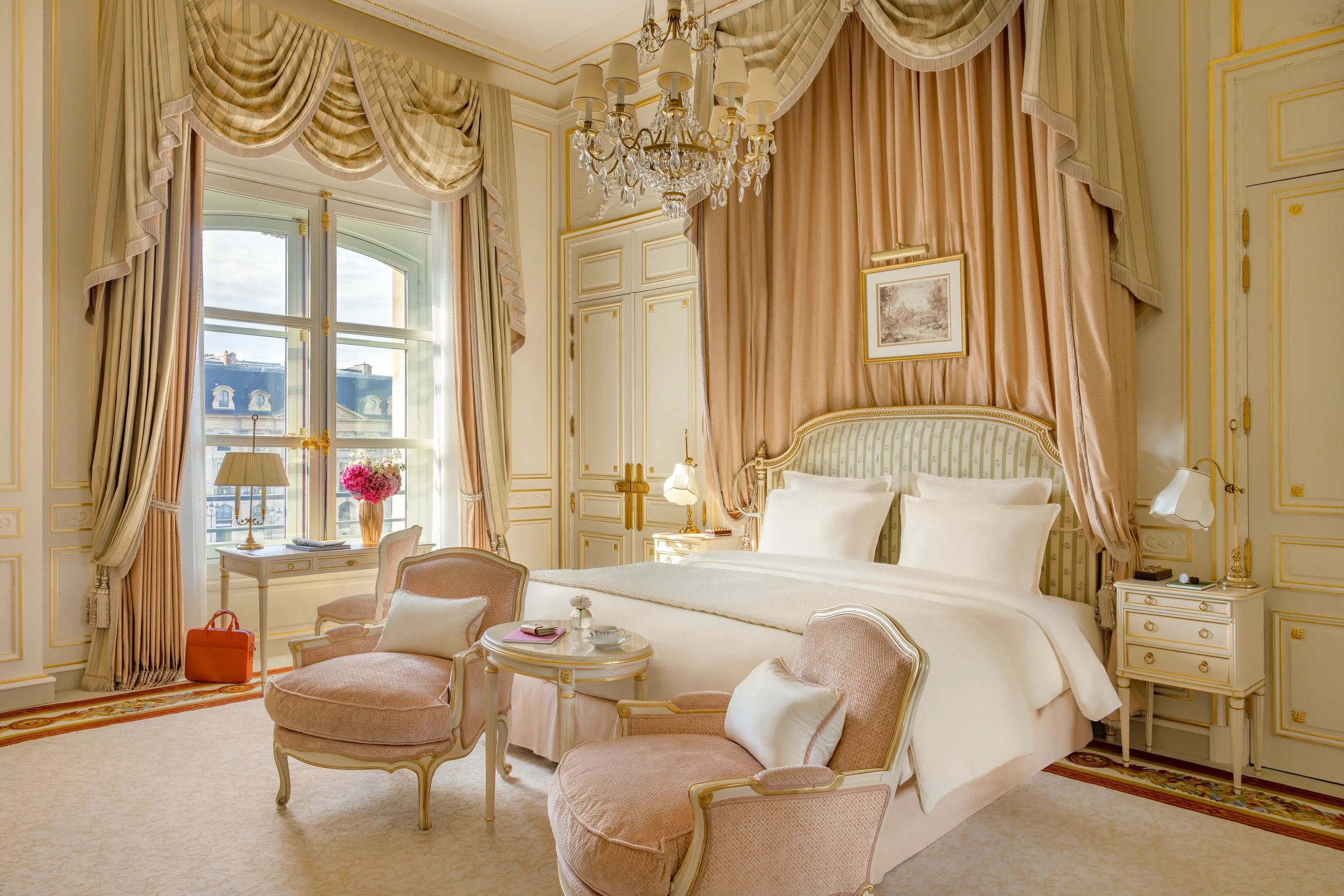
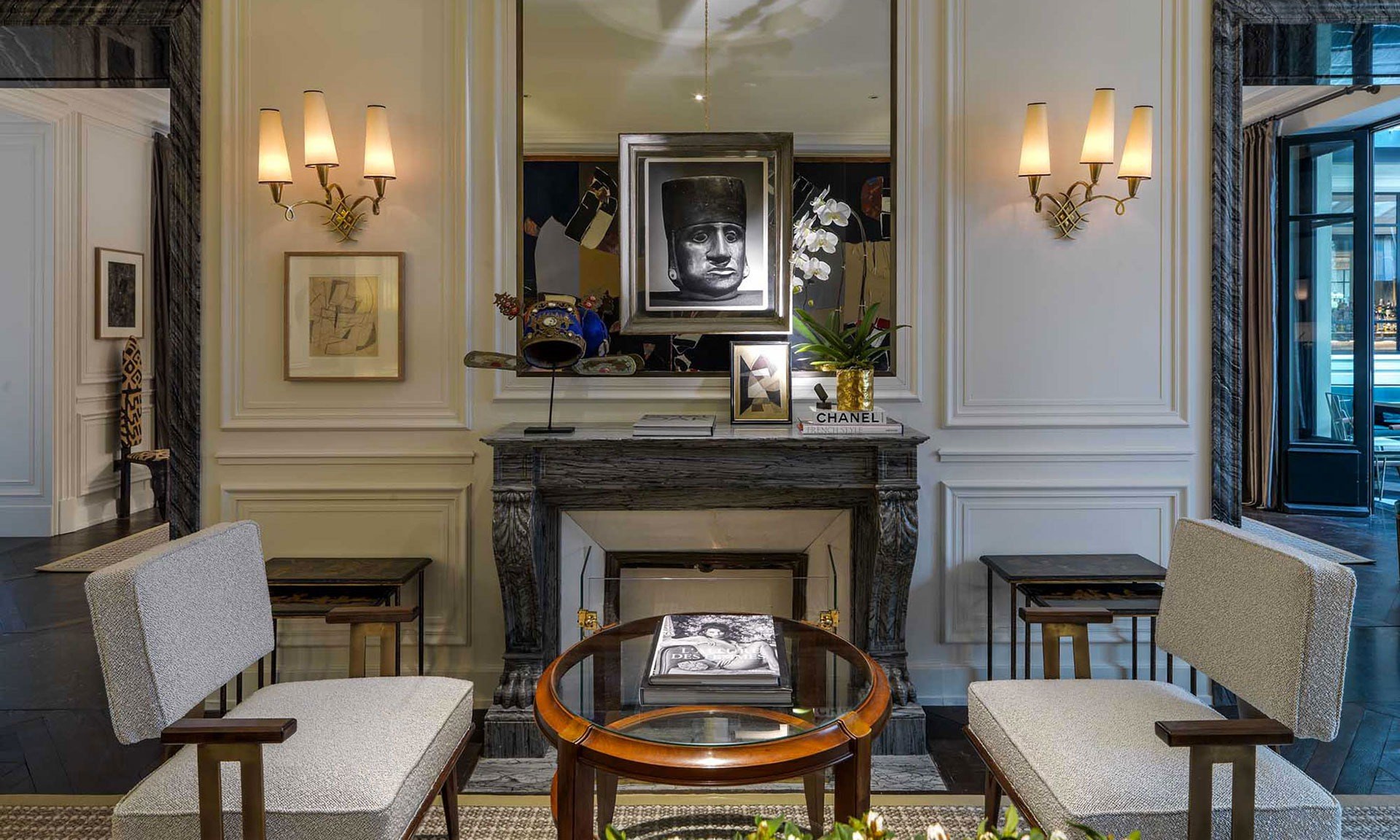
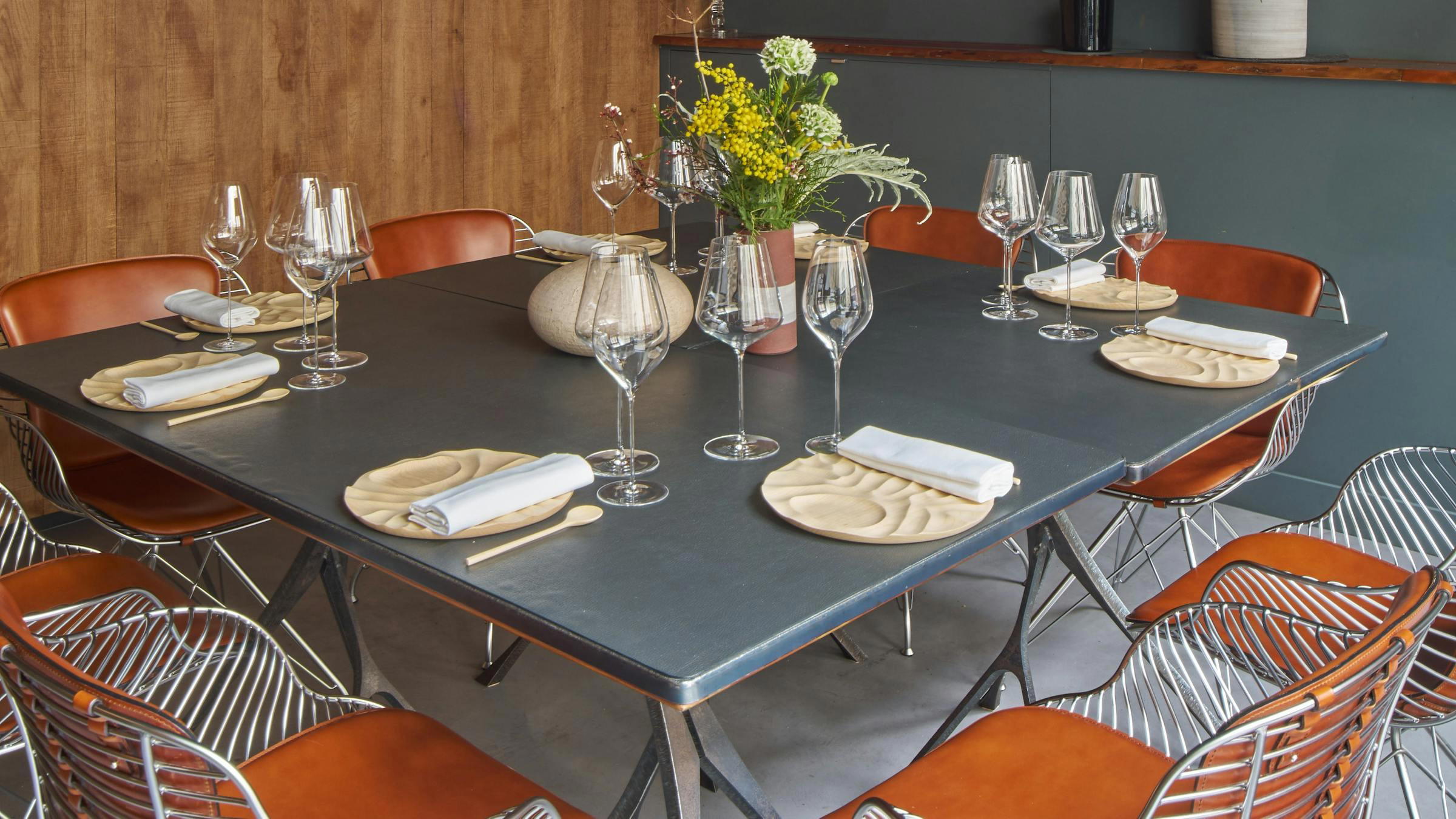
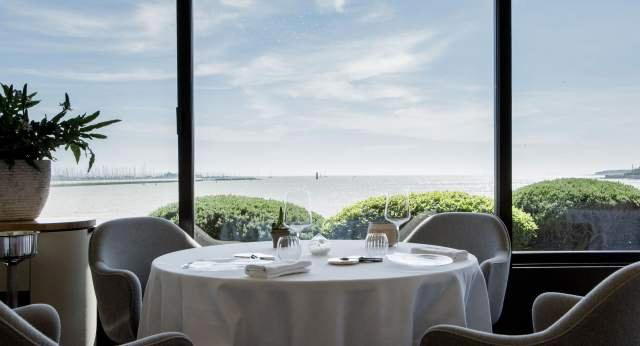
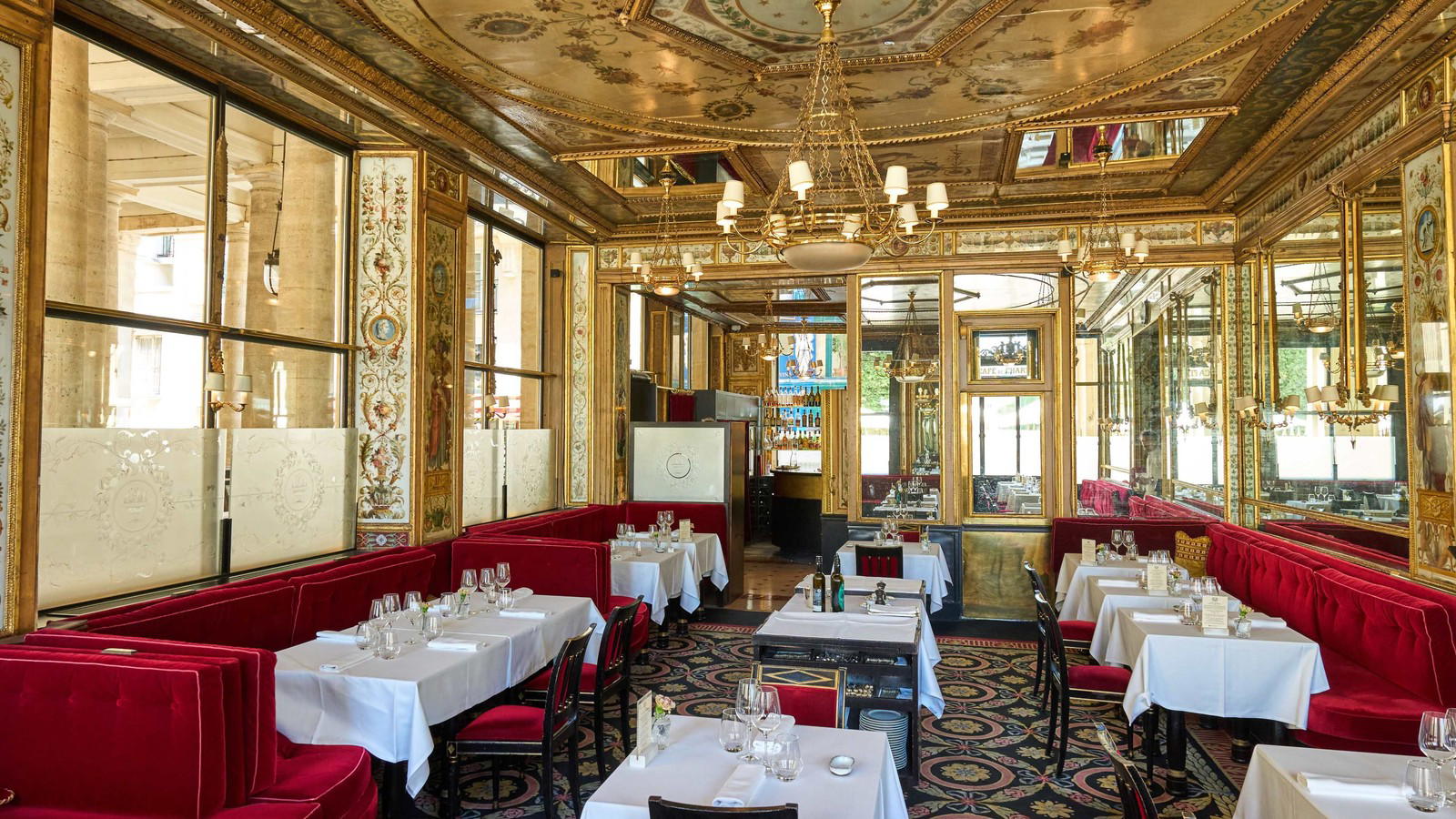
Understated grey interiors with steel accents and white dinnerware designed to highlight the food and sweeping views; moody and sleek entry with airy, light-filled dining rooms featuring gold accents and mirrors that enlarge the space.
Tags
Vibe
Best For
Experience
Sourcing
View
Accessibility
At the Table
- Dress Code
- Formal
- Noise Level
- Conversational
- Service Style
- Formal
- Meal Pacing
- Extended Experience
- Capacity
- Small
- Kitchen
- Modern
- Menu Format
- Prix fixe, Tasting menu
- Wine Program
- Exceptional
- Drinks Focus
- Wine pairing, French wine
- Dietary
- Vegetarian friendly, Allergy accommodating
- Private Dining
- Available
Signature Dishes
- Tarragon-Tinged Crab
- Scallop with Puffed Buckwheat Galette and Oscietra Caviar
- Langoustine Raviolo with Parmesan Cream
- Caramelized Veal Sweetbread with Grenobloise Sauce
- Pear Poached with Honey
Know before you go
Know Before You Go
- Getting there
- Avenue Gustave Eiffel 2ème, Eiffel Tower, Av. Anatole France, 75007 Paris, France
Planning details
Location
Avenue Gustave Eiffel 2ème, Eiffel Tower, Av. Anatole France, 75007 Paris, France · Directions
Recognition and awards





Also consider
Also Consider
- Alléno Paris au Pavillon Ledoyen, Creative, €€€€
- Kei, Contemporary French, Modern Cuisine, €€€€
- L'Ambroisie, French, Classic Cuisine, €€€€
- Le Cinq - Four Seasons Hôtel George V, French, Modern Cuisine, €€€€
- Pierre Gagnaire, French, Creative, €€€€
Restaurant context
At the €€€€ tier in Paris, Le Jules Verne competes on a different axis than most of its peers. The 2-star kitchen is the entry requirement; the Eiffel Tower location is the differentiator. Against Le Cinq at the Four Seasons George V, Le Jules Verne wins on visual drama and singularity of setting but likely concedes on traditional hotel-service polish and the depth of the wine programme you would expect from a grand hotel institution. If the room's grandeur and concierge support matter more than the view, Le Cinq is the stronger business-meal choice. For a personal milestone, Le Jules Verne is harder to argue against.
L'Ambroisie and Kei both operate at the same price tier with strong critical credentials, but neither offers anything approaching the Eiffel Tower setting. L'Ambroisie on Place des Vosges is the better argument if classical French cuisine in an intimate, historic interior is the priority, the cooking is widely considered among the most precise in the city, and it is a quieter, less tourist-facing room. Kei offers a Franco-Japanese contemporary register that suits diners who want technical ambition over classical refinement. Neither books as hard as Le Jules Verne, which gives them a practical advantage for flexible travellers.
For pure creative ambition, Alléno Paris au Pavillon Ledoyen and Pierre Gagnaire push further from the classical French centre than Anton's kitchen at Le Jules Verne. If the food itself, rather than the setting, is the reason you are spending at this level, Alléno or Gagnaire are stronger arguments. Le Jules Verne is the right choice when the occasion, the view, and the reliable delivery of 2-star French haute cuisine need to work together as a single experience.
Around this place
Discover more on Pearl
Unlock the full Le Jules Verne guide in Pearl, including awards, comparisons, FAQs, planning details, and nearby places.
Compare Le Jules Verne
| Venue | Price | Awards |
|---|---|---|
| Le Jules Verne | €€€€ | 2026 OAD Classical in Europe Ranked · #1332026 Relais Chateaux Restaurants2026 Les Grandes Tables du Monde Members2026 La Liste Top Restaurants2025 OAD Classical in Europe Ranked · #2172025 Gault & Millau Remarkable Restaurant2025 Relais Chateaux Award2025 La Liste Top Restaurants2025 Michelin 2 Stars |
| Alléno Paris au Pavillon Ledoyen | €€€€ | 2026 OAD Classical in Europe Ranked · #35Michelin Guide France & Monaco 20262026 La Liste Top Restaurants2025 OAD Classical in Europe Ranked · #342025 The Best Chef Three Knives2025 Gault & Millau Exceptional Restaurant2025 Michelin 3 Stars2024 OAD Classical in Europe Ranked · #342024 World's 50 Best Restaurants · #79 |
| Kei | €€€€ | 2026 OAD Classical in Europe Ranked · #29Michelin Guide France & Monaco 20262026 Les Grandes Tables du Monde Members2026 La Liste Top Restaurants2026 Falstaff Restaurant Guide2025 OAD Classical in Europe Ranked · #262025 Michelin 3 Stars2025 Gault & Millau Prestige Restaurant2025 La Liste Top Restaurants |
| L'Ambroisie | €€€€ | 2026 OAD Classical in Europe Ranked · #10Michelin Guide France & Monaco 20262026 La Liste Top Restaurants2026 Falstaff Restaurant Guide2025 Michelin 3 Stars2025 La Liste Top Restaurants2024 OAD Classical in Europe Ranked · #102024 Michelin 3 Stars2023 OAD Classical in Europe Ranked · #11 |
| Le Cinq - Four Seasons Hôtel George V | €€€€ | No published awards |
| Pierre Gagnaire | €€€€ | 2026 OAD Classical in Europe Ranked · #402026 Relais Chateaux RestaurantsMichelin Guide France & Monaco 20262026 Les Grandes Tables du Monde Members2026 La Liste Top Restaurants2026 Falstaff Restaurant Guide2025 OAD Classical in Europe Ranked · #902025 OAD Top Restaurants in Japan Ranked · #157We're Smart World Top Restaurants 2025 |






Key differences to consider before you reserve.
FAQ
Frequently Asked Questions
Is Le Jules Verne worth the price?
Yes, for a specific use case: a milestone occasion where setting matters as much as cooking. The 2 Michelin Stars (2025) and Les Grandes Tables du Monde Award (2025) confirm the kitchen earns its rating independently of the address. At €€€€, you are paying for both a technically serious meal from Frédéric Anton and one of the most recognisable dining rooms in Europe. If you want pure culinary value without the spectacle, L'Ambroisie or Pierre Gagnaire will give you more plate-focused return per euro.
Can I eat at the bar at Le Jules Verne?
Bar seating is not available, so book a table and do not plan around a counter option. The restaurant operates within the Eiffel Tower's second floor, which means access is controlled and walk-in flexibility is minimal regardless of seating format.
How far ahead should I book Le Jules Verne?
Book at least 6 to 8 weeks out for standard dates; 3 to 4 months out for peak summer or New Year's Eve. This is one of the hardest reservations to secure in Paris due to limited covers and high international demand, not because the restaurant is obscure. Weekend dinner slots go first. If your dates are fixed, treat this as the first reservation you make when planning a Paris trip, not an afterthought.
Is Le Jules Verne good for a special occasion?
Yes, it is purpose-built for it. The combination of a 2-star kitchen, Eiffel Tower access, and formal French service creates a setting that marks the occasion before the first course arrives. Proposals, significant anniversaries, and milestone birthdays are the natural fit. For a business dinner where the agenda matters more than the backdrop, Le Cinq at the Four Seasons George V gives you comparable culinary credentials in a more neutral setting.
What should a first-timer know about Le Jules Verne?
Access is through a dedicated Eiffel Tower entrance reserved for restaurant guests, so you bypass the public queue. The view is the famous panorama of Paris from the second floor, and it does most of the atmospheric work before the food arrives. Frédéric Anton's kitchen holds 2 Michelin Stars (2025) and scored 83 points on La Liste 2026, so the cooking is substantive rather than coasting on location. Arrive with time to settle in and expect a full multi-course format at €€€€ pricing.