Restaurant in London, United Kingdom
Book early. The two stars are earned.
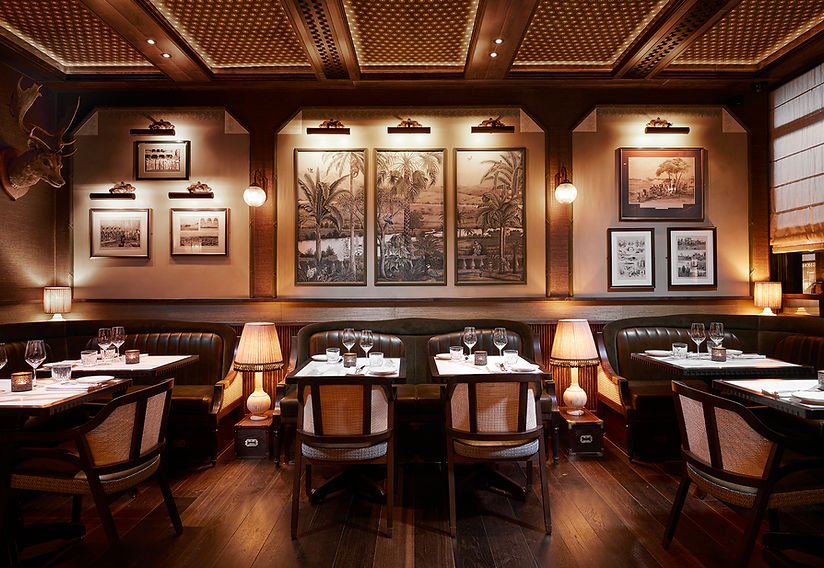
Gymkhana holds two Michelin stars and a consistent OAD Europe top-100 ranking for a reason: the Northern Indian cooking here — game, specialist proteins, technically precise spicing — operates at a level no other Indian restaurant in London matches at this price tier. Book four to six weeks out for dinner at ££££ per head, and prioritise the lamb chops, the nashta plates, and the standalone bar.
Expect to spend £100–£150 per head before drinks at Gymkhana, and expect to wait weeks for the privilege. That price is not an obstacle — it is a filter. For two Michelin stars, a 2025 La Liste score of 78 points, and a seat in one of Mayfair's most considered dining rooms, the arithmetic works out in your favour, provided you are coming specifically for modern Northern Indian cooking at the leading of its range. If you are looking for a cheaper introduction to the JKS group's output, BiBi is the more accessible entry point. But for the full statement, Gymkhana is the booking to make.
Gymkhana draws its visual identity from the clubs of colonial India, and the references are specific rather than decorative. The ground floor dining room is anchored by richly upholstered leather seating, slowly turning ceiling fans, old prints, and hunting trophies sourced from the Maharaja of Jodhpur. A mirrored staircase connects the two levels. The basement room, finished in vivid red, is the more intimate of the two — better for dinner, better for groups that want a degree of privacy. First-timers are generally seated on the ground floor, where the energy reads closer to a club dining room than a formal restaurant. The bar operates as a standalone space, which matters if you are planning an aperitivo before sitting down: the cocktail list draws on Indian spicing, and the nibbles , Amritsari shrimps, Punjabi samosas with tamarind chutney , are worth ordering whether or not you have a table to follow.
The cooking at Gymkhana is predominantly Northern Indian in structure, but the sourcing decisions are what separate it from the broader category. The menu deploys game and specialist proteins , kid goat, guinea fowl, wild muntjac, pork cheek , in formats that would not feel out of place on a European tasting menu, except that the spicing is precise and genuinely Indian rather than decorative. Tandoori masala lamb chops and kid goat methi keema with pao bread are the dishes that appear most consistently in the award citations for good reason: both make the case that technically serious Indian cooking does not require compromise toward a more familiar idiom.
The sourcing logic extends through the menu. Goan-style salmon tikka arrives with tomato chutney; guinea fowl pepper fry is paired with a Malabar paratha; pork cheek vindaloo and wild muntjac biryani make the point that the kitchen is working with ingredients that demand skill to source and skill to cook. This is not a venue using premium ingredients as a price justification , the menu is built around them. For context, the approach shares DNA with what Gaa in Bangkok does with Indian technique in a different market, though Gymkhana's register is more formal and considerably more rooted in British seasonal availability.
Nashta small plates section is where first-timers often find the most reward: duck-egg bhurji scrambled with lobster and served alongside a Malabar paratha is the kind of dish that signals the kitchen's range without requiring you to commit to a full tasting format. Desserts follow the same crossover logic , a tiramisu reworked around rasgulla, or a basmati rice pudding with cardamom and mango sorbet , and are worth leaving room for.
On wine, the list is thoughtfully selected with Indian food compatibility in mind, and includes English sparkling wine alongside broader European choices. A 4th Rifles Pale Ale, brewed specifically for the restaurant, is the beer option worth knowing about if you are pairing across a longer meal.
Gymkhana is one of London's more difficult reservations at the ££££ tier , expect four to six weeks minimum for a weekend dinner booking, less for a midweek lunch. The restaurant operates a standard booking system rather than a lottery or waiting list, so persistence with the release schedule is the practical approach. Lunch is the most accessible entry point and the ground-floor booths are well-suited to it. The standalone bar accepts walk-ins and is the fastest route into the room without a reservation, though it does not substitute for the full dining experience. If you are planning around a specific date , an anniversary, a London trip with a fixed window , treat this as one of the first bookings to make, alongside CORE by Clare Smyth or The Ledbury, which operate on similar timelines.
Reservations: Book four to six weeks out for dinner; two to three weeks for weekday lunch. Budget: ££££ , allow £100–£150 per head before drinks. Dress: Smart casual at minimum; the room skews toward business and occasion dining, and the Mayfair address sets expectations. Hours: Monday to Sunday, 12–2:45 pm and 5:30–10:45 pm. Address: 42 Albemarle St, London W1S 4JH.
Gymkhana is the right booking if you want modern Indian cooking with genuine technical depth, a room that earns its price in atmosphere as well as food, and a confidence that the sourcing behind the menu is doing real work rather than dressing up the bill. It is not the right booking if you want a relaxed, low-cost introduction to the JKS stable , go to BiBi for that. At two Michelin stars and a consistent position in the OAD Europe top 100, the credentials are not in question. The only question is whether your diary and your budget align with what the restaurant requires. For our full London dining guide, see Pearl's London restaurants guide. For hotels nearby, our London hotels guide covers the Mayfair options. See also our London bars guide, London experiences, and London wineries for broader trip planning.
If you are building a longer UK itinerary around serious cooking, Pearl tracks The Fat Duck in Bray, L'Enclume in Cartmel, Moor Hall in Aughton, Gidleigh Park in Chagford, The Hand and Flowers in Marlow, and Hide and Fox in Saltwood. For a broader international reference point on technically serious cooking, Le Bernardin in New York City operates in a comparable register of precision and sourcing discipline.
Yes. The bar at Gymkhana operates as a standalone space and accepts walk-ins. You can order bar snacks , Amritsari shrimps and Punjabi samosas with tamarind chutney are the anchors of that list. It is the fastest way into the room without a reservation, and worth using as an aperitivo stop if you are eating elsewhere in Mayfair. It does not replicate the full dining experience, but it gives you a genuine read on the room and the drinks program before committing to a dinner booking.
At the ££££ price tier with two Michelin stars, the tasting format at Gymkhana is positioned to deliver. The kitchen's strengths , game, specialist proteins, technically precise spicing , come through most clearly when you eat across a longer sequence rather than ordering two or three dishes à la carte. If the format suits you and the budget is in range, it is the more complete argument for what the restaurant does. For à la carte flexibility at a comparable standard in London, The Ledbury gives you more choice over the structure of the meal.
Yes, with a specific condition: you need to be coming for modern Northern Indian cooking at the two-star level, not for a general Mayfair splurge. At £100–£150 per head before drinks, you are paying for sourcing quality , kid goat, guinea fowl, wild muntjac, specialist spicing , and a kitchen that has held two Michelin stars since 2024 while ranking in the OAD Europe top 100 in both 2024 and 2025. Compared to the broader ££££ London field, Gymkhana offers a more distinctive cuisine proposition than Restaurant Gordon Ramsay or Sketch's Lecture Room at roughly equivalent spend.
The tandoori masala lamb chops and kid goat methi keema with pao bread are the dishes most consistently cited in Gymkhana's award recognition , start there if you are ordering à la carte. From the nashta small plates, the duck-egg bhurji with lobster and Malabar paratha is the dish that most clearly signals the kitchen's range. On desserts, the basmati rice pudding with cardamom and mango sorbet is the more grounded choice; the rasgulla tiramisu is for those who want the full crossover experiment. The cocktail list is worth engaging with from the start , the bar program is an integral part of the experience, not an afterthought.
Groups are workable at Gymkhana, with the basement room being the more suitable space , it is more intimate, more contained, and better suited to a shared meal across a larger table. For parties of six or more, contacting the restaurant directly rather than booking online is the practical approach, as specific room requests are unlikely to be honoured through a standard online booking. Budget for the full ££££ per-head spend across the group, and factor in the booking lead time: four to six weeks minimum for dinner, less for weekday lunch. For large group dining in London at a comparable standard, CORE by Clare Smyth has a private dining option worth considering as an alternative.
| Venue | Price | Value |
|---|---|---|
| Gymkhana | ££££ | — |
| CORE by Clare Smyth | ££££ | — |
| Restaurant Gordon Ramsay | ££££ | — |
| Sketch, The Lecture Room and Library | ££££ | — |
| The Ledbury | ££££ | — |
| Dinner by Heston Blumenthal | ££££ | — |
Key differences to consider before you reserve.
Yes — Gymkhana has a standalone bar that serves cocktails, reinvented punches, and bar snacks including Amritsari shrimps and Punjabi samosas with tamarind chutney. It is a practical option if you cannot land a dining room reservation, and it gives you a real read on the kitchen without committing to a full ££££ meal. That said, the bar fills quickly on weekday evenings, so arriving early is advisable.
Gymkhana holds 2 Michelin stars and a La Liste Top Restaurants ranking, so the kitchen has the credentials to justify a tasting format. The menu leans predominantly Northern Indian with strong sourcing decisions — game, chops, and grills feature prominently alongside more esoteric nashta small plates. If you want to cover the most ground in a single sitting, the tasting format makes sense; if you prefer to order selectively around the grill section, à la carte gives you more control at this price point.
At ££££, with spend running £100–£150 per head before drinks, Gymkhana is a considered choice rather than a casual one — but the 2 Michelin stars (held through 2024 and 2025) and a Top 85 Europe ranking from Opinionated About Dining in 2025 confirm the kitchen is operating at that level. The room adds genuine value: the colonial club setting across two floors is specific and considered, not generic fine-dining décor. For modern Indian cooking with technical depth in London, nothing in the same category is consistently rated higher.
The La Liste write-up specifically calls out the tandoori masala lamb chops and kid goat methi keema as standout dishes, and both appear across multiple independent assessments of the menu. The nashta small plates — including duck-egg bhurji scrambled with lobster — are worth ordering if you want to cover the more esoteric end of the menu. Game dishes such as guinea fowl pepper fry and wild muntjac biryani reflect the kitchen's sourcing focus and are harder to find at this level elsewhere in London.
Gymkhana is spread across two levels, with ground-floor booths suited to smaller parties and a basement dining room that has a more intimate feel for larger groups. For parties of six or more, contacting the restaurant directly when booking is the practical approach — the layout is not designed around large open tables, so advance coordination matters. Weekend group bookings at this price tier should be secured four to six weeks out minimum.
Keep this venue in your Pearl passport, rate it after you visit, and track it alongside every other place you collect.



