

.png?width=1200&quality=80)
Torishige
Pork Cuisine, Pork · Minato, Tokyo
Restaurant in Tokyo, Japan
 Book with Pearl
The Read
Third-Generation Offal Grilling
Price
$30–50per person
Chef
Yuji Sakamaki
Dress
Casual
Why go
A Tabelog Bronze Award winner in Yoyogi with a lineage stretching back to 1949, Torishige is Tokyo's strongest argument for charcoal-grill dining below the ¥¥¥¥ tier. At ¥8,000–¥14,999 per head, it ranks #163 on Opinionated About Dining's Japan list and earns its place through sourcing depth and generational technique rather than format novelty. Book for a special occasion dinner; come with cash.
About Torishige
Should You Book Torishige?
If you are weighing up Tokyo's yakitori options against the city's more obvious special-occasion choices, Torishige makes the case for itself clearly: it is a Tabelog Bronze Award winner with a score of 4.08, ranked #163 on Opinionated About Dining's Japan list in 2025 (up from #130 in 2024), and it has held a place on Tabelog's Yakitori 100 list for consecutive years. At ¥8,000–¥14,999 per head, it costs less than a night at Harutaka or RyuGin, yet delivers a level of recognition that puts it in comparable company for serious diners. Book it for a special occasion where you want considered Japanese cooking without a four-figure bill.
The Portrait
Torishige is not trying to be a contemporary tasting-menu restaurant. It is a grilled meat specialist in Yoyogi, Shibuya, that traces its origins to a postwar food stall that opened in September 1949. An old photograph on the first floor shows the original stall sign from those early days, and it functions as the clearest possible statement about what this place is: a third-generation operation that has earned its awards by deepening a tradition rather than abandoning it. The name itself carries history: 'tori' reflects an older usage when yakitori covered pork skewers as well as chicken, and 'shige' honours Prime Minister Shigeru Yoshida, the political figure of the era when the stall first opened.
What that lineage means for your plate is that sourcing and technique are the story here, not theatre or scenery. Each generation has made a specific contribution to the menu: the founding generation established the stuffed bell pepper as a house signature; the second generation introduced beef; the current third-generation chef has built on that by working with rare cuts, extending the range of what appears on the skewer without departing from the charcoal-grilled format. That cumulative approach to the menu is exactly why the Tabelog scores hold: the cooking is not innovative in the sense of fusion or novelty, but in the sense of a practitioner who knows the ingredients well enough to keep finding new applications for them.
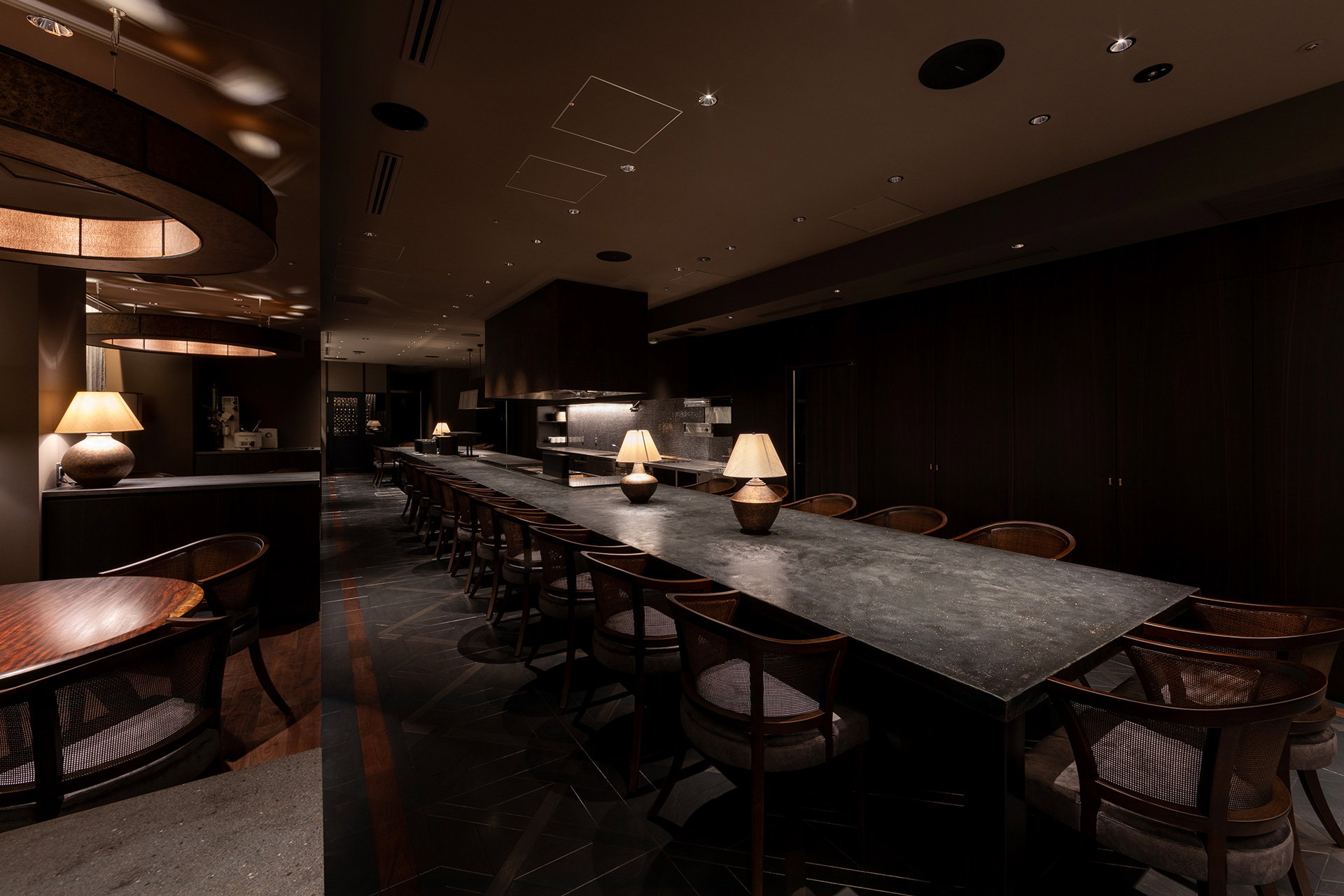
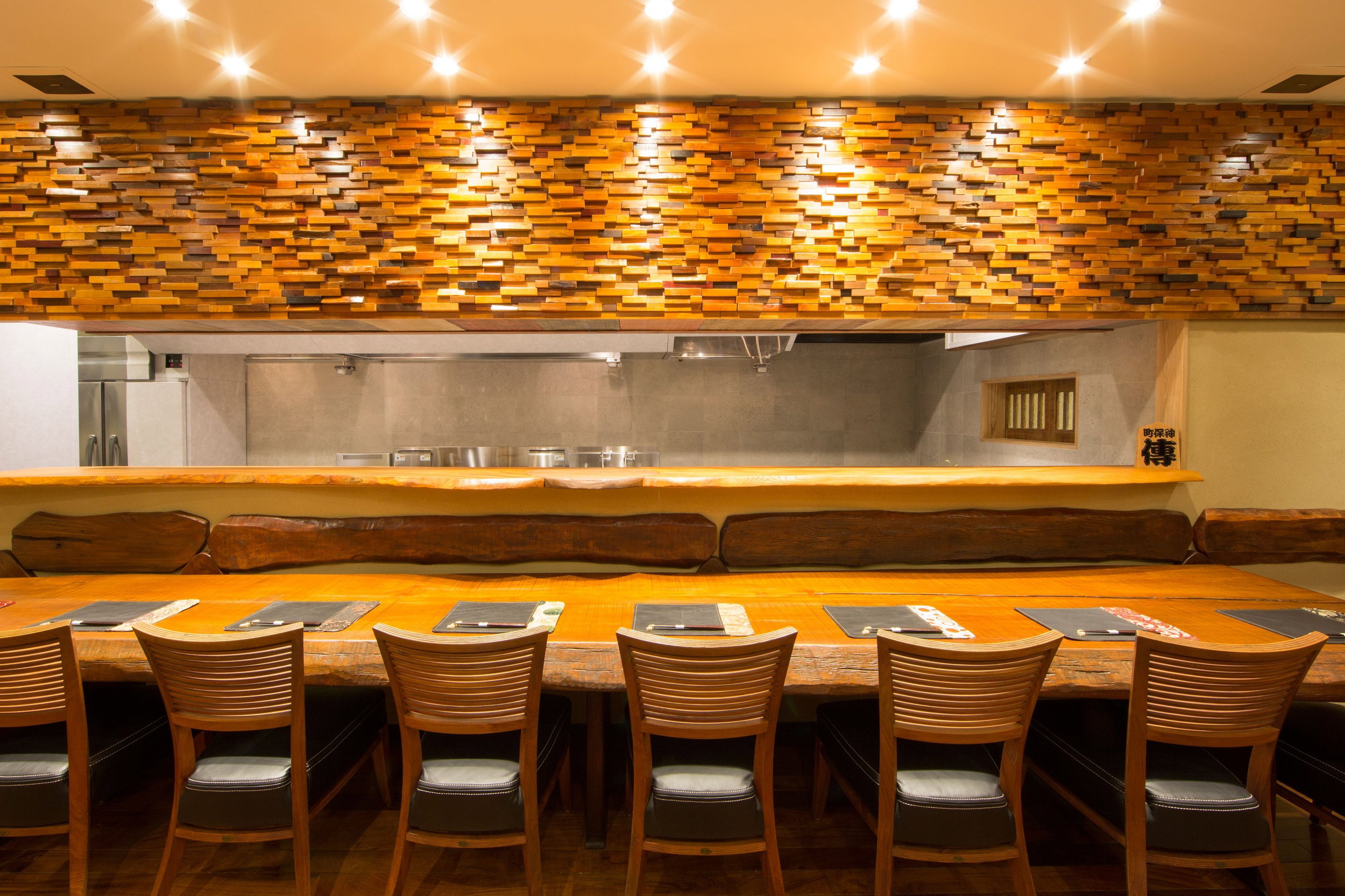
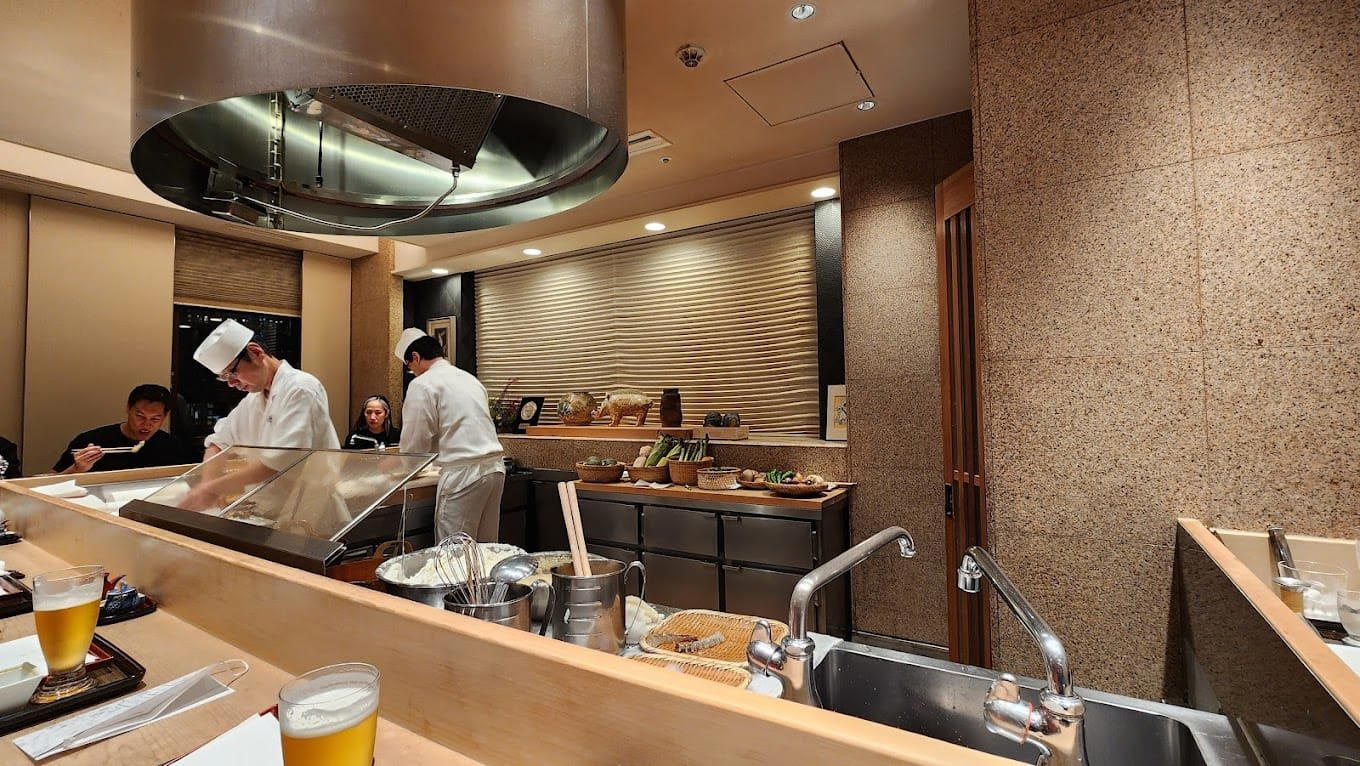
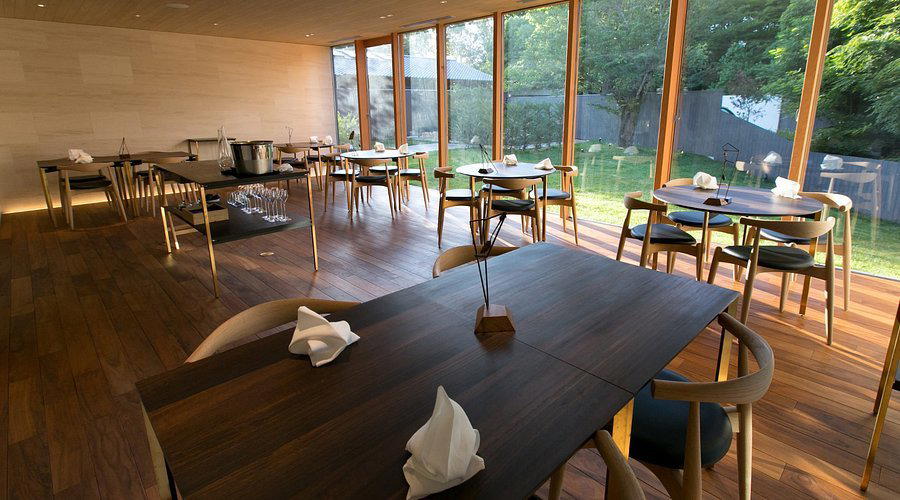
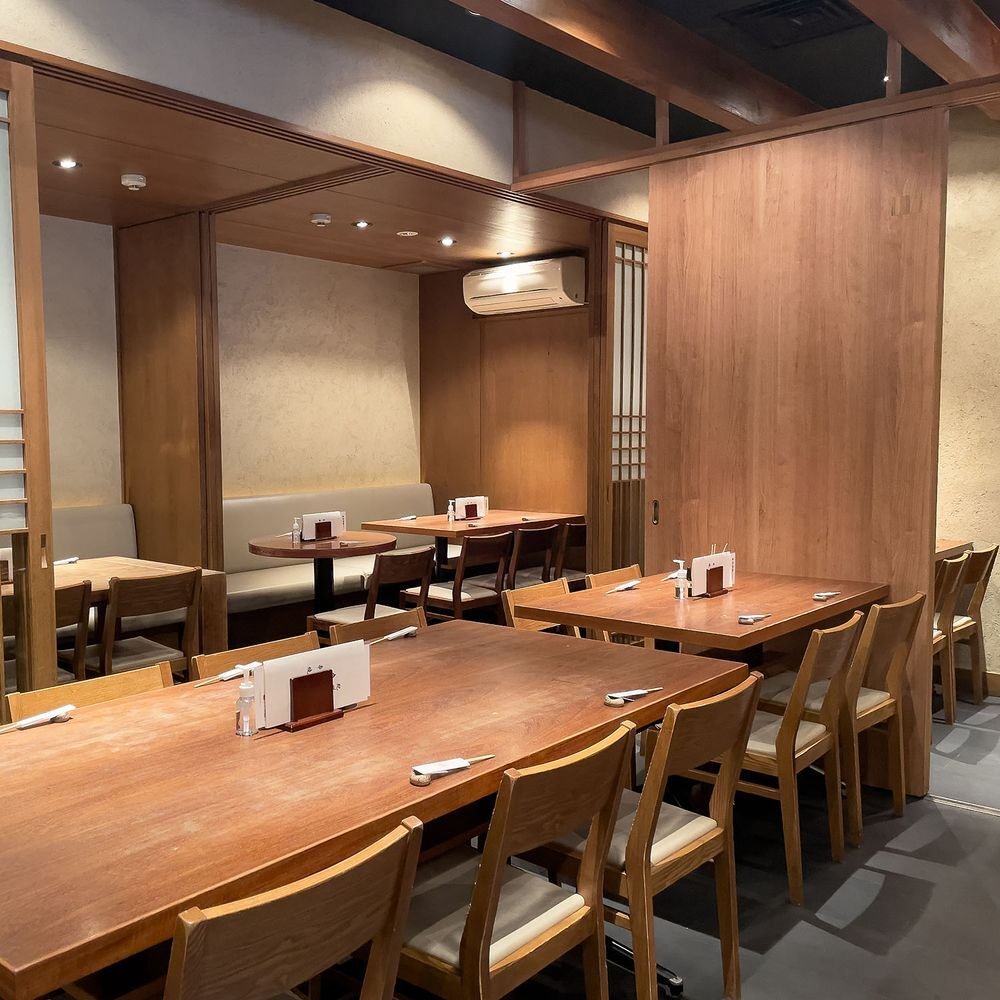
The room seats 82 across two floors, with 22 counter seats and 60 table seats, which is considerably more accessible than the nine-seat counter formats you find at the tighter yakitori specialists. Semi-private seating is available, though private rooms are not. The counter is worth requesting for a date or a business meal where watching the grill is part of the experience. Ventilation is a genuine consideration at any charcoal grill restaurant, and the 22 extraction fans across both floors address this directly. The restaurant is entirely non-smoking, which matters if you are dressing for the evening.
On the sourcing question that defines whether the price is justified: Torishige's consistent recognition from both Tabelog and Opinionated About Dining points to a programme where ingredient quality is the foundation. The rare cuts introduced by the current chef are not a marketing device; they represent the kind of menu decision that only makes sense if the supplier relationships are in place to back them up. For a diner deciding whether ¥8,000–¥14,999 is the right spend for a grilled meat dinner in Tokyo, the answer is yes, provided you want depth in the product rather than a list of familiar cuts. This is the restaurant for someone who finds the sourcing argument more compelling than the plating argument.
Compared to the broader Tokyo restaurant scene, Torishige occupies a specific position: it is a high-credential, lower-price-ceiling option for celebratory dinners, sitting comfortably below the ¥¥¥¥ tier occupied by L'Effervescence or Sézanne while outperforming many peers at equivalent price points on external recognition. If you are building an itinerary that includes serious dining across multiple nights, it belongs on the list alongside heavier commitments, not as a fallback but as a deliberate choice for a different register of cooking.
For context within Japan's wider grilled and izakaya category, places like Goh in Fukuoka or Gion Sasaki in Kyoto demonstrate how a strong regional identity translates into national recognition; Torishige does the same for Tokyo's postwar charcoal-grill tradition. If you are extending your trip beyond Tokyo, HAJIME in Osaka and akordu in Nara are worth noting for a different register entirely, as are 1000 in Yokohama and 6 in Okinawa for day-trip or extension planning.
For comparison outside Japan, the closest analogue in terms of a multi-generational specialist that justifies its price through sourcing discipline rather than format novelty would be something like Le Bernardin in New York for seafood or Atomix for Korean fine dining, though the price gap is significant. Torishige delivers comparable seriousness of intent at a fraction of the cost.
Ratings & Recognition
- Tabelog Bronze Award 2025 and 2026
- Tabelog Score: 4.08–4.10
- Tabelog Yakitori EAST Top 100: 2024 and 2025
- Opinionated About Dining Japan: #163 (2025), #130 (2024)
Booking & Practical Details
Reservations: Reservations available; call after 11:00 AM. Confirm in advance as occasional unscheduled closures occur on weekdays. Hours: Monday–Saturday 17:00–00:00, Sunday closed. Budget: ¥8,000–¥14,999 per head, plus a ¥800 per person seating fee. Payment: Cash only — credit cards, electronic money, and QR code payments are not accepted, so arrive prepared. Dress: No stated dress code, but work clothes and sportswear are not accepted. Capacity: 82 seats across two floors (22 counter, 60 table); semi-private seating available. Groups: Suitable for families (children welcome, no high chairs) and friend groups. Parking: Not available at the restaurant. Smoking: Entire venue is non-smoking.
FAQ
Is Torishige good for solo dining?
- Yes. The 22 counter seats make solo dining comfortable, and the counter is where you get the most from the grill experience. At ¥8,000–¥14,999 per head plus the ¥800 seating fee, solo dining here is a reasonable spend for the credential level.
Can I eat at the bar at Torishige?
- Yes, counter seating is available for 22 guests. It is the better option over the table seats if you want to follow the cooking. Torishige does not offer a bar in the drinks-counter sense, but the counter at the grill is the seat worth requesting.
What should I order at Torishige?
- The stuffed bell peppers are a house tradition from the first generation and a practical starting point. The rare cuts introduced by the current third-generation chef are the items that distinguish this kitchen from a standard yakitori menu. Beyond that, specific dish recommendations require a source — check the most recent Tabelog reviews for what reviewers are currently highlighting.
Is the tasting menu worth it at Torishige?
- At ¥8,000–¥14,999 per head with a minimum charge of ¥10,000 per person, Torishige prices itself below Tokyo's ¥¥¥¥ tier while carrying Tabelog Bronze and OAD Top 200 recognition. For a charcoal-grill specialist with generational depth and a consistent awards record, the price is justified. It compares favourably to equivalently recognised venues in the same city.
Is lunch or dinner better at Torishige?
- Dinner is the primary service. The restaurant opens at 17:00 daily (except Sunday). There is no lunch service listed in the database. Book dinner and plan for an evening rather than a quick midday stop.
Is Torishige good for a special occasion?
- Yes, with caveats. The awards credential and the depth of the menu make it a solid choice for a celebratory dinner. The room is lively rather than hushed, and private rooms are not available, so it suits occasions where conversation matters more than formal separation from other diners. For a quieter, more insulated special occasion, consider Crony or L'Effervescence instead. Cash-only payment is a practical point to manage in advance for group bookings.
What are alternatives to Torishige in Tokyo?
- For a step up in formality and price, RyuGin (kaiseki, ¥¥¥¥) or Harutaka (sushi, ¥¥¥¥) deliver higher ceremony at a higher cost. For innovative cooking at a similar price tier, Crony is worth considering. If the charcoal-grill format matters but you want a smaller counter experience, look at the broader Tokyo yakitori category for nine-seat specialists. Browse the Tokyo hotels guide, bars guide, and experiences guide to build around your dinner booking.
Planning details
- Hours
- Monday: 4:30–11:30 pm · Tuesday: 4:30–11:30 pm
- Location
- 2 Chome-9-17 Shinbashi, Minato City, Tokyo 105-0004, Japan
- Reservations
- Book on the venue's website
- Website
- torishige.com
- Phone
- +81 3-3508-9532
The take
The Take
The Vibe
Torishige reads like a living chapter of Tokyo's postwar food culture. Open since 1949, the place retains historical touches—the original sign and a lineage tied to working‑class stalls—while earning modern plaudits including consecutive Tabelog Bronze recognitions and a Michelin Bib Gourmand. The room centers on a grill counter where the mastery of fire and the freshness of cuts determine the meal. It feels unvarnished and instructive rather than polished: a rustic, direct expression of motsuyaki that lets technique and tradition take center stage.
Best For
This is a dinner destination for anyone who wants to experience traditional motsuyaki done with serious craft. The format is counter-focused and built for close observation of the grill craft, making it ideal for after‑work groups, small celebrations, and diners who want a focused, hands‑on encounter with Tokyo’s offal grilling tradition. Because the restaurant is framed as a single‑evening experience of skewers and sake, plan to dedicate your evening to tasting a range of grilled cuts and appreciating the grill master’s technique.
Ordering Tips
Approach the menu with an eye toward the house specialties: pork liver skewers, wagyu beef, tsukune, shiro (white meat), raw pork and the comforting congee listed among signature items. The writing highlights cold sake as a traditional companion; pairing skewers with sake is true to the working‑class roots described. Build a tasting by sampling several skewers to understand how the grill and fresh cuts differentiate each bite, and save the congee as a satisfying finish to a concentrated meal of grilled offal and meat.
Venue details
Ambiance
Lively, bustling izakaya atmosphere with an open kitchen where diners can watch skilled chefs work; two-story layout with counter seating and tables; warm and welcoming despite language barriers.
Tags
Vibe
Best For
Experience
At the Table
- Dress Code
- Casual
- Noise Level
- Lively
- Service Style
- Upscale Casual
- Meal Pacing
- Leisurely
- Capacity
- Medium
- Kitchen
- Traditional
- Menu Format
- Omakase, A la carte, Set menu, Counter dining
- Wine Program
- Standard
- Drinks Focus
- Sake, Beer, Wine by the glass
- Private Dining
- Available
Signature Dishes
- pork liver skewers
- wagyu beef
- tsukune
- shiro (white meat)
- raw pork
- congee
Know before you go
Know Before You Go
- Getting there
- 2 Chome-9-17 Shinbashi, Minato City, Tokyo 105-0004, Japan
Planning details
Hours
- Monday
- 4:30–11:30 pm
- Tuesday
- 4:30–11:30 pm
- Wednesday
- 4:30–11:30 pm
- Thursday
- 4:30–11:30 pm
- Friday
- 4:30–11:30 pm
- Saturday
- 4:30–11:30 pm
- Sunday
- Closed
Location
2 Chome-9-17 Shinbashi, Minato City, Tokyo 105-0004, Japan · Directions
Recognition and awards

Also consider
Also Consider
- Harutaka, Sushi, ¥¥¥¥
- L'Effervescence, French, ¥¥¥¥
- RyuGin, Kaiseki, Japanese, ¥¥¥¥
- HOMMAGE, Innovtive French, French, ¥¥¥¥
- Crony, Innovative, French, ¥¥¥¥
Restaurant context
Torishige sits in a different price bracket from most of its obvious competition. At ¥8,000–¥14,999 per head, it costs materially less than Harutaka or RyuGin, both of which operate in the ¥¥¥¥ range and deliver a different register of dining entirely: Harutaka for omakase sushi with high technical precision, RyuGin for kaiseki with serious ceremonial weight. If your special occasion requires that level of format and service polish, Torishige is not a substitute. But if the question is whether a grilled meat specialist with a 75-year lineage and consecutive Tabelog Bronze Awards can hold its own as a serious dinner choice, the answer is yes.
Against the innovative French end of Tokyo's ¥¥¥¥ tier, L'Effervescence and Crony offer more elaborate tasting menus and quieter, more formally composed rooms. If you want a private-feeling dinner with a longer progression of courses, either of those is a better fit than Torishige's livelier, two-floor room. HOMMAGE sits in a similar bracket for innovative French cooking if you want a more intimate setting at the ¥¥¥¥ level. The trade-off is cost: Torishige delivers award-level recognition at roughly half the spend.
The most direct comparison is within the yakitori and grilled meat category itself, where Torishige's 82-seat capacity makes it more accessible than the tightly formatted nine-seat charcoal counters that dominate the top end of the category. That accessibility is an advantage if you are booking for three or four people; it is a disadvantage if the intimacy of a small counter is the draw. For booking difficulty, Torishige is among the easier options in its recognition tier, reservations are available by phone, and the capacity means you are not competing for one of nine seats. Among the peers listed here, it represents the clearest value-for-money case for a Tokyo dinner that clears the awards bar without requiring a ¥¥¥¥ budget.
Explore Tokyo
Around this place
Discover more on Pearl
Unlock the full Torishige guide in Pearl, including awards, comparisons, FAQs, planning details, and nearby places.
Compare Torishige
| Venue | Price | Awards |
|---|---|---|
| Torishige | ¥¥ | 2026 Tabelog Bronze · #4732026 OAD Top Restaurants in Japan Recommended2026 Bib GourmandTabelog 100 - Yakitori - EAST - 2025 · #732025 OAD Top Restaurants in Japan Ranked · #1632025 Tabelog Bronze2024 OAD Top Restaurants in Japan Ranked · #1302024 Michelin Bib Gourmand2023 OAD Top Restaurants in Japan Highly Recommended |
| Harutaka | ¥¥¥¥ | 2026 Tabelog Silver · #312026 OAD Top Restaurants in Japan Ranked · #1282026 Michelin 3 Stars2026 La Liste Top RestaurantsTabelog 100 - Sushi - TOKYO - 2025 · #372025 Asia's 50 Best Restaurants · #762025 OAD Top Restaurants in Japan Ranked · #1172025 La Liste Top Restaurants2025 Tabelog Bronze |
| L'Effervescence | ¥¥¥¥ | 2026 Tabelog Silver · #682026 OAD Top Restaurants in Japan Ranked · #103Star Wine Lists 20262026 Black Pearl 2 Diamond2026 Relais Chateaux Restaurants2026 La Liste Top Restaurants2026 Michelin 3 Stars2025 Asia's 50 Best Restaurants · #692025 OAD Top Restaurants in Japan Ranked · #92 |
| RyuGin | ¥¥¥¥ | 2026 OAD Top Restaurants in Japan Ranked · #802026 Tabelog Bronze · #3772026 Michelin 3 Stars2026 La Liste Top RestaurantsTabelog 100 - Japanese cuisine - TOKYO - 2025 · #212025 OAD Top Restaurants in Japan Ranked · #542025 Michelin 3 Stars2025 La Liste Top Restaurants2025 The Best Chef Three Knives |
| HOMMAGE | ¥¥¥¥ | 2026 Tabelog Bronze · #1232026 OAD Top Restaurants in Japan Highly Recommended2026 Michelin 2 StarsTabelog 100 - French - TOKYO - 2025 · #762025 Asia's 50 Best Restaurants · #782025 OAD Top Restaurants in Japan Ranked · #1752025 Michelin 2 Stars2025 The Best Chef One Knife2025 La Liste Top Restaurants |
| Crony | ¥¥¥¥ | 2026 Asia's 50 Best Restaurants · #34Star Wine Lists 20262026 OAD Top Restaurants in Japan Recommended2026 Michelin 2 Stars2025 Asia's 50 Best Restaurants · #30Tabelog 100 - French - TOKYO - 2025 · #782025 OAD Top Restaurants in Japan Ranked · #227We're Smart World Top Restaurants 20252025 Michelin 2 Stars |













Side-by-side comparison to help you decide where to book.
FAQ
Frequently Asked Questions
Is Torishige good for solo dining?
Yes. The 22-seat counter is suited to solo diners and is the most direct way to engage with the grill. Groups of two or more can also take table seats across the 82-seat space, but solo visitors at the counter get the clearest view of the cooking. Confirm your visit by phone after 11:00 AM, as unscheduled weekday closures do happen.
Can I eat at the bar at Torishige?
Yes — there are 22 counter seats available. Table seating covers the rest of the 82-seat floor across two levels. The counter is the better option if you want proximity to the grill; the tables work well for groups. Semi-private seating is available, but no private rooms.
What should I order at Torishige?
The menu reflects three generations of development: meat-stuffed bell peppers have been on since the first generation, beef cuts were introduced by the second, and rare cuts are the current chef's contribution. Beyond those, the grilled tripe (motsuyaki) is the category Tabelog lists this under and the reason regulars return. No specific dish prices are published, but budget ¥8,000–¥10,000 per head.
Is the tasting menu worth it at Torishige?
Torishige does not operate a tasting-menu format — this is an à la carte grilled meat specialist. The ¥800 per-person seating fee applies on top of food spend, and the average per-head cost runs ¥8,000–¥10,000 based on review data. For a structured multi-course experience, RyuGin or L'Effervescence are the more appropriate choices in Tokyo.
Is lunch or dinner better at Torishige?
Dinner is the primary service: the restaurant opens at 17:00 Monday through Saturday and runs until midnight. There is no lunch service listed in the venue data. Arrive early in the evening if you want counter seating; the space fills, and the kitchen closes if it runs out before midnight.
Is Torishige good for a special occasion?
It depends on what the occasion calls for. Torishige has held the Tabelog Bronze Award continuously from 2019 through 2026 — that is a credible track record for a relaxed but serious grilled meat dinner. There are no private rooms, cash is the only payment method, and the dress code is informal (work clothes and jerseys are specifically excluded, but nothing beyond that is required). For a milestone dinner with formal service, look elsewhere; for a long, convivial meal built around quality grilling, it delivers.
What are alternatives to Torishige in Tokyo?
For grilled meat at a similar or higher register, Harutaka (sushi, not grill) is a different format entirely. If you want something in the same casual-specialist category but with a tighter counter experience, search Tabelog's yakitori EAST 100 list — Torishige's peer group is there. For a full fine-dining alternative at higher price points, RyuGin and L'Effervescence both operate in Tokyo and serve structured multi-course menus.