



 Book with Pearl
Pearl Verdict
If you can get a reservation at Sonoji, take it. This 9-seat Edomae tempura counter in Nihonbashi Ningyocho has held a Michelin star (2024), a Tabelog Silver Award consecutively from 2023 through 2026, and ranks among the top 140 restaurants in Japan on Opinionated About Dining (2025). At ¥30,000–¥40,000 for dinner (with review-based averages pushing toward ¥40,000–¥50,000 after drinks and the 5% service charge), this is serious money — but the credential track record at this price tier is hard to argue. Book it for a special occasion, for a solo dining evening, or as the one high-end tempura meal of a Tokyo trip.
About Sonoji
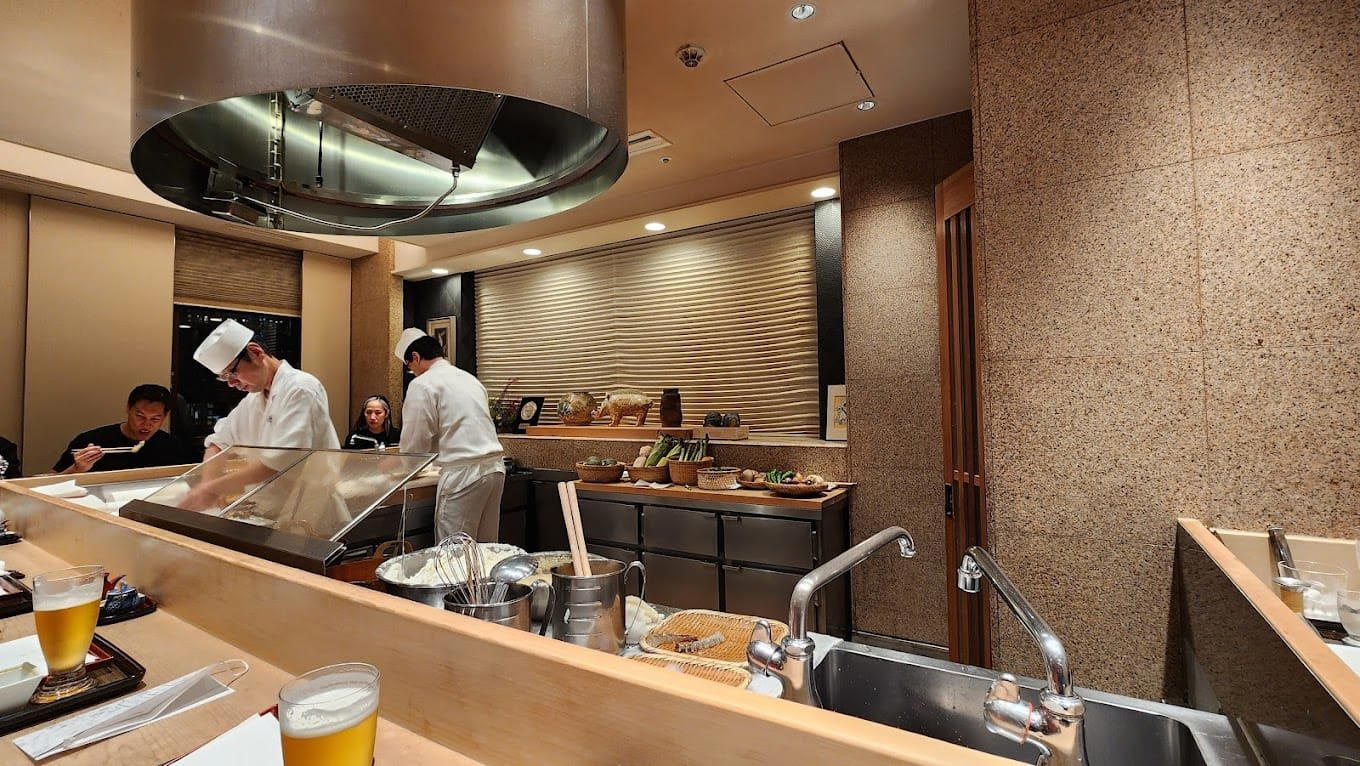
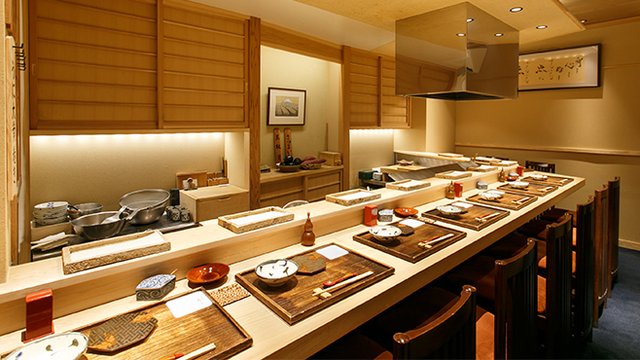
Sonoji opened in October 2016 in the low-key Ningyocho neighbourhood of Chuo ward, away from the tourist circuits of Shinjuku or Ginza. That location is part of the point. The room is a 9-seat counter, counter-only, no private rooms, no private hire, non-smoking throughout. What you get here is proximity to the chef and a format with nowhere to hide: omakase only, simultaneous start time, every seat locked into the same progression from first tempura piece to the final soba.
That progression is the defining structural feature. Sonoji's stated identity, expressed on its noren, is to finish a tempura meal with soba — specifically hand-made soba topped with a kakiage of sakura shrimp from Suruga Bay, described by La Liste (83 points, 2026) as "the jewel of Suruga Bay." Chef Toshiyuki Suzuki trained in both soba and tempura while running a restaurant in his native Shizuoka, and Suruga Bay's seafood anchors his tempura selection alongside traditional Edo ingredients. Vegetables come directly from farmers and shift with the season. The drink program is taken seriously too: sake, shochu, and wine are all listed as areas of particular focus, which matters at a counter where pairings are part of the experience.
For a returning diner, the question shifts from "should I go" to "what to prioritise." Lunch runs ¥20,000–¥30,000 (review-based averages suggest ¥30,000–¥40,000 in practice) and gives you the same omakase format at a lower price point than dinner. If budget is the constraint, lunch is the call. If you want the full evening rhythm of the counter and more time with the drink program, dinner at ¥30,000–¥40,000 is where the room operates at its intended pace. Either way, the soba finish is the anchor, do not leave before it arrives.
The Tabelog Soba 100 selection in 2017 matters here as a data point: at launch, Sonoji was recognised in two separate categories, tempura and soba, before the tempura awards stacked up. That dual recognition is what separates it from single-discipline counters. The tempura credentials have continued to compound: Tabelog Tempura 100 in 2022, 2023, and 2025, with the award tier moving from Bronze (2019–2022) to Silver (2023–2026). Among Tokyo's tempura counters, very few have that kind of upward trajectory sustained over eight years.
Logistics matter at a venue this size. There are 9 seats, no walk-in culture, and a strict simultaneous-start policy. Cancellations cost 50% from three days out and 100% from the day before. Reservations are available via the restaurant directly (phone: +81-3-5643-1566) or through Shokuoku (shokuoku.com). The nearest transit is Ningyocho Station on the Tokyo Metro Hibiya Line or Toei Asakusa Line, a 3–4 minute walk. No on-site parking; paid parking is available nearby at 2-24-1 Nihonbashi Ningyocho. Major credit cards are accepted (Visa, Mastercard, JCB, Amex, Diners). Note that electronic money and QR code payments are not accepted. If you have a soba allergy, the restaurant asks that you avoid strong perfumes as well, an unusual but practical note for a counter of this intimacy.
Solo diners are explicitly welcomed here, and the counter format suits single bookings well. For groups, the 9-seat total capacity means parties of more than three or four will need to plan carefully, there are no private rooms and no buyout option. This is a venue that works well as an intimate meal: a pair or a solo visit will get the most out of the counter proximity and the simultaneous-start format.
For context within Japan's broader fine dining circuit, Sonoji sits alongside other Tabelog Silver tempura counters in Tokyo. If you are building a multi-city Japan itinerary, note that Osaka has its own strong tempura options, Numata and Shunsaiten Tsuchiya are worth considering. Elsewhere in Japan, HAJIME in Osaka, Gion Sasaki in Kyoto, and akordu in Nara cover different cuisine formats at a comparable commitment level. Within Tokyo's tempura category specifically, Tempura Kondo, Tempura Motoyoshi, Tempura Ginya, Edomae Shinsaku, and Fukamachi are the peer set worth comparing before you book. See also our full Tokyo restaurants guide, Tokyo hotels guide, Tokyo bars guide, Tokyo wineries guide, and Tokyo experiences guide.
Know Before You Go
- Address: 2 Chome-22-11 Nihonbashiningyocho, Chuo City, Tokyo 103-0013 (Inoue Building 1F)
- Nearest transit: Ningyocho Station (Hibiya Line / Toei Asakusa Line), 3–4 min walk
- Hours: Tue–Fri: 12:00–14:00, 18:30–21:00 | Sat: 12:30–14:00, 18:30–21:00 | Sun: 12:00–14:00, 18:30–21:00 | Monday: Closed
- Price (dinner): ¥30,000–¥39,999 listed; review averages suggest ¥40,000–¥49,999 with drinks
- Price (lunch): ¥20,000–¥29,999 listed; review averages suggest ¥30,000–¥39,999
- Format: Omakase only, simultaneous start, counter seating (9 seats)
- Service charge: 5%
- Booking: Phone (+81-3-5643-1566) or Shokuoku; advance booking strongly recommended
- Cancellation policy: 50% fee from 3 days prior; 100% fee from the day before
- Payment: Major credit cards (Visa, MC, JCB, Amex, Diners); no electronic money or QR codes
- Parking: None on-site; paid parking nearby at 2-24-1 Nihonbashi Ningyocho
- Smoking: Non-smoking throughout
- Private rooms: Not available
- Solo dining: Recommended
Explore More
Planning a broader Japan trip? See our guides for Goh in Fukuoka, 1000 in Yokohama, and 6 in Okinawa. For Osaka tempura, see Numata and Shunsaiten Tsuchiya.