

Yonemasu
Japanese · Kita, Osaka
Restaurant in Osaka, Japan
 Book with Pearl
The Read
Seasonal Calendar Kaiseki
Price
$30–50per person
Dress
Formal
Why go
A Michelin-starred, 8-seat counter in Kita Ward with Tabelog Silver recognition across seven consecutive years. Yonemasu serves fixed-course kaiseki built around the traditional Japanese calendar, with a stated focus on fish and strict attention to seasonal provenance. Cash only, no website, and genuinely hard to book — plan at least several weeks ahead for any specific date.
About Yonemasu
Who Should Book Yonemasu — and When
Yonemasu is the right call if you are a food-focused traveller who wants a counter-seat kaiseki experience in Osaka that has earned sustained critical recognition without crossing into the five-figure-per-head territory of the city's most decorated rooms. With a Michelin star (2024) and Tabelog Silver Awards from 2019 through 2023 and 2025, plus repeated selection for the Tabelog Japanese Cuisine WEST "100" list, this is a venue with a long and consistent track record — not a recent hype play. At 8 seats, it is one of the smallest serious kaiseki rooms in Kita Ward, which makes the booking genuinely difficult and the experience meaningfully intimate. If you are planning around a seasonal visit, cherry blossom in April, autumn foliage in November, factor that in early, because the kitchen's explicit orientation around the traditional Japanese calendar means the meal changes with the season and demand spikes accordingly.
The Experience at the Counter
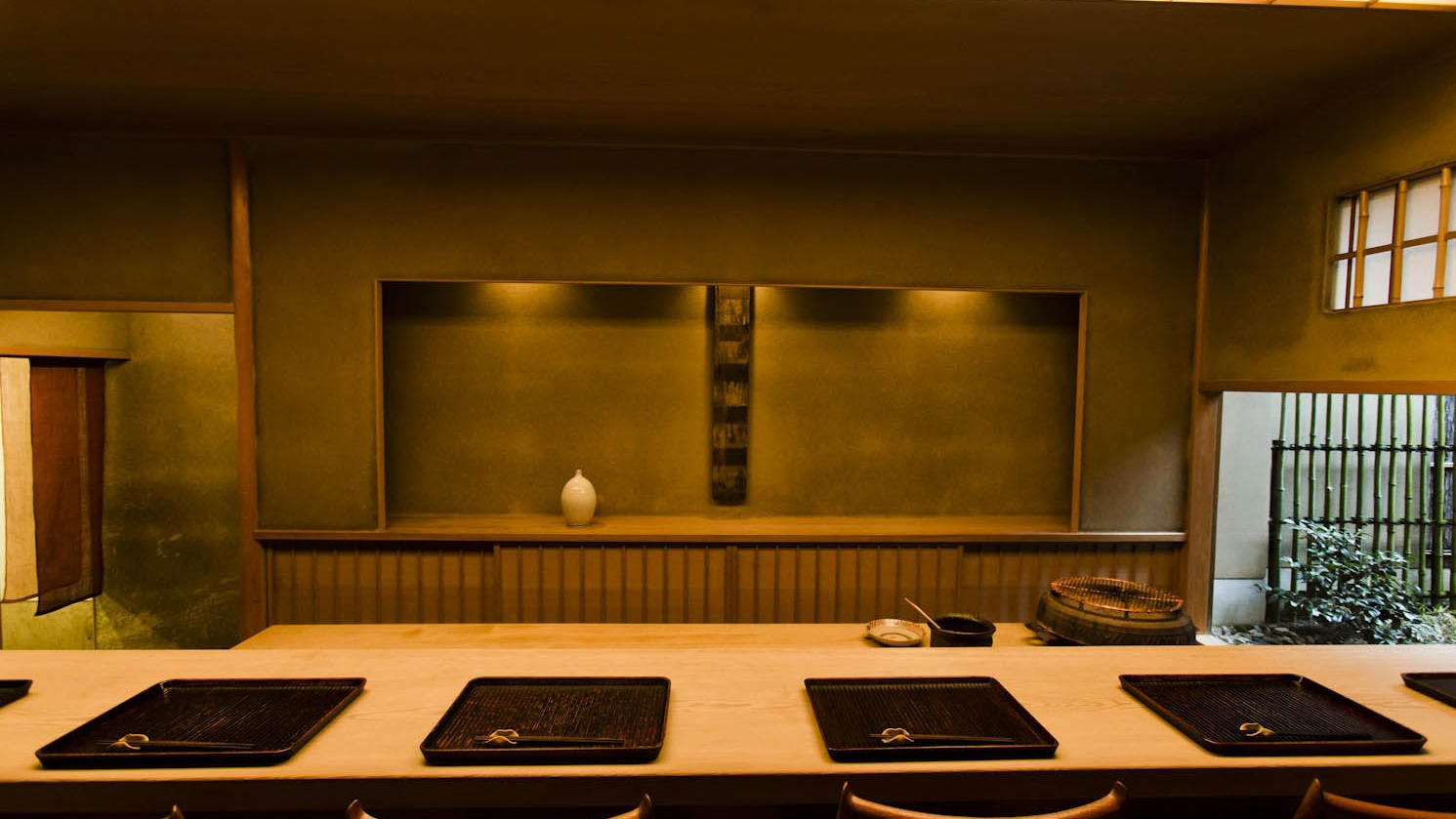
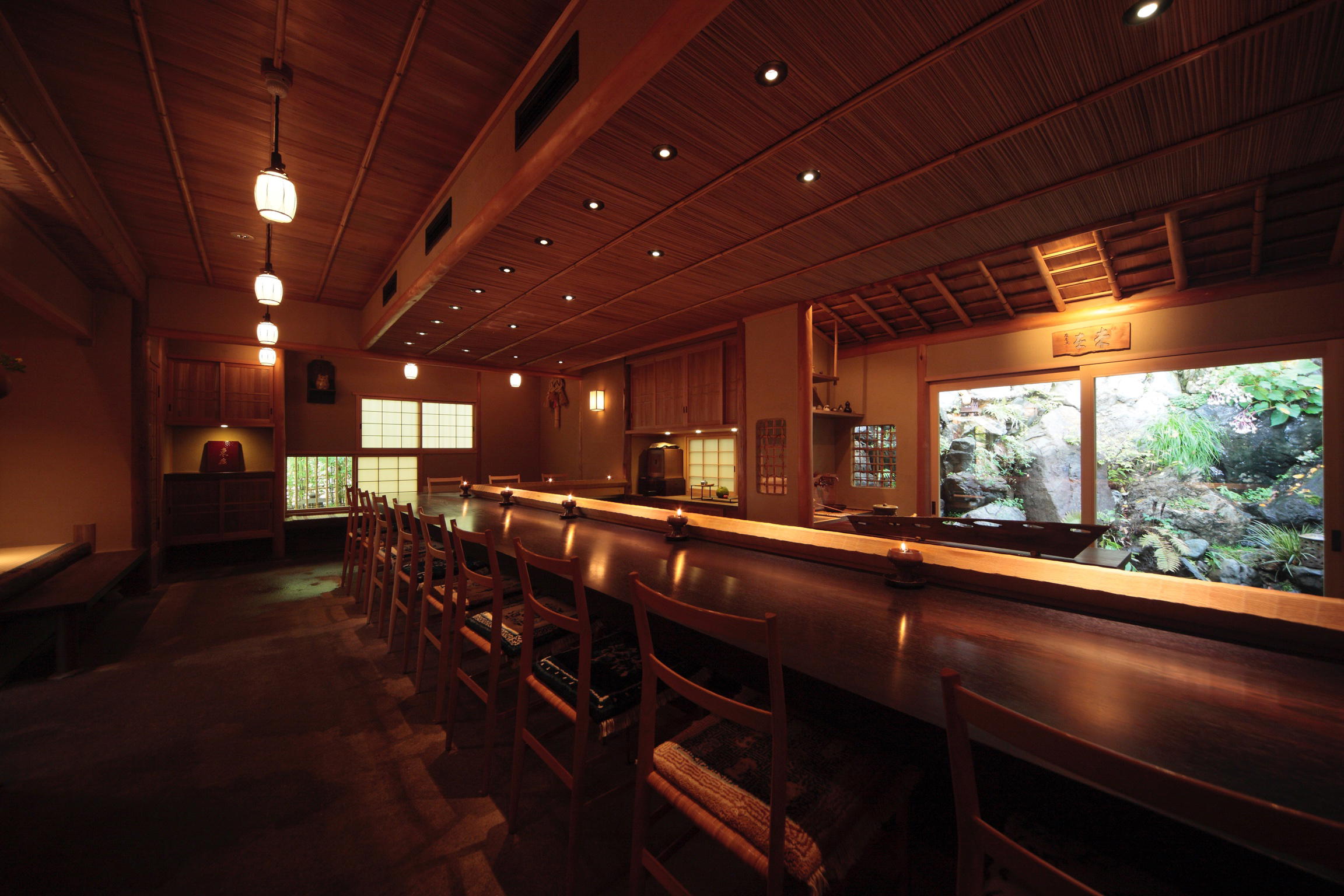
Yonemasu operates exclusively as counter seating, all 8 of them, which sets the tone immediately: this is not a room for large groups or for those who want to disappear into a private booth. The atmosphere is calm and focused rather than theatrical. According to the venue's own description, the proprietor and his cooks begin each meal by introducing the ingredients before preparing the meal as a team, a format that draws you into the process rather than presenting the finished result at a remove. Noise levels stay low. This is a room built for conversation at close range, for paying attention to what is in front of you.
The kitchen's stated focus on fish is worth taking seriously when setting expectations. The menus are built around the traditional Japanese calendar, with ingredients sourced across Japan and, notably, presented on a map showing provenance. Serving vessels are chosen carefully; food is sometimes presented on paper or leaf garnishes in keeping with established Japanese culinary custom. Temperature and texture receive explicit attention. This is kaiseki in a form where the intellectual framework, seasonality, provenance, ceremony, is as much part of the proposition as the food itself. For an explorer-type diner who wants context alongside flavour, that framing is exactly the point.
Lunch vs Dinner: The Value Question
Both lunch and dinner are priced in the same bracket, the listed course is ¥20,000 before tax, with a 10% service charge on leading. The course price brings the base to ¥22,000, and review-based spending data from Tabelog suggests actual spend at dinner runs higher, in the ¥40,000–¥49,999 range, likely reflecting beverage additions from the sake, shochu, and wine list. Lunch spend based on reviews sits at ¥30,000–¥39,999, which implies drinks play a meaningful role in the final bill at both services.
The practical implication: if budget is a constraint, the lunch service is the more controlled spend. The sit-down time for lunch is listed as 14:00, which is an afternoon kaiseki format rather than a standard midday meal, a useful distinction if you are building a day around it. Dinner begins at 17:30. Both services are reservation-only, required at minimum by the day before, though given the 8-seat capacity and booking difficulty, planning weeks ahead is more realistic. The venue is closed Wednesdays and Sundays.
Practical Details
Reservations: Required in advance (minimum the day before, but expect to book weeks out given the 8-seat counter and sustained award recognition). Phone: +81-6-6345-1107. No official website. Hours: Lunch at 14:00, Dinner at 17:30; closed Wednesdays and Sundays, confirm directly before visiting as hours may change. Budget: Course from ¥20,000 before tax; with 10% service charge and drinks, expect ¥30,000–¥40,000+ at lunch and ¥40,000–¥50,000 at dinner based on review data. Payment: Cash only, credit cards, electronic money, and QR code payments are not accepted. Bring cash. Dress: No stated dress code, but the price point, intimacy of the counter, and ceremonial nature of the service call for smart casual at minimum. Transport: 7 minutes walk from JR Fukushima Station; 15 minutes walk from JR Osaka Station. No parking available. Accessibility: Children not allowed. No private rooms currently, though plans for addition are noted.
Awards and Recognition
Yonemasu has held a Michelin star since at least 2024. On Tabelog it carries a score of 4.37 and has won Silver Awards continuously from 2019 to 2023 and again in 2025, with Bronze in 2024, 2026, and 2018. It has been selected for the Tabelog Japanese Cuisine WEST "100" list in 2021, 2023, and 2025. This is a venue with nearly a decade of documented critical approval across two of Japan's most widely used fine dining reference systems.
How It Compares
Within Osaka's ¥¥¥ Japanese cuisine tier, the closest peer is Kashiwaya Osaka Senriyama and Taian. Taian is a kaiseki benchmark in the city with strong Michelin credentials; if you want a more established kaiseki institution with a broader reputation, Taian is the comparison. Yonemasu offers something more compressed, an 8-seat counter with a deliberately intimate, calendar-driven format, which suits a diner who wants proximity to the kitchen and a more personal pace over the formal grandeur of a larger kaiseki room.
If budget is not a constraint and you are open to French-influenced or innovative formats, HAJIME, La Cime, and Fujiya 1935 all sit in the ¥¥¥¥ tier and offer different expressions of Osaka's serious dining options. For a food-focused traveller who specifically wants Japanese cuisine with seasonality at the core and a counter format, Yonemasu at ¥¥¥ delivers more direct access to that experience at a lower price point than any of those alternatives.
Outside Osaka, comparable counter-based serious Japanese dining can be found at Gion Sasaki in Kyoto and Harutaka in Tokyo. If you are travelling the Kansai region, pairing Yonemasu with a visit to akordu in Nara gives a useful contrast between Osaka's Japanese tradition and Nara's cross-cultural approach.
Pearl Picks Nearby
- Miyamoto, Japanese, Osaka
- Oimatsu Hisano, Japanese, Osaka
- Tenjimbashi Aoki, Japanese, Osaka
- Yugen, Japanese, Osaka
- Myojaku, Japanese in Tokyo
- Azabu Kadowaki, Japanese in Tokyo
- Goh in Fukuoka
- 1000 in Yokohama
- 6 in Okinawa
For more options across the city, see our full Osaka restaurants guide, our full Osaka hotels guide, our full Osaka bars guide, our full Osaka wineries guide, and our full Osaka experiences guide.
Planning details
- Location
- 1 Chome-9-16 Oyodominami, Kita Ward, Osaka, 531-0075, Japan
- Website
- tabelog.com/en/osaka/A2701/A270108/27095726
- Phone
- +81 6-6345-1107
The take
The Take
The Vibe
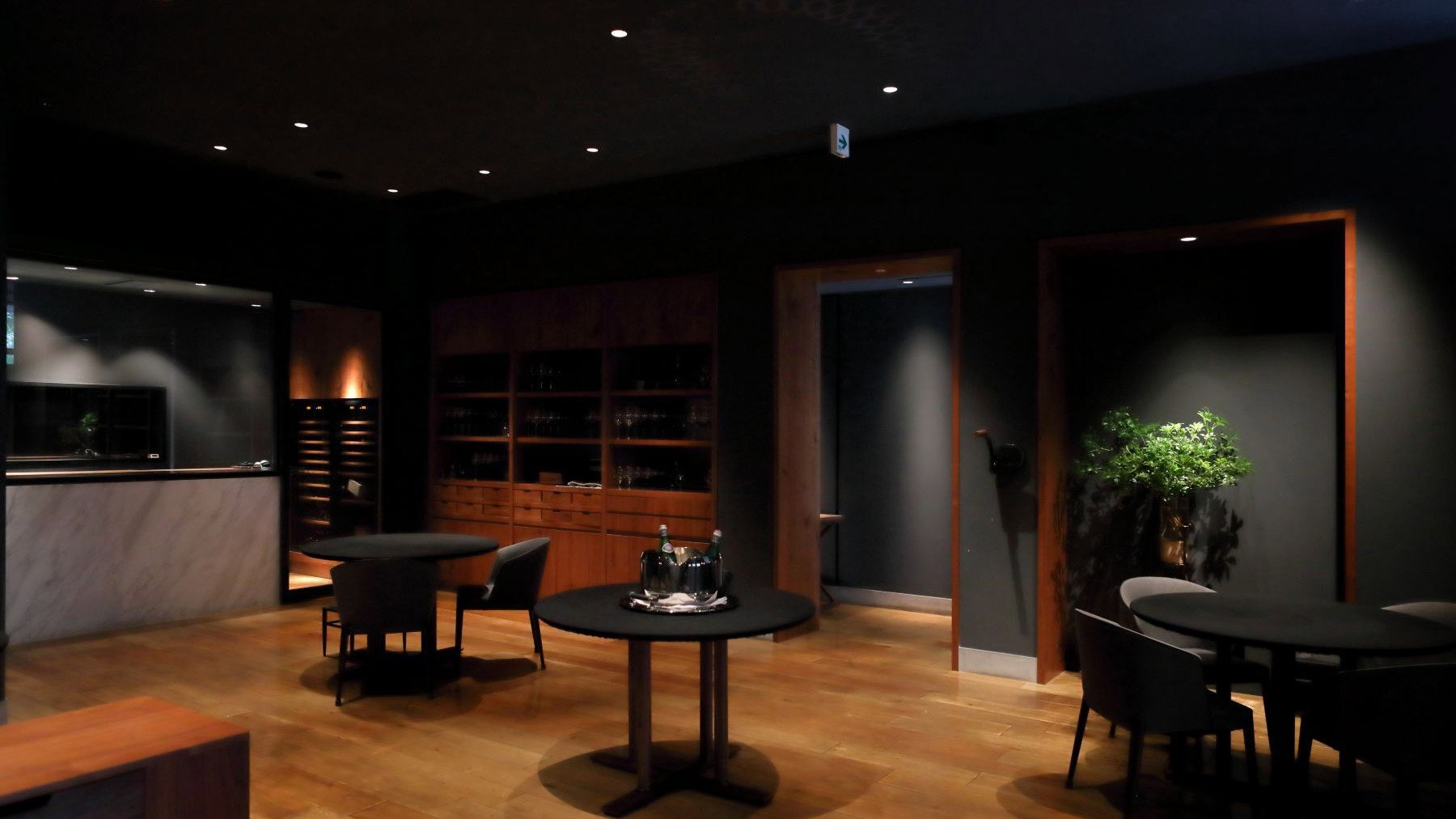
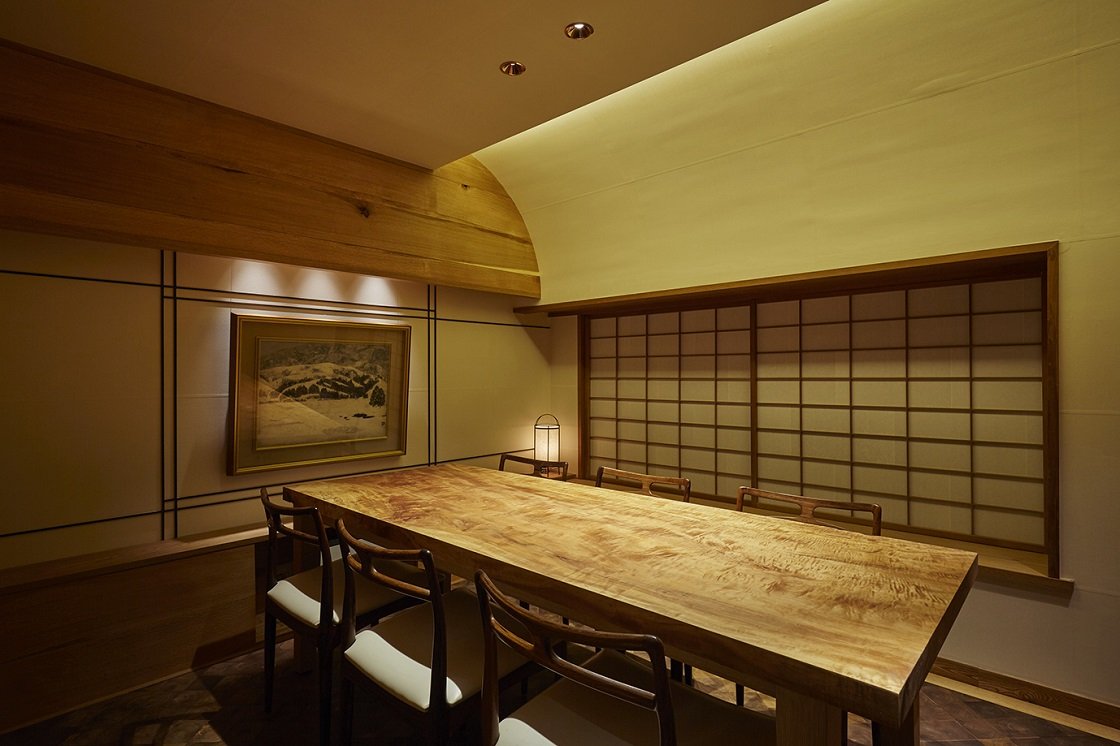
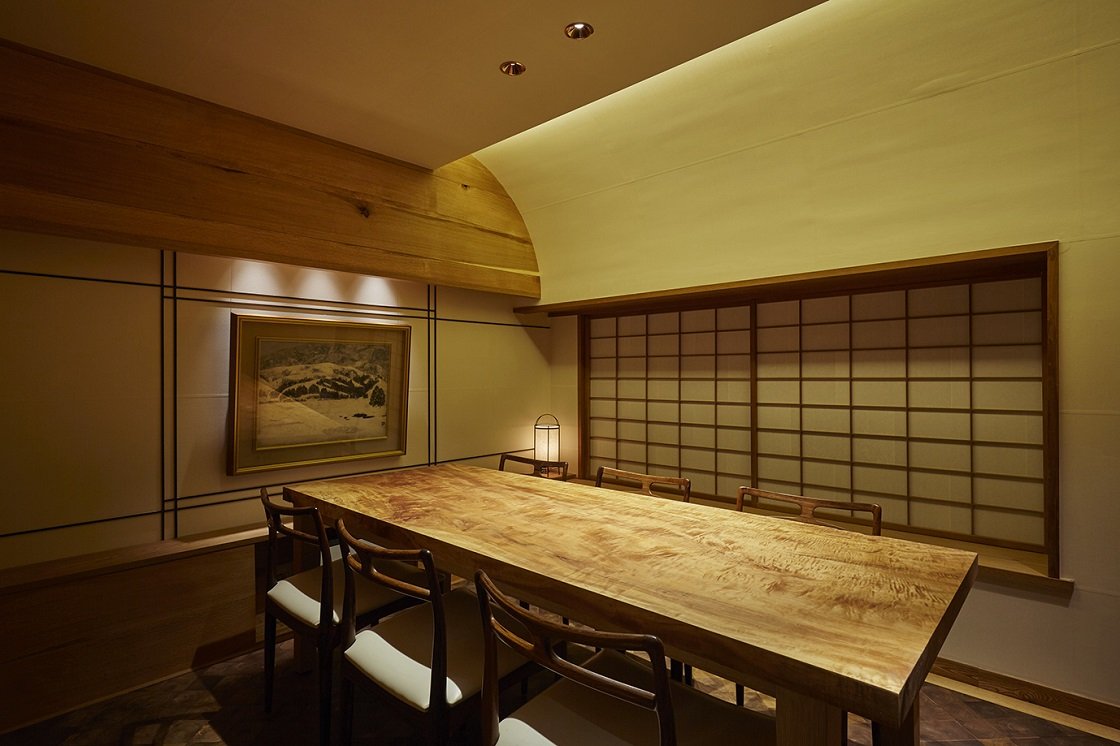
Yonemasu presents an intensely focused, quietly elegant counter experience. The compact room is defined by a single row of eight seats and a deliberate lack of spectacle, so attention falls entirely on the plated sequence before you. The restaurant operates within kaiseki tradition, favouring spatial restraint and seasonal discipline; menus are organised around the traditional Japanese calendar and ingredients are traced to their regions. That restraint feels sophisticated rather than showy: service and technique exist to illuminate provenance and seasonality, making the setting intimate, contemplative and classically refined.
Best For
This is a destination for diners who seek a concentrated, ritualised meal rather than casual dining. The eight-seat counter and kaiseki structure make Yonemasu especially suited to couples, small parties and serious food lovers celebrating a special evening. The format encourages close engagement with the chef and the sequence of courses, so it works well for date nights and special-occasion dinners where the focus is on seasonal ingredients and provenance. It is less appropriate for loud group nights or anyone looking for a high-energy dining scene.
Ordering Tips
Expect the kitchen to drive the experience: menus are organised around the traditional Japanese calendar and the course structure reflects seasonal divisions. The restaurant emphasises provenance — ingredients are plotted on a map of Japan and the team is particular about fish — so lean into that framing by taking the set sequence the counter offers rather than asking for à la carte substitutions. Sit at the counter to see the progression and to hear about ingredients’ origins; that perspective is central to understanding what Yonemasu is presenting.
Venue details
Ambiance
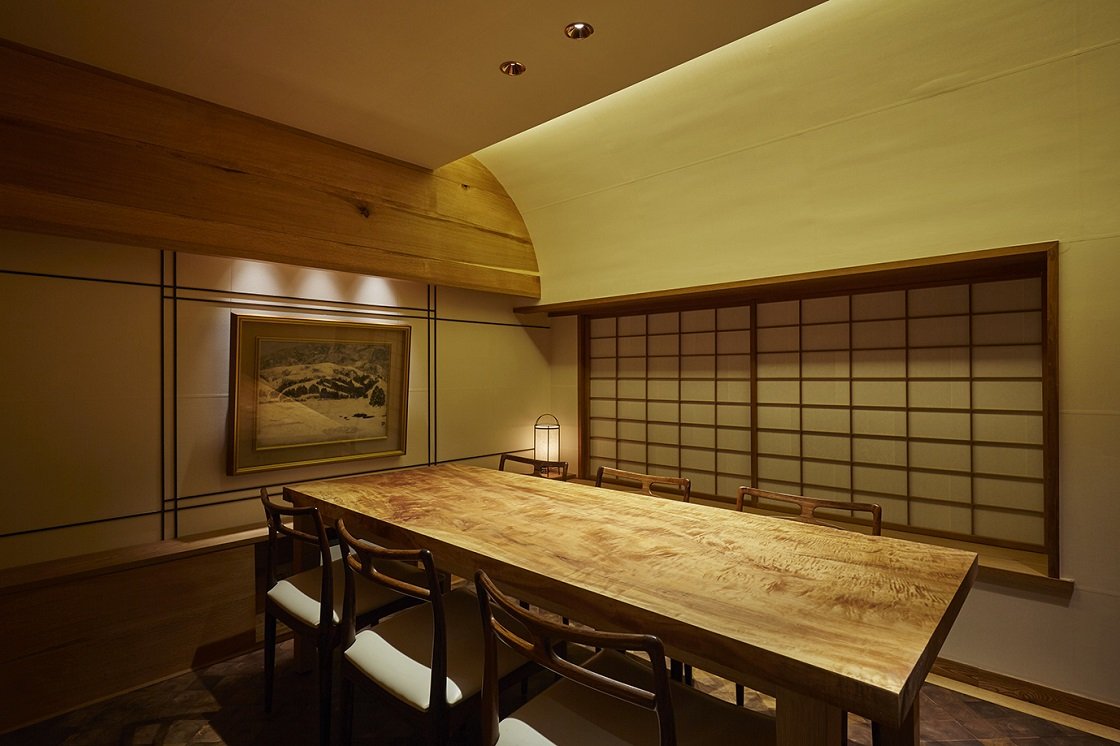
Quiet, deliberate, and formal, with a smart and elegant room that feels removed from the pace of the nearby station area.
Tags
Vibe
Best For
Experience
At the Table
- Dress Code
- Formal
- Noise Level
- Quiet
- Service Style
- Formal
- Meal Pacing
- Extended Experience
- Capacity
- Small
- Kitchen
- Traditional
- Menu Format
- Set menu
Know before you go
Know Before You Go
- Getting there
- 1 Chome-9-16 Oyodominami, Kita Ward, Osaka, 531-0075, Japan
Planning details
Location
1 Chome-9-16 Oyodominami, Kita Ward, Osaka, 531-0075, Japan · Directions
Recognition and awards
Also consider
Also Consider
- HAJIME, French, Innovative, ¥¥¥¥
- La Cime, French, ¥¥¥¥
- Kashiwaya Osaka Senriyama, Japanese, ¥¥¥
- Taian, Kaiseki, Japanese, ¥¥¥
- Fujiya 1935, Innovative, ¥¥¥¥
Restaurant context
Within Osaka's ¥¥¥ Japanese cuisine tier, Taian is the most direct peer: a kaiseki-focused counter with Michelin credentials and strong critical standing. Taian suits diners who want a more established institutional kaiseki experience; Yonemasu's 8-seat format and calendar-driven ingredient presentation make it the better pick for those who want closer proximity to the preparation and a more personal pace. Both carry comparable price points, so the decision comes down to format preference rather than budget.
Kashiwaya Osaka Senriyama is the other ¥¥¥ Japanese comparison worth considering. If you want a venue with a longer public reputation and potentially easier booking logistics, Kashiwaya is worth the call first. Yonemasu's booking difficulty is higher given the 8-seat constraint, but for a diner specifically seeking an intimate counter with the kitchen visible and active, Yonemasu is the more compelling argument.
If you are open to spending more, HAJIME, La Cime, and Fujiya 1935 all sit at ¥¥¥¥ and offer French or innovative formats that reflect a different side of Osaka's serious dining scene. For a traveller who specifically wants Japanese cuisine with seasonality and ceremony at the centre, none of those three match Yonemasu's focus, and all will cost more. Yonemasu is the right call if traditional Japanese kaiseki is your priority and you can navigate the booking process.
Explore Osaka
Around this place
Discover more on Pearl
Unlock the full Yonemasu guide in Pearl, including awards, comparisons, FAQs, planning details, and nearby places.
Compare Yonemasu
| Venue | Price | Booking Difficulty | Awards |
|---|---|---|---|
| Yonemasu | ¥¥¥ | Hard | 2026 Tabelog Bronze · #522Michelin Guide Kyoto Osaka 20262026 Michelin 1 StarTabelog 100 - Japanese cuisine - WEST - 2025 · #812025 Tabelog Silver2024 Michelin 1 Star |
| HAJIME | ¥¥¥¥ | Unknown | Star Wine Lists 2026 · #12026 Tabelog Bronze · #922026 OAD Top Restaurants in Japan Ranked · #98Michelin Guide Kyoto Osaka 20262026 La Liste Top RestaurantsTabelog 100 - Innovative / Creative cuisine - 2025 · #692025 Asia's 50 Best Restaurants · #832025 OAD Top Restaurants in Japan Ranked · #87We're Smart World Top Restaurants 2025 |
| La Cime | ¥¥¥¥ | Unknown | 2026 Asia's 50 Best Restaurants · #132026 OAD Top Restaurants in Japan Ranked · #1492026 Tabelog Bronze · #231Michelin Guide Kyoto Osaka 20262026 La Liste Top Restaurants2025 Asia's 50 Best Restaurants · #82025 World's 50 Best Restaurants · #44Tabelog 100 - French - WEST - 2025 · #932025 OAD Top Restaurants in Japan Ranked · #123 |
| Kashiwaya Osaka Senriyama | ¥¥¥ | Unknown | 2026 Tabelog Bronze · #1682026 OAD Top Restaurants in Japan Recommended2026 Relais Chateaux RestaurantsMichelin Guide Kyoto Osaka 20262026 La Liste Top RestaurantsTabelog 100 - Japanese cuisine - WEST - 2025 · #772025 OAD Top Restaurants in Japan Ranked · #1552025 Relais Chateaux Award2025 Michelin 3 Stars |
| Taian | ¥¥¥ | Unknown | 2026 OAD Top Restaurants in Japan RecommendedMichelin Guide Kyoto Osaka 20262026 La Liste Top Restaurants2025 OAD Top Restaurants in Japan Ranked · #2042025 La Liste Top Restaurants2025 Michelin 3 Stars2024 OAD Top Restaurants in Japan Ranked · #1912024 Michelin 3 Stars2023 OAD Top Restaurants in Japan Highly Recommended |
| Fujiya 1935 | ¥¥¥¥ | Unknown | 2026 Tabelog Bronze · #752026 OAD Top Restaurants in Japan RecommendedMichelin Guide Kyoto Osaka 20262026 La Liste Top Restaurants2025 Michelin 2 Stars2025 Tabelog Silver2025 La Liste Top Restaurants2024 OAD Top Restaurants in Japan Ranked · #2392024 Michelin 2 Stars |









What to weigh when choosing between Yonemasu and alternatives.
FAQ
Frequently Asked Questions
How far ahead should I book Yonemasu?
Book at least two to four weeks out — the 8-seat counter fills fast given Yonemasu's Michelin star and continuous Tabelog Silver Awards from 2019 to 2023. Reservations must be made by the day before at the latest, but that window will rarely be available. Call +81-6-6345-1107 directly; there is no official website for online booking.
Can I eat at the bar at Yonemasu?
Yes, and it is the only option: Yonemasu currently operates exclusively with counter seating across all 8 places. There are plans to add private rooms, but as of now the full experience happens at the counter. This is a feature, not a limitation — the format is designed around watching the team prepare each course in front of you.
Is Yonemasu good for solo dining?
Yes, it is a strong choice for solo diners. The counter format at Yonemasu suits one or two guests better than larger groups, and the 8-seat layout means you are close to the preparation throughout the meal. Solo kaiseki dining in Japan is standard practice, and a Michelin-starred counter at ¥20,000 before tax is a reasonable solo spend for the category.
What should I wear to Yonemasu?
No dress code is documented for Yonemasu, but the setting — a Michelin-starred kaiseki counter with a 10% service charge and a ¥20,000+ fixed course — points toward neat, understated attire. Smart casual (no athletic wear) fits the occasion without being overdressed. Confirm with the restaurant directly if you are unsure.
Does Yonemasu handle dietary restrictions?
No dietary restriction policy is documented in the available data. Given that the kitchen focuses on fish-forward Japanese cuisine with a fixed course structure built around seasonal ingredients, accommodating significant restrictions may be limited. Contact the restaurant in advance — Yonemasu requires reservations by the day before at minimum, so raising any restrictions at that point is the practical approach.
What should a first-timer know about Yonemasu?
Yonemasu runs a single fixed course at ¥20,000 before tax (plus 10% service charge), so there is no menu to navigate — the kitchen decides. The experience is built around seasonal ingredients mapped to their origins across Japan, with the team introducing produce before cooking begins. Crucially, Yonemasu does not accept credit cards, electronic money, or QR code payments, so bring sufficient cash.