Book Atomix if you want a serious Korean tasting menu in New York where the explanation is part of the value. At our autumn Chef’s Counter meal, the course cards named the ingredients, explained the thinking behind each dish and credited the ceramic artist behind each vessel. They connected razor clams to preservation, abalone to chef Junghyun “JP” Park’s childhood, and lamb to the way rice, soup and side dishes structure a Korean meal.
The payoff was on the plate: kohlrabi ribbons under a crown of caviar, golden eye snapper with green sauce and sujebi, lobster with yellow squash, and lamb with dubu mandu and a separate bowl of rice. Read the cards closely. They make Atomix easier to follow than most tasting menus at this level.
Junghyun and Ellia Park’s New York restaurant
Atomix is Junghyun and Ellia Park’s restaurant, built around Korean culinary traditions with room for new techniques and ingredients. It followed Atoboy, which opened in 2016; Atomix opened in 2018. Before those projects, JP worked at Jungsik in New York. Ellia treats the cards, the ceramics and the guest’s choice of chopsticks as part of the hospitality.
The awards tell you this is a major booking, but the meal explains why. JP received the James Beard Award for Best Chef: New York State in 2023, and Atomix won Outstanding Hospitality in 2025. The restaurant holds two Michelin stars.
At the Chef’s Counter
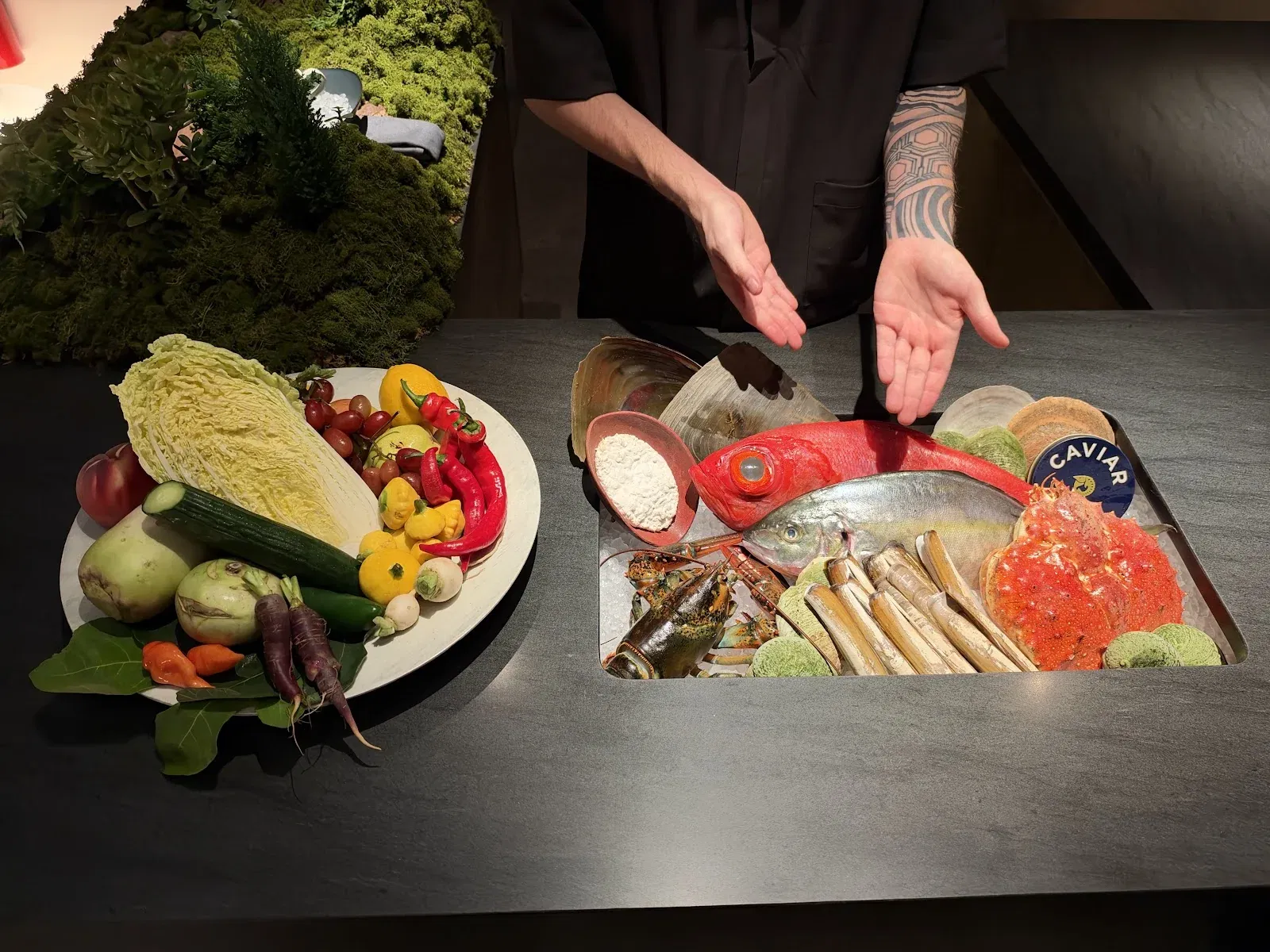
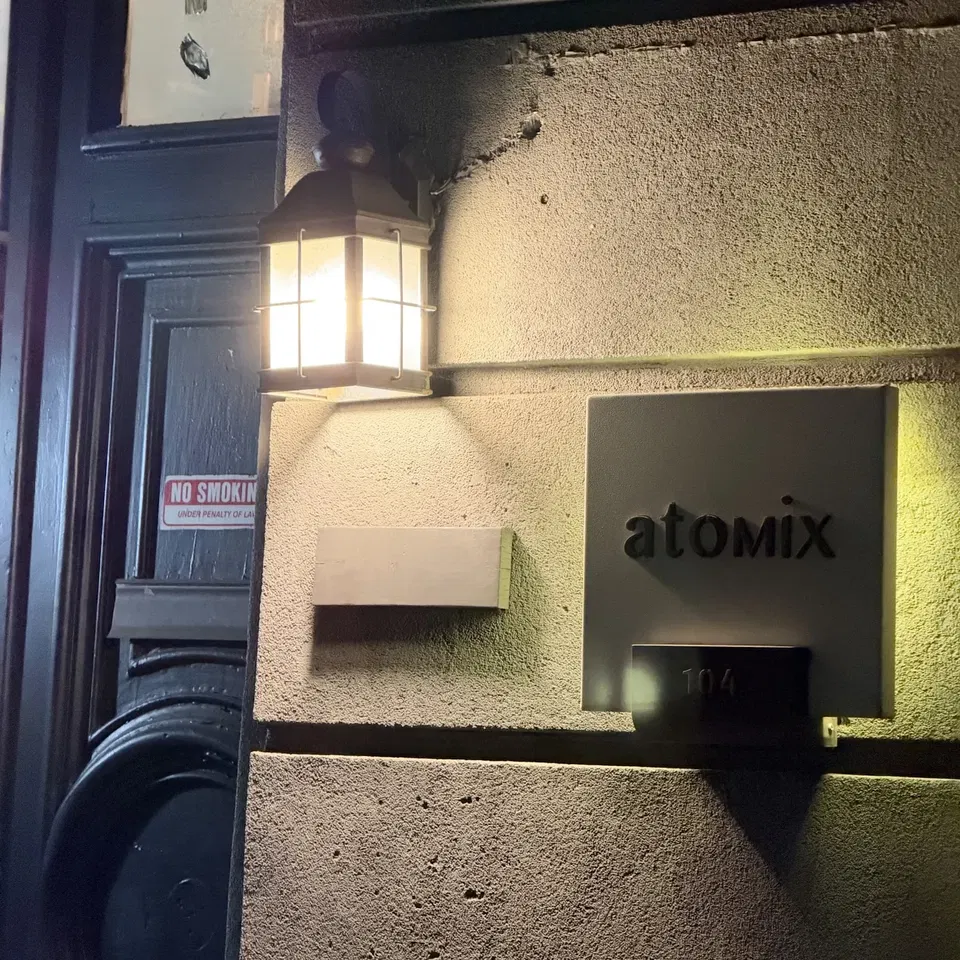
Atomix sits at 104 East 30th Street, with a lantern beside the entrance. Inside, a large botanical arrangement brings green and autumnal orange into the stairwell. Downstairs, the dark, marbled U-shaped counter faces an open kitchen with pale wood cabinetry. Before dinner, the team presented ingredients: whole fish, shellfish, caviar and a broad selection of vegetables.
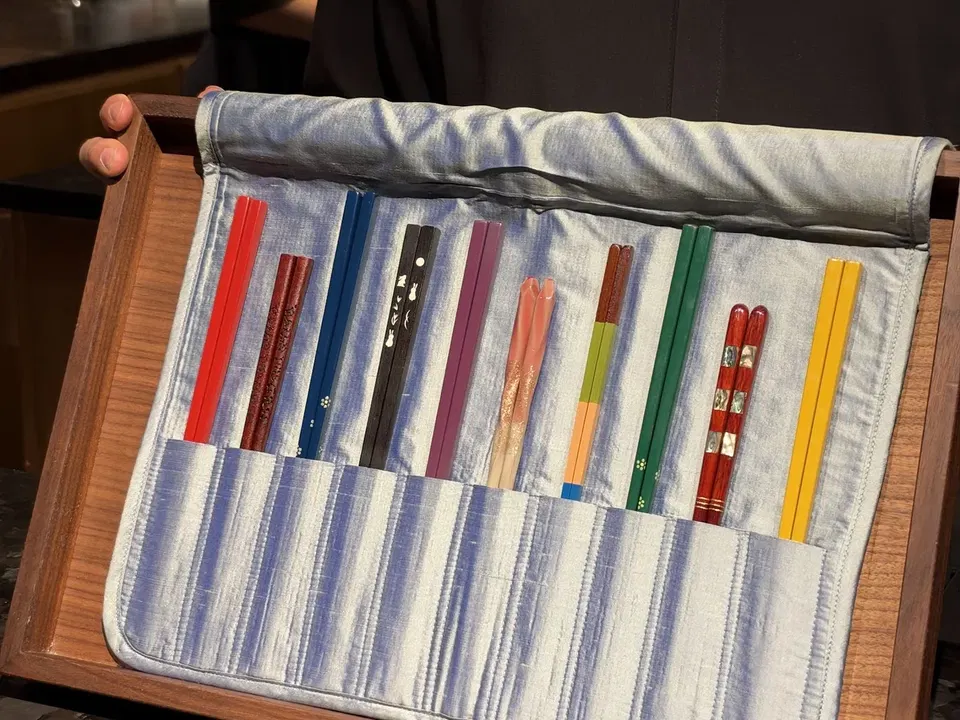
The chopstick choice is small, but it sets the tone. A tray of colorful pairs came round, and the ceramics changed with every course.
The welcome card, signed by JP, introduced food as a way to carry memories and connect cultures. Each numbered card gave you a title, ingredients and a chef’s explanation: preservation for razor clam, omija for sea urchin, nuruk for king crab, Korean-Chinese delivery meals for abalone, seaweed XO for snapper, seasonal exchange for lobster, and the rhythm of rice, soup and banchan for lamb. It turns a technical meal into one you can follow.
The opening bites
Our welcome sequence included honeysuckle sikhye, followed by Pacific saury with gim bugak and perilla and littleneck clam with dashima and chrysanthemum.
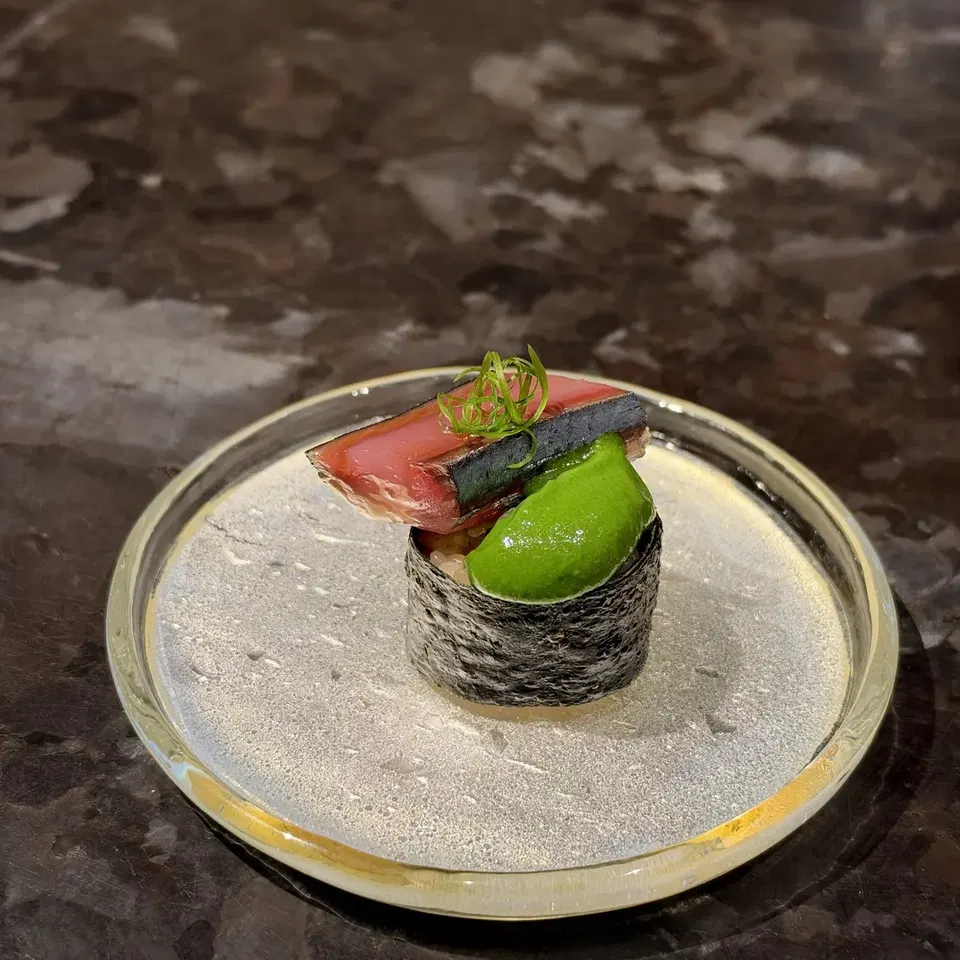
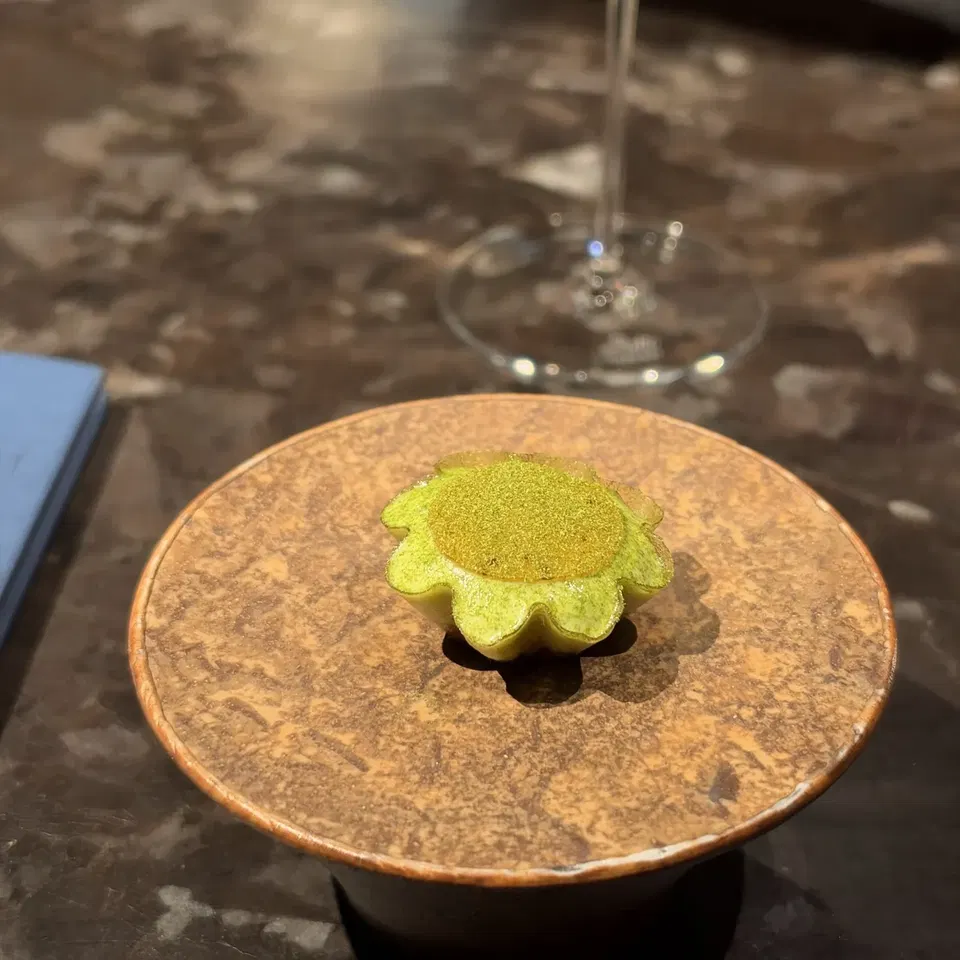
The welcome card credited ceramic artists Kira Kim and Sungki Oh. Even before the first numbered course, Atomix had introduced seafood, grains, herbs and seaweed, plus the idea that the vessel would matter as much as the plating.
Seven courses, seven stories
1. Held Through Time: razor clam, napa cabbage and dashima
The first card made the case for preservation, a smart opening because it immediately separates Atomix from tasting menus that lean only on luxury ingredients. It described autumn’s abundance and the Korean practices of fermenting, drying and pickling ingredients to carry them into colder months. Razor clam was prepared with mirin, cheongju and jungjang; napa cabbage was paired with lacto-fermented celeriac and brown butter.
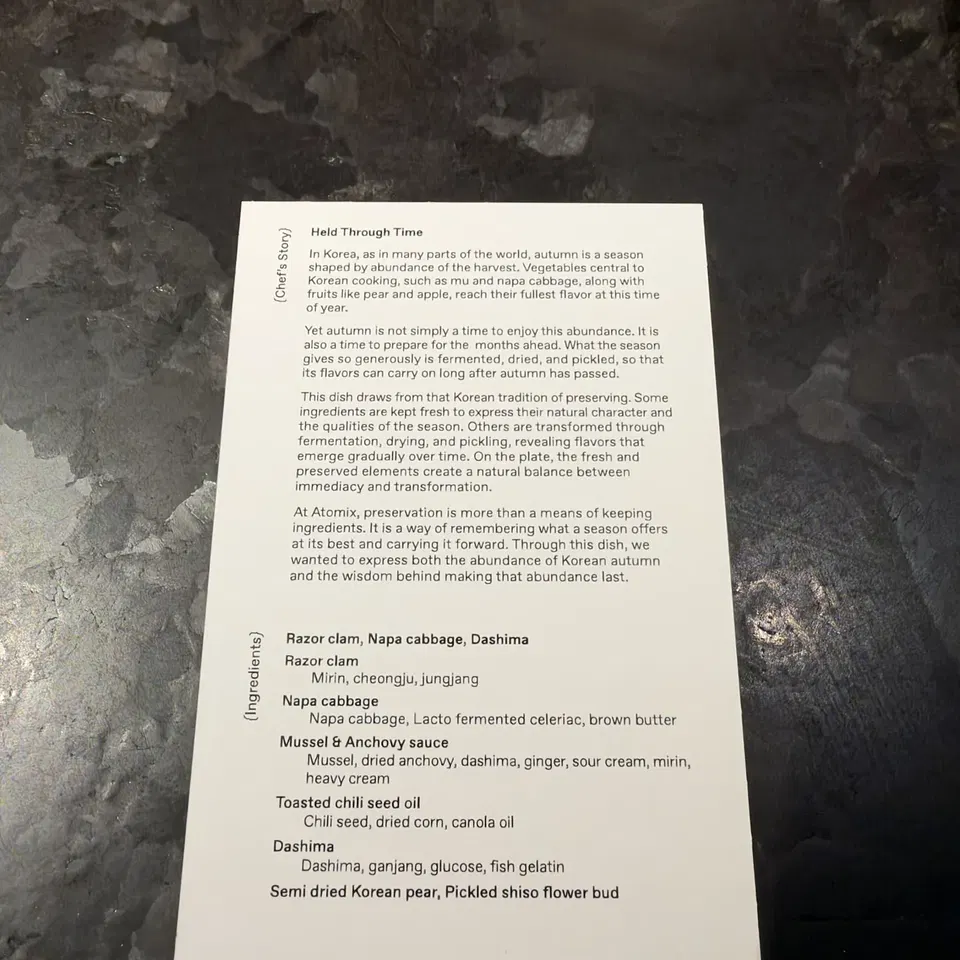
The mussel-and-anchovy sauce also included dashima and ginger, while toasted chili-seed oil added another preparation to the plate. Semi-dried Korean pear and pickled shiso flower buds made the preservation theme clear. Several ways of extending an ingredient’s life were at work in one bowl.
The vessel was by Jeonwook Kim.
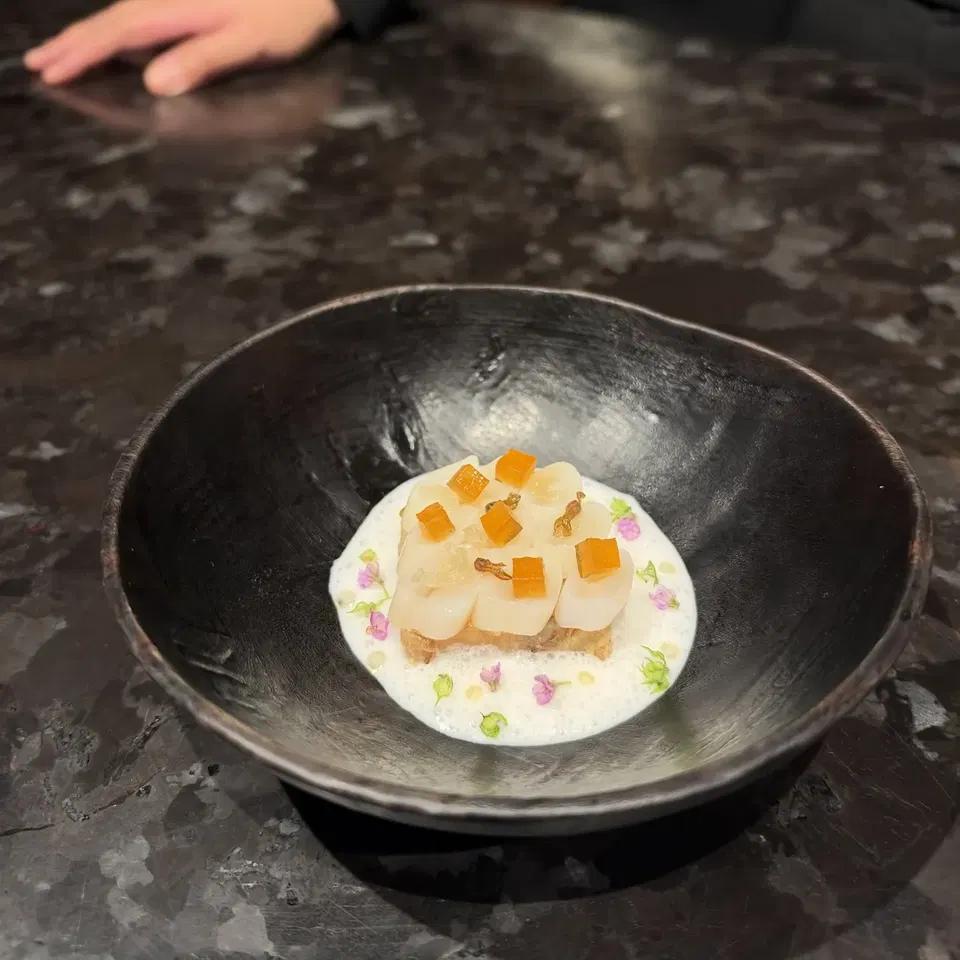
2. A Harmony of Flavors: sea urchin, smoked striped jack and red frill mustard
The second course centered on omija, whose name refers to five flavors: sweet, bitter, sour, salty and pungent. The chef’s explanation focused on the balance created by bringing different sensations together. Sea urchin, smoked striped jack and red frill mustard were the main ingredients.
The supporting preparations were highly detailed. Purple carrot juice was combined with fermented tuna extract; the mustard gel involved radish, ginger, omija, lemon and rice vinegar. Licorice, roasted buckwheat oil, avocado, myoga and alyssum flowers appeared elsewhere in the composition.
The bowl was by Hyunsung Cho.
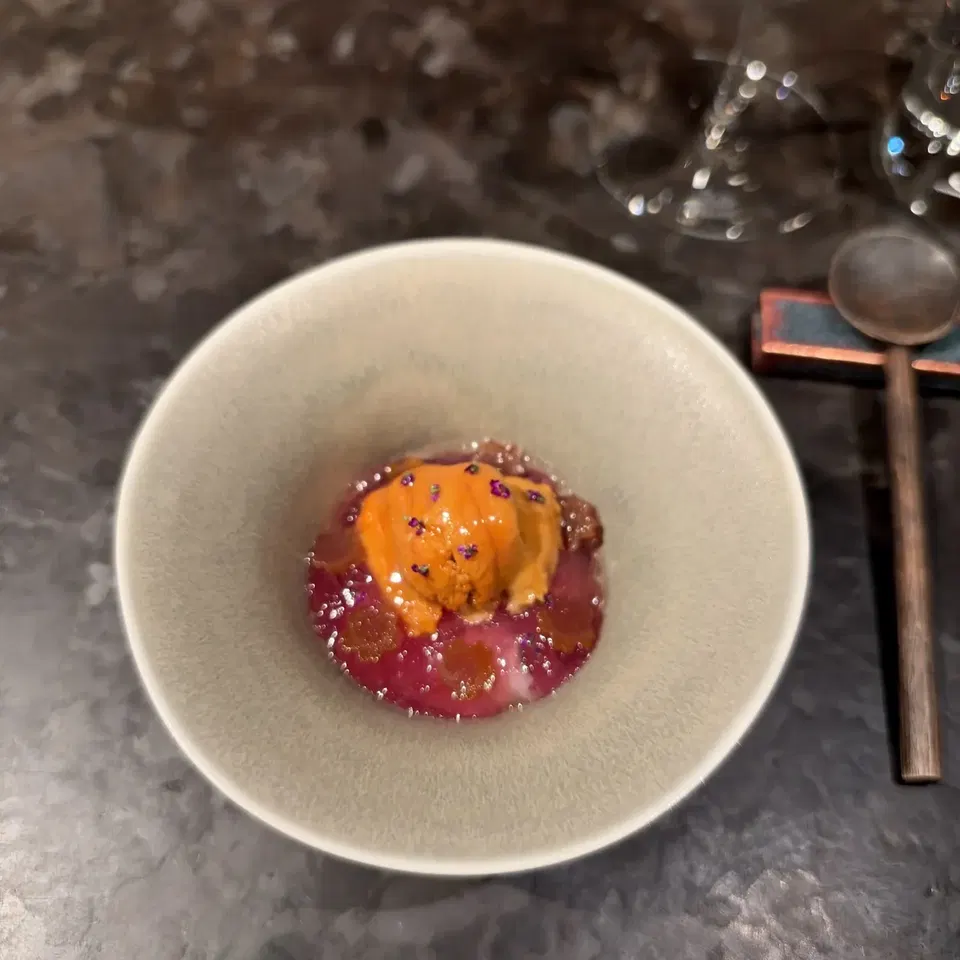
3. Nuruk: kohlrabi, king crab and Kristal caviar
Nuruk, a grain-based fermentation starter, supplied the subject of the third card. JP described work with Common Era, a research laboratory in Korea, exploring its possibilities beyond alcoholic drinks. Atomix’s preparation focused on white mold cultivated on rice, with potential uses extending to powders, oils and sauces.
Here, the idea appeared in a sauce with kohlrabi, cream, butter and yondu. Kohlrabi ribbons formed the central structure, with king crab and a round crown of Kristal caviar. The crab preparation included garlic, jungjang, fish sauce and black truffle; perilla oil appeared with the kohlrabi and in the finishing details.
The bowl was by Hye Jeong Kim. The fermentation work is what makes this dish, more than the caviar.
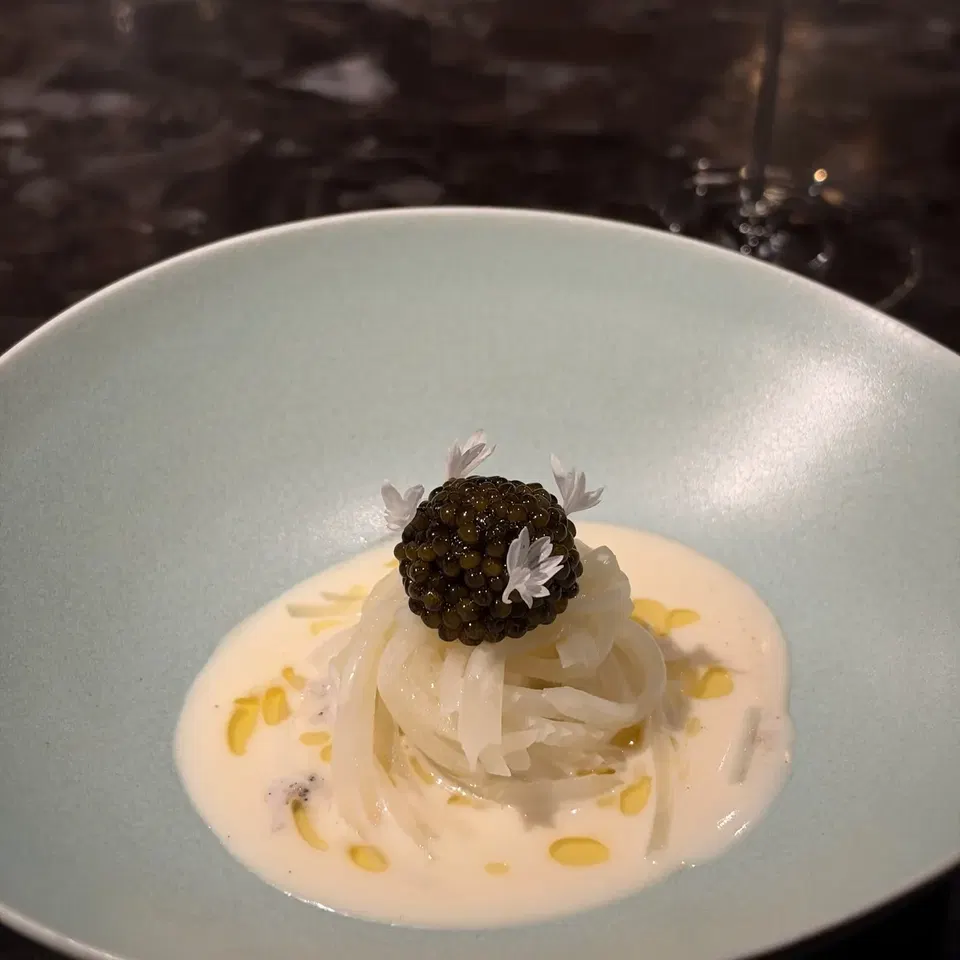
4. Korean-Chinese Cuisine: abalone, pomegranate and red cabbage
On this card, JP recalled Korean-Chinese delivery meals and celebrations during his childhood in the 1990s, especially tangsuyuk: battered meat with a sweet-and-tart sauce. He reworked that childhood reference with abalone.
The abalone’s preparation included rice and tapioca in the batter, with soju among the ingredients. Pomegranate sauce brought in wood-ear mushroom, onion, napa cabbage, garlic, scallion and vinegars. A red cabbage purée carried the color further, while young scallion and wood sorrel finished the plate. A small side preparation combined celtuce jangajji, pearl onion and cashew.
The card credited Songam Lee and Jeongwon Lee for the ceramics. Knowing the tangsuyuk link gives a familiar frame to a luxury ingredient.
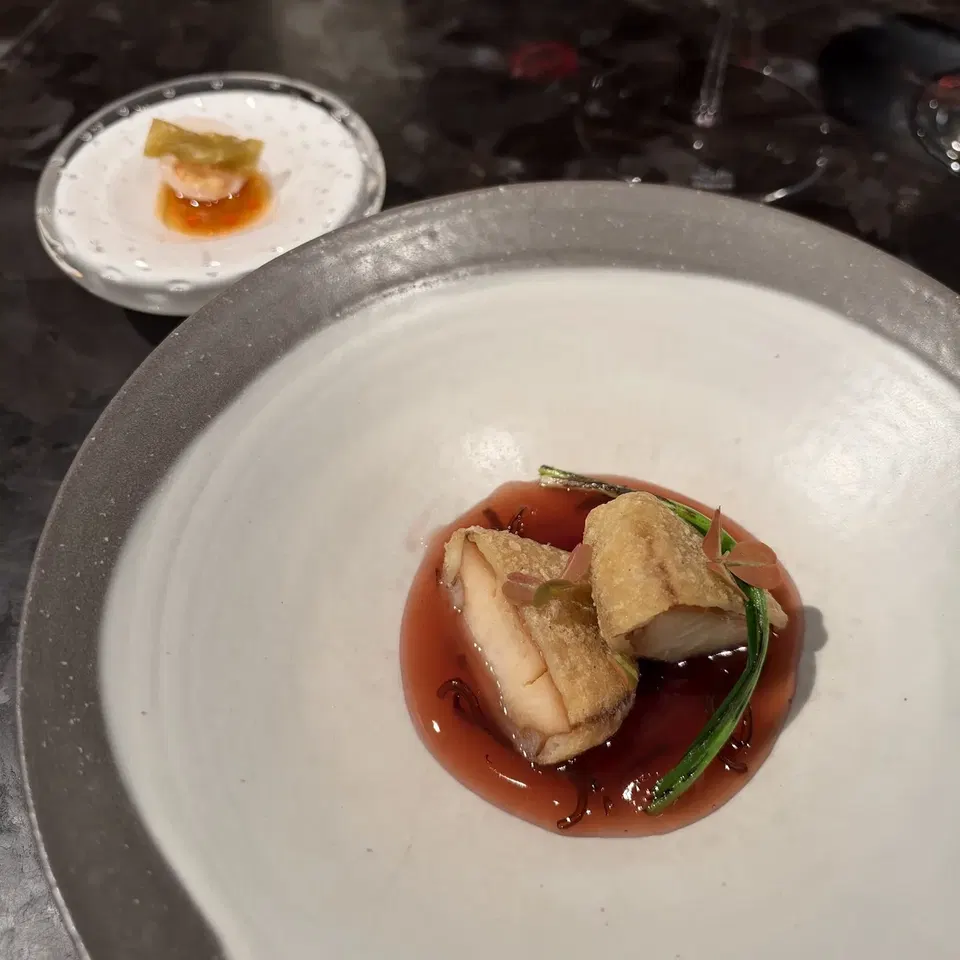
5. Beyond Seaweed: golden eye snapper, daepa sujebi and Jimmy Nardello pepper
The snapper course returned to the kitchen’s work with Common Era, this time through Korean seaweeds. Its seaweed XO took inspiration from the role of Hong Kong’s XO condiment, combining dashima, miyeok and gim with shallot, garlic, meju and sesame oil.
Golden eye snapper came with daepa sujebi and a green sauce. The sujebi preparation included littleneck clam, salted shrimp, nuruk, butter and brown rice vinegar. Jimmy Nardello pepper was paired with pickled habanero; ruby amaranth, garlic chive flower and nasturtium added the finishing greens. Cucumber kimchi and white peach accompanied the course.
Artists Jaeil Shin and Hyun-Sung Cho were credited for the vessels. The seaweed XO worked as a real condiment, and the cucumber and peach gave the course another register.
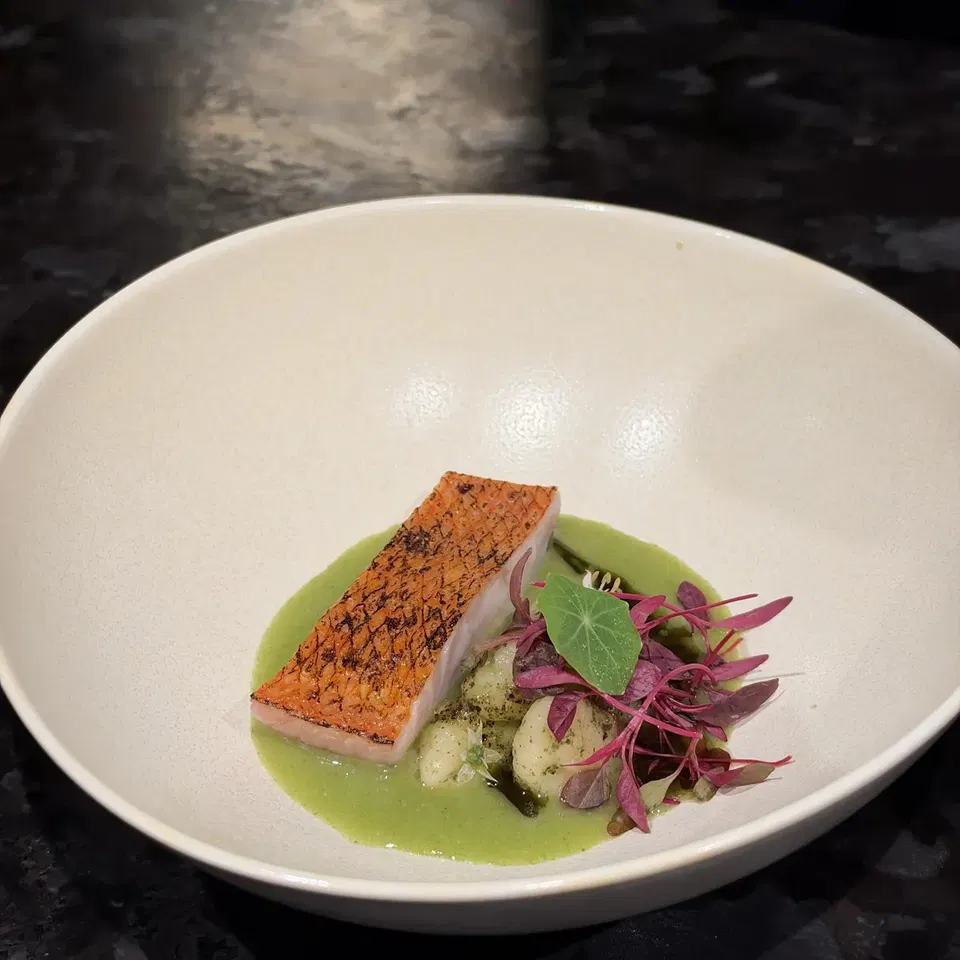
6. A Season Shared: lobster, koginut squash, persimmon and aji dulce
For this course, JP described living between New York and Seoul and finding connections between their seasonal ingredients. Lobster, squash and chilies came together with persimmon and Korean fermentation. The title pointed to an autumn shared across places, expressed through the components of one plate.
The lobster preparation used gochujang, garlic and black vinegar. Koginut squash and persimmon were joined by Fuji apple and lemon, while aji dulce appeared as a pickled purée. Hakurei turnip and citrus lace completed the composition.
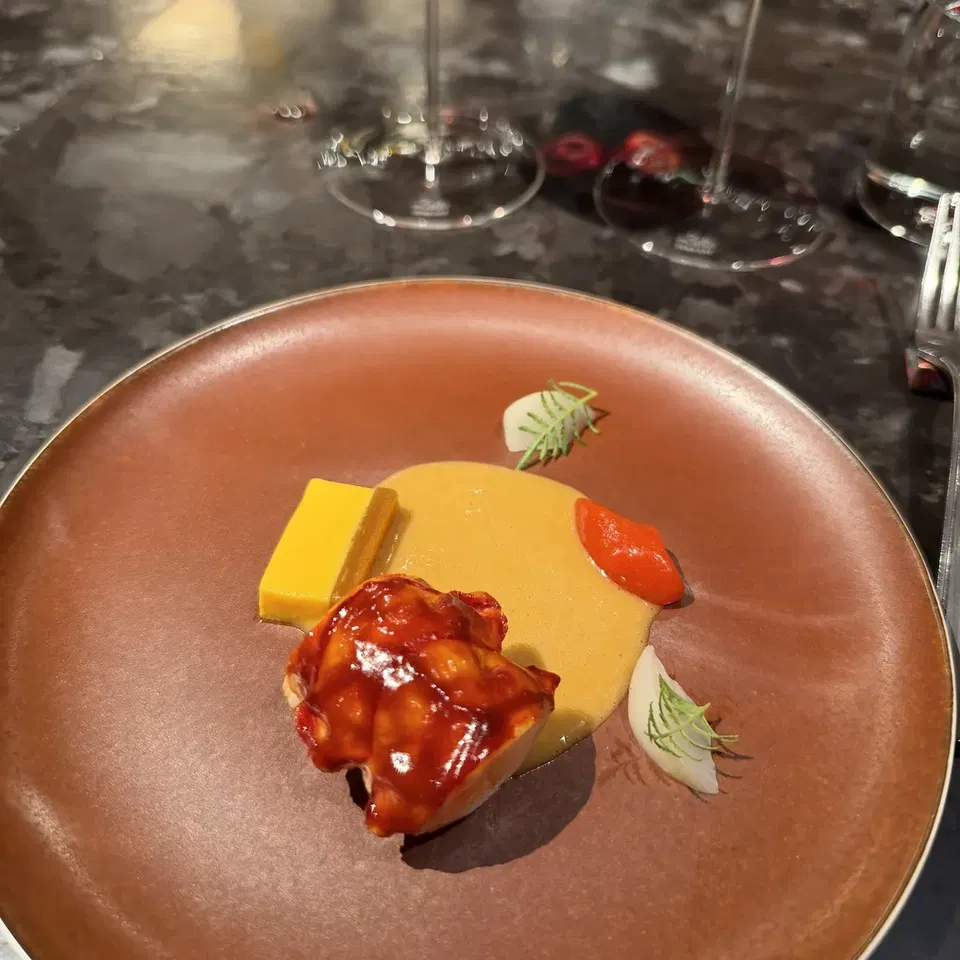
A separate bowl of lobster jeotgal rice accompanied the dish. The ceramics were by Namhee Kim and Youme Oh.
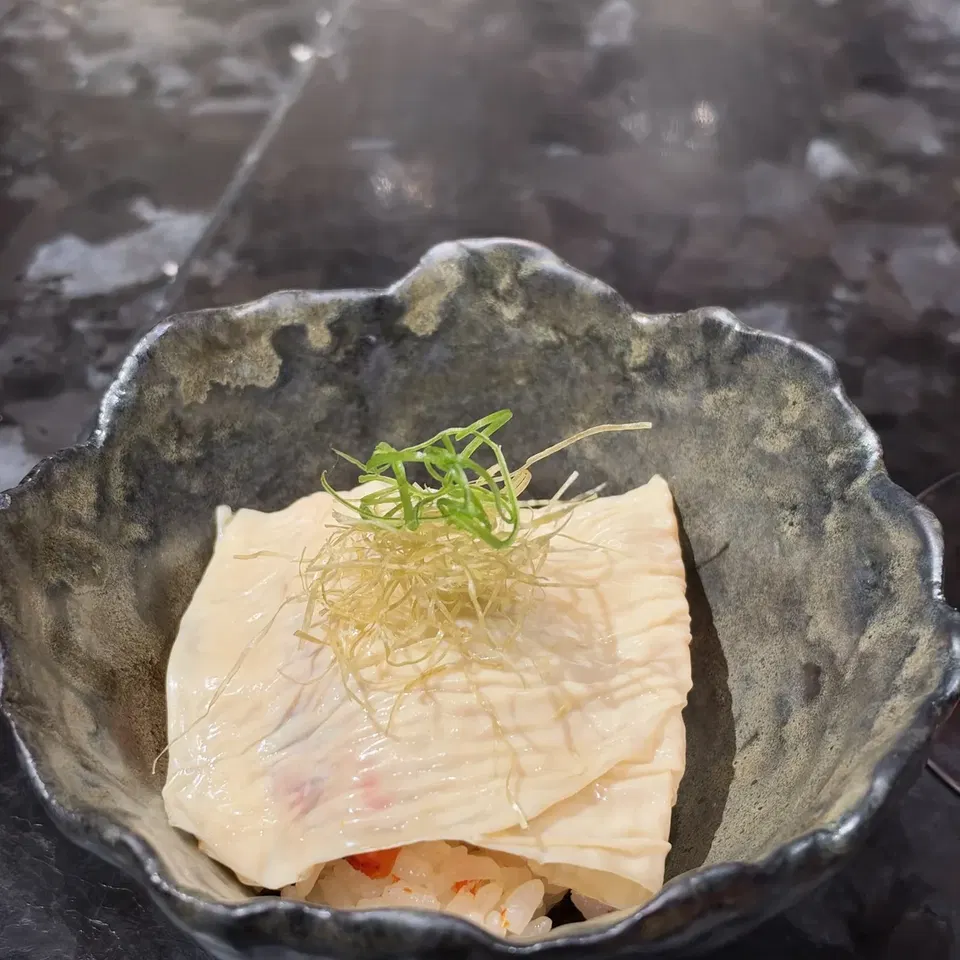
7. The Rhythm of a Meal: lamb saddle, neungi mushroom and dubu
The final numbered card focused on the relationship between rice, soup and banchan in a Korean meal. It invited moving between the lamb, broth and rice.
Elysian Fields Farm lamb saddle was prepared with nuruk, cumin and coriander seed. A lamb jocheong sauce included jungjang and rice vinegar, while the neungi broth drew on lamb, chicken, radish, daepa and black cardamom. Beside the lamb was dubu mandu: a tofu-based dumpling preparation containing meat and vegetables, including lamb, chicken, cabbage and buchu. It was accompanied by mu and gosari rice.
The card credited Sangwook Huh and Sui Park for the ceramics.
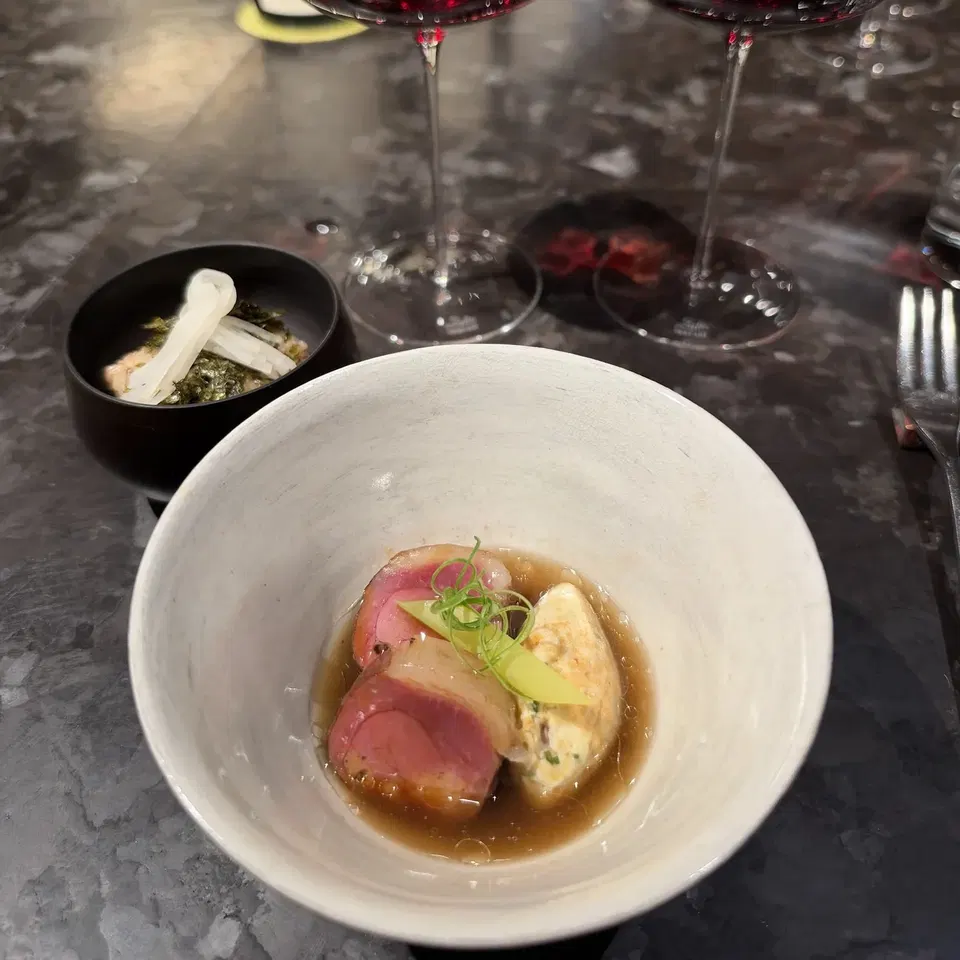
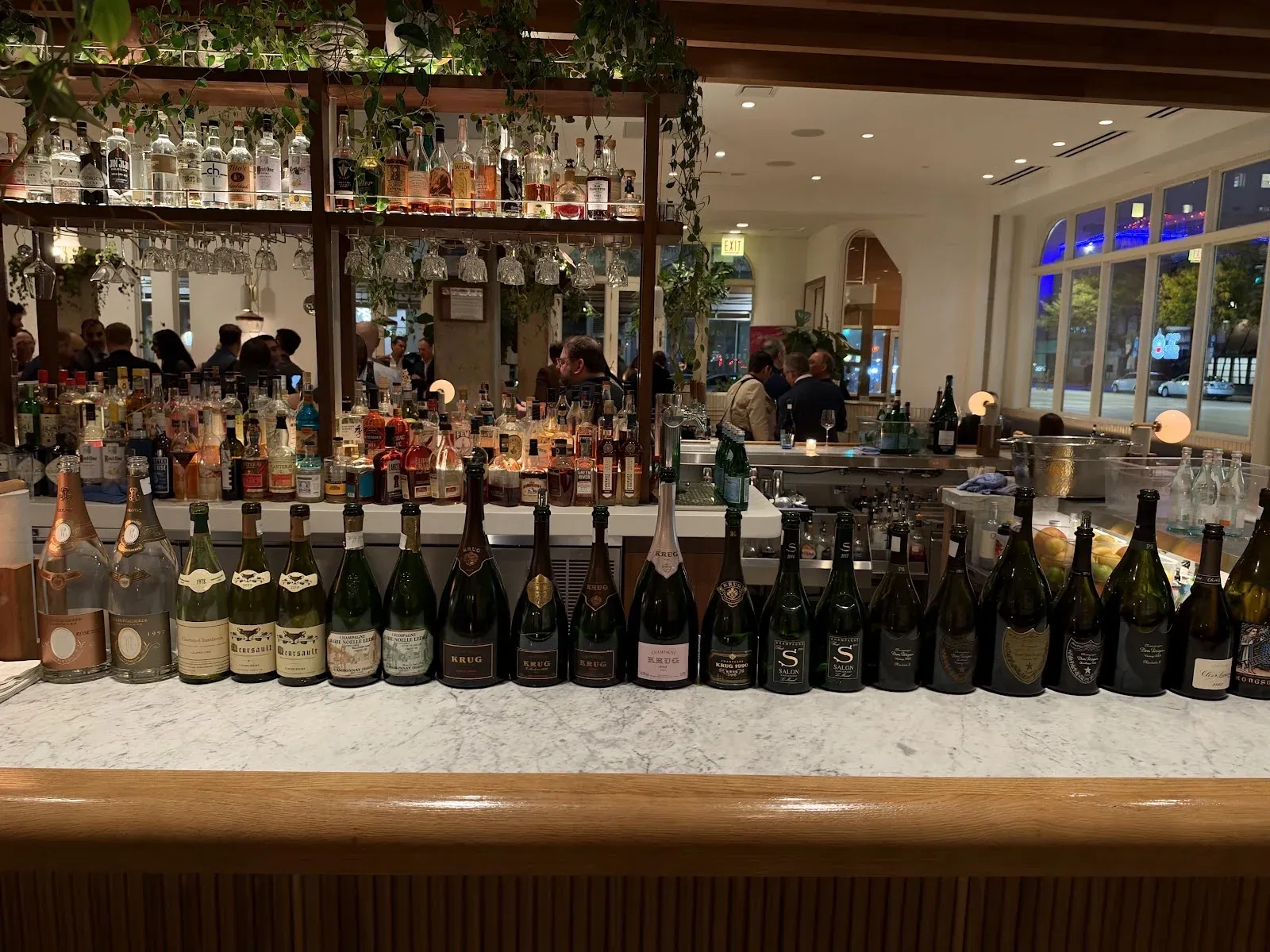
The wines beside the menu
Our bottles included Éric Taillet Sur le Grand Marais Brut Nature Champagne, Domaine Cécile Tremblay Chambolle-Musigny Les Cabottes 2022 and Domaine Alain Hudelot-Noëllat Chambolle-Musigny Premier Cru Les Charmes 2022. The two red Burgundies shared a village and vintage while representing different producers and sites. Les Cabottes is the village Chambolle-Musigny; Les Charmes is the premier cru. The Cabottes was floral and velvety, with real depth on a long finish, while Les Charmes was softer and more perfumed, with red cherry, raspberry, rose petal and a salty finish.
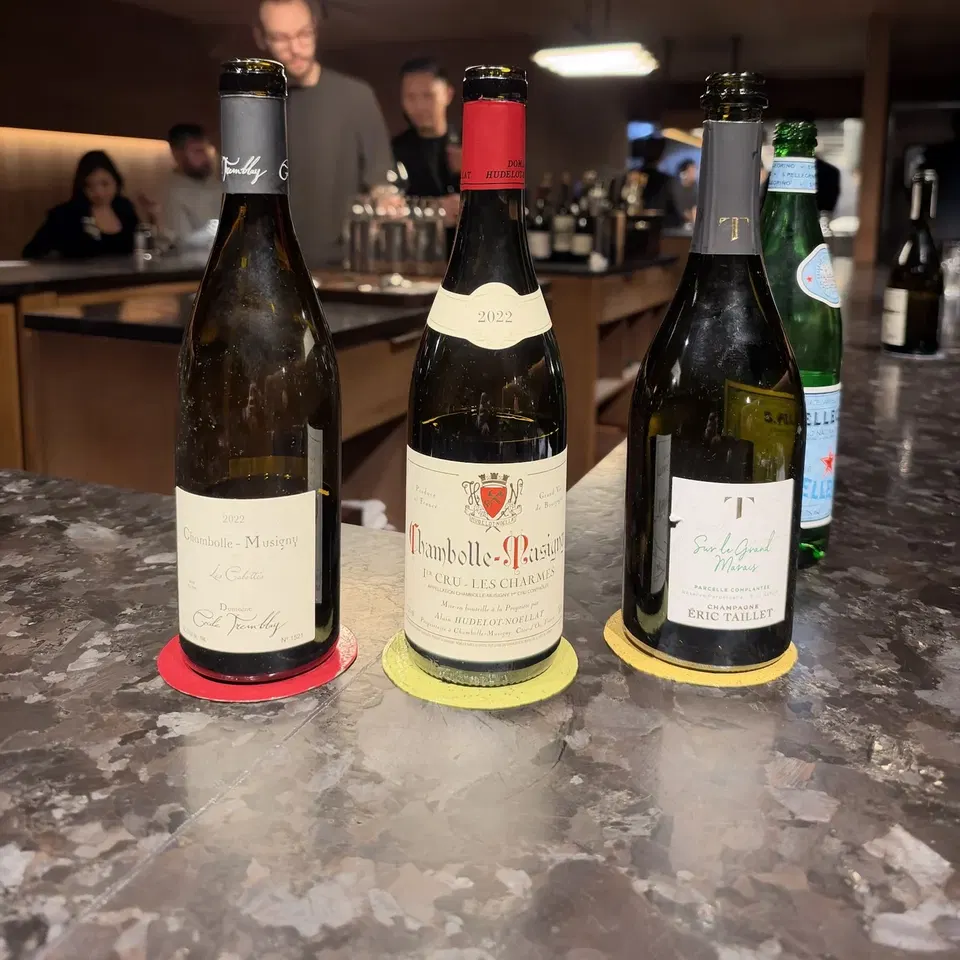
Éric Taillet’s Sur le Grand Marais combines a perpetual reserve spanning three harvests with 90 percent Meunier and 10 percent Chardonnay. Our bottle had no dosage and was disgorged in June 2024. It was bone dry and fresh, with pear, citrus and red berries, picking up biscuit notes as it opened.
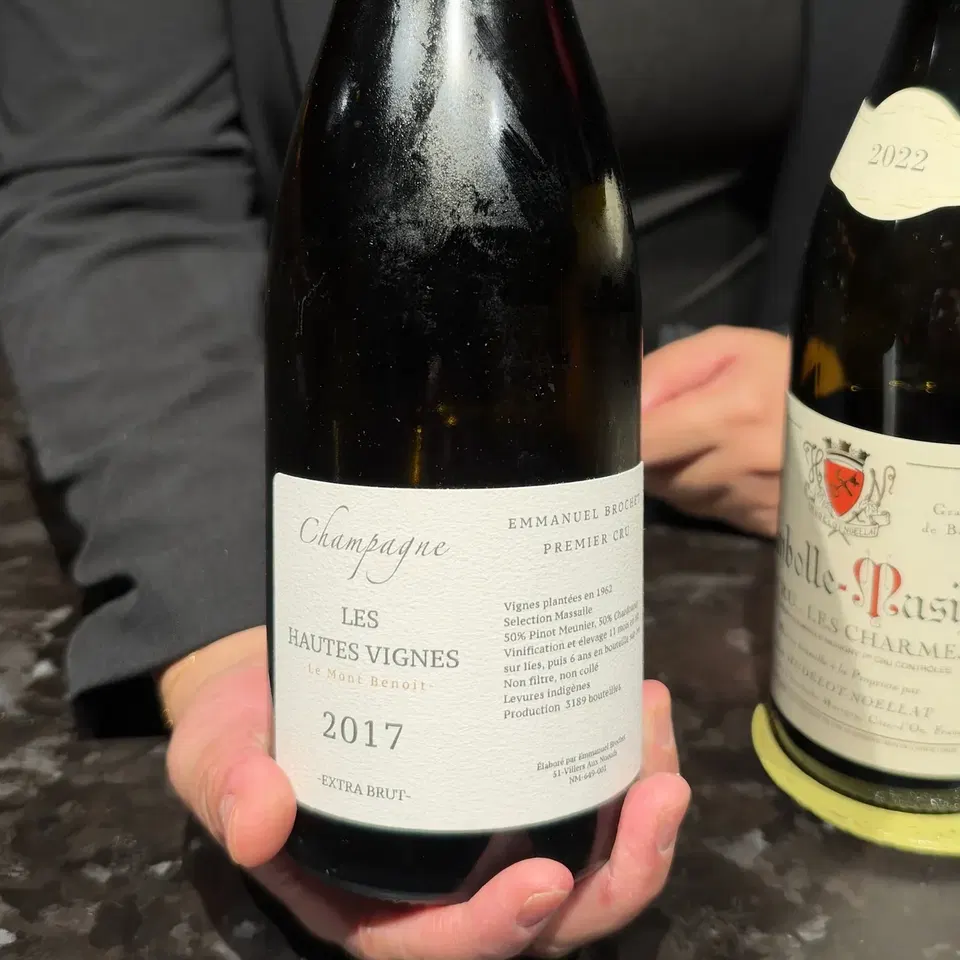
We also had Emmanuel Brochet Les Hautes Vignes Le Mont Benoit Premier Cru Extra Brut 2017. Its label gave an equal blend of Pinot Meunier and Chardonnay, from vines planted in 1962. It joined Chardonnay’s tight, salty edge to Meunier’s fruit. The Champagne and Burgundy worked well for a menu that moved from seafood and caviar to lobster and lamb.
Tea, sweets and what stays with the meal
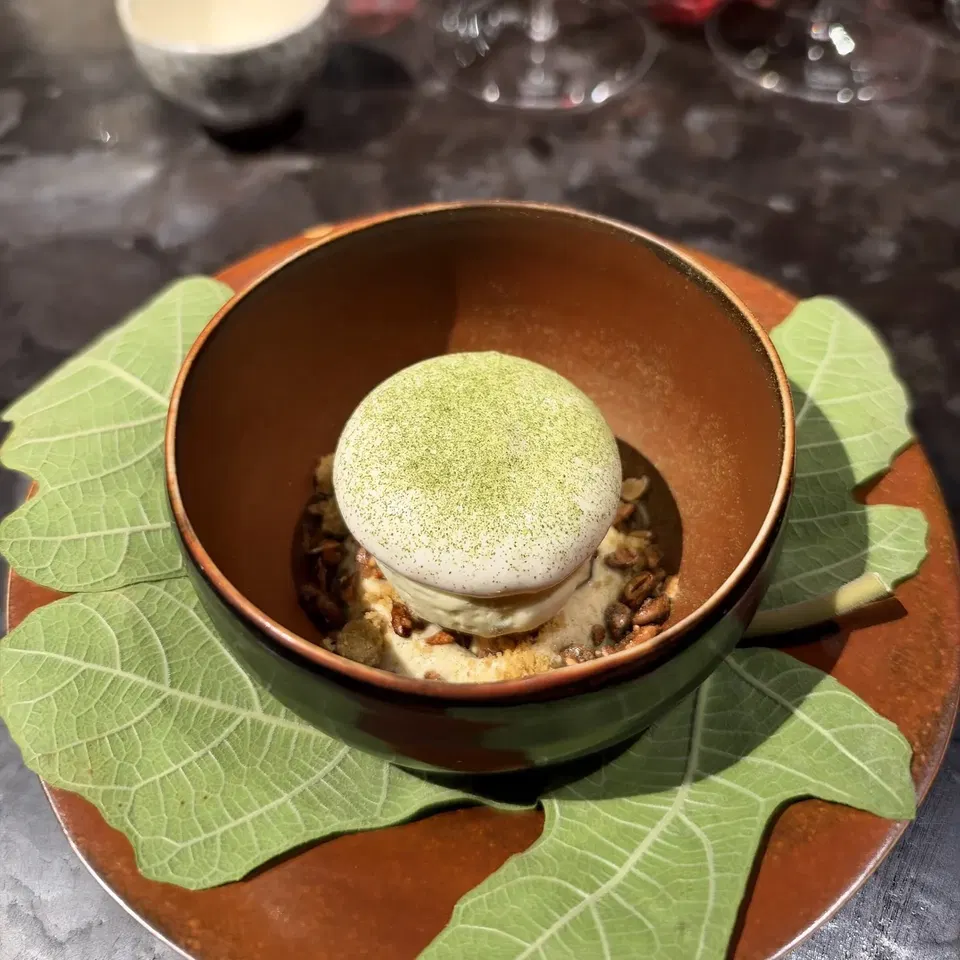
Tea service came near the end, followed by the sweets.
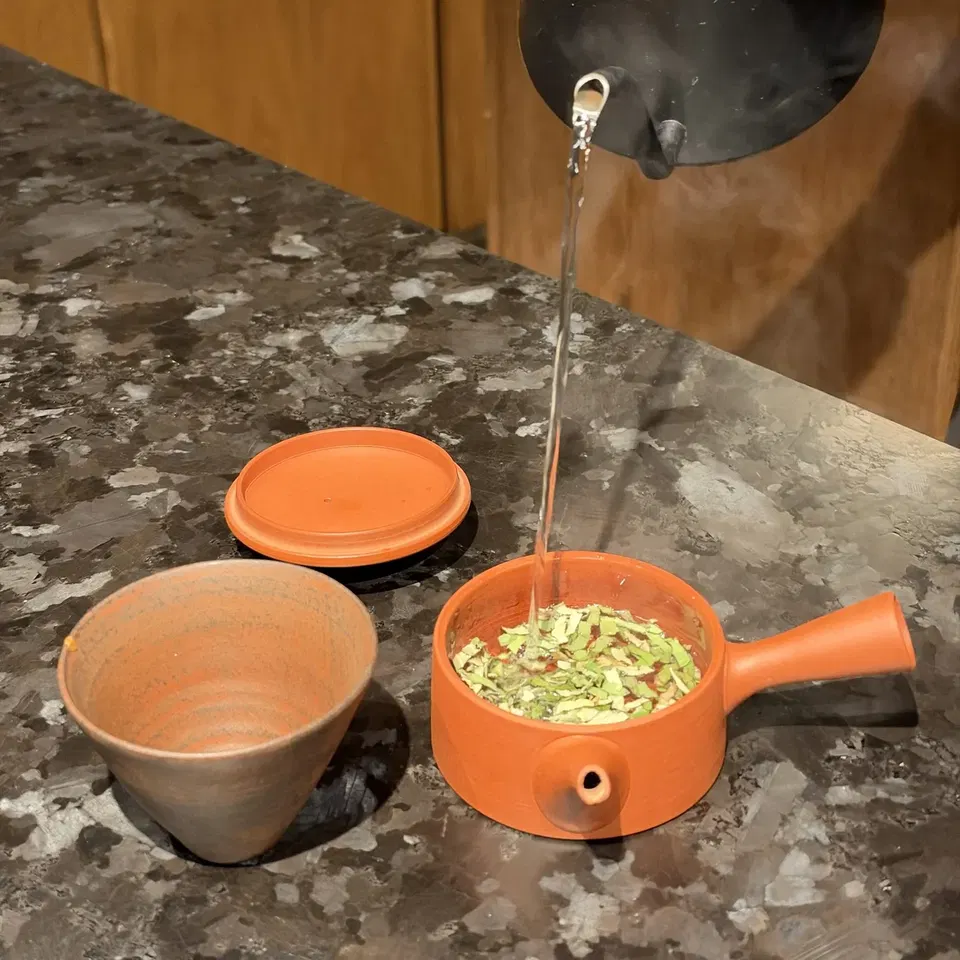
The cards add something to every plate. The abalone becomes a connection to JP’s childhood; the kohlrabi and crab introduce the kitchen’s fermentation work; the lobster brings two places into one seasonal dish. The artist credits also make the ceramics part of the memory, with a named maker behind each course’s presentation.
Planning a Chef’s Counter dinner
Atomix is at 104 East 30th Street in Manhattan’s NoMad area. Reserve the Chef’s Counter on Tock, and check the dietary restrictions the kitchen cannot accommodate before you book.
For more dining ideas around the city, explore Pearl’s New York City restaurants guide. Book Atomix if you want a tasting menu where the thinking behind each dish makes the food better, and plan to read as you eat. At our dinner, the cards made the difference between seeing an arranged course and understanding the history, ingredients and people behind it.