


Tempura Ginya
Tempura · Minato, Tokyo
Restaurant in Tokyo, Japan
 Book with Pearl
The Read
High-Heat Seasonal Omakase
Price
$300–500per person
Chef
Katsuji Ginya
Dress
Smart Casual
Why go
Tempura Ginya holds one Michelin star and an Opinionated About Dining top-400 Japan ranking, operating just four evenings a week in Shirokanedai. Chef Katsuji Ginya's counter delivers precision tempura craft at close range: seasonal ingredients, high-heat technique, no embellishment. Booking difficulty is near impossible; engage a hotel concierge at least four to six weeks ahead.
About Tempura Ginya
Book the Counter: If You Can Get In
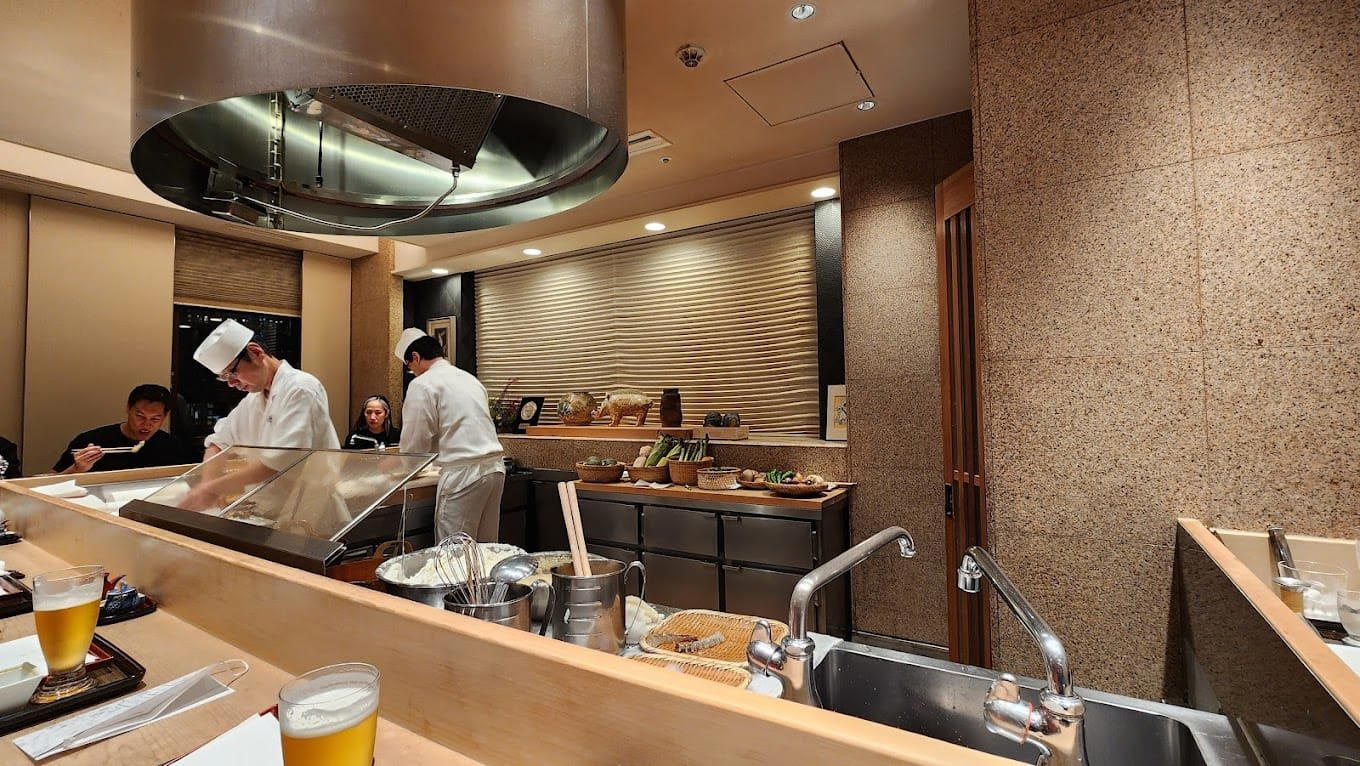
The single most important booking tip for Tempura Ginya: request counter seating, and treat any available Tuesday or Wednesday evening as the window to take. This is a Shirokanedai restaurant that operates four evenings a week (Tuesday through Saturday, 6:30–9 pm), closes Sunday and Monday, and carries two Michelin stars alongside an Opinionated About Dining ranking in Japan's top 400. The combination of limited hours and serious recognition makes this one of the harder tables to secure in Tokyo's tempura category. If you land a seat at the counter directly in front of chef Katsuji Ginya, you are positioned to watch the entire process: batter calibration, oil temperature management, the timing judgements that determine whether each piece arrives light or heavy. That vantage point is the reason to book this room over a table at the back.
What Ginya Is Doing at the Counter
The venue's own documentation describes chef Ginya as someone who has devoted his working life to tempura as a craft discipline. He fries on high heat, adjusting batter thickness and flame through the course of the meal, aiming to draw out moisture from ingredients and concentrate their flavour rather than coat or disguise them. Creative embellishment is deliberately avoided: the format puts seasonal ingredients at the centre, and the cooking technique exists to serve those ingredients rather than showcase the chef's range. This is a philosophy you can observe clearly from counter seats, where the silence and focus of the kitchen are part of the experience. The interior was designed by a traditional Japanese tea-house carpenter, which means the room itself is calibrated to match that level of restraint.
For a special occasion, this framing matters. You are not getting theatrical plating, an evolving tasting menu narrative, or tableside performance. You are getting precision craft executed at close range, in a graceful room in Shirokanedai, at a pace that runs roughly 6:30 to 9 pm. If that format fits the occasion, a dinner for two where the cooking itself is the focal point, Tempura Ginya is one of the strongest choices in the category. If you need a dining room with more visual drama or a longer arc of courses, RyuGin or L'Effervescence will serve you better.
Ratings and Trust Signals
Tempura Ginya holds two Michelin stars in both 2024 and 2025, plus an Opinionated About Dining ranking among Japan's leading restaurants (ranked #241 in 2024, #309 in 2025, and Highly Recommended in 2023). The OAD movement between 2024 and 2025 is worth noting: a drop from #241 to #309 is not alarming in a field this competitive, but it positions Ginya as a strong performer rather than a consensus frontrunner in Tokyo's broader fine-dining tier.
Within the tempura category specifically, Michelin two-star recognition places Ginya in direct company with venues like Tempura Kondo and Tempura Motoyoshi. If tempura is your focus and you want to compare options across the category, Fukamachi, Edomae Shinsaku, and Seiju are all worth considering depending on your timing and booking flexibility. For tempura outside Tokyo, Numata in Osaka and Mudan Tempura in Taipei represent the category well in their respective cities.
Booking and Practical Details
Booking Tempura Ginya is near impossible. No website or phone number is listed in public records, which means access typically runs through hotel concierge channels, specialist booking services, or direct introductions. If you are staying at a Tokyo property with a strong concierge desk, engage them at least four to six weeks ahead of your intended date. Reservations: near impossible; pursue via concierge or third-party booking service as early as possible. Hours: Tuesday through Saturday, 6:30–9 pm; closed Sunday and Monday. Address: 5 Chome-17-9 Shirokanedai, Minato City, a residential neighbourhood south of Roppongi. Budget: ¥¥¥¥ price range; plan accordingly for a full tempura course at Michelin two-star level in Tokyo. Dress: no formal dress code is documented, but the room's character and price tier call for smart attire. For broader planning context, see our full Tokyo restaurants guide, as well as Tokyo hotels, bars, wineries, and experiences.
Ideal time to visit
Tuesday and Wednesday evenings are the practical entry points if you have any flexibility. Weekend seats (Friday and Saturday) attract the most competition and are likely to be claimed furthest in advance. If you are visiting Tokyo in spring or autumn, when seasonal Japanese ingredients are at a peak, the format of letting in-season produce lead the menu makes timing your visit around those windows a reasonable consideration. The kitchen's stated philosophy of letting seasonal ingredients speak for themselves means the time of year genuinely affects what arrives at the counter.
For Context: Japan's Broader Fine-Dining Scene
Tempura Ginya sits within a wider ecosystem of serious Japanese fine dining. If your trip extends beyond Tokyo, HAJIME in Osaka, Gion Sasaki in Kyoto, akordu in Nara, Goh in Fukuoka, 1000 in Yokohama, and 6 in Okinawa are all worth building an itinerary around.
Planning details
- Hours
- Monday: Closed · Tuesday: 6:30–9 pm
- Location
- 5 Chome-17-9 Shirokanedai, Minato City, Tokyo 108-0071, Japan
- Reservations
- Book on the venue's website
- Website
- tempura-ginya.com
- Phone
- +81 3-5422-7612
The take
The Take
The Vibe
Tempura Ginya presents a pared-back, highly focused counter experience that favors craft over theatricality. The room is deliberately intimate: limited seats and single-session evenings create a hushed atmosphere where regulars and chefs move in practiced rhythm. The restaurant's two-Michelin-star standing underlines a rigorous technical approach: high-heat frying, precise batter control and timing are central. The result is an elegant, minimalist setting that feels sophisticated without being ostentatious; the emphasis is on the ingredient transformed by exacting technique rather than on decor or distractions.
Best For
This is a dinner destination for diners who prize precision and quiet intensity. The counter format and single-session service suit couples and small parties marking a special occasion or a date night, and appeal to guests who value repetition and craft: regulars are part of the rhythm here. It’s not a casual drop-in; the environment rewards attentive tasting and familiarity with the format. If you come for a focused, high-caliber tempura sequence and appreciate an intimate, unhurried evening, Ginya delivers.
Ordering Tips
The counter operates like a specialist workshop: let the chefs set the sequence and trust their pacing. Expect a dinner-led service rather than à la carte grazing; signature items to look for include Kuruma Ebi tempura, Amadai (tilefish) with edible scales, sea urchin tempura, shrimp-and-scallop kakiage and the tendon rice bowl with yuzu. Seats are limited and the venue runs single-session evenings, so plan ahead and arrive prepared to follow the chef’s lead rather than request major deviations.
Venue details
Ambiance
Serene, understated elegance with soft lighting and rounded architectural details; a hidden basement sanctuary with an L-shaped counter for eight, accented by seasonal flower arrangements and calligraphy art.
Tags
Vibe
Best For
Experience
Sourcing
At the Table
- Dress Code
- Smart Casual
- Noise Level
- Quiet
- Service Style
- Omakase Bar
- Meal Pacing
- Extended Experience
- Capacity
- Intimate
- Kitchen
- Traditional
- Menu Format
- Counter dining, Omakase, Tasting menu
- Drinks Focus
- Sake, Wine
- Dietary
- Vegetarian friendly, Gluten-free options, Pescatarian friendly
Signature Dishes
- Kuruma Ebi (Sweet Shrimp) Tempura
- Amadai Tilefish with Edible Scales
- Sea Urchin Tempura
- Kakiage with Shrimp and Scallops
- Tendon Rice Bowl with Yuzu
Know before you go
Know Before You Go
- Getting there
- 5 Chome-17-9 Shirokanedai, Minato City, Tokyo 108-0071, Japan
Planning details
Hours
- Monday
- Closed
- Tuesday
- 6:30–9 pm
- Wednesday
- 6:30–9 pm
- Thursday
- 6:30–9 pm
- Friday
- 6:30–9 pm
- Saturday
- 6:30–9 pm
- Sunday
- Closed
Location
5 Chome-17-9 Shirokanedai, Minato City, Tokyo 108-0071, Japan · Directions
Recognition and awards

Also consider
Also Consider
- Harutaka: Sushi, ¥¥¥¥
- L'Effervescence: French, ¥¥¥¥
- RyuGin: Kaiseki, Japanese, ¥¥¥¥
- HOMMAGE: Innovtive French, French, ¥¥¥¥
- Crony: Innovative, French, ¥¥¥¥
Restaurant context
At the ¥¥¥¥ tier in Tokyo, Tempura Ginya competes directly with venues that are doing very different things with the same budget. If you are choosing between Ginya and Harutaka, the decision comes down to format: Harutaka's omakase sushi counter gives you a wider progression of flavours and a more conversational rhythm with the chef, while Ginya's counter is quieter and more meditative, structured around the act of frying. Both are technically serious and hard to book. For a single special-occasion dinner, the question is whether you want the sushi format or the tempura format: neither is a compromise choice.
RyuGin offers a kaiseki structure that covers far more culinary ground at the same price level, making it the better pick if you want variety across a long course progression. L'Effervescence and HOMMAGE are the choices if French technique in a Tokyo context matters to your group. Crony sits in a different register, more casual energy, innovative format, and is worth considering if the formality of a traditional tempura counter is not what the occasion calls for.
Among tempura specialists, Tempura Ginya's two-star standing and the intimacy of the counter position it as the format-pure choice: you are here specifically because tempura at this level of craft is what you want, not because it is the easiest or most flexible option in the ¥¥¥¥ bracket. If booking access is your primary constraint, compare availability across Tempura Kondo and Tempura Motoyoshi before committing: all three are in the same difficulty tier.
Explore Tokyo
Around this place
Discover more on Pearl
Unlock the full Tempura Ginya guide in Pearl, including awards, comparisons, FAQs, planning details, and nearby places.
Compare Tempura Ginya
| Venue | Awards | Price |
|---|---|---|
| Tempura Ginya | 2026 OAD Top Restaurants in Japan Recommended2026 Michelin 1 StarTabelog 100 - Tempura - 2025 · #382025 OAD Top Restaurants in Japan Ranked · #3092025 Michelin 2 Stars2024 OAD Top Restaurants in Japan Ranked · #2412024 Michelin 2 Stars2023 OAD Top Restaurants in Japan Highly Recommended | ¥¥¥¥ |
| Harutaka | 2026 Tabelog Silver · #312026 OAD Top Restaurants in Japan Ranked · #1282026 Michelin 3 Stars2026 La Liste Top RestaurantsTabelog 100 - Sushi - TOKYO - 2025 · #372025 Asia's 50 Best Restaurants · #762025 OAD Top Restaurants in Japan Ranked · #1172025 La Liste Top Restaurants2025 Tabelog Bronze | ¥¥¥¥ |
| L'Effervescence | 2026 Tabelog Silver · #682026 OAD Top Restaurants in Japan Ranked · #103Star Wine Lists 20262026 Black Pearl 2 Diamond2026 Relais Chateaux Restaurants2026 La Liste Top Restaurants2026 Michelin 3 Stars2025 Asia's 50 Best Restaurants · #692025 OAD Top Restaurants in Japan Ranked · #92 | ¥¥¥¥ |
| RyuGin | 2026 OAD Top Restaurants in Japan Ranked · #802026 Tabelog Bronze · #3772026 Michelin 3 Stars2026 La Liste Top RestaurantsTabelog 100 - Japanese cuisine - TOKYO - 2025 · #212025 OAD Top Restaurants in Japan Ranked · #542025 Michelin 3 Stars2025 La Liste Top Restaurants2025 The Best Chef Three Knives | ¥¥¥¥ |
| HOMMAGE | 2026 Tabelog Bronze · #1232026 OAD Top Restaurants in Japan Highly Recommended2026 Michelin 2 StarsTabelog 100 - French - TOKYO - 2025 · #762025 Asia's 50 Best Restaurants · #782025 OAD Top Restaurants in Japan Ranked · #1752025 Michelin 2 Stars2025 The Best Chef One Knife2025 La Liste Top Restaurants | ¥¥¥¥ |
| Crony | 2026 Asia's 50 Best Restaurants · #34Star Wine Lists 20262026 OAD Top Restaurants in Japan Recommended2026 Michelin 2 Stars2025 Asia's 50 Best Restaurants · #30Tabelog 100 - French - TOKYO - 2025 · #782025 OAD Top Restaurants in Japan Ranked · #227We're Smart World Top Restaurants 20252025 Michelin 2 Stars | ¥¥¥¥ |












Side-by-side comparison to help you decide where to book.
FAQ
Frequently Asked Questions
Is Tempura Ginya worth the price?
Yes, for anyone serious about tempura as a craft. Two consecutive Michelin stars (2024 and 2025) and an OAD ranking among Japan's top restaurants back the ¥¥¥¥ price point. The format is restrained, no creative flourishes, no theatre, so if you want technical precision over spectacle, the value holds. If you're after a multi-discipline tasting experience, RyuGin or L'Effervescence offer broader range at a comparable spend.
Is Tempura Ginya good for a special occasion?
Yes, provided the occasion suits an intimate, disciplined format. The interior was built by a traditional Japanese tea-house carpenter, and the counter seats a small number of guests, which makes it well-suited to a two-person milestone dinner. It's not a celebratory showroom: there's no flourish or ceremony beyond the cooking itself. If you need a more socially animated atmosphere, L'Effervescence in Tokyo handles occasion dining with a broader floor and wine program.
How far ahead should I book Tempura Ginya?
Booking Tempura Ginya is near-impossible. There is no public website or phone number, which means access typically goes through a hotel concierge or a reservation service: start that process at least 4 to 8 weeks out, more for Friday or Saturday seats. Tuesday and Wednesday evenings are the practical entry points if you have any flexibility, as weekend seats attract the most competition.
Can I eat at the bar at Tempura Ginya?
Counter seating is the format here, and it's the seat to request. The chef's technique, adjusting batter and heat continuously during service, is meant to be watched at close range, and the counter is where that experience lands properly. If you're offered table seating due to availability, it's worth asking whether counter positions are free on an alternative date rather than accepting a secondary seat at this price point.