Hotel Fork & Knife Miyajima opened this March on the mainland shore of Hiroshima prefecture, facing Miyajima island across a narrow channel, and it belongs on your short list if design-led slow travel in Japan is what you're planning.
At ¥60,000 per night for a standard room with breakfast and dinner included, it is not cheap, but the combination of 34 artisan-designed rooms, an 11-course wood-fire tasting menu led by a chef with Michelin-starred kitchen experience, and a top-floor onsen spa with channel views puts it ahead of anything else on this stretch of coast.
There is no comparable property this close to one of Japan's three canonical views that packages cuisine, craft, and landscape at this level.
Hotel Fork & Knife Miyajima: Design, Food, and a Channel View That Day-Trippers Miss
Miyajima island draws millions of visitors each year to see the vermilion torii gate of Itsukushima Shrine standing in the tidal waters of the Seto Inland Sea. The island holds UNESCO World Heritage status and is counted among Japan's Nihon Sankei, the three views considered most beautiful in the country. For all that traffic, overnight options on the mainland shore have historically offered little for travelers who care about design or food. Hotel Fork & Knife Miyajima is the first property here to take both seriously.
The hotel opened in March, designed by artist Fumihiko Sano, and sits on the mainland facing the island across the channel. Its position is a practical advantage that day-trippers never access: guests watch the torii gate at dawn and dusk from a fixed, private vantage point over Setonaikai National Park, rather than navigating ferry crowds. The island receives its visitors in waves; the hotel receives them at rest. That distinction shapes the entire experience.
Miyajima island also carries a strict Shinto tradition rooted in its sacred character: historically, neither births nor deaths were permitted on the island, and no cemeteries exist there. The island's spiritual weight is not incidental atmosphere. It is the context Hotel Fork & Knife Miyajima is built around, and Sano's design makes that relationship explicit rather than decorative.
The Hotel Fork & Knife Miyajima Experience: Sacred Views, Artisan Rooms, and Wood-Fire Cuisine
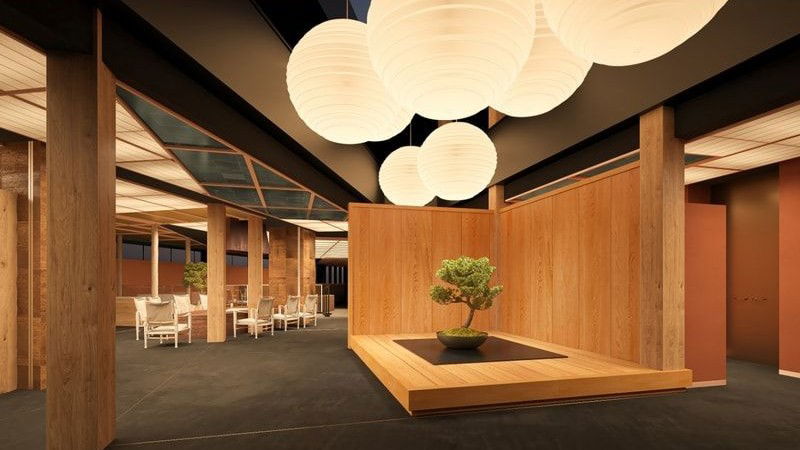
The lobby sets the tone immediately. Sano drew its gallery space from the noh stage of Itsukushima Shrine, the hinoki cypress structure built over the sea and designated an Important Cultural Property. A diagonally intersecting wood lattice ceiling runs above deep reddish-brown walls, with locally crafted Hiroshima lanterns overhead. The space rotates exhibitions of regional art and craft, so what guests encounter on arrival changes across visits and seasons.
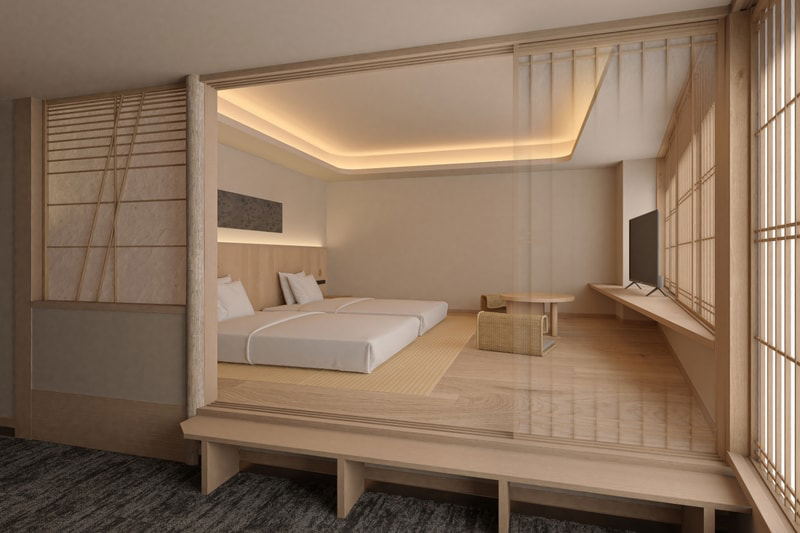
The 34 rooms span ten accommodation types, each named for a quality of light or water. One name translates as "ripples on water," another as "morning calm." Natural wood is the dominant material throughout. Some rooms include a koagari, a raised tatami seating area, and private balconies facing the Seto Inland Sea. The artwork in each room was commissioned as part of the design brief, not sourced from a catalog and hung at the end of a fit-out, which separates it from most hotel art programs in this price tier.
For the top of the room hierarchy, the Premium Suite Midori runs 180 square meters and includes a private sauna and an open-air hot spring bath. Suites exceed ¥100,000 per night. The suite is also set to include a dedicated chef's kitchen counter for bespoke in-room dining, which would make it one of the more complete private dining formats available in a Japanese boutique hotel at this price point.
The hotel's guiding philosophy is described as "tradition served quietly," a phrase that accurately captures the restraint of the design. Nothing announces itself. The shoji screens, the lanterns, the irori hearth in the salon lounge: each element references the Hiroshima region, and none of it is overdone.
The Restaurant: An 11-Course Wood-Fire Menu from a Michelin-Pedigreed Chef
Chef Ryo Ishihama leads the kitchen. He previously served as sous-chef at Abysse, a Michelin-starred French seafood restaurant, and also runs a seafood restaurant in Shibuya. His format here is an 11-course dinner menu built around wood-fire cooking, using seasonal seafood and mountain produce from the surrounding region. The wood-fire technique is not a stylistic choice layered onto an existing menu. It is the organizing principle, determining how each ingredient is treated and what qualities come forward.
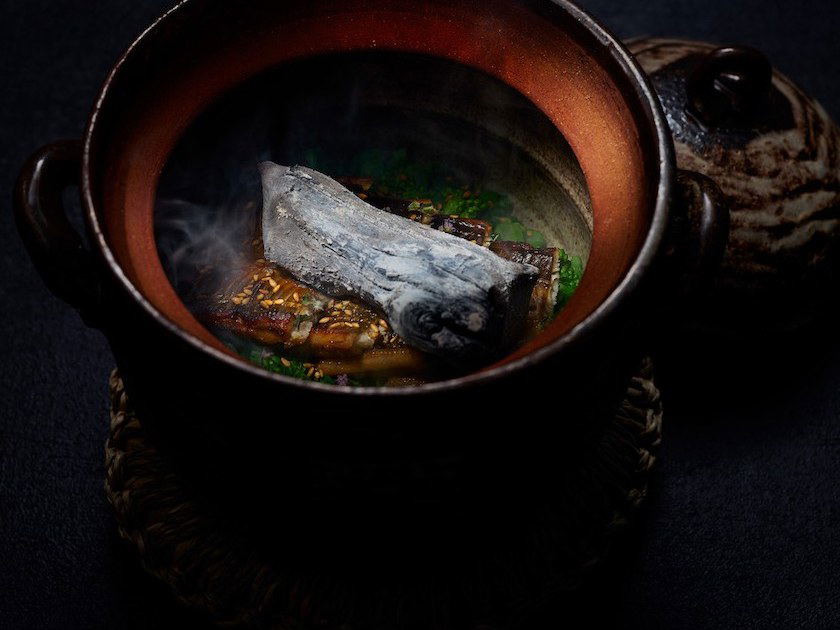
Two details distinguish the dining program from what you would find at a comparable design hotel. First, the in-house rice mill: grains are milled immediately before cooking and served in a traditional donabe earthen pot at both breakfast and dinner.
The gap between milled and cooked rice is measured in minutes, not days, and the difference in flavor is perceptible. Second, the drinks program draws on sake from Saijo, a brewing region within Hiroshima prefecture with a long production history, alongside local wines and craft beers.
The sourcing is regional throughout, which gives the meal a coherence that imported wine lists and generic sake selections do not.
For travelers who plan itineraries around restaurant reservations, Ishihama's Michelin-adjacent credentials and the specificity of the wood-fire format make this a genuine reason to book the hotel rather than simply a benefit of staying there. The tasting menu is included in the room rate for standard plans, which at ¥60,000 per night represents reasonable value for an 11-course dinner plus breakfast with this level of sourcing and technique.
Onsen, Design, and the Fumihiko Sano Aesthetic
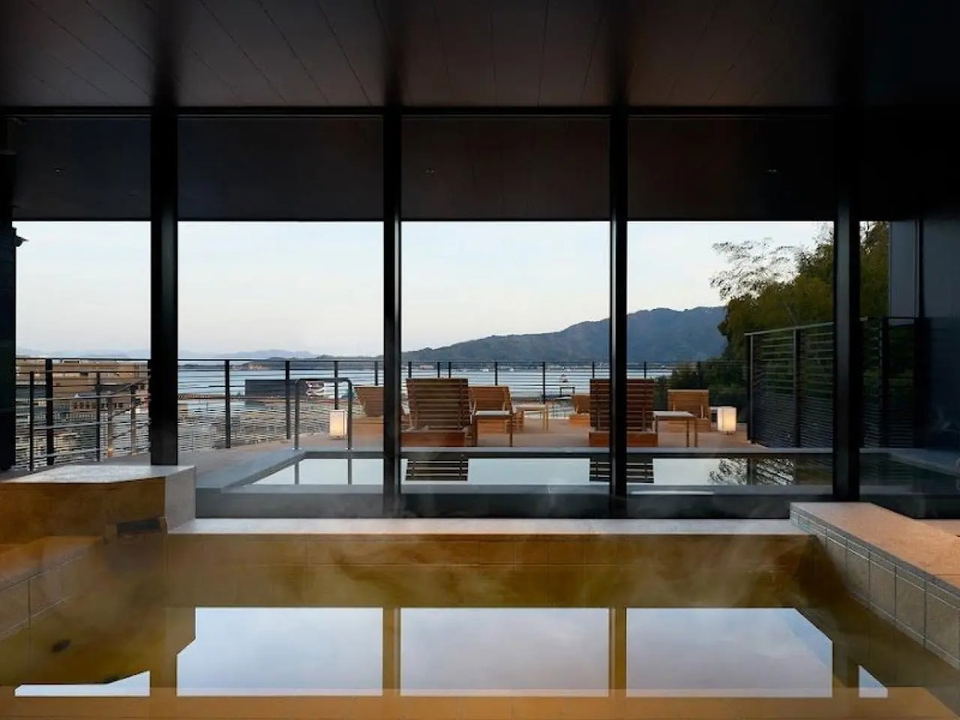
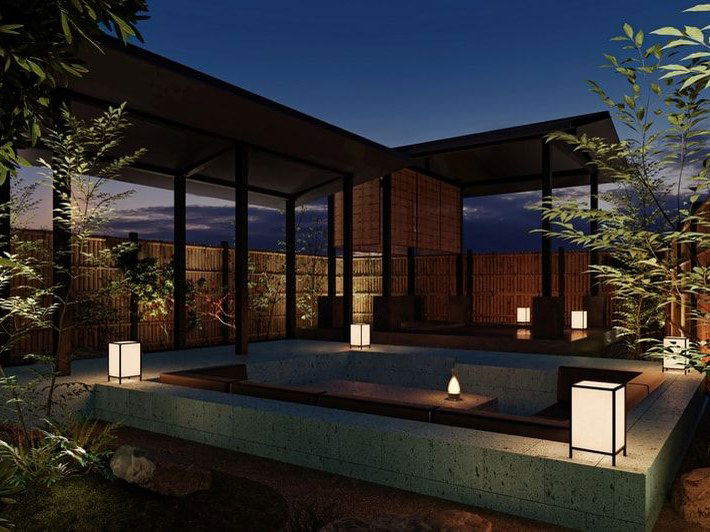
The top-floor spa uses natural hot spring water transported from Miyahama Onsen, with both indoor and outdoor baths and a sauna. It is a mixed-gender space requiring swimwear, which is worth knowing before you arrive. The outdoor bath faces the channel, with sightlines toward Miyajima island, the same view as the guest rooms but experienced from water rather than from a balcony.
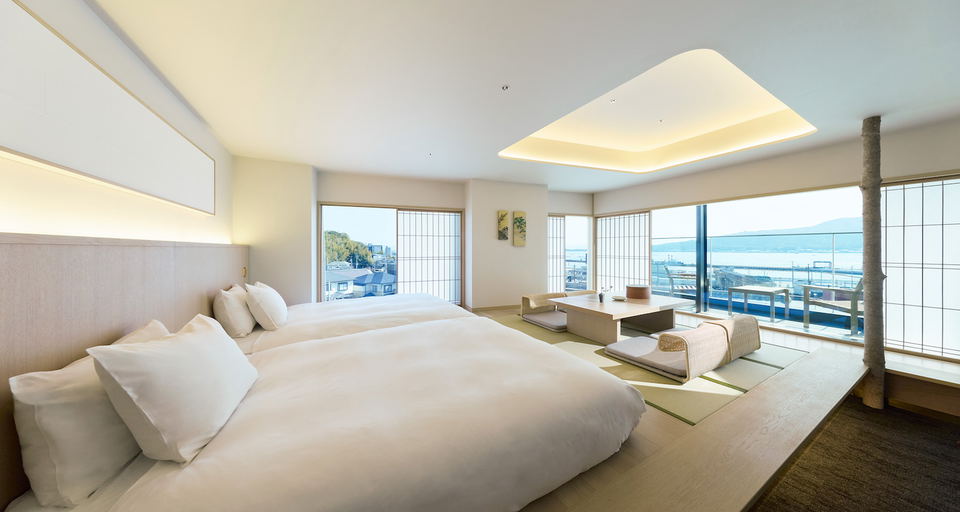
Sano describes the hotel as "an eclectic space that combines the old with the new; a place where guests can truly sense the quality of Hiroshima's raw materials and the atmosphere of Miyajima."1 That description holds across the property. The materials are local: wood, lantern craft, regional ceramics. The forms they take are contemporary without being self-consciously so. The salon lounge, centered on a traditional irori hearth, is the clearest example. It functions as a gathering space for evening drinks, but the hearth gives it a warmth that a modern bar counter would not.
The study area includes a photobook by French actress Emmanuelle Riva from her 1958 visit to Hiroshima to film Hiroshima Mon Amour. It is a small detail, but it reflects the hotel's broader curatorial instinct: the cultural references are specific and earned, not generic Japan-aesthetic gestures.
The seasonal dimension of the property is worth factoring into timing. The view across the channel shifts materially across cherry blossom season, the summer lantern festival, and autumn foliage, and rates reflect that, with peak periods commanding higher prices. If the onsen experience is the priority, autumn and winter visits offer the sharpest contrast between cold air and hot water. If the view is the priority, cherry blossom season in late March and early April frames the torii gate against the hillside in a way that photographs of the island alone cannot replicate.
Practical Details: How to Book and What to Expect
Hotel Fork & Knife Miyajima has 34 rooms across ten room types. Standard rooms start at around ¥60,000 per night with breakfast and dinner included. Larger concept rooms and suites exceed ¥100,000 per night. All guests must be above the age of 13.
Getting there from Hiroshima is simple. Take the JR Sanyo Line from Hiroshima Station to Miyajimaguchi Station, a journey of just under 30 minutes. The hotel is a seven-minute walk from the station, and a free shuttle service is also available. From the hotel, Miyajimaguchi Pier is a short walk, with the ferry crossing to Miyajima taking around 10 minutes. JR West Miyajima Ferry and Miyajima Matsudai Kisen both operate frequent services. Itsukushima Shrine is approximately 15 minutes on foot from the island's ferry terminal.
Compared to ryokan options on Miyajima island itself, Hotel Fork & Knife Miyajima offers a more design-forward aesthetic and a stronger culinary program, at the cost of being on the mainland rather than on the island. If sleeping within the shrine's sacred precinct is the point, a traditional island ryokan delivers that. If the priority is a coherent design-and-dining experience with the island as backdrop rather than address, this property has no direct competition on this coast.
With only 34 rooms in a destination that draws visitors from across Japan and internationally, availability during peak seasons will tighten quickly. The property opened in March and is still building its international profile, which makes now a reasonable window to book before that changes.