
.png?width=1200&quality=80)

Sushi Matsumoto
Sushi · Shinjuku, Tokyo
Restaurant in Tokyo, Japan
 Book with Pearl
The Read
Sake-Paced Nigiri Progression
Price
$200–300per person
Dress
Smart Casual
Why go
Sushi Matsumoto is a sake-forward sushi counter in Shinjuku ranked in Opinionated About Dining's top Japan restaurants. At ¥¥¥ with easy booking, it's the right call for a relaxed special-occasion dinner where sake and sushi share equal billing — less formal than the Ginza prestige counters, but technically grounded and deliberately sequenced.
About Sushi Matsumoto
Is Sushi Matsumoto worth booking for a special occasion in Tokyo?
Yes — with a clear caveat. Sushi Matsumoto is a Michelin Plate-recognised counter in Shinjuku's Tsukudocho that has climbed steadily through the Opinionated About Dining Japan rankings, reaching #76 in 2023 before settling at #320 in 2024 and #374 in 2025. That trajectory tells you something useful: it was once considered a sharper find than it is today, but the underlying experience — relaxed, sake-forward, technically grounded, remains intact. If you want a sushi counter for a date night or a small celebration that doesn't demand the formality of the top-tier Ginza rooms, this is a practical, well-priced choice at ¥¥¥.
The Experience
Sushi Matsumoto is structured around sake as much as sushi, which makes it a different proposition from a pure nigiri counter. The kitchen alternates between snacks and nigiri deliberately, a sequencing decision designed to keep the sake pairing coherent across the meal. Glasses replace traditional ochoko cups, and the selection of accompanying snacks is broad enough that the drinking side of the evening genuinely competes with the eating side for attention. For a special occasion where you want conversation to flow alongside the meal, that format works better than the intense, silent focus some high-end omakase rooms impose.
The kitchen's commitment to detail shows in the small things. Toro is served first, not because it's the showpiece, but because the heat of freshly cooked vinegared rice is needed to melt the fat properly at that point in the sequence. Nori is toasted fresh. Tea arrives in Nambu ironware teapots, a cast-iron tradition from the Iwate region with centuries behind it. These are not decorative touches; they reflect a kitchen that has thought carefully about the mechanics of what it's serving. The atmosphere is deliberately relaxed, with jazz in the background, low enough to talk over, present enough to set a mood. For a date or a birthday dinner, the register is right.
The Sake Program
The editorial angle here matters. Sushi Matsumoto's sake list is the lens through which the entire meal is designed, and that is not typical. Most sushi counters treat sake as an accompaniment; here, the progression of snacks and nigiri is explicitly sequenced to support what's in the glass. The result is an experience closer to a wine-pairing dinner at a serious French restaurant than to a conventional omakase. If sake is something you want to explore seriously, sampling across styles, learning the range, this counter offers structured access to that in a way that counters focused purely on fish technique generally do not. At ¥¥¥ pricing, it also does so without requiring the ¥¥¥¥ outlay of the city's most decorated rooms.
For context: Tokyo has sushi counters that prioritise knife technique above everything else, counters built around sourcing rare fish, and counters where the chef's personal philosophy dominates the room. Sushi Matsumoto sits in a narrower category, counters where the drink program is genuinely co-equal with the food. That specificity is useful when deciding whether to book. If sake doesn't interest you, the case for this counter over a comparably priced alternative weakens. If it does, the case strengthens considerably.
Location and Booking
The address is in Shinjuku City's Tsukudocho district, in the basement of the ASK Building. Shinjuku is one of Tokyo's most accessible hubs, multiple rail and subway lines converge there, so getting to the restaurant is direct from most parts of the city. The basement setting is common among serious Tokyo sushi counters; don't read anything into the address. Booking difficulty is rated as easy, which is a meaningful advantage over the leading Ginza counters where reservations can require months of lead time or a hotel concierge connection. See our full Tokyo restaurants guide for broader context on the city's dining options, or check our Tokyo hotels guide if you're still planning accommodation.
How It Fits the Broader Tokyo Sushi Scene
If you're building a Japan trip itinerary and want to benchmark Sushi Matsumoto against other cities, the closest regional comparisons are Sushi Shikon in Hong Kong and Shoukouwa in Singapore, both serious omakase counters at higher price points. Within Japan, the range extends from HAJIME in Osaka and Gion Sasaki in Kyoto at the high-ceremony end, to more accessible options like Goh in Fukuoka and 1000 in Yokohama. Within Tokyo itself, Harutaka, Sukiyabashi Jiro Roppongiten, and Sushi Kanesaka represent the more technically focused, prestige end of the spectrum. Edomae Sushi Hanabusa and Hiroo Ishizaka are worth considering if you want Edomae tradition at a similar price tier. For broader Tokyo planning, our Tokyo bars guide, Tokyo wineries guide, and Tokyo experiences guide cover the surrounding context. For Japan-wide context beyond Tokyo, akordu in Nara and 6 in Okinawa round out the picture at opposite ends of the country.
Quick reference: Sushi Matsumoto, Shinjuku, Tokyo, ¥¥¥, Michelin Plate (2025), OAD Leading Restaurants Japan #374 (2025), sake-forward counter with easy booking.
How far ahead should I book Sushi Matsumoto?
Booking difficulty is rated as easy, which puts it well ahead of the heavily competed Ginza counters where two to three months' lead time is standard. A week or two of advance notice should be sufficient in most cases, though for specific dates, weekend evenings, public holidays, or Golden Week, book earlier to be safe.
Is Sushi Matsumoto worth the price?
At ¥¥¥, yes, particularly if the sake pairing format appeals to you. You're getting a Michelin Plate-recognised counter with a deliberate drink-food sequence and genuine technical care, at a price point below the ¥¥¥¥ rooms that dominate Tokyo's prestige sushi tier. If your priority is pure nigiri technique and you're indifferent to sake, counters like Edomae Sushi Hanabusa or Hiroo Ishizaka may be a closer match at a similar price level.
Can Sushi Matsumoto accommodate groups?
Seat count is not confirmed in available data, but the counter format typical of this style of restaurant generally suits groups of two to four more comfortably than larger parties. If you're planning for five or more, contact the venue directly to confirm capacity before booking.
Is the tasting menu worth it at Sushi Matsumoto?
The structured alternation between snacks and nigiri, designed explicitly around the sake pairing, is what makes the format here worth committing to fully rather than ordering selectively. The progression is the point. If you engage with it as intended, particularly on the sake side, it delivers meaningfully more than the sum of individual dishes. If you're not interested in sake, the value proposition narrows, and a counter with a stronger a la carte offering might suit you better.
Does Sushi Matsumoto handle dietary restrictions?
Specific dietary accommodation details are not confirmed in available data. The fish-and-rice nature of a sushi counter means shellfish allergies or strong aversions to raw fish will be difficult to work around in the omakase format. Contact the restaurant directly before booking if dietary requirements are a concern, attempting to manage significant restrictions on arrival at a counter-format restaurant is not recommended.
Planning details
- Location
- Japan, 〒162-0821 Tokyo, Shinjuku City, Tsukudocho, 4−1 ASKビル 1B
- Reservations
- Book on Omakase
- Website
- sushi-matsumoto.net
- Phone
- +81 3-3260-0102
The take
The Take
The Vibe
Sushi Matsumoto presents a low-key, tightly focused counter experience tucked into a Shinjuku basement. The room is deliberately small and measured, where jazz and ironware set a quietly refined tone that favors technical precision over ostentation. Its placement below street level and steady presence on critic rankings give it the feel of a discreet find rather than a theatrical destination. The service leans toward the classical omakase rhythm — attentive, unshowy and built around the chef’s work at the bar — reinforcing an intimate, understated atmosphere that rewards diners who appreciate craft and nuance.
Best For
This is a dinner-first counter for diners seeking a serious introduction to omakase without the highest-tier Michelin star prices. It suits couples on a date night, business diners who want a focused meal, and anyone marking a special occasion with refined sushi. The setting encourages full engagement with the chef’s progression, so it’s best experienced seated at the counter where the preparation and plating are visible. Pricing around the ¥¥¥ tier and a Michelin Plate underline that the room is intended for thoughtful, evening tasting rather than casual drop-ins.
Ordering Tips
Opt for the omakase progression to experience the kitchen’s technical strengths and pacing; the menu’s highlights — uni caviar, fatty tuna nigiri and sea urchin chawanmushi — are specifically noted as signatures. Expect a linear, chef-led sequence rather than à la carte variety, and plan for an evening visit given the counter format and the restaurant’s positioning. The Michelin Plate and past critic rankings suggest consistency, so let the chef guide the selection and timing to get the most from this precise, counter-focused meal.
Venue details
Ambiance
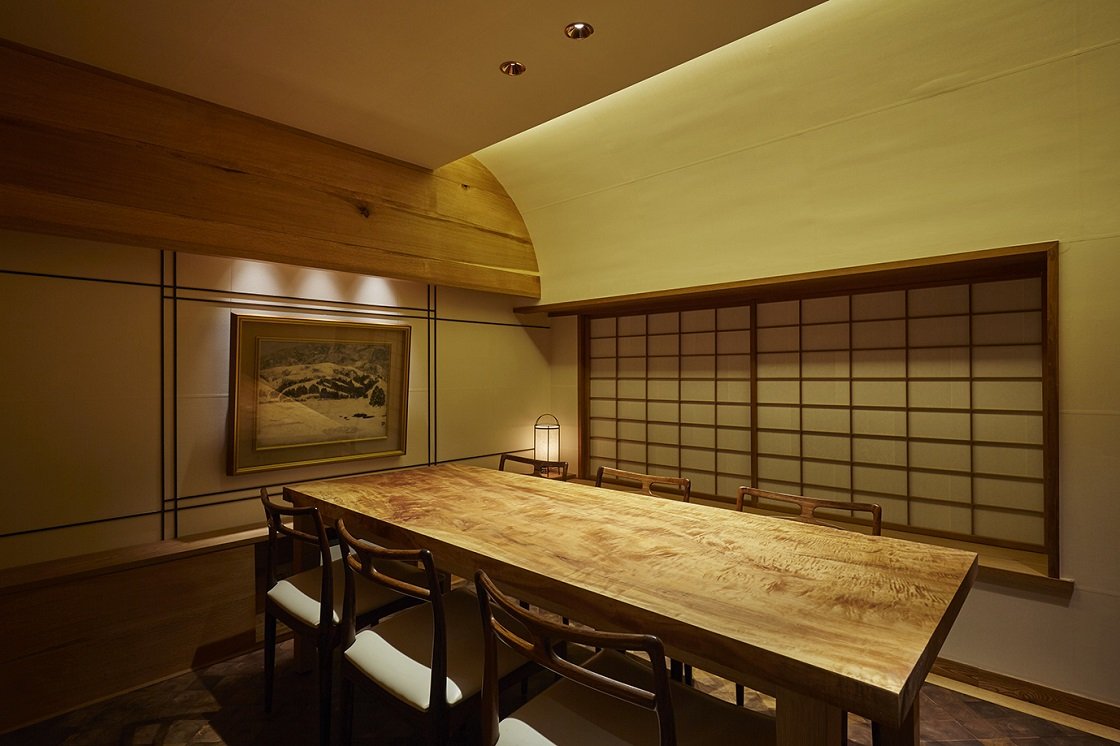
Relaxed elegant counter seating with cypress wood, soft jazz, and dignified yet welcoming atmosphere.
Tags
Vibe
Best For
Experience
Sourcing
At the Table
- Dress Code
- Smart Casual
- Noise Level
- Quiet
- Service Style
- Formal
- Meal Pacing
- Leisurely
- Capacity
- Intimate
- Kitchen
- Traditional
- Menu Format
- Omakase, Counter dining
- Wine Program
- Curated
- Drinks Focus
- Sake
- Private Dining
- Available
Signature Dishes
- uni caviar
- fatty tuna nigiri
- sea urchin chawanmushi
Know before you go
Know Before You Go
- Getting there
- Japan, 〒162-0821 Tokyo, Shinjuku City, Tsukudocho, 4−1 ASKビル 1B
Planning details
Location
Japan, 〒162-0821 Tokyo, Shinjuku City, Tsukudocho, 4−1 ASKビル 1B · Directions
Recognition and awards

Also consider
Also Consider
- Harutaka, Sushi, ¥¥¥¥
- L'Effervescence, French, ¥¥¥¥
- RyuGin, Kaiseki, Japanese, ¥¥¥¥
- HOMMAGE, Innovtive French, French, ¥¥¥¥
- Crony, Innovative, French, ¥¥¥¥
Restaurant context
How It Compares
Sushi Matsumoto sits at ¥¥¥ in a Tokyo dining scene where the most-discussed sushi and Japanese rooms operate at ¥¥¥¥. That price difference is meaningful. Harutaka at ¥¥¥¥ delivers a more technically demanding nigiri experience and commands a harder booking, but if sake pairing and a relaxed atmosphere matter more to you than maximum prestige, Matsumoto closes the gap considerably. For a date or birthday dinner where you want the evening to feel special without the formal intensity of a top-tier Ginza counter, Matsumoto is the more comfortable choice at a lower outlay.
Against non-sushi alternatives at ¥¥¥¥, the comparison shifts. L'Effervescence and Crony offer wine-driven tasting menus at a higher price point with more elaborate cooking; RyuGin provides kaiseki at the upper end of the prestige scale. If your guest is more interested in a wine list than a sake selection, those rooms serve the occasion better. HOMMAGE is worth considering if innovative French technique is the priority. Matsumoto wins on accessibility, value, and the specificity of its sake-forward format, it doesn't try to compete on the same terms as these ¥¥¥¥ rooms, and it doesn't need to.
The practical verdict: book Sushi Matsumoto if you want a ¥¥¥ counter with genuine credentials, easy reservations, and a sake program that drives the structure of the meal. Book Harutaka if maximum sushi technique is the priority and you can secure the reservation. Book RyuGin or L'Effervescence if you want a more elaborate tasting format with a wine program as the drink pairing anchor.
Explore Tokyo
Around this place
Discover more on Pearl
Unlock the full Sushi Matsumoto guide in Pearl, including awards, comparisons, FAQs, planning details, and nearby places.
Compare Sushi Matsumoto
| Venue | Cuisine | Awards | Booking Difficulty |
|---|---|---|---|
| Sushi Matsumoto | Sushi | 2026 OAD Top Restaurants in Japan Recommended2026 Michelin PlateTabelog 100 - Sushi - TOKYO - 2025 · #832025 OAD Top Restaurants in Japan Ranked · #3742025 Michelin Plate2024 OAD Top Restaurants in Japan Ranked · #3202023 OAD Top Restaurants in Japan Ranked · #76 | Easy |
| Harutaka | Sushi | 2026 Tabelog Silver · #312026 OAD Top Restaurants in Japan Ranked · #1282026 Michelin 3 Stars2026 La Liste Top RestaurantsTabelog 100 - Sushi - TOKYO - 2025 · #372025 Asia's 50 Best Restaurants · #762025 OAD Top Restaurants in Japan Ranked · #1172025 La Liste Top Restaurants2025 Tabelog Bronze | Unknown |
| L'Effervescence | French | 2026 Tabelog Silver · #682026 OAD Top Restaurants in Japan Ranked · #103Star Wine Lists 20262026 Black Pearl 2 Diamond2026 Relais Chateaux Restaurants2026 La Liste Top Restaurants2026 Michelin 3 Stars2025 Asia's 50 Best Restaurants · #692025 OAD Top Restaurants in Japan Ranked · #92 | Unknown |
| RyuGin | Kaiseki, Japanese | 2026 OAD Top Restaurants in Japan Ranked · #802026 Tabelog Bronze · #3772026 Michelin 3 Stars2026 La Liste Top RestaurantsTabelog 100 - Japanese cuisine - TOKYO - 2025 · #212025 OAD Top Restaurants in Japan Ranked · #542025 Michelin 3 Stars2025 La Liste Top Restaurants2025 The Best Chef Three Knives | Unknown |
| HOMMAGE | Innovtive French, French | 2026 Tabelog Bronze · #1232026 OAD Top Restaurants in Japan Highly Recommended2026 Michelin 2 StarsTabelog 100 - French - TOKYO - 2025 · #762025 Asia's 50 Best Restaurants · #782025 OAD Top Restaurants in Japan Ranked · #1752025 Michelin 2 Stars2025 The Best Chef One Knife2025 La Liste Top Restaurants | Unknown |
| Crony | Innovative, French | 2026 Asia's 50 Best Restaurants · #34Star Wine Lists 20262026 OAD Top Restaurants in Japan Recommended2026 Michelin 2 Stars2025 Asia's 50 Best Restaurants · #30Tabelog 100 - French - TOKYO - 2025 · #782025 OAD Top Restaurants in Japan Ranked · #227We're Smart World Top Restaurants 20252025 Michelin 2 Stars | Unknown |












Side-by-side comparison to help you decide where to book.
FAQ
Frequently Asked Questions
How far ahead should I book Sushi Matsumoto?
Book at least four to six weeks in advance, especially for weekend seatings. Sushi Matsumoto has climbed steadily through Opinionated About Dining's Japan rankings — reaching #76 in 2023 before settling at #374 in 2025 — which means demand from serious diners remains consistent. If your Tokyo dates are fixed, lock in the reservation before you book flights.
Is Sushi Matsumoto worth the price?
At ¥¥¥, Sushi Matsumoto sits in a mid-to-upper price bracket for Tokyo omakase. The value case rests on the sake program: the meal is designed around sake pairings rather than pure nigiri progression, which gives you more for your money if sake interests you. If you want a stripped-back nigiri-only counter at this price point, compare alternatives first — Sushi Matsumoto's format is a different proposition.
Is the tasting menu worth it at Sushi Matsumoto?
Yes, if the sake-and-snacks structure suits you. The kitchen alternates between snacks and nigiri to complement sake service — toro is served first so the rice's warmth melts the fat, and nori is freshly toasted, which signals genuine craft. If you want a traditional, sake-free omakase progression, this format may feel unconventional; if sake pairings are a draw, it's a well-considered meal.
Does Sushi Matsumoto handle dietary restrictions?
No dietary restriction policy is documented for Sushi Matsumoto. For a counter restaurant with a fixed sake-and-sushi format in Tokyo, the kitchen's flexibility is likely limited — pescatarian guests are probably fine, but vegetarian or allergen-specific needs should be confirmed directly before booking. Do not assume accommodation without checking in advance.