.png?width=1200&quality=80)

Hirayama
Steak · Taitō, Tokyo
Restaurant in Tokyo, Japan
 Book with Pearl
The Read
Kappo-Rooted Soba Counter
Price
$200–300per person
Dress
Smart Casual
Why go
A kappo-style soba counter in Nishiasakusa operating well above its ¥¥ price point. Three consecutive Opinionated About Dining rankings, including #258 in Japan for 2024, make this one of Tokyo's clearest value cases in serious dining. Book for Saturday lunch or a weekday dinner for two; the house-milled buckwheat soba and single-order tempura are the anchors of a well-paced multi-course meal.
About Hirayama
Should You Book Hirayama?
If you are weighing Hirayama against the soba-kaiseki options in central Tokyo, consider this first: most multi-course soba experiences at that level will run ¥¥¥¥ and require booking weeks in advance. Hirayama sits at ¥¥ and is genuinely accessible, yet it has appeared on Opinionated About Dining's ranking of Japan's leading restaurants three consecutive years, reaching #258 nationally in 2024. That combination of price, recognition, and actual bookability puts it in a different category from most of what Tokyo's Taito ward offers. The verdict: book it, especially for lunch.
What Hirayama Is
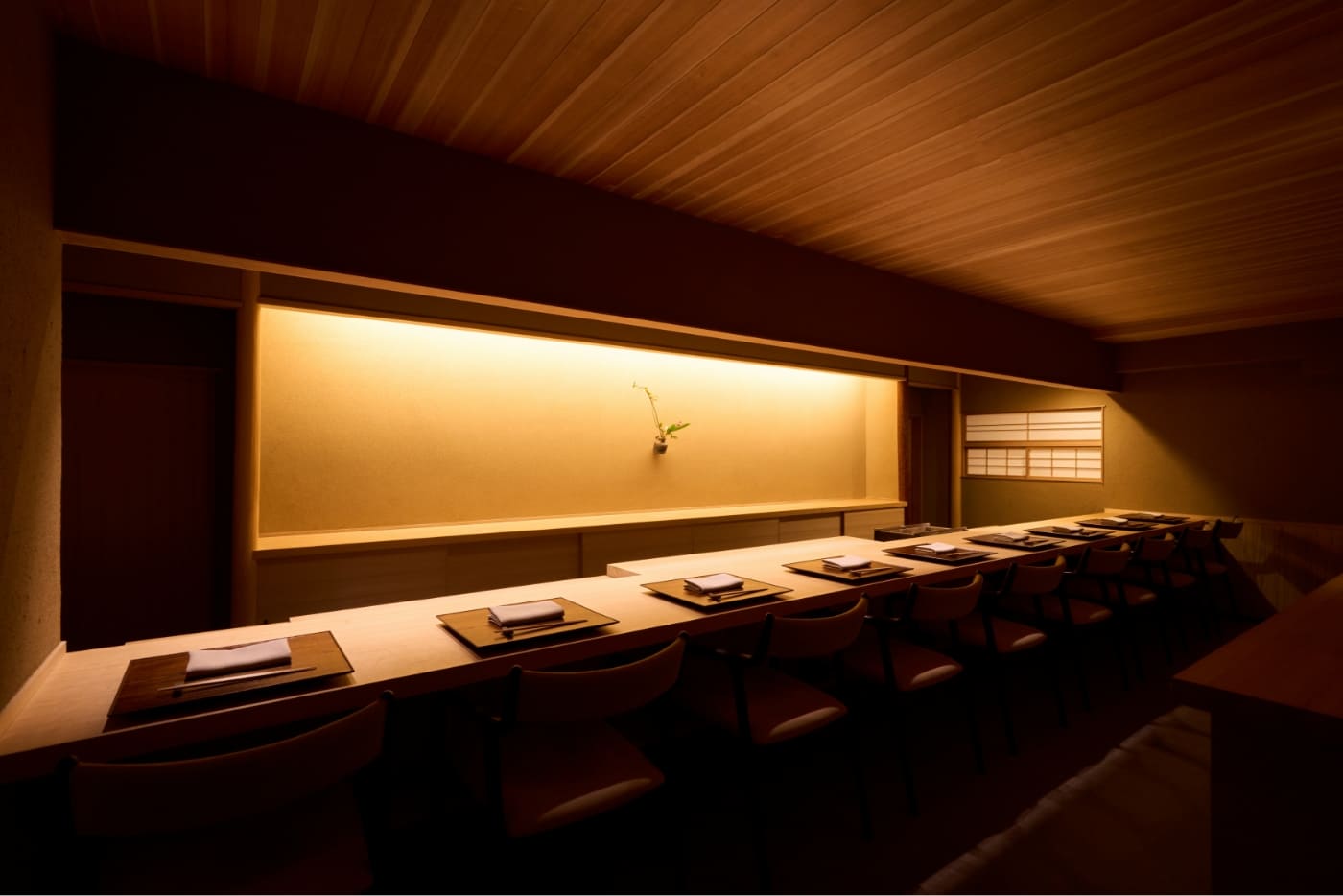
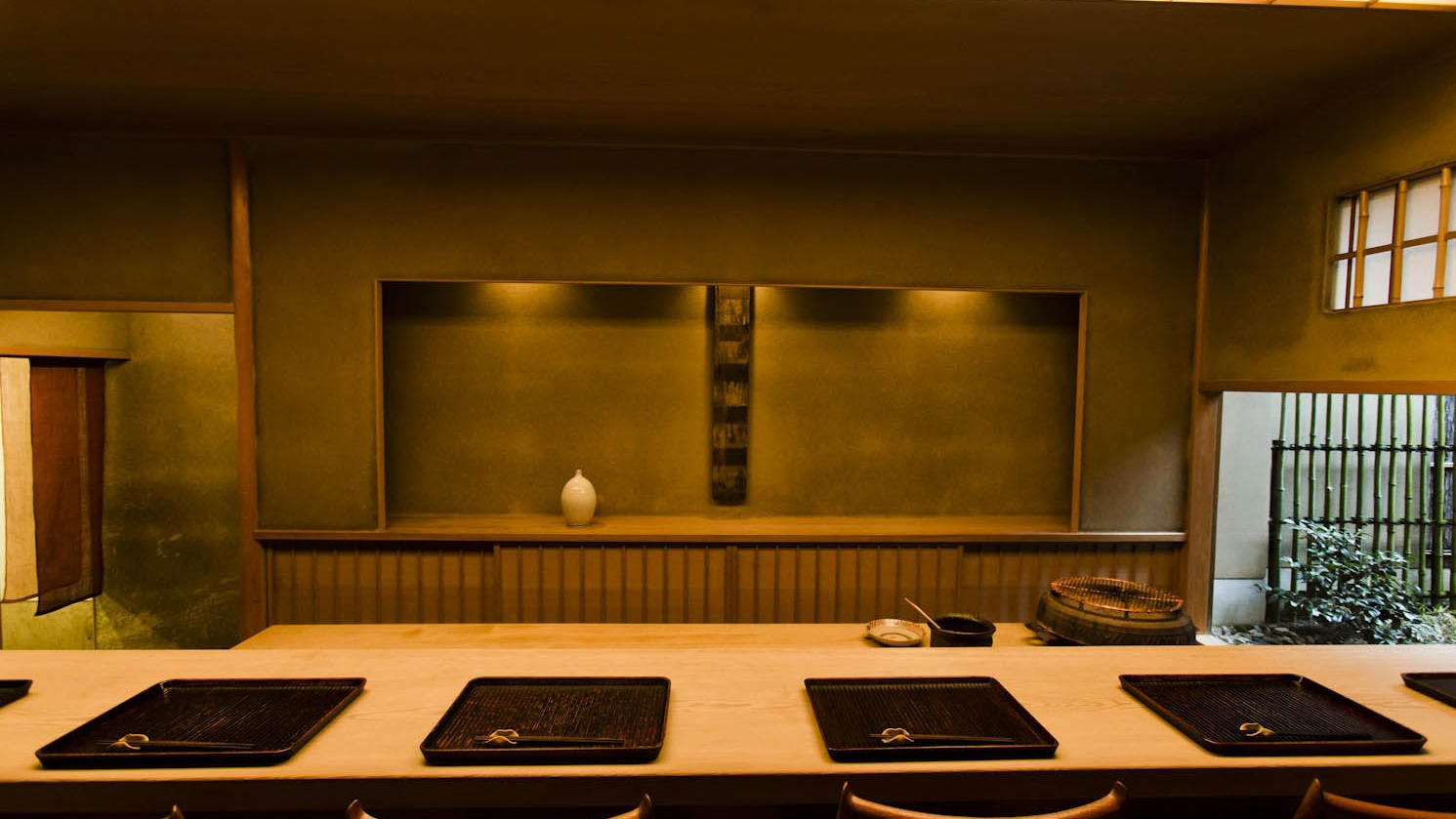
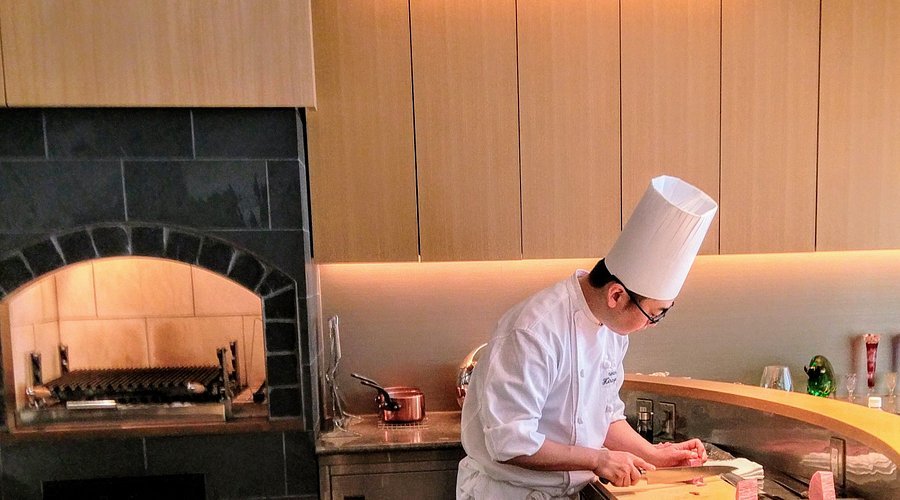
Hirayama is a kappo-style soba restaurant in Nishiasakusa, close to the Kappabashi kitchenware district. Chef Keisuke Hirayama comes from a kappo background, and the counter-seat format reflects that: guests sit facing the kitchen, courses arrive in sequence, and the cooking is visible throughout. The calligraphy on the shop curtain at the entrance was brushed by the chef's grandmother, a calligraphy teacher, a detail that signals something about the register of the place: considered, personal, not performing for a tourist audience.
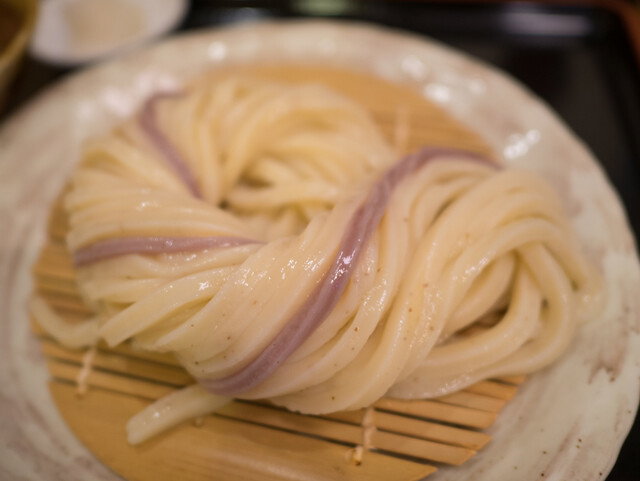
The meal moves from savoury starters through to soba. Courses like jellied conger eel broth and duck breast stew precede the main event, and tempura items are fried to order, one by one, at the quality level you would expect from a specialist tempura shop. The soba itself is made from 100% buckwheat, milled in-house from unpolished grain, producing a flavour that is noticeably more intense than restaurant soba made from commercial flour. For a special occasion, that sequence: broth, stewed proteins, tempura, noodles, works extremely well. The pacing is deliberate, the format intimate.
Lunch vs. Dinner: Where the Value Is
This is the most practical question you can ask about Hirayama, and the answer is clear: lunch is the better entry point, both for value and for the overall experience. The restaurant opens at 11:30 am through 2 pm, six days a week (closed Sunday), and the midday slot tends to be quieter than dinner service, which runs until 10 or 11 pm depending on the day. At ¥¥ pricing, lunch here represents one of the more unusual value propositions in Tokyo's serious dining tier, a multi-course, craft-driven meal in a counter setting, without the premium that dinner commands at comparable venues.
Dinner at Hirayama runs longer and the later hours attract a different crowd, but the kitchen output is consistent across both services. If you are visiting from outside Tokyo, or if your schedule is flexible, the Friday or Saturday lunch is the most comfortable option: the neighbourhood is quiet enough to explore before or after the meal, and you avoid the compressed midweek lunchtime rush that affects Kappabashi-area restaurants. For a date or a small celebration, dinner on a Tuesday through Thursday has the counter mostly to itself by 8 pm, which makes conversation easier.
One practical note: the restaurant is closed on Sundays. If you are building a Tokyo itinerary around a weekend visit, book Saturday lunch as your fallback, it is the last available slot of the week.
The Experience for Special Occasions
Counter seating at a kappo restaurant is the right format for a birthday dinner or a quiet anniversary meal in a way that a larger dining room often is not. You are close enough to the preparation to follow each course as it is made, the interaction with the chef is natural rather than staged, and the sequence of dishes gives the meal a clear shape from start to finish. At Hirayama, the chef's demeanour is genuinely warm, which matters when the physical distance between kitchen and guest is measured in centimetres.
At ¥¥ pricing, you are not spending what you would at Harutaka or RyuGin, but the experience does not feel like a concession. The OAD recognition across three consecutive years, Highly Recommended in 2023, #258 in 2024, #308 in 2025, confirms that the kitchen is operating at a level well above what the price range would suggest. For a celebratory meal where you want considered cooking without a ¥¥¥¥ bill, Hirayama is the right call. For those looking to explore Tokyo's broader food scene, our full Tokyo restaurants guide gives more options across all price tiers.
Location and Getting There
Hirayama is at 1 Chome-3-14 Nishiasakusa, Taito City, a short walk from Tawaramachi Station on the Ginza Line, and close to the northern edge of the Kappabashi kitchenware street. The neighbourhood is low-rise and walkable; if you are staying in central Tokyo, this is a direct journey. For hotel options near the area, see our Tokyo hotels guide. For bars to visit before or after dinner, our Tokyo bars guide covers the full range. If you want to pair the visit with other Tokyo restaurant bookings, nearby options worth considering include Gorio, Idea Ginza, and Shima. For a steak-focused alternative in the same city, Peter Luger Steak House Tokyo occupies a completely different price and format tier. Elsewhere in Japan, comparable care-driven cooking can be found at Gion Sasaki in Kyoto, HAJIME in Osaka, akordu in Nara, Goh in Fukuoka, 1000 in Yokohama, and 6 in Okinawa. For international steak comparisons, see Arthur J. in Los Angeles and B&B Butchers and Restaurant in Houston. Pearl also covers Tokyo wineries and Tokyo experiences for a fuller itinerary. For full context on Tokyo's sushi scene, Harutaka is the reference point at the ¥¥¥¥ level.
Quick reference: Nishiasakusa, Taito City, open Mon–Sat lunch (11:30 am–2 pm) and dinner (5:30–10/11 pm), closed Sunday, ¥¥ price range, counter seating, OAD Top 308 Japan (2025), booking difficulty: easy.
Planning details
- Hours
- Monday: 11:30 am–2 pm, 5:30–11 pm · Tuesday: 11:30 am–2 pm, 5:30–10 pm
- Location
- 1 Chome-3-14 Nishiasakusa, Taito City, Tokyo 111-0035, Japan
- Website
- asakusa-hirayama.com
- Phone
- +81 3-5830-6857
The take
The Take
The Vibe
Hirayama feels like a quietly consequential discovery: a small, counter-led kappo operation that asks for attention rather than shouting for it. The hand-brushed noren, painted by the chef’s grandmother, sets a personal tone before you even sit. The room is compact and craft-focused, with cooking performed in view and dishes given directly from chef to guest. Planted in a working corner of Tokyo that trades gloss for industry, the restaurant’s modest exterior and precise execution create a restrained, charming atmosphere where the food is the principal flourish.
Best For
This is a place people choose for milestone meals and deliberate celebration dinners. The kappo approach, dishes prepared and plated at the counter in course-by-course sequence, rewards diners who want a focused, attentive experience rather than a casual quick meal. It suits couples marking an occasion, small groups who appreciate handiwork, and anyone seeking soba treated as a central craft. Evening service and the tasting-style architecture of the meal make it primarily a dinner destination where trusting the chef enhances the visit.
Ordering Tips
Accepting the kappo format is the clearest ordering tip: let the chef shape the sequence and trust the counter rhythm. Watch for the juwari soba, 100% buckwheat milled in-house and served at the precise temperature and timing it requires, and treat it as a highlight rather than a simple afterthought. The menu also rewards attention to signature items such as Wagyu Tenderloin, Garlic Rice and Steak Tartare if they appear as part of the course. Avoid asking for a la carte permutations; the experience is built around the chef’s flow.
Venue details
Ambiance
Upscale and classy with curved wooden counter around open kitchen and private room.
Tags
Vibe
Best For
Experience
Sourcing
At the Table
- Dress Code
- Smart Casual
- Noise Level
- Quiet
- Service Style
- Upscale Casual
- Meal Pacing
- Leisurely
- Capacity
- Intimate
- Kitchen
- Modern
- Menu Format
- A la carte, Counter dining
- Private Dining
- Available
Signature Dishes
- Wagyu Tenderloin
- Garlic Rice
- Steak Tartare
Know before you go
Know Before You Go
- Getting there
- 1 Chome-3-14 Nishiasakusa, Taito City, Tokyo 111-0035, Japan
Planning details
Hours
- Monday
- 11:30 am–2 pm, 5:30–11 pm
- Tuesday
- 11:30 am–2 pm, 5:30–10 pm
- Wednesday
- 11:30 am–2 pm, 5:30–10 pm
- Thursday
- 11:30 am–2 pm, 5:30–10 pm
- Friday
- 11:30 am–2 pm, 5:30–10 pm
- Saturday
- 11:30 am–2 pm, 5:30–10 pm
- Sunday
- Closed
Location
1 Chome-3-14 Nishiasakusa, Taito City, Tokyo 111-0035, Japan · Directions

Also consider
Also Consider
- Harutaka: Sushi, ¥¥¥¥
- L'Effervescence: French, ¥¥¥¥
- RyuGin: Kaiseki, Japanese, ¥¥¥¥
- HOMMAGE: Innovtive French, French, ¥¥¥¥
- Crony: Innovative, French, ¥¥¥¥
Restaurant context
Hirayama's most direct competition is not other soba restaurants: it is the broader set of Tokyo counter-dining experiences where the meal is sequenced, intimate, and tied to a single chef's point of view. Against that field, the price gap is the deciding factor. Harutaka and RyuGin both operate at ¥¥¥¥ with booking windows of 4–8 weeks minimum. Hirayama sits at ¥¥, books easily within a week, and carries three years of OAD national recognition. If budget is a real constraint but you want the counter-dining format with serious kitchen credentials, Hirayama wins that comparison without qualification.
For a special occasion where the meal itself is the centrepiece, the relevant question is whether you want French-influenced innovation or Japanese craft cooking. L'Effervescence, HOMMAGE, and Crony all deliver technically ambitious cooking in the ¥¥¥¥ range, with service depth and wine programmes that Hirayama does not attempt to match. If that level of production and service polish is what you are paying for, those venues justify the premium. But if you want a meal that is rooted in Japanese craft technique, personally made by the chef in front of you, and priced at less than half the cost, Hirayama is the clearer choice.
The honest comparison for groups or corporate meals is different: Hirayama's counter format does not scale beyond 4 people comfortably, and the kappo structure does not suit guests who want to order freely or spend a long evening over wine. For those occasions, the ¥¥¥¥ venues above have room configurations and service structures better suited to the purpose. For two people on a date or a small celebration where craft and value both matter, Hirayama is the most practical booking in this comparison set.
Explore Tokyo
Around this place
Discover more on Pearl
Unlock the full Hirayama guide in Pearl, including awards, comparisons, FAQs, planning details, and nearby places.
Compare Hirayama
| Venue | Price | Awards |
|---|---|---|
| Hirayama | ¥¥ | 2026 Bib GourmandTabelog 100 - Soba - EAST - 2025 · #1002025 OAD Top Restaurants in Japan Ranked · #3082024 OAD Top Restaurants in Japan Ranked · #2582023 OAD Top Restaurants in Japan Highly Recommended |
| Harutaka | ¥¥¥¥ | 2026 Tabelog Silver · #312026 OAD Top Restaurants in Japan Ranked · #1282026 Michelin 3 Stars2026 La Liste Top RestaurantsTabelog 100 - Sushi - TOKYO - 2025 · #372025 Asia's 50 Best Restaurants · #762025 OAD Top Restaurants in Japan Ranked · #1172025 La Liste Top Restaurants2025 Tabelog Bronze |
| L'Effervescence | ¥¥¥¥ | 2026 Tabelog Silver · #682026 OAD Top Restaurants in Japan Ranked · #103Star Wine Lists 20262026 Black Pearl 2 Diamond2026 Relais Chateaux Restaurants2026 La Liste Top Restaurants2026 Michelin 3 Stars2025 Asia's 50 Best Restaurants · #692025 OAD Top Restaurants in Japan Ranked · #92 |
| RyuGin | ¥¥¥¥ | 2026 OAD Top Restaurants in Japan Ranked · #802026 Tabelog Bronze · #3772026 Michelin 3 Stars2026 La Liste Top RestaurantsTabelog 100 - Japanese cuisine - TOKYO - 2025 · #212025 OAD Top Restaurants in Japan Ranked · #542025 Michelin 3 Stars2025 La Liste Top Restaurants2025 The Best Chef Three Knives |
| HOMMAGE | ¥¥¥¥ | 2026 Tabelog Bronze · #1232026 OAD Top Restaurants in Japan Highly Recommended2026 Michelin 2 StarsTabelog 100 - French - TOKYO - 2025 · #762025 Asia's 50 Best Restaurants · #782025 OAD Top Restaurants in Japan Ranked · #1752025 Michelin 2 Stars2025 The Best Chef One Knife2025 La Liste Top Restaurants |
| Crony | ¥¥¥¥ | 2026 Asia's 50 Best Restaurants · #34Star Wine Lists 20262026 OAD Top Restaurants in Japan Recommended2026 Michelin 2 Stars2025 Asia's 50 Best Restaurants · #30Tabelog 100 - French - TOKYO - 2025 · #782025 OAD Top Restaurants in Japan Ranked · #227We're Smart World Top Restaurants 20252025 Michelin 2 Stars |












A quick look at how Hirayama measures up.
FAQ
Frequently Asked Questions
What should a first-timer know about Hirayama?
Hirayama is a kappo-style counter restaurant, not a conventional soba shop. The format is multi-course: small dishes, tempura fried to order, and then 100% buckwheat soba made with homemade flour as the centrepiece. Chef Keisuke Hirayama runs an interactive counter where the cooking happens in front of you, which means solo diners and pairs get the most out of the format. It sits close to Tawaramachi Station (Ginza Line), near the Kappabashi district: easy to reach from central Tokyo.
How far ahead should I book Hirayama?
Book at least two to three weeks in advance, especially for weekend lunch or Friday and Saturday dinner. The counter format means capacity is limited, and Hirayama's consistent OAD recognition since 2023 keeps demand steady. No booking website is listed publicly, so arriving without a reservation is a real risk.
Is the tasting menu worth it at Hirayama?
At ¥¥ pricing, yes: the value-to-format ratio is strong for a kappo progression that includes tempura fried one piece at a time and soba prepared from unpolished buckwheat flour. You are not paying Tokyo omakase prices for a kappo-calibre experience; the OAD rankings (#258 in Japan in 2024, #308 in 2025) confirm the restaurant holds a serious position without the pricing of a Michelin-tier destination. For the price bracket, the depth of craft is hard to match.
Is lunch or dinner better at Hirayama?
Lunch is the better entry point. The hours (11:30am–2pm daily except Sunday) give you the full format at what is typically a lower price point than dinner, and the Nishiasakusa neighbourhood works well for a midday visit combined with a walk through Kappabashi. Dinner runs later on Mondays (until 11pm) than Tuesday through Saturday (until 10pm), which suits a slower-paced evening, but the experience itself is consistent across both sittings.
Can Hirayama accommodate groups?
Groups of more than four will find the counter format limiting. Kappo counters are designed around an intimate, one-on-one dynamic with the chef, and Hirayama follows that pattern. Small groups of two to three are the sweet spot. If you need space for five or more, this is the wrong format: a restaurant with private dining rooms will serve a larger group better.
Is Hirayama good for a special occasion?
Yes, specifically for birthdays or quiet anniversary dinners between two people. Counter kappo is one of the few formats where the chef's engagement with guests is part of the experience: Chef Hirayama's demeanour, noted in OAD coverage, adds to that. The calligraphy at the entrance (done by the chef's grandmother) gives the space a personal character that a hotel restaurant cannot replicate. Keep the group small for this to land properly.
Is Hirayama worth the price?
At ¥¥, Hirayama is one of the better-value kappo experiences in Tokyo. You are getting tempura at the level of a specialty tempura shop and soba made from scratch with unpolished buckwheat: the OAD committee has ranked it in the top 310 restaurants in Japan for three consecutive years. For that price bracket, the craft-to-cost ratio is favourable. If you want a comparable experience at a lower price, a standalone soba shop will cost less but will not offer the full kappo progression.