Book it. Ten No Meshi Los Angeles, the first U.S. outpost of a Kyoto-born Wagyu katsu specialist, is open at 2006 Sawtelle Boulevard, and the A5 Wagyu katsu set at $57 is the most direct path to genuine Japanese A5 beef this city currently offers at that price. No reservations, waits that regularly exceed one hour, and a tableside chanting ritual that stops the entire dining room every five minutes: this is the most purposeful Japanese opening on Sawtelle in years, and it is already drawing the kind of crowds that make arriving at 5 p.m. sharp a non-negotiable strategy.
What Is Ten No Meshi, and Why Kyoto's Wagyu Katsu Specialist Matters in L.A.
Los Angeles has spent the last several years watching A5 Wagyu migrate from white-tablecloth Japanese steakhouses into pitas, Philly cheesesteaks, and $28 smash burgers. The beef has become a shorthand for a certain kind of conspicuous dining, a flex ingredient more than a considered one. Ten No Meshi Los Angeles is a correction to that drift. The Kyoto original built its entire identity around a single format: panko-breaded, deep-fried Wagyu and Kurobuta pork katsu sets, served with rice, miso soup, shredded cabbage, and a condiment bar that rewards attention.
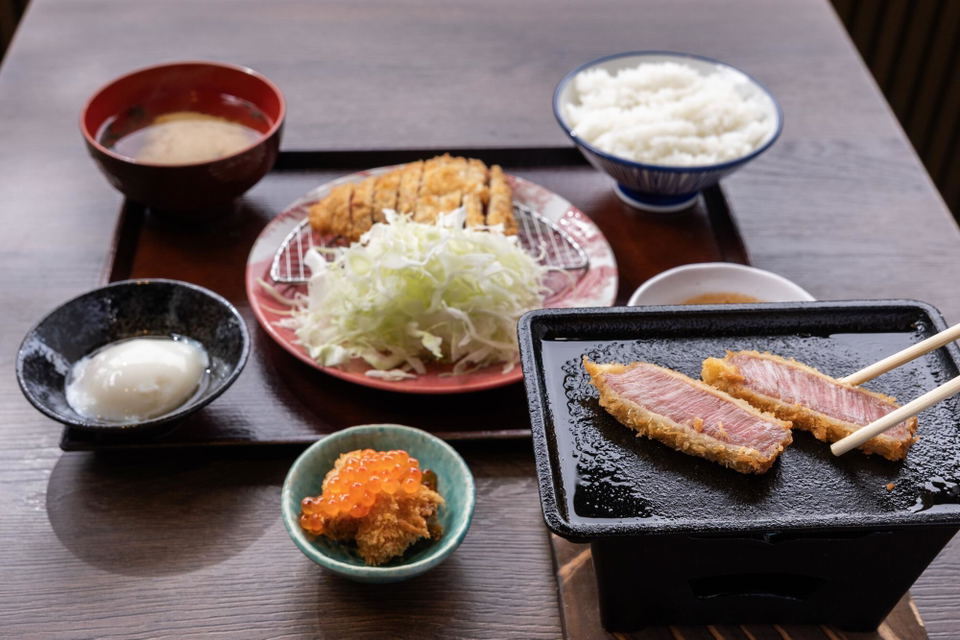
This is not a restaurant that does ten things adequately. It does one thing with the kind of precision that comes from a kitchen that has thought about nothing else. The beef is sourced from Miyazaki and Kagoshima, two Kyushu Island prefectures that produce some of Japan's most sought-after Wagyu cattle.
The breading process, as described by manager Takeshi Yamamura, involves a specific flour imported from Japan, a Japanese-sourced melted butter for binding, and a particular size of fresh panko chosen for the feathery, exaggerated crust it produces.
The frying medium is a blend of palm oil, beef tallow, and pork lard, a combination designed to carry the fat content of the Wagyu without overwhelming it.
For a city already fluent in omakase and kaiseki, Ten No Meshi offers something different: a specialist's focus applied to a format that is fundamentally accessible. You sit down, you choose your protein, and the kitchen does the rest. The question is whether the execution justifies the wait, and at Sawtelle, the wait is real. Plan accordingly.
Inside the Ten No Meshi Experience: Tableside Ritual and A5 Beef
The meal begins before the Wagyu arrives. Every few minutes, the dining room's attention pivots to whichever table is about to receive its first course. A server carries out a woven tray holding bowls of panko-crusted scallops under a mesh dome, sets it down, and asks if you're ready. What follows is a countdown: "Three, two, one, Ten No Meshi! Yoisho! Hotate dashimasu!", scallops coming. A second server crowns each scallop with a spoonful of ikura, punctuating each scoop with another sharp "yoisho."
Manager Takeshi Yamamura describes "yoisho" as meaning "let's go", the word you say when you're putting energy and enthusiasm into something. In practice, the chant functions as a dining room reset: it pulls every table out of its own conversation and into a shared moment of collective anticipation. The effect is less performance and more ritual, the kind of thing that feels slightly absurd in description and entirely right in the room. No standard tonkatsu counter in Los Angeles replicates it.
The scallops earn the ceremony. The ikura is sweet and deeply umami, with thin membranes that burst on contact, flooding the palate with brine. Paired with the natural sweetness of the scallop and the crunch of the panko crust, it sets a high bar for what follows.
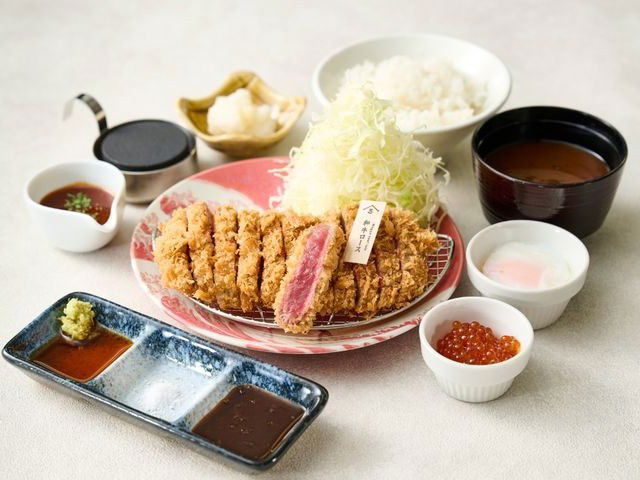
The main event arrives as a spread: a sliced cutlet on a raised wire plate alongside shredded cabbage and a cup of demiglace, a bowl of steamed rice, miso soup, grated daikon with yuzu, and a runny poached egg for dipping. Each diner also receives a hot stone, use it to finish cooking the cutlet to your preferred doneness, or leave it. The table holds self-serve containers of dashi soy sauce, garlic soy sauce, regular and spicy tonkatsu sauce, salt, and wasabi. Rice, miso, and cabbage can all be replenished at no extra charge.
The A5 Wagyu katsu, sourced from Miyazaki and Kagoshima, arrives as tiles of beef so marbled and yielding that the panko crust is doing structural work the meat itself cannot. The specific size of fresh panko creates a feathery, delicate crunch that gives way immediately. The demiglace on the side, a silky tomato-meat gravy, works as a dipping sauce for the Wagyu or anything else on the table. Yamamura's position: there is no wrong way. Sear it on the stone, swipe it through the runny egg, drag it through the garlic soy. The condiment bar is an invitation to experiment across the meal.
Sawtelle Boulevard Gets Its Most Considered Japanese Opening in Years
Ten No Meshi's choice of Sawtelle Boulevard is not accidental. The corridor running through West Los Angeles has functioned as the city's most concentrated Japanese dining street for decades, anchored by ramen shops, izakayas, Japanese grocery stores, and specialty dessert counters. The customer base on Sawtelle already understands the difference between Kurobuta pork and commodity loin, already knows what Miyazaki beef means, and is willing to wait for the real thing, as the crowds outside Ten No Meshi confirm nightly.
That context matters because Ten No Meshi's format demands a certain level of engagement from the diner. The condiment bar is not decorative, it's part of the meal. The hot stone is not a gimmick, it's a finishing tool. The yoisho ritual is not optional, it happens whether you're expecting it or not. On a street where diners arrive with baseline Japanese food literacy, Ten No Meshi can operate at full register without having to explain itself.
The competition on and around Sawtelle includes strong ramen, solid izakaya fare, and a handful of capable sushi counters, but nothing that occupies the specific niche Ten No Meshi has claimed: a single-format Wagyu katsu specialist with a Kyoto pedigree and a set-menu structure that keeps the kitchen focused and the experience consistent. For the Sawtelle regular who has cycled through the corridor's existing options, this is a meaningful addition to the rotation, and a reason to return on a weeknight when the waits are shorter.
Ten No Meshi Los Angeles Menu, Pricing, and What to Order
The menu is organized around sets. Pork katsu sets run $32 to $35, covering loin and tenderloin cuts of Kurobuta pork. Wagyu katsu sets run $44 to $57: the American Wagyu at $44, the A5 at $57. À la carte fried items are available from $3 to $47, and curry and katsudon bowls range from $27 to $57.
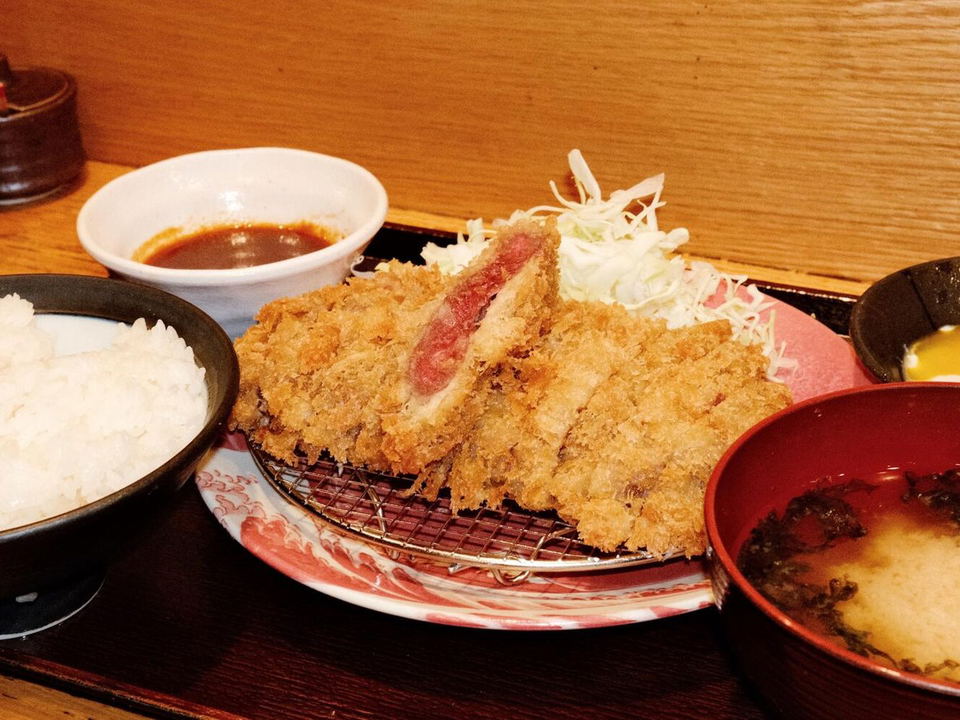
The A5 at $57 is the order. The source review describes it as potentially the most affordable Wagyu filet mignon in Los Angeles, a claim that holds up against the broader market for A5 beef in any format across the city. The American Wagyu at $44 is the right call for diners who want the characteristic heavy marbling and beefy depth of Wagyu without the full A5 premium: heavily marbled, exceedingly tender, with a pronounced beefy flavor that satisfies on its own terms.
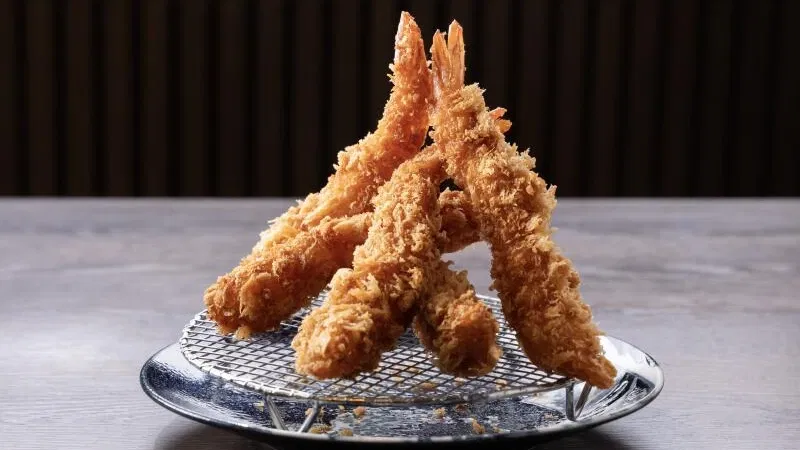
The pork tenderloin is the more tender of the two pork cuts, though the breading has been known to separate from the meat during frying, a minor inconsistency worth knowing before you order. The katsudon bowl, listed among the restaurant's recommended dishes, takes the pork katsu and submerges it in sweet-savory dashi broth with onions and beaten egg over white rice, a format that compensates for any dryness in the pork and produces a cohesive, satisfying bowl. The ebi fry, panko-fried shrimp, is also on the recommended list and worth ordering as a supplement to the set.
One practical note: Ten No Meshi was still awaiting its beer and wine permit at the time of the source review. The beverage list currently runs to iced matcha lattes, iced Sencha tea, iced tea, soft drinks including Calpico, and Ramune, the Japanese carbonated drink sealed with a glass marble. The Sencha is grassy and refreshing, a reasonable palate cleanser between bites of fried beef. Anyone arriving expecting an Asahi with their katsu will need to wait for the permit to come through. When it does, expect the line outside to get longer.
Practical Details: Location, Hours, and How to Get a Table
Ten No Meshi Los Angeles is at 2006 Sawtelle Boulevard. Phone: (310) 231-1177. Website: tonkatsu-la.tennomeshi.com. Open daily for lunch from 11:30 a.m. to 2:30 p.m. (last order at 2:15 p.m.) and for dinner from 5 p.m. to 10 p.m. Street parking is available.
There are no reservations. Wait times regularly exceed one hour, particularly in the 7 to 8 p.m. window. Arriving at opening, 11:30 a.m. for lunch or 5 p.m. for dinner, is the most reliable way to avoid the longest waits. Patio seating puts you in direct eyeline of everyone still waiting for a table; inside seating is preferable for that reason alone, but you do not get to choose when your name is called.
The group-size sweet spot is two to four: large enough to sample across the menu, small enough to move quickly when your name is called. The set format means the kitchen's pacing is consistent regardless of party size, but larger groups will spend more time waiting for a table that fits. Solo diners and pairs will turn tables fastest and face the shortest effective waits.
Ten No Meshi Los Angeles is the kind of opening that gets harder to access as word spreads, not easier. The format is tight, the seating is limited, and the yoisho ritual is already generating the kind of attention that shortens wait times in the wrong direction. The beer and wine permit, when it arrives, will make the experience more complete, and will almost certainly make the line longer. Go now, go at 5 p.m., and order the A5. This is the kind of intel Pearl members get first. Join Pearl, your table is waiting.
Frequently Asked Questions
What is Ten No Meshi Los Angeles and where is it located?
Ten No Meshi Los Angeles is the first U.S. location of a Kyoto-born Wagyu katsu specialist, focused exclusively on panko-breaded, deep-fried A5 Wagyu and Kurobuta pork katsu sets. It is located at 2006 Sawtelle Boulevard in Los Angeles.
How much does the A5 Wagyu katsu set cost at Ten No Meshi Los Angeles?
The A5 Wagyu katsu set is priced at $57, making it one of the most accessible entry points for genuine Japanese A5 beef in the city. The set includes rice, miso soup, shredded cabbage, and a condiment bar.
Does Ten No Meshi Los Angeles take reservations?
Ten No Meshi does not accept reservations, and waits regularly exceed one hour. Arriving at 5 p.m. when the restaurant opens is the recommended strategy to minimize wait time.
What is the tableside chanting ritual at Ten No Meshi?
Every few minutes, servers perform a countdown chant, 'Three, two, one, Ten No Meshi! Yoisho!', when delivering the opening scallop course to a table. Manager Takeshi Yamamura describes 'yoisho' as meaning 'let's go,' conveying energy and enthusiasm, and the ritual briefly unites the entire dining room in shared anticipation.
Where does Ten No Meshi source its Wagyu beef?
The beef is sourced from Miyazaki and Kagoshima, two prefectures on Japan's Kyushu Island known for producing highly sought-after Wagyu cattle. The restaurant also uses a Japan-imported flour, Japanese-sourced melted butter, and a blend of palm oil, beef tallow, and pork lard for frying.