
Restaurant in Tokyo, Japan
Tempura Taku
640Pearl PointsMichelin-listed tempura, easy to book.

.png?width=144&height=144&quality=80)

About Tempura Taku
A Michelin Plate tempura counter in Kagurazaka that earns its OAD #454 Japan ranking through technically precise, seasonally driven omakase. At ¥¥¥ pricing with easy booking, it's one of Tokyo's most accessible routes into serious tempura — and a natural choice for a date or celebration dinner where the food should lead.
Should You Book Tempura Taku?
If you're weighing tempura options in Tokyo, Tempura Kondo is the name most visitors land on first — it carries more international recognition and a longer booking queue to match. At ¥¥¥ pricing, it sits a full tier below the ¥¥¥¥ operators and delivers a tightly controlled omakase format under chef Hisayuki Takeuchi. Book it for a date, a quiet celebration, or a business dinner where you want the food to do the talking.
The Portrait
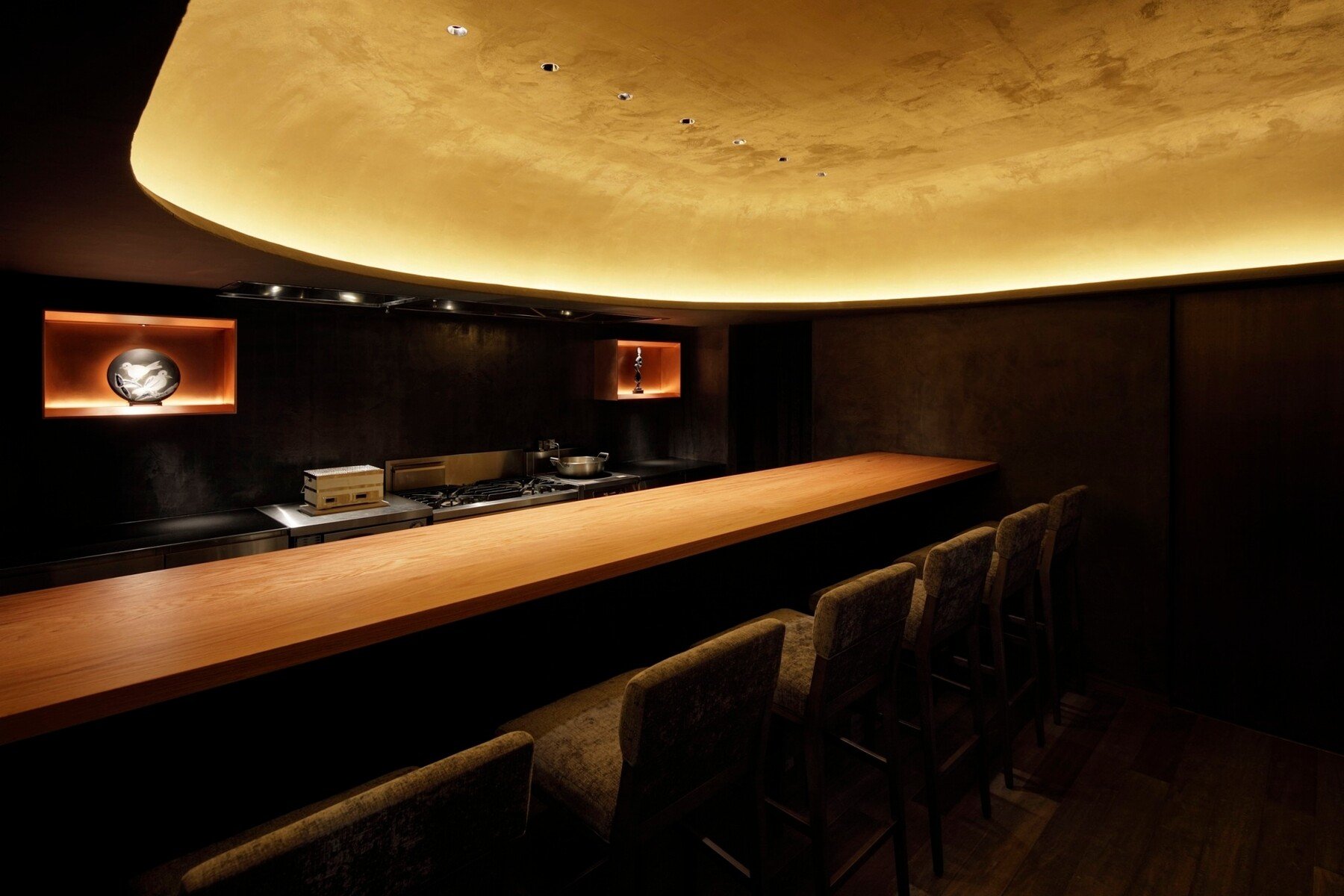
Kagurazaka is one of Tokyo's more quietly rewarding neighbourhoods — former geisha district, Franco-Japanese character, low-rise streets that slow you down. Arriving at the Karukozaka Place building and ascending to the fifth floor sets a deliberate pace before you've touched a piece of tempura. The room operates at a register that suits the food: composed, focused, with the kind of ambient quiet that makes a special-occasion dinner feel intentional rather than incidental. This is not a high-energy counter. If the noise level at Tempura Ginya or other busier operators has ever distracted you from the food, Taku's register will be a genuine improvement.
The cooking philosophy is stated plainly in the venue's own award notes and worth taking seriously as a booking signal. Flour is aerated as it's mixed with water, producing a coating thin enough that you're mostly tasting the ingredient underneath it rather than the batter around it. Cold-pressed sesame oil is the frying medium, which contributes a flavour profile distinct from the neutral oils used elsewhere. The practical effect is tempura that reads lighter and more ingredient-forward than the category average, relevant information if you're comparing this to heavier, crunchier interpretations.
The sequencing of the omakase is deliberate: seafood and vegetable courses alternate throughout the meal, which prevents the palate from settling into a single flavour register. Shrimp and conger eel appear, as they should in any serious tempura omakase, but the menu also includes sea urchin, wrapped in nori before frying so the soft texture survives the oil, and asparagus handled at two separate temperatures, tips and stalks fried differently to achieve the leading result from each part of the vegetable. That kind of technical specificity signals a kitchen that is engaged with the format rather than just executing it.
Seasonal Considerations, When to Visit
This matters more at a tempura counter than at most formats. Tempura is, at its core, a seasonal ingredient showcase: the batter is essentially a neutral frame, and what changes across the calendar year is what's inside it. Spring brings bamboo shoots, young fuki, and the season's first asparagus. Summer shifts to sweetfish, prawn, and corn. Autumn adds matsutake and root vegetables. Winter delivers crab, oyster, and the dense, sweet root produce that colder months produce. Taku's menu structure, with its novel items alongside the classics, suggests a kitchen responsive to what the season offers, so visiting in a shoulder season or during a produce peak (early spring for mountain vegetables, late autumn for mushrooms and root items) will give you a more varied and ingredient-specific experience than a summer visit focused on seafood staples.
If you're visiting Tokyo and building a fine-dining itinerary around more than one meal, note that the neighbourhood concentration of good tempura in Tokyo means you have real alternatives within range. Tempura Motoyoshi and Fukamachi are both worth knowing. For a broader view of where Taku sits in the city's dining map, our full Tokyo restaurants guide covers the range. If you're extending your trip, comparable high-end Japanese dining is available at HAJIME in Osaka, Gion Sasaki in Kyoto, and Goh in Fukuoka. For tempura specifically outside Tokyo, Numata in Osaka and Mudan Tempura in Taipei are the regional comparisons worth considering.
Booking and Practical Details
Booking difficulty is rated Easy, meaningfully useful information in a Tokyo fine-dining market where ¥¥¥¥ counters regularly require months of lead time or a hotel concierge with the right relationships. Taku at ¥¥¥ and with easier availability is one of the more accessible routes into serious tempura omakase in the city. Phone and website details are not available in our current data; the most reliable approach is to contact through a hotel concierge or a reservation service such as Tableall or Omakase. The Kagurazaka address (3 Chome-1 Karukozaka Place 501, Shinjuku City) is accessible from Kagurazaka or Iidabashi stations on the Tokyo Metro Tozai Line. Plan for an evening meal if you're treating this as a date or celebration dinner, the neighbourhood after dark suits the occasion considerably better than a rushed lunch. For accommodation and bar options nearby, see our Tokyo hotels guide and our Tokyo bars guide. For broader Japan trip planning, akordu in Nara, 1000 in Yokohama, and 6 in Okinawa are all worth a look depending on your itinerary. Also see our Tokyo experiences guide and Tokyo wineries guide for wider trip context.
For the special-occasion diner who wants a technically serious omakase at a price point that doesn't require a ¥¥¥¥ budget, Tempura Taku is a clear recommendation. The Michelin recognition is modest but consistent, the OAD trajectory is moving in the right direction, and the format suits a two-person celebratory dinner better than a large group outing. If you're specifically looking for the highest-decorated tempura counter in Tokyo regardless of price, Tempura Kondo or Edomae Shinsaku deserve consideration. But if accessible booking, a quieter room, and serious ingredient work at ¥¥¥ pricing describe your brief, Taku is the answer.
Quick reference: Tempura Taku, Kagurazaka, Tokyo | ¥¥¥ | Michelin Plate 2024–2025 | OAD #454 Japan (2025) | Booking: Easy | Leading for: date nights, celebratory dinners, seasonal produce-led omakase.
Frequently Asked Questions
What are alternatives to Tempura Taku in Tokyo?
Tempura Kondo is the most obvious comparison — it carries stronger international name recognition and is harder to book. Tempura Taku is a better call if you want a Michelin-recognised counter at ¥¥¥ without the lead time. For a completely different format, RyuGin offers multi-course Japanese cuisine at a higher price point and booking difficulty.
What should I wear to Tempura Taku?
The venue database does not specify a dress code, but a counter-format ¥¥¥ tempura restaurant in Kagurazaka — a neighbourhood with Franco-Japanese character and a relatively refined local atmosphere — typically draws guests in neat, relaxed attire. Avoid anything that might introduce strong fragrances near an open frying counter.
Can I eat at the bar at Tempura Taku?
Tempura Taku operates as a counter-format restaurant — meaning the counter is the dining experience, not a secondary option. The format is central to how Chef Hisayuki Takeuchi sequences seafood and vegetable courses, alternating items so flavours shift throughout the meal.
What should I order at Tempura Taku?
The menu runs as a set sequence rather than à la carte, so ordering is not a decision you make at the table. Per the venue record, the kitchen alternates seafood and vegetable tempura throughout service — expect shrimp and conger eel alongside less common items such as sea urchin wrapped in nori and asparagus fried at different temperatures for contrasting texture.
Is Tempura Taku worth the price?
At ¥¥¥, Tempura Taku sits in the mid-to-upper tier of Tokyo tempura pricing and holds a Michelin Plate for 2024 and 2025, plus consecutive OAD rankings in Japan's top 500. For that price range, you are getting a technically considered counter — cold-pressed sesame oil, aerated batter, ingredient-led sequencing — rather than a prestige-brand name. If you want the Kondo or Mikawa reputation, you will pay more and wait longer. Taku is the more accessible call at this level.
Is the tasting menu worth it at Tempura Taku?
The counter format at Tempura Taku is a set-course experience by design, so the question is really whether the format suits you. The kitchen's approach — alternating seafood and vegetables, varying frying temperatures by ingredient, using cold-pressed sesame oil — gives the meal a clear technical logic rather than just a list of fried items. At ¥¥¥ with a Michelin Plate, it delivers on that format. If you prefer à la carte flexibility, a tempura counter is not the right format regardless of venue.
Does Tempura Taku handle dietary restrictions?
No dietary policy is documented for Tempura Taku. Counter-format tempura restaurants generally have limited flexibility given the sequential, ingredient-led structure of service. If you have shellfish or seafood restrictions, check the venue's official channels before booking — shrimp and conger eel are listed as core menu items.
Location
Japan, 〒162-0825 Tokyo, Shinjuku City, Kagurazaka, 3 Chome−1 軽子坂プレイス 501
Tokyo, Japan
Compare Tempura Taku
| Venue | Cuisine | Price | Awards | Booking Difficulty |
|---|---|---|---|---|
| Tempura Taku | Tempura | ¥¥¥ | Easy | |
| Harutaka | Sushi | ¥¥¥¥ | Michelin 3 Star, World's 50 Best | Unknown |
| L'Effervescence | French | ¥¥¥¥ | Michelin 3 Star, World's 50 Best | Unknown |
| RyuGin | Kaiseki, Japanese | ¥¥¥¥ | Michelin 3 Star, World's 50 Best | Unknown |
| HOMMAGE | Innovtive French, French | ¥¥¥¥ | Michelin 2 Star, World's 50 Best | Unknown |
| Crony | Innovative, French | ¥¥¥¥ | Michelin 2 Star, World's 50 Best | Unknown |
A quick look at how Tempura Taku measures up.
Also Consider
- Harutaka, Sushi, ¥¥¥¥
- L'Effervescence, French, ¥¥¥¥
- RyuGin, Kaiseki, Japanese, ¥¥¥¥
- HOMMAGE, Innovtive French, French, ¥¥¥¥
- Crony, Innovative, French, ¥¥¥¥
How Tempura Taku Compares
Tempura Taku sits at ¥¥¥ in a Tokyo fine-dining comparison set dominated by ¥¥¥¥ operators. Against Harutaka (sushi, ¥¥¥¥) or RyuGin (kaiseki, ¥¥¥¥), Taku costs less and books more easily, the relevant trade-off is format, not quality tier. If your priority is a technically focused omakase in a composed, quiet room for two, Taku delivers that at a lower price point than any of its ¥¥¥¥ peers. If you want a multi-course kaiseki with broader ingredient range and deeper sake or wine programme, RyuGin is the stronger choice and worth the step up in price.
Against the French-influenced entries in this set, L'Effervescence, HOMMAGE, and Crony all operate at ¥¥¥¥ with considerably more complex wine and beverage programmes and longer tasting menus. They're the right answer if your guest cares more about modern French technique or wine pairing than Japanese produce-led cooking. For a business dinner where impressing with an unusual format matters, Taku's tempura counter is a more memorable choice than a conventional French tasting menu, but if the client doesn't eat Japanese food or expects a European fine-dining structure, the French options give you more familiar ground.
On value, Taku is the straightforward recommendation in this peer set for the diner who wants Michelin-recognised, OAD-ranked cooking without the ¥¥¥¥ commitment or the advance-booking difficulty. It's the easiest to book in this comparison, which in Tokyo's fine-dining market is itself a meaningful advantage. The one scenario where you should choose differently: if you're building a once-in-a-trip splurge dinner and want the highest-decorated table possible, RyuGin or L'Effervescence carry stronger award pedigree and a wider course format that may suit a longer, more celebratory occasion.
Recognized By


Explore Tokyo
Save or rate Tempura Taku on Pearl
Keep this venue in your Pearl passport, rate it after you visit, and track it alongside every other place you collect.