.png?width=1200&quality=80)

Soba Takama
Soba · Kita, Osaka
Restaurant in Osaka, Japan
 Book with Pearl
The Read
Kansai-Dashi Soba Counter
Price
$20–30per person
Dress
Smart Casual
Why go
Soba Takama holds two consecutive Michelin Bib Gourmand awards (2024 and 2025) at a single-¥ price point, making it one of the most straightforward value decisions in Kita Ward. The kitchen serves mori and inaka soba with Kansai-style kombu dashi, in generous portions that fully satisfy. Book for lunch; walk-ins appear to be the norm.
About Soba Takama
Verdict
If you're choosing between Soba Takama and one of Osaka's many ramen or udon counters for a quick, satisfying lunch, stop deliberating: Soba Takama is the better decision. Two consecutive Michelin Bib Gourmand awards (2024 and 2025) at a single-¥ price point make this one of the clearest value propositions in Kita Ward. The question isn't whether it's worth visiting: it's whether you understand what you're booking into. This is a soba specialist, full stop. If you want kaiseki ceremony or a long tasting format, look elsewhere. If you want precise, historically grounded buckwheat noodles at a price that won't register on your credit card, book this.
Portrait
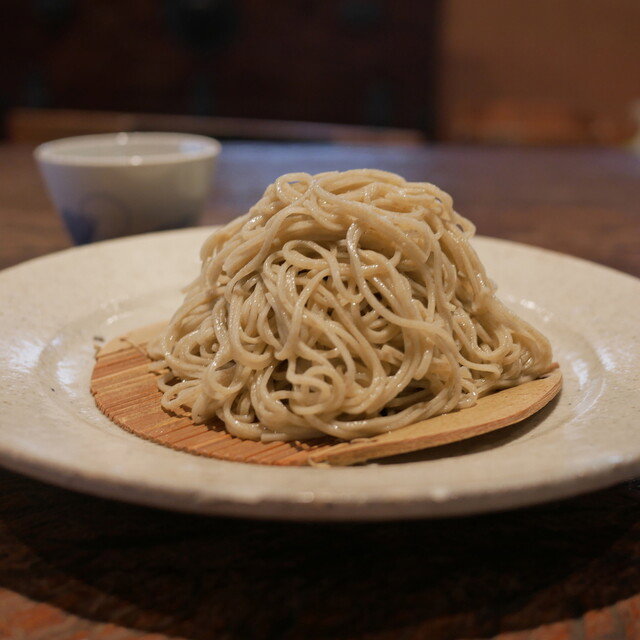
Soba Takama sits in Tenjinbashi, the long shotengai shopping street that runs through Kita Ward: a neighbourhood more associated with everyday Osaka life than with destination dining. That address matters. This is not a restaurant performing for tourists. The visual experience here starts with the seiro: bamboo or wicker baskets carrying noodles arranged with intention. Mori soba arrives piled high, which is exactly what the name promises, 'soba piled high', a presentation style with roots in the Tokugawa period, when noodles were steamed rather than boiled and the basket was a functional vessel, not a prop.
There are two soba formats worth understanding before you sit down. Mori soba uses buckwheat grains stripped of their black husks, producing a cleaner, more delicate noodle with what the venue's own Michelin notes describe as 'a delicious finish.' Inaka soba keeps the whole husked grain intact, which means a darker, more fragrant noodle with a more pronounced buckwheat character. For a returning visitor who has already tried the mori, inaka soba is the logical next order. The dipping sauce uses kombu kelp dashi, a choice that reflects Kansai dashi culture, which runs lighter and more kelp-forward than the bonito-heavy broths common in Tokyo soba shops. That regional specificity is not incidental. It's one of the reasons this restaurant earns a place on Pearl's Osaka list rather than simply being a competent soba counter.
Portions are generous by Japanese noodle-shop standards. One plate is reported to fully satisfy, which at a single-¥ price tier means the cost-per-satisfaction ratio is difficult to match in this city. For context, comparable soba craft in Tokyo, at venues like Akasaka Sunaba or Azabukawakamian, tends to sit at a higher price point and a more formal register. Soba Takama delivers equivalent technical care at a fraction of the ceremony.
Lunch vs. Dinner: Where the Value Sits
This is a soba restaurant, which means the lunch framing is almost always the right one. Soba in Japan has a strong association with the midday meal, historically a working person's food, quick and nourishing, and the format here reinforces that. A lunch visit to Soba Takama is efficient: you order, the noodles arrive cold on the seiro, you dip and eat, you finish. There is no drawn-out service arc. That makes it an excellent decision for a solo traveller moving through Osaka, or for two people who want a serious meal without a two-hour commitment.
If the restaurant serves dinner, the experience is structurally the same, the soba doesn't change based on the hour. But soba counters of this type often close after the lunch service ends, or run reduced evening hours. Arriving mid-morning to early afternoon reduces the risk of turning up post-service. For evening dining in the Tenjinbashi area, you have other options across Osaka's broader restaurant set, see our full Osaka restaurants guide for context.
For the returning visitor specifically: if your first visit was mori soba at lunch, the second visit should be inaka soba, same time of day, with attention paid to how the kombu-forward dipping sauce interacts differently with the earthier whole-grain noodle. That comparison is the most instructive thing this kitchen offers.
How to Book
Booking difficulty is rated Easy. Soba Takama is not a reservation-pressure venue in the way that Osaka's kaiseki or tasting-menu restaurants are. Walk-ins are likely the norm for a counter-style soba shop of this type. The address, 7 Chome-12-14 Tenjinbashi, Kita Ward, is in a dense, walkable part of northern Osaka. Given the lunch-centric nature of soba restaurants in Japan, aim for arrival before the midday rush.
Practical Details
| Detail | Soba Takama | Naniwa Okina | Sobadokoro Toki |
|---|---|---|---|
| Cuisine | Soba | Soba | Soba |
| Price tier | ¥ | ¥ | ¥ |
| Awards | Michelin Bib Gourmand 2024, 2025 | ||
| Booking difficulty | Easy | Easy | Easy |
| Leading for | Solo lunch, quick quality meal | Local soba alternative | Local soba alternative |
For other soba options in Osaka, Ayamedo, Naniwa Okina, Shitennoji Hayauchi, Sobadokoro Toki, and Sobakiri Arabompu are all worth considering depending on your location and timing.
Explore More in the Region
- Our full Osaka hotels guide
- Our full Osaka bars guide
- Our full Osaka wineries guide
- Our full Osaka experiences guide
- Gion Sasaki in Kyoto
- akordu in Nara
- Goh in Fukuoka
- Harutaka in Tokyo
- 1000 in Yokohama
- 6 in Okinawa
Planning details
- Hours
- Monday: Closed · Tuesday: Closed
- Location
- Japan, 〒531-0041 Osaka, Kita Ward, Tenjinbashi, 7 Chome−12−14 1号館
- Website
- tabelog.com/en/osaka/A2701/A270103/27000530
- Phone
- +81 6-6882-8844
The take
The Take
The Vibe
Soba Takama reads like a local institution: a single-focus soba counter embedded in the long Tenjinbashi-suji shopping arcade that serves regulars rather than tourist itineraries. Its Michelin Bib Gourmand recognition underscores a quiet seriousness: craft practiced daily at an accessible price point. The restaurant leans into tradition, from mori soba piled in a seiro to techniques rooted in the Tokugawa period. The result is an unshowy, focused space where the ritual of eating soba matters: attentive, pared-back service at a counter that foregrounds texture, temperature and the simple excellence of a single dish.
Best For
This is a neighbourhood spot built for repeat visits and modest ambitions: quick, well-made soba for locals and anyone wanting an unfussy, high-quality meal. The counter format and approachable price make it ideal for solo diners and casual hangouts, and the Bib Gourmand nod signals consistent value. It suits both daytime and evening visits when you want a focused, efficient meal rather than a lengthy, multi-course dinner. Expect a compact footprint and an atmosphere shaped by regulars and the steady rhythm of a specialist kitchen.
Ordering Tips
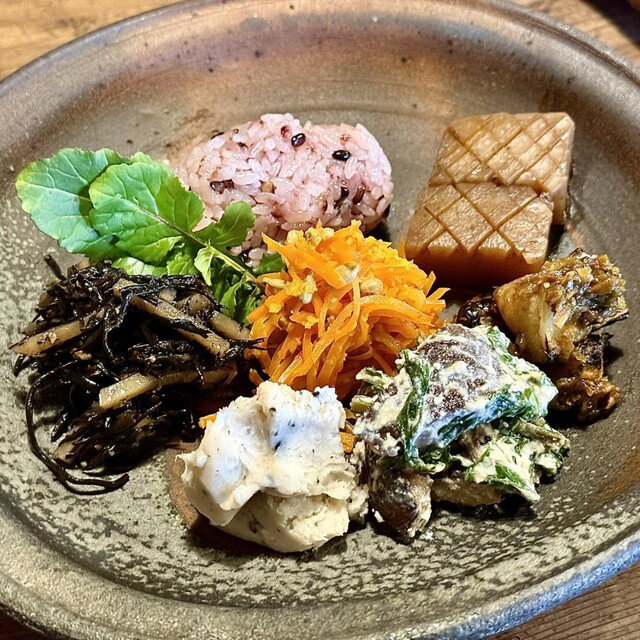
Start with a mori soba to experience the house approach: noodles piled in the seiro affect texture and temperature in ways the kitchen emphasizes. If you want something with tempura, order the tenzaru soba; for a rustic buckwheat flavor try the inaka soba. Small side plates such as dashimaki tamago and miso-pickled tofu are logical companions and help round out the meal. Because the place is celebrated for a single product and consistency, keep orders simple and focus on the noodles and the dipping sauce to judge the craft.
Venue details
Ambiance
Small, cozy, clean space with tranquil energy, traditional Japanese house setup, and homey environment.
Tags
Vibe
Best For
Experience
At the Table
- Dress Code
- Smart Casual
- Noise Level
- Quiet
- Service Style
- Upscale Casual
- Meal Pacing
- Standard
- Capacity
- Intimate
- Kitchen
- Traditional
- Menu Format
- A la carte
Signature Dishes
- Inaka Soba
- Mori Soba
- Tenzaru Soba
- Dashimaki Tamago
- Miso-Pickled Tofu
Know before you go
Know Before You Go
- Getting there
- Japan, 〒531-0041 Osaka, Kita Ward, Tenjinbashi, 7 Chome−12−14 1号館
Planning details
Hours
- Monday
- Closed
- Tuesday
- Closed
- Wednesday
- 11:30 AM–2:30 PM
- Thursday
- 11:30 AM–2:30 PM
- Friday
- 11:30 AM–2:30 PM
- Saturday
- 11:30 AM–2:30 PM
- Sunday
- 11:30 AM–2:30 PM
Location
Japan, 〒531-0041 Osaka, Kita Ward, Tenjinbashi, 7 Chome−12−14 1号館 · Directions
Recognition and awards
Also consider
Also Consider
- HAJIME: French, Innovative, ¥¥¥¥
- La Cime: French, ¥¥¥¥
- Kashiwaya Osaka Senriyama: Japanese, ¥¥¥
- Taian: Kaiseki, Japanese, ¥¥¥
- Fujiya 1935: Innovative, ¥¥¥¥
Restaurant context
Soba Takama operates at a price tier so far below Osaka's other recognised restaurants that direct comparison is almost misleading: but it's useful context. HAJIME, La Cime, and Fujiya 1935 are all ¥¥¥¥ venues with multi-course tasting formats, significant booking lead times, and a very different proposition: if you want an architectural dining experience or a French-influenced progression through Osaka's produce, those three are the right choices. Soba Takama answers a different question entirely: where do I eat well, quickly, at minimal cost, with the reassurance of Michelin recognition?
Within Osaka's Japanese dining tier, Kashiwaya Osaka Senriyama and Taian sit at ¥¥¥ and offer the kaiseki format that represents the other end of Japanese culinary tradition. Both require advance booking and a longer time commitment. Neither overlaps with Soba Takama in purpose. If your Osaka itinerary includes one high-effort, high-spend Japanese meal, book Kashiwaya or Taian for that slot and use Soba Takama for a separate lunch.
For the budget-conscious traveller or anyone building a multi-stop Japan itinerary that already includes high-spend meals in Tokyo or Kyoto (see Gion Sasaki in Kyoto or Harutaka in Tokyo), Soba Takama is the Osaka meal that costs almost nothing and punches well above that cost. Among soba-specific options in the city, Ayamedo and Sobakiri Arabompu are worth considering if Soba Takama is fully occupied or closed, but neither carries equivalent award recognition at this writing.
Explore Osaka
Around this place
Discover more on Pearl
Unlock the full Soba Takama guide in Pearl, including awards, comparisons, FAQs, planning details, and nearby places.
Compare Soba Takama
| Venue | Price | Booking Difficulty | Awards |
|---|---|---|---|
| Soba Takama | ¥ | Easy | 2026 Bib GourmandTabelog 100 - Soba - WEST - 2025 · #822025 Michelin Bib Gourmand2024 Michelin Bib Gourmand |
| HAJIME | ¥¥¥¥ | Unknown | Star Wine Lists 2026 · #12026 Tabelog Bronze · #922026 OAD Top Restaurants in Japan Ranked · #98Michelin Guide Kyoto Osaka 20262026 La Liste Top RestaurantsTabelog 100 - Innovative / Creative cuisine - 2025 · #692025 Asia's 50 Best Restaurants · #832025 OAD Top Restaurants in Japan Ranked · #87We're Smart World Top Restaurants 2025 |
| La Cime | ¥¥¥¥ | Unknown | 2026 Asia's 50 Best Restaurants · #132026 OAD Top Restaurants in Japan Ranked · #1492026 Tabelog Bronze · #231Michelin Guide Kyoto Osaka 20262026 La Liste Top Restaurants2025 Asia's 50 Best Restaurants · #82025 World's 50 Best Restaurants · #44Tabelog 100 - French - WEST - 2025 · #932025 OAD Top Restaurants in Japan Ranked · #123 |
| Kashiwaya Osaka Senriyama | ¥¥¥ | Unknown | 2026 Tabelog Bronze · #1682026 OAD Top Restaurants in Japan Recommended2026 Relais Chateaux RestaurantsMichelin Guide Kyoto Osaka 20262026 La Liste Top RestaurantsTabelog 100 - Japanese cuisine - WEST - 2025 · #772025 OAD Top Restaurants in Japan Ranked · #1552025 Relais Chateaux Award2025 Michelin 3 Stars |
| Taian | ¥¥¥ | Unknown | 2026 OAD Top Restaurants in Japan RecommendedMichelin Guide Kyoto Osaka 20262026 La Liste Top Restaurants2025 OAD Top Restaurants in Japan Ranked · #2042025 La Liste Top Restaurants2025 Michelin 3 Stars2024 OAD Top Restaurants in Japan Ranked · #1912024 Michelin 3 Stars2023 OAD Top Restaurants in Japan Highly Recommended |
| Fujiya 1935 | ¥¥¥¥ | Unknown | 2026 Tabelog Bronze · #752026 OAD Top Restaurants in Japan RecommendedMichelin Guide Kyoto Osaka 20262026 La Liste Top Restaurants2025 Michelin 2 Stars2025 Tabelog Silver2025 La Liste Top Restaurants2024 OAD Top Restaurants in Japan Ranked · #2392024 Michelin 2 Stars |










What to weigh when choosing between Soba Takama and alternatives.
FAQ
Frequently Asked Questions
What should I wear to Soba Takama?
Come as you are. Soba Takama is a ¥-priced neighbourhood soba counter in Tenjinbashi, not a dress-code venue. Casual clothes are entirely appropriate. Leave the formal wear for Osaka's kaiseki restaurants.
What are alternatives to Soba Takama in Osaka?
If you want to stay in the affordable Michelin bracket, Soba Takama is the soba-specific pick. For a step up in format and price, La Cime and Fujiya 1935 both hold serious Michelin recognition and offer tasting-menu experiences. For traditional kaiseki at a higher spend, Kashiwaya Osaka Senriyama and Taian are the natural comparisons: though neither competes on value at the ¥ level.
Is Soba Takama good for a special occasion?
Only if the occasion calls for a relaxed, low-key lunch rather than a celebratory dinner. The Michelin Bib Gourmand (2025) confirms the quality, but at ¥ pricing in a shotengai neighbourhood, this is a food-lover's treat, not a milestone-dinner venue. For a formal occasion in Osaka, consider Taian or Kashiwaya Osaka Senriyama instead.
What should I order at Soba Takama?
The mori soba and inaka soba are the anchors of the menu. The mori soba is served piled high on seiro with a kombu-based dipping sauce reflecting Kansai dashi culture; the inaka soba, made from whole husked buckwheat, is notably fragrant. Portions are generous: one plate is enough for most people, according to the Michelin Bib Gourmand citation.
Is the tasting menu worth it at Soba Takama?
Soba Takama is not a tasting-menu restaurant. This is a soba counter where the value is in individual plates at ¥ prices. If a multi-course tasting format is what you're after in Osaka, Fujiya 1935 or La Cime are better fits.
Is Soba Takama worth the price?
Yes, without much deliberation. At ¥ pricing with back-to-back Michelin Bib Gourmand recognition in 2024 and 2025, the value ratio is hard to argue. Generous portions mean you won't leave hungry. This is exactly the kind of venue the Bib Gourmand designation was created for.