The Dior Bamboo Pavilion opened in Daikanyama, Tokyo this February, and the café at its centre is not a brand activation dressed up as a dining experience. Café Dior by Anne-Sophie Pic is a genuine destination: a collaboration between one of France's most decorated chefs and a maison whose visual language translates, with surprising precision, into food. If you're in Tokyo and you care about where you eat, book it.
What Is the Dior Bamboo Pavilion in Daikanyama?
Concept boutiques are rare in the Dior universe. Only a few exist worldwide, each conceived as a self-contained expression of the maison rather than a retail outpost. The Daikanyama Bamboo Pavilion is the latest, and by any measure the most architecturally deliberate. Its facade draws on a bamboo forest aesthetic; step inside and the references shift. Washi paper lines the interior walls, embossed to mimic Haussmannian moldings. Glass koi hang suspended in a meditative garden pond. Commissions from Japanese contemporary artists and designers appear throughout.
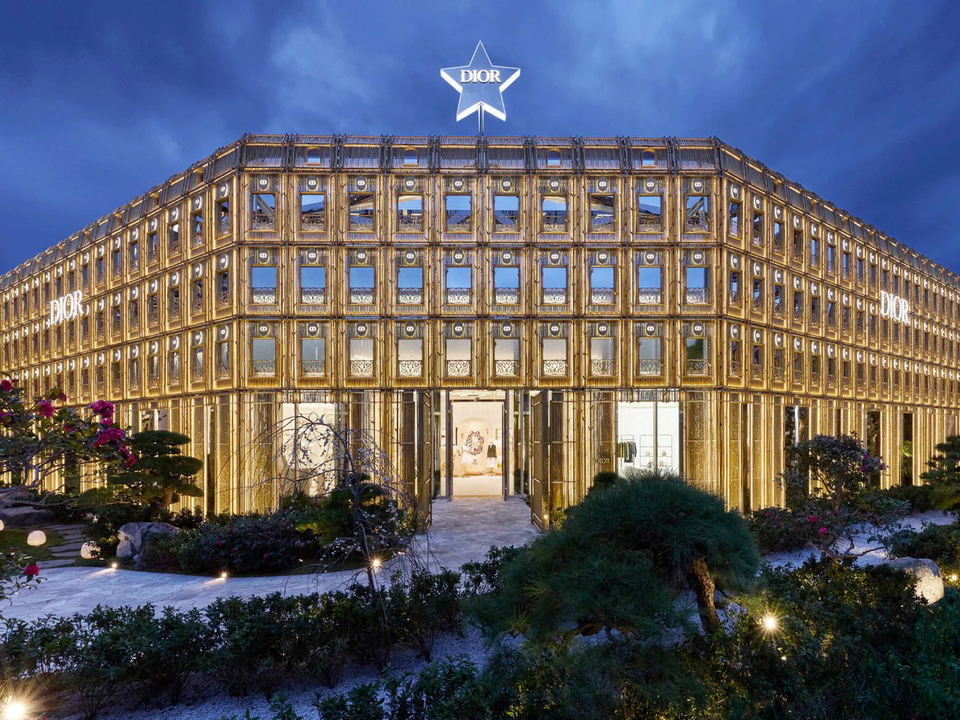
The choice of Daikanyama over Ginza or Omotesando is not incidental. Ginza already has a Café Dior, also overseen by Pic, and it runs at the pace of its surroundings: fast, commercial, shopper-driven. Daikanyama is Tokyo's most design-forward residential neighbourhood, a place where independent bookshops, architecture studios, and considered restaurants coexist at a slower register. Dior read that correctly. The Bamboo Pavilion belongs here in a way it would not belong on Chuo-dori.
At a Glance
Location | Neighbourhood | Pace & Character | Menu Focus | Overseen by Anne-Sophie Pic |
|---|---|---|---|---|
Café Dior, Daikanyama Bamboo Pavilion | Daikanyama, Tokyo | Slow, design-forward, destination dining | Japanese-inflected French menu conceived specifically for this space; matcha, sobacha, dashi | Yes |
Café Dior, Ginza | Ginza, Tokyo | Fast, commercial, shopper-driven | Café Dior format within a luxury retail corridor | Yes |
Inside Café Dior by Anne-Sophie Pic: The Menu and the Vision
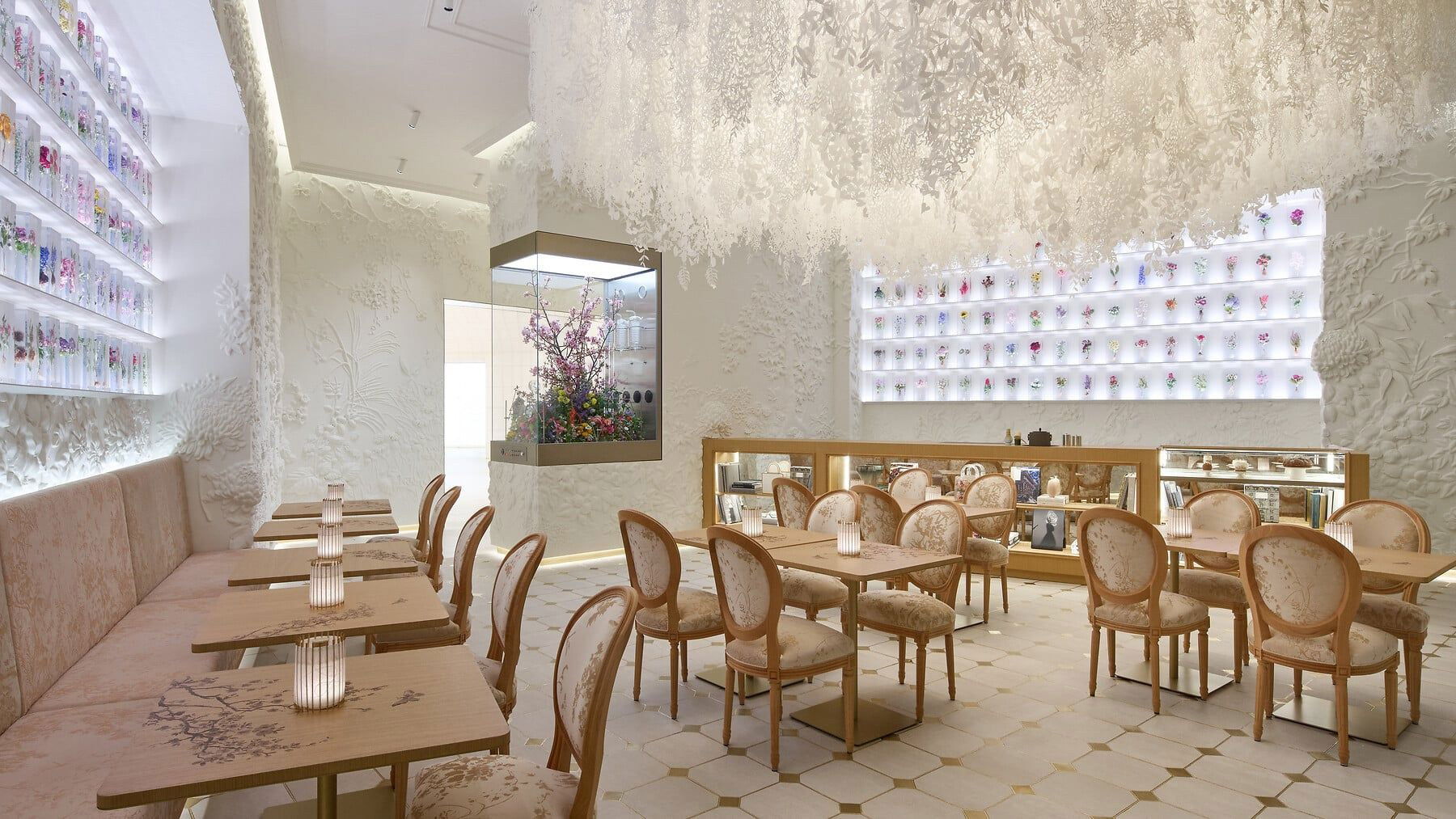
The café occupies the heart of the pavilion, a salon-like room set beneath a paper-cut chandelier created by Japanese artist Ayumi Shibata. The chandelier alone is worth the visit: an intricate suspended structure that shifts the quality of light in the room without announcing itself. It is the kind of detail that separates a designed space from a decorated one.
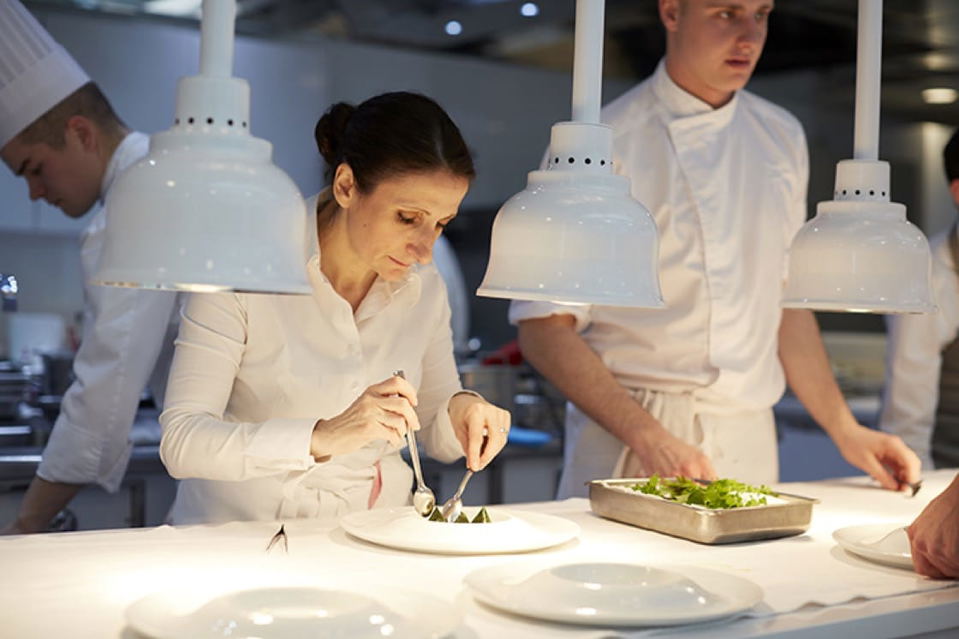
Anne-Sophie Pic is the fourth generation of a culinary lineage from Valence, France, and the first woman in France in half a century to earn three Michelin stars. Her flagship, Maison Pic in Valence, holds that distinction. She is not a chef who licenses her name to hotel lobbies. Her involvement here is substantive: the Daikanyama menu was conceived specifically for this space, shaped by her long relationship with Japanese ingredients and a culinary philosophy she calls suffusion, which builds flavour through marination, infusion, and maceration rather than through heat or reduction alone.
Her connection to Tokyo predates the Dior collaboration by decades. She first came to the city in her twenties as a student, and the experience shaped her cooking in ways that are still visible. The aromatic notes she was drawn to for the Daikanyama menu, matcha, sobacha, dashi, carry a gentle bitterness that she has long folded into her French technique. The result is not fusion in the reductive sense. It is French cooking that has absorbed Japan without being altered by it.
"do not redefine my cuisine, but rather enrich and deepen its French DNA."
Anne-Sophie Pic, Chef1
That restraint is the point. Pic's menu at Café Dior by Anne-Sophie Pic does not perform its Japanese influences. It absorbs them into a logic of nuance, where the French structure holds and the Japanese accents deepen rather than redirect it.
Haute Couture on the Plate: How Dior's Visual Language Becomes Food
The more interesting question about this collaboration is how Dior's couture codes translate into a menu. The answer, in Pic's hands, is more literal than you might expect.
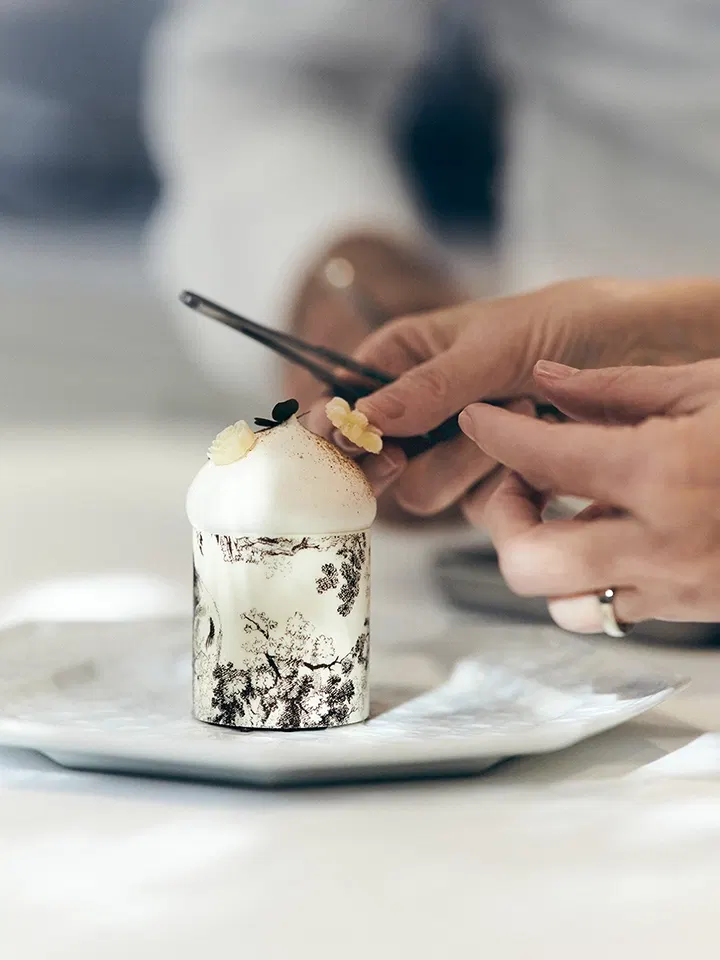
"The codes of the House of Dior are rooted in notions of braiding, pleating and folding, elements intrinsic to haute couture"
Anne-Sophie Pic, Chef2
Construction and volume, the structural principles of a Dior atelier, become the organising logic of the plate. Textures are layered. Cuts are deliberate. The visual presentation carries the same attention to silhouette that a couture house applies to fabric. This is not a metaphor stretched to fill a press release. It is a coherent design brief, and it shows in the food.
The broader context matters here. Luxury fashion houses have been investing in hospitality experiences for years, from Bulgari Hotels to Armani restaurants to Louis Vuitton's Le Café V in Osaka. Most of those projects are competent and forgettable: brand-consistent interiors, menus that do not embarrass the name on the door, nothing that would draw a serious diner on its own terms. Café Dior by Anne-Sophie Pic is a different proposition. Pic's three-Michelin-star credential is not decorative. The menu was built for this specific room, in this specific neighbourhood, by a chef who has been thinking about Tokyo for thirty years.
Daikanyama-Exclusive Desserts and What to Order
Two desserts were created solely for the Daikanyama location and are not available at any other Café Dior globally. If you visit and skip them, you have missed the point of the trip.
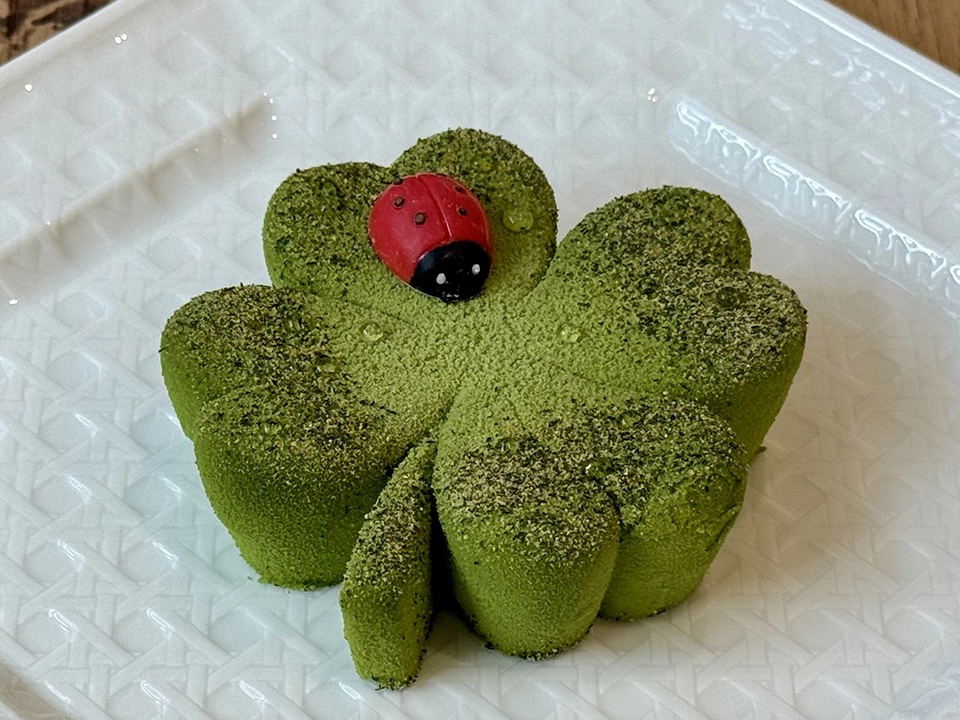
Le Trèfle is a clover-shaped pastry that echoes the Lady Dior Clover bag in its construction. The layers are matcha and tarragon bavaroise, yuzu cream, and pistachio biscuit. The combination reads as a precise exercise in Pic's suffusion philosophy: the matcha bitterness, the tarragon's anise note, the yuzu acidity, and the pistachio base are not competing flavours but a single aromatic argument built in sequence. The clover form is not decorative whimsy. It is the couture logic made edible.
Le Cannage Sucré takes Dior's cannage quilting motif, the pattern on the back of every Lady Dior bag, and reinterprets it as an entremets. The base is sake and rice, layered with vanilla, strawberry, and ginger confit. The sake and rice give it a Japanese structural foundation; the vanilla and strawberry pull it back toward French patisserie. The ginger confit is the suffusion move: an aromatic thread that runs through the other elements without dominating any of them.
Both desserts are available only here. If you are already planning a Tokyo trip and your itinerary includes serious dining, these belong on your list alongside your restaurant reservations. They are not an afterthought to the Dior shopping experience. They are the reason to come.
Practical Details: How to Visit the Dior Bamboo Pavilion Tokyo
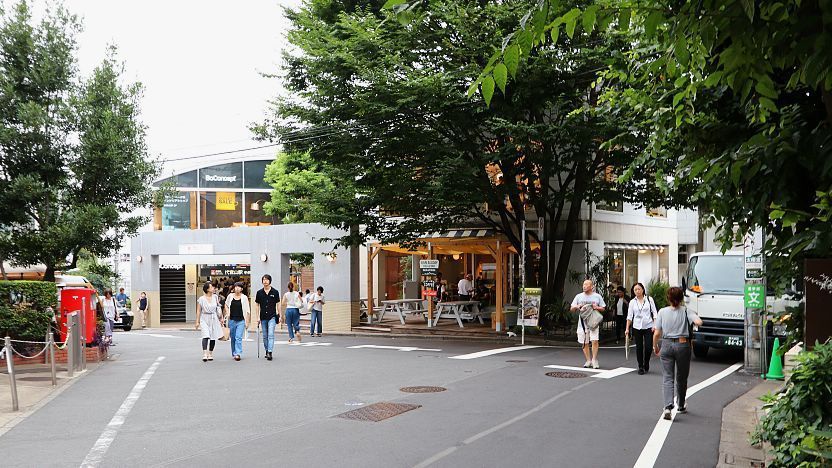
The Dior Bamboo Pavilion is located in Daikanyama, one of Tokyo's most walkable and design-concentrated neighbourhoods. It sits within easy reach of Daikanyama Station on the Tokyu Toyoko Line, and the surrounding streets reward time spent on foot: Tsutaya Books' T-Site complex is nearby, as are several of the neighbourhood's better independent restaurants and galleries. A visit to the pavilion pairs naturally with an afternoon in the area.
Reservations for Café Dior by Anne-Sophie Pic at the Bamboo Pavilion are made online through TableCheck. Given the scale of the space and the level of interest this opening has generated, booking ahead is the only reliable approach. Walk-ins may be possible during quieter periods, but the Daikanyama-exclusive desserts and the Shibata chandelier room are the kind of details that fill seats. Reserve before you travel, not after you arrive.
Dress expectations align with the neighbourhood: Daikanyama runs smart-casual rather than formal, and the café's salon atmosphere suits that register. This is not a white-tablecloth tasting-menu format. It is an afternoon destination, a place to spend two hours rather than two and a half, and the menu is structured accordingly. Come for the desserts, stay for the room, and give yourself enough time to notice the washi paper on the walls and the glass koi in the pond. The details are the experience.
For Pic's broader work, her flagship Maison Pic in Valence remains the three-Michelin-star reference point, and her Ginza café offers a faster-paced counterpart if your Tokyo schedule puts you in that part of the city. But Daikanyama is the more considered of the two Tokyo collaborations, and the exclusive menu makes it the one worth prioritising. As Pic's second Dior project in Tokyo deepens into its first full season, the question is whether the maison will extend the concept further, or whether Daikanyama remains the singular expression of what this collaboration can be at its most deliberate.
Frequently Asked Questions
Where is Café Dior by Anne-Sophie Pic in Tokyo?
Café Dior by Anne-Sophie Pic is located inside the Dior Bamboo Pavilion in Daikanyama, Tokyo, which opened in February. Daikanyama was chosen deliberately over busier commercial districts like Ginza or Omotesando for its slower, design-forward character.
Who is Anne-Sophie Pic and why is she involved with Café Dior?
Anne-Sophie Pic is a fourth-generation chef from Valence, France, and the first woman in France in half a century to hold three Michelin stars at her flagship restaurant, Maison Pic. Her involvement with Café Dior by Anne-Sophie Pic is substantive rather than nominal, she conceived the Daikanyama menu specifically for this space, drawing on a decades-long relationship with Japanese ingredients and her culinary philosophy of suffusion.
What kind of food does Café Dior by Anne-Sophie Pic serve?
The menu is rooted in French technique and shaped by Japanese ingredients such as matcha, sobacha, and dashi, which Pic uses to deepen rather than redirect her cooking's French DNA. Her philosophy of suffusion builds flavour through marination, infusion, and maceration, and the menu also translates Dior's couture codes, braiding, pleating, folding, into plated form.
Is there another Café Dior by Anne-Sophie Pic in Tokyo?
Yes, a Café Dior overseen by Pic also operates in Ginza, Tokyo's main luxury retail corridor. The Ginza location runs at a faster, more commercial pace, whereas the Daikanyama Bamboo Pavilion café is conceived as a more considered, destination-focused dining experience.
What makes the Dior Bamboo Pavilion in Daikanyama different from a typical brand café?
The Bamboo Pavilion is one of only a handful of Dior concept boutiques worldwide, each designed as a self-contained expression of the maison rather than a retail outpost. The interior features washi paper walls embossed with Haussmannian moldings, a suspended glass koi garden, commissions from Japanese artists, and a paper-cut chandelier by Ayumi Shibata, details that place it closer to an art installation than a brand activation.