


Yamaji Yosuke
Kappo, French · Higashiyama, Kyoto
Restaurant in Kyoto, Japan
 Book with Pearl
The Read
Franco-French Counter
Price
¥¥¥
Dress
Smart Casual
Why go
Chef Makoto Okamoto's kappo-French hybrid in Gion holds two consecutive Michelin Plate awards (2024–2025) and offers one of Kyoto's most original menus at ¥¥¥ pricing; one tier below most comparable kaiseki houses. Book this if you want a seasonally rotating, technique-led counter meal rather than a traditional kaiseki ceremony. Booking difficulty is rated Easy.
About Yamaji Yosuke
Verdict: Book It; With the Right Expectations
If you have already eaten at one of Kyoto's formal kaiseki houses and want to understand what happens when a chef deliberately walks away from that tradition, Yamaji Yosuke is the next reservation to make. Chef Makoto Okamoto's kappo-French hybrid is not a compromise between two cuisines; it is an argument for a third thing entirely, on a return visit you will notice how deliberately the menu shifts with the seasons. That evolution is the point. If you want a fixed, ceremonial kaiseki experience, Gion Sasaki or Kikunoi Honten will serve you better. But if you are the kind of diner who wants to track a chef's thinking across visits and seasons, this is one of the more interesting rooms in Kyoto right now.
The Room and the Energy
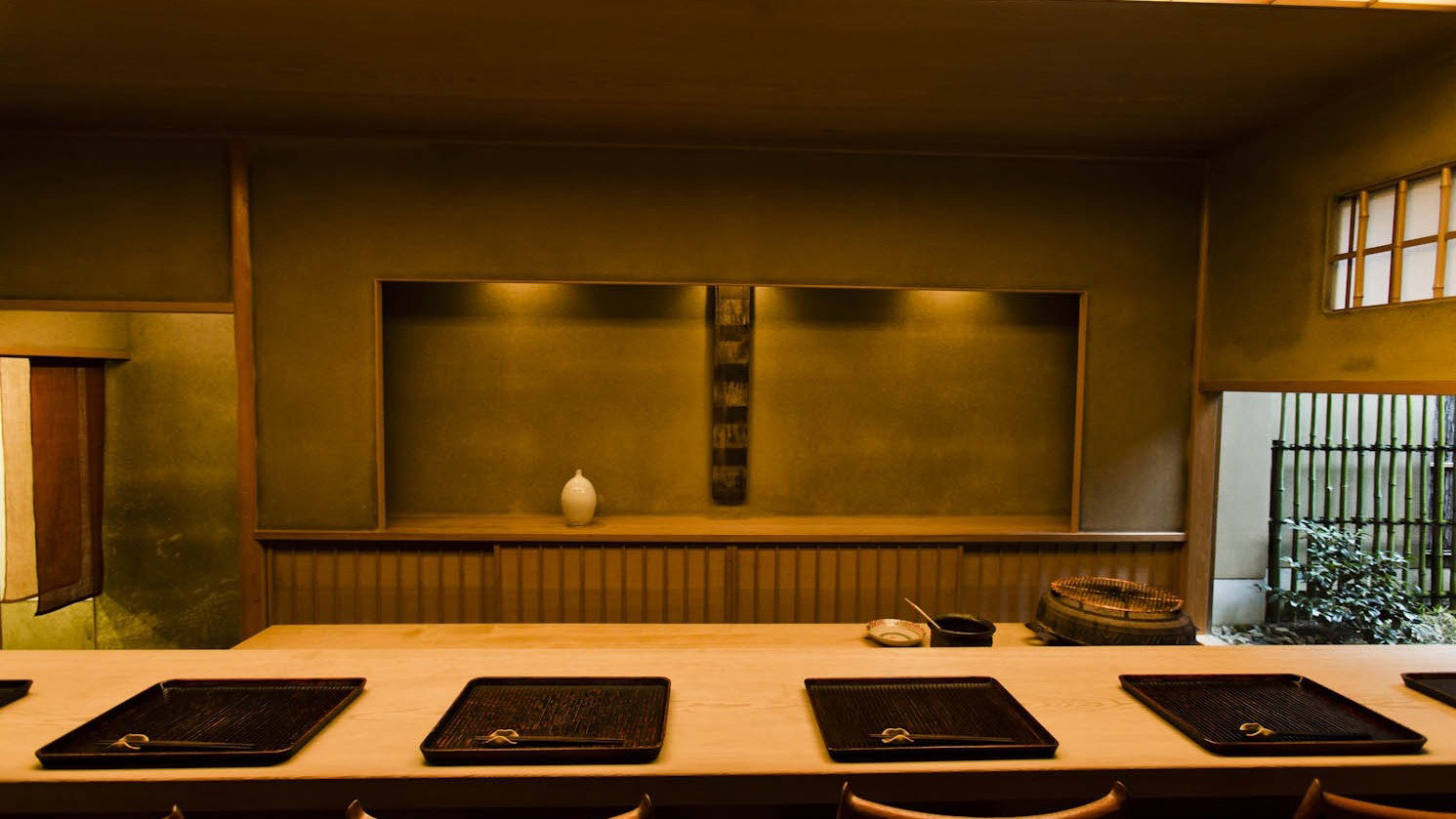
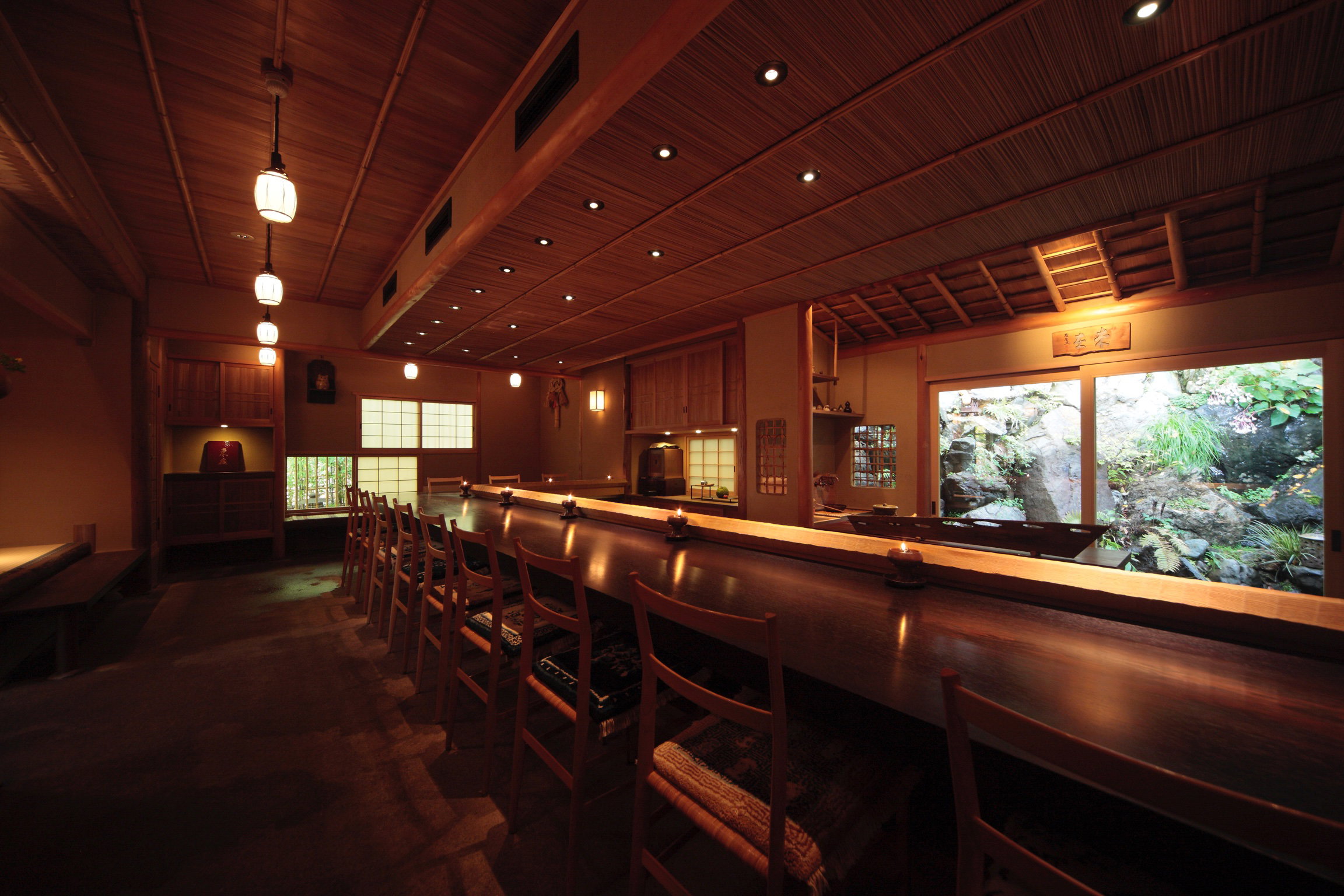
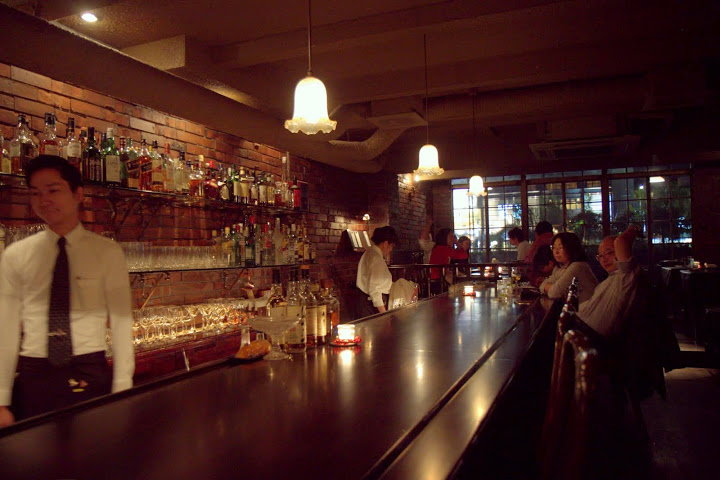
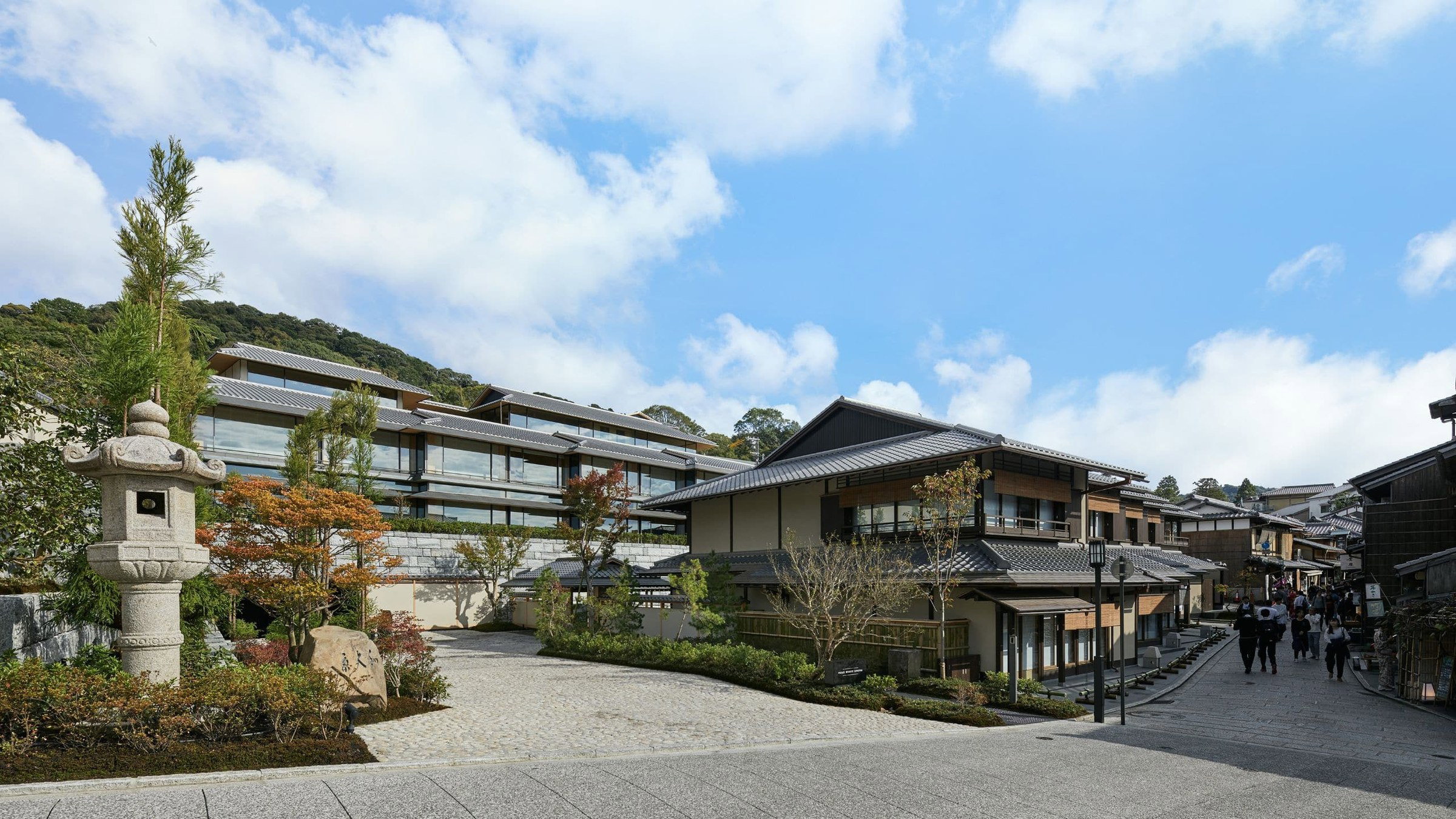
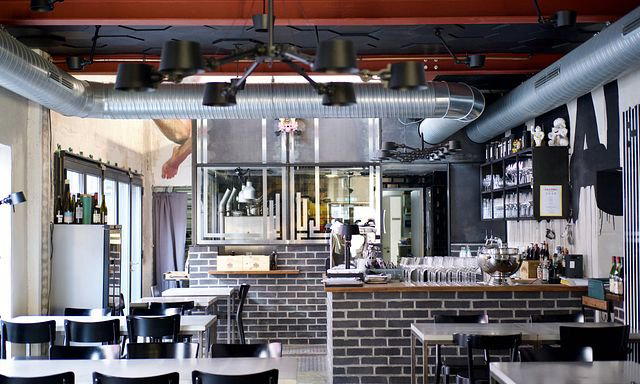
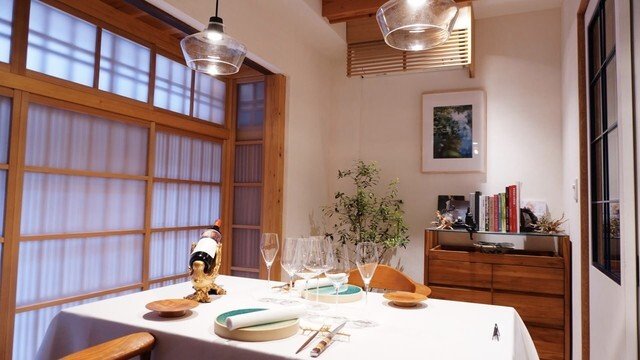
Yamaji Yosuke sits in Gion Minamigawa, one of Kyoto's most composed streetscapes, the room carries the neighbourhood's restraint, quiet without being cold, focused without feeling stiff. This is kappo-format dining, which means the kitchen is present rather than hidden, the energy of the room is closer to a serious counter meal than a multi-room kaiseki progression. The noise level is low enough for conversation at any hour. It is not the place you bring a group looking for a celebratory buzz; it rewards the kind of attention you would bring to a counter seat at Harutaka in Tokyo or HAJIME in Osaka.
The Menu: Seasonal Rotation Is the Core Logic
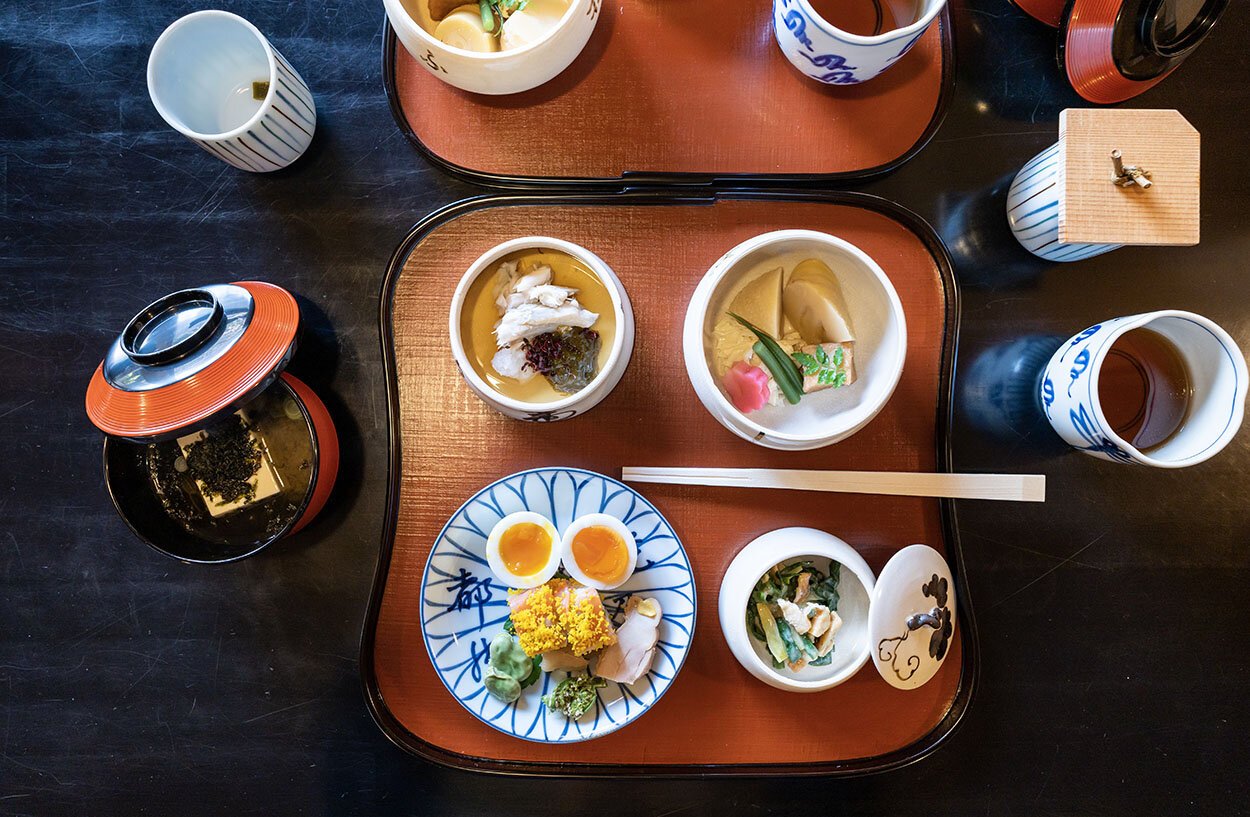
Okamoto trained in France, the cross-cultural foundation of the menu is not decorative, it is structural. The Michelin Plate recognition in both 2024 and 2025 reflects consistent execution, not a one-season spike. The detail that most clearly signals how this kitchen operates: the squid carbonara on the menu originated as a co-creation with a Parisian chef, carried back to Kyoto and made part of a menu that also moves with Japanese seasonal logic. That pairing, French technique meeting Japanese seasonal discipline, means the menu you eat in spring will read differently from the one in autumn.
For the explorer-type diner, this seasonal rotation is the primary reason to plan a return visit or to time your first one carefully. Kyoto's kappo tradition already runs on seasonality, ingredients sourced to the month, presentations that shift with the culinary calendar. Okamoto adds a French layer on leading: sauces, preparations, combinations that borrow from his apprenticeship abroad and from relationships with chefs in Italy, the Middle East, China. The result is a menu with more reference points than most rooms in its price tier, one that rewards diners who come with some knowledge of both traditions. For comparable fusion ambition at a different register, akordu in Nara is worth knowing about, though the context there is Basque-Japanese rather than French-kappo.
Signature dishes are not confirmed in our database, the menu rotates, but the squid carbonara has been documented as a recurring reference point. Do not arrive with a fixed list of dishes you expect to find; this kitchen does not work that way, that is a feature rather than a limitation.
Booking and Logistics
Booking difficulty is rated Easy, which is notable for a Michelin-recognised address in Gion. A week's notice should be sufficient for most dates, though weekend dinner slots will move faster. The restaurant operates both lunch and dinner services every day of the week, lunch runs 12–3 pm across all seven days, dinner runs 6–10 pm Monday through Friday and Sunday, 7–10 pm on Saturday. No phone or booking URL is confirmed in our current data; approach through walk-in enquiry or via your hotel concierge if you cannot find an online reservation channel.
Price is marked ¥¥¥ on a five-tier scale, placing it below the ¥¥¥¥ tier occupied by most of the established kaiseki houses nearby. For comparable French-Japanese ambition at a higher price point, SEN in Kyoto operates at ¥¥¥¥ and offers a different angle on the same intersection. Yamaji Yosuke's value case is direct: you get Michelin-level consistency and a genuinely original culinary position at a price point that sits one tier below the city's leading kaiseki rooms.
Practical Comparison
| Venue | Cuisine | Price | Booking Difficulty | Michelin Recognition |
|---|---|---|---|---|
| Yamaji Yosuke | Kappo, French | ¥¥¥ | Easy | Plate (2024, 2025) |
| Gion Sasaki | Kaiseki, Japanese | ¥¥¥¥ | Hard | Multiple Stars |
| Ifuki | Kaiseki | ¥¥¥¥ | Hard | Starred |
| cenci | Italian | ¥¥¥ | Moderate | Starred |
| SEN | French, Japanese | ¥¥¥¥ | Moderate | Recognized |
Where Yamaji Yosuke Sits in the Kyoto Picture
For most visitors working through our full Kyoto restaurants guide, Yamaji Yosuke belongs on the list alongside rather than instead of the kaiseki canon. The city's formal kaiseki rooms, Hyotei, Mizai, Isshisoden Nakamura, offer a different kind of experience: more ceremonial, more deeply rooted in a single tradition, considerably harder to book. Yamaji Yosuke is the room you add when you want to understand what a chef does when he decides to write his own rules rather than inherit someone else's. The fact that he named the restaurant after himself is not incidental, it is a statement of intent, the menu backs it up. If you are travelling beyond Kyoto, similar creative ambition at the fusion register appears at Goh in Fukuoka and, at the other end of the spectrum in terms of scale and price, at Le Bernardin in New York City for French technique at its most rigorous. The Kyoto hotels guide, bars guide, and experiences guide cover the rest of your trip.
Planning details
- Hours
- Monday: 12–3 pm, 6–10 pm · Tuesday: 12–3 pm, 6–10 pm
- Location
- 570-151 Gionmachi Minamigawa, Higashiyama Ward, Kyoto, 605-0074, Japan
- Website
- yosukeyamaji.com
- Phone
- +81 75-561-8001
The take
The Take
The Vibe
Yamaji Yosuke sits quietly within Gion's historic streets, where machiya facades and lantern-lit lanes set an unmistakable tone. The restaurant channels that neighbourhood character into an intimate kappo counter: seating is arranged for direct exchange between chef and diner, and the open kitchen keeps the choreography of service in full view. Rather than leaning on kaiseki ritual, the kitchen pursues a cross-cultural, disciplined sequence of courses that reads as a thoughtful argument. The result feels both rooted in Kyoto's tradition and quietly cosmopolitan—a refined, close-quarters experience for diners who value technique and attention to detail.
Best For
This is a destination for diners who want a focused tasting experience at dinner. Priced at the ¥¥¥ tier and organized around a deliberate progression of courses, Yamaji Yosuke suits date nights and small special occasions where the exchange with the chef is central to the meal. The counter format rewards attentive guests who enjoy watching preparation and responding course by course; it is less of a banquet spot and more for those seeking a composed, multi-course dialogue in a compact, refined setting.
Ordering Tips
Embrace the kappo format and allow the tasting progression to unfold: courses arrive as they are ready and the rhythm is shaped by the kitchen. Seating at the counter is the essence of the experience—sit close to the action to appreciate technique and the subtle shifts in flavour across the sequence. Given the restaurant's emphasis on sequence over a fixed kaiseki template, trust the chef's flow rather than trying to impose a rigid order; attentive diners will be rewarded by the layered, cross-cultural references in each course.
Venue details
Ambiance
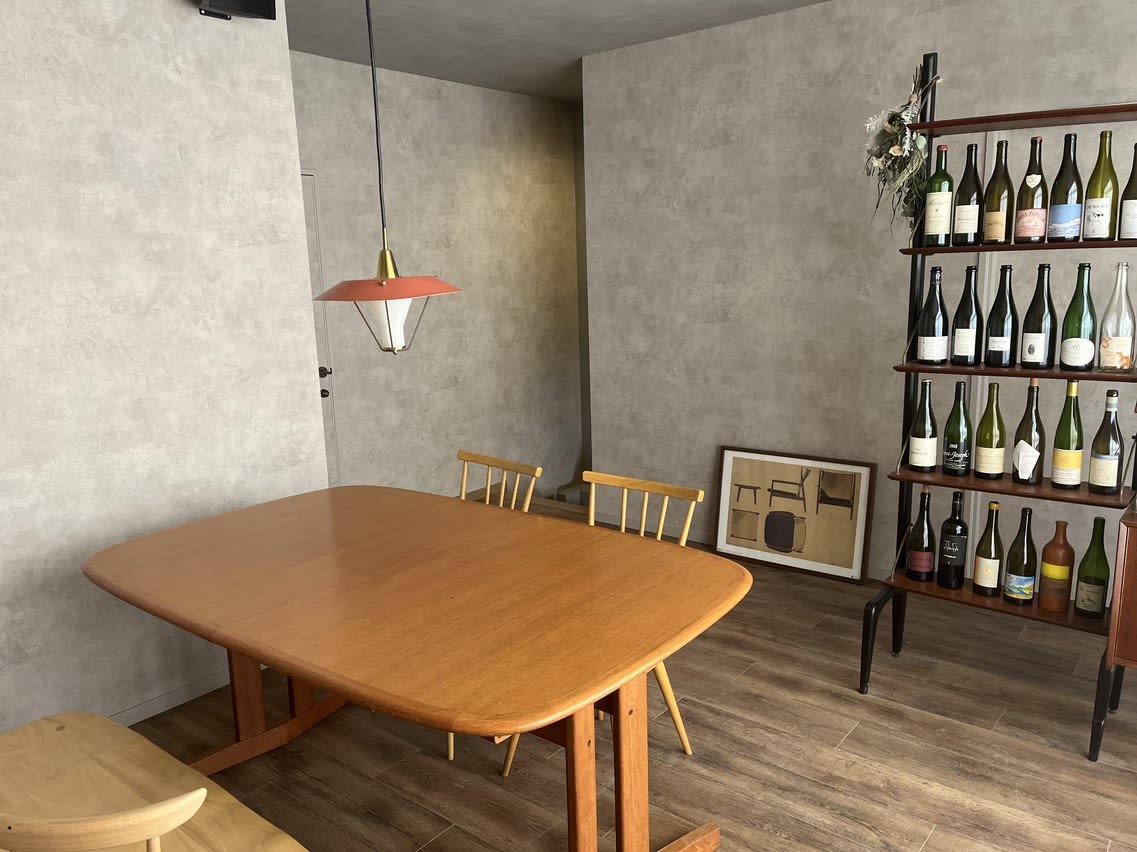
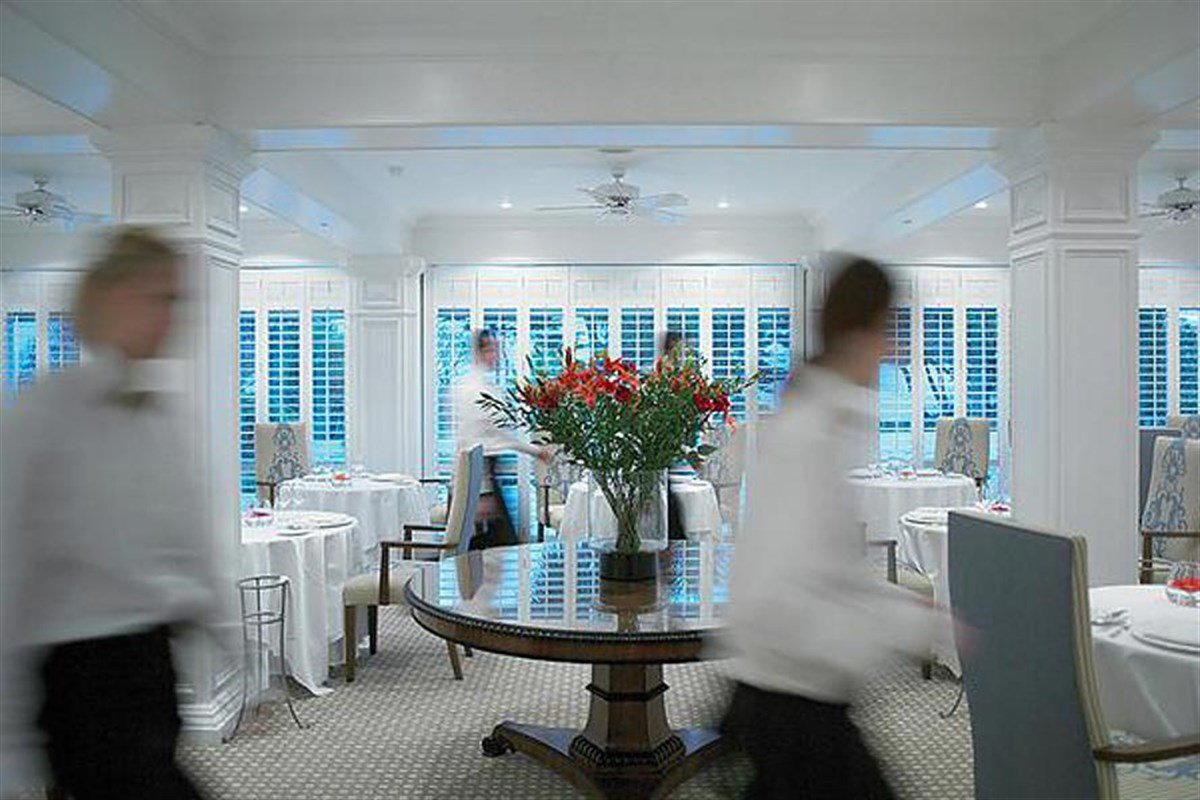
Bright, airy, and set in a renovated Kyoto machiya with a serene Gion atmosphere.
Tags
Vibe
Best For
Experience
Sourcing
At the Table
- Dress Code
- Smart Casual
- Service Style
- Formal
- Meal Pacing
- Leisurely
- Capacity
- Small
Planning details
Hours
- Monday
- 12–3 pm, 6–10 pm
- Tuesday
- 12–3 pm, 6–10 pm
- Wednesday
- 12–3 pm, 6–10 pm
- Thursday
- 12–3 pm, 6–10 pm
- Friday
- 12–3 pm, 6–10 pm
- Saturday
- 12–3 pm, 7–10 pm
- Sunday
- 12–3 pm, 6–10 pm
Location
570-151 Gionmachi Minamigawa, Higashiyama Ward, Kyoto, 605-0074, Japan · Directions

Also consider
Also Consider
- Gion Sasaki; Kaiseki, Japanese, ¥¥¥¥
- cenci; Italian, ¥¥¥
- Ifuki; Kaiseki, ¥¥¥¥
- Kyokaiseki Kichisen; Japanese, ¥¥¥¥
- SEN; French, Japanese, ¥¥¥¥
Restaurant context
If you are deciding between Yamaji Yosuke and Kyoto's established kaiseki rooms, the clearest split is price and format. Gion Sasaki and Ifuki both operate at ¥¥¥¥ with starred Michelin recognition and offer the full ceremonial kaiseki progression; multiple courses, private rooms, a level of service polish that Yamaji Yosuke does not attempt to match. They are harder to book and significantly more expensive. If ceremony and deep kaiseki tradition are what you want from a Kyoto meal, either of those rooms outranks Yamaji Yosuke on those specific terms. Kyokaiseki Kichisen operates at the same ¥¥¥¥ tier and is among the most formal kaiseki addresses in the city; a different level of commitment entirely.
For diners choosing between Yamaji Yosuke and cenci, the comparison is more interesting. Both sit at ¥¥¥, both carry Michelin recognition, both represent a non-Japanese culinary tradition interpreted through a Kyoto lens. cenci's approach is Italian-Japanese; Okamoto's is French-kappo. cenci is starred where Yamaji Yosuke holds a Plate, so on raw Michelin terms cenci has the edge. But the format differs meaningfully; Yamaji Yosuke's kappo structure gives you direct kitchen access and a more informal counter rhythm that cenci's Italian-inflected room does not offer.
SEN is the most direct conceptual peer; French-Japanese cooking at a Kyoto address; but it operates at ¥¥¥¥, making Yamaji Yosuke the lower-cost entry point for the same broad creative territory. If French technique in a Japanese context is your specific interest and budget is flexible, SEN is worth the premium. If you want to maximise the originality-to-cost ratio and are comfortable with Plate rather than Star recognition, Yamaji Yosuke is the sharper choice.
Explore Kyoto
Around this place
Discover more on Pearl
Unlock the full Yamaji Yosuke guide in Pearl, including awards, comparisons, FAQs, planning details, and nearby places.
Compare Yamaji Yosuke
| Venue | Cuisine | Price | Booking Difficulty | Awards |
|---|---|---|---|---|
| Yamaji Yosuke | Kappo, French | ¥¥¥ | Easy | 2026 OAD Top Restaurants in Japan RecommendedMichelin Guide Kyoto Osaka 20262026 Michelin PlateTabelog 100 - French - WEST - 2025 · #322025 Michelin Plate2024 Michelin Plate |
| Gion Sasaki | Kaiseki, Japanese | ¥¥¥¥ | Unknown | 2026 Tabelog Bronze · #3862026 OAD Top Restaurants in Japan RecommendedMichelin Guide Kyoto Osaka 20262026 La Liste Top RestaurantsTabelog 100 - Japanese cuisine - WEST - 2025 · #132025 OAD Top Restaurants in Japan Ranked · #2462025 Tabelog Silver2025 Michelin 3 Stars2025 La Liste Top Restaurants |
| cenci | Italian | ¥¥¥ | Unknown | 2026 Tabelog Bronze · #442026 Asia's 50 Best Restaurants · #762026 OAD Top Restaurants in Japan Highly RecommendedMichelin Guide Kyoto Osaka 2026Tabelog 100 - Italian - WEST - 2025 · #632025 Asia's 50 Best Restaurants · #632025 OAD Top Restaurants in Japan Ranked · #1682025 Tabelog Bronze2024 OAD Top Restaurants in Japan Ranked · #135 |
| Ifuki | Kaiseki | ¥¥¥¥ | Unknown | 2026 OAD Top Restaurants in Japan Ranked · #1222026 Tabelog Bronze · #128Michelin Guide Kyoto Osaka 20262026 La Liste Top RestaurantsTabelog 100 - Japanese cuisine - WEST - 2025 · #622025 OAD Top Restaurants in Japan Ranked · #1002025 La Liste Top Restaurants2025 Tabelog Bronze2025 Michelin 2 Stars |
| Kyokaiseki Kichisen | Japanese | ¥¥¥¥ | Unknown | 2026 Tabelog Bronze · #1752026 OAD Top Restaurants in Japan Highly RecommendedMichelin Guide Kyoto Osaka 20262025 OAD Top Restaurants in Japan Ranked · #1862025 Michelin 2 Stars2025 La Liste Top Restaurants2024 OAD Top Restaurants in Japan Ranked · #1422024 Michelin 2 Stars2023 OAD Top Restaurants in Japan Ranked · #136 |
| SEN | French, Japanese | ¥¥¥¥ | Unknown | 2026 Tabelog Bronze · #3952026 OAD Top Restaurants in Japan RecommendedMichelin Guide Kyoto Osaka 20262026 Michelin PlateTabelog 100 - Japanese cuisine - WEST - 2025 · #652025 Michelin Plate2025 Tabelog Bronze2024 OAD Top Restaurants in Japan Ranked · #3622024 Michelin Plate |
.png?width=1200&quality=80)




What to weigh when choosing between Yamaji Yosuke and alternatives.
FAQ
Frequently Asked Questions
Is lunch or dinner better at Yamaji Yosuke?
Lunch is the practical choice if you are managing a packed Kyoto itinerary; service runs 12–3 pm daily and booking is rated Easy, so you are unlikely to lose the slot. Dinner runs later on Saturdays (7–10 pm vs. 6–10 pm on other nights), which may suit a slower evening in Gion. The menu format, rooted in Okamoto's kappo-meets-French approach, does not appear to differ structurally between services, so choose based on your schedule rather than any quality gap.
What should I wear to Yamaji Yosuke?
Yamaji Yosuke sits in Gion Minamigawa, a neighbourhood where people tend to dress with some care, the room carries that same restrained tone. There is no dress code documented in the venue record, but given the Michelin Plate recognition and the setting, presentable casual; no activewear or beachwear; is the sensible baseline. If you are coming straight from temple-hopping, a quick change is worth the effort.
How far ahead should I book Yamaji Yosuke?
Booking difficulty is rated Easy for a Michelin-recognised address in Gion, which is genuinely unusual. A week's notice should cover most dates, though popular Saturday dinner slots (7–10 pm) are worth securing earlier. If you are visiting during peak Kyoto seasons; late March through April for cherry blossom, or November for autumn colour; add buffer time regardless of the general ease rating.
Can I eat at the bar at Yamaji Yosuke?
The venue record does not specify bar or counter seating. Kappo as a format traditionally involves counter dining where the chef works in front of guests, Okamoto's background makes that format plausible here; but confirming directly with the restaurant before you book is advisable, since seating configurations are not documented in available data.
Is the tasting menu worth it at Yamaji Yosuke?
At ¥¥¥ with two consecutive Michelin Plate recognitions (2024 and 2025), the price-to-credential ratio is reasonable by Kyoto fine dining standards. Okamoto's French apprenticeship is structural to the menu, not decorative; cross-cultural influences from Italy, the Middle East, China inform the cooking alongside the French foundation. If you want a single format that covers that range without switching restaurants, the answer is yes. If you are specifically chasing kaiseki tradition, Kyokaiseki Kichisen is the more direct route.
Is Yamaji Yosuke worth the price?
At ¥¥¥, Yamaji Yosuke sits in the same price bracket as other serious Kyoto dining rooms but delivers a format you will not find at the kaiseki houses: a chef-named, personally assertive restaurant where French technique and kappo discipline are treated as equally valid foundations. The Michelin Plate in both 2024 and 2025 gives independent validation without the full-star premium. Worth it if cross-cultural precision cooking interests you; less so if you came to Kyoto purely for kaiseki, where Kichisen or Gion Sasaki are more on-format.