

en
Japanese · Minami, Kyoto
Restaurant in Kyoto, Japan
The Read
Single-Turn Counter Precision
Price
¥¥¥
Dress
Smart Casual
Why go
En is a Tabelog Bronze Award winner (2019–2026) and Michelin Plate recipient in Kyoto's Minami Ward, with an eight-seat counter running a single-turn sushi omakase at JPY 30,000–39,999 per head. Consistent critical recognition across the Tabelog Sushi WEST Top 100 makes it the right call for a special occasion sushi dinner in Kyoto when counter format matters more to you than kaiseki tradition.
About en
Should You Book en?
If you are choosing between en and a kaiseki counter in Kyoto for a special occasion dinner, book en; with one important condition: you need to be comfortable spending JPY 30,000–39,999 per head at a sushi counter in the Minami Ward rather than the city's more expected fine-dining corridors. For that price you get a Michelin Plate recipient with a Tabelog score of 4.12, eight counter seats, a one-turn format that gives the meal room to breathe, a track record of Tabelog Bronze Awards every year from 2019 through 2026, plus a Silver in 2020. That is a consistent credential set that justifies the fare for any serious sushi dinner in western Japan.
The Room and the Format
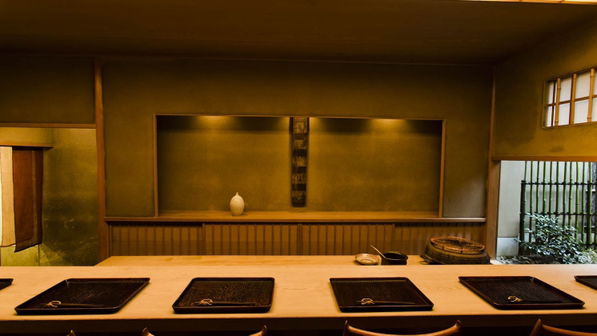
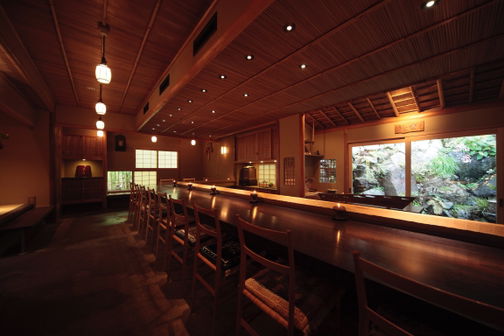
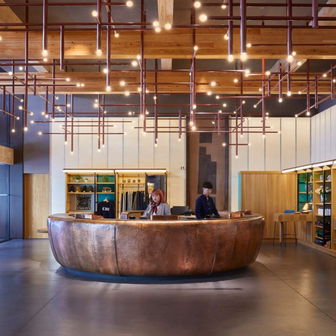
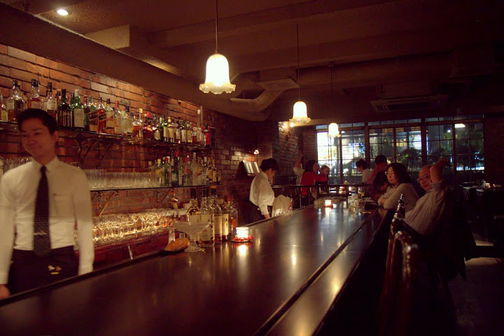
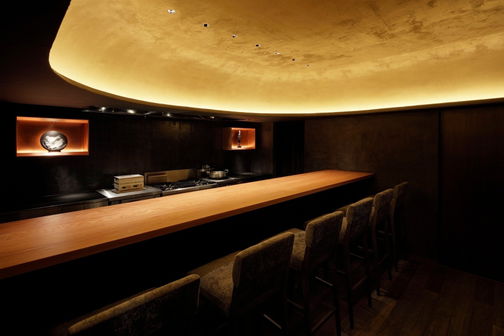
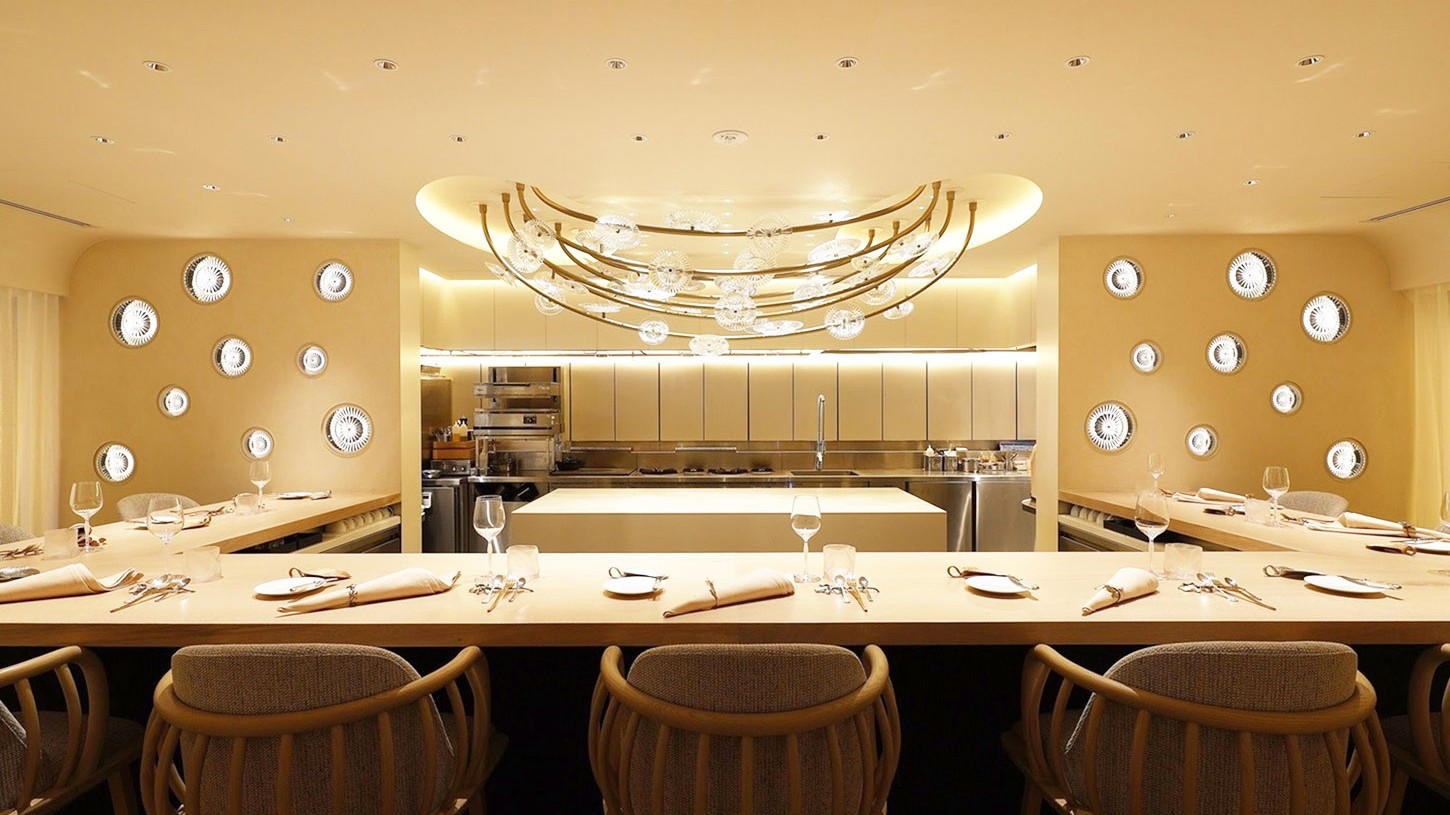
En seats exactly eight people at a counter, that number matters more than it might seem. Since switching from a two-turn to a one-turn system after a recent renewal opening, the kitchen is no longer racing a second seating. The pace of service at an eight-seat, one-turn sushi counter is fundamentally different from a busier operation: courses arrive without the low-grade urgency that can compress a long omakase into something closer to a production line. The room is described as stylish and relaxing, with counter seating as the only configuration. There are no private rooms, which keeps the atmosphere uniform. If you are booking for a celebration, the format suits two diners well; the counter also works for solo dining, the occasion notes from Tabelog reviewers specifically flag solo dining and small groups of friends as the appropriate lens.
The name en means 'swallow,' a bird associated in Japan with good fortune and the return home after long travel. The restaurant's identity is built around that idea: a chef who lived abroad, spread knowledge of Japanese culinary tradition internationally, returned to Kyoto to cook. The menu reflects that biography; broad in scope, with some dishes incorporating Western elements alongside the sushi core. You are not booking a purist edo-mae counter. You are booking something with more range, which makes it a better fit for diners who want a complete evening rather than strict technical repetition.
The Award Record
En has been selected for the Tabelog Sushi WEST Top 100 in 2021, 2022, 2025, which puts it in the top tier of sushi restaurants across western Japan, a competitive field that includes Osaka, Kobe, Kyoto simultaneously. The Bronze Awards are consistent across eight consecutive years, with a Silver in 2020 marking the high point. A Michelin Plate recognition in 2025 adds a second credentialing layer. For context, Tabelog Bronze at a score of 4.12–4.13 in the sushi category in a market as deep as western Japan is a meaningful signal, not a consolation prize. Comparable sushi counters with that profile in Tokyo, such as Harutaka in Tokyo, operate at similar or higher price points with comparable booking difficulty.
Pricing and What Has Changed
Dinner runs JPY 30,000–39,999, though the venue's own notes flag that prices increased by JPY 5,000–7,000 after the renewal opening and the shift to a one-turn system. There is no service charge. Credit cards (Visa, Mastercard) are accepted; electronic money and QR payments are not. Budget accordingly: this is a cash-adjacent situation if you are not carrying a major card. Sake and shochu are available; the drinks list is tight rather than encyclopaedic, which is standard for a counter of this size.
Booking en
Reservations are available and booking difficulty is classified as easy relative to Kyoto's most competitive tables. Given the eight-seat counter and one-turn format, availability is genuinely limited in absolute terms, but en does not have the months-long queue of a Michelin two-star kaiseki room. Book two to three weeks ahead for a standard weekday slot. For Friday or Saturday evenings, or during Kyoto's peak seasons (late March to early May for cherry blossom, October to November for autumn foliage), extend that window to four to six weeks. The restaurant is closed Mondays; hours start from 18:00. Confirm hours directly before visiting, as the Tabelog listing notes they may change. There is no parking on-site.
Who Should Book
En works well as a special occasion dinner for two, or for a solo diner who wants a full counter experience with range beyond strict omakase convention. The Western-influenced elements in the menu give it an advantage over pure-form counters for diners who want something with more architectural variety across the progression of courses. If you are comparing it against Kyoto's kaiseki tier, venues like Kyokaiseki Kichisen or Kodaiji Jugyuan, en is the right call when sushi is your preferred format and you want a counter that earns its price through sustained critical recognition rather than ambiance or heritage positioning. For group dinners of more than four, the eight-seat counter means you could take the entire room on a private-use basis, which the venue permits, worth asking about when booking.
For broader planning around your Kyoto visit, see our full Kyoto restaurants guide, our full Kyoto hotels guide, and our full Kyoto bars guide. If you are building a multi-city itinerary, HAJIME in Osaka, akordu in Nara, and Goh in Fukuoka cover the broader Kansai and Kyushu end of the spectrum. For other Kyoto counter and kaiseki options worth considering alongside en, Gion Matayoshi, Kikunoi Roan, and Isshisoden Nakamura are the relevant comparisons at similar or adjacent price tiers.
Planning details
- Location
- Japan, 〒601-8003 Kyoto, Minami Ward, Higashikujo Nishisannocho, 15−2
- Website
- tabelog.com/en/okayama/A3301/A330101/33001952
- Phone
- +81 75-691-8155
The take
The Take
The Vibe
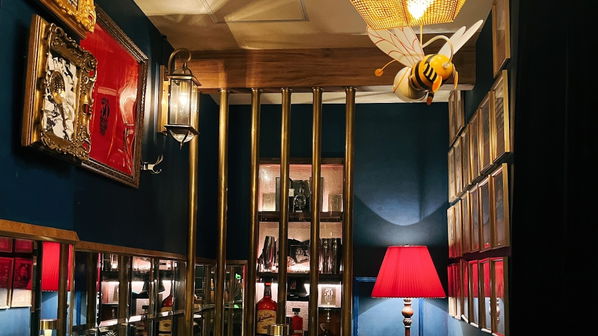
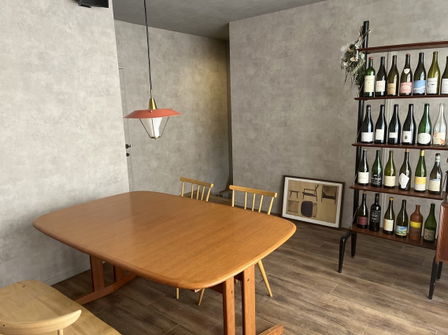
En presents as a restrained, low-key omakase counter that favors quiet intensity over spectacle. The compact eight-seat counter focuses attention on the chef and the sequence of courses, and the room’s clean materials, careful proportions and absence of visual noise emphasize a minimalist aesthetic. Situated in a residential pocket of Minami Ward away from tourist corridors, the restaurant reads like a hidden gem: unassuming from the street yet precise and deliberate inside. The overall effect is intimate and contemplative, a place built for close observation of technique and seasonal ingredients rather than bustling conversation.
Best For
This is a dinner-focused omakase best suited to intimate, special-occasion outings. The restaurant operates a single nightly seating and offers only the counter, which concentrates service into a single, extended meal; that structure skews the experience toward committed dinners rather than casual drop-ins. With limited seating and a deliberate tasting structure, it appeals to diners seeking a focused, ceremonial meal—couples on a quiet date night or food-minded guests looking for a concentrated encounter with a chef’s craft.
Ordering Tips
Expect a single nightly seating at an eight-seat counter: availability is inherently limited and the format leaves no private rooms or alternative seatings. The recent change to one seating per night also increased the per-person price by JPY 5,000–7,000, so plan for a higher-cost tasting. Given the confined capacity and the restaurant’s low-key location, book well in advance and prepare for the full omakase progression rather than à la carte options. Arrive prepared to take the seat at the counter and to remain for the entire service.
Planning details
Location
Japan, 〒601-8003 Kyoto, Minami Ward, Higashikujo Nishisannocho, 15−2 · Directions
Recognition and awards


Also consider
Also Consider
- Gion Sasaki; Kaiseki, Japanese, ¥¥¥¥
- cenci; Italian, ¥¥¥
- Ifuki; Kaiseki, ¥¥¥¥
- Kyokaiseki Kichisen; Japanese, ¥¥¥¥
- Kyo Seika; Chinese, ¥¥¥
Restaurant context
En sits at ¥¥¥ against a Kyoto fine-dining field dominated by ¥¥¥¥ kaiseki. That price gap is the first decision point. If your priority is Kyoto's classic kaiseki progression; the slow arc of seasonal courses in a room built for ceremony; Gion Sasaki and Ifuki both operate at ¥¥¥¥ and deliver that format with more institutional weight. Kyokaiseki Kichisen is the most prestigious option in Kyoto's kaiseki tier and comes with a substantially harder booking window to match. En is the better choice when you want counter sushi with a sustained award record and do not want to absorb the full ¥¥¥¥ outlay.
Against the two ¥¥¥ options in the comparison set, en and cenci occupy very different positions. Cenci is Italian-influenced with a Kyoto ingredient lens; a good call for a diner who wants something outside Japanese formats entirely. Kyo Seika covers the Chinese end at the same price tier. En is the only sushi counter in this group with a multi-year Tabelog Top 100 Sushi WEST credential, which makes it the default recommendation if sushi is your format and you are not ready to move up to ¥¥¥¥.
On booking difficulty, en is classified as easy relative to Kyoto's most competitive tables; meaningfully easier than Kyokaiseki Kichisen or Gion Sasaki during peak seasons. That accessibility, combined with the eight-seat one-turn counter and the price point, makes en the practical first choice for a special occasion sushi dinner in Kyoto where the planning window is shorter than a month.
Explore Kyoto
Around this place
Discover more on Pearl
Unlock the full en guide in Pearl, including awards, comparisons, FAQs, planning details, and nearby places.
Compare en
| Venue | Price | Booking Difficulty | Awards |
|---|---|---|---|
| en | ¥¥¥ | Easy | 2026 Tabelog Bronze · #61Michelin Guide Kyoto Osaka 20262026 Michelin PlateTabelog 100 - Sushi - WEST - 2025 · #552025 Michelin Plate2025 Tabelog Bronze |
| Gion Sasaki | ¥¥¥¥ | Unknown | 2026 Tabelog Bronze · #3862026 OAD Top Restaurants in Japan RecommendedMichelin Guide Kyoto Osaka 20262026 La Liste Top RestaurantsTabelog 100 - Japanese cuisine - WEST - 2025 · #132025 OAD Top Restaurants in Japan Ranked · #2462025 Tabelog Silver2025 Michelin 3 Stars2025 La Liste Top Restaurants |
| cenci | ¥¥¥ | Unknown | 2026 Tabelog Bronze · #442026 Asia's 50 Best Restaurants · #762026 OAD Top Restaurants in Japan Highly RecommendedMichelin Guide Kyoto Osaka 2026Tabelog 100 - Italian - WEST - 2025 · #632025 Asia's 50 Best Restaurants · #632025 OAD Top Restaurants in Japan Ranked · #1682025 Tabelog Bronze2024 OAD Top Restaurants in Japan Ranked · #135 |
| Ifuki | ¥¥¥¥ | Unknown | 2026 OAD Top Restaurants in Japan Ranked · #1222026 Tabelog Bronze · #128Michelin Guide Kyoto Osaka 20262026 La Liste Top RestaurantsTabelog 100 - Japanese cuisine - WEST - 2025 · #622025 OAD Top Restaurants in Japan Ranked · #1002025 La Liste Top Restaurants2025 Tabelog Bronze2025 Michelin 2 Stars |
| Kyokaiseki Kichisen | ¥¥¥¥ | Unknown | 2026 Tabelog Bronze · #175Michelin Guide Kyoto Osaka 20262025 OAD Top Restaurants in Japan Ranked · #1862025 Michelin 2 Stars2025 La Liste Top Restaurants2024 OAD Top Restaurants in Japan Ranked · #1422024 Michelin 2 Stars2023 OAD Top Restaurants in Japan Ranked · #136 |
| Kyo Seika | ¥¥¥ | Unknown | Tabelog 100 - Chinese cuisine - WEST - 2026 · #762026 Tabelog Bronze · #2162026 OAD Top Restaurants in Japan Recommended2026 Michelin 1 Star2025 OAD Top Restaurants in Japan Ranked · #3262025 Tabelog Bronze2024 OAD Top Restaurants in Japan Ranked · #3042024 Michelin Plate2024 Michelin 1 Star |


.png?width=1200&quality=80)






Key differences to consider before you reserve.
FAQ
Frequently Asked Questions
Is the tasting menu worth it at en?
Yes, for diners who want range beyond strict omakase conventions. En holds Tabelog Top 100 status in Sushi WEST (2021, 2022, 2025) and a Tabelog Bronze Award consecutively since 2019, which puts it well above average for a JPY 30,000–39,999 dinner in its city. The format suits those who appreciate a chef-led menu that draws on Western elements alongside Japanese technique; if you want a purely traditional Edo-style progression, a more orthodox counter may be a better fit.
How far ahead should I book en?
Book as early as your schedule allows. The counter seats only eight and operates one turn per evening since switching away from the two-turn format, which means every seat on every night is finite. Booking difficulty is rated as relatively manageable compared to Kyoto's hardest-to-access tables, but that can change; confirm hours and availability directly with the restaurant before travelling, as hours and closed days are noted to vary.
What should I order at en?
En operates a chef-led menu, so ordering is not the relevant decision here; the format is set. What you should know before booking is that the menu is described as broad in scope, including dishes that incorporate Western elements, the kitchen emphasises quality sourcing of fish. If you want strict à la carte or the ability to build your own meal, this is not the right counter.
What are alternatives to en in Kyoto?
For a kaiseki format at a similar or higher price point, Kyokaiseki Kichisen and Gion Sasaki are the standard comparisons in Kyoto. Ifuki works if you want a more approachable counter in the same city. Cenci and Kyo Seika serve different formats but overlap on occasion type. En's distinction is the combination of Tabelog Top 100 recognition, an eight-seat counter, a menu that steps outside strict sushi convention; none of those peers offer exactly that combination.
Is en worth the price?
At JPY 30,000–39,999 for dinner, en is priced at the serious end for Kyoto sushi, the venue's own notes flag a recent increase of JPY 5,000–7,000 following a format change to a single-turn system. That increase is real and worth factoring in. The Tabelog score of 4.13, Bronze awards from 2019 through 2026 (Silver in 2020), and repeated Top 100 selection in Sushi WEST collectively support the price; but you are paying for a rarefied eight-seat experience, not a bargain counter.
Is en good for solo dining?
Yes. The Tabelog listing explicitly flags en as solo dining friendly, an eight-seat counter is a natural format for a single diner. You get the full counter experience without the awkwardness of a table set for one, the single-turn format means the evening is unhurried. For a solo special-occasion dinner in Kyoto at this price tier, en is one of the more practical options available.