
Restaurant in Kyoto, Japan
Isoyama
290Pearl PointsPontocho back-alley omakase, Michelin-noted.

About Isoyama
A Pontocho back-alley izakaya-kappo with Michelin Plate recognition in 2024 and 2025, Isoyama delivers precise omakase small plates at ¥¥¥ pricing — a full tier below Kyoto's kaiseki institutions. The sake-forward format and intimate, Showa-soundtracked room make it a strong date-night option. Booking is relatively straightforward, but confirm hours and dietary flexibility before you go.
Verdict
At ¥¥¥ pricing, it sits a full tier below the ¥¥¥¥ kaiseki institutions that dominate Kyoto's fine-dining conversation, which makes it a serious option if you want ceremonial-quality technique without the full kaiseki price tag. Book it for a date night or a celebratory dinner where intimacy matters more than formality.
The Space
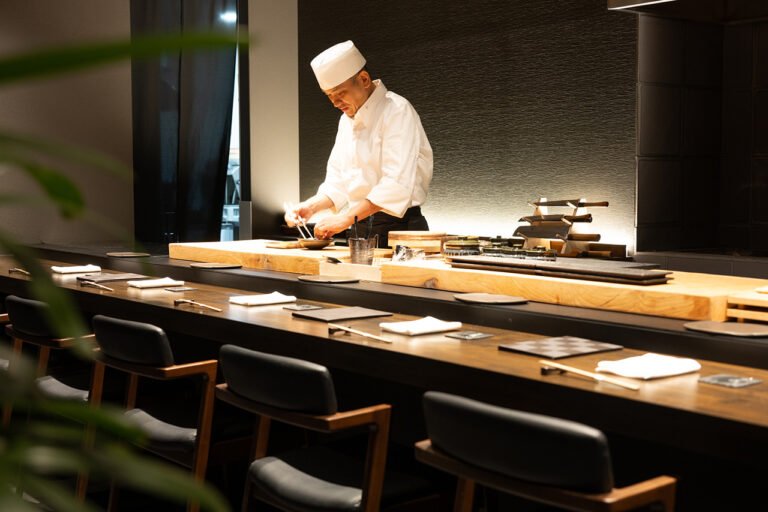
The physical experience starts before you sit down. Isoyama is accessed through a Pontocho back alley — a narrow lane off one of Kyoto's most historically dense nightlife corridors — and announced only by a small illuminated sign. The interior is cozy and deliberately compact, with Showa-era pop playing in the background, which sets a pub warmth rather than a reverent hush. This is not a room designed to intimidate. For special occasions, that tonal choice is worth noting: you get the focused attention of a counter omakase without the pressure of white-glove silence. Compared to the tatami-and-lacquerware gravity of Kyokaiseki Kichisen or the formal proceedings at Isshisoden Nakamura, Isoyama's room is relaxed, a setting where conversation flows rather than gets hushed.
What You're Eating
The format is omakase: a series of numerous small plates and bowls, not a rigid kaiseki progression. The kitchen draws on two distinct culinary traditions simultaneously. Izakaya training shows in dishes like vinegared mackerel, simmered octopus, and roast duck. Kappo experience comes through in soups and char-grilled preparations. Grilled fish is served alongside shuto (pickled and seasoned fish entrails) and konowata (salted sea cucumber entrails) paste, both selected specifically for their affinity with sake. That pairing logic, where the food is built around how it drinks rather than how it photographs, is a meaningful signal about what kind of evening this is. This is a sake-forward dinner, and the food is sequenced to reward that.
Michelin Plate designation, awarded in both 2024 and 2025, confirms that the kitchen's technique registers with professional evaluators, even if the format resists the full starred tier. Michelin Plates go to restaurants cooking at a high standard without necessarily meeting the full criteria for star distinction, often because of format, scale, or style rather than quality deficit. At Isoyama, the format is the point: this is izakaya craft pushed to a level of precision that a Pontocho pub sign does not telegraph from the outside.
Lunch vs. Dinner at Isoyama
Hours are not published in available data, so confirmation of lunch service should be done before building an itinerary around a daytime visit. That said, the venue's character and format, Showa-era music, sake-paired small plates, a dim alley entrance, point clearly toward an evening proposition. The spatial atmosphere and the logic of the food (sake-driven pairing, char-grilled items, entrail condiments) are things that land differently after dark. If Isoyama does offer a daytime sitting, it would likely represent better value on a per-cover basis than its evening service simply because the surrounding Pontocho atmosphere, which amplifies the experience at night, is less charged at lunch. For a special occasion, book dinner. For a more casual exploration of the kitchen's range, a lunch sitting, if available, would be worth investigating directly with the venue.
Is This the Right Venue for Your Occasion?
Isoyama works for celebrations that call for intimacy and personality over grandeur. A date night here has a clear narrative: a hidden alley, a small warm room, precise food, sake chosen for the plate. An anniversary dinner at Gion Matayoshi or Kikunoi Roan would carry more ceremony; Isoyama carries more atmosphere. For groups with a strong sake interest, this is an active recommendation. For guests who need a vegetarian or allergy-accommodating menu, the entrails-inclusive pairing philosophy and the omakase format make dietary flexibility harder to guarantee, contact directly before booking.
For context on what else Kyoto's dining scene offers across price tiers and formats, see our full Kyoto restaurants guide. If you're planning around a broader Japan trip, comparable precision at the izakaya-fine-dining intersection exists in other cities: Myojaku in Tokyo and Azabu Kadowaki in Tokyo both operate in adjacent territory. Further afield, HAJIME in Osaka, Goh in Fukuoka, and akordu in Nara are worth considering if you're travelling the Kansai corridor. For the full scope of Kyoto planning, bars, hotels, experiences, see our Kyoto bars guide, our Kyoto hotels guide, and our Kyoto experiences guide.
Know Before You Go
- Price tier: ¥¥¥ (mid-high; one tier below Kyoto's leading kaiseki)
- Awards: Michelin Plate 2024 and 2025
- Rating:
- Format: Omakase, multiple small plates and bowls; no à la carte
- Location: Pontocho back alley, Nakagyo Ward, Kyoto
- Booking difficulty: Easy, reservations recommended but not difficult to secure
- Dietary restrictions: Omakase format with sake-paired fish entrails; contact in advance if you have restrictions
- Phone/website: Not publicly listed, book via a hotel concierge or third-party reservation platform
- Nearest transport: Central Kyoto; Pontocho is walkable from Kawaramachi and Sanjo stations
- Also in Kyoto: Kodaiji Jugyuan for a contrast in setting and format
Frequently Asked Questions
Is Isoyama good for a special occasion?
Yes, for the right kind of occasion. Isoyama suits intimate celebrations where personality matters more than formality — a date night or a small group marking something meaningful. The back-alley setting in Pontocho and the Showa-era soundtrack give the evening a narrative that a grand kaiseki room does not. It holds a Michelin Plate for 2024 and 2025, so there is independent recognition behind the experience, but keep expectations calibrated to a cozy pub atmosphere rather than a ceremonial dining room.
Does Isoyama handle dietary restrictions?
The omakase format at Isoyama is built around izakaya-kappo technique: vinegared mackerel, simmered octopus, roast duck, grilled fish with fermented fish-entrail pastes. This is a seafood and meat-forward menu with fermented and preserved ingredients central to the concept. Omakase kitchens at this price point can sometimes accommodate advance requests, but the format is not naturally flexible — contact the venue before booking if dietary restrictions are a concern, and do not assume substitutions are available.
Can I eat at the bar at Isoyama?
The interior is described as cozy, consistent with a small counter or bar arrangement common in Pontocho izakaya-kappo venues at this price tier. The database does not confirm specific seating configurations. Given the intimate scale and back-alley location, counter seating is plausible, but confirm when booking rather than arriving and assuming availability.
Is Isoyama worth the price?
At ¥¥¥, Isoyama is mid-to-upper range for Kyoto dining but sits well below full kaiseki pricing at comparable Michelin-recognised venues. For that outlay, you get consecutive Michelin Plate recognition, a genuinely distinctive izakaya-kappo hybrid format, and sake pairings anchored by shuto and konowata — ingredients that take real sourcing and training to use well. If you want ceremony and lacquerware presentation, look at Kyokaiseki Kichisen instead. If the format fits, the price is defensible.
What should I order at Isoyama?
The format is omakase, so the kitchen decides. Dishes are drawn from two traditions: izakaya cooking (vinegared mackerel, simmered octopus, roast duck) and kappo technique (soups, char-grilled items). The sake-pairing angle is a practical reason to drink with dinner here — grilled fish is deliberately paired with shuto and konowata pastes chosen for their affinity with sake. Treat the sake pairing as part of the experience rather than an optional add-on.
Is the tasting menu worth it at Isoyama?
The omakase at Isoyama is a series of small plates and bowls rather than a formal kaiseki progression, which makes it less intimidating and more sociable than a rigid multi-course format. Two consecutive Michelin Plate recognitions confirm consistent kitchen quality. At ¥¥¥, it costs less than the top-tier kaiseki rooms in Kyoto and delivers a more personal atmosphere. If you want the multi-course omakase experience without the reverence of a Michelin-starred kaiseki, this is a sound option.
Location
Japan, 〒604-8015 Kyoto, Nakagyo Ward, Nabeyacho, 212-3 先斗町25番路地
Kyoto, Japan
Compare Isoyama
| Venue | Awards | Price |
|---|---|---|
| Isoyama | ¥¥¥ | |
| Gion Sasaki | Michelin 3 Star | ¥¥¥¥ |
| cenci | Michelin 1 Star, World's 50 Best | ¥¥¥ |
| Ifuki | Michelin 2 Star | ¥¥¥¥ |
| Kyokaiseki Kichisen | Michelin 2 Star | ¥¥¥¥ |
| SEN | Michelin 1 Star | ¥¥¥¥ |
Comparing your options in Kyoto for this tier.
Also Consider
- Gion Sasaki, Kaiseki, Japanese, ¥¥¥¥
- cenci, Italian, ¥¥¥
- Ifuki, Kaiseki, ¥¥¥¥
- Kyokaiseki Kichisen, Japanese, ¥¥¥¥
- SEN, French, Japanese, ¥¥¥¥
Isoyama sits at ¥¥¥ in a Kyoto dining scene where most recognised venues operate at ¥¥¥¥. That price gap is the first decision-making filter. If budget is the primary consideration, Isoyama and cenci are the two options here at the ¥¥¥ level, but they serve entirely different purposes: cenci is an Italian-influenced modern dining room; Isoyama is a sake-driven izakaya-kappo omakase. For Japanese cuisine at this price, Isoyama has no direct peer in this comparison set.
At the ¥¥¥¥ tier, the kaiseki options are Gion Sasaki, Ifuki, and Kyokaiseki Kichisen, plus SEN for a French-Japanese hybrid. If you want the full kaiseki progression, multiple courses in a formal register with seasonal produce as the structural logic, Gion Sasaki or Kyokaiseki Kichisen are the appropriate choices, though both are harder to book and carry higher per-head costs. Isoyama is the right call when you want precision without ceremony, a warmer room, and a format built around drinking sake with food rather than observing a culinary sequence.
For booking ease, Isoyama is the most accessible option here. The ¥¥¥¥ kaiseki venues, particularly Kyokaiseki Kichisen and Ifuki, require more lead time and in some cases involve Japanese-language booking systems or concierge assistance. If you are in Kyoto for a single celebratory dinner and want to guarantee a seat, Isoyama is the lower-friction choice at a meaningful price saving. The trade-off is format depth: you get a compelling evening, not a multi-act kaiseki production.
Recognized By

Explore Kyoto
Save or rate Isoyama on Pearl
Keep this venue in your Pearl passport, rate it after you visit, and track it alongside every other place you collect.