
Restaurant in Beijing, China
Chef 1996
1,055Pearl PointsPrivate-room Sichuan done with real precision.




.png?width=144&height=144&quality=80)
About Chef 1996
Chef 1996 is a private-room Sichuan restaurant in Chaoyang, Beijing, holding a Michelin Plate (2025) and Black Pearl 1 Diamond (2025). At ¥¥¥, it sits below the city's ¥¥¥¥ fine dining tier but delivers comparable credentials. The bamboo-alley setting and easy booking make it one of the more accessible options for serious Sichuan cooking in the capital.
The Verdict
If you are choosing between Beijing's private-room Sichuan options, Chef 1996 is the one to book when atmosphere and kitchen precision matter more than familiarity. It holds a Michelin Plate (2024 and 2025) and a Black Pearl 1 Diamond (2025), which puts it in a credible bracket for serious Sichuan cooking in the capital. Booking is direct compared to more talked-about Beijing addresses, which makes it a practical choice for visitors who want a guaranteed table without a weeks-long wait.
What Chef 1996 Actually Is
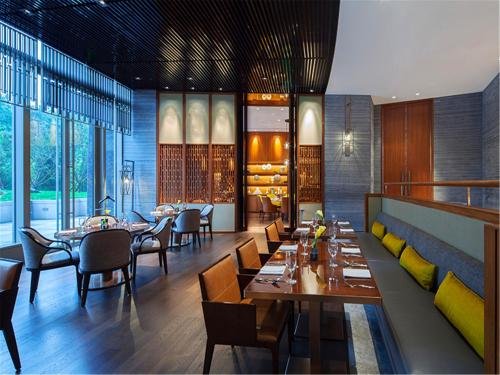
Chef 1996 operates exclusively through private rooms, which changes the experience considerably compared to an open dining room. You are not walking into a buzzing hall of shared tables and ambient noise. Instead, the setting is quieter, more deliberate, arranged along bamboo-lined alleys that create a sense of enclosure and calm. For a cuisine as assertive and technically demanding as Sichuan, that contrast works in the restaurant's favour: the room does not compete with the food.
The format suits groups and occasion dining naturally, but it also means solo diners or pairs need to think about whether a private room format suits their visit. This is a consideration worth making before you book rather than after.
Chef Liang Dee's kitchen is built around meticulous preparation rather than novelty. The camphor wood-smoked duck and Kung Pao prawns are the dishes most associated with the restaurant, and both reflect an approach to Sichuan cooking that prioritises technique and presentation over theatrical flourish. If you are arriving with a fixed idea of what Sichuan food should look like, Chef 1996 may reframe that expectation. The plating is deliberate; the flavours are grounded in Sichuan tradition rather than fusion experiment.
A Multi-Visit Strategy
Given the private-room structure and the depth of the kitchen's repertoire, Chef 1996 rewards return visits more than most Beijing restaurants at this price tier. On a first visit, the camphor wood-smoked duck is the anchor dish and should be your reference point for what the kitchen can do with smoke and timing. The Kung Pao prawns show the other side of Liang Dee's range: precision plating on a dish that most diners think they already know.
A second visit is the right moment to move beyond the signature dishes and test the kitchen's broader Sichuan repertoire. Private-room dining in China typically allows for pre-ordered menus or consultation with the kitchen in advance, so use that to your advantage. Ask what is seasonal or what the kitchen is currently focused on. This is where the Black Pearl recognition becomes a useful signal: the rating reflects consistency across the menu, not just on a handful of headline dishes.
If you are making a third visit or bringing a group that has been before, the format itself becomes the draw. A private room in a bamboo-alley setting is a distinct hospitality experience that translates well for hosting, whether that is business entertaining or a genuinely special occasion with people who appreciate considered surroundings. For that use case, Chef 1996 has few direct competitors in Beijing at the ¥¥¥ price point.
For comparison, Ji Chuan and Lao Chuan Ban offer Sichuan cooking in Beijing at different registers. If you want to benchmark Chef 1996 against other serious kitchens in the city, Gongyuan Shulou and Rong Pao provide useful reference points for what ¥¥¥ to ¥¥¥¥ dining looks like across different Chinese regional styles. Yibin rounds out the Sichuan options worth knowing in the capital.
For broader context on Sichuan cooking at a high level elsewhere in China, Yu Zhi Lan and Fang Xiang Jing in Chengdu represent the benchmark end of the category, and Xin Rong Ji in Chengdu shows a different regional approach to premium Chinese dining. If you are building a broader itinerary across Chinese cities, 102 House in Shanghai, Ru Yuan in Hangzhou, Chef Tam's Seasons in Macau, Imperial Treasure Fine Chinese Cuisine in Guangzhou, and Dai Yuet Heen in Nanjing are all relevant comparisons in the fine Chinese dining tier.
Practical Details
Chef 1996 is located at 4A Jiangtaiwa, Xinghuo East Road, Chaoyang, Beijing. The ¥¥¥ price point sits below the ¥¥¥¥ tier of competitors like Xin Rong Ji and Chao Shang Chao, making it one of the more accessible options in Beijing's serious Chinese dining category. Booking is rated easy, which is a genuine advantage in a city where top-end private room restaurants can be difficult to access without local connections or advance planning. The private-room-only format means you should contact the restaurant directly to confirm availability and discuss menu preferences ahead of your visit. Hours and phone contact are not published in Pearl's current data, so factor in time to confirm these details when planning.
For more on dining, hotels, bars, and experiences in the city, see our full Beijing restaurants guide, our full Beijing hotels guide, our full Beijing bars guide, our full Beijing wineries guide, and our full Beijing experiences guide.
Quick reference: Chef 1996, Chaoyang, Beijing. Sichuan, private rooms only. ¥¥¥. Michelin Plate 2024 and 2025, Black Pearl 1 Diamond 2025. Booking: easy.
Frequently Asked Questions
Is Chef 1996 good for solo dining?
Not the right fit. Chef 1996 operates exclusively through private rooms, which means solo diners will either pay for unused space or feel awkward anchoring a table designed for groups. Solo diners in Beijing wanting high-precision Sichuan should look at restaurants with counter or open dining room formats instead. The private-room structure here is built for parties of two or more.
Is Chef 1996 good for a special occasion?
Yes, and it's one of the stronger options at the ¥¥¥ price point for exactly this purpose. The private-room-only format gives you a contained, dedicated space rather than a shared dining room, which works well for birthdays, business dinners, or anniversaries. The Michelin Plate (2024 and 2025) and Black Pearl 1 Diamond (2025) give it enough credibility to justify the occasion without the ¥¥¥¥ spend of competitors like Xin Rong Ji.
What should a first-timer know about Chef 1996?
The most important thing: this is not a walk-in restaurant. Every table is a private room, so you need a reservation and should expect a more formal, enclosed dining environment than typical Sichuan spots. The kitchen under Chef Liang Dee is known for meticulous preparation, so the experience rewards attention rather than a quick meal. Budget for ¥¥¥ per head and factor in the Chaoyang location at 4A Jiangtaiwa, Xinghuo East Road.
Can Chef 1996 accommodate groups?
Groups are actually the core use case here. Private rooms are purpose-built for gatherings, and the format means larger parties get an exclusive space without competing with other tables for service or noise. If you are organising a group dinner in Beijing at the ¥¥¥ tier with Sichuan on the menu, Chef 1996 is a logical first call. Confirm room capacity and booking lead times directly with the venue.
Is Chef 1996 worth the price?
At ¥¥¥, it sits below the top tier and delivers a Michelin Plate and Black Pearl 1 Diamond level of kitchen precision, which makes the value case fairly clear relative to peers charging ¥¥¥¥. The private-room format adds atmosphere that you cannot get in an open dining room at the same price. If the Sichuan category and private dining setup match what you are after, the price-to-quality ratio is reasonable for Beijing.
What are alternatives to Chef 1996 in Beijing?
Xin Rong Ji (Xinyuan South Road) is the step-up option if budget is not a constraint, operating at ¥¥¥¥ with a different regional Chinese focus. Lamdre and Jingji are worth considering if you want open dining room formats with strong kitchens. Chao Shang Chao (Chaoyang) is a reasonable alternative for Sichuan in the same district. For pure private-room atmosphere at the ¥¥¥ tier, Chef 1996 has few direct equivalents.
Is the tasting menu worth it at Chef 1996?
Specific tasting menu details are not confirmed in available data, so pricing and structure should be verified when booking. What is documented is that the kitchen is known for meticulous preparation and dishes like camphor wood-smoked duck, which suggests a menu format that rewards a longer, multi-course approach rather than ordering à la carte. Given the private-room setting and the ¥¥¥ price tier, a set menu is likely the format that delivers the full experience.
Location
4A Jiangtaiwa, Xinghuo East Road, Chaoyang, Beijing, 100020, Chinese Mainland
Beijing, China
Compare Chef 1996
| Venue | Cuisine | Awards | Booking Difficulty |
|---|---|---|---|
| Chef 1996 | Sichuan | Easy | |
| Jing | French Contemporary | Michelin 1 Star | Unknown |
| Xin Rong Ji (Xinyuan South Road) | Taizhou | Michelin 3 Star, World's 50 Best | Unknown |
| Chao Shang Chao (Chaoyang) | Chao Zhou | Michelin 3 Star | Unknown |
| Lamdre | Vegetarian | Michelin 1 Star, World's 50 Best | Unknown |
| Jingji | Beijing Cuisine | Michelin 2 Star | Unknown |
Side-by-side comparison to help you decide where to book.
Also Consider
- Jing, French Contemporary, ¥¥¥
- Xin Rong Ji (Xinyuan South Road), Taizhou, ¥¥¥¥
- Chao Shang Chao (Chaoyang), Chao Zhou, ¥¥¥¥
- Lamdre, Vegetarian, ¥¥¥¥
- Jingji, Beijing Cuisine, ¥¥¥¥
Against Beijing's ¥¥¥¥ Chinese regional restaurants, Chef 1996 makes a clear value argument. Xin Rong Ji (Xinyuan South Road) and Chao Shang Chao (Chaoyang) both operate at a higher price tier and carry their own reputations for technical precision in Taizhou and Chaozhou cooking respectively. If your priority is regional Chinese cooking with the highest available credentials, both are worth the premium. But if you want a private-room Sichuan experience with verified kitchen quality at a lower entry price, Chef 1996 is the more practical choice. Lamdre at ¥¥¥¥ is the reference for vegetarian fine dining in Beijing and does not compete on the same terms.
Jing at ¥¥¥ is the most direct price-tier comparison, but it covers French Contemporary rather than Chinese regional cooking, so it serves a different diner. If you are choosing between Chef 1996 and Jing for the same occasion, the decision comes down to whether you want Sichuan technique or French contemporary at that price point. For Beijing cuisine specifically, Jingji at ¥¥¥¥ is the obvious alternative if you want a capital-city kitchen rather than a Sichuan one.
On booking difficulty, Chef 1996 has a genuine edge over most of its peers. Easy availability at a credentialed private-room restaurant in Beijing is not the norm, and that practical advantage is worth factoring into your decision. For a group or occasion booking where you need confirmation without a long lead time, Chef 1996 is the most straightforward option in this comparison set.
Recognized By


Explore Beijing
Save or rate Chef 1996 on Pearl
Keep this venue in your Pearl passport, rate it after you visit, and track it alongside every other place you collect.