









Atrio
Contemporary Spanish, Creative · old town, Cáceres
Restaurant in Cáceres, Spain
 Book with Pearl
The Read
Extremadura Regional Precision
Price
$200–300per person
Chef
Toño Pérez
Dress
Formal
Why go
Atrio is a restaurant at Plaza San Mateo in Cáceres, Spain.
About Atrio
Verdict
Book Atrio. With three Michelin stars, a 96-point La Liste score, and a place in Opinionated About Dining's top 30 Classical restaurants in Europe, this is the most credentialed dining room in Extremadura by a significant margin. The city of Cáceres itself, a UNESCO World Heritage old town, is worth the detour from Madrid, and Atrio gives you a reason to stay two or three nights. The tasting menu format, the kitchen's willingness to adapt dishes to your preferences, and a wine cellar running to 4,500 selections across 45,000 bottles make this a venue you can return to and find new ground each time. If you are planning one serious meal in western Spain, this is the address.
The Space
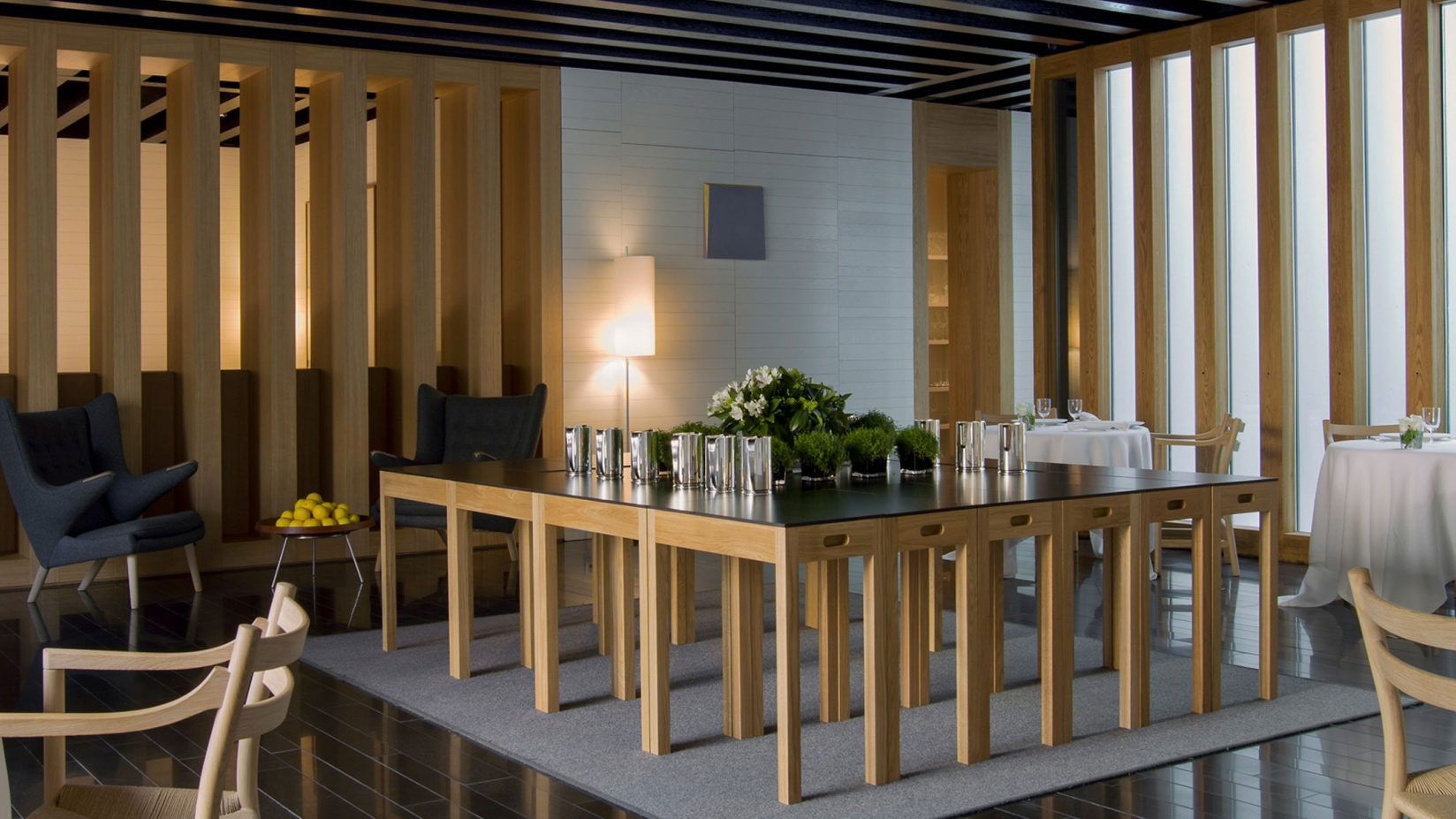
Atrio sits on Plaza de San Mateo, at the heart of Cáceres's walled old city. The dining room itself reflects the architecture around it: stone, restraint, and considered proportion. Seating is intimate rather than theatrical, the room is not a showcase for maximalist design but for focused attention on what arrives at the table. For guests who want to extend the experience, the hotel rooms within the building and eleven suites at the Casa Palacio Paredes Saavedra, roughly 30 metres away, convert a single meal into a longer stay. The wine cellar, which you should ask to visit, is a physical argument for why Atrio holds the credentials it does: historic vintages, deep Burgundy and Bordeaux holdings, strong Spanish and Rhône representation, and Champagne and German selections that indicate a sommelier team, Wine Director José Luis Paniagua, alongside Fabio Gritti and José Luis Ramos, building seriously across categories rather than chasing a single prestige corridor.
What to Eat and How to Plan Multiple Visits
Atrio runs a single tasting menu, but it is extensive and the kitchen adapts it around your preferences, which means repeat visits are not a case of eating the same meal twice. Chef Toño Pérez, who was born in Cáceres, structures the menu around Extremaduran ingredients, Iberian pork in particular, which the menu treats as a full subject rather than a single course. Expect variations across pork fat, cured ham, dewlap, loin, rind, and jus, each prepared to show a different technical register. La Liste's 2026 notes describe this as “creative cuisine of the highest technical level.”
For a first visit, let the kitchen run its full sequence without intervention. The point is to understand what Pérez considers the complete argument for Extremaduran cooking. For a second visit, use the menu's adaptability, push toward the pork preparations you found most interesting, or ask the sommelier team to build a wine progression that goes deeper into the cellar's historic stock. A third visit, especially if you stay at the Casa Palacio suites, shifts the context entirely: the meal becomes part of a longer immersion in the old city rather than a single-evening event.
Compared with other three-star Spanish restaurants, Atrio's regional specificity is its defining characteristic. El Celler de Can Roca in Girona is broader in reference and more internationally famous; Arzak in San Sebastián leans into Basque identity with similar conviction; Azurmendi in Larrabetzu is more concept-forward. Atrio's value relative to peers like Martin Berasategui in Lasarte-Oria or Quique Dacosta in Dénia lies in its rootedness, this is a kitchen that has spent decades arguing for a single place and its ingredients, not a restaurant pivoting toward international recognition through technique alone. Cocina Hermanos Torres in Barcelona offers a comparable level of ambition in a more urban setting if you want a comparison within the three-star tier.
The Wine Program
The wine list at Atrio is one of the most significant in Spain and is worth treating as a destination in its own right. With 4,500 selections and 45,000 bottles in inventory, the cellar goes well beyond what most fine-dining wine programs offer. Pricing is in the upper tier, expect many bottles above €100, but the depth in Burgundy, Bordeaux, Rhône, Champagne, Germany, Port, and Spanish regions means that a sommelier-led pairing here can reach levels of specificity you will not find at most restaurants at this price point. Budget for the wine as seriously as you budget for the menu. The World of Fine Wine accreditation reinforces what the inventory numbers already suggest.
Booking and Practical Details
Atrio is near-impossible to book at short notice. With a Michelin three-star profile, a top-30 OAD ranking, and a location that draws food-focused travellers specifically to Cáceres, demand consistently outpaces availability. Plan a minimum of six to eight weeks out, and expect that peak travel periods, spring and early autumn, when the old city is most visited, require longer lead times. Both lunch and dinner service run seven days a week: lunch at 1:30 pm, dinner at 8:30 pm, with last orders at 3 pm and 10 pm respectively. The kitchen closes at 3 pm and 10 pm, so late arrivals are not an option. If you are travelling from Madrid, the drive takes roughly three hours via the A-5; the train from Cáceres station puts you about 2 km from the restaurant. Badajoz airport is 90 km away; Madrid-Barajas is 300 km. GPS coordinates: 39.4731, -6.3714.
Pricing sits at the top tier for Spain (€€€€), consistent with the three-star level. A full tasting menu with sommelier wine pairing will be a significant spend, treat the day or evening as the centrepiece of a trip, not a single course in a longer restaurant itinerary. For context on where Atrio fits within the broader Cáceres dining picture, see our full Cáceres restaurants guide. If you are extending your stay, our Cáceres hotels guide, bars guide, wineries guide, and experiences guide cover the rest of the city.
Quick reference: Tasting menu only, lunch and dinner daily, advance booking essential (6–8 weeks minimum), wine cellar visit on request, hotel accommodation available on-site and 30m away.
Awards and Recognition
- 3 Michelin Stars (2024, 2025)
- La Liste Leading Restaurants: 96.5 pts (2025), 96 pts (2026)
- Opinionated About Dining, Classical in Europe: #29 (2024), #28 (2025)
- World of Fine Wine, 3-Star Accreditation
How It Compares in Cáceres
See the comparison section below for how Atrio sits against the city's other dining options.
Located inside
 HotelAtrio Restaurante HotelFull hotel guide
Planning details
- Hours
- Monday: 1:30–3 pm, 8:30–10 pm · Tuesday: 1:30–3 pm, 8:30–10 pm
- Location
- Pl. San Mateo, 1, Centro-Casco Antiguo, 10003 Cáceres, Spain
- Reservations
- Book on TheFork
- Website
- atriocaceres.com
- Phone
- +34 927 24 29 28
The take
The Take
The Vibe
Atrio sits deep within Cáceres' UNESCO-listed old city, so the atmosphere is anchored in history: Renaissance stone facades, tower-houses and narrow cobbled lanes shape the experience before a plate arrives. The restaurant occupies those same architectures rather than merely backing onto them, and the particular silence of the walled quarter gives the dining room a calm, almost reverent quality. The setting reads as a quietly classic, charming place for serious dining: its medieval surroundings framing a kitchen that presents three-star technical precision while the hush of the square preserves an intimate, contemplative mood.
Best For
Atrio is best for diners seeking a focused, celebratory gastronomic experience. The restaurant’s single tasting menu and three-Michelin-star recognition make it a natural choice for special-occasion meals and date nights where the food is the primary event. The attached hotel and the location on Plaza de San Mateo mean guests can pair the meal with an old-city stay, and the low-tourist, hushed character of the quarter favors couples or small groups who want an immersive, food-first evening in a historic setting.
Ordering Tips
The kitchen at Atrio operates a single, multi-course tasting menu that it adjusts according to each table’s preferences; this is stated explicitly. Guests should be prepared for a sequence of dishes rather than an à la carte selection, and they should communicate any allergies, strong dislikes or dietary requirements when arranging the meal so the team can tailor the progression. Because the menu is designed as a unified tasting experience, expect a thoughtful, sequential service where substitutions are handled at the kitchen’s discretion to preserve the overall narrative of the menu.
Venue details
Ambiance
Modern and elegant interior with subtle lighting, spacious tables, and a contemporary atmosphere integrated into historic buildings, creating a cozy yet sophisticated dining experience.
Tags
Vibe
Best For
Experience
Sourcing
Accessibility
At the Table
- Dress Code
- Formal
- Noise Level
- Quiet
- Service Style
- Formal
- Meal Pacing
- Extended Experience
- Capacity
- Intimate
- Kitchen
- Modern
- Menu Format
- Tasting menu
- Wine Program
- Deep wine list
- Dietary
- Vegetarian friendly, Vegan options, Gluten-free options
- Private Dining
- Available
- Outdoor Seating
- Yes
Know before you go
Know Before You Go
- Getting there
- Pl. San Mateo, 1, Centro-Casco Antiguo, 10003 Cáceres, Spain
Planning details
Hours
- Monday
- 1:30–3 pm, 8:30–10 pm
- Tuesday
- 1:30–3 pm, 8:30–10 pm
- Wednesday
- 1:30–3 pm, 8:30–10 pm
- Thursday
- 1:30–3 pm, 8:30–10 pm
- Friday
- 1:30–3 pm, 8:30–10 pm
- Saturday
- 1:30–3 pm, 8:30–10 pm
- Sunday
- 1:30–3 pm, 8:30–10 pm
Location
Pl. San Mateo, 1, Centro-Casco Antiguo, 10003 Cáceres, Spain · Directions
Recognition and awards




Also consider
Also Consider
- Borona Bistró: Contemporary, €€
- Torre de Sande: Traditional Cuisine, €€
- Javier Martín: Contemporary, €€€
- Madruelo: Regional Cuisine, €€
- Las Corchuelas: Notable alternative
Restaurant context
Atrio operates in a different category from every other restaurant in Cáceres. At €€€€ with three Michelin stars, it is not competing for the same table as Borona Bistró or Madruelo: both of which are solid €€ options for a less formal meal in the old city. If you want contemporary cooking at a lower price point, Javier Martín at €€€ is the closest step down in ambition, and considerably easier to book. Miga covers traditional cuisine for visitors who want regional flavour without the tasting menu format. For a meal in the surrounding countryside, Las Corchuelas offers a different context entirely.
The practical decision is straightforward: if your budget and travel schedule allow for it, Atrio is the clear choice for a serious meal. The combination of three-star cooking, one of Spain's deepest wine cellars, and the option to stay overnight in the Casa Palacio suites makes it a self-contained itinerary. If you are visiting Cáceres on a tighter budget or want a more casual evening, Borona Bistró and Madruelo both offer good-value cooking in the old city without the formality or the advance booking requirement.
For food and wine enthusiasts building a longer trip, the most effective approach is to anchor one or two nights around Atrio and use the city's other options, Torre de Sande for traditional cooking, Javier Martín for contemporary technique, to fill out the rest of the stay. Atrio should be the primary reservation; everything else fills around it.
Explore Cáceres
Around this place
Discover more on Pearl
Unlock the full Atrio guide in Pearl, including awards, comparisons, FAQs, planning details, and nearby places.
Compare Atrio
| Venue | Location | Cuisine | Awards | Price |
|---|---|---|---|---|
| Atrio | Cáceres | Contemporary Spanish, Creative | 2026 OAD Classical in Europe Ranked · #34Guía Repsol Soles 20262026 Relais Chateaux Restaurants2026 La Liste Top Restaurants2026 Wine Spectator Grand Award2026 Michelin 3 Stars2025 OAD Classical in Europe Ranked · #282025 La Liste Top Restaurants2025 Michelin 3 Stars | €€€€ |
| Borona Bistró | Cáceres | Contemporary | Guía Repsol Soles 20262026 Michelin Plate2025 Michelin Plate2024 Michelin Plate | €€ |
| Torre de Sande | Cáceres | Traditional Cuisine | 2026 Relais Chateaux RestaurantsGuía Repsol Soles 20262026 Michelin Plate2025 Michelin Plate2024 Michelin Plate | €€ |
| Javier Martín | Cáceres | Contemporary | Guía Repsol Soles 20262026 Michelin Plate2025 Michelin Plate2024 Michelin Plate | €€€ |
| Madruelo | Cáceres | Regional Cuisine | 2026 Michelin Plate2025 Michelin Plate2024 Michelin Plate | €€ |
| Las Corchuelas | Cáceres | No published awards |

.png?width=1200&quality=80)
How Atrio Cáceres compares with similar nearby venues.
FAQ
Frequently Asked Questions
What should I order at Atrio?
There is no à la carte: Atrio runs a single extensive tasting menu, and the kitchen adapts it to your preferences when you book. The signatures built around Iberian pork are the throughline: Toño Pérez's 'happy pig' concept runs across the menu in multiple forms, from pork fat and ham to dewlap, loin, rind, and jus. Tell them upfront about any preferences or aversions and they will work around them.
What are alternatives to Atrio in Cáceres?
If three Michelin stars and a €€€€ tasting menu is more than you need, Cáceres has credible alternatives. Torre de Sande offers regional cooking in a historic setting at a significantly lower price point. Borona Bistró and Madruelo suit casual or mid-budget meals. Javier Martín and Las Corchuelas round out the local options for those wanting something between Atrio and a neighbourhood restaurant.
Does Atrio handle dietary restrictions?
Yes, within reason. The kitchen adapts the tasting menu around your preferences, which is confirmed by the La Liste write-up of the restaurant. Given the Iberian pork focus that runs through the menu, vegetarians or those with strict pork restrictions should flag this clearly at the time of booking so the kitchen can plan accordingly.
Is lunch or dinner better at Atrio?
Both services run the same tasting menu format, so the food is not differentiated by time of day. Lunch (1:30–3pm) can suit those combining the meal with an afternoon in Cáceres's walled old city, which is worth the time. Dinner (8:30–10pm) fits the Spanish rhythm more naturally and tends to feel less rushed. Neither service has a structural advantage in terms of the food or wine program.
Is Atrio worth the price?
At €€€€ with a 96-point La Liste score, three Michelin stars, and a top-30 OAD ranking among Classical restaurants in Europe, Atrio justifies the price if a tasting-menu format suits you and you have paired the visit with time in Cáceres's old city. The wine program, 4,500 selections, 45,000 bottles, with depth in Burgundy, Bordeaux, and Spain, adds meaningful value if you engage it. If you are sceptical of long tasting menus or making a standalone trip purely for the meal, the calculus is harder; pair it with the hotel stay or a wider Extremadura itinerary to make the trip earn its cost.