

Hotel in Akagera National Park, Rwanda
Wilderness Magashi Peninsula
425Pearl PointsPrivate-Concession Big Five Access

About Wilderness Magashi Peninsula
On a private peninsula jutting into Lake Rwanyakazinga in northeastern Rwanda, Wilderness Magashi occupies a 23-square-mile exclusive concession within Akagera National Park. Three freestanding villas combine open-air design with direct savannah access, offering one of the few places in East Africa where Big Five game viewing and lakeside activities coexist within the same itinerary. Rates start from $2,490 per night.
A Peninsula at the Edge of Rwanda's Savannah
The northeastern corner of Akagera National Park is where Rwanda's famous forest narrative gives way to something more open and elemental. The terrain here is savannah, punctuated by wetlands and the long shoreline of Lake Rwanyakazinga, and the sense of distance from the country's gorilla-trekking circuit is not just geographical. This part of Rwanda draws a different kind of traveller: one who wants space, silence, and the particular rhythm of plains game viewing rather than the charged proximity of primate encounters. Within that context, Wilderness Magashi Peninsula occupies the most extreme position available, built on the tip of a peninsula that extends into the lake, within a private 23-square-mile concession that no other lodge shares. The approach alone signals what the camp is doing architecturally and experientially: it ends at water on three sides, the kind of site selection that forces every design decision toward openness rather than enclosure.
Design Built Around Sight Lines
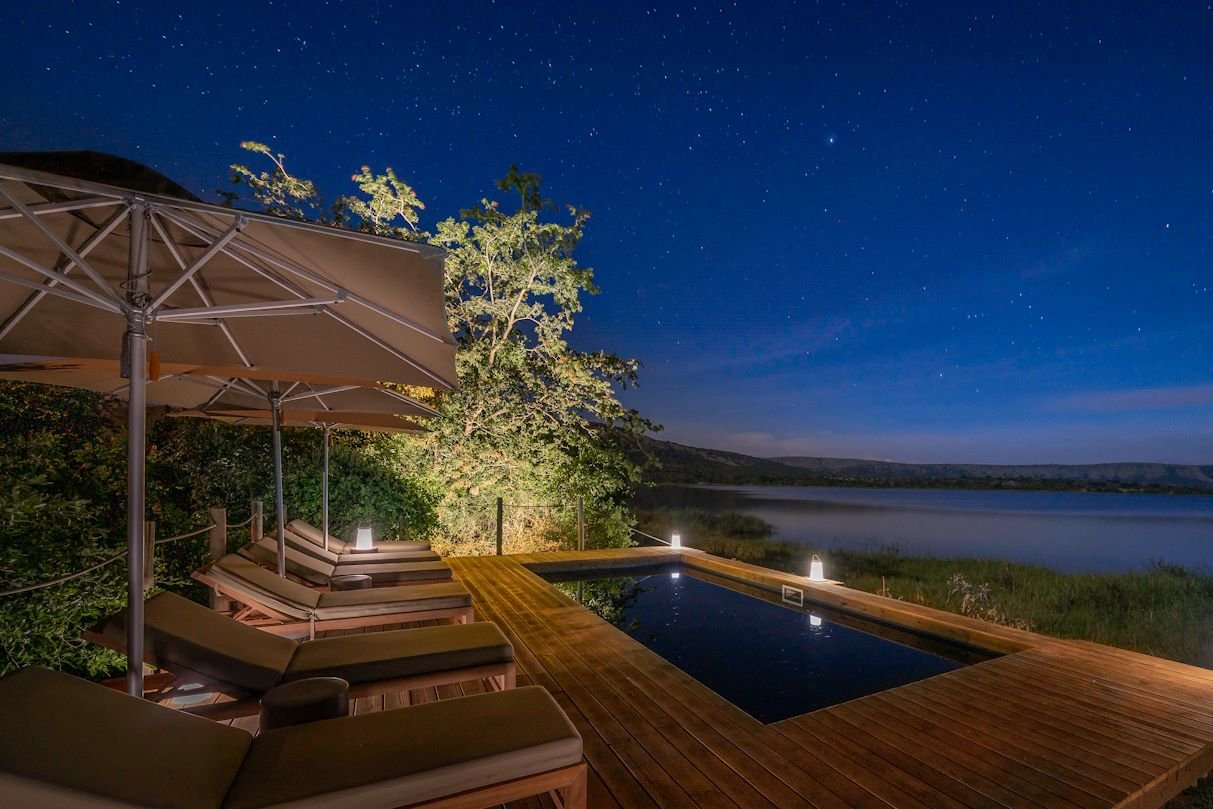
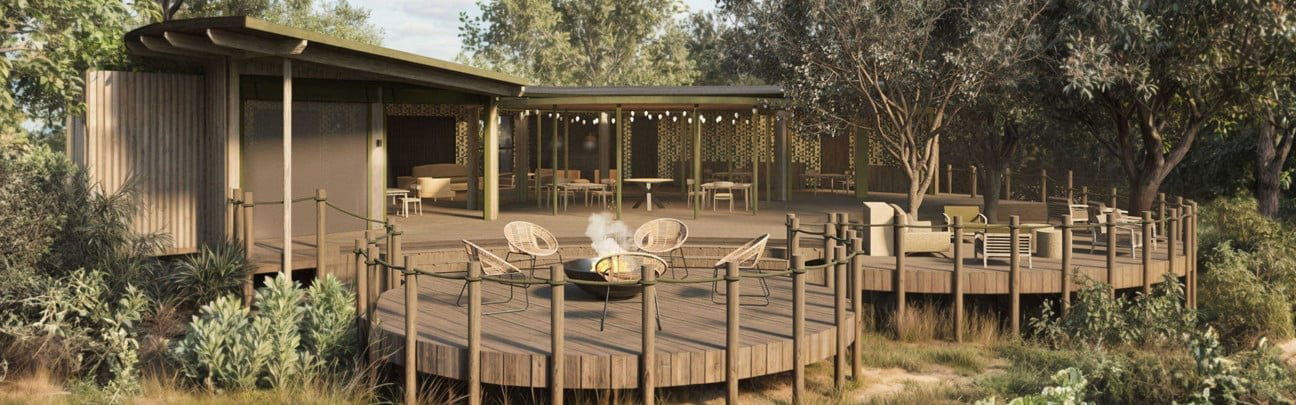
The architectural grammar of premium safari camps in East and Central Africa has shifted considerably over the past decade. The canvas-and-timber vernacular of an earlier era has largely given way to structures that foreground unobstructed views, dissolve the boundary between interior and exterior, and treat natural materials as a design language rather than a rustic fallback. Wilderness Magashi Peninsula sits at that more considered end of the spectrum. The three villas, which the brand describes as spacious bush homes, are finished in the warm wood tones of the surrounding wilderness, with décor calibrated to recede rather than compete with the landscape outside. The effect is deliberate: the architecture positions the lake, the savannah, and the sky as the primary visual content of any given room.
Two of the three accommodations are tented suites; the third is a four-bedroom private villa suited to families or groups travelling together. Each sits on the game-rich shoreline of Lake Rwanyakazinga, which means the transition from interior to activity begins at the threshold rather than after a transfer. Specific design features documented in the property record include outdoor showers, plunge pools, and netted rooftop sleeping areas positioned for stargazing. The last detail is worth dwelling on: a rooftop bed with mosquito netting at a site with minimal light pollution is a structural choice, not an amenity add-on, and it reframes the night hours as part of the experience rather than a pause in it.
Among Rwanda's broader portfolio of premium lodges, this design posture places Wilderness Magashi Peninsula in a small tier of properties that prioritise site specificity over brand-template comfort. For comparison, the gorilla-facing lodges in Rwanda's northwest, including Singita Kwitonda Lodge in Kinigi and Wilderness Bisate Lodge in Ruhengeri, are built for forest immersion, with architectural responses to elevation and canopy. Magashi's design answers a different brief entirely: flat water, open horizons, and the spatial demands of a savannah concession.
The Concession and What It Means Operationally
Luxury safari has split, broadly, between larger properties that absorb volume and micro-camps where exclusivity is the product. Wilderness Magashi Peninsula belongs firmly to the second category. Three villas across a 23-square-mile private concession means the ratio of land to guest is among the most generous available in Rwanda, and it produces a style of game viewing that differs from shared-park experiences in a measurable way: vehicles are not queuing at sightings, and itineraries do not need to account for traffic from competing camps.
The Big Five are present and well-documented within Akagera. The park's rhino and lion populations have been reintroduced in recent years through conservation programs that are now delivering consistent sightings, and leopard are recorded at the lake's edge after dark. The wetlands within and adjacent to the concession also rank among the largest protected wetland systems in Central Africa, which adds a birding dimension that serious ornithologists treat as a primary draw rather than a secondary activity.
Activity programming at Magashi is explicitly free-form by design. Guests document the option to spend extended time with specific species, to take sunrise coffee by pontoon on the lake, or to structure a night drive around leopard tracking rather than a fixed circuit. That flexibility is structurally related to the camp's small scale: it is operationally possible because the guide-to-guest ratio is high and the concession is private. For travellers used to larger East African camps, where programming can feel semi-fixed regardless of conditions, the distinction is significant. Published rates begin at $2,490 per night, with doubles reported from $2,716, positioning the property at the premium end of the Rwandan market alongside comparisons such as One&Only Nyungwe House and Singita in Volcanoes National Park.
Food and the Rhythm of a Camp Day
The food program at Wilderness Magashi Peninsula follows the informal, location-led structure that characterises contemporary safari camps at this price tier. According to reviewer documentation, the day opens with a cake stand of overnight oats, fruit, and pastries, moves through midday meals of chilled soups and salads served under trees, and closes with lamplit three-course dinners. The menu spans plant-based pasta and fire-seared steak, which reflects a catering approach calibrated for varied dietary preferences rather than a single culinary identity. The format is light and contextually appropriate: heavy, restaurant-formal dining at a remote bush camp would be the wrong answer to the setting, and the food program here is explicitly built around the pace of the day rather than around the meal itself.
Where Magashi Sits in Rwanda's Travel Circuit
Rwanda's international travel identity has been built primarily on mountain gorilla permits, which positions properties like Bisate Lodge in Musanze and One&Only Nyungwe House at the centre of most itineraries. Akagera receives significantly less attention in travel writing despite containing terrain and wildlife that are arguably more varied. Wilderness Magashi Peninsula is the only luxury lodge operating within a private concession in Akagera's northern sector, which means it has no direct in-park competitor for its specific combination of lakeside positioning, Big Five access, and concession exclusivity. Travellers building a multi-country East Africa circuit who want to include Rwanda's savannah alongside its forests now have a lodging option that meets the same standard as the gorilla-trek properties without duplicating the experience type. Those whose itinerary starts or ends in Kigali might consider The Pinnacle Kigali as a city base on either end of the Akagera leg.
For context on how Magashi's design approach fits into the global conversation about remote luxury properties, the camp's emphasis on minimal footprint, site-specific materials, and low key count is a posture shared by properties in very different geographies: Hotel Esencia in Tulum and Castello di Reschio in Lisciano Niccone both operate on the principle that the property should amplify its setting rather than substitute for it. At Magashi, that principle is applied to one of the more geographically specific sites in East African hospitality: a lake peninsula inside a recovering national park in a country that has been reintroducing predators and rebuilding wildlife corridors within the past decade. The design is, in the end, a response to that particular place and its particular moment.
Planning Your Stay
Wilderness Magashi Peninsula is a reservation-only property; given the three-villa capacity, availability moves quickly for peak dry-season windows (typically June through September and the shorter January dry period). The camp is reached via Akagera National Park's northern entrance, with transfer options from Kigali available through the Wilderness group. See our full Akagera National Park guide for broader context on the park's zones and logistics. For travellers comparing Rwanda's premium tier, the Singita Kwitonda Lodge and Wilderness Bisate Lodge remain the primary benchmarks for gorilla-country properties, while Magashi occupies the savannah end of the same market without overlap.
Frequently Asked Questions
Is Wilderness Magashi Peninsula more formal or casual?
The camp operates on a casual-by-design basis. The small scale, free-form activity structure, and outdoor dining format all signal that this is not a property built around formality. In Rwanda's premium safari tier, where properties like Singita and One&Only set a more polished service register, Magashi's character is closer to a private bush home than a resort. That said, at rates from $2,490 per night and within Wilderness's 55-plus camp portfolio, service standards are high; the informality is a deliberate design choice, not a function of lower investment.
Which room category should I book at Wilderness Magashi Peninsula?
The four-bedroom private villa is the appropriate booking for families or groups of four or more travelling together; it offers the full camp experience within a single shared structure. For couples or solo travellers, the two tented suites deliver the same lake-facing position and concession access in a more contained footprint. Given that the entire property totals three accommodations, any booking type gives you a meaningful share of the concession rather than a fraction of a large camp.
What's the main draw of Wilderness Magashi Peninsula?
Combination of a private 23-square-mile concession, exclusive lake-peninsula positioning, and Big Five access within Akagera National Park is the core case for the property. Rwanda's safari circuit has long been dominated by gorilla trekking, and Akagera's savannah and wetland terrain remains comparatively overlooked. For travellers who want plains game and birdlife at the standard of luxury East African safari without the crowd dynamics of shared-park properties, Magashi is the only lodge in this part of Rwanda offering that combination at this price point.
Is Wilderness Magashi Peninsula reservation-only?
Yes. With three villas across the entire property, Wilderness Magashi Peninsula does not accommodate walk-in guests. Reservations should be made well in advance for peak season windows. Bookings are handled through the Wilderness group's central reservations system; neither a public phone number nor a standalone website is listed for the property directly. Rates begin at $2,490 per night. The Wilderness brand operates over 55 properties globally, and their central booking infrastructure covers Magashi alongside other Rwanda properties including Wilderness Bisate Lodge.
Location
Wilderness Magashi , Akagera National Park ,
Akagera National Park, Rwanda
Recognized By
Save or rate Wilderness Magashi Peninsula on Pearl
Keep this venue in your Pearl passport, rate it after you visit, and track it alongside every other place you collect.