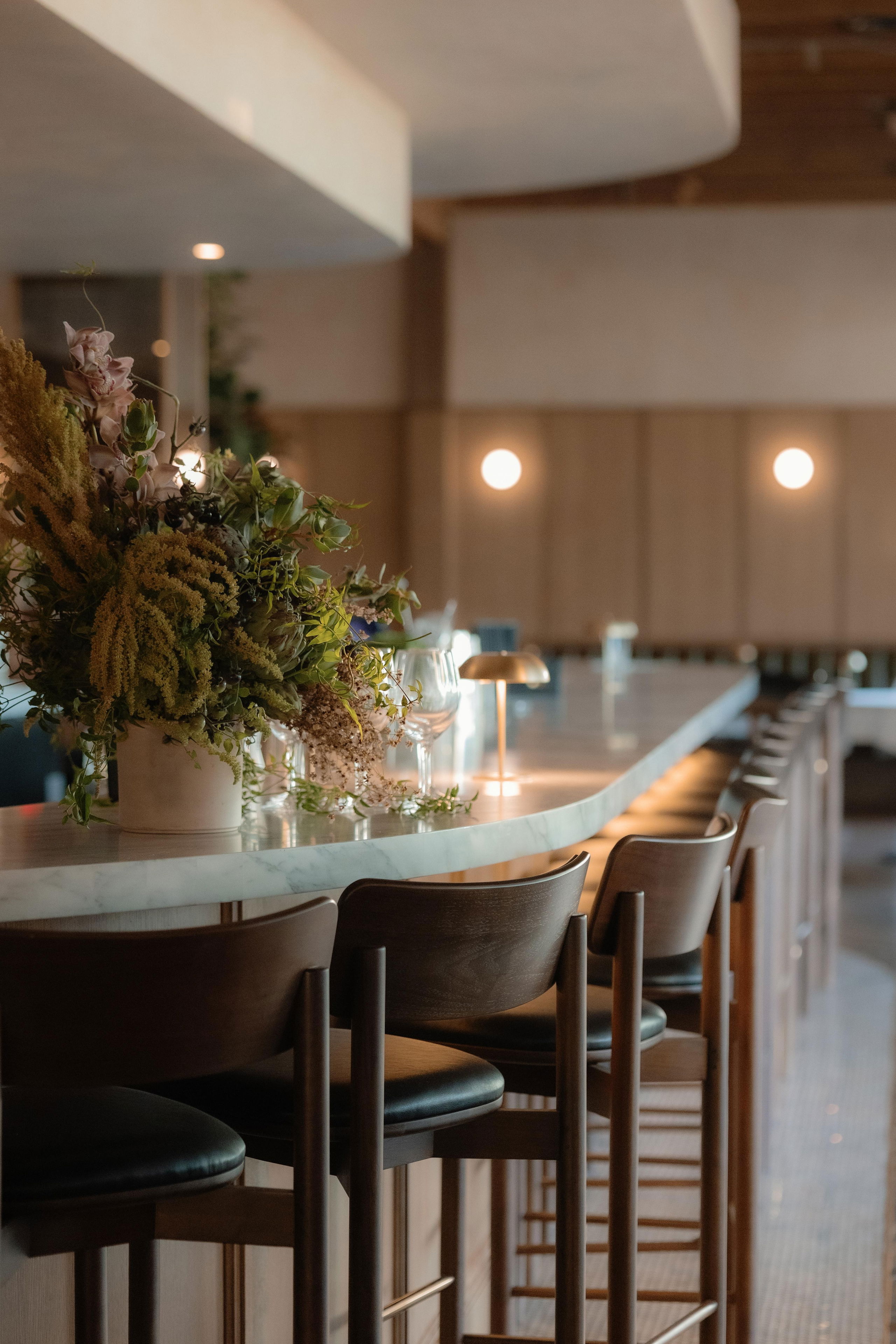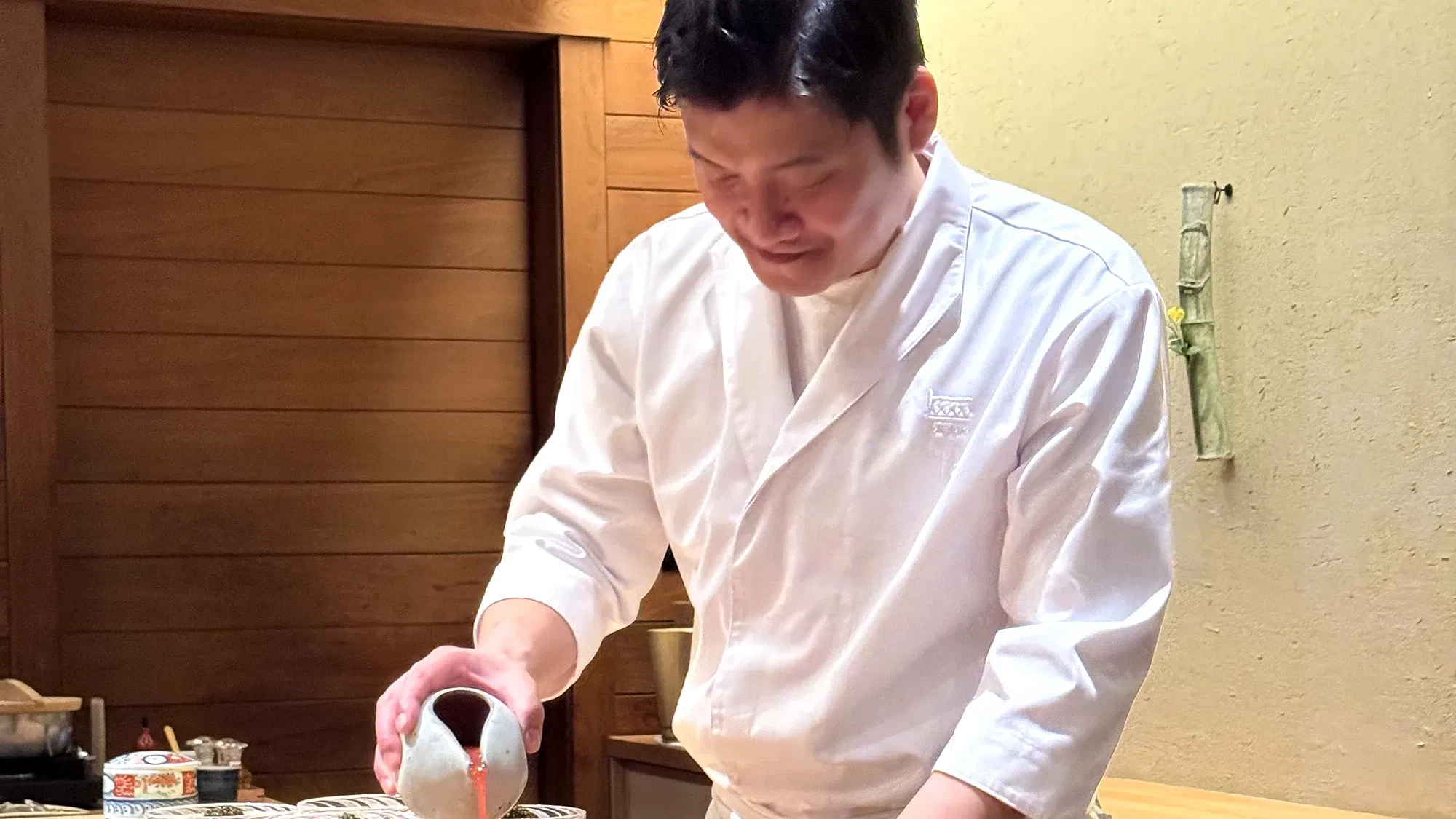
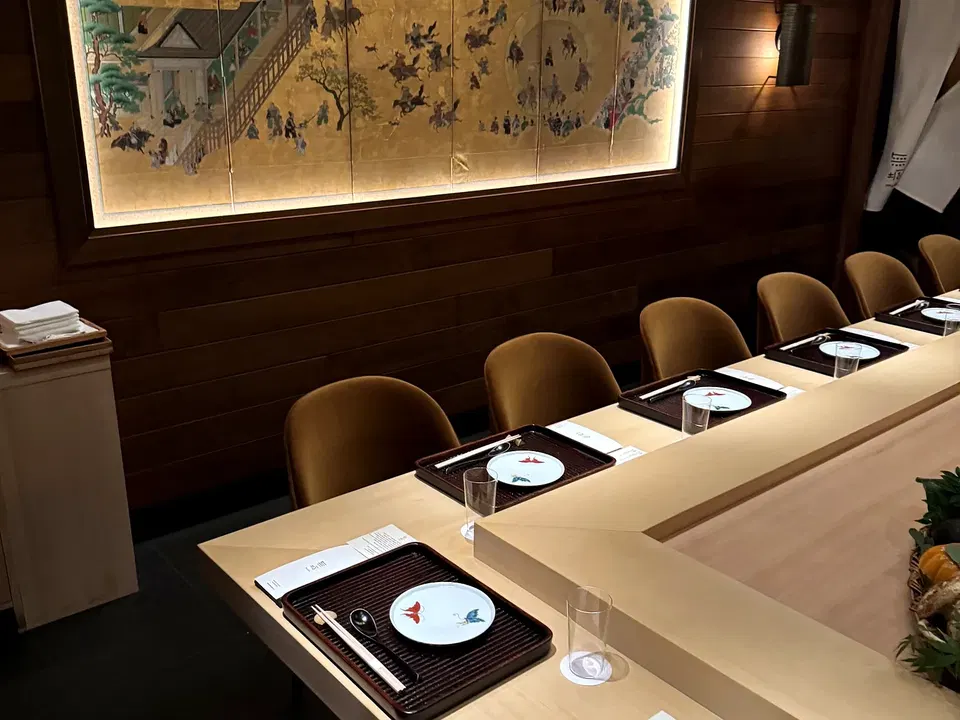
I was at Muku for its opening weekend on Saturday, September 13, 2025, three days after its September 10 public debut. The approximately ten-seat Tribeca counter still felt almost impossibly new, yet it already carried the calm of a much older place: warm wood, an illuminated wall panel, carefully chosen ceramics and executive chef Manabu Asanuma arranging seasonal ingredients directly in front of us. Just over two months later, Michelin would award Muku a star. That recognition came quickly, but the foundation was visible from the opening.
The most important point in this Muku NYC review is that the restaurant is not a sushi omakase. Muku describes its cooking as nihonryori inspired by kaiseki but not bound by its formal structure. Sashimi appears within a progression organized around goho: raw, simmered, steamed, grilled and fried preparations, followed by wagyu, rice, handmade soba and fruit. Each course changes the temperature, texture and technique while preserving a sense of restraint.
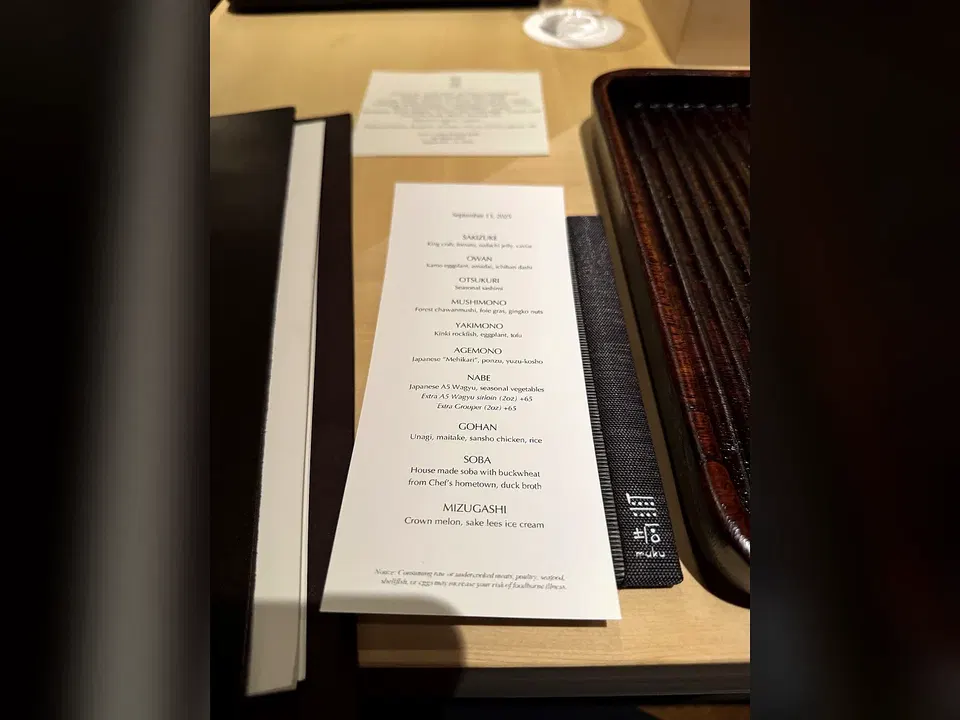
Our ten-stage opening menu was remarkably complete: king crab with tomato and sudachi; amadai in first dashi; seasonal sashimi; foie-gras chawanmushi; grilled kinki rockfish; fried mehikari; Japanese A5 wagyu; unagi rice; soba made with buckwheat from Asanuma’s hometown; and crown melon with sake-lees ice cream. The progression was ambitious, but it never felt like a checklist. The small counter kept the focus on the chef’s hands and the relationships between one course and the next.
See Muku’s Pearl venue profile for the location and practical details.
What Muku means, and why the name fits
Muku is written 無垢 and translated by the restaurant as “purity” or “innocence.” In less capable hands, that idea could become a generic promise of minimalism. Asanuma gives it more substance. His cooking is highly technical, but the technique is used to clarify ingredients rather than advertise difficulty. A broth tastes intensely of dashi. A piece of fish is grilled to reveal its fat and skin. Soba connects the counter in New York to agricultural land in Yamagata.
The room reinforces that clarity. There are few visual distractions beyond the counter, the chef and the illuminated artwork behind the seats. Service pieces are expressive without overwhelming the food. At roughly ten seats, everyone can see the same ingredient presentation and every finishing gesture.
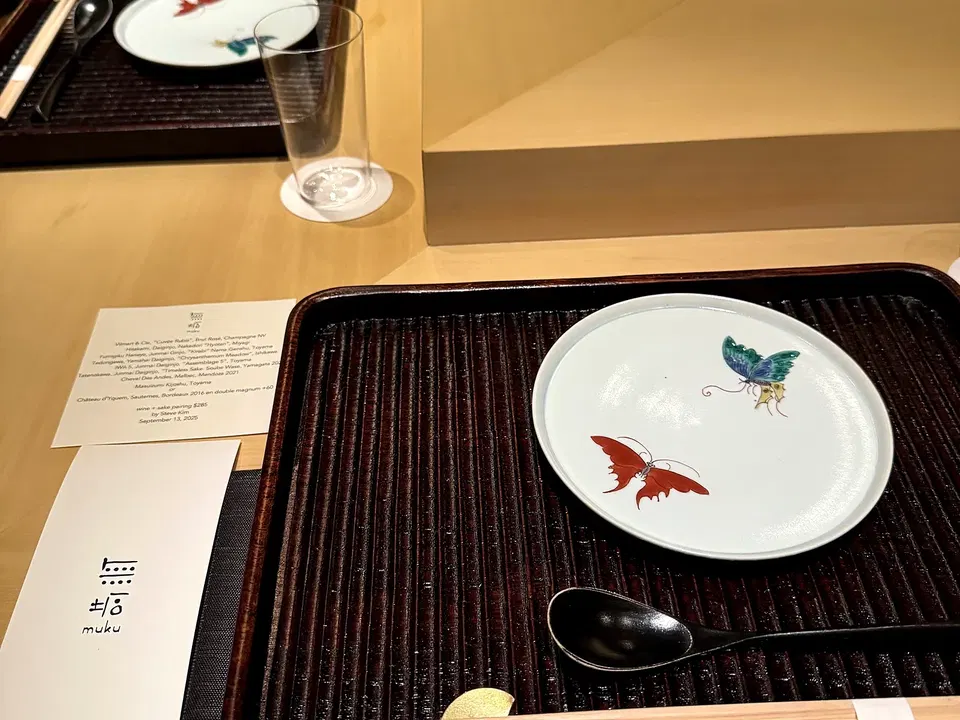
Muku belongs to Kuma Hospitality Group, which also operates L’Abeille and L’Abeille à Côté. The connection helps explain the polish, but the restaurant has its own identity. The counter is Japanese in structure and discipline, while the sequence accommodates richness, luxury ingredients and an occasional French accent without losing its center.
Chef Manabu Asanuma’s path from Yamagata to Tribeca
Asanuma comes from Yamagata Prefecture, a region known for mountain agriculture, soba and sharply defined seasons. He studied nihonryori in Miyagi, learned kappo under Iron Chef Koumei Nakamura, trained in Kyoto-style cuisine with Chef Iwasaki of Akasaka Eigetsu and studied shitate cooking with a master trained at Tokyo Kitcho. His career later took him through Tokyo and Taiwan; in New York, his résumé includes Uchu, Odo and Sushi Ichimura.
Those experiences matter, but the most compelling biographical detail arrives near the end of dinner. The buckwheat for Muku’s soba is grown by Asanuma’s parents on family land in Yamagata. Opening coverage identified the variety as Mogami Wase and described the noodles as ni-hachi soba, made with 80 percent buckwheat and 20 percent wheat. The dish is both deeply personal and technically demanding.
Before our first course, Asanuma presented an abundant display of vegetables and seasonal Japanese ingredients across the counter. It was not decoration. The gesture made the menu’s seasonality visible and gave the room a common point of attention.
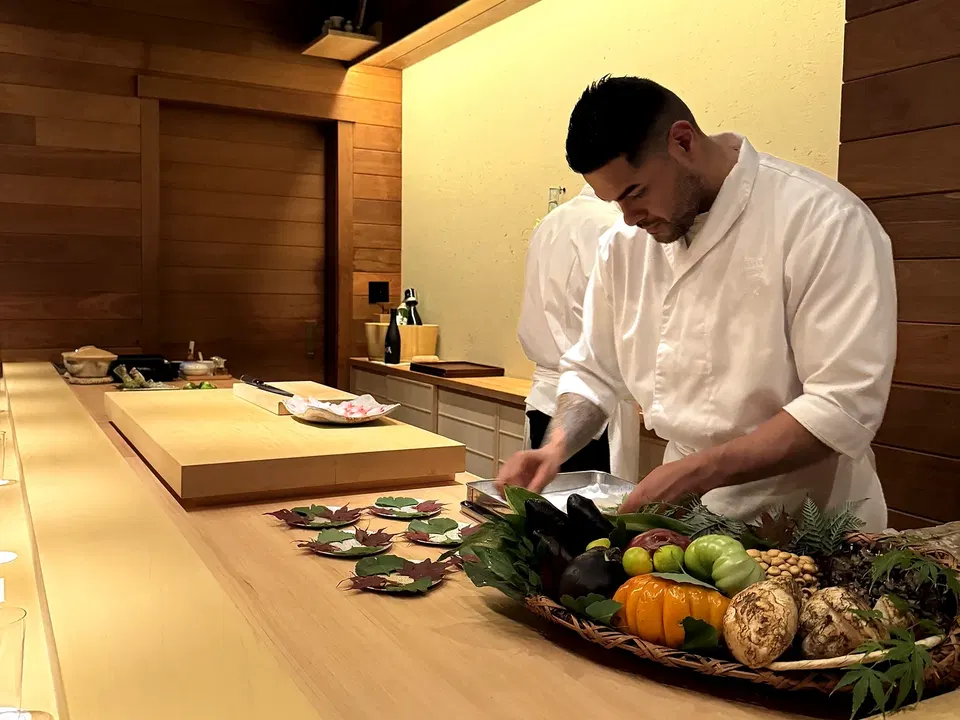
That opening presentation also revealed something essential about his style. Muku is intimate enough for the chef to explain an ingredient without interrupting the evening’s momentum. Guests can see how raw materials become the dinner in real time. The relationship between sourcing, technique and finished dish never feels abstract.
Goho: the five techniques behind the menu
Michelin describes Muku through the idea of goho, the five classical Japanese cooking methods: raw, simmered, steamed, grilled and fried. The September menu made that framework easy to understand.
Otsukuri supplied the raw course through seasonal sashimi. Owan, built around first dashi, represented simmering and the art of broth. Mushimono brought steam to chawanmushi. Yakimono used the grill for kinki rockfish. Agemono introduced frying through mehikari. These methods were not grouped into a lecture; they were distributed through the meal so that each course reset the palate and changed the pace.
The result was broader than sushi, yet more disciplined than a tasting menu that borrows Japanese ingredients without following Japanese structure. Muku’s sequence felt intentional from the light, cool opening through the richer center and the grounding starch courses near the end.
The September 13 menu, course by course
The printed menu gave each course its Japanese name, followed by a concise list of ingredients. That economy left space for the experience itself.
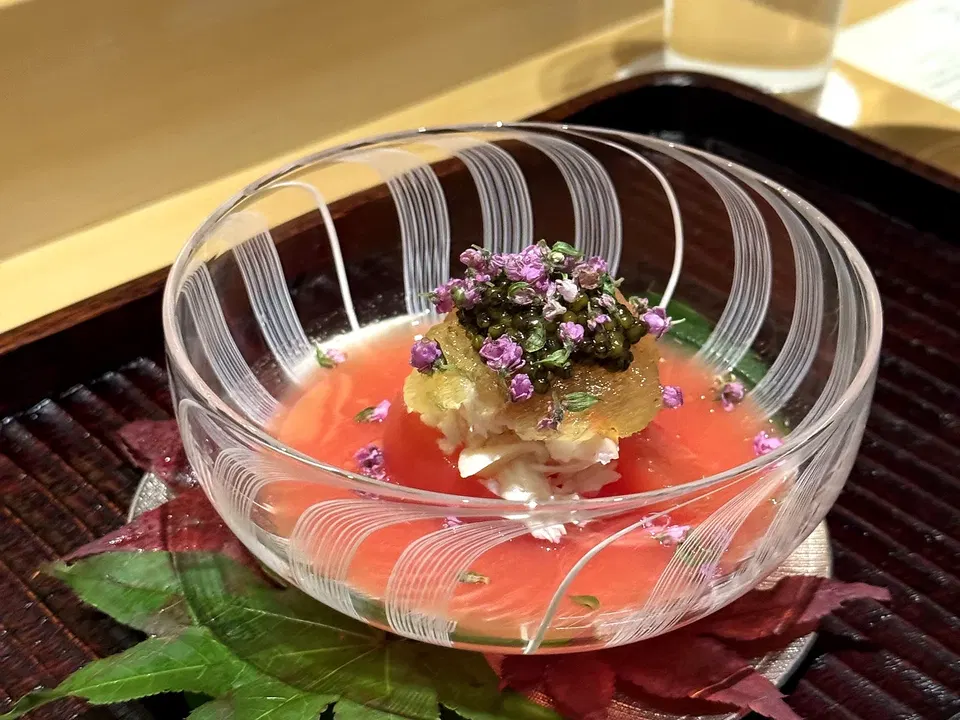
Sakizuke: king crab, tomato, sudachi jelly and caviar
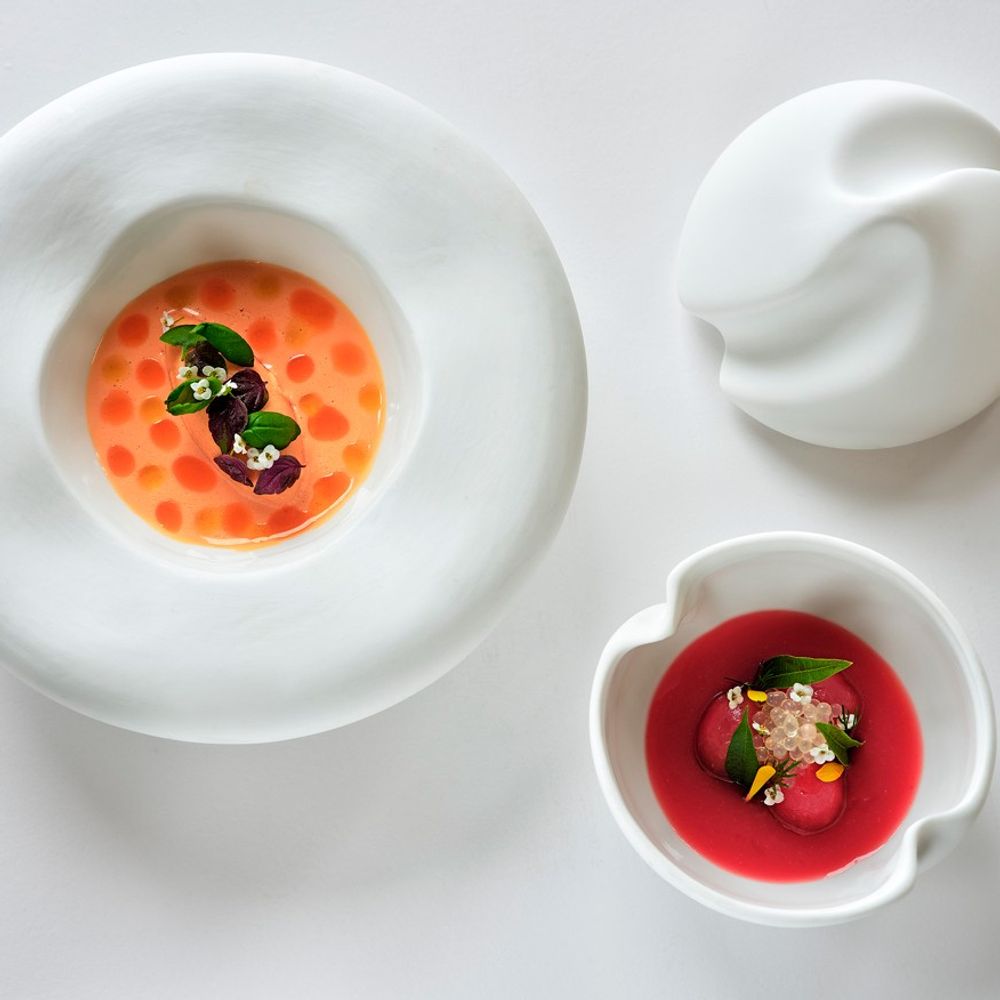
The opening course received the most visible preparation of the night. Asanuma arranged the components in fluted glass bowls and poured the liquid around them at the counter. Sweet king crab and ripe tomato formed the center, sudachi brought aromatic citrus, and caviar added salinity.
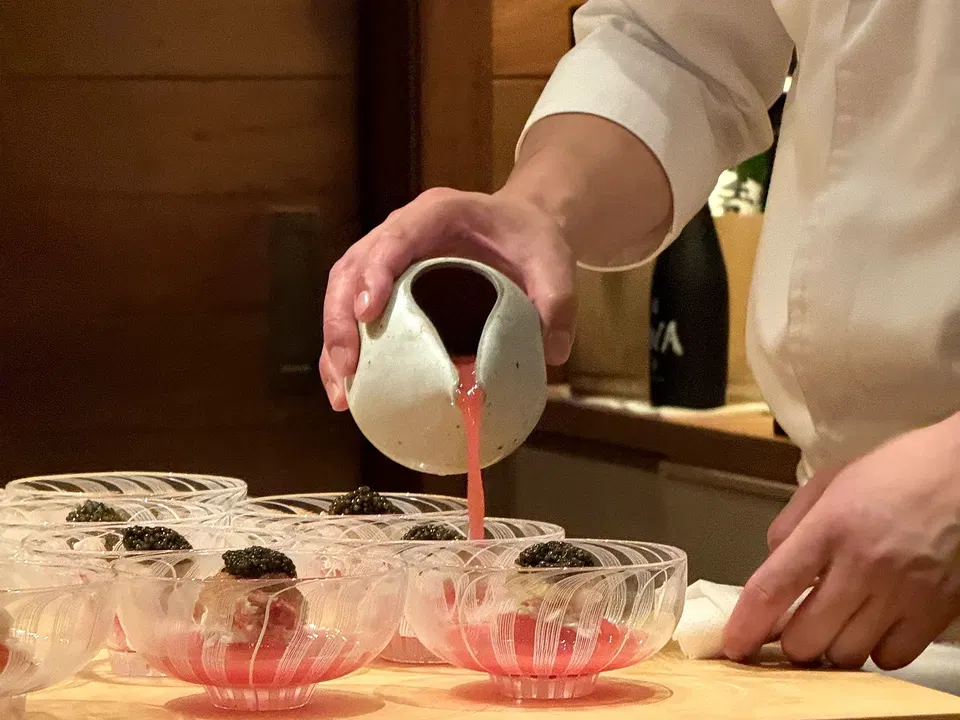
The composition looked luxurious but felt light in concept. Tomato and sudachi kept crab and caviar from settling into simple richness. The clear bowl and table-side pour emphasized transparency, both visually and in flavor.
Owan: kamo eggplant, amadai and ichiban dashi
Owan shifted the focus from brightness to broth. Kamo eggplant, amadai and ichiban dashi placed the quality of the first extraction at the center of the course. Ichiban dashi is prized for its clarity and aroma; there is nowhere for imprecision to hide. The transition showed how Muku uses restraint as a form of intensity.
Otsukuri: seasonal sashimi
The sashimi course allowed the raw ingredient to lead, but its position within the larger menu mattered. It was one expression of the five techniques, not the organizing principle for the entire dinner. That distinction is why describing Muku as omakase undersells what Asanuma is doing.
Mushimono: forest chawanmushi, foie gras and gingko nuts
The steamed course moved decisively toward autumnal richness. Chawanmushi supplied a delicate custard structure, while foie gras and gingko nuts gave it depth and texture. “Forest” was an evocative description for a course that joined earthy flavor with the softness of steamed egg.
Yakimono: kinki rockfish, eggplant and tofu
Kinki, a prized cold-water rockfish, is particularly rewarding when grilled because its fat supports crisp skin and succulent flesh. Eggplant and tofu kept the plate grounded. After the steamed custard, the grill introduced a firmer texture and deeper roasted character.
Agemono: Japanese mehikari, ponzu and yuzu kosho
Mehikari is a small Japanese fish whose name refers to its bright eyes. Frying gave the sequence crunch, while ponzu and yuzu kosho supplied acidity, citrus and chile. The course demonstrated why agemono appears where it does: it raises the energy of the meal without becoming heavy when the seasoning remains sharp.
Nabe: Japanese A5 wagyu and seasonal vegetables
The nabe course brought the menu to its richest point. Japanese A5 wagyu arrived with seasonal vegetables, letting the broth and produce absorb the beef’s intensity. The visit menu also offered optional supplements of additional A5 wagyu sirloin or grouper. Those extras were choices, not requirements for the dinner to feel complete.
Gohan: unagi, maitake, sansho chicken and rice
Rice served as a transition from the menu’s main protein arc toward its final savory expression. Unagi, maitake and sansho chicken created layers of smoke, earth and peppery lift. In the logic of kaiseki, rice is not filler at the end; it is an anchoring course that brings satisfaction and calm.
Soba: Yamagata buckwheat with duck broth
The soba was the course I most wanted to understand before visiting, and the story made it even stronger. Buckwheat grown by Asanuma’s parents on family land in Yamagata becomes noodles at a counter in Tribeca, served with duck broth. That line from place to plate is unusually direct for a New York tasting menu.
Ni-hachi soba balances the fragrance of buckwheat with enough wheat to give the noodles elasticity. The duck broth provided richness without erasing the grain’s aroma. After a menu filled with luxury ingredients, this was the course that most clearly expressed the chef himself.
Mizugashi: crown melon and sake-lees ice cream
Crown melon and sake-lees ice cream finished the meal with coolness and fragrance. The melon supplied pure sweetness and texture; sake lees added gentle fermentation and creaminess. It was a clean conclusion after wagyu, rice and duck broth.
The counter makes precision feel personal
The size, Muku’s approximately ten seats, changes how the meal works. Asanuma can present ingredients to the entire room, plate in full view and maintain a consistent pace without the counter feeling like a performance stage.
The atmosphere during our opening-weekend visit was focused but not severe. Warm wood and low light softened the formality of the sequence. The staff handled the many transitions in ceramics, temperature and beverage service with quiet control. Because the room is so small, even tiny choices become visible: where a menu is placed, when a sauce is poured, how the chef turns from one guest to the next.
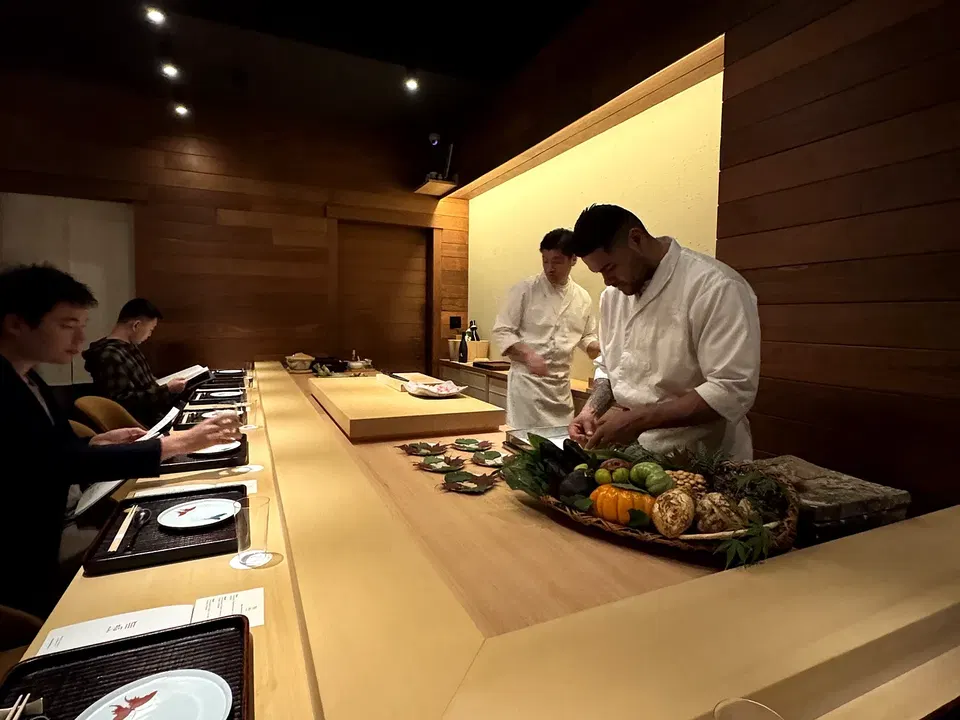
That proximity supports trust. A diner is asked to follow a long, seafood-forward progression, but the chef is present throughout. The experience feels guided rather than anonymous.
Michelin recognition after only two months
Muku opened on September 10, 2025. Michelin awarded it one star in the 2025 Northeast Cities selection on November 18, just over two months later. The speed of that recognition is striking, but it should not reduce the restaurant to a novelty about timing.
The star makes sense because Muku opened with a mature culinary system. Asanuma already had the training, sourcing relationships and New York experience to articulate a complete point of view. The menu demonstrated technical breadth through goho, while the room and service supported that cooking from the first week.
For diners, the more useful takeaway is that Muku is no longer a quiet opening with easy access. The counter is tiny, the restaurant has two seatings and Michelin recognition increases demand. Reservations require planning.
Price, reservations, dress code and arrival timing
Our September 2025 opening menu was $295 before tax and gratuity. As of this August 2026 fact check, OpenTable lists the regular Muku experience at $325 prepaid; a separate one-year-anniversary menu running in September is listed at $375. Prices and special menus change, so confirm the current total when reserving rather than relying on the visit price.
Muku currently serves Tuesday through Saturday at 5:30 p.m. and 8:30 p.m. The restaurant is closed Sunday and Monday. Because the counter begins as a synchronized experience, punctuality matters. Muku advises that guests arriving more than 15 minutes late may not receive the full menu.
The dress code is smart casual. The restaurant specifically asks guests not to wear tank tops, flip-flops, shorts or sweatpants. That policy matches the room: refined, intimate and formal enough to feel special without requiring black tie.
Dietary planning deserves special attention. This is a seafood-forward fixed menu built around dashi, fish, shellfish and a tightly sequenced kitchen. Contact the restaurant before purchasing the experience if you have any dietary restriction.
For current availability and policies, use Muku’s official information page and reservation page.
Should you book Muku?
Yes, especially if you want Japanese fine dining that extends well beyond sushi. Muku is an enthusiastic recommendation for diners who care about seasonality, broth, technique and the narrative arc of a complete kaiseki-inspired meal.
The counter’s small scale makes the experience feel personal, while the menu has enough range to remain surprising through ten courses. The king crab opening is visually striking; the progression through goho gives the dinner structure; and the Yamagata soba supplies the emotional center.
Being there for Muku’s opening weekend gave us a rare view of a restaurant at the beginning of its public life. The Michelin star arrived soon afterward, but the evening did not feel like a work in progress. It felt like a clear idea finally given a room of its own.
Muku NYC FAQ
Does Muku have a Michelin star?
Yes. Michelin awarded Muku one star in its 2025 Northeast Cities selection on November 18, 2025, just over two months after the restaurant opened.
How much does Muku cost?
Our September 2025 opening menu was $295 before tax and gratuity. As of August 2026, OpenTable lists the regular experience at $325 prepaid and a separate September anniversary menu at $375. Confirm the latest price and inclusions when reserving.
How many seats does Muku have?
Muku is an intimate counter with approximately ten seats and two nightly seatings on service days.
Is Muku an omakase restaurant?
Muku is better understood as a kaiseki-inspired Japanese tasting menu than a sushi omakase. Seasonal sashimi is one course within a progression that also emphasizes simmering, steaming, grilling, frying, rice and handmade soba.
When are Muku’s seatings?
The current schedule is Tuesday through Saturday at 5:30 p.m. and 8:30 p.m. Guests should arrive on time because a delay of more than 15 minutes may prevent the restaurant from serving the complete experience.
What is the dress code at Muku?
Muku requests smart-casual dress and excludes tank tops, flip-flops, shorts and sweatpants.
Can Muku accommodate dietary restrictions?
Because the fixed menu is seafood-forward and relies on dashi, fish and shellfish, contact the restaurant before booking to confirm whether a specific need can be accommodated.