Fontenille Collection opened Château de Cîteaux in Meursault, Burgundy, last week inside a transformed 19th-century château above 12th-century Cistercian wine cellars. According to Robb Report Hotels, book Château de Cîteaux Meursault if you want a wine-first Burgundy base with 18 rooms ready now, rates from about $440 (380 euros) per night, and cellar tastings due to begin in September.
This is not the right pick if you want Beaune outside your hotel door or a fully finished 35-room property from day one. It is the right pick if Meursault is the point of the trip, especially if your Burgundy itinerary revolves around Côte de Beaune whites, grower visits, and a hotel that puts the region’s cellar history under the same roof as your room.
What Makes Château de Cîteaux Meursault Worth Booking
Château de Cîteaux Meursault gives Burgundy travelers a practical answer to a common problem: where do you stay if the trip is about wine rather than spa-and-castle theater? The property sits in Meursault, the small village birthplace of Chardonnay, and it puts guests under a three-hour train ride from Paris. That makes it viable for a two-night Burgundy run, not just a weeklong circuit planned around a rental car and multiple hotel changes (Robbreport1).
The comparison that matters is location. A Beaune hotel is better if you want the region’s wine capital as your base, with more obvious town energy and easier access to restaurants beyond the property. Château de Cîteaux is better if you want to sleep in Meursault and build the day around cellars, neighboring winemakers, and Côte de Beaune villages such as Pommard and Beaune. For collectors who care where they wake up, that difference matters more than another layer of château decoration.
Scarcity also works in its favor, but not in the lazy “hard to get” sense. The hotel will have 35 rooms and suites in total, yet only 18 are ready now. Another 17 are scheduled for later in 2027. If you want the earliest version of the property, you are booking into a hotel still in its first operating chapter. That usually means more access, more curiosity from the staff, and fewer repeat-guest patterns already locked in. It can also mean some services are still finding their rhythm (Robbreport1).
Fontenille Collection’s timing adds a second reason to track it now. This is the group’s first Burgundy property, and the opening coincides with its 10-year anniversary. That does not guarantee flawless execution, but it does mean the group has chosen Meursault for a high-visibility address rather than a side project. For Burgundy travelers, the useful takeaway is simple: a new room supply has arrived in a village where the hotel decision has often felt secondary to the wine appointment (Robbreport1).
The 12th-Century Cistercian Wine Cellars Beneath the Property
The cellars are the booking argument. The current château dates to the 19th century, but the wine story beneath it reaches back to the 12th-century cellars created by Cistercian monks in Meursault’s Vieux-Clos. Robert de Molesme founded the Cistercians at an abbey about 20 miles from Meursault in 1098, before the dukes of Burgundy gave monks land for vineyards in the area.
That history would be academic if the hotel treated it as a plaque in the lobby. Instead, guests will be able to explore the 12th-century Cistercian cellars for a tasting starting in September. If your trip lands before then, the room rate buys you the château setting and Meursault base, but not yet the full cellar-access proposition. If the underground tasting is the reason you are going, wait for September or confirm the experience before you book.
Philippe Bouzereau gives the wine program a useful local anchor. The hotel’s wine selection is a selection of Burgundy wines, between grandes appellations and producer cuvées. That is the kind of detail to ask about before arrival: which Bouzereau wines are being poured, which neighboring growers are available for tastings, and whether the cellar tasting is private, shared, or tied to a set schedule.
The hotel also plans vineyard picnics, tastings with neighboring winemakers, and harvest events with Bouzereau from August to September. Those are not throwaway add-ons if you are traveling with people who do not want every appointment to be a formal domaine visit. A picnic or harvest event can make the trip work for a mixed group: the wine obsessive still gets Meursault context, while the less technical traveler gets something more relaxed than another hour in a tasting room.
Rooms, Suites, and Design Details
According to Robb Report Hotels, Château de Cîteaux will eventually reach 35 rooms and suites, but the current experience is smaller: 18 rooms are open now, with 17 more coming later in 2027. That matters for booking. Early guests get the advantage of a quieter house and a more limited number of people moving through the public rooms. They also accept that the complete property will not be online until a later phase.
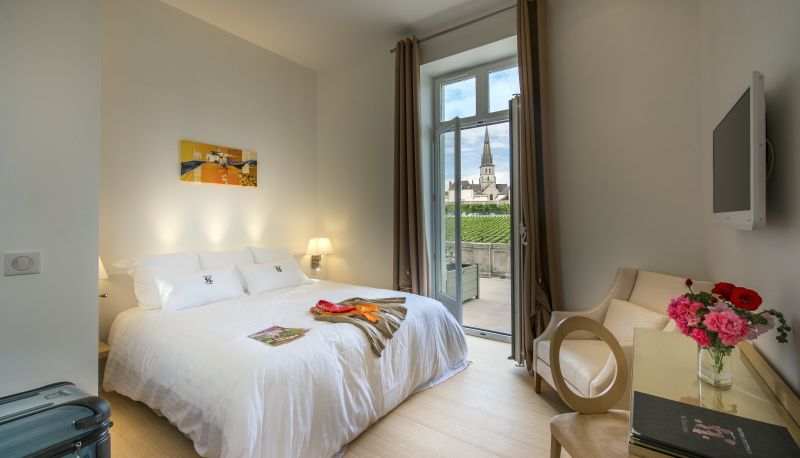
The building itself was designed by architect Jules Bernard in the Napoleon III era, above the older cellars. Second Empire references include torsade columns, muted greens, terra-cotta touches, and stonework. Those details sound minor until you compare this with a generic countryside hotel where Burgundy is reduced to a framed vineyard print and a list of premiers crus. Here, the architecture has enough specificity that design-minded travelers have a reason to stay on property between tastings.
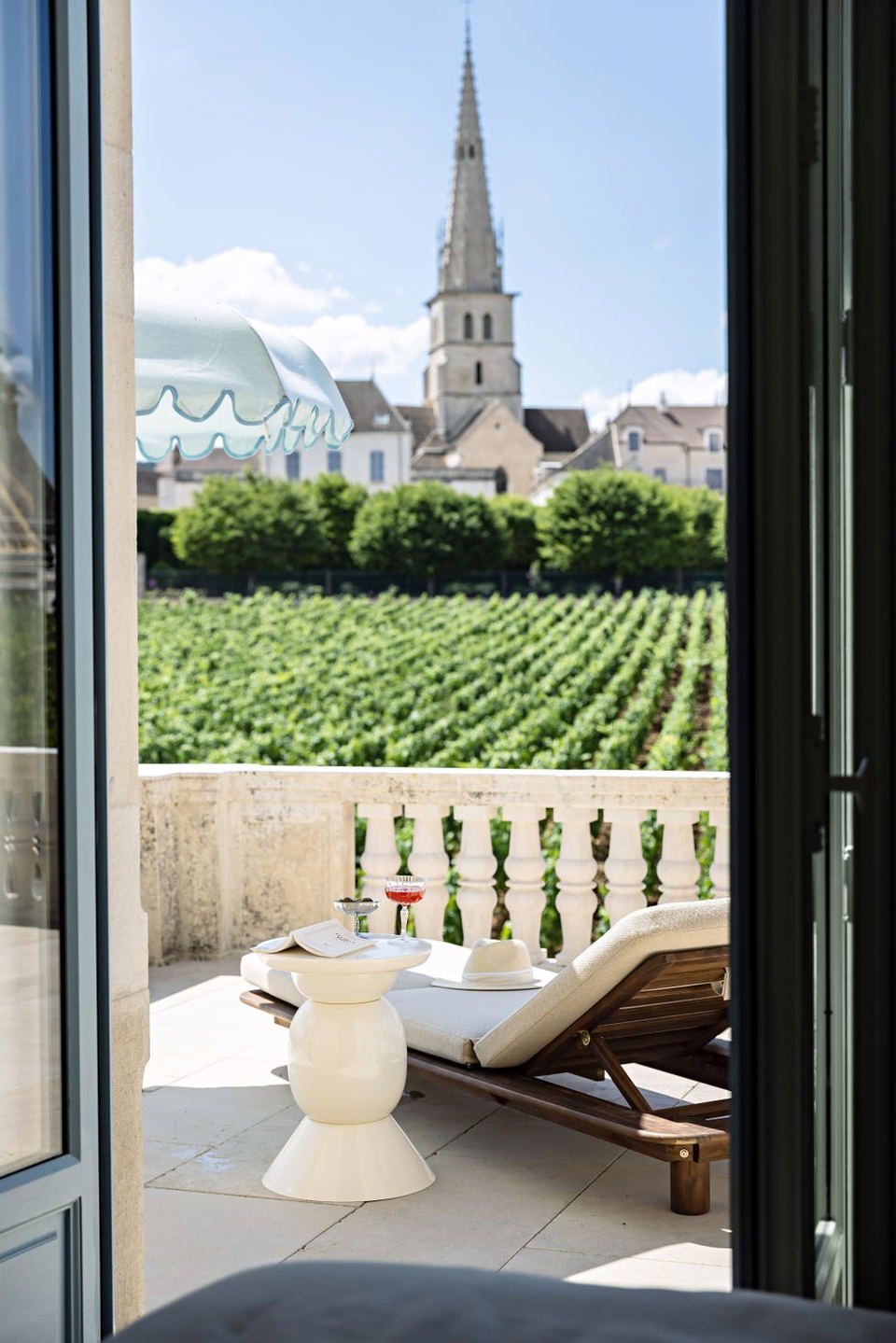
The rooms draw from the Barbizon School, the 19th-century French painters associated with nature and rural scenes, and some rooms have private terraces overlooking the Côte de Beaune. Ask for the terrace category if morning and late-afternoon downtime matter to you. In Burgundy, the difference between a good stay and a logistical one often comes down to whether you have somewhere to sit between appointments without defaulting to the car or the bar.
Fontenille Collection also used local ateliers, including Leblond Père et Fils for bespoke woodwork. The more important detail is that the restoration did not stop at furniture. Conservator Alice Gardien restored paintings and frescoes in the hotel’s restaurant, giving the main dining room a direct link to the château’s own visual history. If you care about old houses, book dinner at Célestine at least once rather than treating the restaurant as a backup option.
Dining and Wine Programming at Célestine
Célestine, the hotel restaurant, is named for Jules Bernard’s daughter and occupies a gilded salon with restored paintings and frescoes, including ceiling cherubs among clouds. Chef Christophe Vauthier leads the kitchen. The menu direction is regional rather than concept-heavy: cheeses from the area, river fish, Bresse poultry, and vegetables from local markets.
That makes Célestine more useful for a Burgundy trip than a tasting-menu restaurant trying to detach itself from place. After a day of cellar visits, most travelers do not need another performance. They need a kitchen that understands the wines being opened in the room. Regional cheeses, river fish, Bresse poultry, local vegetables, Bouzereau cuvées, Côte de Beaune appellations, and smaller growers give the restaurant enough material to serve that role.
Book Célestine for your first night if you are arriving by train from Paris. Under three hours on the rails still leaves the usual arrival friction: transfer, check-in, luggage, and the temptation to over-schedule. Eating on property lets you calibrate the wine list before committing the next day to tastings with neighboring winemakers. If the sommelier team can steer you toward smaller growers by glass or bottle, that is where the restaurant becomes part of the trip rather than just the convenient dinner.
For groups, the format sounds more forgiving than a rigid counter or tasting menu. The reported ingredients point toward a room that can handle different appetites: cheese and vegetables for lighter diners, Bresse poultry for the table that wants a proper main course, river fish for anyone trying to avoid a meat-heavy run through Burgundy. If your party includes both collectors and people who came for the countryside, Célestine is likely the easy first reservation.
Practical Details: Rates, Booking, and Access
Rates at Château de Cîteaux start from about $440 (380 euros) per night. For Burgundy, that is not an automatic yes or no. The decision depends on whether you use the property’s wine programming. If you only need a bed between Beaune dinners, you can make a stronger case for staying in Beaune. If you want Meursault, an on-site restaurant, spa facilities, and cellar tastings from September, the entry rate is easier to justify.
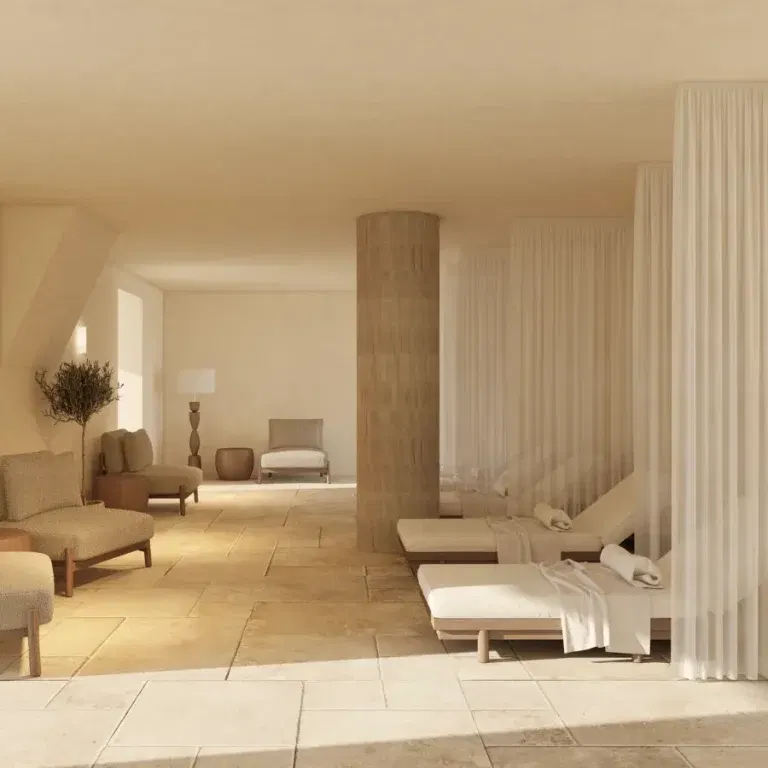
The access equation is also clean. The hotel is under a three-hour train ride from Paris, which makes it workable for a long weekend if you do not try to visit every village in one trip. Keep the first stay tight: arrival day at Célestine, one day for Meursault and neighboring winemakers, one day for Beaune or Pommard, then back to Paris. Spa facilities include treatments based on the monks’ apothecary, a heated indoor pool, a Jacuzzi, a hammam, and a sauna, which gives non-driving hours some structure.
Timing matters more than usual. Book now if you want the first 18-room phase and can accept that the full 35-room hotel will not arrive until later in 2027. Wait if you need the broader room inventory, if you are traveling with a larger group, or if you want more certainty around the September cellar tastings. For harvest-season travelers, the August-to-September events with Bouzereau are the detail to ask about before locking dates.
The next thing to watch is how Château de Cîteaux turns its cellar access into a daily rhythm: fixed tastings, private appointments, grower dinners, or harvest programming tied to Bouzereau and neighboring domaines. If Fontenille Collection gets that right, Château de Cîteaux Meursault becomes less a nice place to sleep in Burgundy and more a useful base for understanding why Meursault keeps pulling serious wine travelers back.