

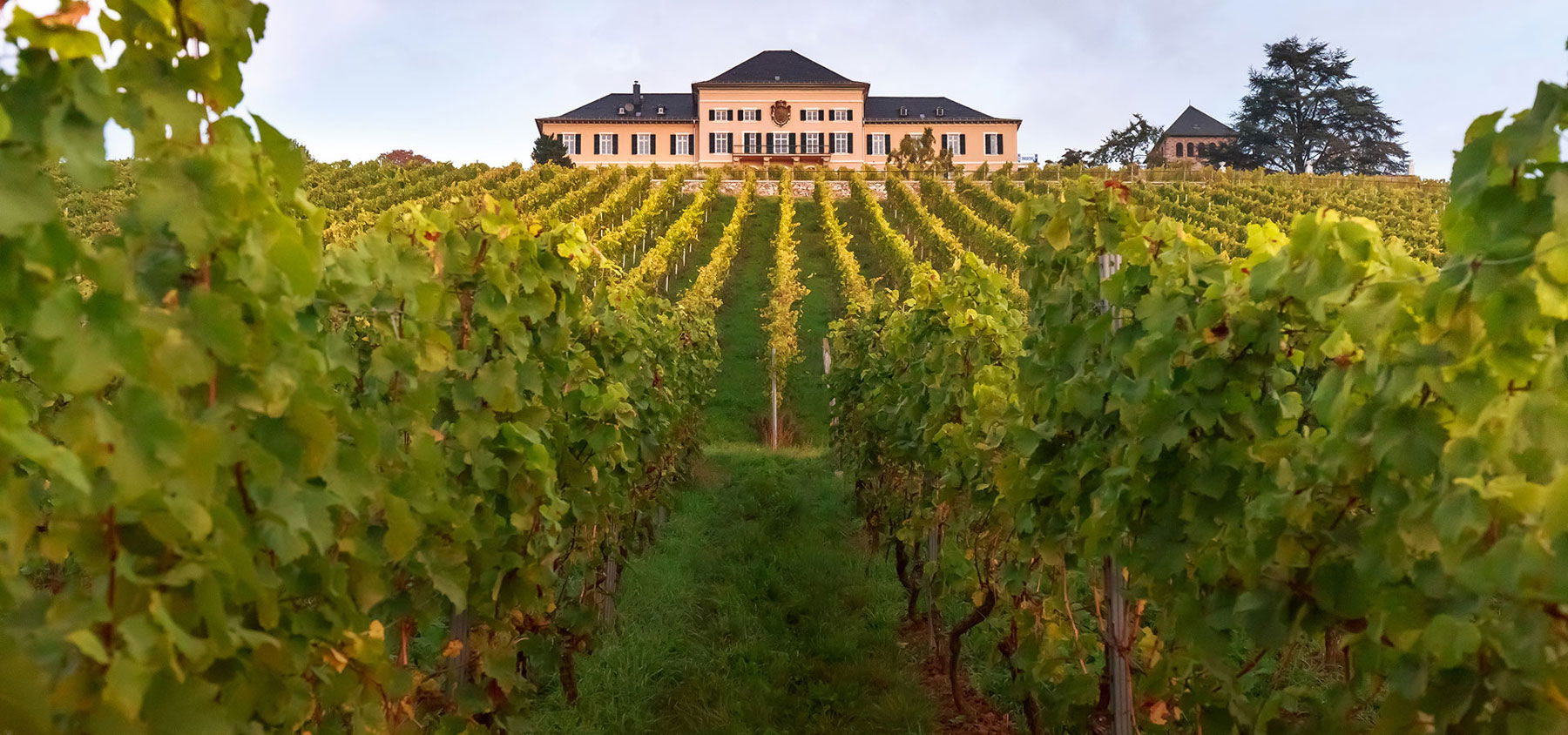

Schloss Johannisberg
Johannisberg, Geisenheim-Johannisberg
Winery in Geisenheim-Johannisberg, Germany
 Book with Pearl
The Read
Origin-Point Riesling
Why go
Schloss Johannisberg is a Riesling wine estate in Geisenheim-Johannisberg in Germany's Rheingau region.
About Schloss Johannisberg
Verdict
If access is tight, the smart move is to treat Schloss Johannisberg as the anchor for a wider Rheingau wine day rather than the only stop. The hilltop palace setting is visible before the wine argument even starts, and the case for going is strongest for Riesling drinkers who care about origin stories, long continuity, and bottles with a clear flagship identity. This is not the easiest winery decision in Germany: booking difficulty is listed as near impossible, public contact details are not available in the record, and prices are not published here. The upside is a Pearl 4 Star Prestige rating for 2025 and a site first planted with vines in 817, later becoming the world’s first dedicated Riesling winery in 1720.
Portrait
In Rheingau terms, this is the heritage-heavy choice. Readers comparing German Riesling estates should not treat it like a casual tasting-room add-on. Schloss Johannisberg is better for the explorer who wants the visual drama of a neoclassical palace above the vineyards and the historical weight of a Riesling specialist than for someone trying to maximize easy appointments in one afternoon. If the goal is bottle discovery across styles, cross-shop with Weingut Georg Breuer in Rüdesheim am Rhein or Weingut Wittmann in Westhofen; if the goal is a landmark Riesling reference point, this is the more obvious target.
The flagship assessment is simple: the reason to prioritize this visit is Riesling. The database identifies the estate as the world’s first dedicated Riesling winery in 1720, which gives the bottles a stronger provenance story than many otherwise excellent German producers. That does not automatically make every purchase a value play, especially without published pricing in the record. It does mean shipping or cellar allocation makes more sense for buyers who already drink Riesling regularly and want a benchmark Rheingau name, not for casual buyers looking for a mixed-case education.
Compared with Mosel peers such as Weingut Willi Schaefer in Graach an der Mosel or Weingut Clemens Busch in Pünderich, the appeal here is less about quiet cellar intimacy and more about historic scale. Compared with Pfalz names like Weingut Müller-Catoir in Neustadt an der Weinstraße or Weingut Von Winning in Deidesheim, it is more narrowly tied to Rheingau Riesling identity. That focus is a strength if the reader wants depth, but a limitation if the day needs variety across grapes, architecture, and hospitality formats.
Ratings
- Pearl rating: Pearl 4 Star Prestige (2025).
- Trust signal: Hill first planted with vines in 817; dedicated Riesling winery from 1720, according to the venue record.
- Decision read: Prioritize for Riesling provenance and setting; skip if easy access, published pricing, or casual drop-in logistics matter more.
Booking
Booking difficulty is near impossible, so plan around uncertainty. The record does not provide hours, phone, website, or a booking method, which means readers should avoid building a full day around an unconfirmed visit. For a tighter itinerary, use Weingut Georg Breuer as a nearby Rheingau comparison and keep Weingut Jakob Schneider in Niederhausen or Weingut Van Volxem in Wiltingen on the broader German Riesling shortlist.
Know Before You Go
- Address: Schloss Johannisberg, 65366 Geisenheim.
- City: Geisenheim-Johannisberg, Germany.
- Price range: Not available in the database record.
- Hours: Not available in the database record.
- Dress code: Not available in the database record; for a palace winery context, smart casual is the safer default.
- Group suitability: Capacity is not listed, so large groups should not assume availability without direct confirmation.
- Useful guides: See our full Geisenheim-Johannisberg wineries guide, plus restaurants, hotels, bars, and experiences for planning the rest of the day.
How It Compares
Schloss Johannisberg is the prestige-first Rheingau pick: harder to access, stronger on historic Riesling identity, and more visually formal than most German winery visits. Weingut Georg Breuer is the cleaner cross-shop for readers who want Rheingau context without putting every plan behind a difficult booking.
For Riesling depth outside the Rheingau, Weingut Willi Schaefer, Weingut Clemens Busch, and Weingut Van Volxem give a stronger Mosel/Saar comparison set. For broader German dry-wine context, Weingut Wittmann, Weingut Müller-Catoir, and Weingut Von Winning are better for readers who want to compare regional styles rather than focus on one historic Riesling address.
Pearl Picks Nearby and Similar
- Weingut Georg Breuer in Rüdesheim am Rhein for a nearby Rheingau comparison.
- Weingut Jakob Schneider in Niederhausen for another German Riesling reference.
- Bodegas Ysios in Laguardia if architecture-led winery visits are part of the appeal.
- Cakebread Cellars in Rutherford for readers comparing classic estate visits outside Europe.
Planning details
- Location
- Schloss Johannisberg, 65366 Geisenheim
- Website
- schloss-johannisberg.de/en
- Phone
- +49 6722 70090
The take
The Take
The Vibe
Schloss Johannisberg feels like a living thread of Riesling history. Approaching the Neoclassical palace on the crest of a sun-drenched, south-facing slope immediately frames the visit as both architectural and agricultural: vineyards fall away to the river below, and the site’s long lineage — planted by Benedictine monks in 817 AD and formalized as a dedicated Riesling estate in the early 1700s — gives the place an historic gravitas. The tone is quietly majestic rather than flashy; the landscape, soils and riverlight do the talking, making the estate feel serene and timeless.
Best For
This is a destination for people who want to understand Riesling in context. The estate’s centuries-long stewardship and its role as a regional reference point make it particularly well suited to educational visits and to special occasions that benefit from dramatic setting and provenance. Guests come to see how slope, soil and river influence ripening, to walk estate grounds, and to absorb the sense of history conveyed by the Neoclassical palace and uninterrupted vineyard site. It’s less about nightlife and more about study, scenic presence and ceremony.
Tasting Tips
Focus your tasting on the estate’s Riesling expressions and ask about how the slope, soil and river influence ripeness and aging. Given the site’s historic role as a reference for the variety, request older vintages or estate bottlings when available to compare ripening profiles. If educational visits or guided tastings are offered, prioritize those — the description emphasizes terroir and history, so curator-led explanations will deepen appreciation of what makes Johannisberg distinctive.
Venue details
Ambiance
Historic Baroque palace amid steep south-facing vineyards, evoking timeless elegance and serene wine culture.
Tags
Vibe
Best For
Experience
Sourcing
View
At the Vineyard
- Appellation
- Rheingau
- Varietals
- Riesling
- Tour Duration
- 60-90 minutes
- Wine Club
- Not available
Know before you go
Know Before You Go
- Getting there
- Schloss Johannisberg, 65366 Geisenheim
Planning details
Location

Winery context
Schloss Johannisberg is the prestige-heavy choice in the Geisenheim-Johannisberg orbit: better for Riesling history and palace setting than for easy planning or clear value math. Since pricing, hours, and booking method are not listed, it is a weaker pick for travelers who need a predictable afternoon and a stronger pick for collectors who value the 817 vineyard history and 1720 Riesling focus.
For a nearby Rheingau alternative, Weingut Georg Breuer in Rüdesheim am Rhein is the cleaner cross-shop when access matters. For Riesling drinkers willing to travel beyond the region, Weingut Willi Schaefer, Weingut Clemens Busch, and Weingut Van Volxem give a broader Mosel and Saar comparison set.
If the goal is variety rather than a single historic Riesling address, look at Weingut Wittmann, Weingut Müller-Catoir, or Weingut Von Winning. Schloss Johannisberg wins on heritage signal; those peers are more useful for comparing regional German wine styles across a wider itinerary.
Explore Geisenheim-Johannisberg
Around this place
Discover more on Pearl
Unlock the full Schloss Johannisberg guide in Pearl, including awards, comparisons, FAQs, planning details, and nearby places.
FAQ
Frequently Asked Questions
When is the best time to visit Schloss Johannisberg?
Go in the daytime and build it into a Rheingau wine day, since Schloss Johannisberg sits at Schloss Johannisberg, 65366 Geisenheim and works better as a planned stop than an impulse one. If you want the clearest read on the estate, avoid treating it like a quick roadside tasting room.
What is the flagship wine at Schloss Johannisberg?
Riesling is the answer here, because Schloss Johannisberg became the world’s first dedicated Riesling winery in 1720. If you want the estate’s core identity, start with that rather than looking for a broader mixed-variety lineup.
Can Schloss Johannisberg handle large groups?
Large groups should be planned in advance, not assumed to fit in casually. The hilltop estate format at Schloss Johannisberg in Geisenheim-Johannisberg is better suited to organized visits than to walk-in parties of 6 or more.
Is the wine club at Schloss Johannisberg worth joining?
Join only if you are already serious about Rheingau Riesling, because the estate’s value is strongest for repeat buyers of a very specific style. The Pearl 4 Star Prestige rating signals real weight, but a club makes sense mainly for people who want ongoing access, not occasional bottles.
How long should I plan for a visit to Schloss Johannisberg?
Plan for a half-day if you want the visit to feel worthwhile, especially if you are pairing it with other Rheingau stops. The estate’s address in Geisenheim-Johannisberg points to a destination visit, not a quick in-and-out tasting.
Do I need a reservation at Schloss Johannisberg?
Yes, treat it as reservation-first rather than spontaneous. The record gives no phone number or website, so the practical move is to plan ahead and not count on walking in at Schloss Johannisberg.
Does Schloss Johannisberg ship wine?
Do not assume shipping until you verify it directly through the estate. Because the record lists no website or phone for Schloss Johannisberg in Geisenheim, shipping is something to confirm before you plan around it.