


Ubuka
Spanish, Crab Specialities · Shinjuku, Tokyo
Restaurant in Tokyo, Japan
 Book with Pearl
The Read
Shellfish-Centred Precision
Price
$150–200per person
Why go
Ubuka is a Michelin one-star shellfish specialist in Shinjuku, built around crab and prawn with French and kaiseki technique. At ¥¥¥, it delivers better value than most starred Tokyo dinners. Book the counter, plan three to four weeks ahead, and only come if shellfish is genuinely your priority — the menu doesn't waver from it.
About Ubuka
Who Should Book Ubuka
If crab and shellfish are your priority and you want a Michelin-starred meal in Tokyo that doesn't follow the standard kaiseki or omakase script, Ubuka in Shinjuku's Arakicho neighbourhood is the right call. This is the restaurant for diners who've already done the sushi counter circuit and want something with a sharper, more singular focus. At ¥¥¥, it sits a price tier below the ¥¥¥¥ heavyweights like RyuGin or L'Effervescence, which makes it one of the stronger value propositions for a one-star dinner in the city.
The Venue
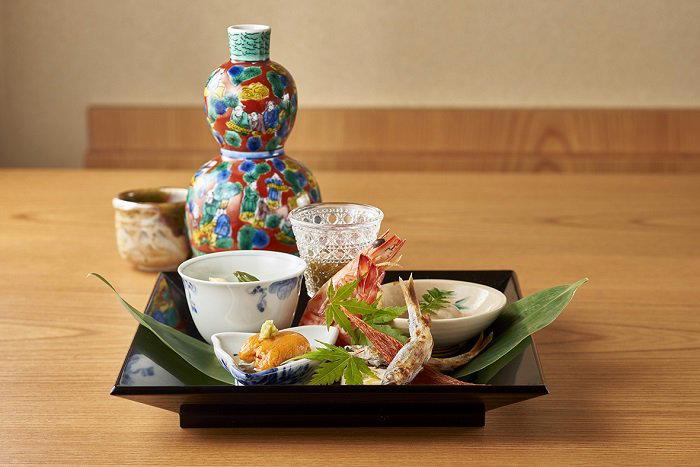
Ubuka is chef Jerome Quilbeuf's shellfish-focused restaurant, driven by a menu built almost entirely around crab and prawns. The kitchen pulls from both French and kaiseki traditions — hair crab terrine borrows from classical French technique, while prawns appear in sauce américaine, and the meal closes with crab and vegetables cooked over rice in an earthenware pot. That closing dish is the most telling: it uses a kaiseki-style earthenware pot but frames the shellfish as the main event rather than the supporting ingredient. Portions are described as generous, which is worth noting for a Michelin-starred Tokyo restaurant where the opposite is often the case.
The approach here is clear from the first course: this is a chef who built a restaurant around what he genuinely cares about rather than around a format. Quilbeuf's menu doesn't hedge between Western and Japanese cuisines — it uses both where they serve the ingredient. The result is a menu that feels direct rather than experimental.
The Counter Experience
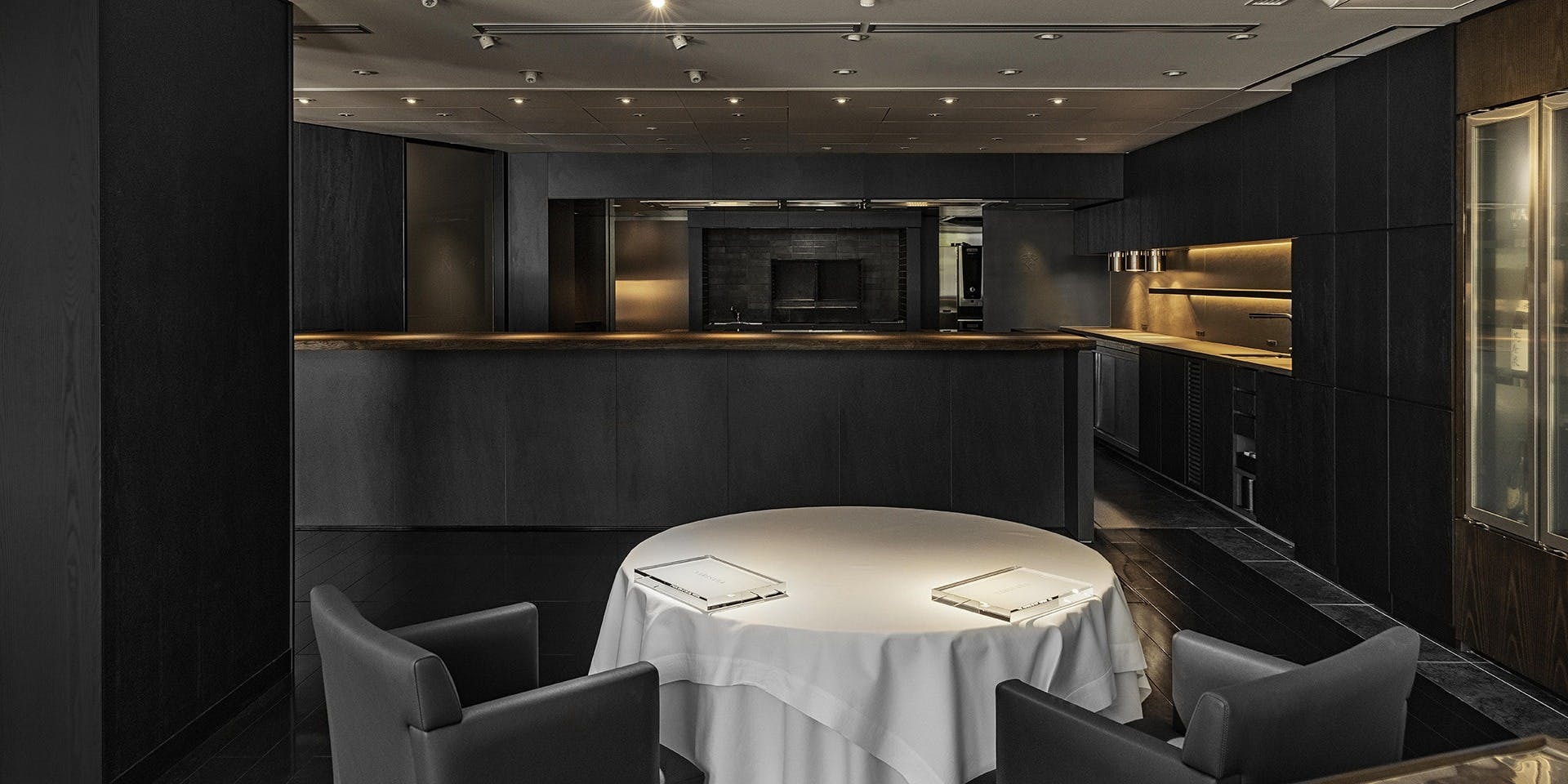
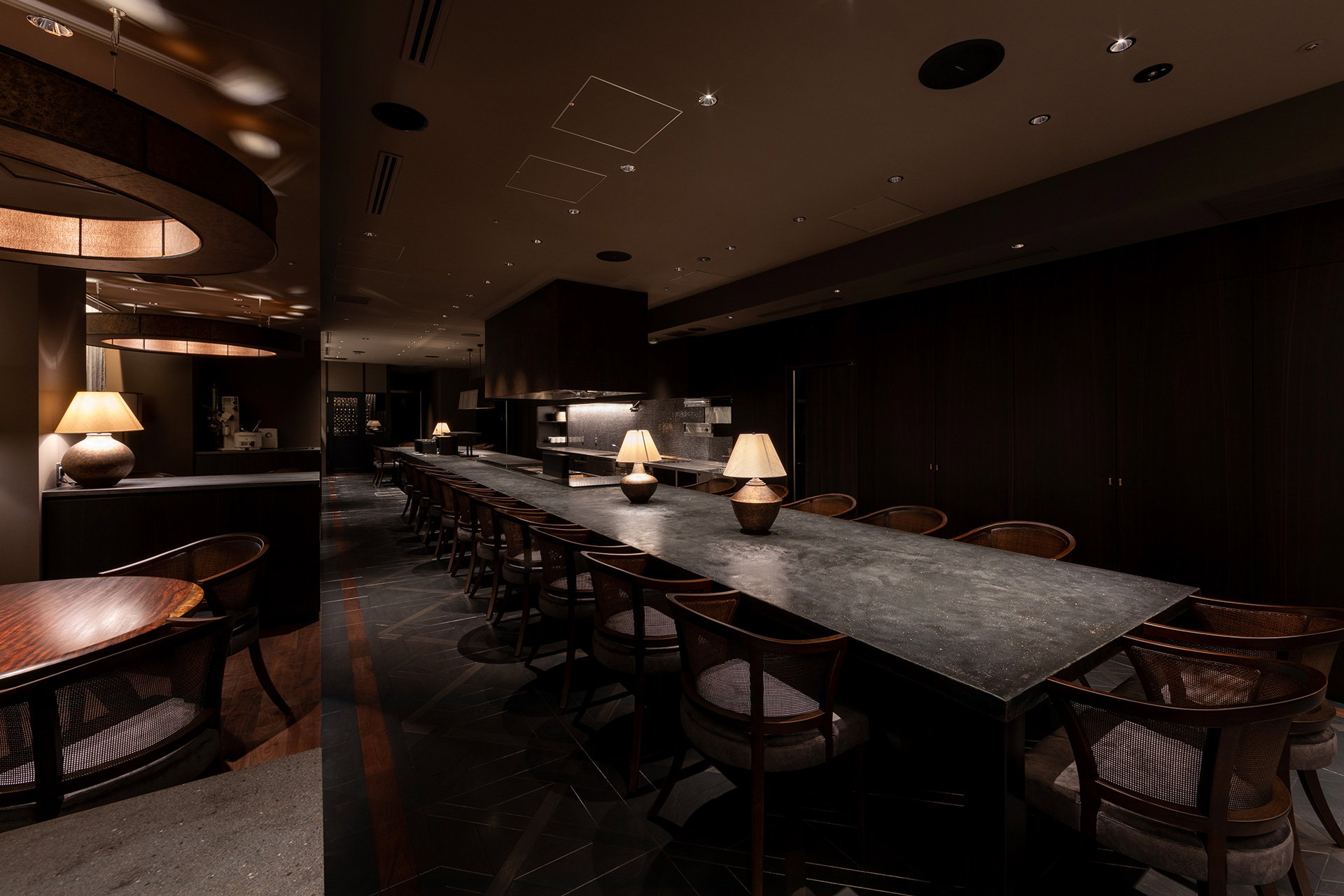
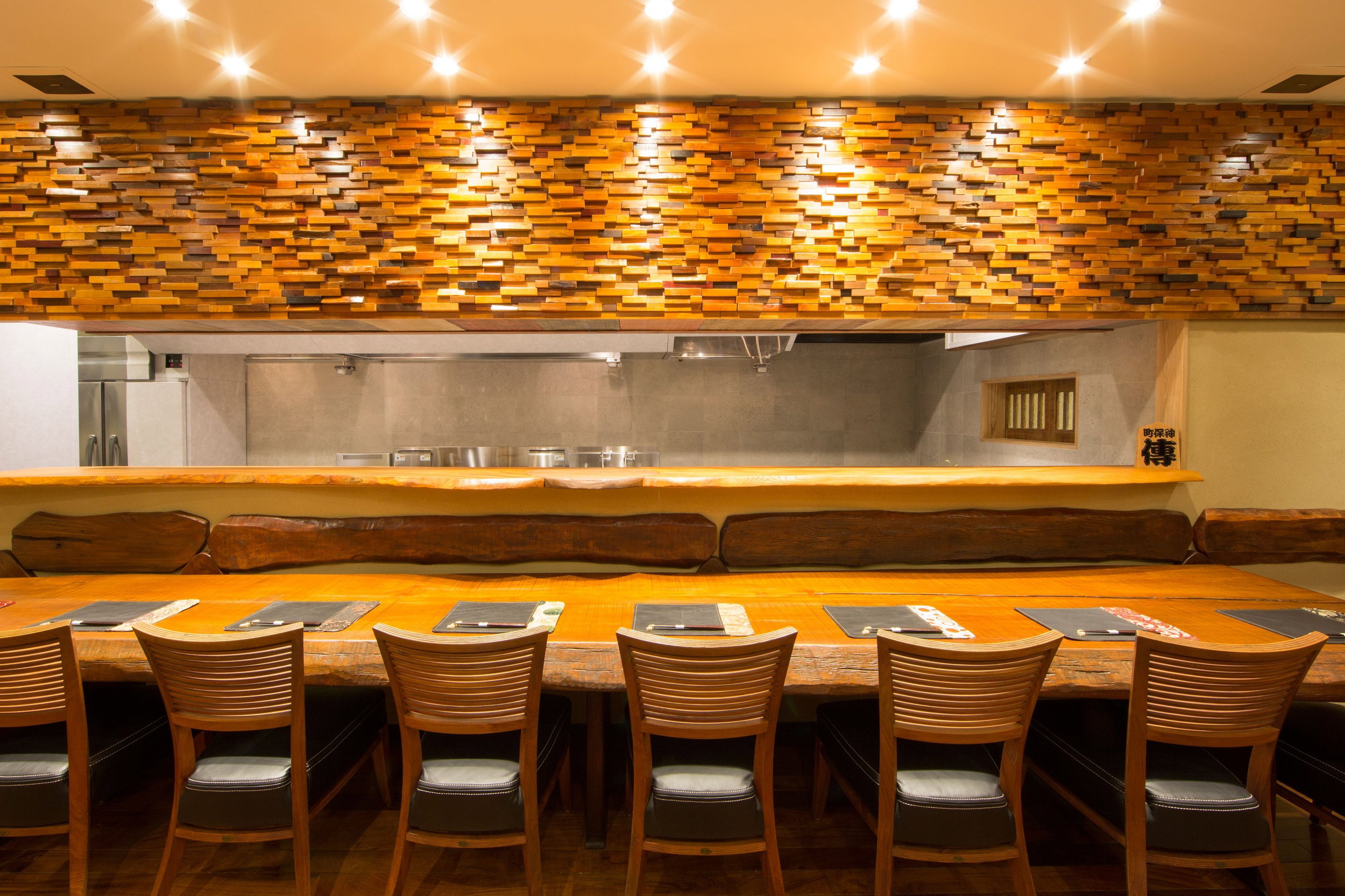
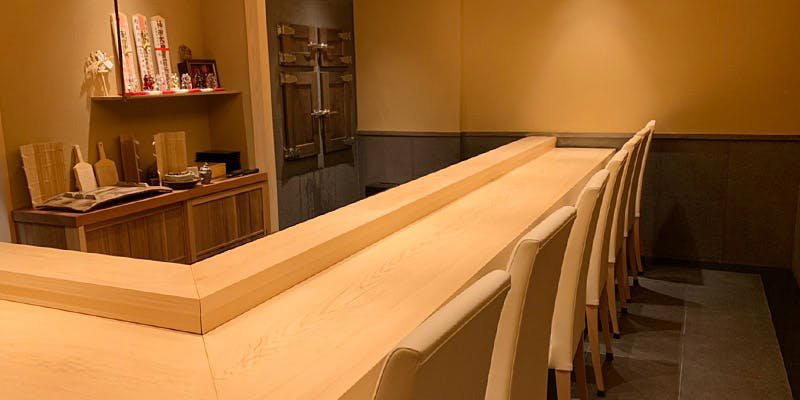
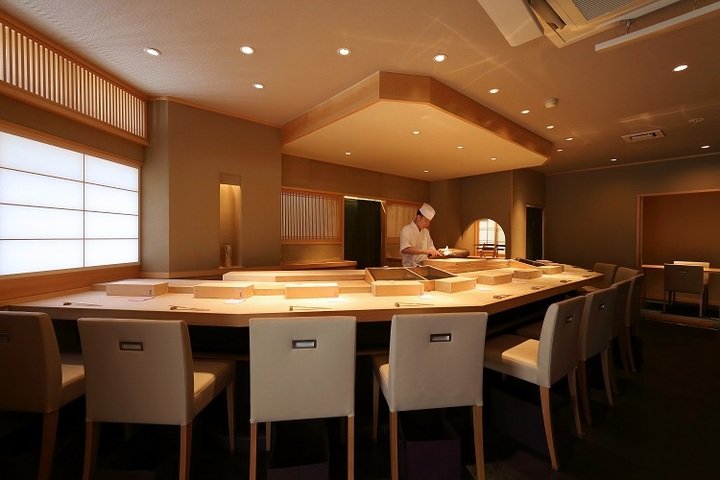
Ubuka's counter seating is where you'll get the most from the meal. Watching the preparation of crab-heavy dishes at close range adds context that a table removes, particularly for the earthenware pot course, where timing and heat management are visible from the counter. If you're returning for a second visit, or if you're booking with one or two people, request counter seats specifically. The counter format also gives you natural access to the kitchen team, which is useful for pacing questions or understanding the sourcing of specific shellfish. For a restaurant with this level of focus on a single ingredient category, that proximity matters.
First-timers sometimes default to tables, but at Ubuka the counter is the better seat. The restaurant's format rewards engagement with the cooking rather than a passive dining experience. If you've been before and sat at a table, the counter is what to try next.
Booking and Logistics
Ubuka holds a 2024 Michelin one star and is listed in the Opinionated About Dining leading restaurants in Japan (2023). With that combination of recognition and a single Shinjuku location, the booking window is tight. Treat this as a hard booking, plan at least three to four weeks out, and further in advance if you're visiting during peak Tokyo travel periods. Sunday is the one closed day; dinner service runs Monday through Saturday, 5:30 to 11 pm. There is no lunch service.
The absence of a website in the current record means booking likely requires a direct reservation channel, your hotel concierge in Tokyo will be the most reliable path if you're visiting from outside Japan. Japanese-language phone or walk-in approaches are the alternative, but given the restaurant's reputation and compact size, walk-in availability is unlikely on most nights.
Know Before You Go
- Cuisine: Spanish-influenced, crab and prawn specialities with French and kaiseki elements
- Price range: ¥¥¥
- Hours: Monday to Saturday, 5:30–11 pm; Sunday closed
- Awards: Michelin 1 Star (2024); Opinionated About Dining Leading Restaurants in Japan (2023)
- Booking difficulty: Hard, reserve three to four weeks out minimum
- Leading seats: Counter, for proximity to the kitchen and the closing earthenware pot course
- Dress code: Not specified; smart casual is a safe assumption for a one-star Shinjuku dinner
- Lunch: Not available, dinner only
How It Compares
Explore More in Japan
If you're planning broader travel around Tokyo, see our Tokyo hotels guide, our Tokyo bars guide, and our Tokyo experiences guide. Beyond Tokyo, notable restaurants with a similar level of focused culinary intent include HAJIME in Osaka, Gion Sasaki in Kyoto, akordu in Nara, Goh in Fukuoka, 1000 in Yokohama, and 6 in Okinawa. For shellfish-forward dining at a comparable level internationally, Le Bernardin in New York City is the obvious benchmark, though with a very different format and price point.
Planning details
- Hours
- Monday: 5:30–11 pm · Tuesday: 5:30–11 pm
- Location
- Japan, 〒160-0007 Tokyo, Shinjuku City, Arakicho, 2−14 アイエスビル 2- 1F
- Reservations
- Book on Omakase
- Website
- ubuka.jp
- Phone
- +81 3-3356-7270
The take
The Take
The Vibe
Ubuka feels like a focused, hushed counter room where a single ingredient — shellfish, especially crab — sets the tone. The one-star kitchen blends a kaiseki structure with French technique and Spanish coding, producing a disciplined yet generous sequence of courses. The service and pacing read as formal and attentive, and the counter setting tightens the experience: you are watching the rhythm of the kitchen and the chef’s choices unfold. It’s an elegant, low-key destination for diners who prefer refinement and concentration over theatricality, where the pleasure comes from deep, ingredient-led attention rather than breadth.
Best For
This is best suited to dinner-focused outings and formal occasions where the food is the principal subject. Ubuka’s Michelin context and methodical, course-driven progression make it a natural fit for business dinners and special occasions that call for seriousness and restraint. The counter seating encourages close attention to preparation and presentation, so guests who appreciate chef-led sequences and a quiet environment will get the most from a visit. The singular shellfish focus also makes it ideal for aficionados of crab and prawn-centered cuisine.
Ordering Tips
Expect a multi-course, shellfish-centred sequence that leans on crab and prawn in multiple preparations. Highlights described include a hair-crab terrine, fried prawns in sauce américaine, and a finale of crab and vegetables cooked with rice in an earthenware pot — the menu’s generous portions mean you should pace yourself to enjoy the rice-based close. Because the kitchen applies French technique within a kaiseki frame, choose dishes that showcase crustacean intensity if available and leave space for the earthenware rice finish that reframes the earlier Western-style courses.
Venue details
Ambiance
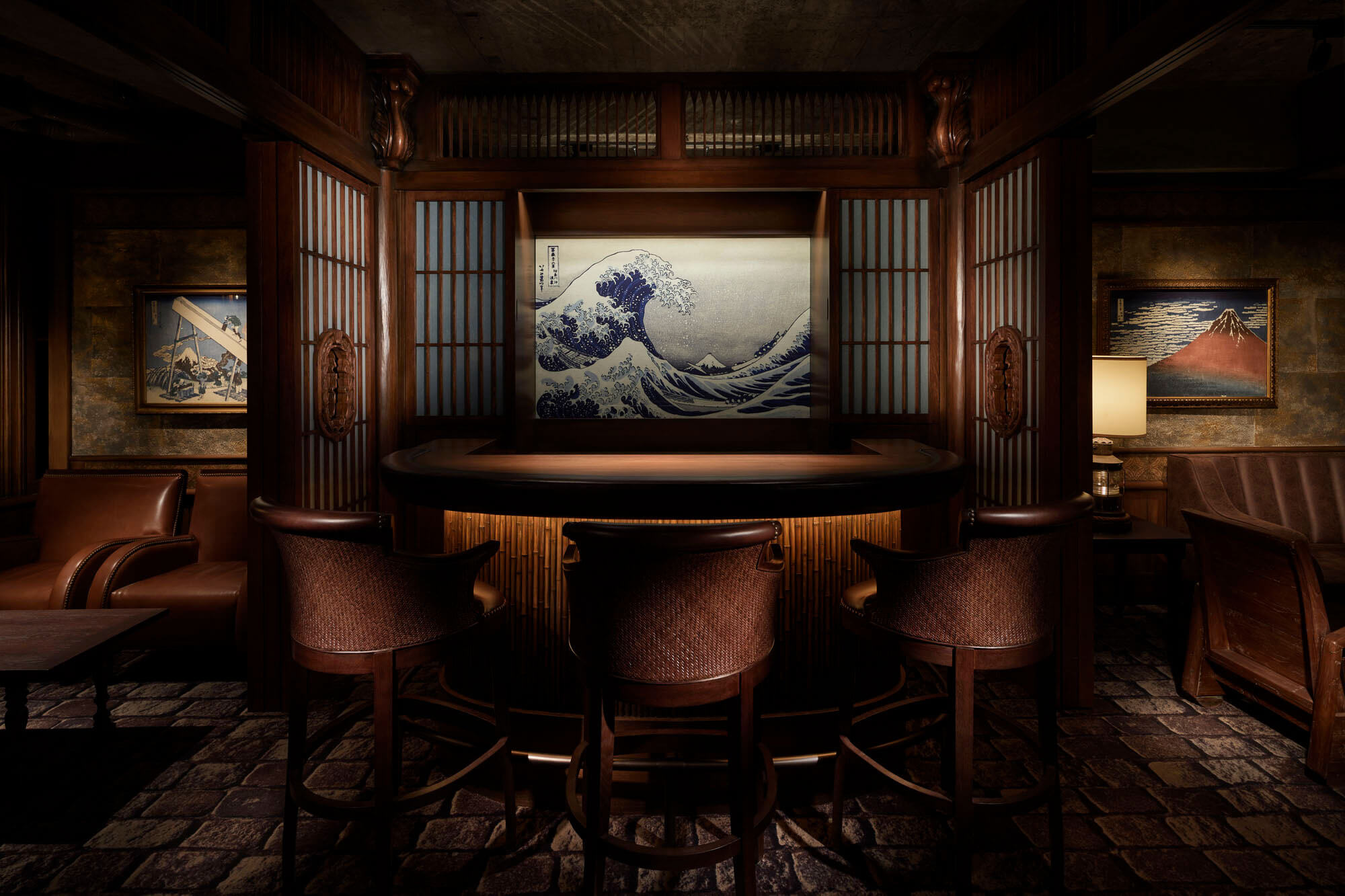
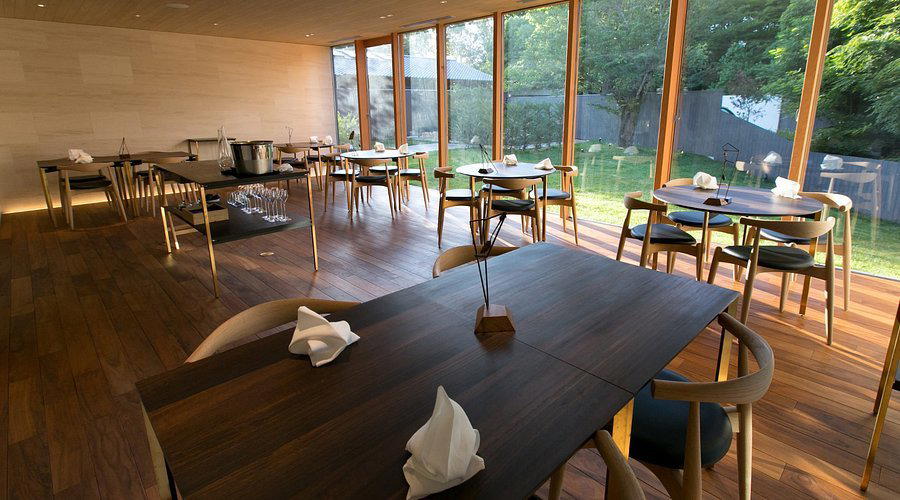
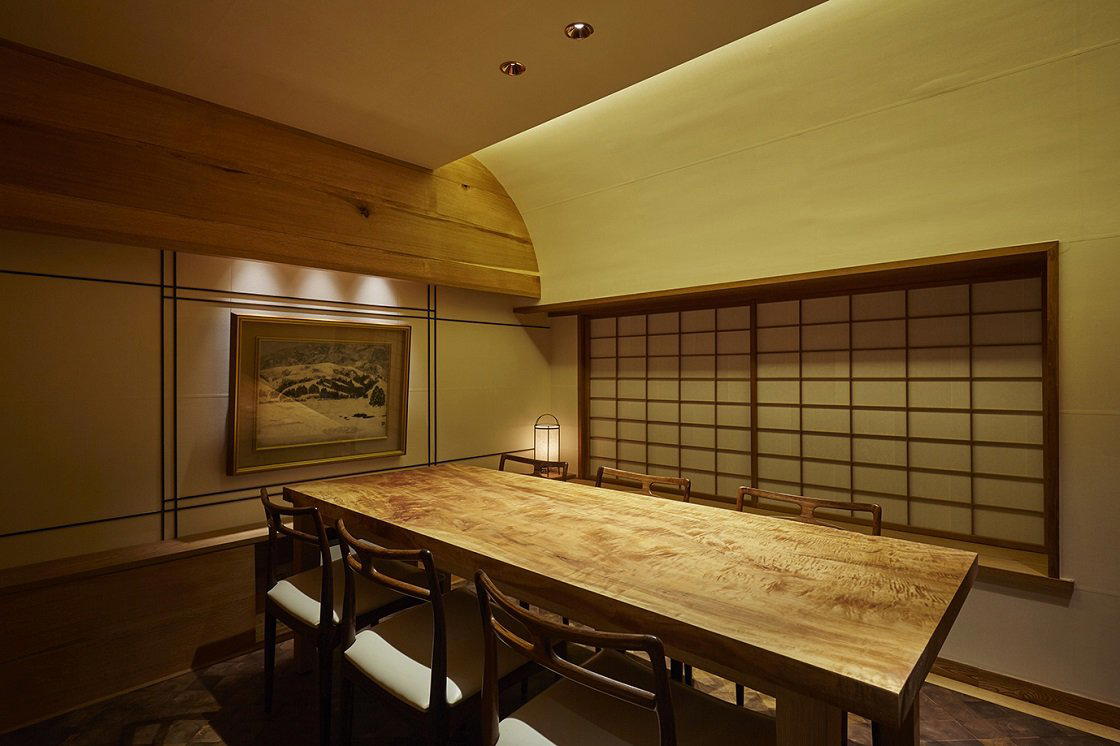
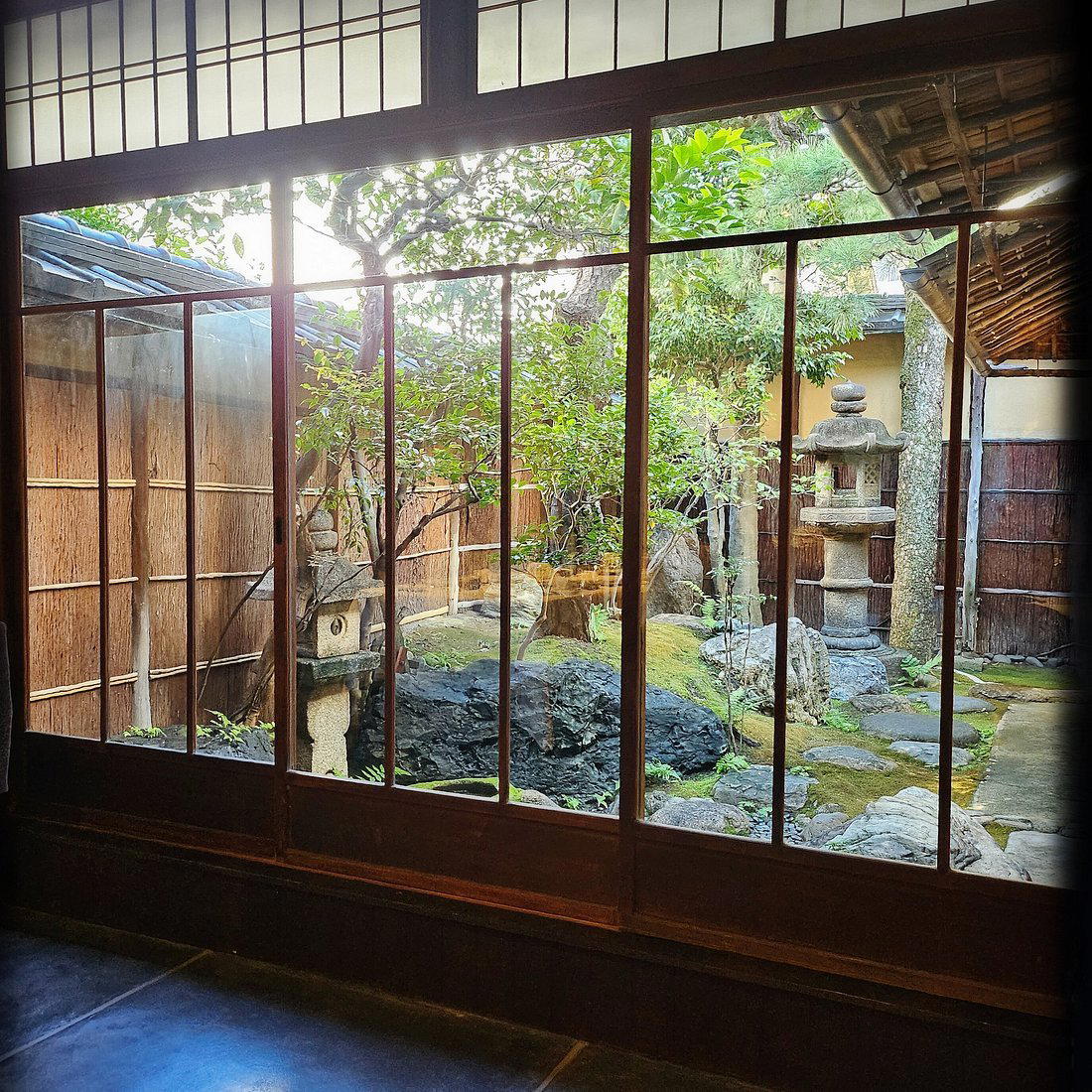
Serene, relaxing, and unpretentious with a humble, tactile atmosphere in a modest 14-seat space.
Tags
Vibe
Best For
Experience
At the Table
- Noise Level
- Quiet
- Service Style
- Formal
- Meal Pacing
- Leisurely
- Capacity
- Intimate
- Kitchen
- Modern
- Menu Format
- Omakase
- Wine Program
- Curated
- Drinks Focus
- Sake, Wine
Signature Dishes
- kuruma ebi fry
- snow crab rice
Know before you go
Know Before You Go
- Getting there
- Japan, 〒160-0007 Tokyo, Shinjuku City, Arakicho, 2−14 アイエスビル 2- 1F
Planning details
Hours
- Monday
- 5:30–11 pm
- Tuesday
- 5:30–11 pm
- Wednesday
- 5:30–11 pm
- Thursday
- 5:30–11 pm
- Friday
- 5:30–11 pm
- Saturday
- 5:30–11 pm
- Sunday
- Closed
Location
Japan, 〒160-0007 Tokyo, Shinjuku City, Arakicho, 2−14 アイエスビル 2- 1F · Directions

Also consider
Also Consider
- Harutaka, Sushi, ¥¥¥¥
- L'Effervescence, French, ¥¥¥¥
- RyuGin, Kaiseki, Japanese, ¥¥¥¥
- HOMMAGE, Innovtive French, French, ¥¥¥¥
- Crony, Innovative, French, ¥¥¥¥
Restaurant context
Ubuka sits at ¥¥¥ against a peer group that's almost entirely ¥¥¥¥, which immediately makes it the value pick among Tokyo's Michelin-starred options. RyuGin and L'Effervescence both operate at a higher price tier with broader menus, RyuGin for kaiseki purists, L'Effervescence for seasonal French-Japanese cooking. Neither is focused on a single ingredient category the way Ubuka is. If you want a structured Michelin-starred meal that covers more culinary ground, either of those is worth the premium. If crab and shellfish are your goal, Ubuka is the more logical booking and costs less.
Crony and HOMMAGE occupy the innovative French space at ¥¥¥¥ and appeal to diners who want technical ambition across a wider range of ingredients. Both are harder to compare directly with Ubuka because the formats are so different, Ubuka isn't trying to be a modern French restaurant, it's a shellfish-first counter. That focus is either exactly what you want or a reason to look elsewhere.
For booking difficulty, all five comparison venues are competitive, but Ubuka's combination of one-star status, a compact room, and dinner-only service makes it genuinely hard to get into on short notice. Harutaka at ¥¥¥¥ is the toughest reservation in the sushi category and isn't a direct competitor, but if you're choosing between a sushi counter and a shellfish counter for a special dinner, Ubuka's relative accessibility (and lower price) gives it a practical edge for most visitors.
Explore Tokyo
Around this place
Discover more on Pearl
Unlock the full Ubuka guide in Pearl, including awards, comparisons, FAQs, planning details, and nearby places.
Compare Ubuka
| Venue | Cuisine | Price | Awards | Booking Difficulty |
|---|---|---|---|---|
| Ubuka | Spanish, Crab Specialities | ¥¥¥ | 2026 OAD Top Restaurants in Japan Recommended2026 Michelin 1 StarTabelog 100 - Japanese cuisine - TOKYO - 2025 · #992024 Michelin 1 Star2023 OAD Top Restaurants in Japan Recommended | Hard |
| Harutaka | Sushi | ¥¥¥¥ | 2026 Tabelog Silver · #312026 OAD Top Restaurants in Japan Ranked · #1282026 Michelin 3 Stars2026 La Liste Top RestaurantsTabelog 100 - Sushi - TOKYO - 2025 · #372025 Asia's 50 Best Restaurants · #762025 OAD Top Restaurants in Japan Ranked · #1172025 La Liste Top Restaurants2025 Tabelog Bronze | Unknown |
| L'Effervescence | French | ¥¥¥¥ | 2026 Tabelog Silver · #682026 OAD Top Restaurants in Japan Ranked · #103Star Wine Lists 20262026 Black Pearl 2 Diamond2026 Relais Chateaux Restaurants2026 La Liste Top Restaurants2026 Michelin 3 Stars2025 Asia's 50 Best Restaurants · #692025 OAD Top Restaurants in Japan Ranked · #92 | Unknown |
| RyuGin | Kaiseki, Japanese | ¥¥¥¥ | 2026 OAD Top Restaurants in Japan Ranked · #802026 Tabelog Bronze · #3772026 Michelin 3 Stars2026 La Liste Top RestaurantsTabelog 100 - Japanese cuisine - TOKYO - 2025 · #212025 OAD Top Restaurants in Japan Ranked · #542025 Michelin 3 Stars2025 La Liste Top Restaurants2025 The Best Chef Three Knives | Unknown |
| HOMMAGE | Innovtive French, French | ¥¥¥¥ | 2026 Tabelog Bronze · #1232026 OAD Top Restaurants in Japan Highly Recommended2026 Michelin 2 StarsTabelog 100 - French - TOKYO - 2025 · #762025 Asia's 50 Best Restaurants · #782025 OAD Top Restaurants in Japan Ranked · #1752025 Michelin 2 Stars2025 The Best Chef One Knife2025 La Liste Top Restaurants | Unknown |
| Crony | Innovative, French | ¥¥¥¥ | 2026 Asia's 50 Best Restaurants · #34Star Wine Lists 20262026 OAD Top Restaurants in Japan Recommended2026 Michelin 2 Stars2025 Asia's 50 Best Restaurants · #30Tabelog 100 - French - TOKYO - 2025 · #782025 OAD Top Restaurants in Japan Ranked · #227We're Smart World Top Restaurants 20252025 Michelin 2 Stars | Unknown |












Side-by-side comparison to help you decide where to book.
FAQ
Frequently Asked Questions
What should a first-timer know about Ubuka?
The menu is built around crab and prawns, with French technique and kaiseki influence applied depending on the dish — so expect a hair crab terrine alongside rice cooked in an earthenware pot, not a standard omakase format. Chef Jerome Quilbeuf holds a 2024 Michelin one star, and the OAD listing confirms this is a serious room. Ubuka operates dinner only, Monday through Saturday from 5:30 pm, in Arakicho, Shinjuku. Portions are reportedly generous, which makes the ¥¥¥ price point feel fair for the level.
Is Ubuka good for solo dining?
Yes — this is a strong solo choice. Counter seating at a shellfish-focused restaurant lets you watch the kitchen and set your own pace through the meal. At ¥¥¥ and Michelin one-star level, it delivers enough on the plate to justify a solo dinner without feeling like you need company to get value from the experience.
Is the tasting menu worth it at Ubuka?
For shellfish enthusiasts, yes. The 2024 Michelin one star and OAD top restaurants in Japan listing both point to a kitchen executing at a high level. The menu's range — from French-influenced crab terrine to prawn in sauce américaine to the closing earthenware rice pot — gives enough variety that the format holds across a full sitting. If crab and prawn are not your preference, this is not the right room.
Is Ubuka worth the price?
At ¥¥¥, yes — Ubuka sits below the ¥¥¥¥ bracket where much of Tokyo's Michelin competition lands, which makes the one-star recognition here unusually good value. You're getting a focused, technically accomplished shellfish menu from a decorated chef at a price that leaves room in the budget. Against comparably rated Tokyo restaurants, this is one of the stronger value cases in the category.
Is lunch or dinner better at Ubuka?
There is no lunch service — Ubuka runs dinner only, Monday through Saturday, 5:30 pm to 11 pm, and is closed Sundays. Plan your Tokyo day accordingly and book dinner as the anchor. Sunday closures are confirmed, so avoid building a weekend itinerary around it.