The Verdict
If you are weighing Sakuragi against other counter Japanese restaurants in the JPY 20,000–29,999 dinner bracket, book here before you consider the more prominent names around Ginza. This is a Tabelog Award 2026 Bronze winner with a Tabelog score of 4.16, named to the Tabelog Japanese Cuisine Tokyo Top 100 for 2025, and recognised by Michelin with a Plate in both 2024 and 2025. For a counter kappo experience in Tsukiji at this price point, that credential set is hard to argue. The catch: it seats only eight people, dinner starts at 18:00, and the format is reservation-only. If you cannot plan ahead, look elsewhere.
About Sakuragi
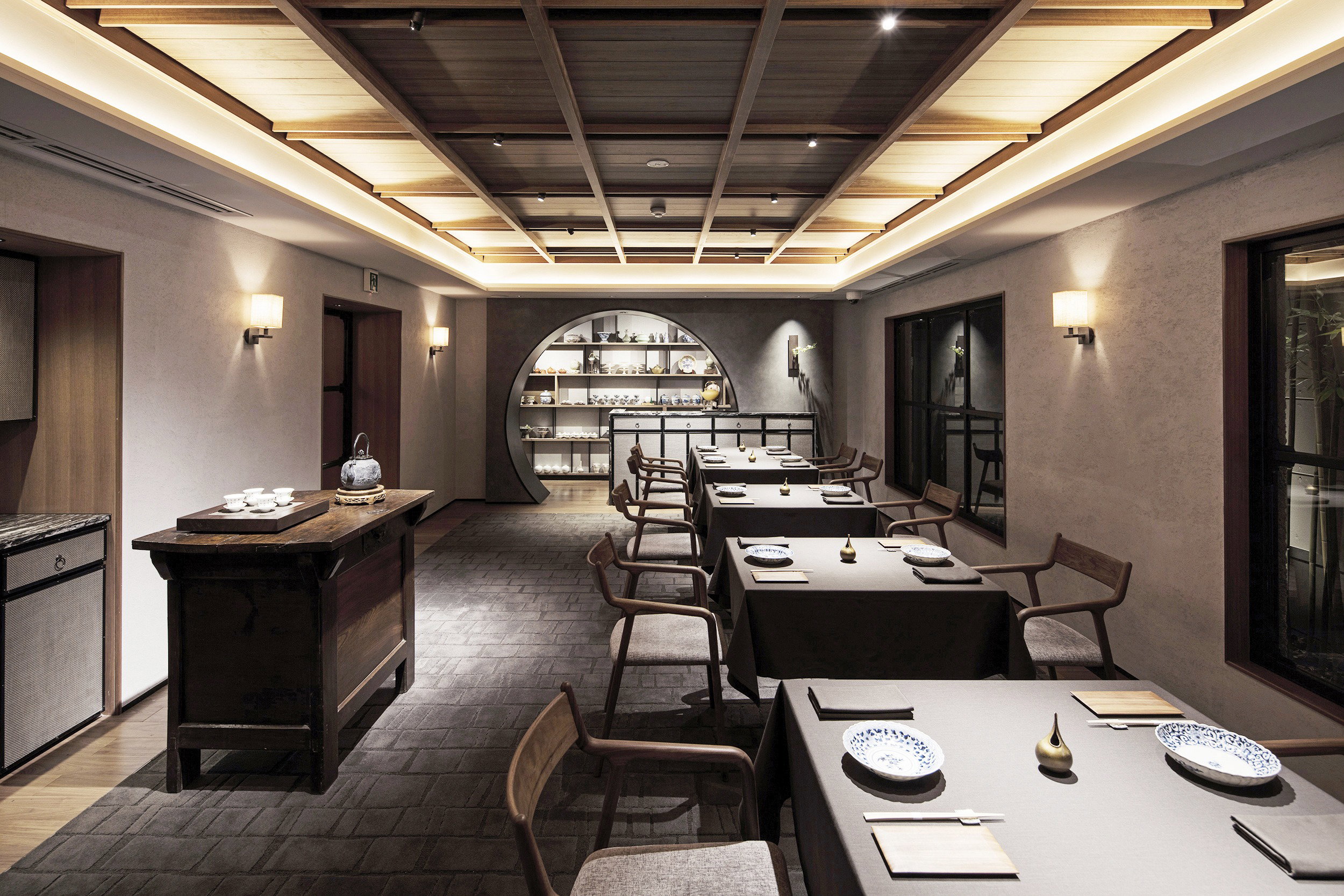
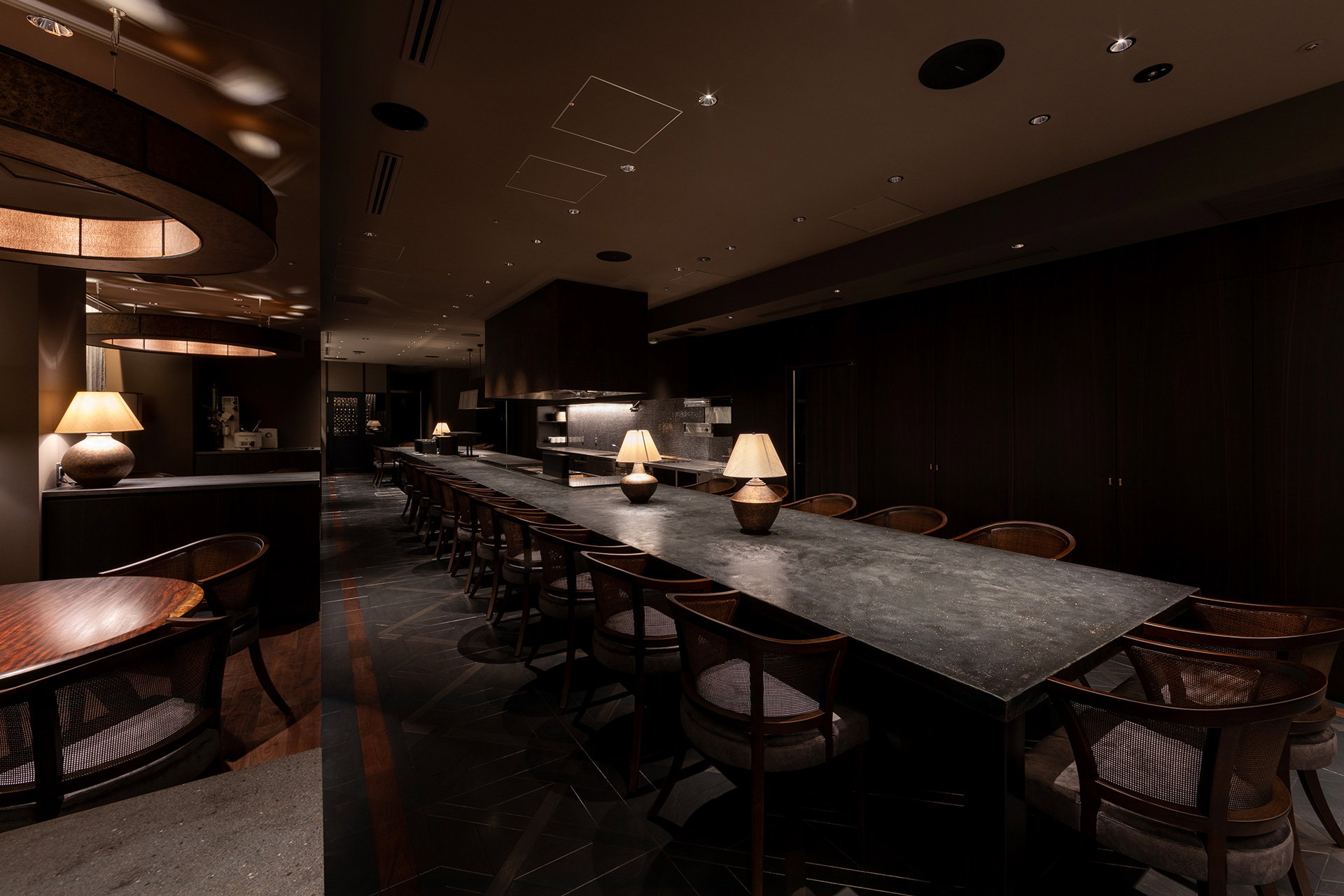
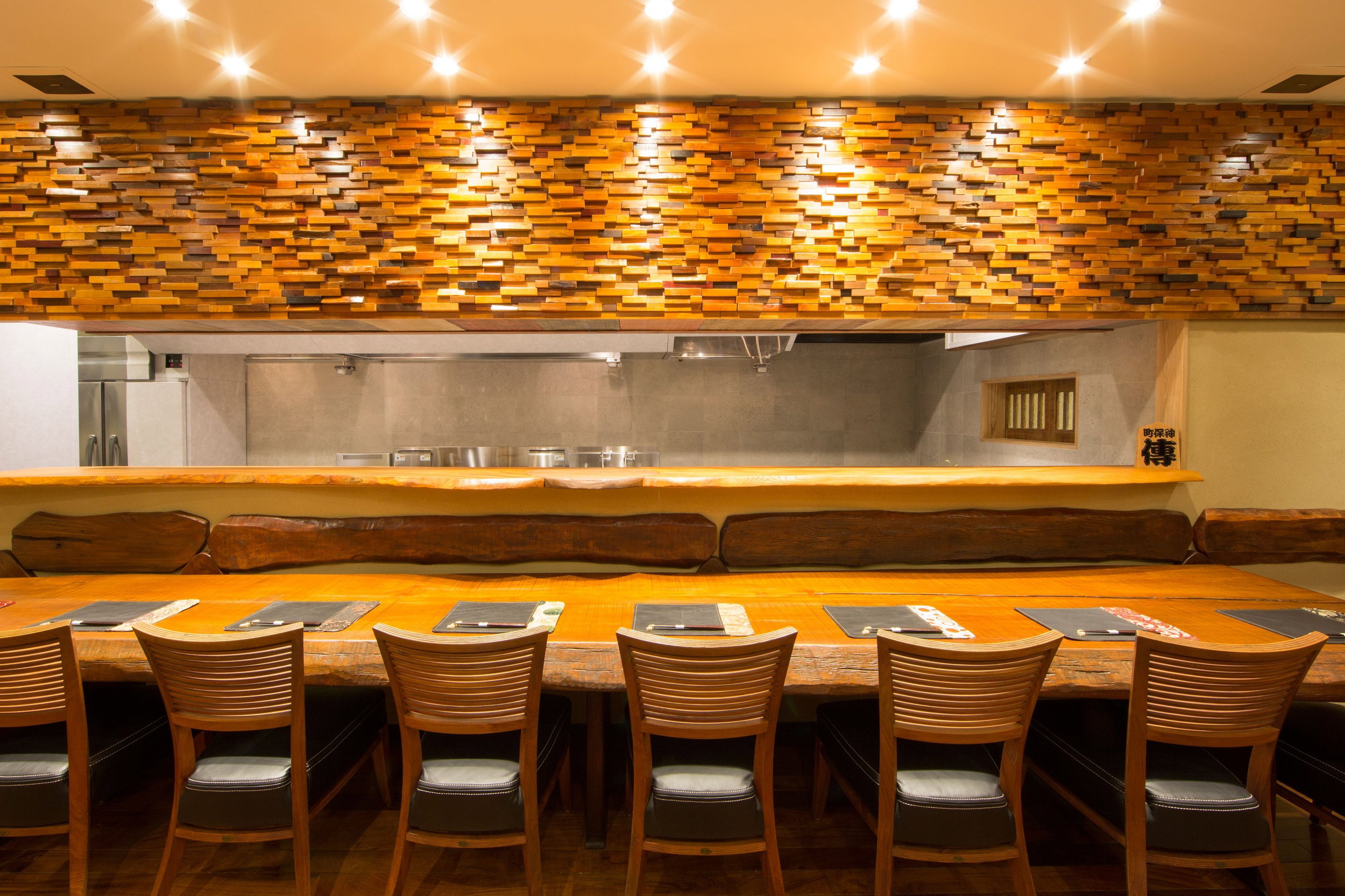
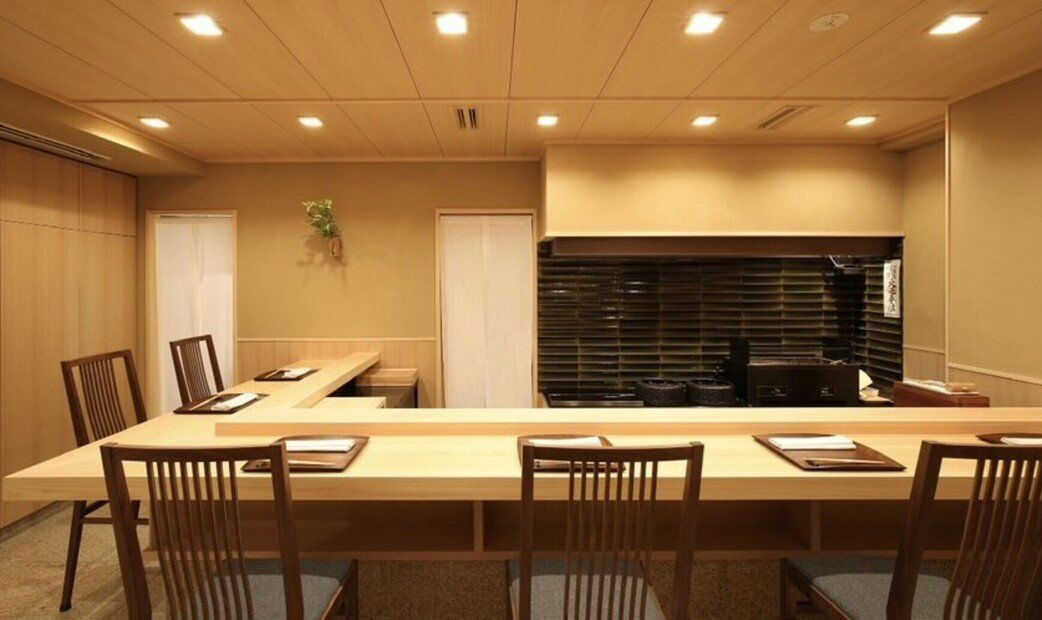
Sakuragi opened in August 2022 in a second-floor space inside a commercial building a five-minute walk from Tsukiji Station on the Tokyo Metro Hibiya Line. The location is easy to underestimate from street level, which is exactly the point — the Tabelog listing categorises it as a hideout, and that framing is accurate. You are not coming here for a high-profile address; you are coming for what happens at the eight-seat counter once service begins at 18:00.
The format is counter kappo, a style built around proximity and timing. The kitchen is open, the counter is close, and the logic of the meal is that every dish reaches you at the moment it is ready rather than when service logistics allow. That discipline matters more than it sounds. At a table-service restaurant you might wait for a dish to rest, travel across a room, and arrive at the right temperature by coincidence. Here, the gap between kitchen and guest is measured in seconds. The Tabelog description notes that dashi is prepared from scratch, with bonito shaved immediately before use, and that fish is char-grilled and roasted on straw — techniques that produce aroma as much as flavour. If you have sat close to a kappo counter when straw-roasting is underway, you know what that means: the smoke and char reach you before the plate does. That is the sensory signal that tells you the kitchen is working at the right pace.
The monthly course format means the menu rotates with the season. Sakuragi lists a strong focus on fish, which given the proximity to the old Tsukiji wholesale market is both a practical advantage and a statement of intent. The kitchen applies that focus across a progression of courses built around seasonal ingredients selected by the chef. Fresh-cooked rice, served with either raw egg or seasoned minced chicken, closes the meal, a deliberately grounding finish after a sequence of more precise preparations.
The Drinks Program
For a room this size, the drinks list at Sakuragi deserves attention. The venue is notably particular about sake: nihonshu is listed as a specific priority, and the selection is curated rather than comprehensive. That distinction matters if you are building your meal around Japanese spirits and wine pairings. Sake pairs naturally with the fish-forward kappo format here, and a kitchen this attentive to timing and temperature tends to produce a progression of dishes that rewards a sake pairing rather than a single bottle of wine through the meal.
Shochu, wine, and BYO are all available options. The BYO policy is worth flagging for serious wine drinkers who have specific bottles they want to drink with this calibre of food, it is an uncommon concession at a venue with this level of recognition. No service charge is applied, which affects the real cost calculation when you are comparing this with peer venues that add 10–15% on leading. At JPY 20,000–29,999 per head for dinner, the all-in number is likely to sit below equivalently credentialled alternatives once that factor is accounted for.
There are no cocktails listed, and no evidence of a dedicated cocktail program. If bar-first drinking is your priority, Sakuragi is not the right room. This is a food-led experience with a drinks program designed to support the kitchen. Go for the sake. The wine is an option; the sake is the point.
Practical Details
Sakuragi runs dinner-only service, with no fixed closing time listed. The dress code asks that those who are extremely casual refrain from visiting, smart casual is the safe interpretation. Children are welcome (school-age; preschool children are not permitted). Major credit cards are accepted (Visa, Mastercard, JCB, Amex, Diners); electronic money and QR code payments are not. Parking is unavailable on-site, but coin parking is nearby. The venue is non-smoking throughout.
For private use, the full space can accommodate up to 20 people, which implies a buyout arrangement rather than a separate private room (private rooms are listed as unavailable). An additional fee applies for private reservations. The restaurant is reservation-only, so walk-in attempts are not a realistic option.
How It Compares
Against RyuGin, Sakuragi is the more intimate choice. RyuGin carries heavier international recognition and a more elaborate kaiseki architecture, but Sakuragi's eight-seat counter produces a level of individual attention that is difficult to replicate in a larger room. If the counter experience and proximity to the kitchen is what you are after, Sakuragi wins on format. If you want the prestige signal and a longer, more ceremonial meal, RyuGin is the more appropriate booking.
Harutaka is the obvious comparison for fish-focused counter dining at a similar price tier, but Harutaka is a sushi specialist whereas Sakuragi runs a kappo course format. The distinction matters: kappo gives you a broader range of cooking techniques across the meal, while Harutaka delivers a more singular, refined sushi experience. Both are in the JPY 20,000–29,999 range; Harutaka is significantly harder to book. For Tokyo visitors who cannot secure a Harutaka reservation, Sakuragi is a credible alternative with its own distinct identity rather than a fallback.
If you are considering Florilège or L'Effervescence as alternatives in a similar price bracket, the comparison is format rather than quality. Both are French, table-service, and substantially larger rooms. Sakuragi offers something categorically different: a Japanese counter experience with a sake program built around the food. For a Tokyo itinerary that already includes a French dinner, Sakuragi fills a distinct slot rather than competing directly.
Pearl Picks, Also Consider
- Myojaku, Counter Japanese in Tokyo
- Azabu Kadowaki, Japanese in Tokyo
- Kagurazaka Ishikawa, Japanese in Tokyo
- Ginza Fukuju, Japanese in Tokyo
- Jingumae Higuchi, Japanese in Tokyo
- Gion Sasaki in Kyoto, For comparable counter kaiseki outside Tokyo
- HAJIME in Osaka, If you are travelling beyond Tokyo
- Isshisoden Nakamura in Kyoto, Traditional Japanese, Kyoto
- Kashiwaya Osaka Senriyama, Japanese in Osaka
For more options, see our full Tokyo restaurants guide, our full Tokyo bars guide, our full Tokyo hotels guide, our full Tokyo wineries guide, and our full Tokyo experiences guide.



.png?width=1200&quality=80)
 Book with Pearl