
Restaurant in Kyoto, Japan
Tan
425ptsMichelin-recognized, communal, and produce-first.


About Tan
A two-time Michelin Bib Gourmand recipient in Higashiyama, Tan serves seasonal Japanese food built around staff-grown rice and unsprayed Kyotango vegetables at a ¥¥ price point that is hard to match in Kyoto. The communal daidokoro table format makes it a strong choice for a grounded, meaningful dinner without kaiseki formality or pricing. Book via concierge; three days' notice required for fully plant-based dining.
Verdict: The Right Kyoto Dinner for the Wrong Reasons Most People Book It
The common mistake with Tan is treating it as a budget fallback on the way to a more serious kaiseki booking. It is not a consolation prize. Two consecutive Michelin Bib Gourmand awards (2024 and 2025) confirm what repeat visitors already know: this is a destination in its own right, and at the ¥¥ price point, it is one of the most honest representations of Kyoto's agricultural identity you will find at any price. If you are planning a special occasion in Higashiyama and want something that feels meaningful without the formality or the four-figure bill of a traditional kaiseki house, Tan is where to book.
What Tan Actually Is
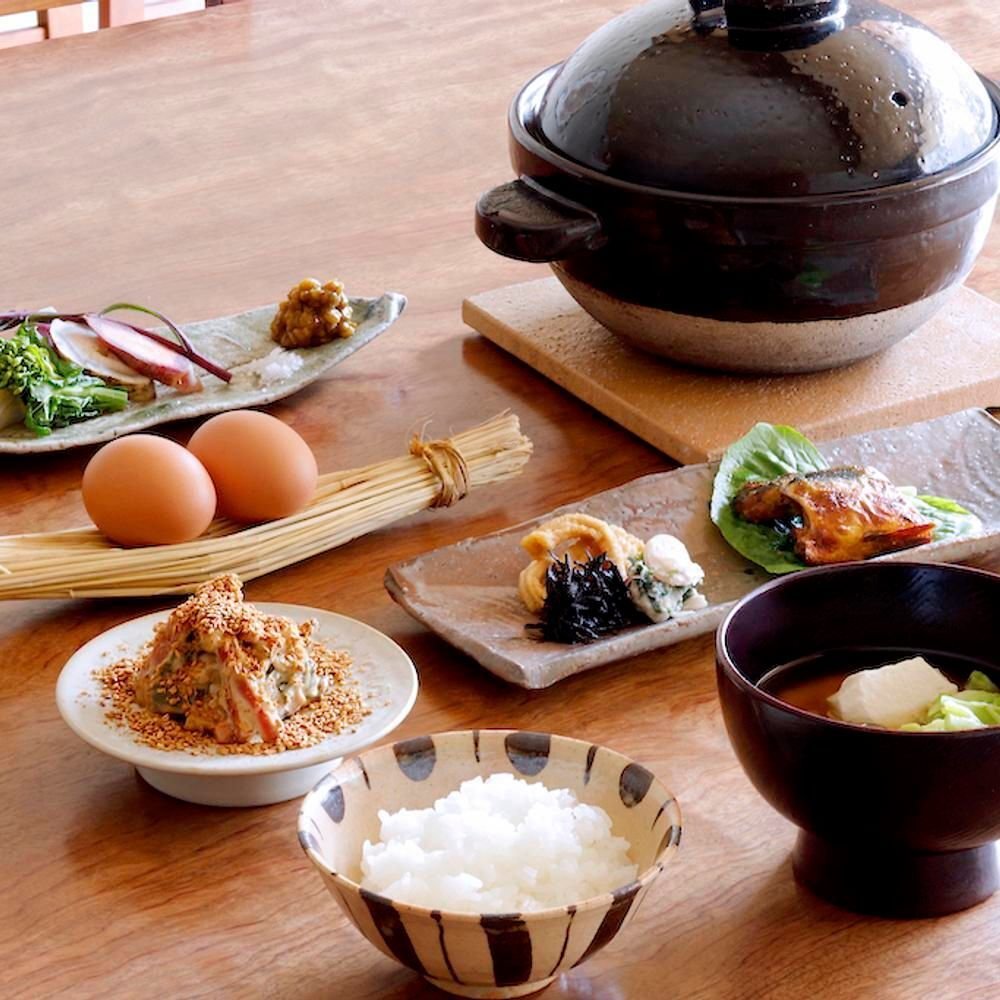
The name references Kyotango, a coastal region in northern Kyoto Prefecture, and the food stays true to that geography. Rice is grown by the staff. Vegetables come from Tango-region farmers, and the kitchen sources them unsprayed, working with what nature makes available each morning rather than reverse-engineering a fixed menu around supply chains. The result is a meal shaped by seasonal availability rather than chef ego, which suits Kyoto's culinary tradition more closely than many restaurants charging three times the price.
Gohan — plain-cooked rice — arrives timed to your seating, prepared in clay pots and ready the moment guests are settled. It is served alongside aemono, seasonal vegetables dressed generously with sesame. The emphasis on texture, restraint, and ingredient quality over technique showmanship puts Tan in a different register than the kaiseki format. This is not a parade of small courses designed to impress. It is a considered, grounded meal built around what grows nearby.
The dining setup reinforces that philosophy. Guests sit around a large communal table called the daidokoro, a word meaning kitchen. The arrangement is deliberate: the table is meant to feel less like a restaurant and more like being welcomed into a household. For a date, a quiet celebration, or a solo evening where you want to actually absorb where you are, this format works. For a business dinner that requires private space and a more formal structure, it may not be the right fit , consider Kyokaiseki Kichisen instead.
On the Drinks Program
No drinks data is available in our current record, so we will not speculate on the wine list or sake selection. What the philosophy of the food implies, though, is worth naming: a kitchen this focused on provenance and natural farming will typically pair well with natural wines or regional sake rather than international wine programs. If the drinks program matters as much to you as the food, confirm the list before booking. Venues at this price point in Kyoto vary considerably in what they pour alongside a plant-forward seasonal meal. For a deeper drinks program paired with serious food, Gion Matayoshi and Kikunoi Roan are worth comparing.
Plant-Based Dining: Read This Before You Book
Tan's ingredient sourcing is almost entirely plant-forward by default, which makes it a natural choice for vegetable-focused dining. However, a fully plant-based menu requires three days' advance notice. The We're Smart organization, which recognises restaurants for plant-based commitment, has noted this as a missed opportunity given the wealth of ingredients already in use. If you are planning a fully plant-based meal, give that notice when you book. If you are simply prioritising vegetables and are comfortable with what else may appear, no advance arrangement is needed.
Booking and Logistics
Tan is located in Higashiyama Ward at 106-13 Gokencho, within walking distance of some of Kyoto's most visited sites. Booking difficulty is rated Easy , this is not a restaurant you need to plan months ahead for, which is a practical advantage over most Michelin-recognized addresses in the city. No booking method or current hours are available in our record; confirm through a hotel concierge or current listings before visiting. Given the communal daidokoro format, solo diners, pairs, and small groups all fit naturally. Larger parties should confirm whether the format suits the occasion before reserving.
Google reviews sit at 4.2 across 284 ratings, which is a reliable signal for a restaurant at this price tier. At ¥¥, the risk profile is low. If the meal exceeds expectations, as the Bib Gourmand suggests it does, you will leave having paid well below what comparable care and provenance costs elsewhere in Kyoto. If you are exploring Higashiyama for an evening, Tan sits alongside Kodaiji Jugyuan as one of the neighbourhood's more considered options in the mid-range tier.
How Tan Fits Into a Wider Japan Trip
If you are building a longer itinerary across Japan, Tan's approach to regional sourcing and seasonal vegetables has parallels worth tracking. akordu in Nara applies a similarly produce-led philosophy in a different format. HAJIME in Osaka pushes the plant-forward idea into fine-dining territory at a considerably higher price. Goh in Fukuoka and 1000 in Yokohama offer further comparison points if the question is how Japan's regional ingredient culture translates across different cities. In Tokyo, Myojaku and Azabu Kadowaki represent the more formal end of the Japanese dining spectrum, useful benchmarks if you want to understand the range. For the full picture of what Kyoto offers across price tiers and formats, see our full Kyoto restaurants guide. If you are also planning accommodation or evening activities, our Kyoto hotels guide, bars guide, and experiences guide cover the rest.
The Bottom Line
Book Tan if you want a Michelin-recognized meal in Kyoto that prioritises where the food comes from over how it is presented. The communal table format, seasonal vegetable focus, and staff-grown rice make it a specific kind of experience , grounded, unhurried, and genuinely connected to its region. At ¥¥, the value is clear. The main caveats are format fit (the daidokoro is not for everyone) and the drinks program (confirm before you go if that matters). For most people visiting Higashiyama who want dinner that means something, Tan earns the booking.
Explore More in Kyoto
- Isshisoden Nakamura , traditional Kyoto dining in a historic setting
- Kyokaiseki Kichisen , for kaiseki at the formal end of the spectrum
- Kikunoi Roan , Michelin-starred kaiseki, more accessible than the main branch
- Our full Kyoto wineries guide
- 6 in Okinawa , for regional Japanese dining beyond the Kansai circuit
- Harutaka in Tokyo , a useful comparison point for precision-led Japanese cooking
Compare Tan
| Venue | Cuisine | Price | Booking Difficulty |
|---|---|---|---|
| Tan | Japanese | ¥¥ | Easy |
| Gion Sasaki | Kaiseki, Japanese | ¥¥¥¥ | Unknown |
| cenci | Italian | ¥¥¥ | Unknown |
| Ifuki | Kaiseki | ¥¥¥¥ | Unknown |
| Kyokaiseki Kichisen | Japanese | ¥¥¥¥ | Unknown |
| Kyo Seika | Chinese | ¥¥¥ | Unknown |
A quick look at how Tan measures up.
Frequently Asked Questions
What are alternatives to Tan in Kyoto?
For a similarly produce-led approach at a higher price point, cenci is the closest comparison — more refined plating, still vegetable-attentive. Ifuki is a better pick if you want a traditional kaiseki format rather than Tan's communal daidokoro setup. Kyokaiseki Kichisen sits at the formal, high-ceremony end of Kyoto dining and is not a like-for-like swap at Tan's ¥¥ price range. Kyo Seika works if you want a dessert-focused experience rather than a full dinner format.
Can I eat at the bar at Tan?
Tan is structured around a large communal table called the daidokoro — there is no bar or counter seating in the usual sense. The format is shared and social by design, so if you are expecting a private counter experience, this is not the right format.
Is Tan good for solo dining?
The communal daidokoro table format actually makes Tan more comfortable for solo diners than most Kyoto options at this price range — you are seated with other guests rather than isolated at a two-top. That said, confirm solo availability when booking, as communal table dynamics can vary by service.
What should I wear to Tan?
Nothing in the venue record specifies a dress code, and the communal table setup with a focus on regional farmhouse-style sourcing suggests an unpretentious atmosphere. Neat, comfortable clothing is a reasonable read here — this is not a formal kaiseki room requiring traditional attire.
Is the tasting menu worth it at Tan?
At a ¥¥ price point with two consecutive Michelin Bib Gourmand awards (2024 and 2025), Tan delivers recognized quality at a cost well below comparable Kyoto kaiseki. The format centers on Kyotango-region rice, seasonal vegetables, and aemono dressed with sesame — food that earns its recognition on sourcing integrity rather than theatrical presentation. If that trade-off suits you, yes, it is worth it.
Is Tan worth the price?
Two Bib Gourmand awards at a ¥¥ price range make Tan one of the stronger value propositions in Kyoto's recognized dining scene. You are paying for ingredient provenance — staff-grown rice, unsprayed regional vegetables — not for a high-ceremony kaiseki production. For the price category, the sourcing standard is hard to match in Higashiyama.
Is Tan good for a special occasion?
Tan works for a special occasion if the occasion fits the format: communal table, seasonal and regional food, unhurried pacing. It is not the right venue if you need private seating or a formal room with ceremony. For a birthday or anniversary where the emphasis is on food quality and atmosphere over formality, the Bib Gourmand track record and intimate daidokoro setup hold up well.
Recognized By


More restaurants in Kyoto
- Kikunoi HontenThree Michelin stars and eight consecutive Tabelog Bronze awards make Kikunoi Honten one of Kyoto's most credentialed kaiseki addresses. Lunch (JPY 20,000–29,999) is the practical first visit; dinner (JPY 30,000–39,999) rewards a return. Booking is near impossible without advance planning — use a hotel concierge or specialist service. Private rooms accommodate groups of 4 to 30-plus.
- MizaiMizai holds three Michelin stars and a sustained Tabelog track record across nearly a decade, with dinner running to ¥80,000–¥99,999 per person all-in. Chef Hitoshi Ishihara structures the meal around the spirit of the tea ceremony in a 15-seat room inside Maruyama Park. Book for a serious special occasion; reservations are near-impossible to secure without months of advance planning.
- OgataOgata is a 16-seat kaiseki counter in Shimogyo, Kyoto, holding two Michelin stars and ten years of Tabelog Gold recognition. Dinner runs JPY 60,000–79,999 before drinks and a 10% service charge. Booking is near impossible without months of advance planning, but for serious kaiseki at the counter, it earns its place on any shortlist.
- Gion SasakiGion Sasaki holds a Michelin three-star rating and a Tabelog score above 4.34, with dinner at JPY 40,000–59,999 per person in a 20-seat counter room in Higashiyama, Kyoto. Booking opens by phone on the first of each month for up to two months ahead; this is a near-impossible reservation. The counter-theatre format makes it the right call for a memorable special occasion, less so if you want a quiet private room.
- Sojiki NakahigashiSojiki Nakahigashi holds two Michelin stars and a Tabelog score of 4.30 in Kyoto's Sakyo Ward, with chef Hisao Nakahigashi foraging wild plants and herbs daily for a kaiseki menu built entirely around seasonal nature. Lunch runs JPY 10,000–14,999 — an unusually accessible entry point for this credential level. Book the 12-seat counter, plan your reservation for the first of the preceding month, and go in committed to the plant-forward format.
Related editorial
- Asia's 50 Best Restaurants 2026: The Chairman and Wing Go 1-2 from the Same BuildingThe Chairman takes No. 1 and Wing climbs to No. 2 at Asia's 50 Best Restaurants 2026. Both operate from the same Hong Kong building. Here's what it means.
- Four Seasons Yachts Debut: 95 Suites, 11 Restaurants, and a March 2026 Maiden VoyageFour Seasons I launches March 20, 2026, with 95 suites, a one-to-one staff ratio, and 11 onboard restaurants. Worth tracking if you want hotel-grade service at sea.
- LA Michelin Guide 2026: Seven New Restaurants from Tlayudas to Uzbek DumplingsMichelin's March 2026 California Guide update adds six LA restaurants and one Montecito newcomer, spanning Oaxacan tlayudas, Uzbek manti, and Korean-Italian pasta.
Save or rate Tan on Pearl
Keep this venue in your Pearl passport, rate it after you visit, and track it alongside every other place you collect.