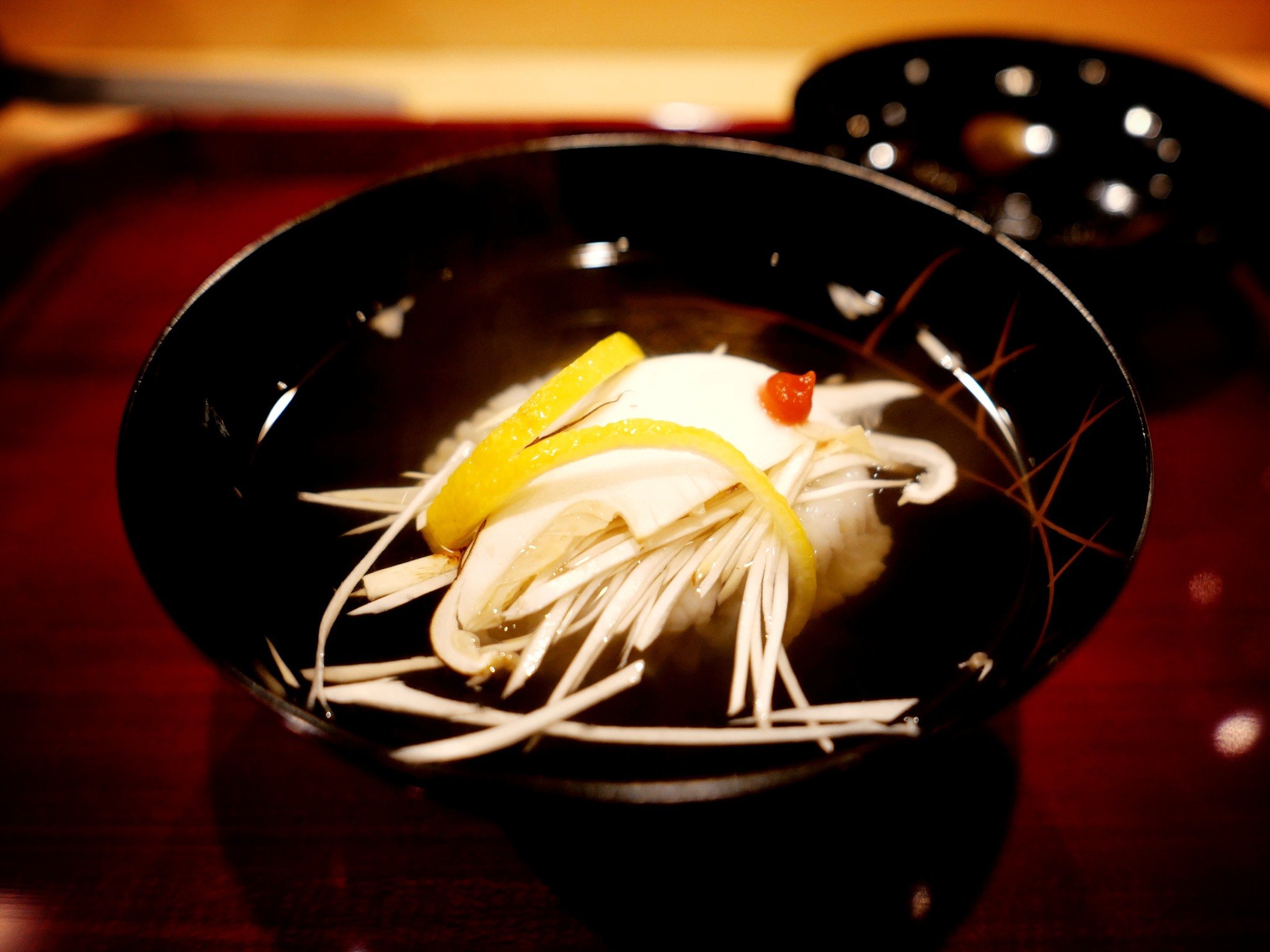
Restaurant in Tokyo, Japan
Suzutashiki
525ptsNew-wave kaiseki that earns its price tag.

About Suzutashiki
Suzutashiki is a Tabelog Bronze-awarded kaiseki counter in Nishiazabu that earned its first major recognition within a year of opening in January 2024. Chef Hideto Tashiro runs 8 counter seats with a menu centred on wood-fired cooking and fermentation. At JPY 60,000–79,999 per head, it is a strong choice for a special occasion dinner where intimacy and seasonal technique matter.
Should You Book Suzutashiki?
If you are comparing Suzutashiki against other kaiseki options in Tokyo at this price tier, the honest answer is that it competes directly with RyuGin for technical ambition but offers a markedly different proposition: a counter of just 8 seats, a chef committed to wood-fired cooking and fermentation, and a Tabelog score of 4.24 that places it among the top tier of Japanese cuisine restaurants in the capital. For a special occasion dinner where format and intimacy matter as much as the food itself, Suzutashiki is worth serious consideration. For those who want a larger room or more established name recognition internationally, the calculus shifts.
The Restaurant
Suzutashiki opened in Nishiazabu on 9 January 2024, making it one of the more decorated restaurants to emerge from a debut year in recent Tokyo memory. Within its first year of operation, it earned a Tabelog Bronze Award (2025) and a place on the Tabelog Japanese Cuisine TOKYO 100 list for 2025, both of which were renewed for 2026. It also appeared on the Opinionated About Dining ranking of leading restaurants in Japan, reaching #243 in 2024 and climbing to #269 in 2025 after a Highly Recommended debut in 2023. That trajectory from newcomer to consistently awarded venue in under two years is the clearest signal of what you are booking into.
Chef Hideto Tashiro runs an 8-seat counter on the second floor of a building in Nishiazabu, Minato. The format is kaiseki, but the kitchen approach places particular emphasis on wood-fired cooking and fermentation, which distinguishes this from more classically structured kaiseki rooms. That emphasis makes timing your visit relevant: fermentation-driven menus respond to seasonal ingredient availability, and a kaiseki progression built around live-fire technique will read differently in winter, when root vegetables and aged preparations tend to dominate, than in spring or early summer, when lighter, fresher ingredients shift the balance. If you have flexibility over when to visit Tokyo, late spring (April through June) and autumn (October through November) represent the two strongest windows for seasonal kaiseki across the city, and Suzutashiki's ingredient-forward approach means those windows apply here as much as anywhere.
The room is entirely counter seating — 8 seats with no expansion. Private room configurations are available for 6 or 8 guests, and exclusive private use of the space is possible. For a business dinner or a celebration where you want the room to yourselves, that private use option is worth asking about when booking. The drink programme is notably serious: the kitchen has a particular focus on sake and wine, and a sommelier is available. Credit cards are accepted; a 10% service charge applies.
At JPY 60,000 to JPY 79,999 per head at dinner (based on Tabelog review data), Suzutashiki sits at the upper end of Tokyo kaiseki pricing. That is a significant outlay, but it is consistent with what Tabelog Bronze-awarded kaiseki restaurants in this city typically charge, and the Opinionated About Dining recognition adds a second independent data point that the experience justifies the spend. For context, you are in the same price territory as Kikunoi Tokyo and well-regarded kaiseki rooms like Hirosaku and Akasaka Ogino.
Lunch is not currently offered. The restaurant operates Tuesday through Sunday from 5 PM, with two seatings indicated (from 17:30 and from 20:30). Monday is closed.
Know Before You Go
- Address: Nishiazabu 1-9-5, 2F, Minato, Tokyo (approx. 616 metres from Nogizaka station)
- Hours: Tuesday to Sunday, 5 PM onwards (seatings from 17:30 and 20:30); Monday closed
- Price: JPY 60,000–79,999 per head at dinner (based on Tabelog review data); no lunch service
- Service charge: 10%
- Seats: 8 counter seats; private room available for 6 or 8; full private hire possible
- Reservations: Via OMAKASE platform; no walk-ins
- Payment: Credit cards accepted; electronic money and QR payments not accepted
- Drinks: Sake and wine focus; sommelier on site
- Smoking: Non-smoking throughout
- Parking: Not available
How It Compares
Explore More
For more kaiseki at a comparable level, Ifuki and Ankyu in Kyoto offer strong reference points if your trip extends beyond Tokyo. Elsewhere in Japan, Gion Sasaki in Kyoto and HAJIME in Osaka represent comparable ambition at different price points and formats. For Japanese cuisine options closer to Suzutashiki in Tokyo, see also Ajihiro and Aoyama Jin. If you are planning a broader Tokyo trip, our full Tokyo restaurants guide, Tokyo hotels guide, Tokyo bars guide, Tokyo wineries guide, and Tokyo experiences guide cover the full picture. Outside Tokyo, consider akordu in Nara, Goh in Fukuoka, 1000 in Yokohama, and 6 in Okinawa for dining worth building an itinerary around.
Frequently Asked Questions
- Can I eat at the bar at Suzutashiki? Yes — the entire dining room is a counter, so all 8 seats are bar seats by design. There is no separate bar area or standing option. Every guest eats at the counter.
- Does Suzutashiki handle dietary restrictions? No specific dietary policy is listed in the available data. Given the kaiseki format and a menu built around fermentation and wood-fired technique, restrictions that affect core preparations (shellfish, allergy-level avoidances) should be communicated at the time of booking through the OMAKASE platform. Kaiseki menus at this level are typically fixed, so last-minute requests are harder to accommodate.
- Is lunch or dinner better at Suzutashiki? Dinner is your only option. Suzutashiki does not currently offer lunch service, so the choice is simply which evening seating (17:30 or 20:30) suits you better. The 17:30 seating gives you more time, which is worth considering at a counter where the progression can run several hours.
- What should a first-timer know about Suzutashiki? This is a kaiseki counter that opened in January 2024 and earned Tabelog Bronze recognition within its first year, which is a fast trajectory by Tokyo standards. The price runs JPY 60,000–79,999 per head at dinner, plus a 10% service charge. Reservations are only through the OMAKASE platform , there is no phone booking. The room seats 8 at a counter, which means the experience is inherently intimate. A sommelier is on hand, and the drink programme is sake- and wine-focused.
- What should I order at Suzutashiki? The format is kaiseki with no à la carte option , you receive a set progression determined by the kitchen. The menu emphasis is on wood-fired cooking and fermentation, both of which are seasonal by nature. What you eat will depend on when you visit. Autumn and late spring historically offer the most varied seasonal ingredient windows for Tokyo kaiseki, so if you have timing flexibility, those periods give the menu the most to work with. The sommelier can guide sake or wine pairing across the progression.
- How far ahead should I book Suzutashiki? Booking is rated as easy relative to Tokyo's most difficult-to-access counters, but with only 8 seats and a Tabelog score of 4.24 placing it in the leading percentile of Tokyo Japanese cuisine restaurants, availability is still limited. Booking 3 to 4 weeks ahead is a sensible starting point. Reservations are exclusively through the OMAKASE platform.
Compare Suzutashiki
| Venue | Price | Value |
|---|---|---|
| Suzutashiki | — | |
| Harutaka | ¥¥¥¥ | — |
| L'Effervescence | ¥¥¥¥ | — |
| RyuGin | ¥¥¥¥ | — |
| HOMMAGE | ¥¥¥¥ | — |
| Crony | ¥¥¥¥ | — |
A quick look at how Suzutashiki measures up.
Frequently Asked Questions
Can I eat at the bar at Suzutashiki?
Yes, and it is the only way to dine here. Suzutashiki runs an 8-seat counter with no table seating, so every guest sits at the bar. Private room hire is available for groups of 6 or 8, but the standard experience is counter-only. If you prefer table seating, this is not the venue for you.
Does Suzutashiki handle dietary restrictions?
No specific dietary accommodation policy is documented for Suzutashiki. At a ¥60,000–¥79,999 kaiseki counter with 8 seats and a fixed menu format, the kitchen has limited flexibility by design. check the venue's official channels via OMAKASE when booking to raise any restrictions before confirming your reservation.
Is lunch or dinner better at Suzutashiki?
Dinner is your only option. Suzutashiki does not offer lunch service — Tabelog lists dinner only, with seatings from 17:30 and 20:30. Budget ¥60,000–¥79,999 per person plus a 10% service charge for the evening.
What should a first-timer know about Suzutashiki?
Suzutashiki opened in January 2024 and earned Tabelog Bronze awards in both 2025 and 2026, along with selection for Tabelog's Japanese cuisine Tokyo Top 100 — an unusually fast credential trajectory for a restaurant in its debut year. The format is an 8-seat counter, dinner only, with kaiseki rooted in wood-fired cooking and fermentation. Reservations are handled through OMAKASE, credit cards are accepted, and a 10% service charge applies. There is no parking on site.
What should I order at Suzutashiki?
Suzutashiki operates a fixed kaiseki format, so there is no à la carte menu to choose from. The kitchen sets the progression for the evening, with a noted focus on wood-fired cooking and fermentation techniques. A sommelier is on hand, and the restaurant is particular about both sake and wine pairings, which are worth considering at this price point.
How far ahead should I book Suzutashiki?
Book as early as possible — an 8-seat counter with two seatings per night and consistent Tabelog Top 100 recognition means availability is tight. Reservations are made through OMAKASE; there is no phone booking listed. Given the ¥60,000–¥79,999 price point and the restaurant's quick rise since its January 2024 opening, last-minute tables are unlikely. Aim for 4–6 weeks out at minimum, longer for weekend slots.
Hours
- Monday
- Closed
- Tuesday
- 5–11:30 pm
- Wednesday
- 5–11:30 pm
- Thursday
- 5–11:30 pm
- Friday
- 5–11:30 pm
- Saturday
- 5–11:30 pm
- Sunday
- 5–11:30 pm
Recognized By
More restaurants in Tokyo
- SézanneOccupying the seventh floor of the Four Seasons Hotel Tokyo at Marunouchi, Sézanne earned its first Michelin star within months of opening in July 2021 and now holds three. British chef Daniel Calvert applies French technique to Japanese ingredients, producing a prix-fixe format that Tabelog has recognised with Silver awards every year from 2023 through 2026. It ranked 4th in Asia's 50 Best Restaurants in 2025 and 15th globally in 2024.
- SazenkaSazenka is the address for Chinese cuisine in Tokyo at its most technically demanding. Chef Tomoya Kawada's wakon-kansai approach — Japanese seasonal ingredients applied through Chinese culinary technique — has earned consecutive Tabelog Gold Awards from 2019 to 2026, a #71 ranking on the World's 50 Best 2025, and 99 points from La Liste 2026. At JPY 50,000–59,999 per head, it is one of the hardest tables in the city to book and worth the effort.
- NarisawaNarisawa is Tokyo's most credentialled innovative tasting menu restaurant — two Michelin stars, Asia's 50 Best number 12, and a Tabelog Silver award — running at JPY 80,000–99,999 per head. Book for a milestone occasion, confirm vegetarian or vegan needs in advance, and reserve at least two to three months out. With 15 seats and reservation-only access, this is one of Tokyo's hardest tables to secure.
- FlorilègeFlorilège delivers two Michelin stars and an Asia's 50 Best #17 ranking at a dinner price of ¥22,000 — competitive for Tokyo at this level. Chef Hiroyasu Kawate's plant-forward tasting menus around an open-kitchen counter at Azabudai Hills make this the strongest choice for contemporary French dining in Tokyo if theatrical, produce-led cooking is what you want. Book well in advance; availability is near-impossible at short notice.
- DenDen holds two Michelin stars, a World's 50 Best top-25 Asia ranking, and a Tabelog Silver Award running back to 2017 — and it books out within hours of the two-month reservation window opening. Chef Zaiyu Hasegawa's daily-changing seasonal omakase runs JPY 30,000–39,999 at dinner in a relaxed house-restaurant setting near Gaiemmae. Book by phone only, noon–5 PM JST. Lunch is irregular; plan around dinner.
- MyojakuMyojaku is a 2-Michelin-star, 14-course French-leaning omakase in Nishiazabu holding a 4.47 Tabelog score, Tabelog Silver 2025–2026, and Asia's 50 Best #45 (2025). Chef Hidetoshi Nakamura's water-forward, no-dashi approach shifts meaningfully with the seasons — making timing your reservation as important as getting one. Budget JPY 50,000–59,999 per head plus 10% service charge; reservations only, near-impossible to secure.
Similar venues by awards
Related editorial
- Best Fine Dining Restaurants in ParisFrom three-Michelin-star icons to the next generation of Parisian chefs pushing boundaries, these are the restaurants that define fine dining in the world's culinary capital.
- Best Luxury Hotels in RomeFrom rooftop terraces overlooking ancient ruins to Michelin-starred hotel dining, these are the luxury hotels that make Rome unforgettable.
- Best Cocktail Bars in KyotoFrom sleek lounges to hidden speakeasies, Kyoto's cocktail scene blends Japanese precision with global influence in ways you won't find anywhere else.
Save or rate Suzutashiki on Pearl
Keep this venue in your Pearl passport, rate it after you visit, and track it alongside every other place you collect.