.png?width=1200&quality=80)

Sobakiri Karani
Soba · Fukushima, Osaka
Restaurant in Osaka, Japan
 Book with Pearl
The Read
Coarse-Ground Kansai Soba
Price
$10–20per person
Dress
Smart Casual
Why go
Sobakiri Karani holds back-to-back Michelin Bib Gourmand recognition (2024–2025) and is the most straightforward high-confidence soba booking in Osaka at the ¥ price tier. The whimsical timber-and-art interior, sake-forward appetisers, and dual-cut coarse-ground noodles make it the right call for a relaxed dinner that punches well above its price point.
About Sobakiri Karani
Verdict
Sobakiri Karani earns its back-to-back Michelin Bib Gourmand recognition (2024 and 2025) by doing something deceptively simple exceptionally well: coarse-ground soba served in a room that makes you want to stay longer than you planned. At the ¥ price tier, this is one of the most direct high-confidence bookings in Osaka's Fukushima Ward. If soba is even a passing interest, book it. If you are looking for a low-cost, high-reward evening in a city where kaiseki menus routinely run into tens of thousands of yen, this is the answer.
The Space and What to Expect
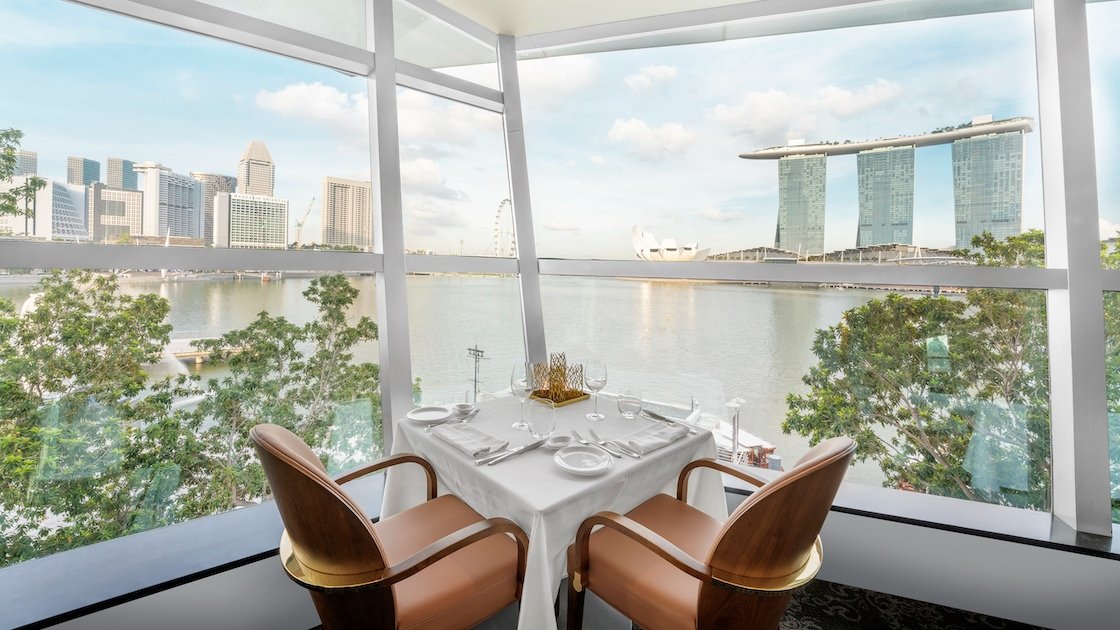
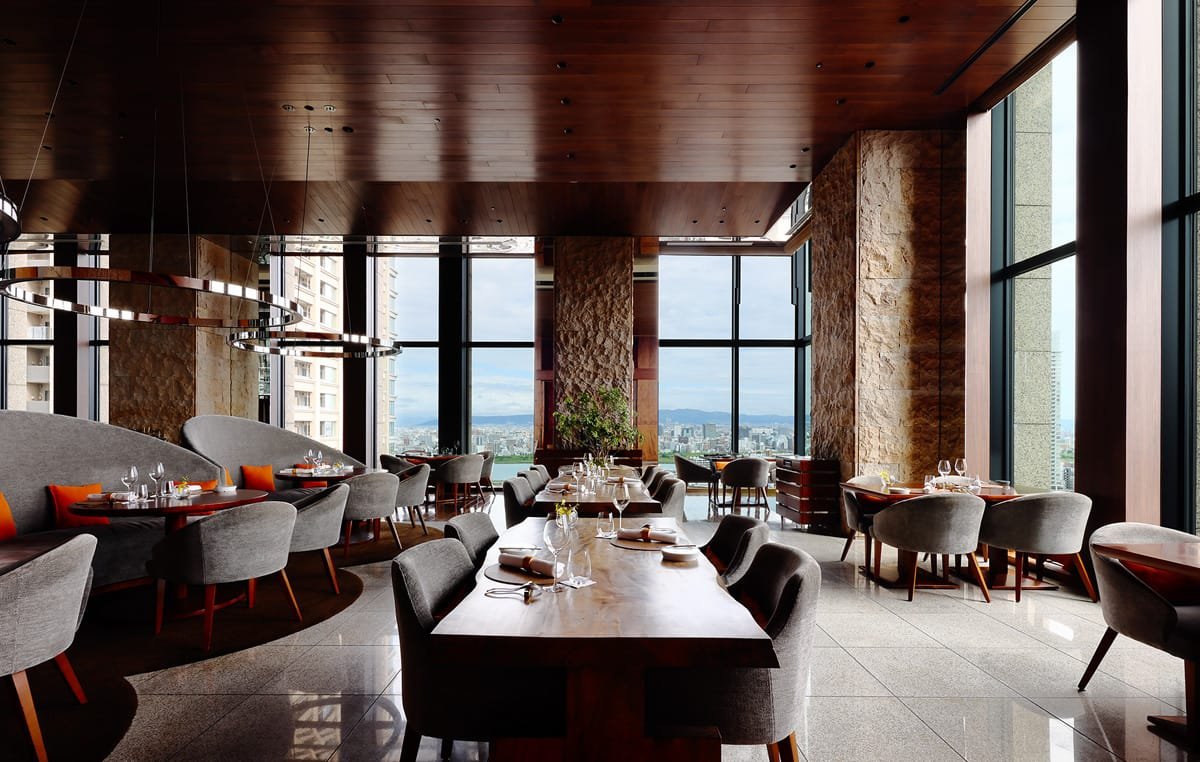
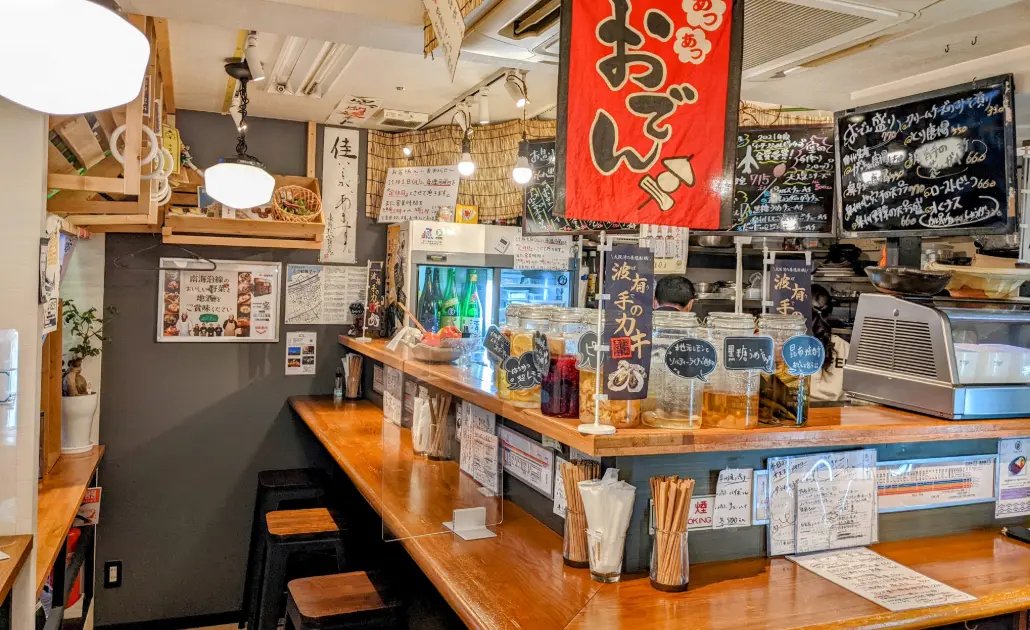
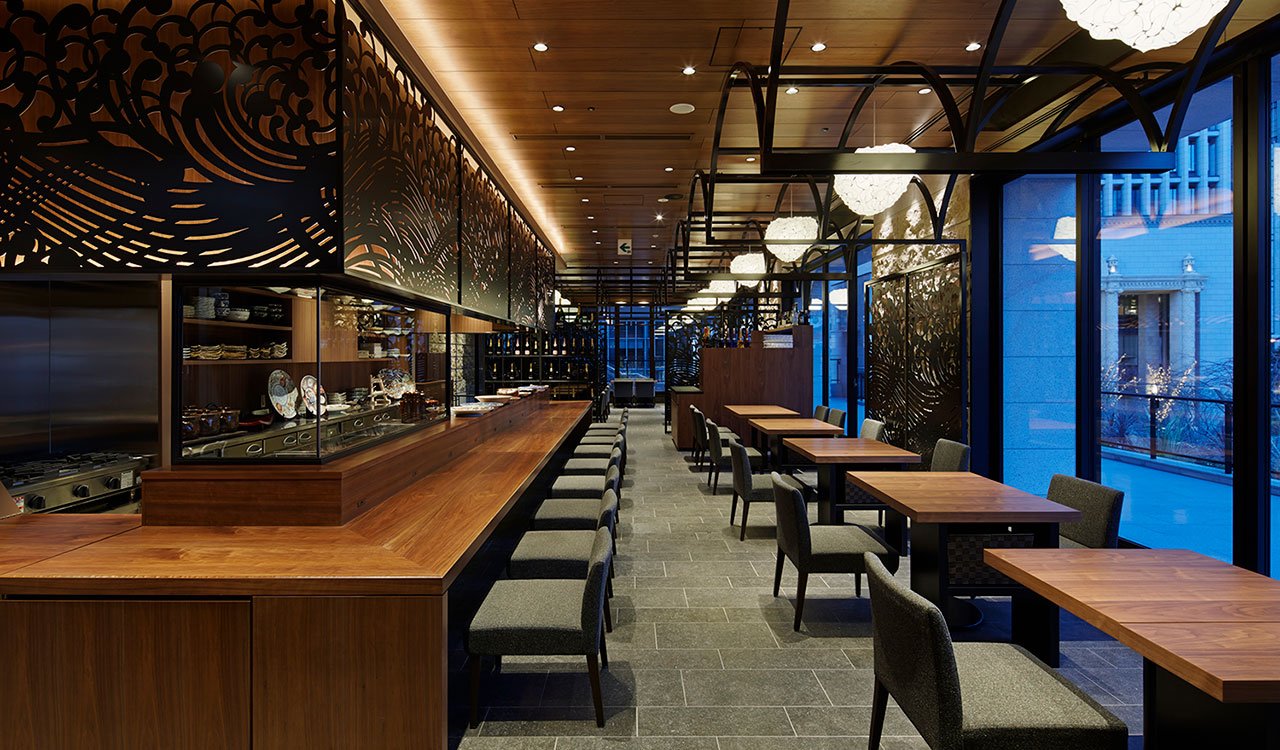
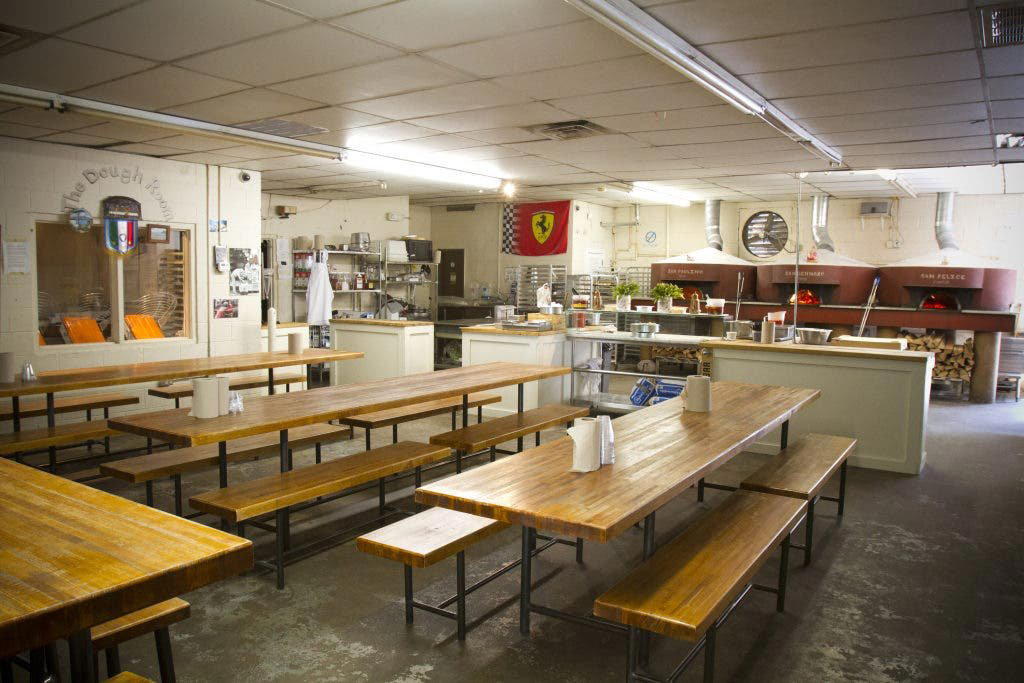
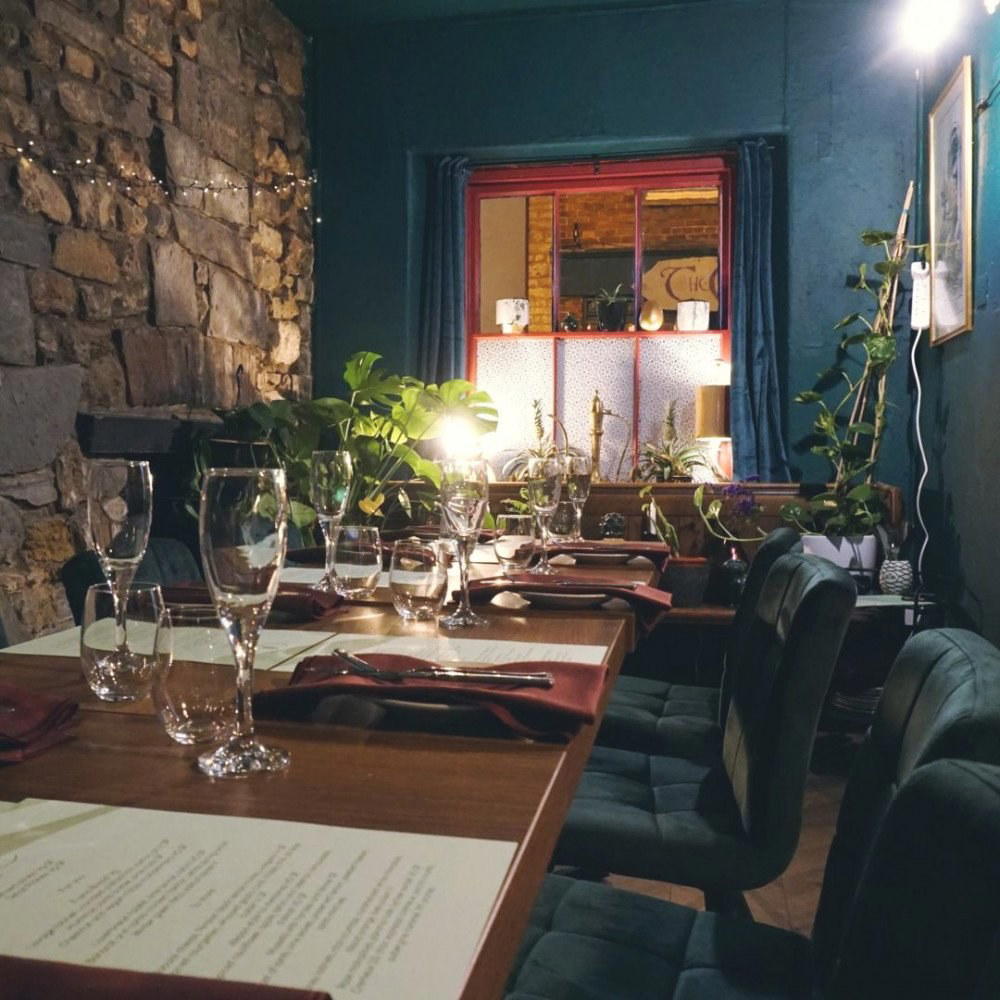
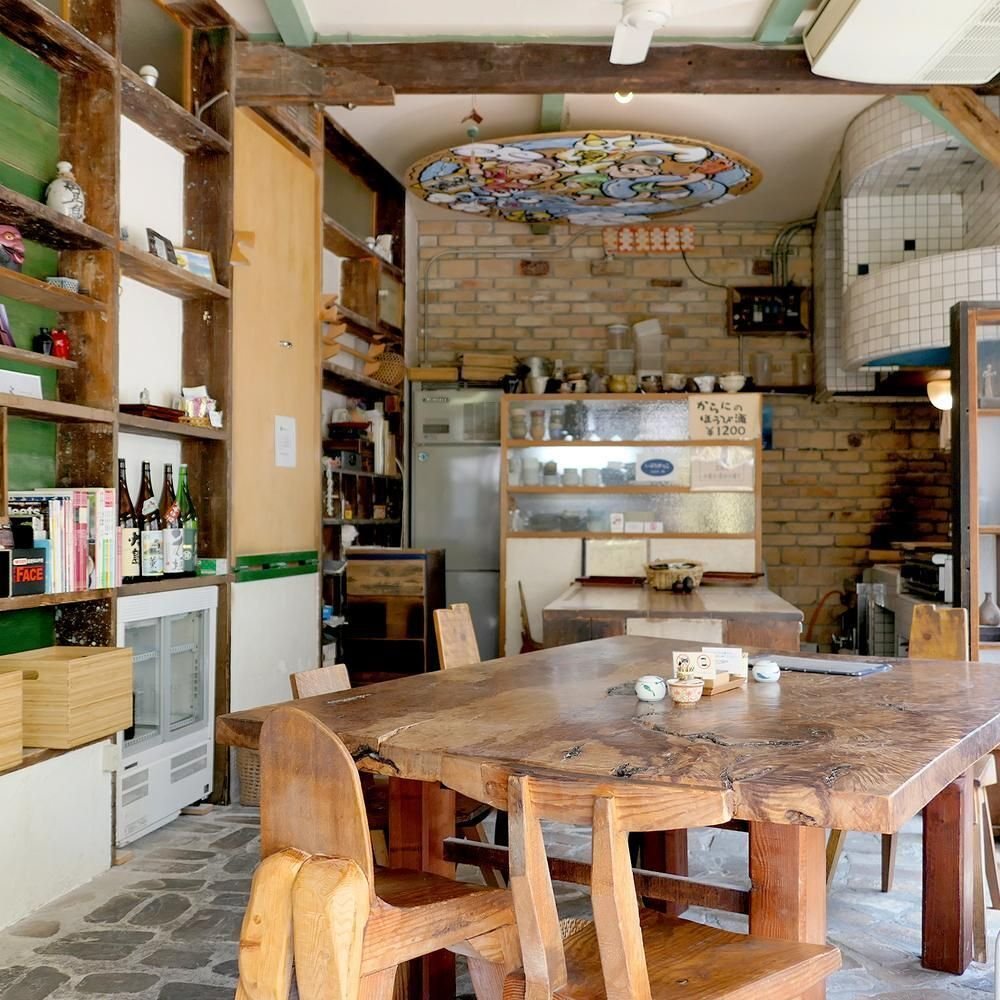
Sobakiri Karani worked with a woodworking artist to construct its interior from re-used timber, and the result is a room that does not look like anywhere else in Osaka's dining circuit. Large communal-style tables, mismatched chairs, and ceiling paintings give the space a playful, unhurried quality that suits the food and the price point equally well. This is not a reverential, hushed soba counter. It is a room designed for a relaxed dinner, a bottle of sake shared across the table, and a second order of noodles if the mood takes you. For a special occasion that does not require formality, a birthday dinner, a date that should feel easy rather than ceremonial, the atmosphere delivers in a way that a stiff kaiseki room sometimes cannot.
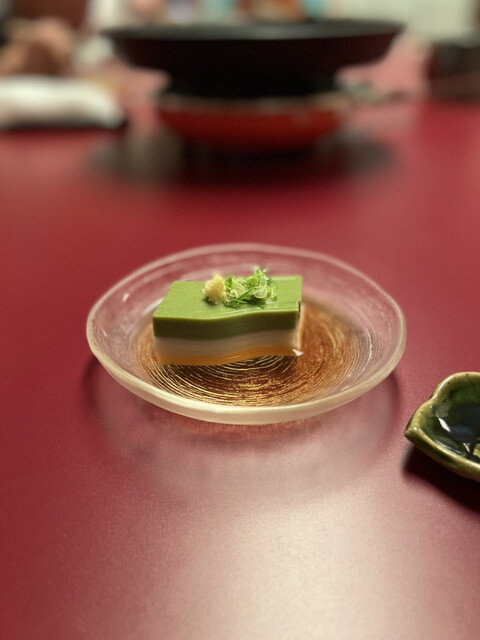
The menu builds logically from appetisers toward soba. The tofu pickled in unrefined sake and the duck-and-onion miso listed among the starters are precisely the kind of food that makes a cup of sake feel necessary rather than optional. These are not afterthoughts; they are engineered to extend the meal and raise the floor of the entire experience before the noodles arrive. Plan to order broadly rather than rushing to the soba itself.
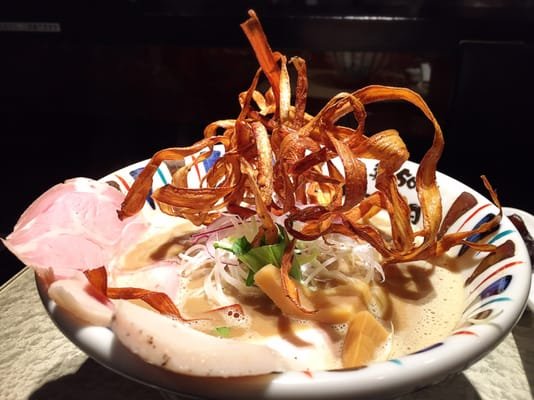
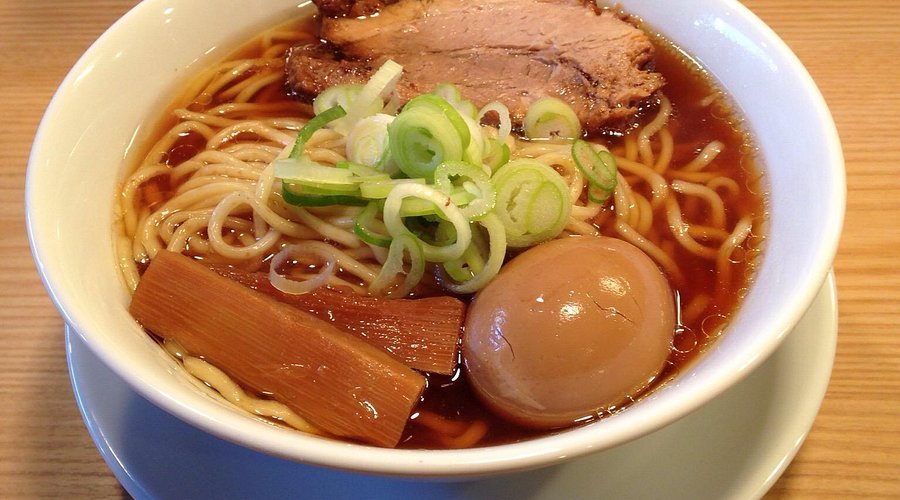
The soba is coarse-ground and cut into both thin and thick formats, which gives you genuine textural variety across a single sitting. This is a meaningful distinction: many soba specialists offer one style and ask you to appreciate the craft from that fixed point. Karani's dual-cut approach lets you compare finishes and flavour intensity side by side, which is useful both for first-timers and for anyone who already has opinions about noodle gauge. The Bib Gourmand, awarded by Michelin's inspectors who are specifically assessing value at accessible price points, confirms that the execution clears the bar Michelin sets for this category.
Booking and Timing
Booking difficulty is rated Easy, which at a Bib Gourmand venue in a major Japanese city means you should still plan ahead rather than arrive on the assumption that a table will be available. A week's notice is a sensible buffer on weekdays; weekend evenings in Fukushima Ward will fill faster given the neighbourhood's density of dining options. Walk-in attempts are a gamble worth taking only if you arrive early and outside peak hours.
If you are travelling from elsewhere in the Kansai region, from Gion Sasaki in Kyoto or akordu in Nara, for instance, factor in that Osaka's Fukushima Ward is well-connected but not the city's tourist core, so build in enough time to locate the address at 2 Chome-11-26 Sagisu.
Late-Night and After-Hours Positioning
Sake-forward appetisers, a convivial room with no dress expectations, and a whimsical atmosphere designed to encourage lingering position Sobakiri Karani as a late-evening option. Traditional soba restaurants in Japan often close early, treating noodles as a lunch category. Karani's menu and atmosphere read as evening-first: the duck miso, the unrefined sake pairings, and the social room layout all point toward a dinner-and-drinks format rather than a quick lunchtime bowl. If you are assembling a late-night Osaka itinerary, this is worth calling ahead to confirm closing time before you build it into the plan. Check our full Osaka bars guide for what to do before or after.
Solo Dining and Group Suitability
The large-table format with mismatched seating suggests the room handles groups comfortably. Solo diners visiting Osaka's Fukushima Ward should note that the communal energy of the space means you are unlikely to feel conspicuous eating alone, though a counter-style seat would feel more purposeful. For groups of three or more, this is a strong choice: the shareable appetisers and the range of soba styles mean everyone at the table has something to work with and compare. For soba dining specifically in the Osaka context, this is more group-friendly than stiffer, more ceremonial alternatives.
Soba in Osaka and Japan, Context
Soba as a restaurant category in Japan spans an enormous quality range, from convenience-format chains to Michelin-recognised specialists. Sobakiri Karani's Bib Gourmand places it at the top of the accessible tier nationally. For comparison, Akasaka Sunaba in Tokyo and Azabukawakamian in Tokyo represent the Tokyo soba reference points; Karani holds its own as Osaka's answer to that standard. Within Osaka specifically, other soba options worth considering include Ayamedo, Naniwa Okina, Shitennoji Hayauchi, Soba Takama, and Sobadokoro Toki. For broader Osaka planning, the full Osaka restaurants guide gives you the complete picture across price tiers and cuisines.
Pearl's Take
Sobakiri Karani is the kind of venue Pearl exists to flag: Michelin-recognised, accessible on price, and built around a specific craft executed with enough seriousness to justify a dedicated visit. The whimsical room, the sake-friendly appetiser list, and the dual-cut soba make this the right booking for anyone who wants an evening that feels genuinely local rather than tourist-optimised. Book with a week's advance notice, arrive hungry enough to work through the starters, and do not rush.
For hotels to pair with your visit, the Osaka hotels guide covers the full range of options in the city. If you are exploring the wider Kansai and Japan dining circuit, Harutaka in Tokyo, Goh in Fukuoka, 1000 in Yokohama, and 6 in Okinawa are all worth building into your itinerary. The Osaka experiences guide and Osaka wineries guide round out the picture if you are planning a longer stay.
Planning details
- Hours
- Monday: 11 AM–2 PM, 5–8:30 PM · Tuesday: 11 AM–2 PM, 5–8:30 PM
- Location
- 2 Chome-11-26 Sagisu, Fukushima Ward, Osaka, 553-0002, Japan
- Website
- tabelog.com/en/osaka/A2701/A270108/27004511
- Phone
- +81 6-4796-2286
The take
The Take
The Vibe
Sobakiri Karani foregrounds conviviality over austerity. The dining room, conceived with a woodworking artist, pairs reclaimed timber and rough-hewn walls with mismatched chairs and large communal tables, and a painted ceiling that the reviewer calls deliberately whimsical. Rather than the spare, meditative register of a Tokyo soba-ya, the space feels tactile and immediate, inviting lingering conversation and second rounds of sake. The overall impression is handcrafted and warm: an intentionally relaxed, slightly rustic counterpoint to more formal soba traditions, where atmosphere and small plates share the spotlight with the noodles.
Best For
This is a place to linger with friends and small groups. The menu’s sake-friendly appetizers and the communal seating make Sobakiri Karani especially well suited to after-work gatherings and group dinners where sharing and conversation are central. Its recognition with a Michelin Bib Gourmand in 2024 and 2025 signals reliably good cooking without formality, so it also works for casual celebratory nights when you want quality food in an unpretentious setting. The restaurant’s Kansai approach, lighter, kombu-forward broths and texture variation, makes it appealing to diners looking to explore regional soba styles together.
Ordering Tips
Start with the small, sake-friendly appetizers and plan to order a round of sake before the noodles arrive: the review explicitly notes that diners often request a second round of sake while waiting for soba. Lean into the house specialties: the Arabiki Soba selections, including the version with grated daikon and katsuobushi and the duck-broth variation, are highlighted as signature preparations. Expect lighter, kombu-forward broths typical of the Kansai approach; tasting those nuances alongside shared plates gives the most authentic sense of the restaurant’s direction.
Venue details
Ambiance
Practical warm lighting highlights woodwork and open kitchen in an artisanal space with exposed brick, hand-painted panels, and informal communal seating fostering lively conversation.
Tags
Vibe
Best For
Experience
Sourcing
Accessibility
At the Table
- Dress Code
- Smart Casual
- Noise Level
- Conversational
- Service Style
- Upscale Casual
- Meal Pacing
- Standard
- Capacity
- Intimate
- Kitchen
- Modern
- Menu Format
- A la carte, Small plates
- Drinks Focus
- Sake
Signature Dishes
- Arabiki Soba
- Arabiki Soba with Grated Daikon and Katsuobushi
- Arabiki Soba with Duck Broth
Know before you go
Know Before You Go
- Getting there
- 2 Chome-11-26 Sagisu, Fukushima Ward, Osaka, 553-0002, Japan
Planning details
Hours
- Monday
- 11 AM–2 PM, 5–8:30 PM
- Tuesday
- 11 AM–2 PM, 5–8:30 PM
- Wednesday
- 11 AM–2 PM
- Thursday
- Closed
- Friday
- 11 AM–2 PM, 5–8:30 PM
- Saturday
- 11 AM–2 PM, 5–8:30 PM
- Sunday
- 11 AM–2 PM, 5–8:30 PM
Location
2 Chome-11-26 Sagisu, Fukushima Ward, Osaka, 553-0002, Japan · Directions
Also consider
Also Consider
- HAJIME: French, Innovative, ¥¥¥¥
- La Cime: French, ¥¥¥¥
- Kashiwaya Osaka Senriyama: Japanese, ¥¥¥
- Taian: Kaiseki, Japanese, ¥¥¥
- Fujiya 1935: Innovative, ¥¥¥¥
Restaurant context
Sobakiri Karani operates in an entirely different price bracket from most of Osaka's recognised dining names, which makes direct comparison partly a question of what you are actually deciding between. If your evening requires a serious occasion format: private dining, elaborate courses, sommelier service HAJIME and Fujiya 1935 are the ¥¥¥¥ options at the innovative end of the spectrum, and La Cime covers French at the same tier. All three demand significantly more planning time and significantly more budget. Sobakiri Karani is the answer when the brief is a high-quality, low-ceremony evening rather than a formal meal.
Within the ¥¥¥ tier, Kashiwaya Osaka Senriyama and Taian represent Osaka kaiseki at its most considered: both are harder to book, more formal in atmosphere, and structured around multi-course progression rather than the relaxed build-your-own-evening format Karani offers. If you want to mark a genuinely significant occasion with the full weight of Osaka's Japanese dining tradition behind it, Taian or Kashiwaya is the stronger choice. If you want a Michelin-recognised evening that costs a fraction of the price and lets you eat and drink at your own pace, Karani wins.
On pure value terms, Sobakiri Karani is the easiest booking among Osaka's Michelin-recognised options and the lowest entry cost. The Bib Gourmand is Michelin's specific signal for value at accessible prices, so this is not a compromise: it is a different category of recommendation. Book Karani when the priority is craft, atmosphere, and value. Book the ¥¥¥¥ venues when budget is not the constraint and you want the full production.
Explore Osaka
Around this place
Discover more on Pearl
Unlock the full Sobakiri Karani guide in Pearl, including awards, comparisons, FAQs, planning details, and nearby places.
Compare Sobakiri Karani
| Venue | Awards | Price |
|---|---|---|
| Sobakiri Karani | 2026 Bib GourmandMichelin Guide Kyoto Osaka 2026Tabelog 100 - Soba - WEST - 2025 · #862025 Michelin Bib Gourmand2024 Michelin Bib Gourmand | ¥ |
| HAJIME | Star Wine Lists 2026 · #12026 Tabelog Bronze · #922026 OAD Top Restaurants in Japan Ranked · #98Michelin Guide Kyoto Osaka 20262026 La Liste Top RestaurantsTabelog 100 - Innovative / Creative cuisine - 2025 · #692025 Asia's 50 Best Restaurants · #832025 OAD Top Restaurants in Japan Ranked · #87We're Smart World Top Restaurants 2025 | ¥¥¥¥ |
| La Cime | 2026 Asia's 50 Best Restaurants · #132026 OAD Top Restaurants in Japan Ranked · #1492026 Tabelog Bronze · #231Michelin Guide Kyoto Osaka 20262026 La Liste Top Restaurants2025 Asia's 50 Best Restaurants · #82025 World's 50 Best Restaurants · #44Tabelog 100 - French - WEST - 2025 · #932025 OAD Top Restaurants in Japan Ranked · #123 | ¥¥¥¥ |
| Kashiwaya Osaka Senriyama | 2026 Tabelog Bronze · #1682026 OAD Top Restaurants in Japan Recommended2026 Relais Chateaux RestaurantsMichelin Guide Kyoto Osaka 20262026 La Liste Top RestaurantsTabelog 100 - Japanese cuisine - WEST - 2025 · #772025 OAD Top Restaurants in Japan Ranked · #1552025 Relais Chateaux Award2025 Michelin 3 Stars | ¥¥¥ |
| Taian | 2026 OAD Top Restaurants in Japan RecommendedMichelin Guide Kyoto Osaka 20262026 La Liste Top Restaurants2025 OAD Top Restaurants in Japan Ranked · #2042025 La Liste Top Restaurants2025 Michelin 3 Stars2024 OAD Top Restaurants in Japan Ranked · #1912024 Michelin 3 Stars2023 OAD Top Restaurants in Japan Highly Recommended | ¥¥¥ |
| Fujiya 1935 | 2026 Tabelog Bronze · #752026 OAD Top Restaurants in Japan RecommendedMichelin Guide Kyoto Osaka 20262026 La Liste Top Restaurants2025 Michelin 2 Stars2025 Tabelog Silver2025 La Liste Top Restaurants2024 OAD Top Restaurants in Japan Ranked · #2392024 Michelin 2 Stars | ¥¥¥¥ |










How Sobakiri Karani stacks up against the competition.
FAQ
Frequently Asked Questions
Does Sobakiri Karani handle dietary restrictions?
The menu is soba-centred with appetisers that include duck-and-onion miso and tofu pickled in unrefined sake, so guests avoiding meat or alcohol-based preparations should check directly before visiting. Phone and website details are not currently listed, so the most reliable approach is to contact the restaurant in advance through a hotel concierge or booking platform if you have specific requirements. The ¥ price tier and informal room suggest flexibility in service style, but dietary customisation at a specialist soba counter is not guaranteed.
Is Sobakiri Karani good for solo dining?
Yes: solo diners are a natural fit here. The large-table format with mismatched seating means you are unlikely to feel conspicuous eating alone, and the convivial, no-fuss atmosphere supports a drop-in mindset. Soba as a format is also inherently solo-friendly: shorter meals, no multi-course commitment, and a ¥ price point that removes any pressure to stretch the bill.
Is the tasting menu worth it at Sobakiri Karani?
Sobakiri Karani is not structured around a tasting menu format. The draw is ordering soba the way you want it, thin or thick, coarse-ground, alongside sake-forward appetisers like tofu in unrefined sake or duck-and-onion miso. At the ¥ price tier with back-to-back Michelin Bib Gourmand recognition in 2024 and 2025, the value case is strong regardless of how much you order.
How far ahead should I book Sobakiri Karani?
Book at least one to two weeks ahead, especially for weekend visits. The Michelin Bib Gourmand recognition in both 2024 and 2025 has raised the venue's profile consistently, and the room in Fukushima Ward draws a local following on top of visiting diners.
What are alternatives to Sobakiri Karani in Osaka?
If budget is your priority and you want Michelin-recognised craft dining, Sobakiri Karani has few direct soba-specific rivals in Osaka at the ¥ tier. For a step up in formality and price, La Cime and Fujiya 1935 both offer serious tasting-menu experiences with strong critical credentials, while Kashiwaya Osaka Senriyama and Taian sit at the high end of the kaiseki category. HAJIME is a separate proposition entirely: three Michelin stars and a distinctly different format. None of these replicate what Sobakiri Karani does: specialist soba, low prices, and a room built around craft and conviviality.