.png?width=1200&quality=80)

Oribe
Teppanyaki · Nishi, Osaka
Restaurant in Osaka, Japan
 Book with Pearl
The Read
Franco-Japanese Griddle Cooking
Price
$50–100per person
Dress
Smart Casual
Why go
A Michelin Bib Gourmand two years running, Oribe in Osaka's Nishi Ward takes teppanyaki in a French-bistro direction: appetisers drawn from the European canon, a celebrated cabbage steak rooted in okonomiyaki, and a closing savoury pancake that brings the meal back to Osaka. At ¥¥, it delivers a more structured and considered dining arc than the price suggests.
About Oribe
Verdict
Oribe earns back-to-back Michelin Bib Gourmand recognition in 2024 and 2025 for a reason: it delivers a genuinely considered teppanyaki-meets-French-bistro experience at a price point (¥¥) that makes it one of the more defensible bookings in Osaka's crowded dining scene. If you have been once, the second visit holds up: the menu architecture is structured enough that returning diners find familiar anchors while the appetiser range gives Chef Takahito Nishimura room to vary the opening act. For first-timers and returnees alike, this is a restaurant worth booking with intent, not just filling a slot on a busy itinerary.
Portrait
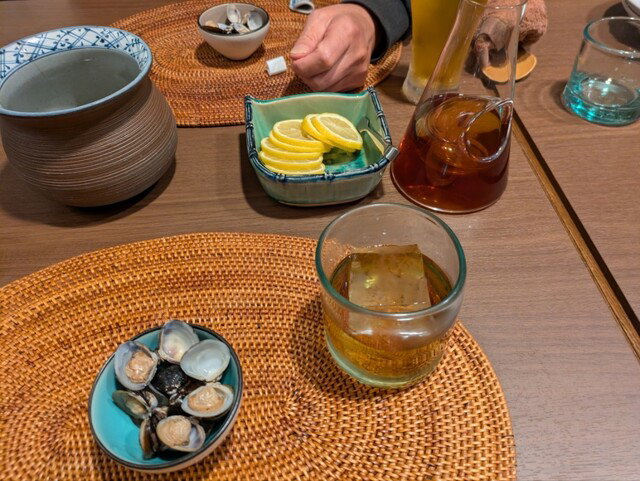
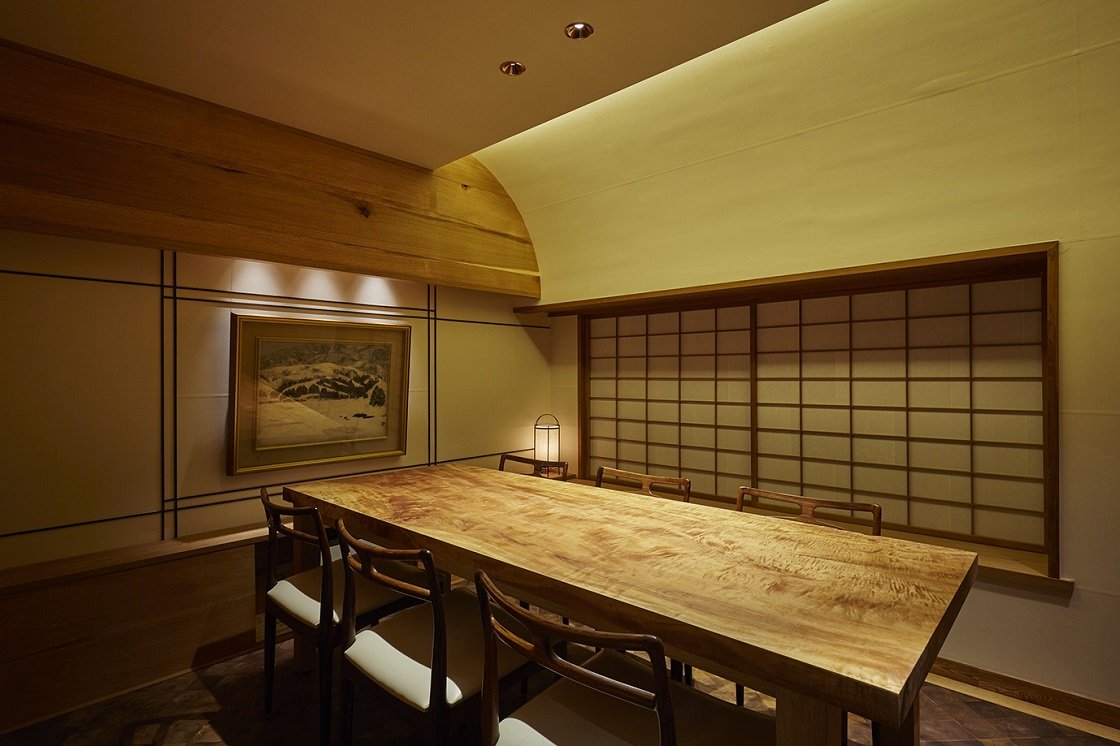
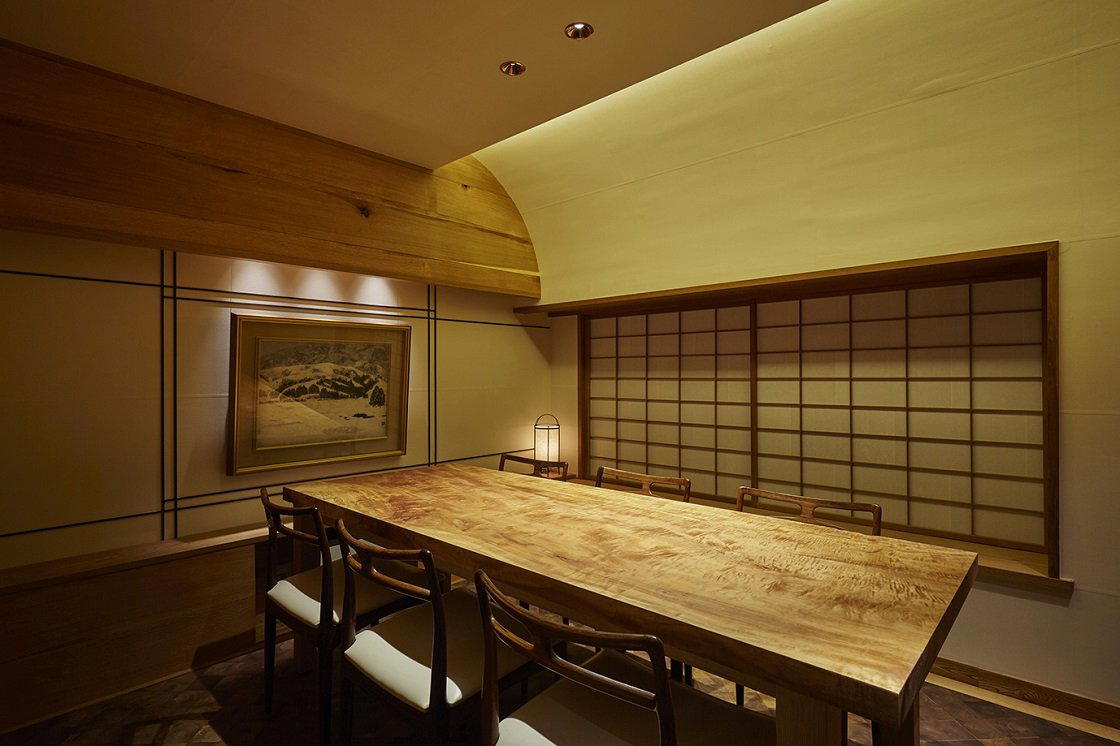
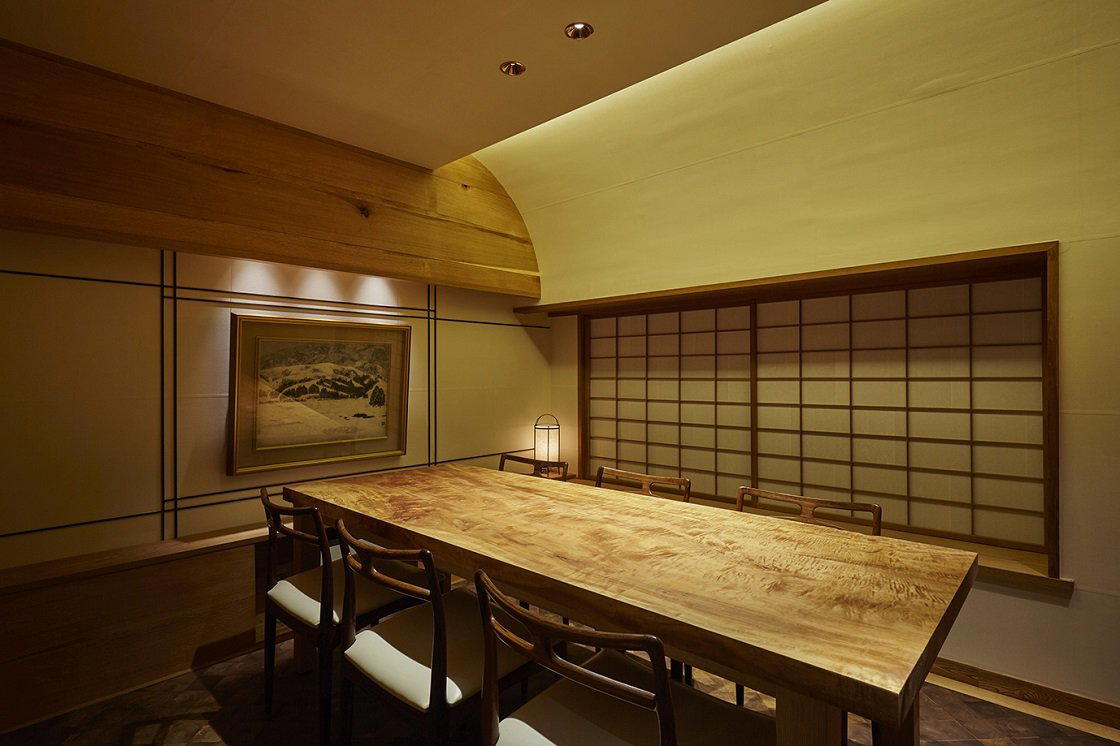
Walk into Oribe and the first thing you register is green. The décor draws directly from Oribe ware: the rustic, asymmetrical Momoyama-period pottery characterised by bold copper-green glazing, and that visual through-line gives the room a coherence that many mid-range teppanyaki venues lack. This is not green as an accent colour; it is a considered design statement that signals the chef's sensibility before a single plate arrives. Chef Nishimura named the restaurant for his affinity with this style of ceramics, and the aesthetic discipline carries into how the meal is staged.
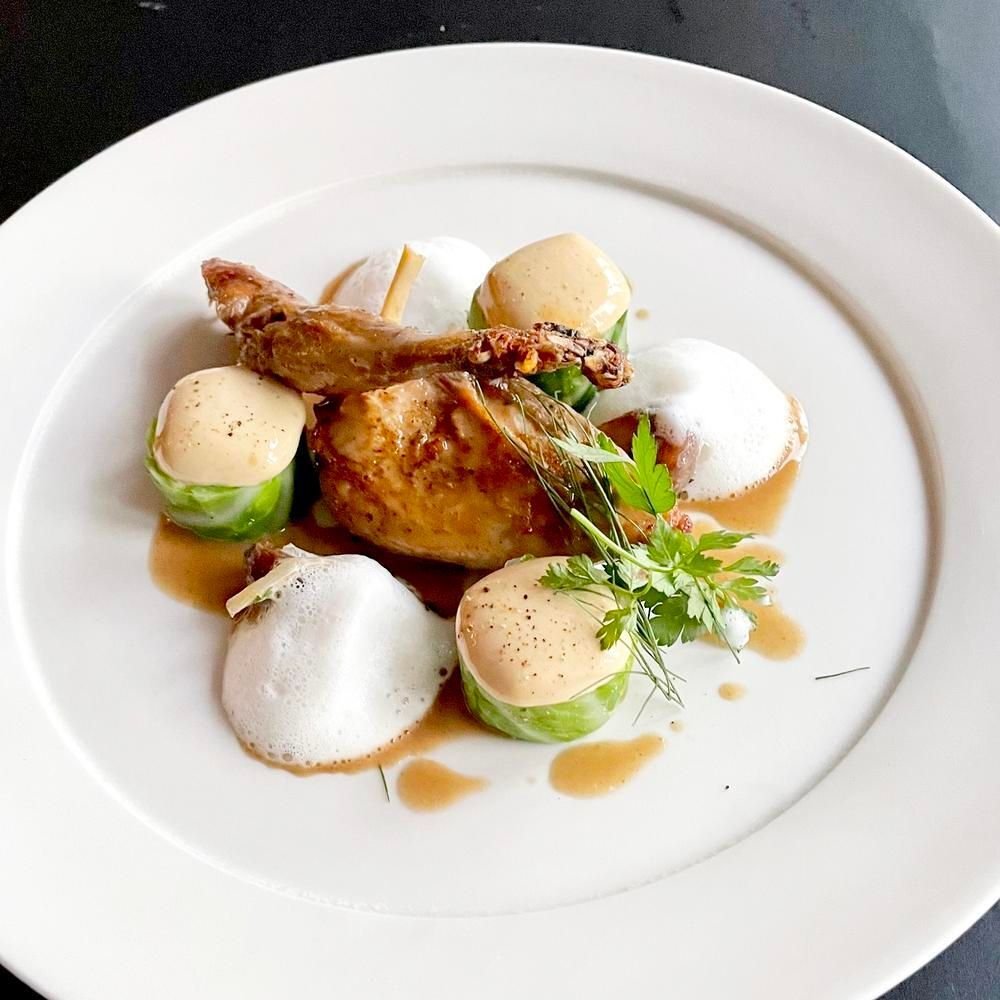
The cooking at Oribe sits at an unusual crossroads: teppanyaki technique applied to a menu that draws openly from French bistro tradition. That combination sounds like a gimmick but functions as a genuine structural idea. The meal opens with a range of appetisers, paté, smoked salmon preparations and similar items drawn from the French canon, cooked or finished on the iron griddle. This is not fusion in the blurred, everything-goes sense. It is a deliberate sequencing choice: French-trained flavour logic, executed with teppanyaki's direct heat and the particular textural results it produces.
The progression through the meal has a clear arc. The appetiser range is where the menu shows the most variation and creative range, this is where Nishimura has the most latitude to shift across visits, which is part of what makes Oribe rewarding on a return. The middle of the meal anchors around the famous cabbage steak, a dish that deserves its reputation. It was conceived from the base ingredients of okonomiyaki, Osaka's defining savoury pancake, and reconstructed as something more focused and less chaotic than its street-food source material. For diners who know Osaka's food culture, this is a pointed reference; for those arriving without that context, it reads simply as a compelling vegetable course with real structural confidence.
Meal closes with okonomiyaki itself, which functions as a deliberate return to Osaka's culinary ground level after the French-inflected opening. This is smart menu architecture: the meal moves from European register toward Kansai tradition, ending somewhere that feels local and grounded. For a restaurant operating at the ¥¥ price range, the structural thought behind that progression is notable, it is the kind of sequencing you more often find at venues charging considerably more.
Oribe's address in Nishi Ward, Shinmachi, puts it in a walkable part of central Osaka. For broader context on where to eat across the city, see our full Osaka restaurants guide.
For teppanyaki comparison further afield, Ishigaki Yoshida in Tokyo operates in a more traditional register at a higher price point, and Hibana by Koki in Hanoi takes the format in an entirely different regional direction. Within the Kansai region, Gion Sasaki in Kyoto and akordu in Nara offer strong alternatives for travellers moving across the region. Other Japan options worth considering include Harutaka in Tokyo, Goh in Fukuoka, 1000 in Yokohama, and 6 in Okinawa.
If Oribe is on your Osaka list, pair it with a broader city plan: our Osaka hotels guide, bars guide, wineries guide, and experiences guide cover the rest of the picture. For other Osaka dining options in a similar spirit, JIBUNDOKI and tanpopo are worth adding to the shortlist.
Ratings & Recognition
- Michelin Bib Gourmand, 2025
- Michelin Bib Gourmand, 2024
Booking
Booking difficulty is rated easy, which tracks with Oribe's mid-range positioning. It does not carry the wait times of Osaka's starred venues, but the Bib Gourmand recognition has lifted its profile, checking availability a week or two ahead is sensible for weekend evenings. The address in Shinmachi (テラスレジデンス四ツ橋 1階, Nishi Ward) gives you a starting point for direct enquiry or walk-in assessment at quieter times.
Quick reference: ¥¥ price range | Teppanyaki-French | Nishi Ward, Shinmachi, Osaka | Booking: easy, 1–2 weeks ahead recommended for weekends.
How It Compares
See the comparison section below for Oribe's position against Osaka's broader dining field.
FAQ
What should I order at Oribe?
- Focus on the full progression rather than picking individual dishes. The appetiser sequence, French-influenced plates including paté and smoked salmon preparations, is where the menu shows the most range. The cabbage steak is the course Oribe is most associated, built from okonomiyaki's base ingredients and worth ordering for the structural creativity alone. The meal closes with okonomiyaki itself, which is a popular finish here. Let the menu run its course rather than editing it heavily.
How far ahead should I book Oribe?
- Booking is rated easy relative to Osaka's starred venues, but the consecutive Bib Gourmand recognition in 2024 and 2025 has raised the restaurant's profile. For weekday dinners, a few days' notice is likely sufficient. Weekend evenings are worth securing one to two weeks ahead. Compare this with higher-tier Osaka venues like La Cime or HAJIME, where lead times run considerably longer.
Is Oribe good for solo dining?
- Yes. The teppanyaki counter format suits solo diners well, you have a direct sightline to the cooking and a natural rhythm to the meal that does not depend on conversation to fill space. At ¥¥ pricing, it is also one of the more comfortable solo splurges in Osaka without the financial commitment of a multi-course kaiseki. If solo counter dining appeals to you elsewhere in Japan, Harutaka in Tokyo operates in a similar spirit at a higher price point.
Is Oribe good for a special occasion?
- It works for a low-key celebration where the food is the point rather than the ceremony. The Bib Gourmand recognition and the thoughtful menu arc give it genuine occasion-dining credibility, and the Oribe ware-inspired décor creates a more distinctive room than a typical teppanyaki venue. That said, if the occasion calls for full formal service or a longer tasting menu with wine pairing, Kashiwaya Osaka Senriyama at ¥¥¥ or La Cime at ¥¥¥¥ would better fit the brief.
Is Oribe worth the price?
- At ¥¥, yes. Two consecutive Bib Gourmand awards signal consistent quality at a price point the Michelin guide specifically validates as accessible. The French-teppanyaki format is more structured and deliberate than the price range usually delivers, and the menu arc from bistro appetisers through the cabbage steak to an okonomiyaki finish is genuine creative thinking rather than a formula. For this combination of recognition, concept, and price, Oribe represents strong value in Osaka's mid-range.
Does Oribe handle dietary restrictions?
- Given the French-teppanyaki format and the structural role of specific dishes (the cabbage steak, the okonomiyaki finish), menus here are likely to be fairly fixed. Contact the restaurant directly before booking if you have dietary requirements that would affect the meal's progression.
Planning details
- Hours
- Monday: Closed · Tuesday: 6–10 PM
- Location
- Japan, 〒550-0013 Osaka, Nishi Ward, Shinmachi, 1 Chome−6−18 テラスレジデンス四ツ橋 1階
- Reservations
- Book on TableCheck
- Website
- o-ri-be.com
- Phone
- +81 6-6532-8266
The take
The Take
The Vibe
Oribe presents a quietly refined take on Osaka teppanyaki: the dining room’s dark green palette, inspired by Oribe ware, anchors an intimate counter format in historical reference rather than flash. The space feels considered and sophisticated, pairing an informal, neighborhood counter setting with an attention to aesthetic detail. Cooking sits at the centre of the room, and the interplay of French bistro technique with iron-griddle traditions gives the experience a modern, cultured edge. It reads like a local favorite that values repeat custom and measured refinement over spectacle.
Best For
Oribe is best approached as an evening destination for diners who appreciate focused counter cooking and thoughtful combinations of technique and tradition. The format rewards repeat visits and suits couples on date night, small special-occasion meals and solo diners who want direct contact with the cookery. Pricing sits below flagship kaiseki and French counters, making it an accessible option for celebratory dinners that still feel elevated. Expect a dinner-led service built around teppanyaki mains and bistro-style appetisers rather than an all-day or casual lunch operation.
Ordering Tips
Sit at the counter to watch the griddle work and get the full teppanyaki experience. Start with the French-influenced appetisers noted in the menu: references to pâté and smoked salmon suggest a series of small plates that play well before the main grill items. For mains, the wagyu beef teppanyaki is a signature choice; plan to finish with the seafood-mix okonomiyaki, which the kitchen positions as a satisfying endpoint. Given the restaurant’s neighbourhood focus, pacing your meal to enjoy multiple small courses mirrors the house’s approach to technique and repetition.
Venue details
Ambiance
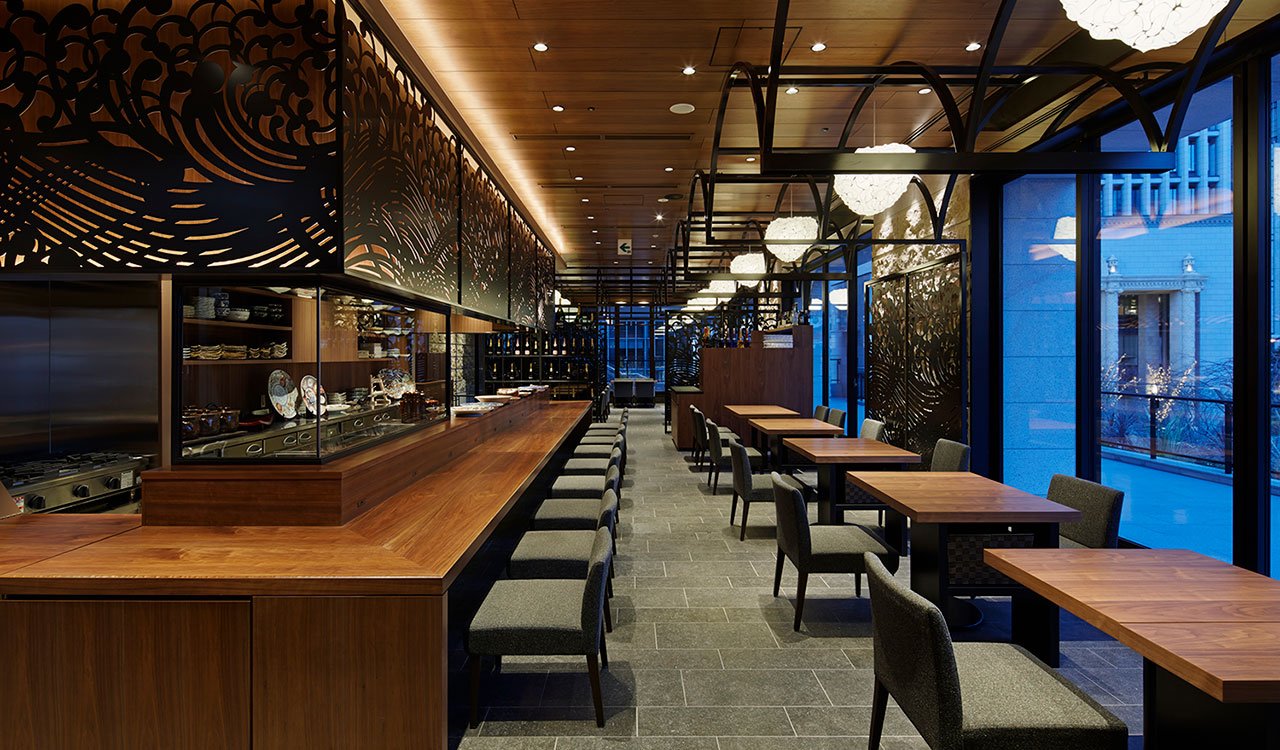
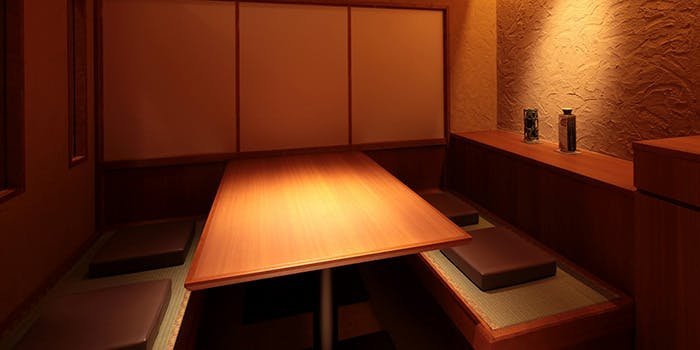
Warm wooden interior with counter seating focused on the chef's lively cooking performance.
Tags
Vibe
Best For
Experience
At the Table
- Dress Code
- Smart Casual
- Noise Level
- Conversational
- Service Style
- Upscale Casual
- Meal Pacing
- Leisurely
- Capacity
- Intimate
- Kitchen
- Fusion
- Menu Format
- A la carte, Counter dining
Signature Dishes
- wagyu beef teppanyaki
- seafood mix okonomiyaki
Know before you go
Know Before You Go
- Getting there
- Japan, 〒550-0013 Osaka, Nishi Ward, Shinmachi, 1 Chome−6−18 テラスレジデンス四ツ橋 1階
Planning details
Hours
- Monday
- Closed
- Tuesday
- 6–10 PM
- Wednesday
- 6–10 PM
- Thursday
- 6–10 PM
- Friday
- Closed
- Saturday
- 6–10 PM
- Sunday
- 6–10 PM
Location
Japan, 〒550-0013 Osaka, Nishi Ward, Shinmachi, 1 Chome−6−18 テラスレジデンス四ツ橋 1階 · Directions
Also consider
Also Consider
- HAJIME: French, Innovative, ¥¥¥¥
- La Cime: French, ¥¥¥¥
- Kashiwaya Osaka Senriyama: Japanese, ¥¥¥
- Taian: Kaiseki, Japanese, ¥¥¥
- Fujiya 1935: Innovative, ¥¥¥¥
Restaurant context
Oribe sits at the accessible end of Osaka's recognised dining tier. At ¥¥ with back-to-back Bib Gourmand awards, it is the right choice if you want a genuinely considered meal without the financial or logistical commitment of the city's starred venues. Compare it against HAJIME and La Cime at ¥¥¥¥: both operate at a higher level of technical ambition and service formality, and both require significantly more advance planning to book. If you are deciding between Oribe and one of those two, the question is whether you want a long, ceremonial tasting experience or a shorter, more animated counter meal at a fraction of the price. Fujiya 1935, also at ¥¥¥¥, is the right pick if innovative multi-course French-Japanese cooking is the priority and budget is not a constraint.
At the ¥¥¥ tier, Kashiwaya Osaka Senriyama and Taian offer kaiseki and traditional Japanese formats that run longer and more formally than Oribe's teppanyaki arc. For a special occasion with a larger budget and a preference for Japanese rather than French-inflected cooking, either of those two would be the stronger call. Oribe's advantage over that tier is price, booking accessibility, and a format that feels more energetic and immediate: teppanyaki cooking in front of you rather than a sequence of small rooms and ceremonial service.
Within Osaka's broader mid-range, JIBUNDOKI and tanpopo are worth cross-referencing depending on your cuisine preference. Oribe's specific niche, French bistro technique channelled through teppanyaki, at Bib Gourmand pricing, is narrow enough that direct substitutes are limited. If the concept appeals, book it. If you are undecided between Oribe and a more expensive option, the price gap is large enough that Oribe is the lower-risk starting point for a first visit to Osaka's restaurant scene.
Explore Osaka
Around this place
Discover more on Pearl
Unlock the full Oribe guide in Pearl, including awards, comparisons, FAQs, planning details, and nearby places.
Compare Oribe
| Venue | Price | Awards |
|---|---|---|
| Oribe | ¥¥ | 2026 Bib GourmandMichelin Guide Kyoto Osaka 2026Tabelog 100 - Steak / Teppanyaki - WEST - 2025 · #512025 Michelin Bib Gourmand2024 Michelin Bib Gourmand |
| HAJIME | ¥¥¥¥ | Star Wine Lists 2026 · #12026 Tabelog Bronze · #922026 OAD Top Restaurants in Japan Ranked · #98Michelin Guide Kyoto Osaka 20262026 La Liste Top RestaurantsTabelog 100 - Innovative / Creative cuisine - 2025 · #692025 Asia's 50 Best Restaurants · #832025 OAD Top Restaurants in Japan Ranked · #87We're Smart World Top Restaurants 2025 |
| La Cime | ¥¥¥¥ | 2026 Asia's 50 Best Restaurants · #132026 OAD Top Restaurants in Japan Ranked · #1492026 Tabelog Bronze · #231Michelin Guide Kyoto Osaka 20262026 La Liste Top Restaurants2025 Asia's 50 Best Restaurants · #82025 World's 50 Best Restaurants · #44Tabelog 100 - French - WEST - 2025 · #932025 OAD Top Restaurants in Japan Ranked · #123 |
| Kashiwaya Osaka Senriyama | ¥¥¥ | 2026 Tabelog Bronze · #1682026 OAD Top Restaurants in Japan Recommended2026 Relais Chateaux RestaurantsMichelin Guide Kyoto Osaka 20262026 La Liste Top RestaurantsTabelog 100 - Japanese cuisine - WEST - 2025 · #772025 OAD Top Restaurants in Japan Ranked · #1552025 Relais Chateaux Award2025 Michelin 3 Stars |
| Taian | ¥¥¥ | 2026 OAD Top Restaurants in Japan RecommendedMichelin Guide Kyoto Osaka 20262026 La Liste Top Restaurants2025 OAD Top Restaurants in Japan Ranked · #2042025 La Liste Top Restaurants2025 Michelin 3 Stars2024 OAD Top Restaurants in Japan Ranked · #1912024 Michelin 3 Stars2023 OAD Top Restaurants in Japan Highly Recommended |
| Fujiya 1935 | ¥¥¥¥ | 2026 Tabelog Bronze · #752026 OAD Top Restaurants in Japan RecommendedMichelin Guide Kyoto Osaka 20262026 La Liste Top Restaurants2025 Michelin 2 Stars2025 Tabelog Silver2025 La Liste Top Restaurants2024 OAD Top Restaurants in Japan Ranked · #2392024 Michelin 2 Stars |










How Oribe stacks up against the competition.
FAQ
Frequently Asked Questions
What should I order at Oribe?
The cabbage steak is the dish Oribe is known for: developed from okonomiyaki's core ingredients and cooked on the teppan. Work through the French-inflected appetisers, which include items like paté and smoked salmon, and save room for the okonomiyaki that closes the meal. That savoury pancake finale is a signature move, not an afterthought.
How far ahead should I book Oribe?
Oribe is rated easy to book, so a few days to a week ahead should be sufficient for most visits. It does not carry the lead times of Osaka's Michelin-starred venues, which makes it a practical choice if you're planning a last-minute dinner in the Shinmachi area. That said, two consecutive Bib Gourmand nods in 2024 and 2025 have raised its profile, so earlier is safer on weekends.
Is Oribe good for solo dining?
Teppanyaki counters are one of the better formats for solo diners in Japan: you eat in front of the action, and the progression of courses gives the meal structure. Oribe's ¥¥ price range means a solo visit won't feel like an outsized spend, and the Bib Gourmand recognition confirms the value holds at that ticket. A reasonable solo option in Nishi Ward.
Is Oribe good for a special occasion?
It works for a low-key celebration rather than a formal milestone dinner. At ¥¥, Oribe won't anchor a major anniversary the way a Michelin-starred room might, but the French-teppanyaki format and two consecutive Bib Gourmand awards make it a considered choice for a birthday dinner or a treat-yourself meal without the booking complexity of Osaka's upper tier.
Is Oribe worth the price?
At ¥¥ with back-to-back Michelin Bib Gourmand recognition in 2024 and 2025, Oribe delivers clear value. The Bib Gourmand designation exists specifically to flag good cooking at accessible prices, so the recognition here is directly relevant to the value question. For teppanyaki in Osaka at this price point, it's a well-credentialled choice.