

Naniwa Okina
Soba · Kita, Osaka
Restaurant in Osaka, Japan
 Book with Pearl
The Read
Shrine-Water Soba
Price
$20–30per person
Dress
Casual
Why go
A Michelin Bib Gourmand soba restaurant in Osaka's Kita Ward, Naniwa Okina combines Yamanashi noodle technique with an Osaka kombu-dashi tradition passed down three generations. At single-¥ pricing, it's one of the most credentialed-per-yen meals in the city and easy to book.
About Naniwa Okina
Verdict: Worth booking, easy to get in, harder to fully appreciate on a single visit
Naniwa Okina holds a Michelin Bib Gourmand for 2024 and 2025 — recognition that signals serious quality at a price point that won't require much deliberation. At the single-¥ tier, this is one of the most credentialed-per-yen soba experiences you'll find in Osaka, and booking is direct enough that there's no excuse to skip it. The question isn't really whether to go. It's how many times to go, and in what order.
What This Place Is
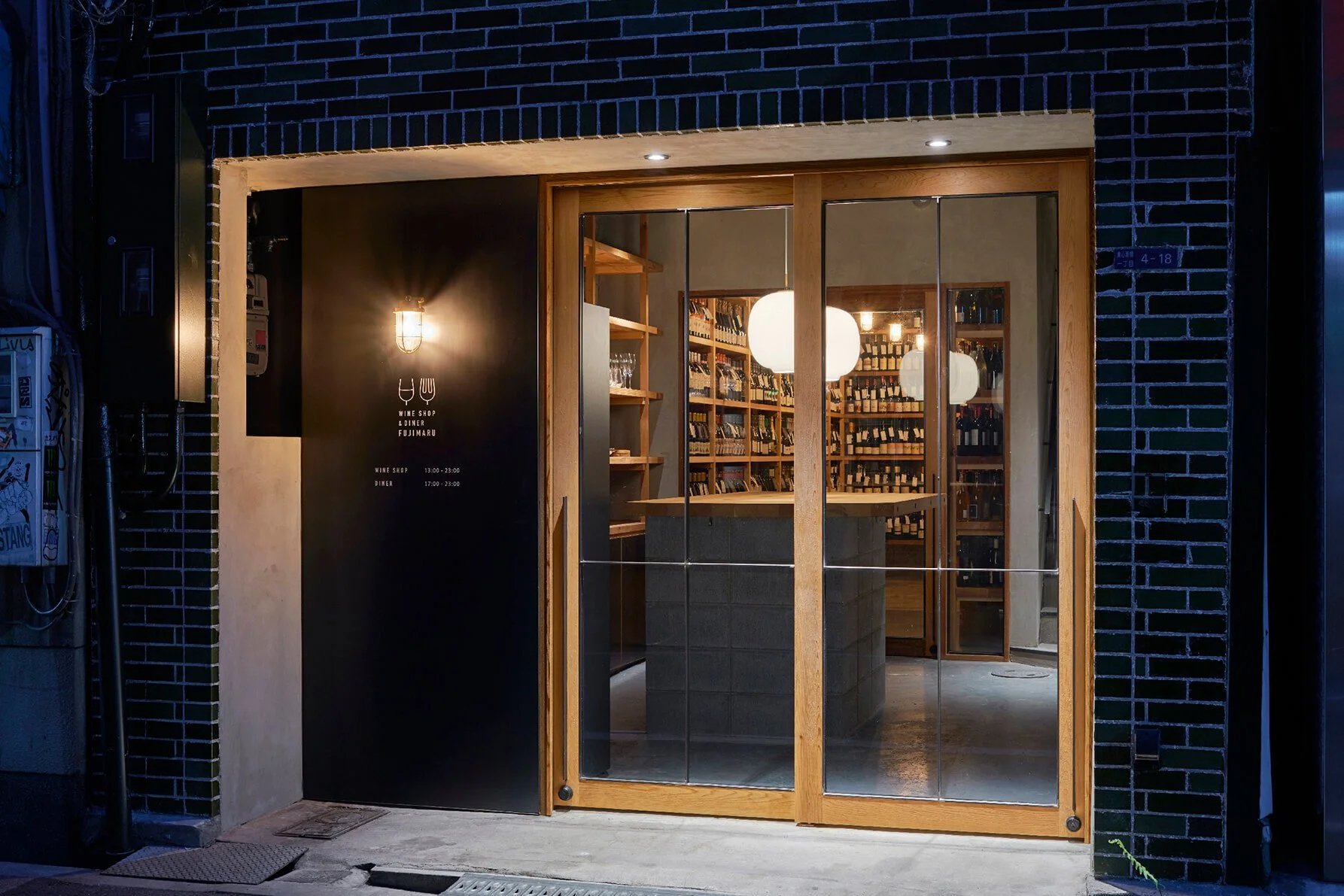
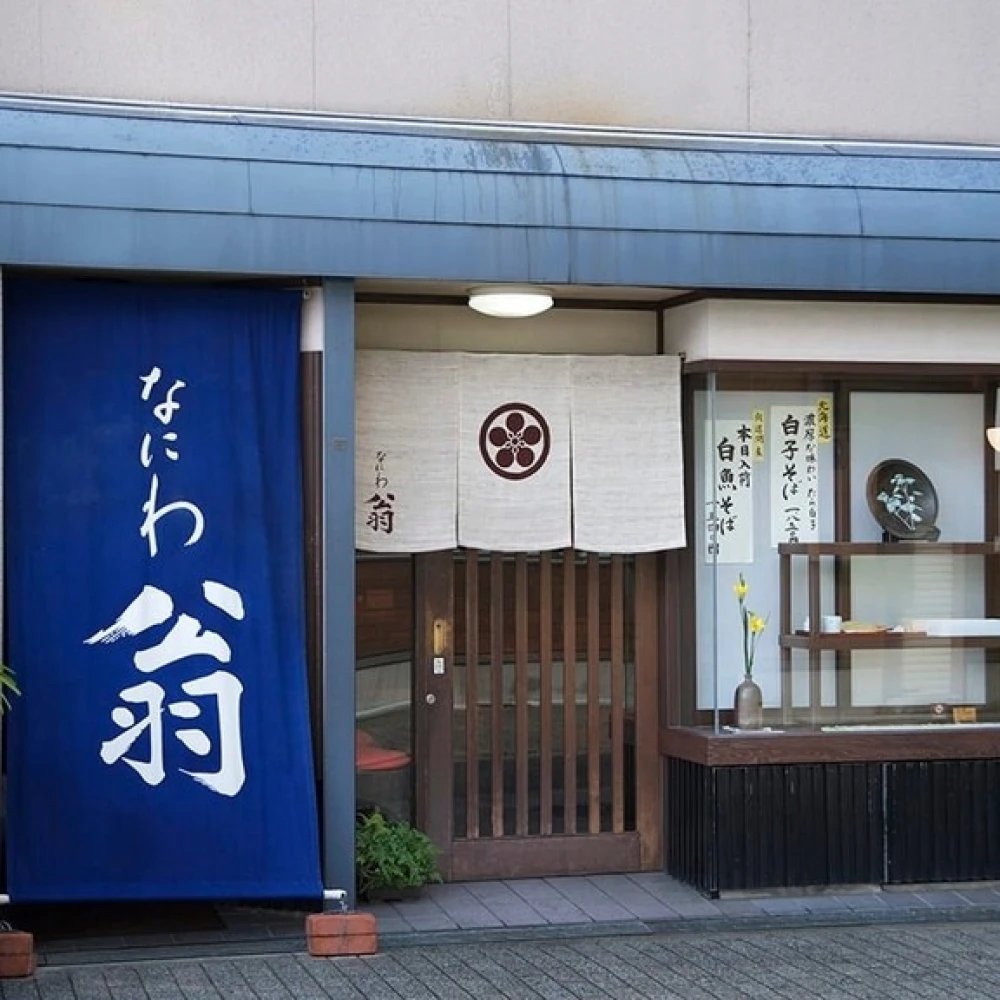
Naniwa Okina sits on Oimatsu-dori in Kita Ward, a street historically known for antique shops and galleries, and formerly the approach road to Osaka Tenmangu Shrine. The restaurant's noren carries the shrine's plum-flower crest — a deliberate acknowledgment of that history. The noodles themselves are made using water drawn from the shrine, a detail that might sound ceremonial but reflects something more practical: the third-generation owner-chef, Kanda Takuji, has built his entire approach around local continuity and inherited technique.
The broth follows a recipe passed down from his grandfather: kombu and light soy sauce, the foundation of Osaka's dashi tradition. If you know anything about regional Japanese cooking, you'll recognise this as a meaningful distinction. Osaka dashi leans toward kombu rather than the bonito-dominant stocks more common in Tokyo-style soba. The result is a broth with a cleaner, more mineral character, subtle rather than assertive, and better suited to letting the noodle itself carry the experience.
That noodle technique comes from a different lineage entirely. Kanda trained under a master in Yamanashi Prefecture, one of Japan's most respected soba-producing regions. So what you're eating at Naniwa Okina is genuinely a hybrid craft: Yamananshi noodle discipline applied to an Osaka dashi tradition. That combination is not something you'll find replicated easily, and it's precisely why the Bib Gourmand recognition makes sense here. For food-oriented travellers comparing Osaka soba options, this layering of technique is what separates Naniwa Okina from more generic noodle stops. For context on the broader Osaka soba scene, Soba Takama, Sobadokoro Toki, and Sobakiri Arabompu are worth considering alongside it.
A Multi-Visit Strategy
The PEA editorial angle is intentional: Naniwa Okina rewards repeat visits, and if you're spending more than two days in Osaka, building this into your itinerary more than once is a reasonable call. Here's how to think about sequencing:
First visit: Go for the seiro (cold buckwheat noodles served on a tray with dipping broth). This is the format that leading showcases the noodle itself, its texture, the buckwheat aroma, the quality of the milling. Eating them cold removes the broth as a variable and puts the craft front and centre. At a single-¥ price point, this is also the most efficient way to calibrate your reference point before exploring other dishes.
Second visit: Order a hot preparation, kake soba or a broth-forward option if available, to experience the grandfather's dashi recipe in the context it was designed for. Having already tasted the noodle on its own, you're now in a better position to understand what the broth adds and how the two interact. This is also a good visit to arrive with more time, eat slowly, and pay attention to the room's relationship to its neighbourhood.
Third visit (if you have it): Use it to explore any seasonal or daily variations. Soba restaurants at this level often work with seasonal ingredients for accompaniments or change preparations slightly depending on the time of year. Since specific menu details are not confirmed in our data, ask the chef or staff directly, at a small owner-operated restaurant of this type, that kind of conversation is usually welcomed.
For Tokyo-based travellers curious about how Naniwa Okina compares to the capital's soba tradition, Akasaka Sunaba and Azabukawakamian represent the Tokyo reference points worth knowing.
Who Should Book This
Naniwa Okina is a strong fit for food-focused travellers who want to understand Osaka's culinary identity beyond kaiseki and kushikatsu. It's also one of the most accessible entry points into serious Japanese soba culture for visitors who haven't spent time in dedicated soba restaurants before: the price is low, the setting is meaningful without being intimidating, and the Bib Gourmand gives you a reliable quality guarantee going in.
If you're building a broader Osaka dining itinerary, this pairs well with Ayamedo and Shitennoji Hayauchi for variety across meal types and price points. For the full picture, see our full Osaka restaurants guide.
Travellers visiting other Japanese cities can find comparable depth of craft, though in different formats, at Gion Sasaki in Kyoto, Harutaka in Tokyo, akordu in Nara, Goh in Fukuoka, 1000 in Yokohama, and 6 in Okinawa.
Practical Details
Naniwa Okina is located at 4 Chome-1-18 Nishitenma, Kita Ward, Osaka, a short walk from Osaka Tenmangu Shrine in a neighbourhood that also rewards a pre- or post-meal wander along Oimatsu-dori's antique shops. Confirmed hours and specific booking methods are not available in our data; check directly with the restaurant before visiting, particularly if travelling from outside Osaka. The price range is single ¥, making this one of the most accessible Michelin-recognised dining experiences in the city.
For wider planning, see our Osaka hotels guide, our Osaka bars guide, our Osaka wineries guide, and our Osaka experiences guide.
Quick reference:
Planning details
- Location
- 4 Chome-1-18 Nishitenma, Kita Ward, Osaka, 530-0047, Japan
- Website
- naniwa-okina.co.jp
- Phone
- +81 6-6361-5457
The take
The Take
The Vibe
Naniwa Okina reads like a small, reverent thread in Osaka’s broader culinary fabric. The noren at the door carries the shrine’s plum-flower crest, and the menu is presented as a continuation of family technique rather than a bid for flash. Two consecutive Michelin Bib Gourmand nods underline that the kitchen prizes disciplined technique and humble pricing. The third-generation owner-chef works from a kombu-and-light-soy dashi inherited from his grandfather, so the room feels like a deliberate space for tasting lineage: unhurried, respectful and quietly exacting rather than showy or trend-driven.
Best For
This is a restaurant for people who come to honor craft and flavour over spectacle. Local diners and visitors who appreciate traditional dashi-driven cooking find it especially rewarding, and it suits solo diners or small parties seeking a focused, modestly priced meal. The setting and restrained approach make it a good stop after exploring the surrounding galleries and shrine precincts. Expect a calm, attentive service style and a menu built around precise, time-honoured technique rather than multi-course theatrics.
Ordering Tips
Start with a straightforward Zaru Soba to taste the house-made broth and noodle texture; its simplicity is the clearest expression of the kombu-and-light-soy dashi the kitchen preserves. From there, move to signatures like Mackerel Tsukemen for a richer, more assertive flavour, or the Herring and Beef Soba options if you want variations on the umami profile. Given the kitchen’s emphasis on lineage and technique, order selections that let the dashi and noodle work speak for themselves rather than seeking fusion-style permutations.
Venue details
Ambiance
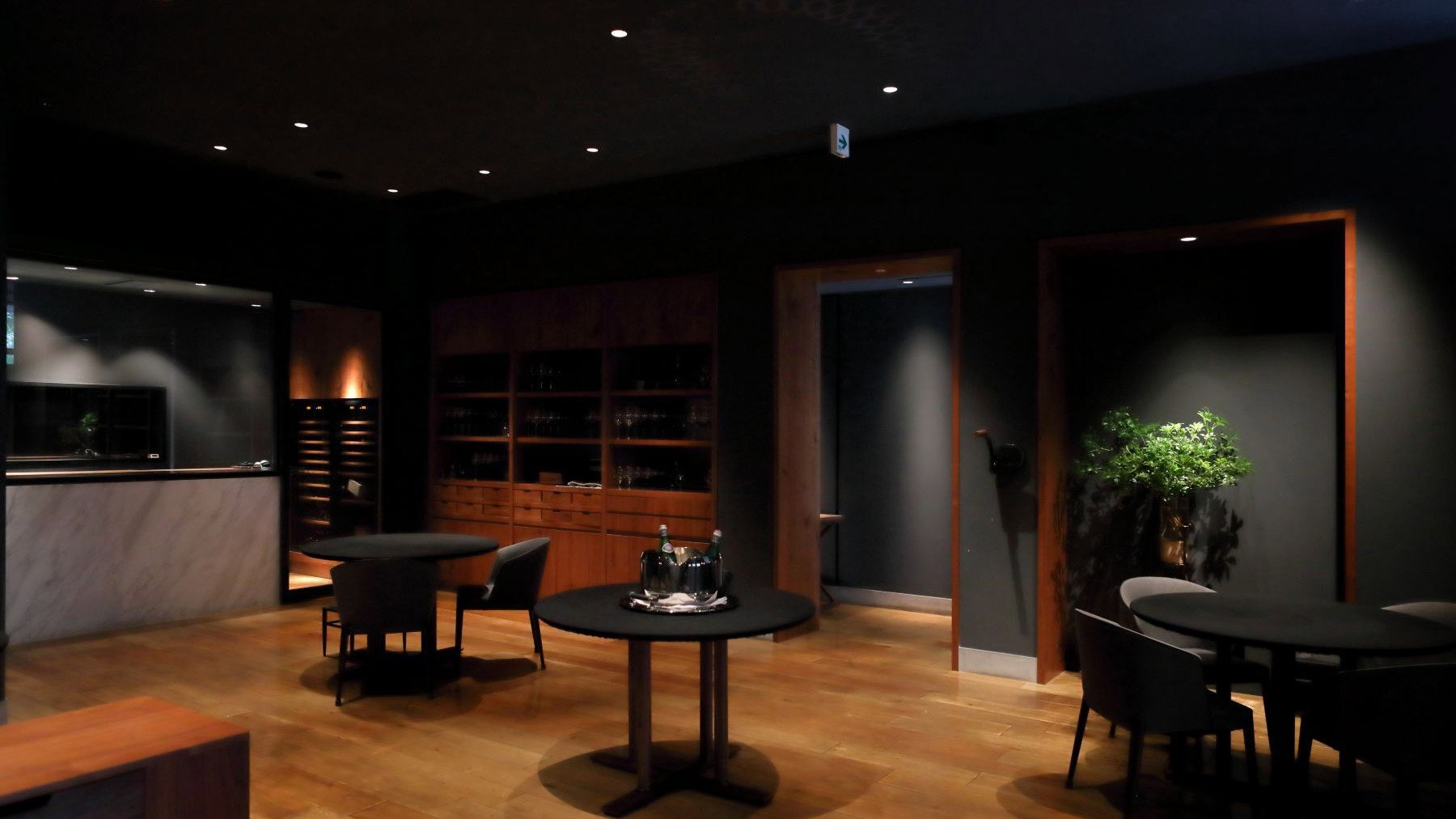
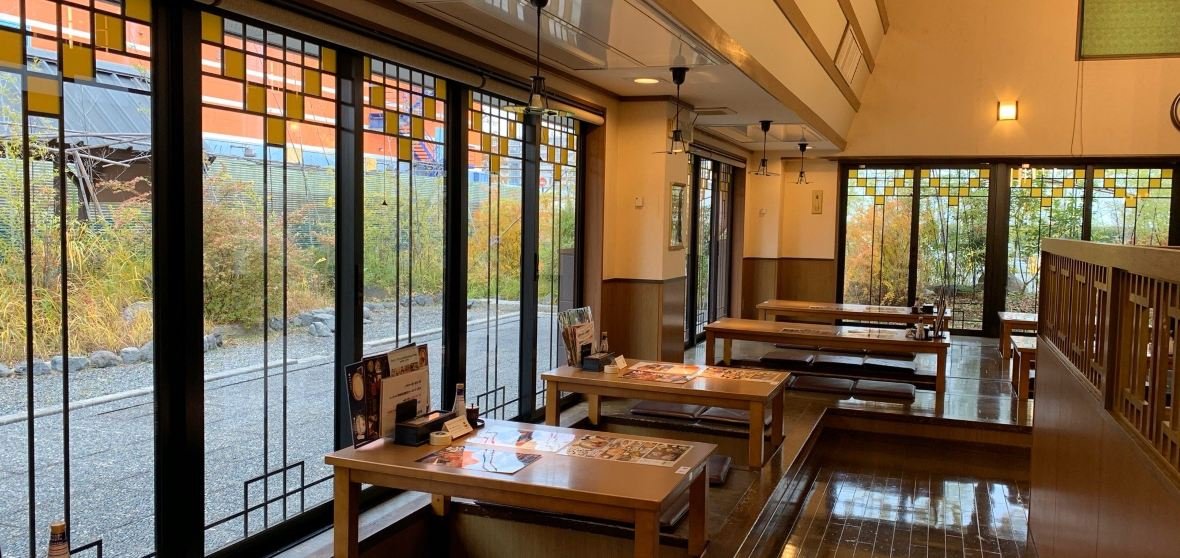
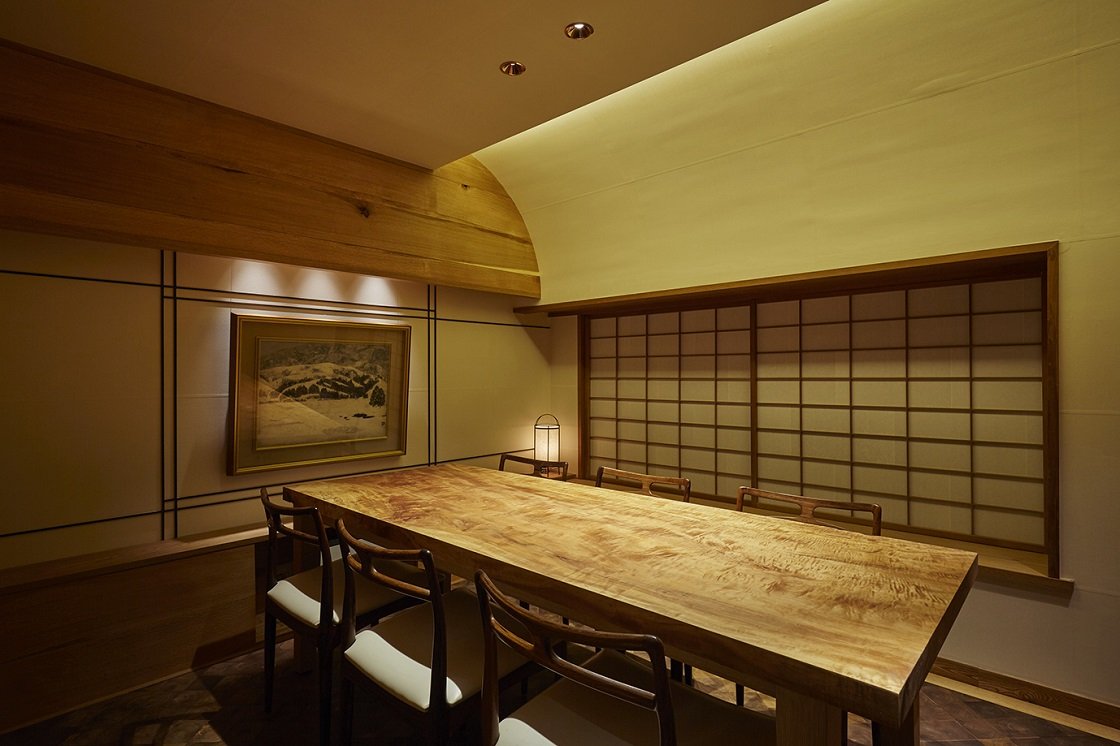
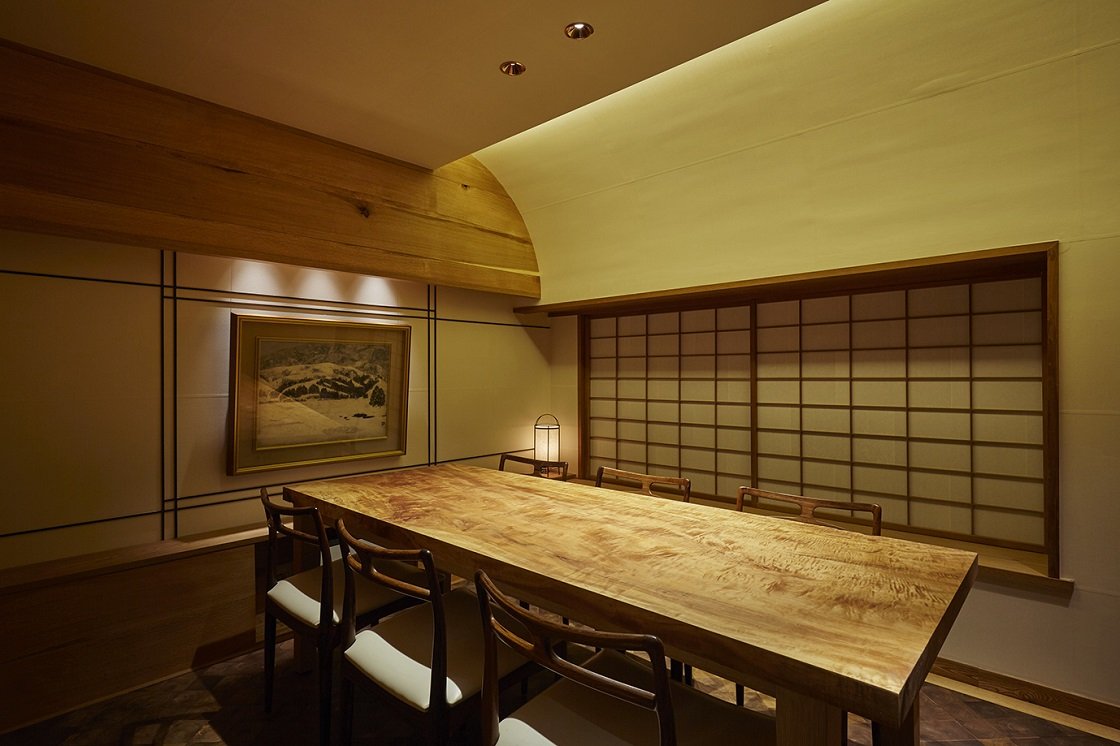
Warm wood-paneled interior with clean, calm, and relaxing atmosphere; simple yet charming décor reflecting traditional Japanese aesthetics.
Tags
Vibe
Best For
Experience
Sourcing
At the Table
- Dress Code
- Casual
- Noise Level
- Quiet
- Service Style
- Casual
- Meal Pacing
- Standard
- Capacity
- Small
- Kitchen
- Traditional
- Menu Format
- A la carte, Counter dining
- Drinks Focus
- Sake, Shochu
Signature Dishes
- Zaru Soba
- Mackerel Tsukemen
- Herring Soba
- Beef Soba
Know before you go
Know Before You Go
- Getting there
- 4 Chome-1-18 Nishitenma, Kita Ward, Osaka, 530-0047, Japan
Planning details
Location
4 Chome-1-18 Nishitenma, Kita Ward, Osaka, 530-0047, Japan · Directions
Also consider
Also Consider
- HAJIME, French, Innovative, ¥¥¥¥
- La Cime, French, ¥¥¥¥
- Kashiwaya Osaka Senriyama, Japanese, ¥¥¥
- Taian, Kaiseki, Japanese, ¥¥¥
- Fujiya 1935, Innovative, ¥¥¥¥
Restaurant context
Naniwa Okina operates at a completely different price tier from most of Osaka's decorated dining. At single ¥, it's not competing with HAJIME, La Cime, or Fujiya 1935, all of which sit at ¥¥¥¥ and deliver multi-course French or innovative tasting menus. Those restaurants are the right call if you want a full evening format, wine pairings, and a structured progression of courses. Naniwa Okina is the right call if you want to understand what Osaka tastes like at its most historically grounded, without spending ¥¥¥¥ to do it.
Against Osaka's mid-range Japanese options, the comparison is more direct. Kashiwaya Osaka Senriyama and Taian both sit at ¥¥¥ and offer kaiseki formats with significantly more ceremony and course count. If you're after a full kaiseki experience, the progression, the seasonal compositions, the lacquerware, either of those is a better fit than Naniwa Okina. But if your goal is a focused, high-craft lunch that connects directly to Osaka's dashi culture without the kaiseki price or time commitment, Naniwa Okina wins on value and accessibility.
For soba specifically, Naniwa Okina is the most credentialed option in Osaka with Bib Gourmand recognition in both 2024 and 2025. Travellers who've eaten at serious Tokyo soba counters like Akasaka Sunaba will find the Osaka dashi tradition here a meaningful point of comparison, lighter, more kombu-forward, and worth experiencing on its own terms rather than as a substitute for the Tokyo style.
Explore Osaka
Around this place
Discover more on Pearl
Unlock the full Naniwa Okina guide in Pearl, including awards, comparisons, FAQs, planning details, and nearby places.
Compare Naniwa Okina
| Venue | Cuisine | Price | Awards | Booking Difficulty |
|---|---|---|---|---|
| Naniwa Okina | Soba | ¥ | Michelin Guide Kyoto Osaka 20262026 Bib GourmandTabelog 100 - Soba - WEST - 2025 · #512025 Michelin Bib Gourmand2024 Michelin Bib Gourmand | Easy |
| HAJIME | French, Innovative | ¥¥¥¥ | Star Wine Lists 2026 · #12026 Tabelog Bronze · #922026 OAD Top Restaurants in Japan Ranked · #98Michelin Guide Kyoto Osaka 20262026 La Liste Top RestaurantsTabelog 100 - Innovative / Creative cuisine - 2025 · #692025 Asia's 50 Best Restaurants · #832025 OAD Top Restaurants in Japan Ranked · #87We're Smart World Top Restaurants 2025 | Unknown |
| La Cime | French | ¥¥¥¥ | 2026 Asia's 50 Best Restaurants · #132026 OAD Top Restaurants in Japan Ranked · #1492026 Tabelog Bronze · #231Michelin Guide Kyoto Osaka 20262026 La Liste Top Restaurants2025 Asia's 50 Best Restaurants · #82025 World's 50 Best Restaurants · #44Tabelog 100 - French - WEST - 2025 · #932025 OAD Top Restaurants in Japan Ranked · #123 | Unknown |
| Kashiwaya Osaka Senriyama | Japanese | ¥¥¥ | 2026 Tabelog Bronze · #1682026 OAD Top Restaurants in Japan Recommended2026 Relais Chateaux RestaurantsMichelin Guide Kyoto Osaka 20262026 La Liste Top RestaurantsTabelog 100 - Japanese cuisine - WEST - 2025 · #772025 OAD Top Restaurants in Japan Ranked · #1552025 Relais Chateaux Award2025 Michelin 3 Stars | Unknown |
| Taian | Kaiseki, Japanese | ¥¥¥ | 2026 OAD Top Restaurants in Japan RecommendedMichelin Guide Kyoto Osaka 20262026 La Liste Top Restaurants2025 OAD Top Restaurants in Japan Ranked · #2042025 La Liste Top Restaurants2025 Michelin 3 Stars2024 OAD Top Restaurants in Japan Ranked · #1912024 Michelin 3 Stars2023 OAD Top Restaurants in Japan Highly Recommended | Unknown |
| Fujiya 1935 | Innovative | ¥¥¥¥ | 2026 Tabelog Bronze · #752026 OAD Top Restaurants in Japan RecommendedMichelin Guide Kyoto Osaka 20262026 La Liste Top Restaurants2025 Michelin 2 Stars2025 Tabelog Silver2025 La Liste Top Restaurants2024 OAD Top Restaurants in Japan Ranked · #2392024 Michelin 2 Stars | Unknown |
.png?width=1200&quality=80)









A quick look at how Naniwa Okina measures up.
FAQ
Frequently Asked Questions
What should a first-timer know about Naniwa Okina?
The core draw is a third-generation dashi broth recipe built on kombu and light soy sauce — a deliberate expression of Osaka's dashi tradition rather than the darker, bonito-forward broths common elsewhere in Japan. The noodles are made with water drawn from nearby Osaka Tenmangu Shrine, which gives the place a sense of local rootedness that goes beyond marketing. Michelin awarded it a Bib Gourmand in both 2024 and 2025, meaning the quality-to-price ratio is the point: this is a ¥-range restaurant that has earned serious recognition.
What should I wear to Naniwa Okina?
No dress code is specified for Naniwa Okina. At a ¥-range soba restaurant, even one with Michelin recognition, clean and presentable casual wear is the appropriate register. The neighbourhood context — Oimatsu-dori, historically an antique and gallery street near Osaka Tenmangu Shrine — is understated rather than formal.