
Restaurant in Los Angeles, United States
n/naka
1,680Pearl PointsBook months out. The 13 courses justify it.





About n/naka
n/naka is a two-Michelin-starred kaiseki in Culver City where Chefs Niki Nakayama and Carole Iida-Nakayama serve a 13-course, California-inflected tasting menu rooted in seasonality and precision. Ranked ninth on the LA Times 2024 list of 101 Best Restaurants, it is one of the hardest reservations in Los Angeles. Book months ahead and commit to the drinks pairing.
Verdict
If you've been to n/naka once, you already know it deserves a return visit. The two-Michelin-starred kaiseki in Culver City is one of the hardest reservations to secure in Los Angeles, and the $$$$ price point is real — but this is the rare room where the experience justifies both the cost and the effort. Book it for any occasion that warrants three hours and 13 courses of considered, seasonal cooking. If you're debating whether to go back, stop debating.
The Room
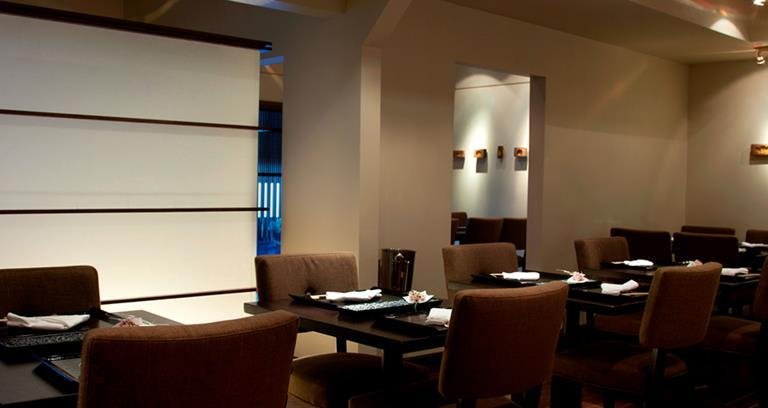
The dining room at n/naka is deliberately spare. Minimal surfaces, calm lighting, no visual noise competing with the food. For a returning diner, this restraint reads differently the second time: the room isn't empty, it's edited. The space creates the conditions for the meal rather than commenting on it, which is precisely the point of kaiseki as a format. You're not here to be impressed by the interior; you're here to be absorbed by the sequence of courses. The spatial geometry is tight enough to feel intimate without crowding the experience. First-timers sometimes expect more visual drama; regulars understand that the room is doing exactly what it should.
The Drink Program
n/naka does not operate a standalone cocktail bar, and walk-up bar seating is not part of the format here. The drinks program exists in service of the kaiseki progression, which means the intelligent move is to engage with the sake and wine pairing rather than treating the beverage component as incidental. Sake selections are curated to track the seasonal logic of the food, and the pairing format rewards returning diners who want to go deeper into the beverage side of the experience. If you visited previously and ordered drinks ad hoc, consider the pairing on your next visit — it reframes individual courses and adds a structural layer that casual ordering misses. For those who want a dedicated bar experience alongside Japanese-influenced cooking in Los Angeles, Bar Sawa operates a different format worth knowing about.
The Food
Chef Niki Nakayama and Chef Carole Iida-Nakayama run a 13-course modern kaiseki that pulls from their own garden and California producers, which means the menu shifts with what's actually in season rather than performing seasonality as a concept. The LA Times ranked n/naka ninth on its 2024 list of 101 Best Restaurants in the city, and Opinionated About Dining placed it 96th among North American restaurants in 2024. The Netflix Chef's Table feature (Volume 1, Episode 4) brought wider attention to Nakayama's approach, but the kitchen has been at this since 2011 and the cooking hasn't become a performance of itself. Returning diners will notice that the sushi courses are part of the structure rather than the centerpiece, the kaiseki framework allows for more personal, ingredient-specific expressions that you won't get at a straight omakase counter. The California influence is specific, not decorative: local produce sits alongside Japanese technique in ways that make geographic sense rather than novelty.
Booking and Logistics
Secure a reservation as far in advance as the booking window allows, weeks at minimum, more realistically months if your dates are fixed. This is not a walk-in venue in any practical sense, and the Wednesday-through-Saturday dinner-only schedule (5:30–9 pm) means your available windows are limited. The restaurant is closed Sunday, Monday, and Tuesday. For solo diners, the format works but the per-person cost at $$$$ is the same regardless of party size, so go in with that expectation. Dietary restrictions should be communicated at the time of booking, not at the table, kaiseki requires advance preparation and the kitchen needs lead time to adjust. If you're traveling from outside Los Angeles and building a broader itinerary, our full Los Angeles restaurants guide covers the wider field, and our full Los Angeles hotels guide can help anchor the trip.
Context and Comparisons
At the $$$$ tier in Los Angeles, Hayato is the closest direct comparison for Japanese kaiseki, it operates a similarly structured, highly seasonal format in the Arts District and is equally difficult to book. If kaiseki specifically is your format, choosing between the two is worth doing deliberately: Hayato leans toward traditional Japanese kaiseki with minimal California inflection, while n/naka is more explicitly a California kitchen working within the kaiseki structure. For a broader sense of where n/naka sits in the national tasting-menu conversation, the comparisons run to The French Laundry in Napa, Single Thread Farm in Healdsburg, and Lazy Bear in San Francisco, all operating at comparable price tiers with similarly personal, producer-driven tasting formats. Internationally, the kaiseki tradition that n/naka interprets has its clearest points of reference in Tokyo at venues like Myojaku and Azabu Kadowaki, where the format is more traditionally anchored. Understanding that gap helps calibrate what n/naka is actually doing: it's a Californian argument about what kaiseki can mean outside Japan, not a reproduction of the original. That argument is worth engaging with, especially on a return visit.
Pearl Picks Nearby
- Hinoki & The Bird, Japanese-influenced, Century City
- IMA, Japanese, Los Angeles
- 715, Los Angeles
- Our full Los Angeles bars guide
- Our full Los Angeles wineries guide
- Our full Los Angeles experiences guide
Frequently Asked Questions
Is n/naka good for a special occasion?
Yes — the format was built for it. A three-hour, 13-course kaiseki at a two-Michelin-starred restaurant, with a dining room designed to keep the focus entirely on the food, is as occasion-appropriate as LA gets. Ranked #9 on the LA Times 101 Best Restaurants 2024, it carries enough weight that the occasion will feel commensurate with the booking effort. Just make sure whoever you're bringing is comfortable with a structured tasting menu format rather than ordering freely.
Can I eat at the bar at n/naka?
No. n/naka does not offer bar seating or a walk-up bar option. The entire experience is a pre-booked, multi-course kaiseki dinner — there is no à la carte service and no separate bar program to access independently. If you want to experience the restaurant, you need a reservation for the full tasting menu.
Is the tasting menu worth it at n/naka?
At the $$$$ tier, yes — provided kaiseki is the format you want. The 13-course menu draws from Chefs Niki and Carole Iida-Nakayama's own garden and California producers, which gives it a specificity you won't get from a generic tasting menu. Two Michelin stars and a #9 ranking on the LA Times 2024 list are credible signals, not PR noise. If you want flexibility to order and share, this is the wrong room; if you want a structured, chef-driven evening, it justifies the price.
How far ahead should I book n/naka?
Book as soon as the reservation window opens — realistically, months out if you have fixed dates. This is consistently cited as one of the hardest reservations in Los Angeles. Operating only Wednesday through Saturday, 5:30–9pm, the available windows are limited, and demand far exceeds capacity. Treat it like a Michelin-starred omakase booking in New York: set a calendar reminder and move on the first available date.
Does n/naka handle dietary restrictions?
Kaiseki is a highly structured format, and n/naka's menu is built around seasonal California produce, garden ingredients, and Japanese technique. Accommodation of dietary restrictions is possible at this calibre of restaurant, but given the $$$$ price point and the degree of pre-planning each course requires, communicating restrictions clearly at the time of booking is essential — not optional. Significant restrictions may limit the experience meaningfully, so check the venue's official channels before reserving.
Is lunch or dinner better at n/naka?
Dinner only. n/naka operates Wednesday through Saturday from 5:30–9pm exclusively; there is no lunch service. The decision you're making is which evening to go, not which meal period.
What are alternatives to n/naka in Los Angeles?
Hayato in the Row DTLA is the closest direct comparison — a similarly serious, reservation-only Japanese kaiseki with comparable structure and seasonal focus. Kato on the Westside offers a more Taiwanese-inflected tasting menu at a slightly different price point, with its own devoted following. If you want to step outside Japanese entirely, Vespertine in Culver City is the most conceptually ambitious tasting menu in LA. For something less format-constrained at the $$$$ tier, Camphor or Gwen offer more flexibility while still delivering serious cooking.
Location
3455 Overland Ave, Los Angeles, CA 90034
Los Angeles, United States
Compare n/naka
| Venue | Cuisine | Price | Awards | Booking Difficulty |
|---|---|---|---|---|
| n/naka | Japanese | $$$$ | Hard | |
| Kato | New Taiwanese, Asian | $$$$ | Michelin 1 Star, World's 50 Best | Unknown |
| Hayato | Japanese | $$$$ | Michelin 2 Star | Unknown |
| Vespertine | Progressive, Contemporary | $$$$ | Michelin 2 Star | Unknown |
| Camphor | French-Asian, French | $$$$ | Michelin 1 Star | Unknown |
| Gwen | New American, Steakhouse | $$$$ | Michelin 1 Star | Unknown |
A quick look at how n/naka measures up.
Also Consider
- Kato, New Taiwanese, Asian, $$$$
- Hayato, Japanese, $$$$
- Vespertine, Progressive, Contemporary, $$$$
- Camphor, French-Asian, French, $$$$
- Gwen, New American, Steakhouse, $$$$
At the $$$$ tier in Los Angeles, Hayato is the clearest direct competitor to n/naka for Japanese tasting menus. Both are two-Michelin-starred, both are extremely difficult to book, and both operate a structured multi-course format. The difference is in orientation: Hayato runs a more traditionally anchored kaiseki with less California influence, while n/naka is explicitly a California kitchen working within the kaiseki framework. If you want the format as it exists in Japan, Hayato is the closer approximation. If you want to see what kaiseki becomes when a Los Angeles chef makes it her own, n/naka is the right choice.
Kato operates at the same price tier with a different cultural reference point, New Taiwanese rather than Japanese kaiseki, but shares the same commitment to seasonal, personal tasting-menu cooking. Kato is generally considered slightly easier to book than n/naka, which matters if your travel window is narrow. Vespertine is the most challenging and conceptually demanding option in the Los Angeles $$$$ field, appropriate for diners who want a full aesthetic experience rather than a food-forward one. Camphor offers French-Asian cooking at the same price level with a notably different register: more accessible, less ritualistic, and easier to book on shorter notice.
For diners choosing between n/naka and the broader $$$$ tier: if the occasion is specifically about Japanese cuisine and seasonal kaiseki, n/naka or Hayato are the two serious answers. If you want the most considered tasting-menu experience in Los Angeles without a specific cuisine preference, n/naka's combination of award credentials, critical recognition, and personal cooking makes it the stronger overall argument. Gwen is the best option in this tier if you want a $$$$ splurge that centers meat cookery over multi-course progression.
Hours
- Monday
- Closed
- Tuesday
- Closed
- Wednesday
- 5:30–9 pm
- Thursday
- 5:30–9 pm
- Friday
- 5:30–9 pm
- Saturday
- 5:30–9 pm
- Sunday
- Closed
Recognized By


Explore Los Angeles
Save or rate n/naka on Pearl
Keep this venue in your Pearl passport, rate it after you visit, and track it alongside every other place you collect.