





St John
British, Traditional British · Farringdon, London
Restaurant in London, United Kingdom
 Book with Pearl
The Read
Nose-to-Tail Authority
Price
$50–100per person
Dress
Smart Casual
Why go
St John is Fergus Henderson's Michelin-starred nose-to-tail restaurant in Smithfield, London, and one of the strongest value propositions at £££ in the city. Book two to four weeks ahead. The daily-changing menu centres on offal, game, and seasonal British produce, the bone marrow is the dish to know. If you want serious cooking without the ceremony of a ££££ room, this is the booking to make.
About St John
Should You Book St John?
Getting a table at St John is harder than it looks on paper. Walk-ins occasionally work at lunch mid-week, but anyone planning around this restaurant should book at least two to three weeks ahead, and further out for Friday or Saturday service. The Barbican address puts it slightly off the main drag of London's restaurant cluster, which means the room fills with a deliberate crowd: people who came specifically for this, not because it was nearby. That deliberateness is part of what makes the experience work. If you are organising a special dinner in London and want somewhere with genuine culinary authority rather than theatrical presentation, St John is one of the few places at £££ that can deliver that without requiring a ££££ budget.
The Restaurant
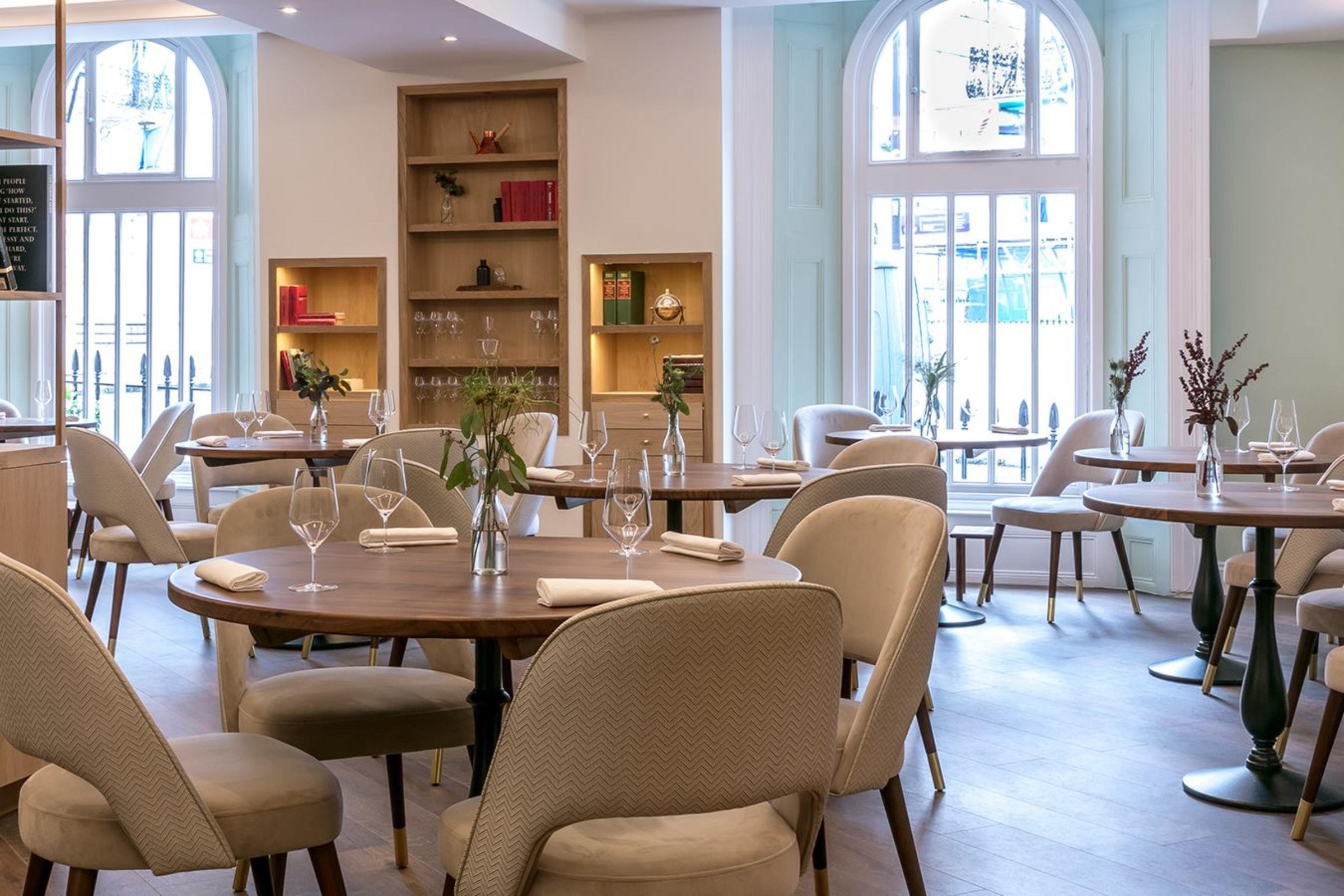
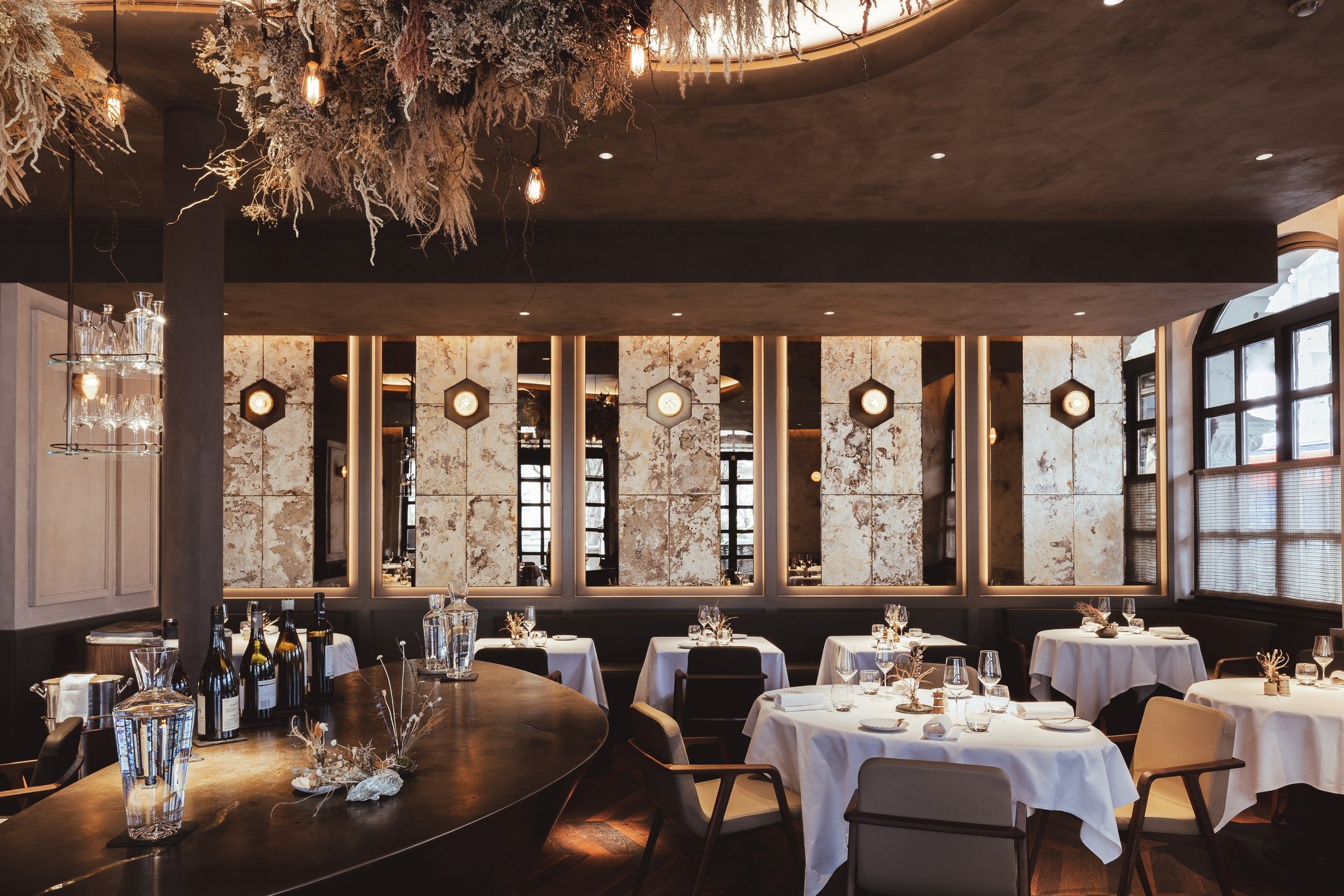
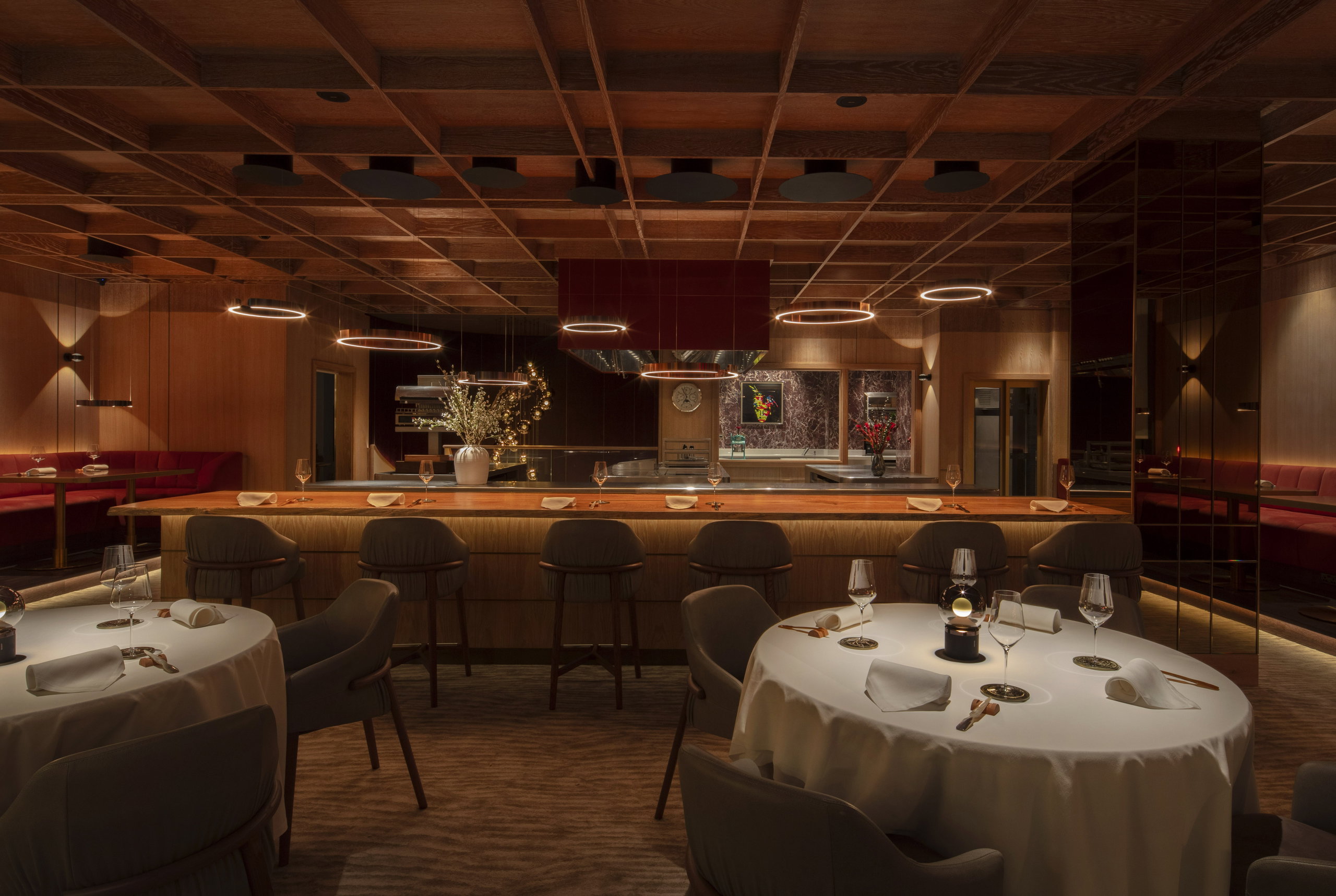
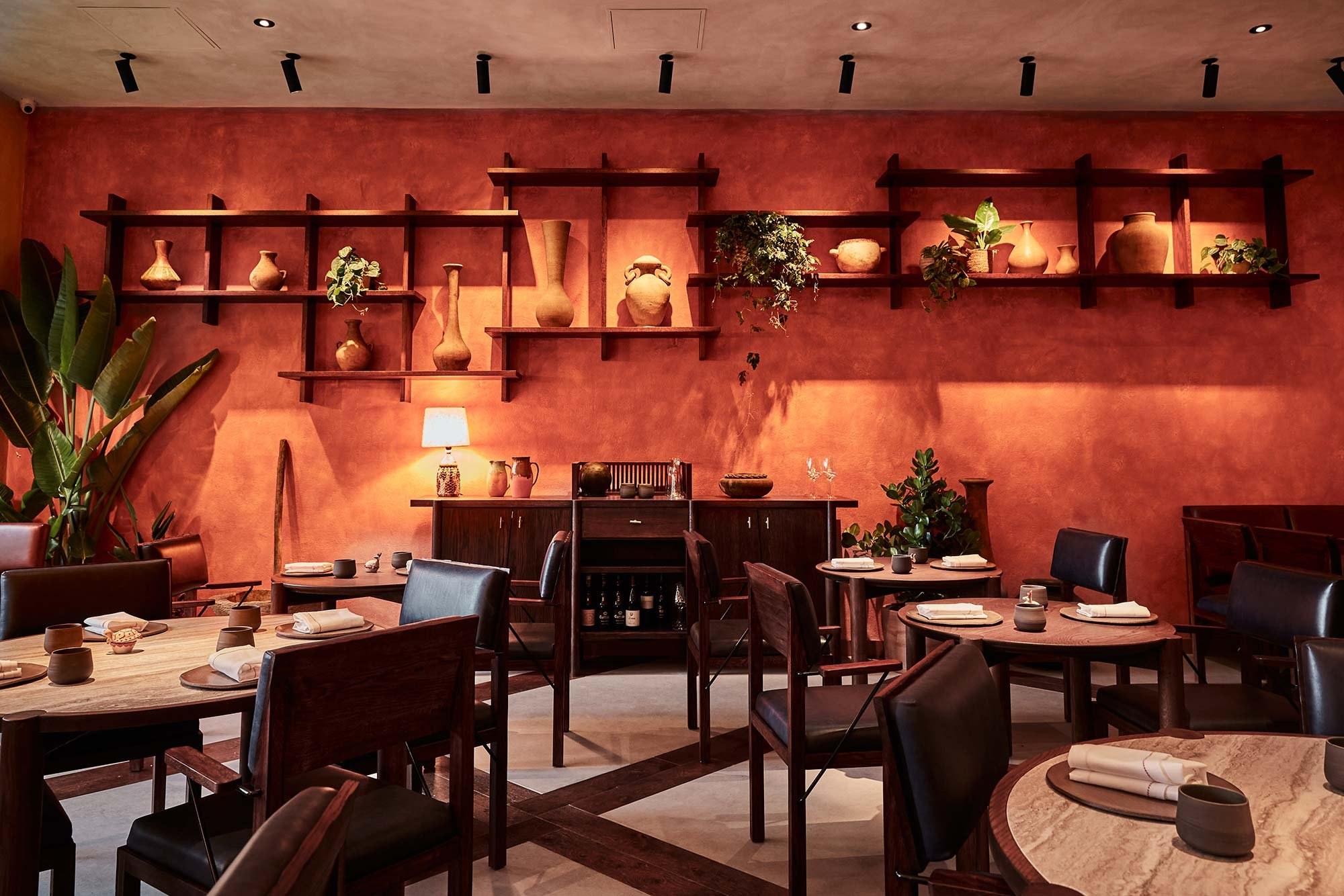
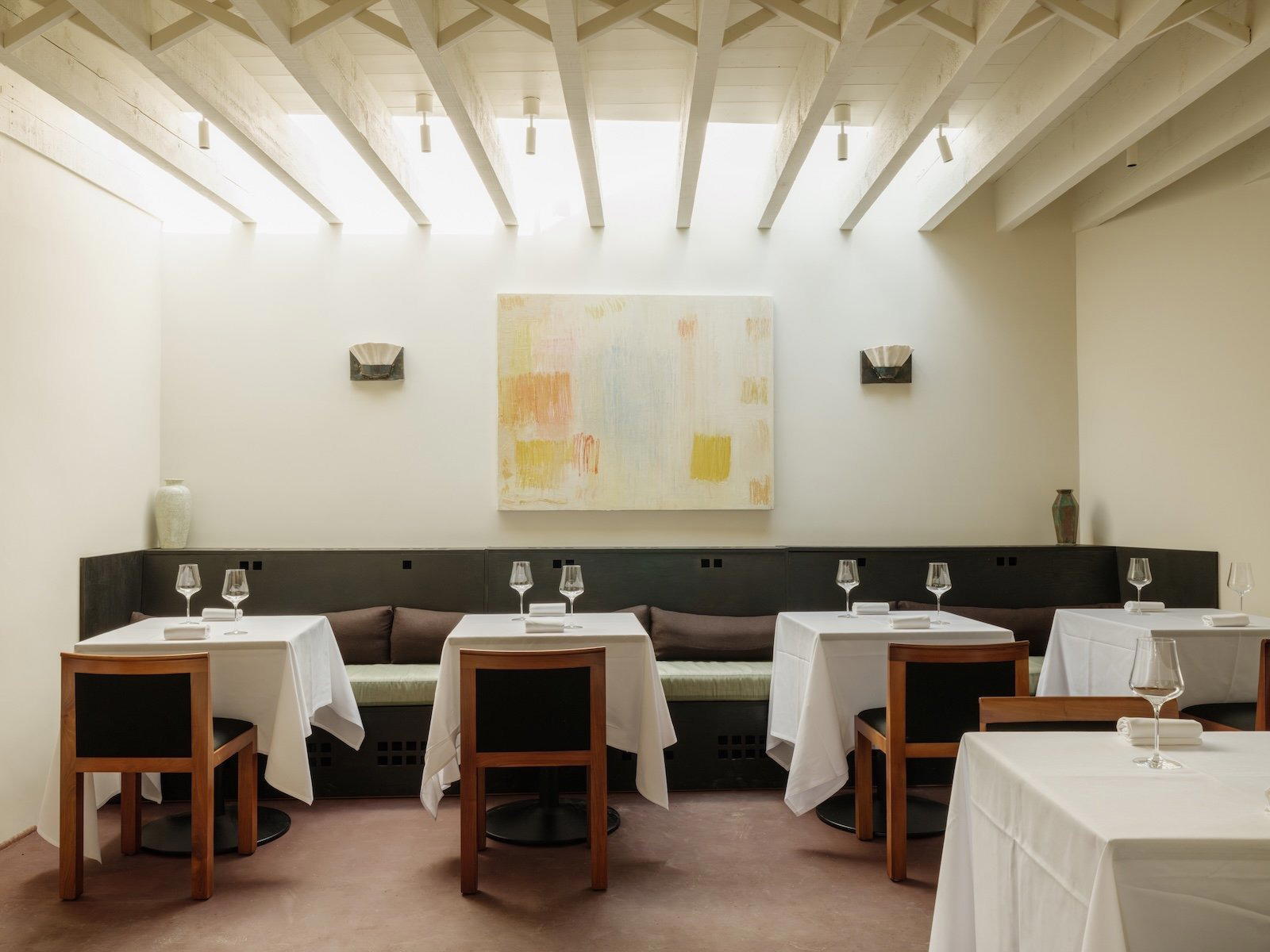
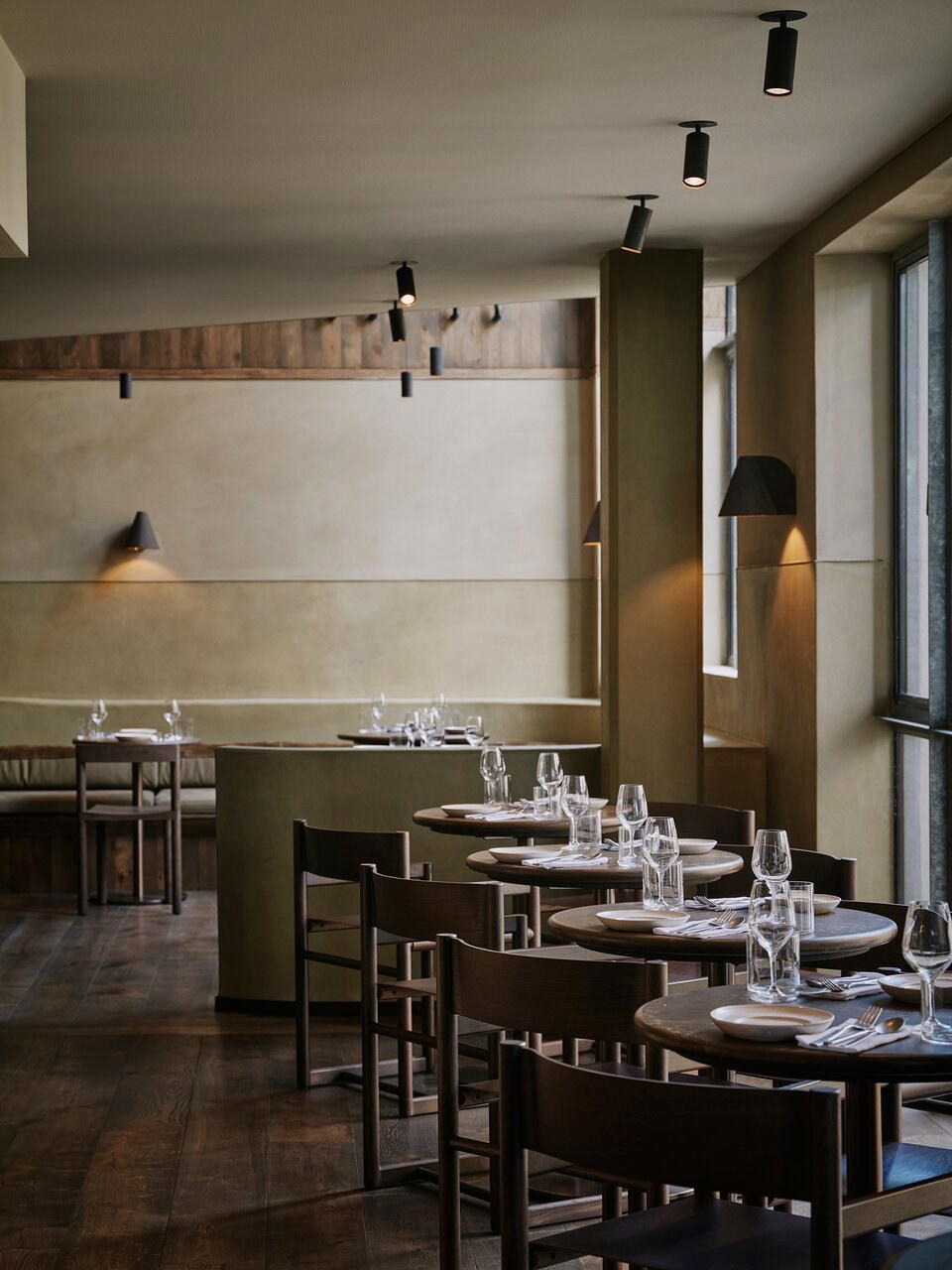
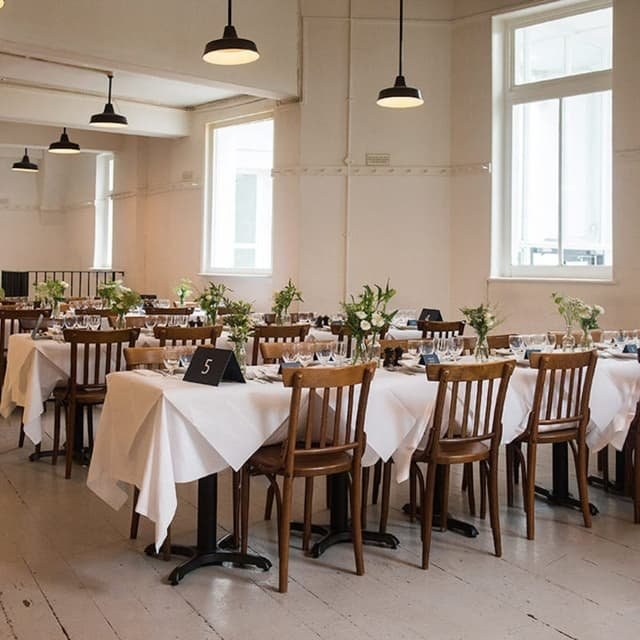
St John sits on St John Street in Barbican, EC1, in a converted smokehouse with whitewashed walls and a room that has changed almost nothing in three decades. The atmosphere is purposefully stripped back: plain tables, squat wine glasses used for both wine and water, paper tablecloths in some accounts. The noise level is warm and social rather than hushed, the kind of room where conversation carries easily and no one is performing for anyone else. For a special occasion dinner, that matters. You are not competing with the room's own theatrics.
Fergus Henderson's nose-to-tail approach has been consistent since opening, and that consistency is the point. The menu changes daily based on what is seasonal and available, but the philosophy does not shift. Bone marrow with parsley salad appears regularly and has become the most recognised dish on the menu, though the daily board will typically feature ox liver, pig's trotters, game, and cuts that most London kitchens have long since stopped serving. If offal is outside your comfort zone, the kitchen does cook fish and more familiar proteins, but this is not the place to come hoping to avoid the kitchen's identity. Potatoes and greens are always on the menu, but the specific varieties change with the season.
The room runs Monday to Saturday from noon until 10:15 PM, and Sunday from noon until 3:30 PM. The Sunday lunch window is worth noting: it is a natural fit for a relaxed special occasion meal, and the shorter service window makes a reservation more important, not less.
The wine list skews French and is intentionally unpretentious. The house pour, St John Rouge, is well regarded. Magnums are available for larger tables, and the list is built to work with the food rather than to impress on paper. For a celebration dinner, it is more than adequate, and the pricing matches the food's £££ positioning rather than inflating for the occasion.
Puddings are taken seriously: expect eight to ten options on any given day, leaning toward classic British formats. The warm madeleines are available to take away at the end of the meal, which is the kind of detail that sticks.
As a neighbourhood anchor, St John occupies a specific role in Barbican and the broader EC1 area. This part of north-central London is not overrun with serious restaurant options at this level, and St John has been the reference point for the area's dining credibility since the mid-1990s. Locals treat it as a regular rather than a destination, which keeps the room grounded even when it is full of visitors who have tracked it down specifically.
The credentials are substantial. St John does not try to please everyone, and it still rates that high.
For broader London dining context, see our full London restaurants guide. If you are planning a full trip, our London hotels guide, bars guide, and experiences guide cover the rest of the city. Elsewhere in Britain, The Fat Duck in Bray, L'Enclume in Cartmel, and Moor Hall in Aughton represent the opposite end of the formality spectrum. If you want traditional British with more grandeur, Rules in Covent Garden is the obvious comparison within London. For longer UK trips, Gidleigh Park in Chagford, Hand and Flowers in Marlow, and hide and fox in Saltwood are worth considering depending on your route.
Booking and Practical Details
Book two to three weeks ahead for weekday lunch or dinner. For Friday and Saturday, push that to four weeks minimum. Sunday lunch closes at 3:30 PM, so plan accordingly. The restaurant does not have a tasting menu format; you order from the daily menu, which changes based on availability. There is no dress code: the room is smart-casual at most, and the stripped-back interior sets the tone. Dishes for two are available on the menu, which makes St John a workable choice for a couple celebrating rather than a group looking for a shared-plates format. For groups of four or more, book early and confirm the table configuration when you reserve.
Quick reference: 26 St John St, Barbican, EC1M 4AY | Mon–Sat 12 PM–10:15 PM, Sun 12 PM–3:30 PM | £££ | Book 2–4 weeks ahead.
How It Compares
Frequently Asked Questions
What should a first-timer know about St John?
- The menu changes daily, so you cannot plan specific dishes in advance. The kitchen builds around what is seasonal and available, with an emphasis on offal, game, and less common cuts.
- Bone marrow with parsley salad is the most consistent dish on the menu and worth ordering if it appears.
- At £££, the pricing is honest for what it is: serious cooking without the ceremony of a ££££ room. Expect to spend meaningfully but not at the level of CORE by Clare Smyth or The Ledbury.
- The room is loud enough to feel lively but not so loud that conversation suffers. It is a good choice for a celebratory dinner where you actually want to talk.
- Puddings are a strong close: order at least one, and take the madeleines for the journey home if they are available.
Is St John worth the price?
- At £££, yes, with the caveat that the value depends on your appetite for the kitchen's identity. If offal and nose-to-tail cooking are what you want, the price-to-quality ratio is among the strongest in London at this level.
- Compared to a ££££ night at Restaurant Gordon Ramsay or Sketch, The Lecture Room and Library, St John costs less and delivers a more direct, less embellished version of serious cooking.
- The Michelin star and sustained critical recognition over three decades confirm that the quality is not a matter of reputation coasting. The cooking holds up.
Is the tasting menu worth it at St John?
- St John does not operate a tasting menu. You order from the daily à la carte, which changes based on availability.
- That format suits the kitchen's philosophy: Fergus Henderson's approach is built around seasonal availability and direct cooking rather than a curated sequence of courses.
- If a tasting menu format is important to your occasion, CORE by Clare Smyth or Dinner by Heston Blumenthal are the more appropriate alternatives.
What should I wear to St John?
- There is no dress code. The room has whitewashed walls, plain tables, and paper tablecloths in some configurations. Smart-casual is the natural register, but the room is not precious about it.
- For a special occasion, dress as you would for any serious London restaurant at this level, but do not over-formalize. The atmosphere does not call for it, and overdressing would feel slightly at odds with the room's deliberate lack of ceremony.
Does St John handle dietary restrictions?
- The kitchen's identity is built around meat, offal, and animal-forward cooking. Vegetarians will find options, but they are not the main event. Vegans will have a limited experience.
- The menu changes daily, so the specific available dishes are not predictable in advance. Contact the restaurant directly before booking if dietary restrictions are a significant factor.
- For a special occasion where dietary requirements are central to the experience, a kitchen with a more flexible format may be a safer choice.
Planning details
- Hours
- Monday: 12 PM-10:15 PM · Tuesday: 12 PM-10:15 PM
- Location
- 26 St John St, Barbican, London EC1M 4AY, United Kingdom
- Reservations
- Book on OpenTable
- Website
- stjohnrestaurant.com
- Phone
- +44 20 7251 0848
The take
The Take
The Vibe
St John presents a stripped-back, historically rooted dining room that reads more like a working space than a stage. Housed in a converted Smithfield smokehouse, the restaurant foregrounds the building's past: whitewashed walls and bare wood tables remove ornament so the food's argument stands on its own. The greater point is intellectual as much as aesthetic — nose-to-tail cooking and unfashionable ingredients are pursued with rigor rather than rhetoric. The result is a quietly authoritative place where culinary seriousness meets minimal presentation, and where the restaurant's history and surroundings remain central to its character.
Best For
This is a restaurant for diners who want a definitive take on British cooking rather than a decorative meal. With a long-standing reputation and a Michelin star, it suits meals where the food is the focus: thoughtful dinners, business meals for guests who appreciate provenance, and celebratory occasions centered on robust, traditional plates. The atmosphere is earnest and restrained rather than flashy, so reservations work best for those seeking a purposeful, food-forward evening rather than a casual hangout.
Ordering Tips
Lean into the house philosophy by ordering dishes that highlight offal and secondary cuts: bone marrow with parsley salad, devilled kidneys on toast, and deep-fried rarebit are emblematic. For larger, more substantial choices try roast pigeon or the pheasant and trotter pie. Finish with madeleines for a simple, classic sweet. The menu rewards diners who embrace the restaurant’s nose-to-tail approach—choose dishes that foreground texture and ingredient honesty rather than ornate preparations.
Venue details
Ambiance
Casual yet refined atmosphere with waiters in stark white butchers' garb; minimalist decor with chalkboard menus; warm lighting and intimate seating.
Tags
Vibe
Best For
Experience
Sourcing
At the Table
- Dress Code
- Smart Casual
- Noise Level
- Conversational
- Service Style
- Upscale Casual
- Meal Pacing
- Leisurely
- Capacity
- Medium
- Kitchen
- Traditional
- Menu Format
- Small plates, A la carte
- Drinks Focus
- Wine, Beer
Signature Dishes
- bone marrow with parsley salad
- deep fried rarebit
- devilled kidneys on toast
- roast pigeon
- pheasant and trotter pie
- madeleines
Know before you go
Know Before You Go
- Getting there
- 26 St John St, Barbican, London EC1M 4AY, United Kingdom
Planning details
Hours
- Monday
- 12 PM-10:15 PM
- Tuesday
- 12 PM-10:15 PM
- Wednesday
- 12 PM-10:15 PM
- Thursday
- 12 PM-10:15 PM
- Friday
- 12 PM-10:15 PM
- Saturday
- 12 PM-10:15 PM
- Sunday
- 12 PM-3:30 PM
Location
26 St John St, Barbican, London EC1M 4AY, United Kingdom · Directions
Recognition and awards




Also consider
Also Consider
- CORE by Clare Smyth, Modern British, ££££
- Restaurant Gordon Ramsay, Contemporary European, French, ££££
- Sketch, The Lecture Room and Library, Modern French, ££££
- The Ledbury, Modern European, Modern Cuisine, ££££
- Dinner by Heston Blumenthal, Modern British, Traditional British, ££££
Restaurant context
St John sits at £££ while most of its peers in London's serious dining tier operate at ££££. That price gap is the first thing to weigh. CORE by Clare Smyth and The Ledbury both deliver more technically elaborate cooking, more polished service, and a more formal occasion experience, but they cost significantly more and are harder to book. If your priority is a formal celebration with high production value, either of those is the right call. If you want authoritative cooking at a price that does not require a budget conversation beforehand, St John is the stronger choice.
Dinner by Heston Blumenthal is the closest peer in the British cooking category, but it operates at ££££ and leans into theatrical presentation and historical British recipe references. St John goes in the opposite direction: no showmanship, no tasting menu, just direct cooking from a kitchen that has been doing this since the mid-1990s. For a diner who values restraint and culinary honesty over spectacle, St John wins that comparison. For someone who wants the occasion to feel like an event in itself, Dinner by Heston delivers more of that.
Restaurant Gordon Ramsay and Sketch, The Lecture Room and Library both operate in a different register entirely: more formal, more French-influenced, better suited to a business meal where the room and service need to do some of the work. St John is the better call for a personal celebration where the food is the point, not the setting.
Around this place
Discover more on Pearl
Unlock the full St John guide in Pearl, including awards, comparisons, FAQs, planning details, and nearby places.
Compare St John
| Venue | Cuisine | Price | Booking Difficulty | Awards |
|---|---|---|---|---|
| St John | British, Traditional British | £££ | Near Impossible | 2026 National Restaurant Awards Top 100 · #962026 OAD Casual in Europe Ranked · #132Star Wine Lists 2026Michelin Guide Great Britain & Ireland 20262026 Michelin 1 Star2025 National Restaurant Awards Top 100 · #99The Good Food Guide 20252025 Michelin 1 Star2024 OAD Casual in Europe Ranked · #304 |
| CORE by Clare Smyth | Modern British | ££££ | Unknown | Star Wine Lists 2026 · #12026 Harden's Top 100 UK Restaurants · #252026 OAD Top Restaurants in Europe Ranked · #532026 National Restaurant Awards Top 100 · #872026 AA 5-Rosette RestaurantsMichelin Guide Great Britain & Ireland 20262026 La Liste Top Restaurants2025 National Restaurant Awards Top 100 · #382025 OAD Top Restaurants in Europe Ranked · #46 |
| Restaurant Gordon Ramsay | Contemporary European, French | ££££ | Unknown | 2026 OAD Classical in Europe Ranked · #682026 AA 4-Rosette RestaurantsMichelin Guide Great Britain & Ireland 20262026 La Liste Top Restaurants2026 Falstaff Restaurant Guide2025 National Restaurant Awards Top 100 · #142025 OAD Classical in Europe Ranked · #96The Good Food Guide 20252025 Michelin 3 Stars |
| Sketch, The Lecture Room and Library | Modern French | ££££ | Unknown | 2026 Harden's Top 100 UK Restaurants · #532026 OAD Classical in Europe Ranked · #1202026 AA 5-Rosette RestaurantsMichelin Guide Great Britain & Ireland 20262026 La Liste Top Restaurants2025 OAD Classical in Europe Ranked · #105We're Smart World Top Restaurants 20252025 Michelin 3 Stars2024 OAD Classical in Europe Ranked · #117 |
| The Ledbury | Modern European, Modern Cuisine | ££££ | Unknown | Star Wine Lists 2026 · #12026 Harden's Top 100 UK Restaurants · #42026 National Restaurant Awards Top 100 · #42026 OAD Top Restaurants in Europe Ranked · #142026 AA 4-Rosette RestaurantsMichelin Guide Great Britain & Ireland 20262026 La Liste Top Restaurants2026 Falstaff Restaurant Guide2025 National Restaurant Awards Top 100 · #3 |
| Dinner by Heston Blumenthal | Modern British, Traditional British | ££££ | Unknown | Star Wine Lists 2026 · #12026 OAD Top Restaurants in Europe Ranked · #1442026 AA 4-Rosette Restaurants2026 OAD Top Restaurants in Asia Recommended2026 La Liste Top RestaurantsMichelin Guide Great Britain & Ireland 20262026 Falstaff Restaurant Guide2025 Michelin 2 Stars2025 La Liste Top Restaurants |








Side-by-side comparison to help you decide where to book.
FAQ
Frequently Asked Questions
Does St John handle dietary restrictions?
The kitchen's entire identity is built around meat, offal, and animal-forward nose-to-tail cooking, so vegetarians and vegans will find the menu narrow. Vegetable dishes do appear, seasonality is core to the kitchen's philosophy, but they are supporting acts, not the focus. If dietary restrictions are central to your group's needs, St John is the wrong fit; consider a restaurant built around a more flexible format instead.
What should I wear to St John?
No dress code is enforced and the room actively discourages formality, paper tablecloths and squat wine glasses set the tone. Come as you would to a serious neighbourhood restaurant where the food matters and the atmosphere does not. Overdressing will feel out of place.
What should a first-timer know about St John?
Come with an open mind about offal and lesser-used cuts, this is the restaurant that made bone marrow and parsley salad a London institution. The room is spare whitewashed walls, paper tablecloths, and no ceremony, which can wrong-foot guests expecting Michelin pomp. The menu changes daily based on seasonal availability, so don't arrive with a fixed dish in mind. Order the warm madeleines before you leave.
Is St John worth the price?
At £££, St John sits below CORE by Clare Smyth or Sketch's Lecture Room on price, and the no-frills room and paper tablecloths mean you're paying for the cooking, not the setting. The Michelin star and multiple World's 50 Best appearances (including a peak of #14 in 2009) confirm the kitchen's credentials over three decades. If you want technique-forward refinement with tableside theatre, look elsewhere. If you want precise, seasonal British cooking with real flavour, the price holds up.
Is the tasting menu worth it at St John?
St John does not operate a fixed tasting menu format, the approach is à la carte with a daily-changing menu built around seasonality and nose-to-tail availability. Dishes for two are available, which suits the sharing style of the cooking. If a structured multi-course progression is what you want, The Ledbury or CORE by Clare Smyth are the relevant comparisons.