
Saryo Tesshin
Soba · Nakagyō, Kyoto
Restaurant in Kyoto, Japan
 Book with Pearl
The Read
Gold-Leaf Soba Theatre
Price
¥
Dress
Smart Casual
Why go
Saryo Tesshin is Kyoto's most accessible Michelin-recognised soba restaurant, earning a 2025 Bib Gourmand for its creative, Japanese-Italian fusion approach. The Daigo Soba — buckwheat noodles with Parmigiano Reggiano, bonito broth, and olive oil — is the reason to visit. At a single ¥ price tier with easy booking, it is the strongest lunch value in Nakagyo Ward.
About Saryo Tesshin
Should You Book Saryo Tesshin?
If you've already eaten at Saryo Tesshin once, the question on a return visit is whether the Daigo Soba still surprises you. It does. The dish — soba draped in a snowfall of Parmigiano Reggiano, tied together with bonito broth and olive oil — reads like a gimmick on paper and lands as something more considered in practice. That tension between Japanese and Italian is the whole point of this restaurant, and it holds up under scrutiny. The 2025 Michelin Bib Gourmand, following a Michelin Plate in 2024, confirms the kitchen has sharpened rather than coasted. Book it.
Portrait
The room sets expectations immediately. An 8-metre-wide gold-leaf ceiling painting dominates the space: three tigers and two rabbits arranged to create the sensation of watching a stage performance. It is a bold architectural commitment for a soba restaurant in Nakagyo Ward, and it signals that Tesshin is not positioning itself as a quiet, ascetic noodle shop. This is a venue where the visual experience is part of the offer.
Chef Marcel Frei's kitchen runs a creative soba program built around the Daigo Soba as its centrepiece. The dish takes its name from 'daigo', a fermented dairy product referenced in early Japanese texts, an analogue of sorts to aged cheese. Using Parmigiano Reggiano as the textural and flavour stand-in is not arbitrary; it draws a genuine historical line between ancient Japanese and Mediterranean food cultures. Bonito soup and olive oil complete the bridge. For a diner who follows the Japanese soba tradition closely, this will either feel like a provocation or a revelation. Either way, it merits a seat.
The Bib Gourmand distinction matters here because it carries a specific implication: serious quality at a price that doesn't require a special occasion. At a single ¥ price tier, Tesshin is among the most accessible Michelin-recognised restaurants in Kyoto. Compare that to the ¥¥¥¥ commitments required at kaiseki venues like Gion Sasaki or Kyokaiseki Kichisen, and the value calculation becomes clear: Tesshin lets you eat at Michelin-tracked quality without anchoring your entire evening budget to one table.
On the question of lunch versus dinner, Tesshin's soba-led format is inherently better suited to the middle of the day. Soba culture in Japan skews daytime, the noodles are lighter, the pacing quicker, and the concept pairs naturally with the energy of a lunch sitting. If you're organising a full day in Kyoto with a kaiseki dinner elsewhere, Tesshin slots in as a lunch anchor rather than a competing dinner. A daytime visit also tends to produce shorter waits and a more relaxed room. The gold-leaf painting reads better in natural light, and the food doesn't require an evening context to make sense. Dinner is viable, but lunch is the stronger recommendation. For a night-out soba alternative in Japan, Akasaka Sunaba in Tokyo runs a more traditional format if that's the reference point you're calibrating against.
It implies the fusion approach lands reliably, not just on ideal nights.
Booking is rated easy, which makes Tesshin one of the more accessible Michelin-recognised restaurants in Kyoto's central wards. You don't need to plan weeks ahead the way you would for a kaiseki table at Ifuki or a reservation at Juu-go. That accessibility is a practical advantage for travellers building an itinerary on shorter timelines. The address, 321-2 Shinnyodocho, Nakagyo Ward, puts it centrally within the city, reachable from most of Kyoto's main districts without significant travel time.
For context on how Tesshin fits within Kyoto's soba options more broadly, Honke Owariya runs one of the city's oldest soba houses and represents the traditional end of the spectrum. Chikuyuan Taro no Atsumori and Gombei offer further reference points at different price and style positions. Tesshin occupies the creative end of that range, and it's the only one with Michelin recognition. If you want to understand what soba looks like when someone pushes its boundaries rather than preserves them, this is the table to take.
Travellers moving through the Kansai region can extend the food itinerary to HAJIME in Osaka or cross to akordu in Nara for a different take on Japanese-European fusion at a higher price tier. For fusion soba elsewhere, Ayamedo in Osaka is worth the comparison. See our full Kyoto restaurants guide for the broader picture, and our Kyoto hotels guide, bars guide, wineries guide, and experiences guide if you're building a full Kyoto trip.
Ratings & Recognition
- Michelin Bib Gourmand, 2025
- Michelin Plate, 2024
Booking
Booking difficulty is rated easy. No extended lead time required. Walk-in viability is not confirmed from available data, but the easy booking designation means securing a reservation should not be a planning obstacle. Lunch sittings are the stronger recommendation, both for the cuisine format and likely for availability.
Practical Details
Saryo Tesshin is located at 321-2 Shinnyodocho, Nakagyo Ward, Kyoto, a central address accessible from most parts of the city. Price tier is ¥, placing it at the accessible end of Kyoto's restaurant range. Hours and dress code are not confirmed in available data; confirm directly before visiting. The cuisine is creative soba, and the Daigo Soba is the dish that defines the menu. Chef Marcel Frei leads the kitchen. See also Itsutsu for another Kyoto option at a comparable creative register. If you're making a wider Japan trip, Harutaka in Tokyo, Goh in Fukuoka, 1000 in Yokohama, and 6 in Okinawa round out a strong national itinerary.
FAQ
Is Saryo Tesshin good for solo dining?
- Yes. A single ¥ price tier and easy booking make it a low-friction solo lunch in central Kyoto. The counter-style experience typical of soba restaurants suits solo diners well, and the room's theatrical quality is easy to appreciate alone. It is more practical as a solo lunch than as a solo dinner.
Can I eat at the bar at Saryo Tesshin?
- Seating configuration details are not confirmed from available data. Given the venue's soba format and the presence of a theatrical room centred on the gold-leaf ceiling painting, some counter or bar-style seating is plausible, but confirm directly when booking. Do not assume bar-only walk-in access without checking.
Is the tasting menu worth it at Saryo Tesshin?
- Menu structure details are not confirmed from available data. What is confirmed is that the Daigo Soba, soba with Parmigiano Reggiano, bonito broth, and olive oil, is the signature dish and the main reason to visit. At ¥ pricing with a 2025 Bib Gourmand, the value case is strong regardless of menu format. If a tasting set exists, it is very likely to represent good value relative to Kyoto's wider restaurant range.
What are alternatives to Saryo Tesshin in Kyoto?
- For traditional soba, Honke Owariya is the historical reference point in Kyoto. For creative cuisine at a similar accessible price tier, Gombei and Chikuyuan Taro no Atsumori offer alternatives. If you want to step up to a full kaiseki experience, Gion Sasaki or Ifuki are the stronger options, but at ¥¥¥¥ and with harder booking windows. Tesshin holds its position as Kyoto's most accessible Michelin-recognised soba option.
What should a first-timer know about Saryo Tesshin?
- Go at lunch. The Daigo Soba is the dish to order, do not leave without it. The room is more dramatic than a typical soba house, with the large gold-leaf ceiling painting creating an atmosphere closer to a destination restaurant than a neighbourhood noodle shop. Booking is easy, the price is low, and the Michelin Bib Gourmand signals the kitchen takes quality seriously. If you are expecting a traditional, austere soba experience, adjust expectations: this is a creative, cross-cultural kitchen operating in a visually ambitious space.
Planning details
- Location
- 321-2 Shinnyodocho, Nakagyo Ward, Kyoto, 604-0853, Japan
- Website
- saryo-tessin.instatry.org
- Phone
- +81 75-585-2420
The take
The Take
The Vibe
Saryo Tesshin presents dining as theatre: an eight-metre-wide gold-leaf painting of tigers and rabbits dominates the ceiling and frames the room like a stage backdrop. The interior reads as thoughtfully composed rather than casually appointed, and the house positions itself on the entry tier of Kyoto’s formal dining spectrum—delivering a measured balance of refinement and accessibility. That sense of history and decorative intent makes the space feel quietly opulent and intimate; every plate arrives under that gilded canopy with the weight of a considered presentation, turning even a soba course into a moment of focused attention.
Best For
This is a spot for deliberate meals rather than quick bites—well suited to special evenings where atmosphere matters. Its Michelin recognitions underline a quality-driven approach, making it appropriate for business dinners and intimate date nights when you want an experience to feel elevated but not ostentatious. The theatrical interior and carefully staged dishes encourage slow, attentive dining; groups seeking raucous late-night energy or casual grab-and-go options will find it less fitting than diners after a composed, design-forward meal.
Ordering Tips
Order the Daigo Soba to see what the kitchen means by 'fusion soba': the dish arrives covered in finely grated Parmigiano Reggiano, then finished with bonito broth and olive oil so Japanese and Italian elements play against each other. The Daigo presentation is explicitly described as a visual event, so it’s worth choosing when you want a signature moment. The Kyoto Duck Nanban is another house specialty mentioned among signature dishes—both signal the kitchen’s willingness to reinterpret tradition, so pick one of these to understand the menu’s creative through-line.
Venue details
Ambiance
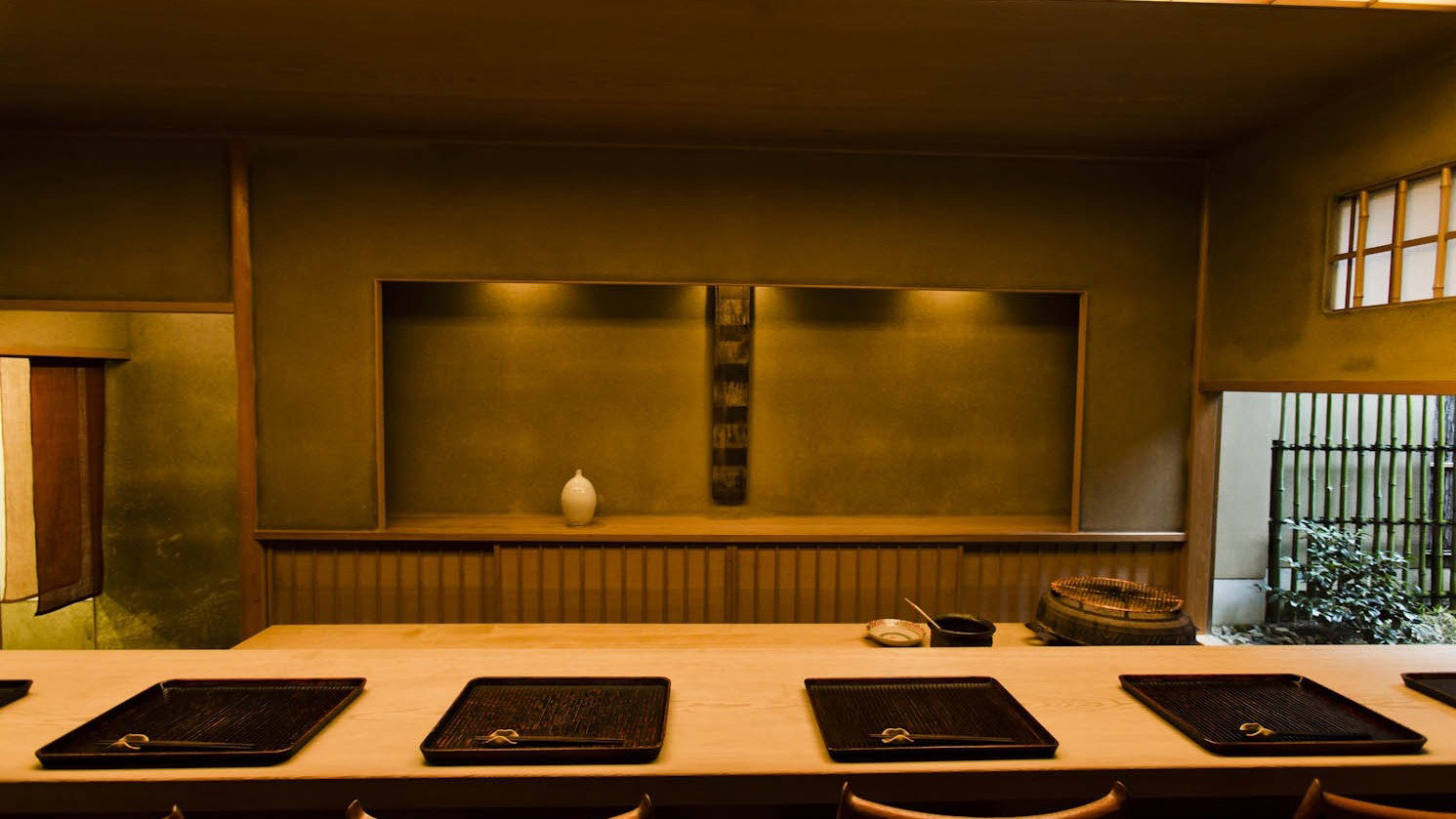
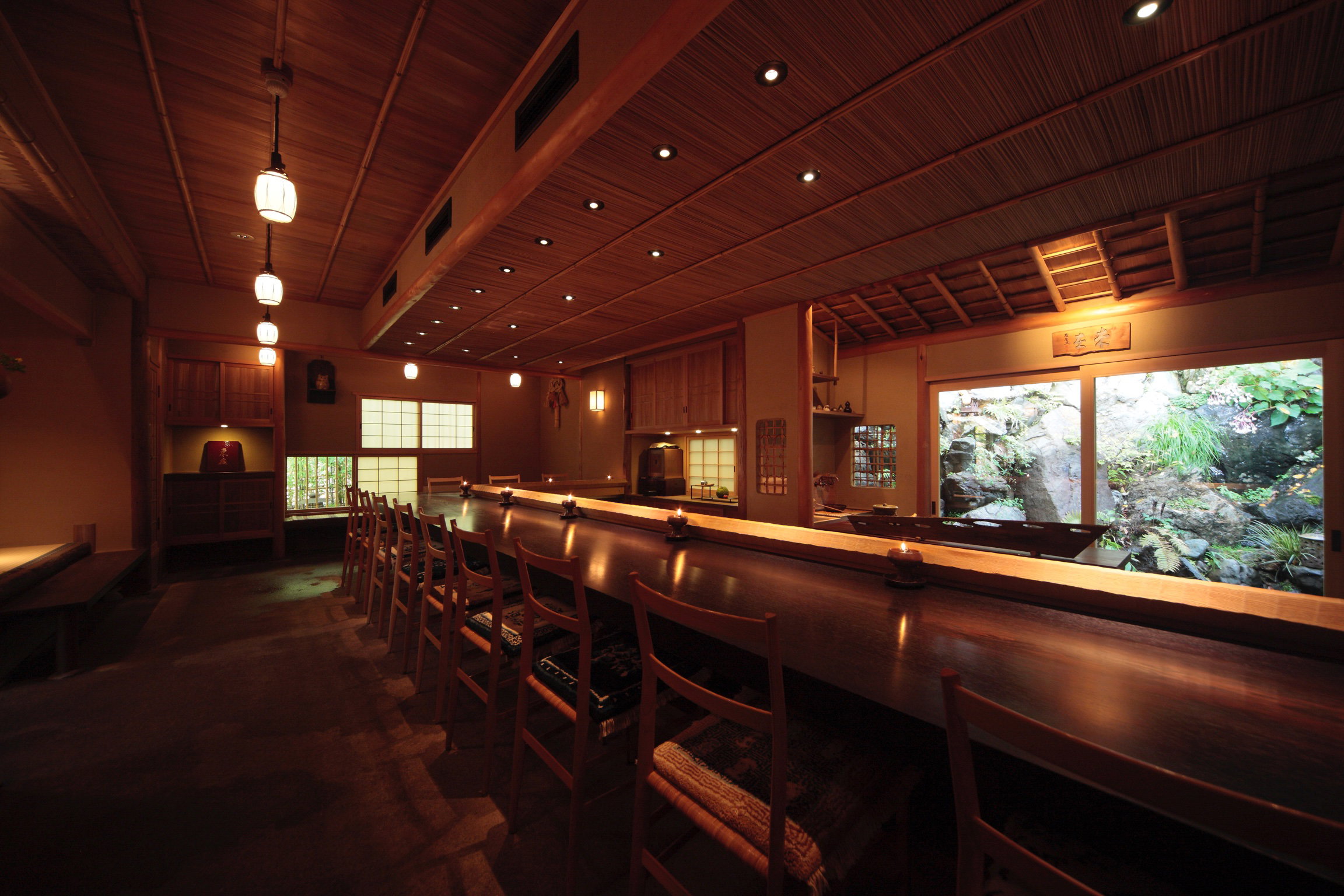
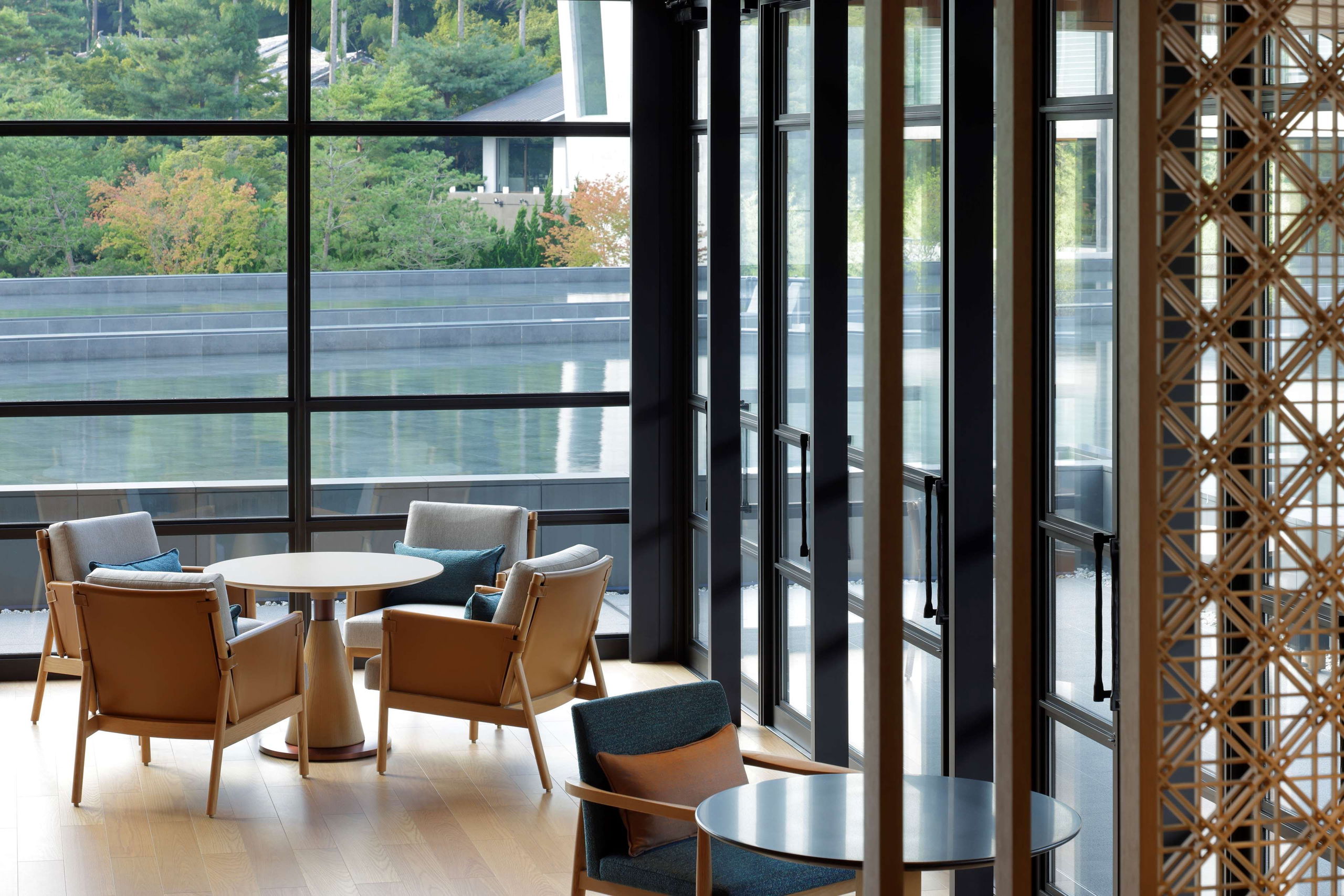
Opulent interior blending grandeur and wabi-sabi with gold leaf art, washi paper counter, coffered ceilings, bonsai, and garden views creating a refined traditional Japanese atmosphere.
Tags
Vibe
Best For
Experience
View
At the Table
- Dress Code
- Smart Casual
- Noise Level
- Quiet
- Service Style
- Upscale Casual
- Meal Pacing
- Leisurely
- Capacity
- Intimate
Signature Dishes
- Daigo Soba
- Kyoto Duck Nanban
Know before you go
Know Before You Go
- Getting there
- 321-2 Shinnyodocho, Nakagyo Ward, Kyoto, 604-0853, Japan
Planning details
Location
321-2 Shinnyodocho, Nakagyo Ward, Kyoto, 604-0853, Japan · Directions
Recognition and awards
Also consider
Also Consider
- Gion Sasaki, Kaiseki, Japanese, ¥¥¥¥
- cenci, Italian, ¥¥¥
- Ifuki, Kaiseki, ¥¥¥¥
- Kyokaiseki Kichisen, Japanese, ¥¥¥¥
- SEN, French, Japanese, ¥¥¥¥
Restaurant context
Tesshin sits in a category of its own within Kyoto's restaurant comparison set. Its closest price peers, cenci at ¥¥¥, operate at a higher cost threshold and with a fuller Italian-influenced tasting format. The ¥¥¥¥ kaiseki venues such as Gion Sasaki, Ifuki, and Kyokaiseki Kichisen require a significantly larger spend and considerably more lead time to book. If your priority is Michelin-tracked quality with minimal booking friction and low spend, Tesshin wins that comparison outright.
For a Japanese-Western fusion experience in Kyoto, SEN at ¥¥¥¥ offers a French-Japanese format at the upper end of the market. SEN is the stronger choice if you want an extended, multi-course dinner experience with a wine program. Tesshin is the right choice if you want a single sitting at lunch that demonstrates creative soba cookery without the time or financial commitment of a full kaiseki or tasting-menu evening. These are different decisions, not competing ones.
Among Kyoto's accessible creative options, cenci at ¥¥¥ is the most direct comparison in terms of cross-cultural ambition, but runs Italian rather than soba as its base. If fusion cuisine in Kyoto interests you and you have two meals to allocate, Tesshin at lunch and cenci at dinner is a coherent pairing. For pure soba depth without the fusion angle, Honke Owariya remains the traditional benchmark in the city. Tesshin does not compete on tradition, it competes on creativity and value, and on both counts it is worth the booking.
Explore Kyoto
Around this place
Discover more on Pearl
Unlock the full Saryo Tesshin guide in Pearl, including awards, comparisons, FAQs, planning details, and nearby places.
Compare Saryo Tesshin
| Venue | Cuisine | Price | Awards | Booking Difficulty |
|---|---|---|---|---|
| Saryo Tesshin | Soba | ¥ | Michelin Guide Kyoto Osaka 20262026 Bib Gourmand2025 Michelin Bib Gourmand2024 Michelin Plate | Easy |
| Gion Sasaki | Kaiseki, Japanese | ¥¥¥¥ | 2026 Tabelog Bronze · #3862026 OAD Top Restaurants in Japan RecommendedMichelin Guide Kyoto Osaka 20262026 La Liste Top RestaurantsTabelog 100 - Japanese cuisine - WEST - 2025 · #132025 OAD Top Restaurants in Japan Ranked · #2462025 Tabelog Silver2025 Michelin 3 Stars2025 La Liste Top Restaurants | Unknown |
| cenci | Italian | ¥¥¥ | 2026 Tabelog Bronze · #442026 Asia's 50 Best Restaurants · #762026 OAD Top Restaurants in Japan Highly RecommendedMichelin Guide Kyoto Osaka 2026Tabelog 100 - Italian - WEST - 2025 · #632025 Asia's 50 Best Restaurants · #632025 OAD Top Restaurants in Japan Ranked · #1682025 Tabelog Bronze2024 OAD Top Restaurants in Japan Ranked · #135 | Unknown |
| Ifuki | Kaiseki | ¥¥¥¥ | 2026 OAD Top Restaurants in Japan Ranked · #1222026 Tabelog Bronze · #128Michelin Guide Kyoto Osaka 20262026 La Liste Top RestaurantsTabelog 100 - Japanese cuisine - WEST - 2025 · #622025 OAD Top Restaurants in Japan Ranked · #1002025 La Liste Top Restaurants2025 Tabelog Bronze2025 Michelin 2 Stars | Unknown |
| Kyokaiseki Kichisen | Japanese | ¥¥¥¥ | 2026 Tabelog Bronze · #1752026 OAD Top Restaurants in Japan Highly RecommendedMichelin Guide Kyoto Osaka 20262025 OAD Top Restaurants in Japan Ranked · #1862025 Michelin 2 Stars2025 La Liste Top Restaurants2024 OAD Top Restaurants in Japan Ranked · #1422024 Michelin 2 Stars2023 OAD Top Restaurants in Japan Ranked · #136 | Unknown |
| SEN | French, Japanese | ¥¥¥¥ | 2026 Tabelog Bronze · #3952026 OAD Top Restaurants in Japan RecommendedMichelin Guide Kyoto Osaka 20262026 Michelin PlateTabelog 100 - Japanese cuisine - WEST - 2025 · #652025 Michelin Plate2025 Tabelog Bronze2024 OAD Top Restaurants in Japan Ranked · #3622024 Michelin Plate | Unknown |
.png?width=1200&quality=80)

.png?width=1200&quality=80)






How Saryo Tesshin stacks up against the competition.
FAQ
Frequently Asked Questions
Is Saryo Tesshin good for solo dining?
Yes. At ¥ pricing and with Michelin Bib Gourmand recognition, Saryo Tesshin is a low-commitment, high-return solo lunch stop in Kyoto. The room's theatrical gold-leaf ceiling makes the experience feel complete even without company. Booking is rated easy, so there's no pressure to plan far ahead.
Is the tasting menu worth it at Saryo Tesshin?
Tasting menu format isn't confirmed in available data, but the Daigo Soba — soba finished with Parmigiano Reggiano, bonito soup, and olive oil — is the dish the kitchen has built its reputation on. At ¥ pricing, even an à la carte order here represents strong value for a Michelin Bib Gourmand restaurant. Order the Daigo Soba; the rest of the decision makes itself.
What are alternatives to Saryo Tesshin in Kyoto?
For high-end kaiseki in Kyoto, Kyokaiseki Kichisen is the serious splurge option. Gion Sasaki and cenci both offer creative Japanese cooking at different price points. Ifuki and SEN are worth considering if you want something in a similar accessible range. Saryo Tesshin is the only one of this group with a specific Michelin-recognised fusion soba identity, which makes it a distinct rather than interchangeable choice.
What should a first-timer know about Saryo Tesshin?
Order the Daigo Soba — it's the dish that earned the Michelin Bib Gourmand, and the Parmigiano-bonito-olive oil combination is the whole point of the visit. The room is more theatrical than a typical soba-ya: the gold-leaf ceiling painting sets the tone immediately. Price tier is ¥, so this is an affordable Kyoto lunch, not a special-occasion dinner. Booking is straightforward; no extended lead time needed.