


Kenya
Japanese · Sakyō, Kyoto
Restaurant in Kyoto, Japan
 Book with Pearl
The Read
Modern Japan Counter Cuisine
Price
¥¥¥
Chef
Kenya Sakai
Dress
Smart Casual
Why go
Kenya is a Michelin-starred, 8-seat counter in Kyoto's Sakyo Ward, running at JPY 20,000–29,999 per head with a Tabelog score of 4.33 and back-to-back Top 100 selections. It is one of Kyoto's harder bookings to land, but the price-to-award ratio is strong relative to the city's ¥¥¥¥ kaiseki tier. Book 4–8 weeks out minimum.
About Kenya
Should You Book Kenya?
Getting a seat at Kenya is genuinely difficult. The restaurant holds 8 guests at a single counter, operates only four days a week (closed Monday and Sunday), and runs two seatings on most nights. Tabelog's 2025 Silver Award, a Michelin star (2024), and selection for the Tabelog Japanese Cuisine WEST Top 100 in both 2023 and 2025 have made this one of Kyoto's harder reservations to secure. If you can get in, it is worth the effort — dinner runs JPY 20,000 to JPY 29,999 per head, which for a Michelin-starred counter in Kyoto sits at the lower end of serious omakase pricing. Book as far ahead as the reservation system allows.
The Counter Is the Experience
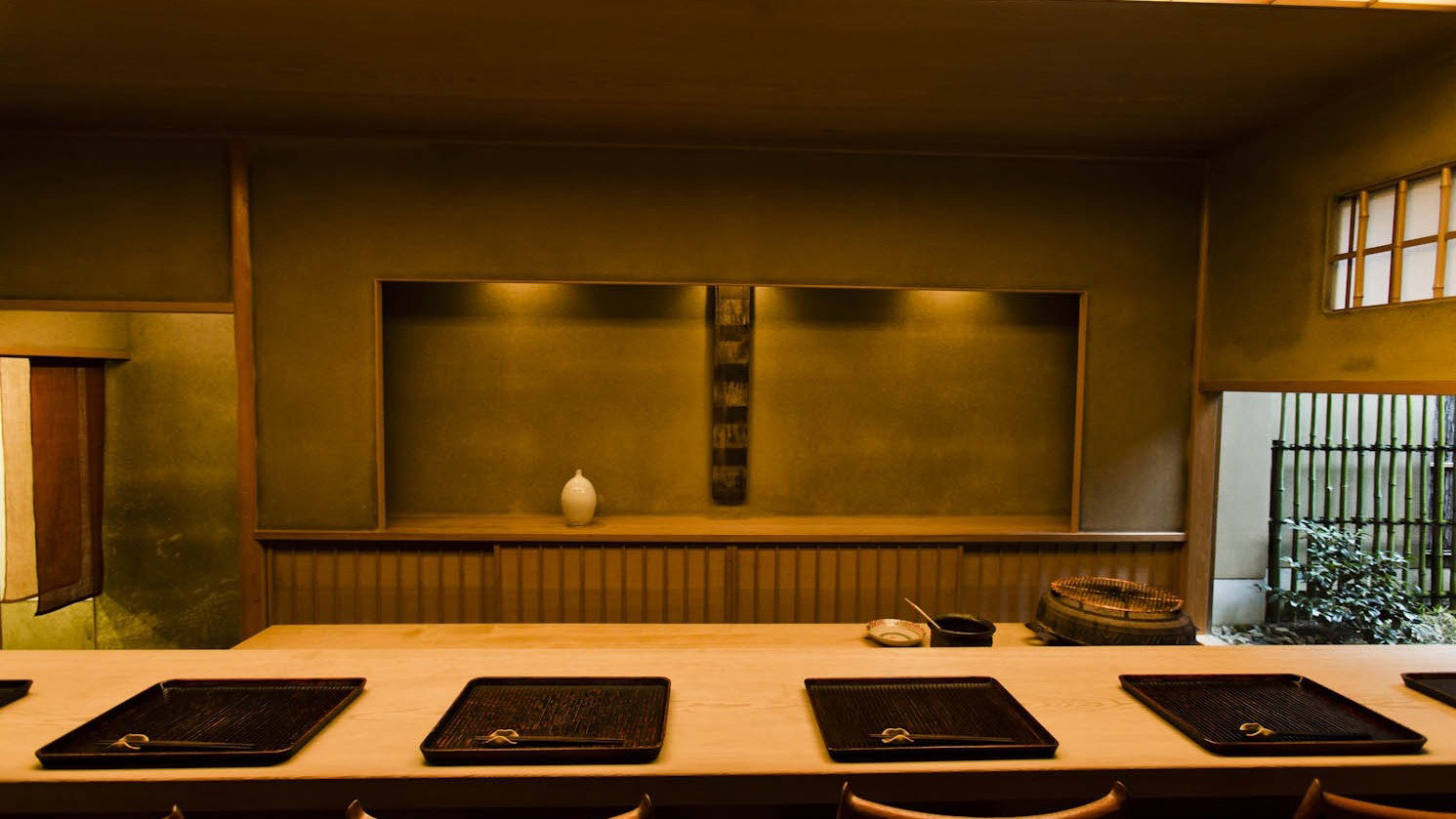
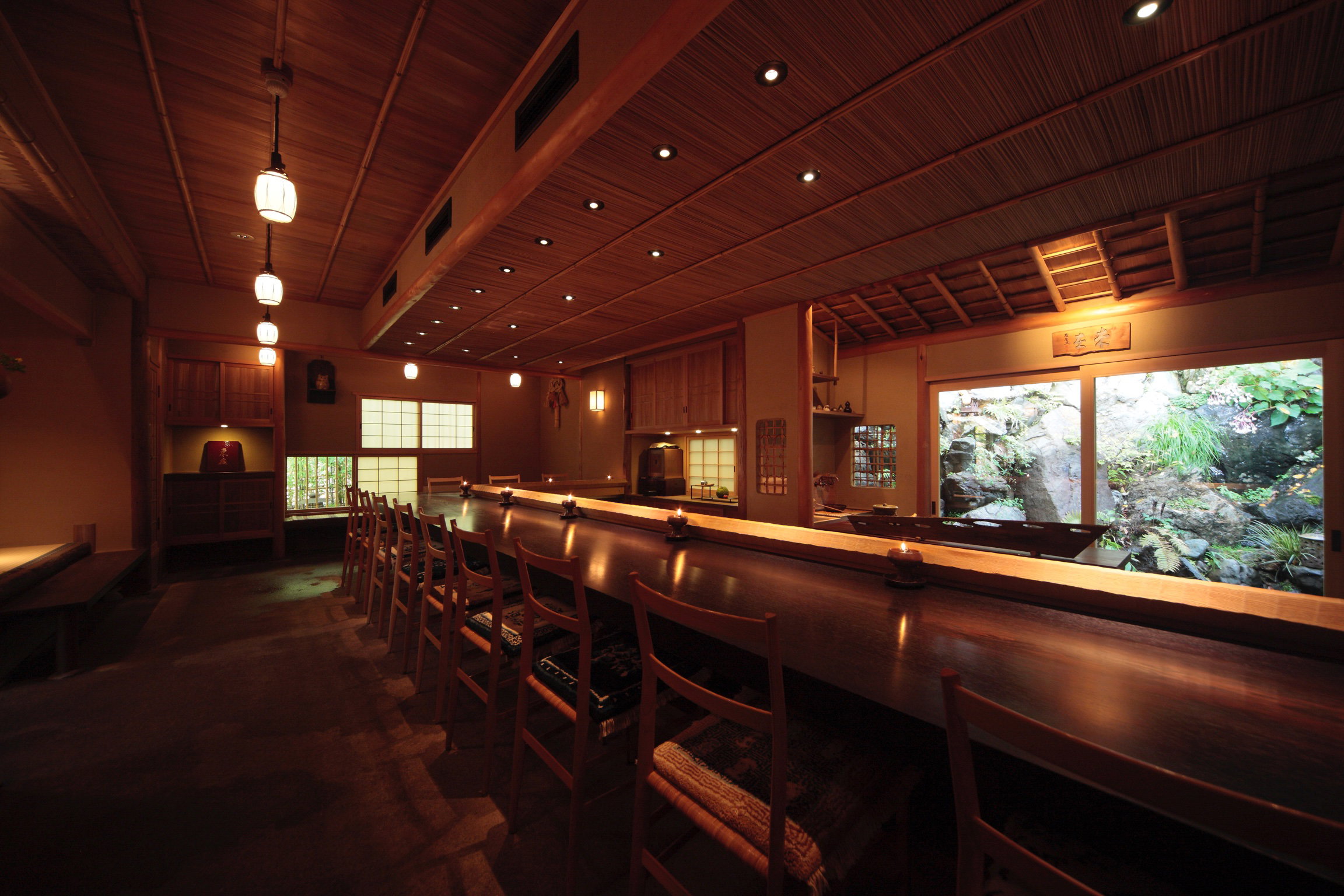
Kenya operates entirely as a counter restaurant. All 8 seats face the kitchen, which means the format here is not incidental — it is the point. Chef Kenya Sakai works in front of you, and the rhythm of the meal is set by what he is doing at any given moment. The concept, described as "Cuisine that Reflects Modern Japan," draws on traditional Japanese cooking techniques while leaving room for individual expression.
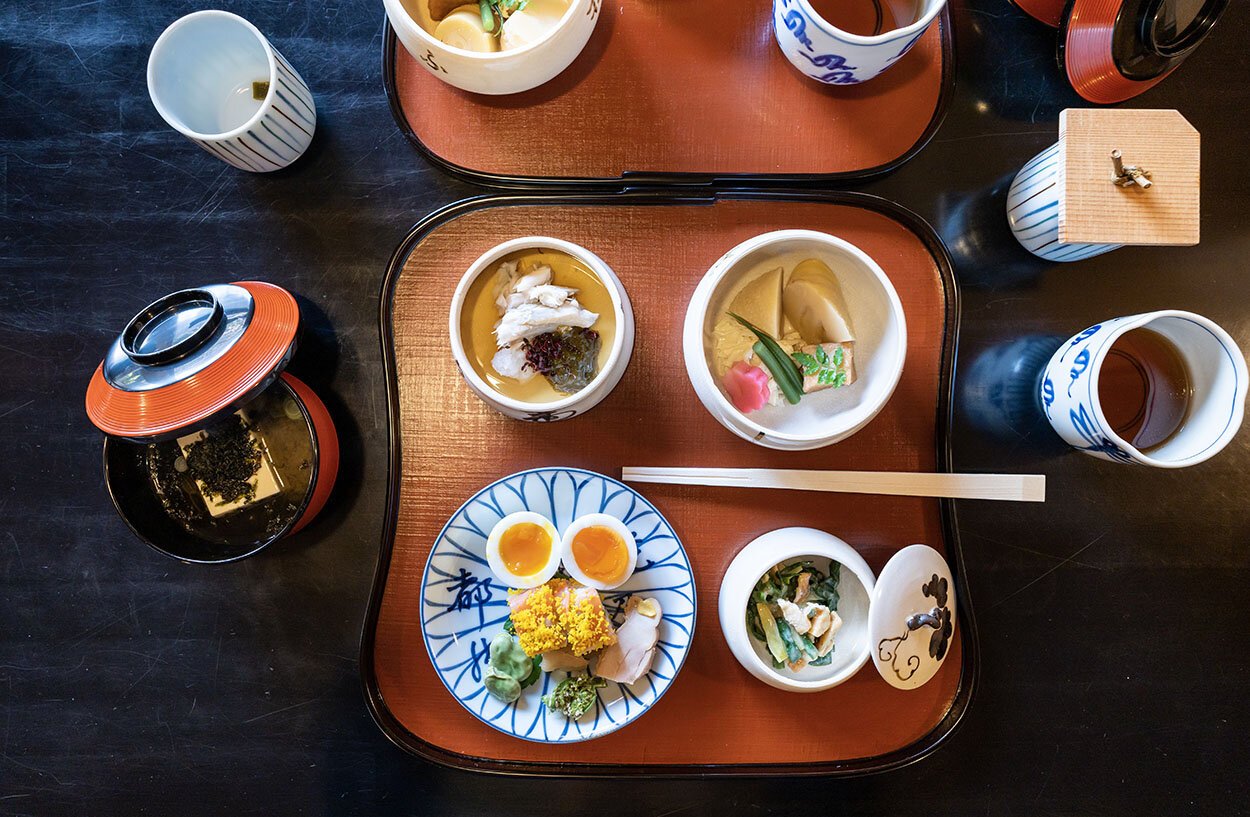
One detail that gets noted repeatedly by guests: the moment Sakai lifts the lid on a pot of freshly steamed rice. The steam carries the scent of the rice before anything else reaches the table, and that moment tends to land as a signal of where the chef's priorities are. Rice and sake both come from Aomori, the chef's home prefecture, a specific sourcing decision that connects the cooking to a place rather than to trend or abstraction.
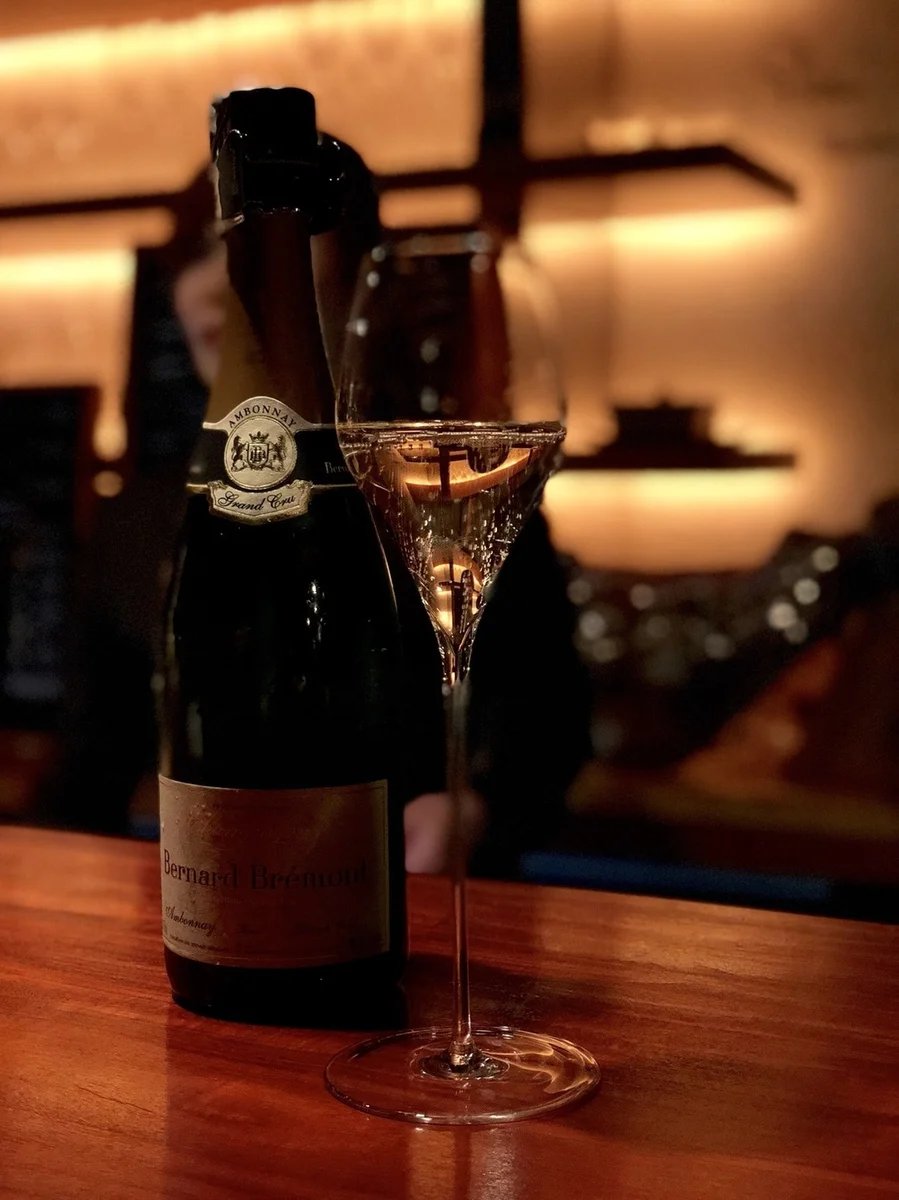
The music is chosen deliberately, Western, classical, and Showa-era ballads shift across the evening in a way that tracks the mood of the courses rather than functioning as background noise. It is an unusual detail for a Japanese counter of this type, and it either works for you or it does not. For most guests, the consensus on Tabelog (score: 4.33, 2026 Bronze) is that it does.
This is a counter where solo dining is actively recommended. Tabelog flags it as particularly suited to solo guests, and that tracking is accurate: the format rewards individual attention rather than group conversation. For a special occasion dinner, the 8-seat counter creates a sense of occasion without the formality of a private room. There are no private rooms available, and the venue can be taken on an exclusive basis for private use if required.
Practical Details
Kenya opened in March 2021 in the Okazaki area of Sakyo Ward, within walking distance of Jingu-Marutamachi Station (Keihan Main Line, approximately 8 minutes on foot) and Higashiyama Station (Kyoto Subway Tozai Line, approximately 11 minutes on foot). There is no parking on site and the restaurant specifically asks guests not to arrive by bicycle or motorcycle, plan around public transport or taxi.
Service hours: Tuesday 18:00 to 20:00 (one seating only); Wednesday through Saturday 17:00 to 22:00 (first seating 17:00, second seating 20:00). Closed Monday and Sunday. Credit cards are accepted (Visa, Mastercard, JCB, Amex, Diners); electronic money and QR code payments are not. The dress code is listed as nothing specific, which in practice means smart casual is appropriate, the counter format keeps it personal rather than ceremonial, but this is a JPY 20,000+ dinner and guests dress accordingly. Drinks include sake, shochu, and wine. The restaurant is non-smoking throughout.
Booking difficulty is high. With 8 seats and limited operating days, this is not a venue where last-minute availability appears reliably. For Kyoto's broader dining options, see our full Kyoto restaurants guide. For context on how Kenya compares to other serious Japanese counters, Myojaku in Tokyo and Azabu Kadowaki in Tokyo operate in a comparable register. Further afield, HAJIME in Osaka and Goh in Fukuoka are worth considering if your itinerary extends across the Kansai region or beyond.
Within Kyoto's kaiseki and Japanese cuisine tier, Kikunoi Roan, Gion Matayoshi, Isshisoden Nakamura, and Kodaiji Jugyuan all represent strong alternatives depending on format preference and price tolerance. For those extending their Kyoto trip, our full Kyoto hotels guide, our full Kyoto bars guide, and our full Kyoto experiences guide cover the practical ground. If you are planning a wine-focused day, our full Kyoto wineries guide is also available. For day trips, akordu in Nara and 1000 in Yokohama are Pearl-tracked options worth noting.
Quick reference: 8-seat counter, JPY 20,000–29,999/head, Tue–Sat only, Michelin 1 star (2024), Tabelog 4.33, no parking, credit cards accepted.
Ratings at a Glance
- Tabelog score: 4.33 (2026 Bronze Award)
- Tabelog 2025: Silver Award
- Michelin: 1 Star (2024)
- Tabelog Japanese Cuisine WEST Top 100: 2023, 2025
- Opinionated About Dining: Ranked #390 in Japan (2025)
- 4.2 (199 reviews)
FAQs
What should I wear to Kenya?
- The official dress code is listed as nothing specific, but smart casual is the right call. This is a JPY 20,000+ counter dinner with Michelin recognition, guests dress in line with the price point even if no formal code is enforced. Suits and dresses are common; jeans work if they are clean and well-fitted.
How far ahead should I book Kenya?
- Book as early as the reservation system allows, ideally 4 to 8 weeks out for weekday seatings, longer for Friday and Saturday. With only 8 seats and four operating days per week, availability moves quickly after the Michelin listing and Tabelog Silver Award raised the venue's profile. Do not rely on short-notice cancellation slots for a trip-critical dinner.
Can I eat at the bar at Kenya?
- Yes, the entire restaurant is a counter. All 8 seats are counter seats; there are no tables or private rooms. The counter format is the defining feature of the experience, not an alternative option. If counter dining does not appeal to you, Kenya is not the right venue. If it does, this is one of the better-credentialed 8-seat counters in Kyoto.
Is Kenya good for a special occasion?
- Yes, with a caveat on group size. For a dinner for two or a solo celebration, the 8-seat counter creates a genuinely intimate occasion with the full attention of the kitchen. For groups of 4 or more, the counter format is less suited to a celebratory gathering, there are no private rooms, though exclusive private use of the venue is available if you want to book it out. At JPY 20,000–29,999 per head, the price point matches the occasion.
Is the tasting menu worth it at Kenya?
- The awards record supports the price: Michelin 1 star, Tabelog Silver (2025), and Top 100 selection in two consecutive cycles. The cooking concept, traditional Japanese technique reframed around a personal, Aomori-influenced sensibility, is specific enough to justify the format. If you want kaiseki-style progression with more ceremonial structure, Kyokaiseki Kichisen at ¥¥¥¥ delivers that at a higher price. Kenya is the better choice if you want credential-backed cooking at a more accessible price with a counter-driven, personal atmosphere.
Is Kenya worth the price?
- At JPY 20,000–29,999 per head, Kenya sits below most Kyoto venues with equivalent award recognition. A Michelin star and back-to-back Tabelog Top 100 selections at this price range is a strong value proposition by the standards of serious Japanese dining. For comparison, ¥¥¥¥ venues in the same city, Gion Matayoshi or Isshisoden Nakamura, typically run higher. If the counter format works for you and you can get the booking, yes.
Planning details
- Location
- 55-4 Tanaka Satonomaecho, Sakyo Ward, Kyoto, 606-8226, Japan
- Website
- gohancafe-kenya.com
- Phone
- +81 75-712-0832
The take
The Take
The Vibe
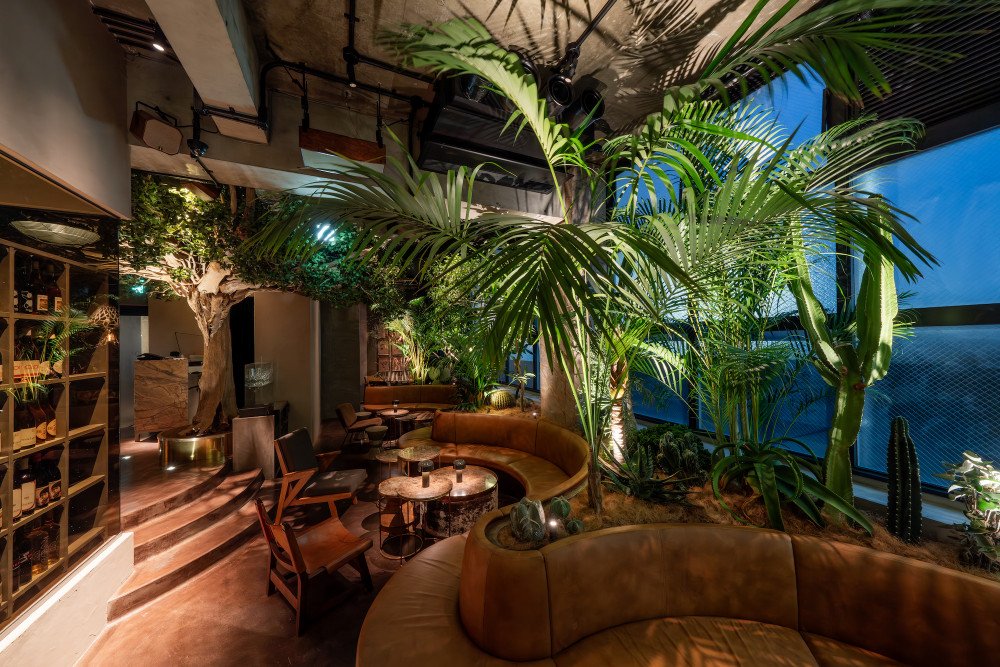
Kenya presents a quietly persuasive presence on a narrow Okazaki lane. It feels like an extension of old Kyoto — unadorned, residential and intentionally unpromoted — which gives the place a discreet, tucked-away quality. The eight-seat counter amplifies that intimacy: service is concentrated and deliberate, and the room’s modest scale keeps conversation soft and the mood focused. Recognition from local and national awards has drawn attention, but the restaurant retains the calm, recommendation-driven rhythm of traditional neighborhood counters rather than the bustle of tourist-facing dining corridors.
Best For
This is a venue built for close-up dining experiences: solo diners who want a focused meal at the counter and couples seeking a quiet, chef-led evening both find Kenya well suited to their needs. Its eight-seat counter means large parties are impractical; instead the restaurant favors personal engagement between kitchen and guest. The Michelin recognition and the concentrated seating make it particularly appropriate for diners who appreciate precision, seasonal Japanese technique and the intimacy of watching dishes arrive directly across the counter.
Ordering Tips
Expect a counter-forward, chef-directed experience rather than à la carte hustle: the description emphasizes what 'arrives across' the counter and the long-standing local pattern of recommendation and repeat custom. Choose a seat at the counter to see preparations and engage with the service; the format rewards trusting the sequence the kitchen presents. Because the place operates quietly within a residential block and has only eight seats, plan your visit knowing the dining experience is compact, focused and centered on the kitchen’s selections.
Venue details
Ambiance
Stylish with music enhancing the intimate counter seating experience and chef's humorous hospitality.
Tags
Vibe
Best For
Experience
Sourcing
At the Table
- Dress Code
- Smart Casual
- Noise Level
- Quiet
- Service Style
- Upscale Casual
- Meal Pacing
- Leisurely
- Capacity
- Intimate
Know before you go
Know Before You Go
- Getting there
- 55-4 Tanaka Satonomaecho, Sakyo Ward, Kyoto, 606-8226, Japan
Planning details
Location
55-4 Tanaka Satonomaecho, Sakyo Ward, Kyoto, 606-8226, Japan · Directions

Also consider
Also Consider
- Gion Sasaki, Kaiseki, Japanese, ¥¥¥¥
- cenci, Italian, ¥¥¥
- Ifuki, Kaiseki, ¥¥¥¥
- Kyokaiseki Kichisen, Japanese, ¥¥¥¥
- Kyo Seika, Chinese, ¥¥¥
Restaurant context
Kenya sits in an interesting gap in Kyoto's formal dining market: award-credentialed (Michelin 1 star, Tabelog Silver 2025) but priced at ¥¥¥ rather than the ¥¥¥¥ that dominates the city's top Japanese cuisine tier. Against Kyokaiseki Kichisen and Ifuki, both at ¥¥¥¥ and operating in a more formal kaiseki register, Kenya is the better value option and the more personal experience, but if classical kaiseki presentation and ceremony matter to you, those venues deliver something Kenya does not attempt. Gion Sasaki at ¥¥¥¥ is the most celebrated kaiseki counter in the city by awards volume, and represents the higher-investment, higher-formality alternative.
For guests deciding between Kenya and the other ¥¥¥ options in Kyoto, the comparison shifts by cuisine type. cenci (Italian, ¥¥¥) and Kyo Seika (Chinese, ¥¥¥) are at the same price tier but a different culinary category entirely. If you are committed to Japanese cuisine and want a counter experience with strong credentials at sub-¥¥¥¥ pricing, Kenya has no direct competitor in its tier in Kyoto.
On booking difficulty, Kenya is harder than most ¥¥¥ venues in the city given the 8-seat capacity and four-day operating week. Guests who want a serious Japanese dinner in Kyoto without the highest price tier should treat Kenya as the primary target and have one of the ¥¥¥¥ venues, Kichisen or Ifuki, as a fallback if the booking does not come through. Solo diners and parties of two will find the counter format optimal; groups of four or more should weigh the private-use option or consider a venue with table seating.
Explore Kyoto
Around this place
Discover more on Pearl
Unlock the full Kenya guide in Pearl, including awards, comparisons, FAQs, planning details, and nearby places.
Compare Kenya
| Venue | Price | Awards |
|---|---|---|
| Kenya | ¥¥¥ | 2026 Tabelog Bronze · #1732026 Michelin 1 StarTabelog 100 - Japanese cuisine - WEST - 2025 · #992025 OAD Top Restaurants in Japan Ranked · #3902025 Tabelog Silver2024 Michelin 1 Star |
| Gion Sasaki | ¥¥¥¥ | 2026 Tabelog Bronze · #3862026 OAD Top Restaurants in Japan RecommendedMichelin Guide Kyoto Osaka 20262026 La Liste Top RestaurantsTabelog 100 - Japanese cuisine - WEST - 2025 · #132025 OAD Top Restaurants in Japan Ranked · #2462025 Tabelog Silver2025 Michelin 3 Stars2025 La Liste Top Restaurants |
| cenci | ¥¥¥ | 2026 Tabelog Bronze · #442026 Asia's 50 Best Restaurants · #762026 OAD Top Restaurants in Japan Highly RecommendedMichelin Guide Kyoto Osaka 2026Tabelog 100 - Italian - WEST - 2025 · #632025 Asia's 50 Best Restaurants · #632025 OAD Top Restaurants in Japan Ranked · #1682025 Tabelog Bronze2024 OAD Top Restaurants in Japan Ranked · #135 |
| Ifuki | ¥¥¥¥ | 2026 OAD Top Restaurants in Japan Ranked · #1222026 Tabelog Bronze · #128Michelin Guide Kyoto Osaka 20262026 La Liste Top RestaurantsTabelog 100 - Japanese cuisine - WEST - 2025 · #622025 OAD Top Restaurants in Japan Ranked · #1002025 La Liste Top Restaurants2025 Tabelog Bronze2025 Michelin 2 Stars |
| Kyokaiseki Kichisen | ¥¥¥¥ | 2026 Tabelog Bronze · #1752026 OAD Top Restaurants in Japan Highly RecommendedMichelin Guide Kyoto Osaka 20262025 OAD Top Restaurants in Japan Ranked · #1862025 Michelin 2 Stars2025 La Liste Top Restaurants2024 OAD Top Restaurants in Japan Ranked · #1422024 Michelin 2 Stars2023 OAD Top Restaurants in Japan Ranked · #136 |
| Kyo Seika | ¥¥¥ | Tabelog 100 - Chinese cuisine - WEST - 2026 · #762026 Tabelog Bronze · #2162026 OAD Top Restaurants in Japan Recommended2026 Michelin 1 Star2025 OAD Top Restaurants in Japan Ranked · #3262025 Tabelog Bronze2024 OAD Top Restaurants in Japan Ranked · #3042024 Michelin Plate2024 Michelin 1 Star |





.png?width=1200&quality=80)
How Kenya stacks up against the competition.
FAQ
Frequently Asked Questions
What should I wear to Kenya?
No dress code is specified — the venue lists it as 'nothing special' — so smart, clean clothes are sufficient. That said, dinner runs JPY 20,000–29,999 per person and the 8-seat counter is an intimate setting, so visibly casual attire may feel out of place. When in doubt, dress as you would for any serious dinner.
How far ahead should I book Kenya?
Book as far in advance as possible — Kenya operates only four days a week (Tuesday, Wednesday, Thursday, Friday, and Saturday), with just 8 counter seats and two sittings per night. Tuesday is the most constrained, with only one seating at 18:00. Reservations are available via the website at kenya-sakai.com; do not expect walk-in access at this level.
Can I eat at the bar at Kenya?
Yes — and at Kenya, the counter IS the restaurant. All 8 seats are counter seats facing the kitchen; there is no separate dining room or table seating. This is the format, not an alternative option. If counter dining is not your preference, this is not the right venue.
Is Kenya good for a special occasion?
Yes, with one caveat: the counter seats 8 and private rooms are unavailable, so this works well for solo dining or small groups rather than large celebrations. Tabelog reviewers specifically flag it as solo-dining-friendly. For a private occasion with more than 4 guests, venues with private room availability may be a better fit.
Is the tasting menu worth it at Kenya?
The format here is a chef-led counter experience grounded in traditional Japanese techniques, with a stated concept of 'Cuisine that Reflects Modern Japan.' At JPY 20,000–29,999 per head, it holds a Michelin star (2024), a Tabelog Silver Award (2025, score 4.28), and three consecutive Tabelog 100 selections. That track record across multiple independent sources supports the price for anyone who values precision Japanese cooking.
Is Kenya worth the price?
At JPY 20,000–29,999 for dinner, Kenya sits in the mid-tier of serious Kyoto counter dining — below the top-end kaiseki houses but well-credentialed with a Michelin star and Tabelog Silver. For a Michelin-recognised, 8-seat counter with a chef-driven concept and strong repeat recognition from Tabelog, the price holds up. If you want more structural ceremony or a longer format, Kyokaiseki Kichisen operates at a higher price point with fuller kaiseki tradition.