
Restaurant in Tokyo, Japan
Ishibashi
1,010Pearl PointsCounter eel, serious credentials, no walk-ins.


.png?width=144&height=144&quality=80)
About Ishibashi
A Michelin Plate sushi-and-unagi counter in Sotokanda with Tabelog Bronze recognition and OAD Top 400 ranking. Dinner runs ¥20,000–¥29,999; the signature unaju takes close to an hour to prepare from order. Evenings only, Monday through Friday, reservation-only. Easier to book than the city's top sushi counters, and priced a tier below them with comparable critical standing.
Should You Book Ishibashi?
Yes, but with clear eyes about what you are booking. Ishibashi is a counter-and-eel specialist in Sotokanda, Chiyoda, operating Monday through Friday evenings only, closed weekends. It holds a Michelin Plate (2025) and ranks #311 on Opinionated About Dining's Japan list (2025). Dinner runs ¥20,000–¥29,999 per person. For a sushi-and-unagi counter at that price in Tokyo, the recognition-to-cost ratio is solid, especially against the ¥¥¥¥ competition one tier up. If you are already familiar with the format and want to return for a more deliberate visit, this page is for you.
What Ishibashi Actually Is
Getting a seat here is easier than at the city's hardest-to-book sushi counters, but that does not mean you walk in off the street. The venue operates reservation-only, evenings only, Monday through Friday, 5 pm to 9:30 pm. There is no Saturday or Sunday service. That five-day evening window with no lunch option concentrates demand, so book at least two to three weeks out for a weekday slot, more if you are aiming for a Friday. The booking reality is: easier than Harutaka, harder than most casual neighbourhood sushi-ya, and strictly reservation-only without exceptions.
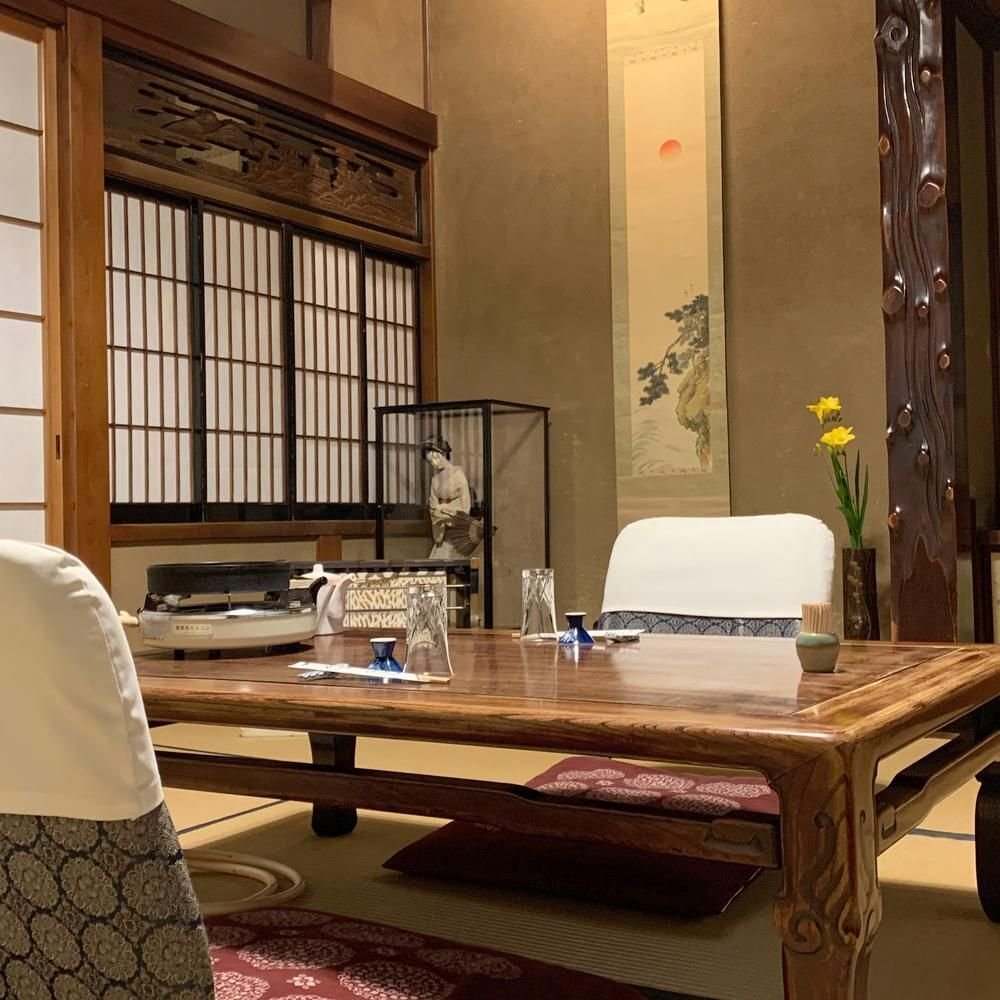
The venue is housed in a traditional structure near the Kanda River, a detached building with a red-brick wall that dates back to an earlier era of the neighbourhood. The room seats a small number of diners across a counter and private configurations. The scale keeps service focused and the pace deliberate. This is not a high-volume operation.
The dual identity of sushi and unagi (freshwater eel) on the same menu is what makes Ishibashi worth understanding before you book. Most Tokyo counters at this price point commit fully to one discipline. Here, the unaju (broiled eel served on rice in a lacquerware box) is the anchor dish: a whole eel in the standard version, one and a half eels in the deluxe. The price difference between the two is small enough that the deluxe is the obvious call. What you need to know before you order: the eel is cut and steamed only after you place your order. Expect to wait close to an hour from ordering to plate. That is not a service failure; it is how the dish is made correctly. If you treat that hour as part of the visit rather than dead time, the experience makes sense. The venue is designed for it: drinks, small snacks, and the room's history absorb the wait.
Aroma that greets you when the kitchen is active is one of the clearest signals that the eel preparation is live and unhurried: charcoal smoke from the grill mixed with the savoury depth of tare glaze reducing over heat. It is the smell of something being made properly, not held and finished. For a second visit, that cue is worth tracking as the evening progresses.
Sake programme is treated seriously here. The venue places emphasis on nihonshu pairings, and that is not incidental. Eel fat and umami interact well with a dry junmai; the wait between ordering and eating is a reasonable window to work through a pour or two. If you are a sake drinker, this is a detail worth planning around rather than discovering after you have already committed to something else.
Ishibashi earned a Tabelog score of 4.04–4.05 across its award cycles, with Bronze recognition in both 2025 and 2026, and inclusion in the Tabelog 100 for Japanese cuisine. These are not the numbers of a hyped reservation play; they are the numbers of a venue that a consistent, repeat-visitor audience rates reliably well. That profile fits the GL-2 guest who already knows the format and is deciding whether to return or deepen the visit.
Private rooms are available for parties of two, four, six, and eight. If you are coming for a business dinner, this is the natural configuration: the venue is specifically noted as recommended for business occasions on Tabelog, the private room removes ambient noise, and the price point is credible without being extravagant by Tokyo standards. For solo diners or pairs who prefer the interaction of a counter, the counter seats are the better call.
One practical note on payment: credit cards are accepted (Visa, Mastercard, JCB, Amex, Diners). Electronic money and QR-code payments are not. No parking on-site. The address is 3 Chome-6-8 Sotokanda, Chiyoda, which is walkable from several Yamanote and metro stations in the Akihabara and Ochanomizu area.
For broader context on where Ishibashi sits in the Tokyo dining picture, see our full Tokyo restaurants guide. If you are building a longer Japan itinerary, venues worth considering alongside it include Gion Sasaki in Kyoto, HAJIME in Osaka, and Goh in Fukuoka. For accommodation and bar options in the city, the Tokyo hotels guide and Tokyo bars guide are the next steps.
Booking
Reservation-only. No walk-ins. Book by phone or through Tabelog's online reservation system. Two to three weeks advance notice is a workable lead time for a weekday slot; four or more for Friday evenings. The venue is closed Saturday and Sunday. Hours are 5 pm–9:30 pm, Monday through Friday.
Frequently Asked Questions
How far ahead should I book Ishibashi?
Two to three weeks is a workable lead time for most dates. The venue is reservation-only with no walk-in option, and at ¥¥¥ per head with only 14 seats total, the counter fills consistently. Book through Tabelog's online reservation system or by phone. Friday slots go faster than early-week openings.
Does Ishibashi handle dietary restrictions?
The kitchen's focus is explicitly on fish, with eel as the centrepiece of the menu. That makes Ishibashi a poor fit for anyone avoiding seafood or following a pescatarian-plus-restrictions diet. check the venue's official channels when booking to discuss any specific requirements before you commit at this price point.
What should a first-timer know about Ishibashi?
The eel is cut and steamed to order, which means a wait of around an hour for your main dish — that is by design, not a service issue. Arrive ready to pace yourself. The venue holds 14 seats across a 6-seat counter and private rooms, so this is an intimate setting, not a casual drop-in. Tabelog reviewers rate it 4.04, and it holds a 2025 Michelin Plate.
Is Ishibashi good for a special occasion?
Yes, particularly for business dinners or two-person meals. Tabelog flags business occasions as a strong fit, and private rooms are available for parties of 2, 4, 6, or 8. Dinner runs JPY 20,000–29,999 per person, which positions it as a considered spend rather than a casual splurge. For a more theatrical multi-course format, RyuGin is a different option at a higher price.
What are alternatives to Ishibashi in Tokyo?
For sushi at a comparable counter format and price, Harutaka is the sharper comparison. For a more elaborate kaiseki-influenced progression, RyuGin sits at a higher price tier but carries stronger international recognition. If the appeal is an intimate Japanese dining room over a specialist eel focus, HOMMAGE offers a French-Japanese counter with a different flavour profile entirely.
Is lunch or dinner better at Ishibashi?
Lunch runs JPY 10,000–14,999 versus JPY 20,000–29,999 at dinner, making it the stronger value case if your schedule allows. The restaurant operates Monday through Friday only, closed weekends, so lunch is a viable option for visitors with a flexible weekday itinerary. The format and quality level are comparable across both services.
Location
3 Chome-6-8 Sotokanda, Chiyoda City, Tokyo 101-0021, Japan
Tokyo, Japan
Compare Ishibashi
Also Consider
- Harutaka, Sushi, ¥¥¥¥
- L'Effervescence, French, ¥¥¥¥
- RyuGin, Kaiseki, Japanese, ¥¥¥¥
- HOMMAGE, Innovtive French, French, ¥¥¥¥
- Crony, Innovative, French, ¥¥¥¥
At ¥¥¥ (¥20,000–¥29,999 dinner), Ishibashi sits a full price tier below the ¥¥¥¥ competition. Harutaka is the most direct sushi comparison: sharper technical precision, broader critical consensus, and a considerably harder booking process. If sushi craft is the primary driver and budget is secondary, Harutaka is the call. If you want recognised counter quality at a more accessible price with a genuinely differentiated menu (the unaju format has no real equivalent at this tier), Ishibashi makes a stronger case for the value-conscious visitor.
Against the kaiseki and French options in the peer set, the comparison is less about format and more about occasion fit. RyuGin delivers a seasonal kaiseki experience with three-star Michelin weight behind it; the spend is higher and the formality greater. L'Effervescence and Crony are French-leaning, tasting-menu formats aimed at a different kind of dinner. None of them offer what Ishibashi does: a relaxed counter setting, a sake-serious drinks list, and a dish (the unaju) that rewards patience rather than pace.
The practical gap that matters most: Ishibashi is closed weekends. RyuGin and L'Effervescence both offer weekend availability, which makes them the better option if your Tokyo visit is concentrated on Saturday or Sunday. For a weekday business dinner or a deliberate Thursday-evening reservation, Ishibashi's private room options, price point, and Tabelog business-occasion recommendation make it the more practical choice over the higher-spend alternatives.
Hours
- Monday
- 5–9:30 pm
- Tuesday
- 5–9:30 pm
- Wednesday
- 5–9:30 pm
- Thursday
- 5–9:30 pm
- Friday
- 5–9:30 pm
- Saturday
- Closed
- Sunday
- Closed


